

Country: USA
Language: English
Runtime: 143 minutes
BBFC: 12A
MPAA: PG-13

Original Release: 9th July 2003 (USA)
UK Release: 8th August 2003
First Seen: cinema, August 2003
Stars
Johnny Depp (Edward Scissorhands, Finding Neverland)
Orlando Bloom (The Lord of the Rings, Troy)
Keira Knightley (Bend It Like Beckham, Pride & Prejudice)
Geoffrey Rush (Quills, The King’s Speech)
Director
Gore Verbinski (The Ring, The Lone Ranger)
Screenwriters
Ted Elliott (Aladdin, Pirates of the Caribbean: On Stranger Tides)
Terry Rossio (Small Soldiers, Pirates of the Caribbean: Dead Man’s Chest)
Story by
Ted Elliott (Treasure Planet, National Treasure: Book of Secrets)
Terry Rossio (The Mask of Zorro, The Lone Ranger)
Stuart Beattie (Collateral, 30 Days of Night)
Jay Wolpert (The Count of Monte Cristo)
Based on
Pirates of the Caribbean, a theme park ride at Disneyland.
The Story
When feared pirate ship the Black Pearl lays siege to the British outpost Port Royal and kidnaps the governor’s daughter, Elizabeth Swann, her childhood friend (and secret admirer) Will Turner teams up with notorious pirate Captain Jack Sparrow to rescue her. Jack has his own axe to grind with the crew of the Pearl, who are afflicted by a supernatural curse that they believe Elizabeth may be the key to breaking.
Our Heroes
Will Turner, a humble blacksmith and self-taught expert swordsman. Doesn’t like pirates, but is forced to team up with one. That would be self-proclaimed captain Jack Sparrow, who is apparently a bumbling buffoon prone to wild exaggeration about his exploits, but is actually strangely competent and honourable. Not to forget Elizabeth Swann, the governor’s daughter who is more strong-minded and capable than women of her time are supposed to be. Hates corsets, too.
Our Villains
Captain Barbossa (a villain of Rickman-esque likeability) and his undead pirate crew just want to lift their terrible curse, but, being pirates, tend to go about that mission with excessive violence.
Best Supporting Character
Two of Barbossa’s crew, Ragetti (Mackenzie Crook) and Pintel (Lee Arenberg), who make a comedy double act. Or maybe triple act, with Ragetti’s wooden eye.
Memorable Quote
“You best start believing in ghost stories, Miss Turner… you’re in one!” — Barbossa
Memorable Scene
Barbossa orders his crew to attack a British Navy ship from underwater. As the moon emerges from behind a cloud to reveal the true skeletal form of the undead crew, they march along the seabed to their target…
Memorable Music
Originally set to be scored by Alan Silvestri, who’d worked with director Gore Verbinski on a couple of previous movies, the composer fell out with producer Jerry Bruckheimer and it was decided to go with Hans Zimmer instead. Unfortunately Zimmer was busy, but he pointed them in the direction of newer composer Klaus Badelt, one of Zimmer’s mentees at his company Media Ventures. Presumably Badelt struggled, because Zimmer ended up drafting several of the score’s main themes in one night, and a team of additional composers (anywhere from seven to fifteen, depending which source you listen to) was brought in to help finish it off. (One of them, incidentally, was Ramin Djawadi, who has since gone on to be noticed for Game of Thrones.) The final score is credited to Badelt, but the soundtrack’s most famous cue — He’s a Pirate — is actually a development of a piece Zimmer wrote for forgotten Wesley Snipes action-thriller Drop Zone. You can’t really argue a score created like that has any artistic integrity, but it’s fun and exciting, and He’s a Pirate is a really, really good piratical action theme.
Truly Special Effect
All of the CGI was strikingly photo-real at the time, the main showcase being the skeletal pirates, especially as they switched from being normal humans to skeletons (and back again) as they moved in and out of the moonlight. I guess it’s aged a little now, but, to be fair, it is 13 years old. Couple this with the even-better work featured in the sequels and it shows ILM are still at the forefront of the industry.
Making of
There’s always been something of a tonal similarity between the Pirates films and the Monkey Island series of computer games, which turned out to be more than coincidence when it eventually emerged that, just a couple of years before Pirates, screenwriter Ted Elliott had been working on a Monkey Island film for Steven Spielberg which never came to fruition. As if to compound the point, Monkey Island creator Ron Gilbert revealed in 2004 that the original game was inspired by the novel On Stranger Tides, and in 2007 Disney bought the rights to the novel and used its title and bits of its plot for the fourth Pirates film.
Next time…
Initially followed by a pair of shot-back-to-back trilogy-forming sequels, their cumulative success turned it into a franchise: a fourth movie followed in 2011, with a fifth shot last year for release next summer. Also inspired a host of piratical TV series, and Disney to attempt various other ride adaptations and genre mash-ups (see: The Lone Ranger).
Awards
5 Oscar nominations (Actor (Johnny Depp), Makeup, Sound Mixing, Sound Editing, Visual Effects)
1 BAFTA (Make Up/Hair)
4 BAFTA nominations (Actor (Johnny Depp), Costume Design, Sound, Visual Effects)
1 Saturn Award (Costumes)
10 Saturn nominations (Fantasy Film, Actor (Johnny Depp), Supporting Actor (Geoffrey Rush), Supporting Actress (Keira Knightley), Director, Music, Make Up, Special Effects, DVD Special Edition, Genre Face of the Future (Keira Knightley))
2 MTV Movie Awards Mexico (Sexiest Hero (Orlando Bloom), Best Look (Johnny Depp))
1 World Stunt Award (Best Fight for the blacksmith shop sword fight)
Nominated for the Hugo for Best Dramatic Presentation Long Form
What the Critics Said
“it’s Johnny Depp’s inspired turn as Captain Jack Sparrow that really marks the spot. Depp, arguing that pirates were the rock stars of their day, models his entire performance on Keith Richards of the Rolling Stones: it’s there in every slurred vowel and every drug-fried wiggle of the head. There’s an endearing dignity to Sparrow’s hunger for fame. “You are, without doubt, the worst pirate I’ve heard of,” says one British officer. “Yes,” replies Jack, “but you have heard of me.” Gloriously over-the-top, this performance is pitched only as high as the film’s fun factor itself. In terms of physical precision and verbal delivery, it’s a masterclass in comedy acting.” — Alan Morrison, Empire
 Score:
 79%
79%What the Public Say
“manages the weird assignment of capturing the sensibility of a theme park boat ride inside a Spielbergian adventure romp. This is all the things popcorn movies should be: fun, energetic, simple enough to quickly grasp but full enough to not seem stupid, anchored by strong personalities among all the side characters (Geoffrey Rush’s florid villain is a great bit of acting in its own right, unfairly overshadowed by Depp), and a cohesive world with a sense of history and depth.” — Tim Brayton, Antagony & Ecstasy

It seemed like such a terrible idea when it was first announced: films based on Disney theme park rides? What the hell were they thinking?! The other movies produced by this initiative turned out to be as terrible as everyone expected, but somehow Pirates of the Caribbean — which also had to contend with the fact that cinematic pirates were deeply unpopular after the studio-killing disaster of CutThroat Island eight years before — wasn’t. Not just “not bad”, either, but an exciting, humorous, creepy, fun movie. That the sequels haven’t lived up to it is disappointing, but the first still stands as a near-perfect example of big-budget swashbuckling entertainment — it’s basically the dictionary definition of a summer blockbuster.

#71 goes to show… you never can tell.
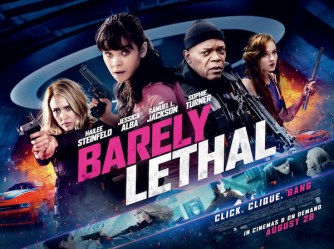 Hailee Steinfeld stars as a teenage girl raised from childhood by a top-secret government organisation to be an expert agent, but who has always longed for a more normal experience. When the organisation thinks she’s died on a mission, she uses it as a chance to have that normal life. Researching the high school experience from teen movies, she heads off to a typical US high school… and finds life isn’t quite like the movies. Though it is a bit, but it’s allowed to be so long as you keep referencing the movies you’re riffing off… right? Oh, and of course her old life keeps intruding, in the form of people wanting to kill her ‘n’ all that.
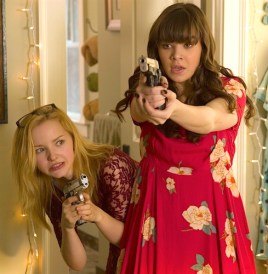 then I think there’s a fair chance you’d find it to be a frequently amusing, occasionally very funny, and sometimes quite sweet high school comedy — with added doses of action comedy for good measure. There’s even one great scene (which is more than many a “very good” film can claim); the kind of scene that, when it happens, is so right it feels like kind of an obvious idea, but I’ve never seen it done before (it kinda requires a premise like this to even work) and is pretty faultlessly executed.
 1960 Academy Awards
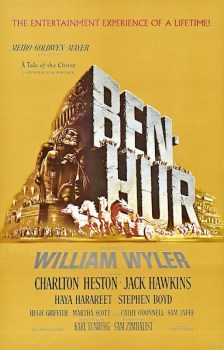 So claims Ben-Hur’s 1961 trailer. They were cocky back then, weren’t they?
 but was so invested that I stuck with it regardless. There are things that have aged poorly, be that the model effects in the sea battle or using a white actor in heavy make-up to portray an Arab, but I think you have to take these things with a certain element of the spirit of the era — I’m sure no offence was intended (see also:
 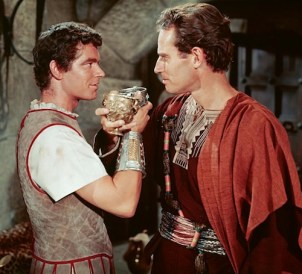 This Christian aspect contrasts sharply with the other subtext I alluded to earlier: the possibility that Judah and Messala were once lovers. The claim originates with screenwriter Gore Vidal, who may or may not have written some or all of the screenplay that was used for shooting. According to Vidal, he and Stephen Boyd discussed the idea before shooting began, and then Boyd played the scenes with it in mind. However, it was kept hidden from Charlton Heston because he’d never agree to it, and when the notion was put to him later he naturally denied there was any homosexual subtext. Whether this tale is true in the literal sense of that subtext being written into the screenplay and Boyd choosing to incorporate it into his performance, I don’t know, but the content of the film makes it easy to believe — the scenes between Messala and Judah, especially when they’re first reunited, absolutely play like there’s a romantic history between them. Bear that in mind and it seems to reoccur later, too: when the story returns to Jerusalem after several years, Messala seems particularly close to his deputy; and there are a couple of shots of Judah being chummy towards a random stableboy (I mean, they’re not much, but if you watch it with the assumption that Judah is gay or bi…) What does this signify? Perhaps not a great deal. I’m sure you can choose to completely ignore it. I imagine some would passionately deny even the possibility it’s there. Personally, I think it adds something to the characters’ relationship.
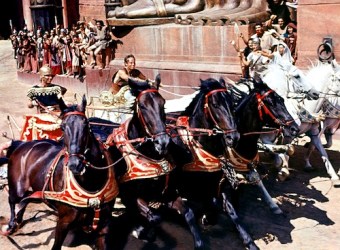 the technical awards the film scooped up are certainly merited. The cinematography is fantastic, with the landscape shots making particularly excellent use of the extra-wide frame. As for the chariot race, it stands up as an incredible action sequence even today, driven by thrilling camerawork and editing, and showcasing some daring stunt work.
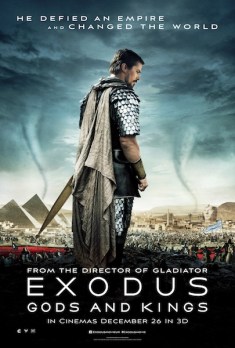 For his most recent historical epic, Ridley Scott tackles the story of Moses. It’s easy to nitpick, depending on your proclivities: whitewashed cast; lack of adherence to the Bible; Ridley’s typically flexible attitude to historiography; it was even banned in Egypt for the negative depiction of both rulers and slaves.
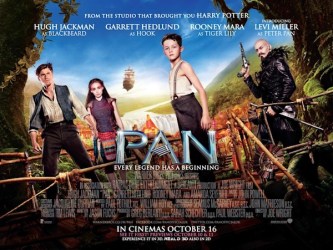 12-year-old Peter (Levi Miller) lives in an orphanage in World War 2 London… until the night pirates bungee in through the ceiling and kidnap a bunch of boys onto their flying galleon. Yes, really. From there it’s second star to the right and straight on ’til morning as the pirates take their new charges to Neverland, where they’re forced into the
  As said boy, Levi Miller manages to make Peter not intensely irritating, which is an achievement compared to other adaptations. Some of that is surely inherited from the writing and directing, but Miller gives a strong performance too. Hugh Jackman hams it up magnificently as Blackbeard, clearly having a riot. Rooney Mara may be miscast due to the colour of her skin (for all the complaints about whitewashing, her tribe is shown to be mixed race… which doesn’t necessarily excuse it), but her actual performance is very good. I felt like Garrett Hedlund was doing an impersonation of someone but I never quite got a handle on who (the character’s definitely written to be Han Solo, but the actor’s not copying Harrison Ford). Adele Akhtar brings comedy as Hook’s chum, Sam ‘Smee’ Smiegel, there are cameos of varying purpose from Amanda Seyfried and Kathy Burke, and Nonso Anozie is always a welcome presence, here playing Blackbeard’s henchman. Cara Delevingne doesn’t act so much as provide a human reference for the CGI.
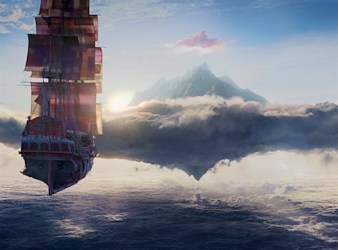 Having found Pan to be a very likeable fantasy adventure, I confess to being slightly confused by the response that saw it soundly trounced by most critics and viewers. The
  or Disney’s, aside from my aforementioned aversion to the eponymous hero), so I was perhaps more open to this Epic Fantasy reimagining. (In that last respect, it definitely falls into the same bracket as



 The Batman v Superman Ultimate Edition has been available via various means for a month or more now, but has only hit disc in the UK this past week (and I waited for it, because I’m a good boy). This extended cut adds half-an-hour of material, give or take (comparing the two Blu-rays tells me the difference is just under 31 minutes;
  You may have read that the photographer with Lois in Africa is Jimmy Olsen, identified in the credits but not on screen in the theatrical cut. In this version he is named on screen, but that’s not the important part. More is done to establish why Lois is in Africa, what she’s hoping to achieve, and lay the seeds for why it’s all going to go wrong. This is achieved in such a short space of time that it seems ludicrous it was cut out, leaving theatrical viewers playing catch-up when a couple of extra moments would’ve explained it clearly. (Of course, there may be an element of re-viewing bias in this: I already know what’s happening so of course I cottoned on to everything sooner.) When things do go south, more material makes it explicit what happened — what the bad guys do to frame Superman, essentially. It’s possible some of this material was cut to achieve the PG-13 rating, but in doing so they left out bits and pieces that are referenced later, heightening the sense of confusion for theatrical viewers — how are we meant to know a woman testifying to a congressional hearing about “burned bodies” is a reference to events we just witnessed if we don’t see anyone burning any bodies?
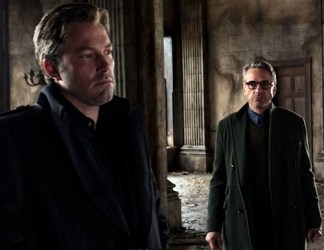
 Less vital to the overall plot, but which certainly contributes to the titular conflict, is that Clark’s investigation into the Batman is seriously beefed up. It makes Clark/Superman feel like more of a leading character in a film that was, at least as originally conceived, his sequel. In some respects this storyline is a more understandable excision, because Superman’s dislike for the Batman and his methods isn’t entirely unclear in the theatrical cut. Equally, it does flesh it out better and connect up some of the dots, like why he intervened when Batman was trying to steal the Kryptonite at the docks (essentially: a Bat-victim’s girlfriend said Batman needed stopping. Maybe not a great reason, but hey, it’s a reason). It’s a case in point of how this film simply has too much going on. To create a workable version it’s had to be three hours long — that’s the length of two movies, and it does feel like two movies’ worth of material. Not back-to-back movies — you couldn’t cut it in two at the middle and be left with two independent films — but two movies that occur concurrently; intercut. I mean, there are even two big action climaxes, back to back.
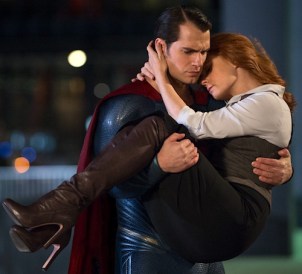 I don’t think it sinks to the level of spelling it all out slowly and carefully in case you missed it, but it does make it more explicit; and, as discussed, it does that by showing more of Lois’ investigation, so it feels like her role is more substantial too. She felt a little cursory in
 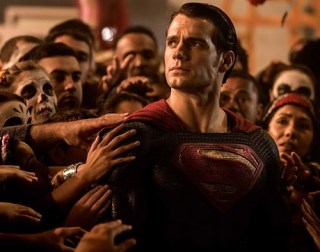 One thing that is pretty apparent about Snyder’s intentions is that he really wanted to make a Batman movie, and I suspect Man of Steel was his way in to getting to do that. Despite launching out of the events of Man of Steel, and engaging with issues of what it means to be Superman (therefore continuing MoS’s theme of “what would it be like if Superman was real?”), and having Lex Luthor as the main antagonist, BvS feels like a Batman-driven movie more often than it does a Superman one. Personally, I get it — I’m more of a Batman fan than a Superman fan too, so that approach warrants little complaint from me — but I can see why Supes’ fans would be miffed.
 Other, more minor changes in this cut include increased violence, though personally I barely noticed it. Some people seem adamant this should’ve upped it to a 15 certificate, but I think you can justify saying it stops just short of that. Quite what the MPAA saw that merited an R, I’m not entirely sure. More interesting to my weirdly-obsessed mind is that the film actually includes the “Ultimate Edition” title on screen, both during the opening credits and at the end (where it’s technically titled “Batman v Superman: Dawn of Justice Ultimate Edition” without any additional punctuation). How many other extended cuts actually change their title card to reflect that fact? Off the top of my head, I can’t think of any.

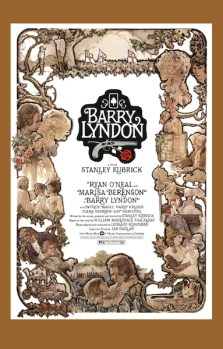 Stanley Kubrick made a good many exceptionally well-regarded films — indeed, with possibly the exception of his first semi-amateur feature,
 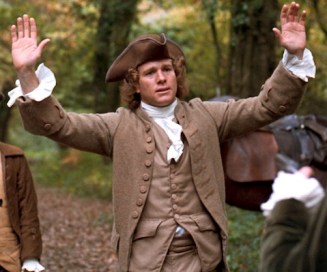 who often tells us less-than-favourable things about the lead character. Apparently this is an example of an unreliable narrator, and I suppose some of the things we’re told aren’t directly evidenced on screen, but I’m afraid I’m going to have to leave that seam to be mined by other writers, because (on a first viewing at least) I didn’t see where or to what effect the narrator was lying to the viewer.
 but a fictional biopic, that ranges across Europe and across time to… what effect? It’s a Kubrick film, so the ultimate goal of the tale, the message(s) it may be trying to impart, are debatable. You could see a story of the pitfalls of hubris. You could see an exploration of how a certain class lived in this time period. You could just see a man who led an adventurous life.
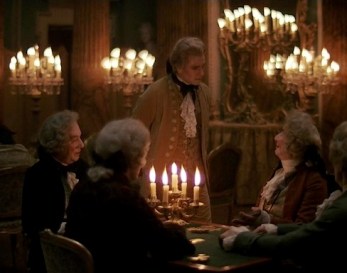 just that it remains the best among greats. (That said, having looked up images online for this review, it seems slightly less striking to me now. That may be the quality of the screengrabs; it may be that the painterly quality is so remarkable at first appearance (before becoming more familiar when the whole movie has that quality) that its memorableness is heightened.)
 The director of
  100Films.co.uk