Serenity (2005)

100 Films’ 100 Favourites #82

They aim to misbehave.

Country: USA
Language: English
Runtime: 119 minutes
BBFC: 15
MPAA: PG-13

Original Release: 29th September 2005 (Australia)
US Release: 30th September 2005
UK Release: 7th October 2005
First Seen: cinema, 7th October 2005

Stars
Nathan Fillion (Waitress, Super)
Summer Glau (The Initiation of Sarah, Knights of Badassdom)
Chiwetel Ejiofor (Dirty Pretty Things, 12 Years a Slave)

Director
Joss Whedon (Avengers Assemble, Much Ado About Nothing)

Screenwriter
Joss Whedon (Buffy the Vampire Slayer, Toy Story)

Based on
Firefly, a TV series created by Joss Whedon.

The Story
In the far future, a crew of renegades harbour a fugitive who knows a terrible secret about the totalitarian rulers. When a ruthless assassin comes for them, their only hope becomes to seek out the truth behind one of the regime’s darkest acts…

Our Heroes
The crew of the Firefly-class spaceship Serenity. Led by Captain Mal Reynolds, they’re a gang of rogues and thieves, but are also honourable sorts (well, mostly) forced into that life by a harsh universe. They’ve recently taken onboard Dr Simon Tam and his mysterious sister, River, who has certain skills…

Our Villains
The Operative, an efficient and moral assassin sent by the Alliance, the universe’s ruling body, to retrieve River — at any cost. But if he’s the rock then there’s also a hard place: Reavers, bloodthirsty perverted cannibals who stalk the uncharted regions our heroes will need to venture into.

Best Supporting Character
Shepherd Book, a preacher and former member of Serenity’s crew, now living on the appropriately-named planet of Haven. Has some very insightful words of advice for Mal.

Memorable Quote
“I don’t care what you believe in, just believe in it.” — Shepherd Book

Quote Most Likely To Be Used in Everyday Conversation
“Shiny” — as a synonym of “great”.

Quote Most Likely To Be Found on a T-Shirt
“I am a leaf on the wind, watch how I soar.” — Wash

Memorable Scene
After the history-lesson-within-a-dream-within-a-hologram-within-a-scene pre-titles, Whedon introduces us to the crew and their titular ship with a four-and-a-half-minute unbroken tracking shot. I do love a long single take, and this one excels by introducing us to all the main heroes, their personalities, their situations, their relationships — all at the same time — while also establishing the geography of the ship; and, by extension, the incredible set, which featured the entire interior of the ship built across just two sections (there’s an invisible cut in the middle of the shot to transition between sets).

Technical Wizardry
I created this category to highlight any elements of production that were especially striking — things like cinematography, editing, design, costumes… No offence to any of them (and considering the film was produced for a slight-for-a-sci-fi-blockbuster $40 million, they all do a super job), but the real star is Whedon’s screenplay. Packed to the gills with the literate, witty dialogue he’s famed for, it also manages to be emotionally affecting, make points about governments and their power, engage with themes of belief and the importance of freedom, and weave in a subtext that reflects the real-life story of Firefly’s death and rebirth — though Whedon claims that last one was an accident.

Letting the Side Down
The public. It didn’t gross enough; there weren’t any sequels. Damn you, mankind!

Making of
Talking of the impressive Serenity set (see: Memorable Scene), it was built in the same way for Firefly, but the blueprints were lost between Fox destroying the series’ sets and production on the movie beginning. When Nathan Fillion learnt this at a production meeting, he was able to supply the blueprints himself — he’d been so excited to be on the show, he’d taken photos of all the pre-production material he’d seen, including the set blueprints.

Previously on…
Serenity continues and, to an extent, concludes Joss Whedon’s criminally short-lived TV series Firefly. Mismarketed by US network Fox, the series wasn’t a success on original broadcast, leading to cancellation after just 11 episodes had aired. Thanks to word-of-mouth and availability on DVD, it has developed a massive following since.

Next time…
Despite the distinct and disappointing dearth of sequels, the Firefly/Serenity franchise has continued on, mostly in the form of various comic books, which have plugged gaps in continuity, revealed long-awaited character histories, and even continued the story after the movie.

Awards
1 Saturn Award (Supporting Actress (Summer Glau))
1 Saturn nomination (Science Fiction Film)
Won the Hugo for Best Dramatic Presentation Long Form

What the Critics Said
“With its Hawksian attention to group dynamics and its skilful definition of character through action, this supremely entertaining hybrid-movie plays like Rio Bravo in space. The textured narrative is peopled by precisely delineated characters who employ a salty retro-future-speak, in which twenty-fifth century slang is morphed with frontier Western archaisms (‘take umbrage’, ‘confound these bungers’). The settings and tone are hyper-real, yet the human behaviour is grounded and credible, the moral conflicts complex and involving. Shiny, intelligent fun.” — Nick Funnell, Time Out London

Score: 82%

What the Public Say
“We get a decent story, providing lots of action, a huge amount of wit and plenty of suspense. It’s extremely entertaining. It’s well written too, with information smartly hidden beneath breezy dialogue, and looks very cinematic. (The camerawork is often expressive and classy.) Maybe what’s most impressive is the economy. Many scenes are doing double-duty, servicing plot and character, action and exposition, drama and comedy… There’s just a sharpness to everything, which means the film rattles along and is never boring.” — Ian Farrington

Verdict

Regular readers may have picked up that I don’t re-watch films much (I can’t identify at all with people who claim to have seen the same film dozens or hundreds of times). Despite that, I saw Serenity in the cinema four times, two of them back-to-back. Such is the genius of writer-director Joss Whedon, and the quality of the Firefly universe — it’s a situation where every element just clicked to make a perfect result. (Well, every element except the original TV network, anyway.) No doubt Serenity is best viewed as a capper to the fourteen-hour TV series — that extra investment in the characters and universe makes the film’s best bits sing — but it’s accessible to newcomers also, being so cleverly structured and packed with all the information you’d need.

It was named “Film of the Year” by the BBC’s Film programme; it topped an SFX poll for the best science-fiction film of all time; and its DVD is a permanent resident on the International Space Station to entertain the crews. Cào nǐ, Fox.

#83 will… get busy living or get busy dying.

Armageddon (1998)

2016 #133
Michael Bay | 145 mins | streaming (HD) | 2.35:1 | USA / English | 12 / PG-13

ArmageddonSometimes you have to wait to see a film because it’s not accessible for some reason (no one’s put it out yet, or it’s out of print and costs a fortune, or whatever). Other times… maybe it’s just me, but there are some films that I wait years to watch for no particular reason. Not wait in the sense of “drumming my fingers waiting for the chance”, but in the sense that I’ll get to it someday, it’s just not a priority, for whatever reason. And then one day, with nothing apparently having changed, the time comes when it’s that movie’s turn.

So it was for me with Armageddon, Michael Bay’s 1998 sci-fi disaster epic. It’s a film I’ve been aware of since it came out (how could you not be?) but never cared enough to actually watch, other than a general feeling I’d get round to it one day because (a) it’s the kind of movie everyone else has seen, and (b) when Michael Bay’s good, he is good (at what he does), so it’s at least worth a look. It’s a pretty readily available film — the kind of thing I regularly see in TV listings or on streaming services and consider watching and end up deciding “nah, not today” — so quite what made me finally watch it now — what made me see it in a list and go “actually, yes, today” — I’m not sure. Such are the mysteries of life. Or of my brain, at any rate.

For the few people who haven’t seen it, then, it’s about a giant asteroid heading towards Earth, where its impact will cause an extinction-level event, and NASA deciding the only way to stop it is to send up a couple of spaceships to land on the asteroid, drop nukes inside, and blow it up (it’s a Michael Bay movie, of course the solution is “blow it up”). To learn about the kind of deep drilling this would require, they bring in the best driller around, Bruce Willis, to train the astronauts. But drilling isn’t something you can learn in a couple of weeks — unlike “how to be an astronaut”, apparently, because it’s decided it will be easier to train drillers to be astronauts than train astronauts to use a drill.

At least they know which way space isIf you’re a reader from outside the UK, I guess you’ve probably not heard of Tim Peake. He’s (quite rightly) been big news here for the last year or so because he was our first (official) astronaut. That it’s taken until now for there to be a British astronaut seems remarkable, but there you go. I guess we always let other people do the initial exploring, then come along later to own the place — I mean, that Columbus fella was Italian, and is Italian the official language of America? No it is not. Anyway, Peake is a qualified helicopter pilot and instructor, has a degree in Flight Dynamics and Evaluation, was selected to be an astronaut in a process that involved academic tests, fitness assessments, and several interviews, and then received six years of training, including a mission as an aquanaut, before he went into space. But no, you can totally train a group of drillers to do that in a fortnight.
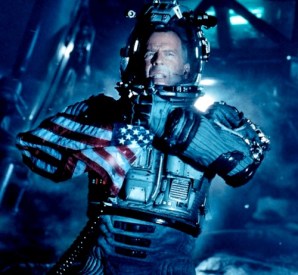
Many Hollywood blockbusters have ludicrous concepts, but Armageddon feels designed to plow new furrows of ridiculousness. Apparently NASA show the film to new managers and ask them to spot the errors. There are at least 168. It only takes a few minutes before it’s already so OTT that it seems like a spoof of Bay — I mean, the title card explodes for crying out loud. When the president makes a speech just before the launch, the quaint shots of the world listening in make it look like the film’s set in the 1950s. Despite being a full two-and-a-half hours long, Bay manages to make the whole film feel like a plot-summarising montage. The average shot length must be Moulin Rouge-level crazy, though where that film weighs super-fast-cut scenes against more measured ones, I think Armageddon is out-of-control-freight-train fast for every last second. Bay is so impatient, the credits start rolling before the film has even finished! And why the fuck does the drilling vehicle have a fucking great machine gun on it?!

Bruce Willis flashesApparently Michael Bay thinks it’s his worst film. In 2013, he said, “I will apologise for Armageddon, because we had to do the whole movie in 16 weeks. It was a massive undertaking. That was not fair to the movie. I would redo the entire third act if I could.” The problems stretch further than that, Michael.
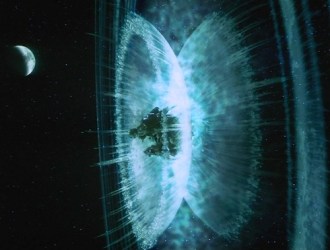
Believe it or not, it’s not all bad. The bit where Bruce Willis’ life flashes before his eyes is actually really good — ten seconds of artistic moviemaking in a 150-minute movie! Visually it looks great throughout, meaning DoP John Schwartzman is possibly the only person who comes out of the whole thing entirely unscathed. The special effects are excellent for 1998. I thought Independence Day’s were still effective when I re-watched it earlier this year, but Armageddon’s feel much less dated, and it was only made two years later. As an effects showcase, it absolutely still holds up today. That said, the top of the Chrysler building falling off, complete with plummeting screaming people, is considerably less palatable since 9/11. And just a minute later there’s a shot of the World Trade Center with burning holes in it. It’s a wonder it hasn’t been re-edited to remove those shots, especially as it’s a Disney-owned movie and they have a history of self-censoring stuff that is no longer considered acceptable.

Armageddon was, famously, released the same year as Deep Impact, which I watched many years ago but remember as a character-driven drama about an asteroid threatening the end of the world. Armageddon’s action-packed bluster was more successful at the box office, of course, but Deep Impact was the more mature movie. SPACE EXPLOSION!Maybe I’m wrong — it has a lower rating on IMDb. But then, that is IMDb. I should probably watch it again, but even without doing that I feel pretty confident saying it’s the better film.
If Michael Bay knew he was making a comedy, Armageddon might be a great movie. But he didn’t. While it’s definitely bad, I did kind of enjoy it… but mainly to laugh at. Make of that what you will.

2 out of 5

The Magnificent Seven (1960)

2016 #152
John Sturges | 123 mins | DVD | 2.35:1 | USA / English | PG

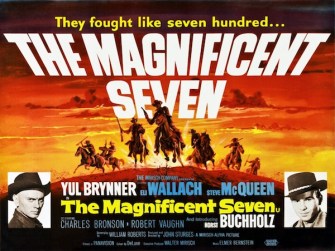
The Magnificent SevenDescribed in the booklet accompanying the Ultimate Edition DVD release as “the last great American western before Sergio Leone reinvented the genre,” The Magnificent Seven doesn’t feel as dated as that might make it sound. Famously, it’s a remake of Akira Kurosawa’s Seven Samurai — a technique Leone would pilfer for his first Western, A Fistful of Dollars, which is a do-over of Kurosawa’s Yojimbo. Leone did his without permission, resulting in a lawsuit that was settled out of court, whereas Magnificent Seven was a fully-licensed re-do. As you’d expect, it therefore sticks fairly closely to the events of Seven Samurai, albeit getting through them an hour-and-a-half quicker.
Of course, it’s relocated — not to America, but to Mexico, where a farming village is being terrorised by a gang led by Eli Wallach. A couple of villagers head to the border to buy some guns to defend themselves, but end up recruiting Yul Brynner to put together a band of gunslingers to help. With no significant pay on offer, his slim pickings are pre-fame turns from Steve McQueen, Charles Bronson, James Coburn, and Robert Vaughn, plus Brad Dexter and Horst Buchholz.

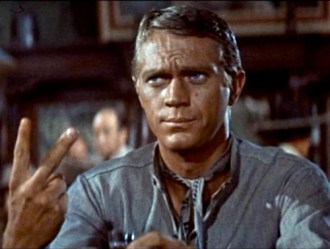
Steve McQueen respondsWith even less screen time to go round than in Kurosawa’s original, the cast only get to provide thumbnail sketches of their characters. However, bearing that in mind, only Vaughn really feels shortchanged on time, while McQueen manages to steal every scene he’s in, even when he was supposed to just be in the background — much to Brynner’s annoyance. One reason this works is because the seven represent more or less the same things thematically, in some respects functioning as one hero character with seven parts. They are all unsettled drifters, good at killing but not at settling down; they have nothing to do but win and so be damned to go find another cause, or die trying. This is taken from Kurosawa’s film too, of course, but it fits just as well in its new setting, and the main scene where the seven discuss it is a definite highpoint of the movie.

Most of the action is saved for the big climax, a good old fashioned free-for-all that (like the rest) doesn’t quite have the epic scope of Kurosawa’s movie, nor the stylised discipline and suspense that would be Leone’s enduring contribution to the genre. I’ve yet to see this year’s remake, nor read too much about it, but I understand it’s changed the plot and characters a fair bit, and I imagine this is one area it’s really applied a new emphasis. Much has changed in what we expect from action movies, which is not to criticise the ’60s film, but more to observe that what once might’ve satiated an action fan’s thirst may no longer fit the bill.

Magnificent badassesThat’s not something that bothered me, but where I did find it suffering was in comparison to Kurosawa. While it has obviously been rejigged for its new setting, it’s not just borrowed the basic concept of seven violence-skilled loners defending a needy village, but rather retained all the bones of the samurai original. As with most remakes, it falters by not doing the same thing quite as well, for one reason or another. Still, if it is a faded copy then at least it’s of one of the greatest films ever made, which leaves it a mighty fine Western in its own right.
4 out of 5

Moonrise Kingdom (2012)

2016 #95
Wes Anderson | 90 mins | TV | 1.85:1 | USA / English | 12 / PG-13

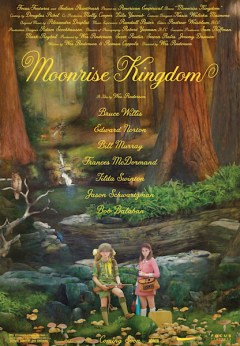
Moonrise KingdomOn the New England island of New Penzance in the summer of 1965, a troop of scouts at camp discover that unpopular member Sam Shakusky (Jared Gilman) has fled in the night. Meanwhile, on the other side of the island, troubled kid Suzy Bishop (Kara Hayward) runs away from home. Unbeknownst to Sam’s scoutmaster (Edward Norton) or Suzy’s parents (Bill Murray and Frances McDormand), the pair of unhappy 12-year-olds have secretly plotted to disappear together. As a violent storm threatens to hit the island, the scouts and police Captain Sharp (Bruce Willis) hunt for the runaways.

A story of young love, Wes Anderson style, the writer-director has described Moonrise Kingdom as “an autobiography about something that didn’t happen”. That feels like a good way to regard the film. There’s clearly an emotional truth to Sam and Suzy’s discontented lives and their desire to connect with a like-minded individual, especially at an age when romantic feelings are beginning to emerge; but there’s no way the rest of the events — which unfold with Anderson’s typical almost-real / almost-fantastical quirkiness — actually happened. Here Anderson has found a strong marriage of form and content: his idiosyncratic, storybook style suits a narrative about inventive children on an almost-fairytale adventure. It’s like it’s been told from the kids’ point of view, with both an artistic simplicity and an exaggeration of actual events.

I’d also say it maintains Anderson’s penchant for unpredictable narrative development: it reached what I’d presumed was the endpoint a long time before the finale, spinning on in crazy new ways. “You do WHAT to the dog?!”If the film has a fault it’s in this part, where the entire cast engage in a runaround as the hurricane arrives and floods the island; but (to give it the benefit of the doubt) perhaps that plays more smoothly with familiarity. And I don’t know what it is that Anderson has against dogs (nor, it seems, does anyone else, bar theories), but I find myself enamoured of his work in spite of this particular foible.
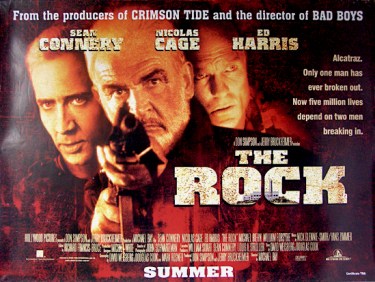
Moonrise Kingdom certainly has enough else going for it to counterbalance these doubts. With golden cinematography and a story of playful, gentle adventure, Anderson has evoked innocent childhood summers of race-memory: even if you didn’t live them yourself, you kind of feel like you did. Perhaps it is, indeed, an autobiography about something that didn’t happen for anyone who ever felt like an outsider as a kid.

4 out of 5

Moonrise Kingdom placed 18th on my list of The 20 Best Films I Saw For the First Time in 2016, which can be read in full here.

The Rock (1996)

100 Films’ 100 Favourites #75

Alcatraz.
Only one man has ever broken out.
Now five million lives depend on two men breaking in.

Country: USA
Language: English
Runtime: 136 minutes
BBFC: 15 (uncut, 1996) | 15 (cut on video, 1996) | 15 (uncut on video, 2002)
MPAA: R

Original Release: 7th June 1996
UK Release: 21st June 1996
First Seen: TV, c.2000

Stars
Nicolas Cage (Raising Arizona, National Treasure)
Sean Connery (You Only Live Twice, The Untouchables)
Ed Harris (Apollo 13, A Beautiful Mind)

Director
Michael Bay (Bad Boys, Transformers)

Screenwriters
David Weisberg (Payoff, Double Jeopardy)
Douglas S. Cook (Holy Matrimony, Criminal)
Mark Rosner (Blanco, Empire City)

Story by
David Weisberg (Holy Matrimony, Criminal)
Douglas S. Cook (Payoff, Double Jeopardy)

The Story
When a rogue US General and his team of Marines occupy Alcatraz, threatening to launch a gas attack on San Francisco unless their demands are met, a field-inexperienced chemical weapons specialist is paired with the only man to ever escape from the prison to break in and prevent the attack.

Our Heroes
Dr Stanley Goodspeed is a mild-mannered vinyl-loving FBI chemist, as unlikely an action movie leading man as… well, Nicolas Cage once was. His new partner is John Mason, a former SAS Captain who’s been imprisoned without charge by the US for decades. He’s also clearly more skilled than both an entire squad of mutinous Marines and, therefore, the entire team of Navy SEALs who initially fail to stop them. That’s the SAS for you.

Our Villain
Brigadier General Francis X. Hummel, a covert ops commander who is seeking recompense for his men who were killed in action but have gone unacknowledged due to the secretive nature of their missions. Fundamentally a good man, driven to less good methods. A particularly effective villain because he’s relatively sympathetic to the audience. Not all the men on his team are so trustworthy, however…

Memorable Quote
Stanley: “You’ve been around a lot of corpses. Is that normal?”
Mason: “What, the feet thing?”
Stanley: “Yeah, the feet thing.”
Mason: “Yeah, it happens.”
Stanley: “Well I’m having a hard time concentrating. Can you do something about it?”
Mason: “Like what, kill him again?”

Memorable Scene
Flarey goodBelieving the mission lost, the military has launched its back-up plan: an airstrike that will destroy the poison gas but also kill everyone on the island. Naturally our heroes manage to complete their mission nonetheless, and as the jets streak across San Francisco Bay, Stanley attempts to signal abort with two green flares. In slow motion, of course.


Making of
The final screenplay actually has many more authors than credited — not unusual for a Hollywood blockbuster, but the uncredited ones are of considerably higher profile. David Weinberg and Douglas Cook penned the original spec script, but Jonathan Hensleigh worked closely with Michael Bay on the final shooting script. When Writers Guild arbitration awarded the credit elsewhere, Bay wrote an open letter calling the process a “sham” and a “travesty”. Others who worked on the screenplay included Aaron Sorkin and Quentin Tarantino, with British screenwriting team Dick Clement and Ian La Frenais brought in at Connery’s behest to rework his dialogue, though they ended up rewriting everyone else’s too.

Previously on…
There’s a theory that Connery’s character is actually an older James Bond, incarcerated under a pseudonym. Obviously that isn’t actually there in the text, but is kind of a fun idea.

Awards
1 Oscar nomination (Sound)
1 MTV Movie Award (On-Screen Duo (Sean Connery & Nicolas Cage))
2 MTV Movie Award nominations (Movie, Action Sequence (for the yellow Ferrari’s chase through San Francisco))
2 Saturn nominations (Action/Adventure/Thriller Film, Music)

What the Critics Said
“the movie’s best asset is the old-fashioned, buddy-movie interplay between Cage and Connery — Cage as the frantic, white-collar lab technician who doesn’t like guns, Connery as the weathered, resourceful old pro who’s escaped from three maximum-security prisons and has a one-liner ready for every big, scary guy he kills.” — Gary Thompson, Philadelphia Daily News

Score: 66%

What the Public Say
“The screenplay […] does a sneaky thing on the way to Alcatraz. The two heroes are developed, or at least as much as one can expect for a standard action film. The action is diverted to the streets of San Francisco and a first-rate car chase. After an hour into the running time, the focus switches to the site in the movie’s title. These things are important in that they keep the film from stretching out the time spent on Alcatraz and becoming bloated on unnecessary action scenes. The audience has invested its interest in the heroes and can enjoy the shootouts now that more is on the line.” — Mark Pfeiffer, Reel Times: Reflections on Cinema

Verdict

Michael Bay has become a bit of a joke, thanks to his tendency to let his movies get distracted by explosions, special effects, and young women, while not paying enough attention to the screenplay. However, earlier in his career — and sometimes in later years, too — he’s produced enough quality work to suggest he does know what he’s doing… or maybe he’s just lucked out a couple of times. Either way, this is probably the pinnacle of his oeuvre. While it functions well in Bay’s familiar wheelhouse of adrenaline-pumping action-thriller, it’s elevated by a screenplay that offers dialogue which, at times, can be witty and/or intelligent; and, most importantly, which creates sympathetic characters on both sides of the conflict. There aren’t many actioners where you can say “the writing’s the best bit”, are there?

#76 will be… just a jump to the left…

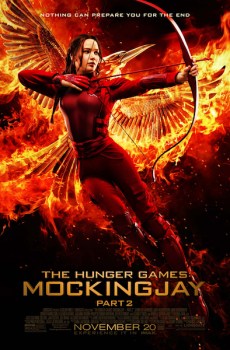
The Hunger Games: Mockingjay – Part 2 (2015)

2016 #59
Francis Lawrence | 137 mins | Blu-ray | 2.40:1 | USA & Germany / English | 12 / PG-13

The Hunger Games: Mockingjay - Part 2The artificially-extended Hunger Games trilogy-turned-tetralogy climaxes here. Presumably you’ve seen the first three and so know what you’re into by this point — either you’re invested or you’ve given up. Unless you want to know “does it end well?” before embarking on the whole thing, of course. While Mockingjay Part 2 is not the series’ finest instalment, it brings things to a decent head… eventually.
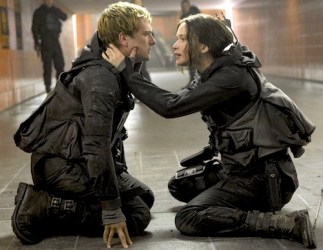
In my review of Mockingjay Part 1, a film much criticised for feeling like half of a whole — or, rather, half of a part of a whole — I argued it does actually function as a film in its own right. I mean, all of these films are part of one long narrative, so that’s par for the course, and I didn’t feel like Mockingjay Part 1 was any less a ‘standalone’ chunk of that narrative than the two films that preceded it. Specifically, I asserted that “the focus on using Katniss as no more than a propaganda figurehead… has been fully explored — and so I think this instalment will feel much more like a fully-fledged film in its own right if they just move on. I hope the final film give us new themes, new subplots, new arcs to follow”.

With that in mind, Part 2 begins with a degree of disappointment, as it tackles some propaganda-related holdovers from the last movie. Maybe I was putting too much stock in the idea of them moving on from that theme and establishing something new, though — especially as it does soon do that anyway. What develops is a “men on a mission” war movie, as Katniss and a small band of soldiers make their way through the deserted-but-boobytrapped Capitol on a mission to assassinate President Snow.

K and P, nutsWhat follows isn’t perfect — in particular, the storyline could’ve done with tightening up — but it does have a lot going for it. There’s strong characterisation: Katniss is as confused, conflicted, and incapable of engaging with her emotions as ever, while Peeta’s PTSD is well-handled, with an effective device where he repeatedly makes a statement before asking, “real or not real?” There are other nicely developed thematic points too, like expanding further on the rebels not being perfect good guys (as initiated in Part 1), which plays a central role in the denouement. The action sequences are well staged and occasionally inventive, but best of all is that the climax doesn’t lean on being the biggest fight scene yet — it’s driven by the story, and the characters and their decisions, rather than being a ginormous shoot-out.

Speaking of the film’s finale, complaints that the endings go on too long bug me, just as they bug me when people bring it up about Lord of the Rings. In both cases, you’re getting a capstone to a 9+ hour saga, not the 2- to 3-hour section of it you just watched. Rings’ endings feel completely suitable if you watch all 12 hours of the extended editions in one sitting, and I’d wager Hunger Games’ do too. Rush it and you end up with something like Harry Potter’s finale, which comes to a crushing thud of an ending as soon as the battle is won. What both Rings and Hunger Games are doing, actually, is showing that these characters are people who exist outside of the context of their war. They’re not just combatants, who evaporate into thin air once the battle’s lost or won; they’re people who have to either return to their old lives or establish new ones.* It’s a richer, more realistic, more human way to end a story than “plot’s over, action sequences are finished — we’re done here!”

Ready for the endMockingjay Part 2 is not the best instalment of the Hunger Games, a series whose second half didn’t quite live up to the developed potential of the excellent Catching Fire. That said, I think it largely works as a whole, with conflicted and complicated characters living in a world that initially seems straightforwardly dystopic but develops many moral greys. That’s particularly welcome from a Young Adult series, a sort-of-genre where some of the most famous examples are lacking in intellectual — or (considering the target audience) educational — heft. In fact, based on the scores and comments I’ve seen on some websites, Mockingjay Part 2 may yet turn out to be the most underrated of the Hunger Games films.

4 out of 5

The Hunger Games: Mockingjay – Part 2 is available on Netflix UK as of this week. Mockingjay Part 1 is also on there; the first two films are not.

* Potter does do the “back to a life” thing, but the details of it are found in ancillary texts. ^

Return of the Jedi (1983)

100 Films’ 100 Favourites #73

Return to a galaxy far, far away.

Also Known As: Star Wars: Episode VI – Return of the Jedi

Country: USA
Language: English
Runtime: 132 minutes | 135 minutes (special edition)
BBFC: U
MPAA: PG

Original Release: 25th May 1983 (USA)
UK Release: 2nd June 1983
First Seen: VHS, c.1990

Stars
Mark Hamill (The Empire Strikes Back, The Guyver)
Harrison Ford (Indiana Jones and the Last Crusade, Patriot Games)
Carrie Fisher (The Empire Strikes Back, The ‘Burbs)
Anthony Daniels (The Lord of the Rings, Star Wars: Episode I – The Phantom Menace)
Peter Mayhew (Star Wars, Comic Book: The Movie)

Director
Richard Marquand (Eye of the Needle, Jagged Edge)

Screenwriters
Lawrence Kasdan (Raiders of the Lost Ark, Silverado)
George Lucas (American Graffiti, Star Wars: Episode III – Revenge of the Sith)

Story by
George Lucas (Indiana Jones and the Temple of Doom, Radioland Murders)

The Story
As the Galactic Empire construct a new Death Star, Jedi-in-training Luke Skywalker — the Rebel Alliance’s best hope of defeating the evil Darth Vader — is busy rescuing his friend Han Solo from the clutches of crime lord Jabba the Hutt. Meanwhile, the powerful Emperor waits, intending to convert the young Jedi to the Dark Side…

Our Heroes
Luke Skywalker: Jedi Knight.
Han Solo: defrosted resistance captain.
Princess Leia: sister, love interest, bikini-wearer. Is it just me or does Leia get a pretty poor deal as the trilogy goes on?

Our Villains
Quite possibly the greatest villain ever created for the movies, Darth Vader. Here he’s on an arc of redemption, so there’s also the Emperor, who has the appearance of a wizened old man but is strong in the Force. As Vader himself puts it, “the Emperor is not as forgiving as I am.” Uh-oh!

Best Supporting Character
R2-D2 is the best supporting character in every Star Wars film, but in this one we are introduced to Jabba the Hutt (well, unless you watched Episode I or the New Hope Special Edition first). A giant, fat, slug-like crime lord who is impervious to Jedi mind tricks and apparently has a fondness for metal bikinis, he’s as physically repulsive as are his methods and mores.

Memorable Quote
“Many Bothans died to bring us this information.” — Mon Mothma

Quote Most Likely To Be Used in Everyday Conversation
“It’s a trap!” — Admiral Ackbar

Memorable Scene
The speeder bike chase — arguably the best action sequence in the entire original trilogy. Considering this is a series of films that include three or four duels with frickin’ laser swords, that’s some feat.

Memorable Music
John Williams’ music is an essential part of the Star Wars experience. While no single tune in Jedi is as iconic as the Main Theme from A New Hope or the Imperial March from Empire, the overall score is as good as ever.

Technical Wizardry
The background plates for the speeder bike chase were captured by having a Steadicam (operated by the system’s creator, Garrett Brown) walked through a forest while filming less than one frame per second. When played back at regular 24fps, this 5mph stroll came out more like a 120mph hurtle. They spent three days filming to get enough footage for the whole sequence.

Truly Special Effects
These days, the answer to the question “how did they do that?” is “CGI”. Back in the ’80s, however, they had to be a bit more creative — leaving an abundance of achievements worthy of inclusion here. For example, the shot where the Imperial fleet spring their trap on the Rebels was the most complex matte shot ever attempted, with dozens of separate model elements having to be printed in. Or there’s the puppet work. Jabba was full-size, of course, and the 2,000lb costume was operated by four puppeteers: one for his right arm and jaw, another for his left arm and tongue, both of whom moved his body; another had a cable control to move the mouth and nostrils, using his feet to work bellows to simulate breathing; and the fourth moved his tail. Plus the smoke for when Jabba uses his pipe was apparently created by someone smoking a cigar and blowing it up a tube. For the Rancor, on the other hand, Lucas wanted to use a Godzilla-style man in a suit, but the tests didn’t work very well. The final result is not stop-motion, as you might expect, but an 18-inch rod puppet. Filming it was treated as a live-action shoot, though various techniques were used to conceal the methodology, like slow-motion or running the film backwards — anything they could think of to help remove the sense of “Muppet-ness”.

Letting the Side Down
When it comes to Lucas’ Special Edition fiddling, most people focus on the “Han shot first” complaint. Personally, I find the change at the end of Jedi — where Hayden Christensen has been pasted over Sebastian Shaw as Anakin’s Force ghost — more egregious. That said, the stupid song & dance number in Jabba the Hutt’s palace runs it a close second. On the bright side, the added shots of planets around the Empire celebrating the destruction of the Death Star helps aggrandise an otherwise low-key post-climax celebration.

Making of
So, that metal bikini, eh? What a blatant bit of fan service by that dirty old George Lucas! Well, apparently it actually came about because Carrie Fisher herself complained about her all-covering costumes in the first two films meaning you couldn’t tell she was a woman. Costumer Aggie Guerard Rodgers’ design was inspired by the work of famed fantasy artist Frank Frazetta, but whoever decided it should be made as such a rigid piece wasn’t thinking ahead: the solidness of the top meant it didn’t move with Fisher’s body, and she refused to use double-sided tape, so before each take someone from wardrobe had to (to quote IMDb) “ensure that her breasts were still snug inside the costume”. Nice work if you can get it. Nonetheless, several scenes had to be reshot due to what we now call “wardrobe malfunctions”.

The Ewok Line
To quote from the How I Met Your Mother Wiki, “The Ewok Line correlates the birth year of a person and the subsequent appreciation of Ewoks […] Those born on or before May 25, 1973 have a low appreciation of the film’s creatures, while those born after this date have an affinity for them. This is because those who saw the Ewoks in Return of the Jedi, which was released theatrically on May 25, 1983, who were 10 or under still loved their teddy bears, giving them an increased appreciation for the Ewoks.” I was born in 1986 and, yes, I love Ewoks. I mean, how can you not enjoy their silly mix of teddybear cuteness, gobbledegook language, and Empire-beating military competence?

Previously on…
Return of the Jedi picks up on the cliffhanger from The Empire Strikes Back, which of course continued the story of Star Wars. Many, many other films, TV series, novels, comic books, computer games, and whatever other media you can think of, take place before and around these movies.

Next time…
Ooh boy… Well, primarily: 16 years later, George Lucas returned to the world he created for the infamous Prequel Trilogy, finally filling in those missing first three Episodes. Chronologically, the saga picks up after Jedi with last year’s Episode VII: The Force Awakens, and will continue in Episodes VIII and IX. Aside from those main tenets, there’s an unimaginable mass of stuff in what’s known as the Star Wars Expanded Universe: TV series, novels, comic books, computer games, and anything else you can imagine — and it’s only going to continue growing in the future. Most of what was generated before Disney bought Lucasfilm may have been wiped out by whoever’s in charge now, but that doesn’t mean people don’t care about what went on in it. Of particular note is Timothy Zahn’s Thrawn trilogy of novels, which kickstarted the prominence of the Expanded Universe, and which many fans used to view as effectively being Episodes VII, VIII and IX.

Awards
1 Oscar (Special Achievement in Visual Effects)
4 Oscar nominations (Score, Art Direction-Set Decoration, Sound, Sound Effects Editing)
1 BAFTA (Visual Effects)
3 BAFTA nominations (Make Up Artist, Production Design/Art Direction, Sound)
5 Saturn Awards (Science Fiction Film, Actor (Mark Hamill), Costumes, Make-Up, Special Effects)
5 Saturn nominations (Actress (Carrie Fisher), Supporting Actor (Billy Dee Williams), Director, Writing, Music)
Won the Hugo for Best Dramatic Presentation

What the Critics Said
“The characters and dialogue get lost somewhere between the bug-eyed monsters and the exploding spaceships, but it is all so much fun it probably really does not matter a whole lot. […] Because so much of Return of the Jedi concentrates on makeup and special effects, and perhaps also because much of the dialogue (and acting) is so bad, it is pretty hard to get too involved with the characters, who came across with much more human interest in The Empire Strikes Back, the second of the movies. In a sense, the extraterrestrials are a lot more human than the people.” — Harper Barnes, St. Louis Post-Dispatch

Score: 80%

What the Public Say
“[A] thing I like about the scene in Jabba’s palace is the teamwork between all of the heroes in their mission to rescue Han Solo. It reminds me of a heist in way, since you got the droids, Chewbacca, Lando, Leia and Luke all working together and serving different purposes in rescuing Han. I also love the fact that the reason they are all working together is because they all care about Han. It just goes to prove that Star Wars isn’t just a huge spectacle but a story about family and friendship, which makes it a lot more personable.” — Jacob Bartley, Apocaflix! Movies

Elsewhere on 100 Films
I’ve written about the original Star Wars trilogy twice before, both times back in 2007. Of Return of the Jedi’s modified DVD version, I said that “there seem to be only minor differences or effects improvements here — it does make you wonder what the fans were kicking up such a fuss about”, and noted that “the speederbike chase is one of the trilogy’s greatest action sequences. And Ewoks are cute.” Then, treating the film as the sixth part of the saga, I wrote that it had “the biggest failing of the films as a single series: the prequel trilogy is endlessly obsessed with the prophecy about Anakin bringing balance to the Force; it isn’t mentioned once here. A dubbed line or added shot with Yoda saying something would’ve been nice.”

Verdict

Once upon a time I decided Return of the Jedi was actually my favourite Star Wars movie. I watched them again last year and changed my mind again, and wondered quite what I’d been thinking before. Jedi does have a lot to commend it, from multiple memorable set pieces to some effective character work with most of the principals, but it’s certainly not without its flaws, which have only been exacerbated by the prequel trilogy — as the climax to a mythic six-film saga, the finale of Jedi lacks some heft. Arguably it only reaches towards classic status by association with its two predecessors, but on its own merits it’s still an exciting space adventure.

#74 will be… six weeks on the road in the winter of 1931.

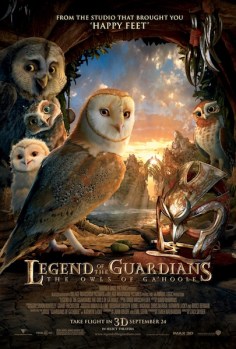
Legend of the Guardians: The Owls of Ga’Hoole (2010)

2016 #104
Zack Snyder | 93 mins | streaming (HD) | 16:9 | USA & Australia / English | PG / PG

Legend of the GuardiansLegend of the Guardians is pretty odd.

It’s an action-fantasy movie… starring owls. It’s animated, but in a dark, realistic way (think Rango with less cartoonishness and less light). It’s based on a kids’ book series… but directed by Zack Snyder, clearly reining in his R-rated impulses (violence occurs just off screen, leading to “did that happen?” confusion). The story has been relocated to Australia, the cast filled with well-known antipodean actors and their accents.

The cumulative effect is kind of surreal, retaining too much Snyderness to function properly as the kind of movie it wants to — perhaps should — be.

3 out of 5

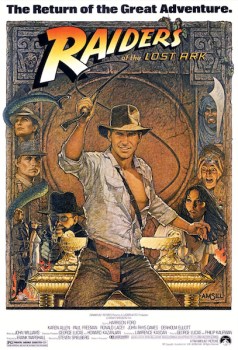
Raiders of the Lost Ark (1981)

100 Films’ 100 Favourites #72

The Return of the Great Adventure.

Also Known As: Indiana Jones and the Raiders of the Lost Ark

Country: USA
Language: English (and German, Hebrew, Spanish, Arabic & Nepali)
Runtime: 115 minutes
BBFC: A (1981) | PG (1987)
MPAA: PG

Original Release: 12th June 1981
UK Release: 30th July 1981
First Seen: VHS, c.1991

Stars
Harrison Ford (Star Wars, Witness)
Karen Allen (Animal House, Starman)
Paul Freeman (The Long Good Friday, Mighty Morphin Power Rangers: The Movie)
Ronald Lacey (Take a Girl Like You, Red Sonja)
John Rhys-Davies (The Naked Civil Servant, The Lord of the Rings)

Director
Steven Spielberg (E.T. the Extra-Terrestrial, The Adventures of Tintin: The Secret of the Unicorn)

Screenwriter
Lawrence Kasdan (The Empire Strikes Back, The Bodyguard)

Story by
George Lucas (THX 1138, Return of the Jedi)
Philip Kaufman (The Outlaw Josey Wales, The Right Stuff)

The Story
1936: adventurer Indiana Jones is hired by the US Army to retrieve the mythical Ark of the Covenant, which they believe is on the verge of being uncovered in Egypt, before the Nazis can get their grubby mitts on it.

Our Hero
Professor of archeology, expert on the occult, and obtainer of rare antiquities, Indiana Jones. Good with a whip; not good with snakes.

Our Villains
Dr. René Belloq, essentially the evil Indy: a fellow archeologist with fewer scruples, who often takes credit for Indy’s hard work and is now in bed with the Nazis. They’re most memorably represented by creepy Gestapo agent Toht, played by Ronald Lacey, who was cast because he reminded Spielberg of Peter Lorre.

Best Supporting Character
The daughter of Indy’s mentor, and his one-time love, Marion Ravenwood, who’s roped in because she happens to possess an artefact with a clue to the Ark’s location. Feisty and capable of holding her own (some of the time, anyway), it’s a shame she didn’t appear in the initial sequels — at Lucas’ insistence, apparently (he also kept her out of the spin-off novels). She eventually returns in Kingdom of the Crystal Skull, the only character from the first three films to be brought back for that adventure (besides Indy, obv.)

Memorable Quote
Sallah: “Indy, why does the floor move?”
Indiana: “Give me your torch… Snakes. Why’d it have to be snakes?”

Memorable Scene
Goodness, where do we start? Well, how about the start! Having made his way safely through a boobytrapped cave, Indy switches a bag of sand for the idol he’s come to retrieve. Unfortunately the trap is not fooled, and Indy has to run out as the place collapses around him and all the traps are triggered — including, most famously, a giant rolling boulder.

Write the Theme Tune…
It’s only one of the greatest movie main themes of all time. Composed by John Williams (of course) it’s technically called The Raiders March, and is a combination of two ideas Williams wrote for Jones’ theme that Spielberg suggested be put together to make one piece.

Technical Wizardry
The film is naturally packed with stunts, one of the most memorable being when Indy is dragged under and out behind a moving truck. To achieve it safely, more clearance was created under the truck by constructing one that was higher than normal and digging out the centre of the road. The shot was filmed at 20fps, lower than the standard 24, so that when played back the truck appeared to be moving faster. The feat was performed by stuntman Terry Leonard, but Harrison Ford was actually dragged behind the truck for some shots. When asked if he was worried, Ford replied, “No. If it really was dangerous, they would have filmed more of the movie first.”

Truly Special Effect
The climax, when the Ark is opened, was a field day for ILM. Techniques used include “animation, a woman to portray a beautiful spirit’s face, rod puppet spirits moved through water to convey a sense of floating, a matte painting of the island, and cloud tank effects to portray clouds.” Plus the villains’ heads melt (a gelatine and plaster model exposed to a heat lamp), collapse (a hollow model with the air sucked out), and explode (which nearly landed the film with an R rating).

Making of
Have you heard the one about the scheduled sword fight and everyone being ill? You have? Oh, okay then.

Next time…
The film was a massive success, so has spawned tonnes of media. Primarily, three direct sequel films, with a fifth set for 2019. Then there’s the three-season TV series The Young Indiana Jones Chronicles, 13 adult novels, 33 Young Indiana Jones novels, 11 “choose your own adventure”-style books, eight German novels (which have never been translated into English), numerous comic books, and 19 computer games, including nine with original storylines and two Lego Indiana Jones games. Also, a stunt show at Walt Disney World in Florida based on Raiders that has been running for 27 years. Whew!

Awards
5 Oscars (Editing, Art Direction-Set Decoration, Sound, Visual Effects, Special Achievement in Sound Effects Editing)
4 Oscar nominations (Picture, Director, Cinematography, Score)
1 BAFTA (Production Design/Art Direction)
6 BAFTA nominations (Film, Supporting Artist (Denholm Elliott), Cinematography, Editing, Music, Sound)
7 Saturn Awards (Fantasy Film, Actor (Harrison Ford), Actress (Karen Allen), Director, Writing, Music, Special Effects)
2 Saturn nominations (Supporting Actor (Paul Freeman), Costumes)
Won the Hugo for Best Dramatic Presentation

What the Critics Said
“Yes, it’s as entertaining as you have heard. Maybe more so. Raiders of the Lost Ark is, in fact, about as entertaining as a commercial movie can be. What is it? An adventure film that plays like an old-time 12-part serial that you see all at once, instead of Saturday-to-Saturday. It’s a modern Thief of Baghdad. It’s the kind of movie that first got you excited about movies when you were a kid. (Translation for today’s children: It’s better than anything on TV.)” — Gene Siskel, Chicago Tribune

Score: 94%

What the Public Say
“Spielberg and George Lucas had, in the same year, rewritten the rules of the science fiction genre; Lucas with Star Wars and Spielberg with Close Encounters of the Third Kind, but what could they do together? Greatness, it turns out. Their contribution: Raiders of the Lost Ark, one of the best, most exciting, most brilliantly written action movies of all time. It’s fun, it has a great sense of wonder and adventure. It’s scary, it’s bloody, it’s violent but you never come away feeling unclean. It has a hero, Indiana Jones, who is fallible but not a wimp. […] I can talk all day about Raiders of the Lost Ark, but I must simply conclude that the movie is just plain fun” — Jerry, armchaircinema

Verdict

George Lucas and Steven Spielberg teamed up for the first time here, recycled elements from movies beloved in their youth, and produced something new and exciting that is still a reference point for blockbusters 35 years later. (We’re getting homages to homages now, aren’t we? Weird.) It’s pretty much a perfect adventure movie: relentlessly paced, packed with action, lightened with humour, full of likeable heroes, who are brave and competent but also a little bit flawed, and hissable villains, with scene after scene of imaginative situations and fabulously staged derring-do. It’s perfectly distilled pulp adventure, and pure cinematic entertainment.

Many Bothans… died to bring us #73.

Return of the One-Armed Swordsman (1969)

aka Du bei dao wang

2016 #101
Chang Cheh | 101 mins | TV (HD) | 2.35:1 | Hong Kong / Mandarin

Return of the One-Armed SwordsmanIn this lesser sequel to the exceptional original, the titular warrior’s life of peace is disrupted when a gang called the Eight Kings capture all the sword masters and order their students to chop off their sword arms.

With ten varied adversaries to defeat — the Eight Kings plus their enforcers, the Black and White Knights — Return puts greater emphasis on action than did its more dramatic forebear. The fighting is solid, with the enemies’ different skills adding some occasional freshness, but the plot underneath is thin. It makes for a decent but largely unremarkable, kind of run-of-the-mill, martial arts adventure.

3 out of 5