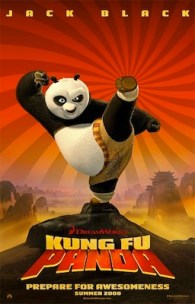
Kung Fu Panda (2008)

2010 #18
Mark Osborne & John Stevenson | 92 mins | Blu-ray | PG / PG

I nearly watched Kung Fu Panda on a plane once, but planes are rubbish places to watch films so I decided against it. (I watched Superhero Movie instead, just to make it worse.) This story has no bearing on my thoughts on the film, other than to remind me how damn long it takes me to get round to watching things sometimes (look at the date on that Superhero Movie review).

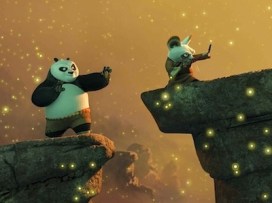
Kung Fu Panda is a much better viewing choice than Superhero Movie. That’s faint praise — most things are a better choice than Superhero Movie — so let’s try again. Kung Fu Panda is a fun film, one of the best computer-animated efforts to come from a non-Pixar studio. It’s suitably amusing with endearing characters, including the titular panda, Po, voiced by Jack Black in non-irritating mode (mostly).

Black mostly carries the film. There’s nothing wrong with the supporting cast but, with the exception of a Dustin Hoffman-voiced wise old master — the only stand-out from a roster of famous names in smaller roles — most have little to do as individuals. Black does a skillful job as the lead, only sounding exactly like himself occasionally, which 95% of the time makes Po a character distinct from the ‘Jack Black’ character he plays in everything else. The remaining 5% do make him the most easily-recognised voice cast member, but then he has so many more scenes to contend with.

Panda features some beautiful animation — not a phrase you usually associate with CG ‘toons (though Pixar are pushing into this area with the likes of Ratatouille), but Panda frequently achieves it: petals swirl in the breeze, panoramic scenery shots look gorgeous, and the character animation is subtly detailed, from rippling fur to realistically low-key eye movements.

Then there’s the action sequences, a thrilling tour de force of the powers of computer animation. There are a few paced well throughout the film, and all are fast, epic, exciting, different; they make full use of the freedom afforded by animation — in particular, 3D CG animation — in both the actual fighting and the camera angles & moves used to cover it. It’s a different kind of beauty to the swirling petals and panoramic scenery, but it’s a beauty nonetheless.

In spite of a daft title/premise and the usual drawback of it Not Being Pixar, Kung Fu Panda shows that other US studios can still make worthwhile animated films. And I’m quite glad I didn’t watch it on that plane, actually, because it deserves a nice big screen.

4 out of 5

Elektra (2005)

2010 #19
Rob Bowman | 93 mins | TV (HD) | 12 / PG-13

I think that — along with SFX magazine — I may be the only person in the world who quite liked the Daredevil movie (which reminds me that I still need to see the (supposedly better) director’s cut). This sequel/spin-off received even poorer reviews than its progenitor however, which means even I have spent the last five years (and 25 days, to be precise) not bothering to watch it. But when something’s available for free on TV, and in HD at that… well, it’d be rude to refuse. Though a little bit of me wishes I had.

So it goes without saying that most of Elektra’s reviews were right. The plot starts out as sub-Leon assassin nonsense, before turning into sub-X-Men superhero nonsense. The connection to Daredevil is actually minimal: vague flashbacks show Elektra being brought back to life, but the only signifier that this was the same death she suffered in Daredevil is the costume she wears. Said outfit has changed here, as she reverts (occasionally) to a bright red get-up that’s slightly more reminiscent of the comics. “It builds the legend,” she semi-explains. What legend? And how can said legend be built if everyone who sees her in it is promptly killed?

But beyond such surface modifications, the film adopts a different tone entirely. Daredevil took place in an almost-real version of the Marvel universe — ‘real’ if you could accept Matt Murdock’s amazing gymnastic abilities and whatnot were possible, anyway. Elektra starts off in this kind of world, but quickly there’s talk of mystical powers that bring back the dead and let you see a teeny bit into the future, shortly before some baddies explode in puffs of green smoke and some more baddies are revealed to have full-on superpowers. Where did these come from? No idea. The film offers no explanation, be it mutant gene or radioactive exposure or plain old training, instead just assuming viewers will accept that this is the real world… oh, but some people have these cool powers.

The plot is slight, early on padded with childhood flashbacks that the climax pretends to solve but really offers no adequate explanation for. Again. Characters die and we’re meant to care, only no one bothered to make them characters rather than plot-furtherers. Others do things that are almost logical, but not quite. One senses a couple more rewrites might have improved some of this, but then it might’ve been ‘improved’ by adding more explanatory dialogue and no one wants that — there are already enough clanging infodumps here, never mind the generally low standard of the rest. The less said about the performances the better. Terence Stamp plays at being blind quite well. Moving on…

The action sequences aren’t up to much either, their brevity and over reliance on slow-mo belying a too-small budget. Or maybe the budget was fine and they just blew it all on CGI, because that at least looks quite good. If they’d managed to produce something worthy of our attention here there might at least be a reason to keep watching, but the weak action is just icing on the cake of the clichéd story and bland characters. Director Rob Bowman claims he made an R-rated film which he was forced to cut to PG-13, the implication being that neutered the whole thing. Maybe that’s where all the action went, though on the evidence of what’s left I’m not sure I believe him.

That said, IMDb informs me that Elektra also has a director’s cut, though at just a three-minute increase it sounds nothing like as fundamental as Daredevil’s. And I do still want to see the Daredevil director’s cut, even if I should find that, after seven years, I no longer like the film; but I think it’s safe to say that Elektra’s definitely won’t be worth the hassle.

2 out of 5

Elektra featured on my list of The Five Worst Films I Saw in 2010, which can be read in full here.

Exiled (2006)

aka Fong juk

2009 #68
Johnnie To | 104 mins | TV* | 15 / R

ExiledThere are times when one feels under-qualified to review a film in a way that gives it its due. This happens particularly frequently when one’s blog covers first-time viewings of films that are often classics/significant/beloved/etc. My appreciation for Exiled has been increased by two other, more qualified, reviews: one from DVD Times, the other from Heroes of the East.

Having never seen a Johnnie To film and not being sure quite what to expect — either from the director or from what appeared to be a gangster/action film being shown on arts-centric BBC Four — my first reactions to Exiled were a little muddled. Having pointed you in the direction of those other reviews — which I should say I agree with, in the sense that they’ve changed my perspective on the film and leave me with a desire to see it again in light of their comments — I’ve decided that, instead of my own review that tries to conglomerate my initial thoughts with the additional perspective I’ve since gained (and which is best presented in those other articles), I’ll once again turn my notes into sentences and offer it up for your consideration.

The length of the sentences and clauses in the above paragraph suggest I’ve read too many academic essays in the last 24 hours, so I’ll just clarify: What follows are, essentially, my notes after first viewing. I’m not wholly in agreement with some of it anymore; with the exception, of course, of the score.

Exiled features several impressive action scenes. They’re Leone-like in the way there’s often an extended pause, the threat of violence hanging in the air — then a sudden burst, over quickly. But within this style there’s a lot of visual flair — unlike Leone, slow motion makes the moments last minutes, underlined by the entire climatic shoot-out taking place in the time it takes for a can of Red Bull to be kicked in the air and drop back down. As many a teenage boy watching would no doubt say, “cool!”

Elsewhere in the coolness stakes, Anthony Wong owns the sunglasses-and-trenchcoat look, appearing as a cross between a middle-aged businessman and a stylish hitman. Francis Ng looks equally cool, but in a more ‘traditional’ way. Quite what the ‘cool’ aesthetic does for the film/story/characters I’m not sure, other than increase its accessibility.

Dialogue is kept to a minimum, appropriately. Whole character arcs and motivations pass by without a word of explanation, allowing the viewer to fill in the gaps. It works just fine — there’s no need to spell them out, and they’re not so obscured as to be baffling. There’s an audacious twist around halfway through, which removes the apparent point of the plot and suggests it’s all really about something other than the obvious. [This in itself should be a sign that a lot of what follows in my comments is rubbish…]

Is the story just an excuse to link the spectacle of action? [This, I think, is where my notes really lose the plot.] Yes and no. The story is hardly revelatory, nor is there a great deal of character exploration (or any, in most cases) to suggest To is aiming for a different angle on a familiar tale. But while the action set pieces are exciting and visually engaging, they’re not so unusual as to suggest someone conceived of them and then a story to connect the dots. Is it style over substance? [No.] Again, to an extent. I suppose there’s not a great deal of substance, and there is quite a bit of style; though, again, the latter isn’t as show-off-y as style-over-substance films usually are.

Alternatively, I suppose the plot is quite shallow [it isn’t really]: even things that suggest stories and development — such as Boss Fay weighing in on Boss Keung’s territory — don’t really develop into much, instead becoming a backdrop for who’s shooting at who when.

Whatever it is, it’s entertaining. Especially if you like people shooting at each other in cool ways and gangster-based thrillersome plots.

Note the dramatic device of the photos [which, I think, in themselves disprove my ponderings that the film lacks depth]: the first shows the characters when young, at the beginning of their ‘career’; the second is at the start of this story, effectively being the midpoint/bulk of said ‘career’; and the last one is at death, the end of this ‘career’ — though it’s the same group in each, they’ve all changed between every photo, even the last two taken just days apart. It’s a relatively subtle but effective motif.

So much for my unadulterated notes. Anyway:

4 out of 5

Director Johnnie To’s 2012 film Drug War is on Film4 tonight, Thursday 15th January 2015, at 1:15am.


* BBC Four showed this in 16:9, but the OAR is 2.35:1 — and it showed, with compositions often looking cropped. Shame. ^

Deja Vu (2006)

2010 #24
Tony Scott | 121 mins | DVD | 12 / PG-13

This review contains spoilers.

Deja VuDenzel Washington and Tony Scott have now served as star and director (respectively, as if you didn’t know) on four films, with a fifth on the way. As director-star relationships go it’s hardly Scorsese-De Niro or Burton-Depp, but I’m quite a fan of Man on Fire and I remember Crimson Tide being pretty good, so one can’t complain. (This whole “regular director-star relationship” thing had higher significance in my head. Anyway…)

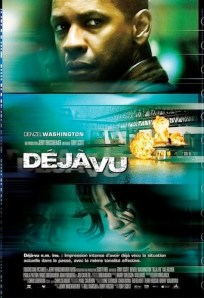
Deja Vu is about a terrorist attack that Washington’s character, an official from the Bureau of Alcohol, Tobacco, Firearms and Explosives (a natural combination only in America; known as the semi-logical AFT for short), isn’t really investigating. But he is a bit, because otherwise the story wouldn’t get started. Once it does, he gets recruited by Val Kilmer to the FBI team that are actually investigating the disaster, and they reveal a mysterious bit of kit to him… which some other review has probably already spoiled for you, so I will too: they can see precisely 4 days and 6 hours into the past.

How can they do this? Well, somewhat surprisingly, screenwriters Bill Marsilii and Terry Rossio (and, one must suspect by extension, Ted Elliott) have bothered to string together a selection of scientific concepts you may have heard of in order to explain it. Essentially, it’s an accidentally-created wormhole. It has loads of rules. I won’t explain them. The most significant is, you can’t send stuff back through it; you can’t change the past. And by “rule” I mean “thing set up to add dramatic tension when it comes time to contradict it in the third act”.

Deja Vu’s timey-wimey plot is quite fun, in some ways. Massively over-complicated — no one will blame you for switching off as the “how it’s done” technobabble washes over you; if you just accept this is all possible within the confines of the movie’s universe, there’s enough investigative thrills to sustain proceedings — but, if one does pay attention, a lot of it makes sense. Well, enough sense. It becomes a bit unravelled toward the end, unless you choose to believe this even more complicated theory, which uses a scant array of clues from the film — plus the desire/need to explain the plot logically — to come up with a cohesive theory that covers all kinds of stuff happening before the film even begins.

…so, I was meant to be explaining why it’s fun. Well, there’s a car ‘chase’ that takes place in both the past and present simultaneously, allowing Scott to indulge in some of his usual cars-flipping-for-no-reason show-off-y-ness (who doesn’t love a car flipping? Especially if it then explodes!) There’s also lots of narrative hoop-jumping, with plenty of clues littered through the first two acts that are paid off in the third. One of the film’s saving graces is that Scott, Marsilii and Rossio don’t spell most of these out for us — Washington doesn’t get up and say, “oh, that explains how the ambulance got here and then the building exploded and he must’ve cut your fingers off because you scratched him and [so on through numerous other minor semi-relevant clues]”; the audience are allowed to think all of this for themselves. Which is nice, because it’s obvious, but blockbusters too often just state the obvious these days. But I suppose when your central conceit needs explaining several times in lengthy dialogue scenes you assume the audience will be paying enough attention to catch the regular complications of standard film-narrative construction.

Deja Vu is kinda nonsense, then, albeit nonsense that some people have put a lot of thought into trying to explain. In spite of this, I quite enjoyed it — Washington is always likeable, the rest of the cast are up to the task of arranging themselves around him, and the connect-the-dots narrative is suitably engrossing. Factor in that Scott has toned down the visual trickery he pushed to eyeball-melting extremes in Man on Fire and Domino, and you find a half-decent sci-fi-ish thriller-blockbuster

It’s also the second film I watched in as many days featuring Friends’ Adam Goldberg playing the character he always plays in a story decisively set in New Orleans. Déjà vu indeed.

4 out of 5

BBC One have the UK TV premiere of Deja Vu tonight at 10:35pm.

Despite the sustained objections of my spellchecker, this film is not called Déjà Vu (on screen). I know, I’m a pedant.

Air Force One (1997)

2010 #13
Wolfgang Petersen | 115 mins | TV | 15 / R

This review contains surprisingly minor spoilers.

Air Force OneHarrison Ford stars as President Indiana Jones — sorry, Jack Ryan — no, James Marshall (that’s it) in this action-thriller from the Die Hard school of moviemaking. Yep, this is “Die Hard on a plane” — except it’s not any old plane, it’s Air Force frickin’ One; and the Bruce Willis character isn’t any old washed-up cop, it’s the frickin’ President of the U.S. frickin’ A. Hells yeah!

At least, that’s how I imagine the pitch went.

It’s a faintly ridiculous premise: Russian terrorists take control of the President’s aircraft in an attempt to get their favourite General released from prison; the President, still on board unbeknownst to them, goes all John McClane. On their ass. Es. Oh, whatever. The really fun thing is, screenwriter Andrew W. Marlowe and/or director Wolfgang Petersen seem to have set themselves the task of upping the level of ludicrousness about every ten to fifteen minutes — the things that go on during the final act have to be seen to be believed and so I won’t ruin them here. Though, suffice to say, if you think someone taking a bullet for the President is old hat, imagine what a fighter jet might do…

If you can suspend your disbelief — and that’s certainly the film’s greatest intellectual challenge — then what goes on is pretty fun. Yes, much of it’s a Die Hard re-hash, but (as someone once said) if you’re going to steal, steal from the best. The initial hostile takeover may be the best action sequence, but the story does its best to hold our interest with a variety of new problems to be solved by the war-hero President-turned-action-hero (the former mentioned in one line of dialogue to help explain the latter, naturally). More entertaining, it must be said, is watching Marlowe and Petersen battle with the problem of making a fairly brief idea stretch to a feature.

Unfortunately, this problem sometimes manifests itself too obviously. The lead villain is dispatched before the final act kicks in. Even if you think narrative theory and screenwriting how-to guides have too large an influence on modern movie structure, surely most will agree that dispensing with your antagonist a good 20 to 30 minutes before the credits roll is a bit much. Though the badly damaged plane still has to be landed, it doesn’t have quite the same anyone-could-die tension as much of the film; a tension which impresses, incidentally, as there’s a disaster movie level of suspense in the potential executions, something most action thrillers fail to achieve with a line up of victims and survivors that’s predictable from the get-go.

A cast who were later TV bound (just see how many faces you can spot from the likes of 24, CSI and, for one of the big stars, Damages) give their all, though Gary Oldman is wasted in a sub-Hans Gruber / neutered-Stansfield role. Harrison Ford again shows he can play variations on a theme — President Jim Marshall may not be as cocky as Han Solo or Indy, but he’s an older figure from the same ballpark. But that’s what’s required in the role and that’s why he was cast, so why complain? On the technical side, there’s a showcase array of pre-CGI-overload special effects, particularly in the closing minutes.

The film’s most interesting facet, 13 years on, is the opening. President Marshall’s stance on terrorism and his commitment to stopping evil foreign regimes probably sounded great rhetoric at the time; and it probably sounded even better post-9/11, when those who perpetrate terrorism and those regimes that support it were obviously at the forefront of everyone’s mind. But after Afghanistan and Iraq, it’s beginning to seem a little awkward. As we’ve seen, tyranny may be quickly overthrown, but peace is much harder to restore; and genocides are worth stopping, but only if there’s oil involved. President Marshall’s peace still sounds bold and correct in theory, but it’s difficult to imagine it going down so well today.

But, really, that’s a retrospectively unfortunate aside: the West Wing-esque fast-talking political early minutes are really just set-up for the barmy action that follows, and taken on that level it’s as disposable as it needs to be.

Overall, my favourite thing about Air Force One is an indefinable quality: it’s an ’80s/’90s action-thriller, the kind of thing Hollywood gave us before The Matrix came along and changed everything. It has a feel — the same one that’s in Die Hard (of course), or The Rock, or other films of this era — that we don’t seem to get any more. Things move on and change, naturally, but I miss this quality a bit, and it’s always nice to discover another example of it.

4 out of 5

Batman (1966)

2009 #47
Leslie H. Martinson | 100 mins | TV (HD) | U / PG

Batman (1966)Having only recently subjected myself to the full horror of Batman & Robin (though, based on the lack of review, it was before this blog began — that “recently” to me means “within the past four years” probably indicates why seeing ‘just’ 100 films in a year is a challenge), this spin-off from the ’60s Batman TV series remains the only significant cinematic outing for the Dark Knight to have escaped my scrutiny (well, unless you count Mask of the Phantasm, which we probably should). Except that’s (still) not entirely true: I once tried to watch it and gave up because it was dreadful. But the desire to be a completist — and an HD showing from Channel 4 — have led me to try again. Thank God I did, because it’s actually brilliant.

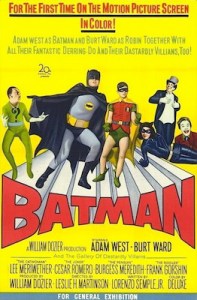
Some Bat-fans are immediately wondering what I’m on now, but I can assure you I watched it entirely sober. Batman has more than his fair share of over-serious fans and this film is anathema to them — it’s mad, camp, illogical, hilarious, vibrant, comic, comical… but all deliberately so. It perhaps goes on too long, perhaps pushes it too far at times… but then, if you’re on board with the concept and style, it’s pretty hard to criticise — it’s so ridiculous, and so aware that it’s ridiculous, that it goes beyond criticism.

In every respect, it has a real feel for what comics were like at the time — the vibrant colours, silliness, larger-than-life characters, nonsensical plots, plus there’s a nice line in risque humour, keeping the adults happy in what’s really a kid-focused film. The effect is akin to what Joel Schumacher wanted to do, only done with more rule-breaking conviction and, therefore, more success. It saves the series’ most famous element — the visual sound effects — for the climax, a submarine-set free-for-all to rival any other climactic mess/fight as Batman, Robin, the major villains and a bunch of sailors all end up floundering in the sea.

Talking of the series, was it this barmy? I don’t remember it being so ridiculous, but then I was young when I last watched it. There’s every chance kids young enough would take this completely seriously, and unquestionably enjoy it in that frame of mind, whereas those of us old enough to realise what’s going on — and, more importantly, old enough to get past the fact that it’s taken the moodiest, broodiest, angsty-teenager-friendly of superheroes and turned him into perhaps the campest ever — can enjoy it on all the levels the makers had in mind.

Batman is so many different things. These days it’s generally accepted that he’s The Dark Knight, a moody crimefighter lurking in the night to battle gangsters and unhinged supercriminals. But in the past he’s been so many other things, and this is just one facet. Those who dismiss it as missing the point of Batman, or any other such criticism of it not being Dark and Serious, are too caught up in our present perception of the character to see that it’s just another of his many sides. Is it a better film than The Dark Knight? No, of course it isn’t; and nor is it better than either of Burton’s Batman outings, nor Batman Begins… but then again, that’s personal preference.

Perhaps this demonstrates better than anything why Batman is one of the most enduringly popular superheroes, has one of the widest fanbases, has more graphic novels available than any other character ever: because, across all his forms, he has been treated in so many different ways by so many different people and for so many different people. You can’t really reconcile this as the same Batman and Joker who fought their way to the top end of the all-time box office pile 18 months ago, but nor were those the same characters who battled it out in 1989, or in thousands of pages of comics. In an age where we’re more obsessed with ‘canon’ and ‘continuity’ than ever (indeed, such concepts probably didn’t exist back when this Batman was being conceived), it’s oddly beautiful and so very freeing to imagine a character so unrestrained. It’s a glorious thing.

If you disagree — if you think Batman must always be dark, moody and deadly serious — well, fine; and you’ll be well catered for, because I doubt the film franchise is giving up that way any time soon (if ever). But as far as I’m concerned, to ignore the mad, frivolous and zany sides of the character — not to mention all the various other ones that could be described with equally unusual adjectives — is your loss.

4 out of 5

(Originally posted on 26th February 2010.)

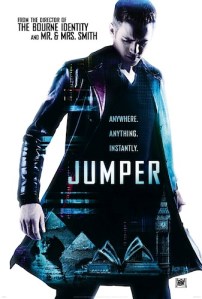
Jumper (2008)

2009 #76
Doug Liman | 88 mins | Blu-ray | 12 / PG-13

JumperIn honour of Jumper’s central conceit — that certain people can instantaneously transport themselves to any other point on the planet — I will conduct this review by jumping about through paragraphs I wrote without bothering to link them properly. (Also done in honour of my laziness.)

Jamie Bell’s character, Griffin, is much more interesting than Hayden Christensen’s lead, but he’s also amoral — from a storytelling point of view (at least, a mainstream one) he needs a controlling influence, which is why he’s reduced to supporting and he’s-a-bad-boy-honest Christensen is the film’s focus point.

Acting wise, everyone’s just fine. Christensen is perhaps not the most convincing rebellious hero ever, but that’s as much the script’s fault as his and he’s a heck of a lot better than in either Star Wars prequel. Jackson could be a decent villain in his sleep, though Roland could perhaps do with a little more menace to live up to his reputation, while Rachel Bilson is a likable (read: pretty) enough love interest. But it’s Jamie Bell who — once again — really stands out. Why he isn’t heading up his own franchise yet is a mystery. (Oh, wait.)

The beginning is at times a little dull. Considering the film barely crosses the 80 minute mark before the credits roll, early on it feels like there could be a little more excitement and drive. The second half almost makes up for it. Budget is plastered across the screen in incredible action sequences that show off the promise of the concept to good effect. Griffin jumping a double decker bus at Roland is a particular highlight. The jumping car chase, on the other hand, is visually neat and a good idea, but also entirely pointless — for one thing, it’s not actually a chase (no one’s pursuing them), and they do it for no reason other than the sheer hell of it. It’s a shame, because it would’ve been even better given a proper place in the story.

The rules of jumping and the world they exist in seem incompletely thought-out; or, at best, inadequately explained. They go on about having ‘jump points’ or something, but then seem to be able to jump about at will, so what are these points? What’s their significance? Their use? How are they established?

Liman also blows a potential twist — that David isn’t the only one who has these abilities — too early in an attempt to flesh out Jackson’s villain. It’s a good scene in its own right and does serve a purpose, but story-wise it would play better after Bell shows himself to David. As it is, his ability to mysteriously follow David around is not so mysterious, his reveal more “and?” than “oh!”

Bourne-esque final scene… except more Supremacy than Identity, so while Liman is copying, it’s unfortunately not from himself.

Jumper is promising rather than accomplished. In the same way many view X-Men as necessary character introduction and setup for X2, so Jumper appears intended as a primer for the sequels Liman and co have (had?) planned. It may reduce you to thumb-twiddling at times, but there’s enough on offer to make a follow-up desirable.

3 out of 5

(Originally posted on 8th February 2010.)

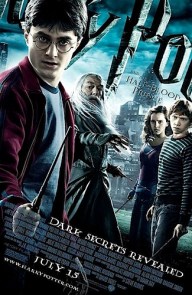
Harry Potter and the Half-Blood Prince (2009)

2009 #84
David Yates | 153 mins | Blu-ray | 12 / PG

Harry Potter and the Half-Blood PrinceBy this point I imagine everyone has a pretty clear idea what they think of Harry Potter, and this latest film certainly isn’t going to change that. That’s not to say it’s bad — in fact, it’s rather good — but Harry Potter is what it is, and nothing’s going to change that, least of all these thoroughly faithful adaptations.

This particular entry is well adapted from its huge source. I remember the novel as being somewhat turgid, a 600-page slab of flashbacks and exposition provided so one could understand the events of Deathly Hallows (for the uninitiated, that’s the final book, arriving as two films in 2010 and 2011). Thankfully, returning screenwriter Steve Kloves (who has adapted every Potter bar the previous one) and director David Yates liven it up considerably.

Adapting a 600-plus-page book is always a gargantuan task, something the Potter series has struggled with before (at times, Order of the Phoenix felt like an hour-long highlights montage), but Kloves manages to keep the thrust of the dark primary plot while peppering it with humour- and romance-based asides. (Calling it ‘romance’ may be a little generous — ‘teenage snogfest’ seems to be the preferred term by critics. And it is that, really. But ‘snog’ is such an ugly word, so I shall stick to ‘romance’.) The film could have been all Dark and Grim — and people doubtless expected, and probably would have accepted, that — but the sizable amounts of humour and romance keep the tone more appropriate to the series’ kid-centred roots, as well as adding light to the shade in a way that should please everyone. The titular Prince, however, is barely a subplot, but that’s a flaw of the novel rather than Kloves’ work.

Yates pitches the humour right, though the romance is occasionally overbearing for my taste, but the action sequences are well handled. Unfortunately, while entertaining in their own right, the majority are an aside to the main plot, which is perhaps where the two-and-a-half-hour running time comes from. The return of Quidditch is welcome to some fans, but would surely have been dropped without the fan pressure. That said, it feeds into both the Luck potion and romantic subplots, as well as providing its own doses of humour and action. Still, it’s a missed opportunity to further establish the character of Katie Bell, who has a moderately significant part to play a bit later on.

Worse is the opening bridge attack, which feels fairly pointless. Again, in itself it’s a dramatic event, expanded from a passing reference in the novel, but it bears little relation to the rest of the plot. In the novel it has a point — the wizarding world is finally impacting on the normal one — but that thread remains unexplored by the rest of the film, rendering the opening a visually exciting but empty sequence.

The still-young cast are intermittently believable. Rupert Grint still has a talent for comedy — enough to fulfill his role here, anyway — while Tom Felton is finally treated to a decent part as Draco. Formerly just an irritating bully, here he has a larger and more complex part to play, allowing Felton room to become one of the few child actors who can still live up to their part now. The adults are excellent as ever, particularly Jim Broadbent in a guest-star-level part and, naturally, Alan Rickman, who remains underused but may yet be treated to some material worthy of his talents in the final films. Additionally, Julie Walters conveys more with one expression in her brief cameo than some actresses can manage with half a dozen scenes.

With numerous plot elements left brazenly gaping ready for the next instalment (just as in the novel, of course) — including at least one thrown into the mix in the closing seconds — and Yates’ promise of an ‘urban thriller’ style for at least Part I (a genre he mastered in the outstanding State of Play), the two-part Deathly Hallows is a relatively tantalising prospect. Just eleven months to go…

4 out of 5

Avatar [3D] (2009)

2009 #89
James Cameron | 162 mins | cinema | 12A / PG-13

AvatarAvatar is The Film That Changed Cinema. The past tense can safely be used, despite the film only having been out a couple of days — it doesn’t matter if we like it, filmmakers and Hollywood executives have decided it’s the artistic and commercial way forward, and so it shall be. It barely even matters if people actually go to see it; not that it’s in much danger of flopping, coming in the wake of years of extreme hype and numerous sycophantic reviews.

What’s almost more irritating than that, however, is that it’s actually quite good. Flawed, unquestionably, and probably undeserving of the volume of advance praise heaped upon it, but far from a disaster.

It’s too long, for one thing. The end of Act Two feels like the end of the film… until it insists on going on for goodness-knows how long (my watch stopped working, I couldn’t check). It might not be so bad if it didn’t take its time getting to this point. Swathes of it feel like a dramatised nature documentary, only this time it’s about a fictional alien world. Talk of Cameron having created a fully-realised, living, breathing ecosystem are over-egged: there’s a half dozen creatures, at most, and their only relation is that they have these weird tentacle things in their hair that allow them to connect up to one another, like nature’s own biological USB. Maybe he knows who eats what and when and how and mating rituals and all that jazz, and if he does we should be thankful it’s not plastered all over the screen, but the creature creation/world realisation here isn’t anything beyond Jurassic Park.

The story itself isn’t bad. It certainly has an epic quality, which at least justifies the running time, though it’s a collation of elements from elsewhere. Of course, such things can be said of most stories these days, but with Avatar it seems even more obvious — a bit of Aliens here, a bit of The Matrix Revolutions there, a bit of An Inconvenient Truth for good measure, and so on with countless other recognisable tropes. The sin Cameron commits is that he mostly does it in quite a clichéd manner — it’s not just that you have seen it before, but it feels like you have too. Even the learning-to-fly bit, much praised in some quarters, reminded me of something else: slightly-rubbish TV miniseries Dinotopia, of all things. And don’t get started on the dialogue — “Try not to think of anything. That shouldn’t be too hard for you.” Dear God, how many times have we heard that line?

Towards the end Cameron does pull a few things out of the bag, mainly involving who gets killed and who doesn’t. Mostly, the story is a framework to allow the visual spectacle and an ecological/anti-war message. It’s as subtle as a nine-foot-tall blue alien. From crystal clear uses of familiar phrases like “shock and awe” and “hearts and minds”, to unconcealed references to our dying planet, Cameron attempts to criticise both American military tactics (invade, crush the locals…) and the destruction of the planet (…take all the natural resources for ourselves, no matter what the cost). It’s not that the message is wrong, it’s just that Al Gore did it with greater subtlety in a 90-minute lecture on that specific subject. From the outset, the military — specifically marines, of course — are quite clearly The Bad Guys Here, which is a refreshing change from the man who brought us Aliens. Quite what the American public are/will make of this outright criticism of both its military and energy consumption remains to be seen.

All this is realised through unrelenting CGI. It’s very good, but here Avatar falls victim to its own hype once again, because it’s still not 100% perfect. Perhaps it’s the closest yet seen — it certainly remains consistent throughout — but nothing had me wondering if they’d perhaps used prosthetics in addition to the CGI, as Davy Jones did at several points during Dead Man’s Chest, and I remain convinced that wonderful modelwork, as seen in the likes of Lord of the Rings, is still an unbeatable tool for creating convincing environments. Some will argue that we remain unconvinced of the alien creatures’ authenticity because we know they can’t be real, but some occasionally exhibit the plasticky shine of CGI or the jerky movement of motion capture. The Na’vi are certainly a step up from Robert Zemeckis’ dead-eyed humans in The Polar Express or Beowulf, but are they that much better than Gollum? Or even Jar Jar Binks? (In terms of the competency of the effects, I hasten to add.)

It’s hard to resist flaw-spotting with Avatar after reading so many praise-filled reviews. At the risk of sounding like one of those irritating people who sits at their keyboard declaring “ah-ha, I’ve realised something all you professional reviewers weren’t clever enough to see!”, I think this is in part due to the final act. Avatar has a stonking finale, from a huge Apocalypse Now-styled 9/11-echoing moment of destruction, to a thrilling and epic final battle (albeit interrupted by a mass of unwelcome pace-challenging plot). These sequences excel on almost every level, from visual wonder to the odd spot of emotion. And this is what your final impression of the film is, which can banish memories of the crawl through the middle, replete with those niggling flaws. I won’t be surprised if DVD/Blu-ray reviews commonly lose a star, robbed as it will be of the huge screen spectacle and reviewers forced to remember what they had to sit through to reach the big climax.

Oh yes, and Avatar’s meant to be convincing us that 3D is the future, isn’t it? And actually, 3D is quite nice. This is the first time I’ve seen a film in RealD, so I was pleased to discover how perfectly it works. No ghosting that I noticed and minimal discomfort even after such a long film, so from a viewing point of view I was happy with it. It adds depth to the image as well, rather than throwing things in your face — this too was pleasant. As I’ve noted on previous 3D reviews, this depth can bring a scene to life… not in the sense that you believe it’s genuinely happening behind that screen in front of you, but it does liven the images up.

What it doesn’t do is improve the storytelling — but then, what does? Some actors in a black box can convey a story wonderfully — look at Dogville, or any number of theatre productions — you don’t need sets, or costumes, or CGI, or even music or any number of other things we associate with the film experience. You could lump 3D in with these, or you could say it’s even less necessary — sets, costumes, and all evoke a time and place and create a realistic world in a way a black box doesn’t, but what does 3D bring to the table? It’s purely about spectacle, in the same way CGI or helicopter shots or using IMAX usually are. And that’s fine. But directors who’ve expressed an interest in shooting a ‘normal’ domestic drama in the format may be overestimating its import.

But for all the derivative plot, blunt message, cheesy dialogue, thrilling action, spectacular imagery, pretty good CGI and debatable 3D, Avatar may have a greater problem in gaining anything like widespread acceptance. It’s set 145 years in the future, on an alien world with floating mountains and other such fantastical elements, where a significant chunk of the story centres on a group of nine-foot-tall aliens (who fall in love and kiss, much to the loud derision of a group of 13-year-old boys in my screening) in a weird alien jungle with prehistoric-like alien creatures, and semi-scientific religious imagery and plot points that I haven’t even touched on… It’s pretty hard science-fiction, to put it simply. It’s not the accessible historical romance/disaster of Titanic, it’s not the real-world-styled action-based superheroics of The Dark Knight, it’s not an accessible adaptation of a widely-loved book like Lord of the Rings or Harry Potter… One could go on in this vein through all the highest-grossing movies of all time.

Instead, it’s the cover art from a pulp science-fiction/fantasy novel or short story magazine writ large with the budget required to pull it off, and it’s that for almost three hours. For every SF/F-loving sycophant there’ll be a member of the general public who thinks it’s a load of old tosh. The truth is somewhere in between, as ever, but I won’t be surprised if the style of Avatar’s business is closer to Watchmen than Titanic. (I don’t think this is too delusional, incidentally. It will perform more strongly than Watchmen, obviously, because it has that all-important PG-13 certificate in the US and a helluva lot more hype in the mass media. But I remain convinced it won’t manage to be a phenomenon to rival Titanic or The Dark Knight, or The Lord of the Rings, or Harry Potter or Pirates of the Caribbean or Star Wars.)

Avatar is a significant film. Thanks to the hype and importance attached to it, by both Cameron and the industry at large, this can never be taken away from it — even if we’ve heard its story before, seen 3D before, seen effects as good before. I don’t believe The Future Of Film is riding on it as much as some would claim — after all, so convinced are They of its status as a hit that an endless stream of 3D movies heavy on CGI have arrived ahead of it and will continue for years after. In itself, it’s quite entertaining and probably deserves to be seen on the big screen. But, as expected, it’s not the revolution that was promised.

4 out of 5

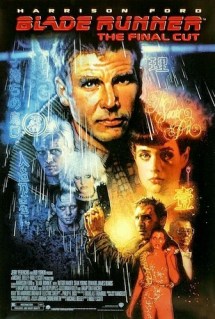
Blade Runner: The Final Cut (1982/2007)

2009 #58
Ridley Scott | 118 mins | Blu-ray | 15 / R

Blade Runner: The Final CutYou don’t need me to tell you about Blade Runner. It’s one of the most popular movies ever, if not with a mass audience then with a significantly-sized cult following and even wider-spread respect. Still, I’m going to go on about it for a bit anyway.

First off let me say that I have seen it before, in the guise of its 1992 Director’s Cut, the only cut available on Home Entertainment/TV since I’ve been old enough to know the film exists, and which is surely to blame for almost every blockbuster getting a Director’s/Extended/Unrated/Ultimate/Complete/etc Cut on DVD these days. Ironic, really, considering it’s a slight misnomer as Ridley Scott wasn’t properly involved with its creation. The Final Cut isn’t fundamentally different to that Director’s Cut, however. Yes, there are an array of editing tweaks and myriad effects fixes, but the meat-and-bones of the story and the content of the scenes — including the removal of the voiceover and the foreshortened ending — remain the same as the Director’s Cut. (If you’re interested in a blow-by-blow account of all the differences between the five cuts now available, try here.)

Normally such minor surface changes wouldn’t warrant a new number on this blog. But this is Blade Runner — or should that be Blade Runner, undeniably one of the most significant films of the last quarter-century thanks to its enduring influence. Yes, it is heavily influenced itself — by the likes of Metropolis and the whole of film noir, primarily — but its dystopian future — all constant night-and-rain, busy streets, neon advertising, canyon-like decrepit skyscrapers towering over dirty streets, high technology rubbing with the everyday detritus of humanity — has been copied everywhere. Without this there’d probably be no Ghost in the Shell, no Dark City, no Matrix, no re-imagined Battlestar Galactica, no thousand other things that have nothing close to the brains but do have the look, the style, the feel. Not to mention Red Dwarf: Back to Earth, of course (he says, as if that has greater significance than the rest!), which sits somewhere between homage and rip-off, surprisingly large chunks of it making almost no sense without at least a passing familiarity with Blade Runner. And the whole thing’s cyclical, because look how The Matrix has gone on to influence countless other lesser efforts. But that discussion is for another time.

In fact, the film can also be seen all over the real world, in what is doubtless the skill of those who predicted its future rather than a genuine influence on Real Life (though you can never be sure). It’s not all true, obviously, but for all the outdated technology (look at the computer displays!) or never-likely technology (flying cars!) there’s an example of the way the world’s headed or already gone. Video phones? Look at Skype, or video inboxes on the iPhone. LA’s skyscrapers, gaudy neon signs, huge video-screen advertisements, rundown areas of the city that are so unrestored they seem to be from decades ago (because they are), the increasingly widespread integration of Eastern culture, photo manipulation available in the home to anyone… it, and more, is all already here, or just around the corner.

But being Surprisingly Accurate does not a popular film make (well, not necessarily), and so of course Blade Runner has a lot more to offer than “ooh, I can do that too!” Putting the future setting aside for a moment, it’s plain to see that the film is as shaped by film noir as by other sci-fi, if not more so. The dark cinematography is perhaps the most obvious area of influence: shafts of light breaking up shadows; imposing cityscapes; constant rain, constant night (with any daytime scenes stuck indoors, often with blinds drawn and/or the light made hazy by smoke). There’s the plot too: it’s packed to bursting with sci-fi concepts underpinned by metaphysical discussions (who is God? what does it mean to be human?), but these are driven by a pure noir narrative, complete with beaten-down reluctant detective (who even loses the final fight), a femme fatale, a questionable moral perspective and a storyline that is predicated on an investigation/manhunt.

That this tale unfurls at a relatively slow pace is surely not to everyone’s taste, but it suits the film’s somewhat intellectual bent. The pacing renders it majestic, stately, both thoughtful and thought-provoking. Even the action sequences tend toward this. This overall languidness frequently allows moments of beauty to leap out, from the visuals, the ideas, the dialogue — Batty’s dying words, for example, are beguiling, elegant and meaningful, mixing the fantastical with an identifiable reality to memorable effect.

The image that most stands out is, appropriately, eyes: the V.K. test, the occasional orange glint in Replicants’ pupils, Batty squeezing out Tyrell’s eyes, the latter’s huge glasses, Pris’ spray-painted eyeliner, Gaff’s odd-looking eyes, and so on. It succinctly reflects the themes of what things seem to be and what they actually are — “seeing is believing”, if you will, although in Blade Runner’s world that clearly isn’t true. The famous photo manipulation scene also feeds into this. One of the great things about the eye motif is that you can’t exactly miss it — the very first thing seen is an extreme close-up of an eye — but it’s obvious not in a batter-you-round-the-head-so-even-the-most-simple-simpleton-will-notice way, but the if-you’re-an-intelligent-viewer-you-shouldn’t-fail-to-spot-it-on-a-repeat-viewing kind of way.

Elsewhere in the filmmaking pantheon, the specials effects are astounding. They look brilliant today, easily besting most of the still-obvious CGI we’re bombarded with. Yes, they’re now aided by some digital clean-up, wire removal and that kind of thing, but the basic models and composites remain untouched and are beautiful. Similarly, Vangelis’ score should by all rights sound dated and discordant, filled as it is with early-80s synths. Fortunately, it has a kind of unusual beauty that matches the visuals it drifts over, complementing as it should rather than providing an uncomfortable reminder of exactly which decade produced the film.

Blade Runner is by any count an incredible piece of work (something the extensive making-of documentary on The Final Cut DVD/BD only emphasises, incidentally). Not everyone will (or does) like it, but I should imagine even they find it hard not to admire (an altogether different thing to “like”). Either way, I think it’s safe to say it can lay claim to a place on the relatively select list of films everyone really must see.

5 out of 5

BBC Two are showing Blade Runner: The Final Cut tonight at 9pm.
Blade Runner: The Final Cut is on BBC Four tonight, 26th September 2013, at 10pm.

I covered the 1992 Director’s Cut as part of my 100 Favourites series, here.