
Quentin Tarantino | 165 mins | Blu-ray | 2.40:1 | USA / English | 18 / R
 Quentin Tarantino made his name in the ’90s with a series of dialogue-heavy gangster thrillers that provoked a storm of imitators. Since the turn of the millennium, however, he’s contented himself with a series of extravagant hyper-cinephilic genre homage/parodies. After tackling Japanese action movies in Kill Bill Vol.1, revenge thrillers in Kill Bill Vol.2, B-movie grindhouse fillers in Grindhouse/Death Proof, and World War 2 men-on-a-mission movies in Inglourious Basterds, here he sets his sights on a genre whose DNA is threaded through all his movies: the Spaghetti Western.
It’s 1858, two years before the American Civil War (which started in 1861 — a schoolboy error, a reference, or a Basterds-style flourish? Who knows), and a bounty hunter by the name of Dr. King Schultz (an Oscar-winning Christoph Waltz) acquires a slave by the name of Django (Jamie Foxx) to help him track down three wanted brothers. In return, he will grant Django his freedom.
But that’s not the end of it. This being post-millennial Tarantino, whose every movie is so long it has the potential to be split in two, Kill Bill style, that plot is just Act One. As Schultz and Django bond, the German learns about Django’s wife, Broomhilda (Kerry Washington), who was sold to the infamous Candyland plantation. Being a good German and feeling he must help this real-life Siegfried, Schultz and Django concoct a plan to rescue her…
 It’s fair to say Django Unchained sprawls. But, unlike the chapterised character-flitting antics of Kill Bill and Inglourious Basterds, it has a straight throughline it follows from beginning to end, with only a few asides. In terms of length and scope, it’s perhaps not too much of a reach to evoke The Good, the Bad and the Ugly rather than any other self-indulgent lengthy non-epics. Some have tired of the film’s length (compared to the masses who have elevated it to 46th on IMDb’s all-time top 250, not many), but the prospect of an extended cut (mooted by QT as something he might offer later) excites me. Of course, the Kill Bill single-film edit still hasn’t made it further than Cannes or the New Beverly, so I won’t be holding my breath.
I’m going to offer pretty unrelenting praise for Django Unchained, but it’s hard to know where to begin. With the cinematography and its extraordinary range? From icy cold mountains to orangey warm Southern interiors, from homaging crash zooms and blood-splattered blossom to new perspectives on action, the work of DP Robert Richardson consistently shines. And I don’t believe there was any teal-and-orange or other such clichéd digital manipulation either. Beautiful.
 Or how about those action sequences? Months of work training real horses to do things never before seen pays off (and Tarantino proudly displays the “no animals were harmed” notice right at the top of the credits), while the blood-drenched Candyland shoot-out is arguably one of the best pure action scenes in years. Those are amongst myriad other sequences, from the small and transitory to the epic and vital.
Or there’s always QT’s renowned music choices? He’s as irreverent but perfect as ever here, encompassing the cheesy title song from the 1966 original, some classic rock, a new song by Ennio Morricone and Elisa, and even modern hip-hop. Some of it jars at first (particularly the latter), but it all works to the intended effect. The only QT soundtracks I’ve bothered with actually buying previously were the Kill Bills, but this may join them.
Or the performances? Tarantino has really gifted his actors with some special roles here. Foxx arguably gets the short straw, though as heroes go there’s actually a lot for him to play in Django. He keeps it subtle amidst an array of large performances, and that’s no bad thing. As his mentor, Waltz earnt a second Oscar for a Tarantino role. Some have accused this of being the same performance as he gave in Basterds, but that’s not quite fair. They’re both Tarantino characters speaking Tarantino dialogue played by the same actor — they’re always going to feel similar. But there are subtle differences, which make Basterds’ Col. Landa a likeable villain and Django’s Schultz a likeable good guy.
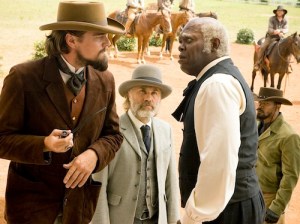 Still, best served — and, perhaps, more deserving of the Supporting Actor nod — are villainous duo Leonardo DiCaprio and Samuel L. Jackson. For starters, has Leo ever played a villain before? He’s on stonking form here as Southern gent Monsieur Candie (who can’t speak French), a sinisterly welcoming fellow with a dark side that’s on constant display. He’s all smiles and all lingering threat and menace. Indeed, scenes are often at their most tense when he’s at his nicest. I think there’s an argument for him to go down as one of the great screen villains — he even has the obligatory cool dispatch. “I couldn’t resist” indeed.
And as for Jackson… He’s a QT regular, and so you’d expect him to be a mofo so cool he was rivalling the titular hero for biggest badass status. But no: he’s a rickety old house slave, with a ring of grey hair and always hunched over his walking stick. He commands respect, but is subservient to Candie… though, who’s really in control? There are some nice scenes and moments questioning that. And he’s completely menacing, but in a more subtle and insidious way than Jackson’s usual Jules-from-Pulp-Fiction-moulded villains.
Aside from the leads, there’s a host of recognisable faces in supporting roles — or even dialogue-free one-shot cameos: someone you might recognise from TV plays The Daughter of the Son of a Gunfighter, seen staring out of a window as Django and Schultz pass by. 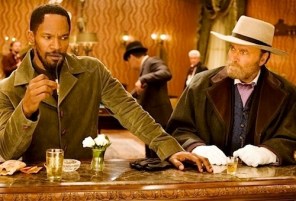 It does make you wonder if some of these people had bigger roles that got cut… or maybe there are just other reasons. However, one remaining cameo features perhaps the most satisfying use of “I know” since The Empire Strikes Back. And QT himself is in it, briefly, doing an Australian accent (I think?) and affording himself a striking exit.
One thing that provoked some comment and controversy was the violence, and the juxtaposition of humour and violence. Personally, I think Tarantino nails it. There’s horrific stuff done to slaves, most of it by Candie and his acolytes — but, what, you thought the slave trade was cushtie? There’s no lingering on gore like you’d find in a Saw film — there are bits where he could have, if he’d wanted, but that’s not the point. Are the scenes still shocking? Yes, but that is the point. These are Very Bad Men who do Very Bad Things, which I can well imagine are historically accurate, and Tarantino exposes that and, through it, well earns the explosion of vengeance that forms the film’s multiple climaxes.
There are flashes of humour throughout, making for welcome contrast, but the one that provoked the most discussion is an extended sequence with a gaggle of proto-Klan members. I’m sure you read about it: they can’t see out of their hoods. Some decried it for being silliness involving a gang who were viciously cruel and shouldn’t be the subject of humour. 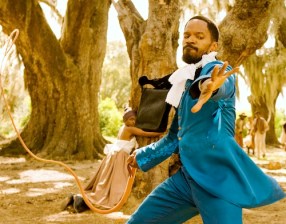 Tosh and piffle, I say. One of the best ways to skewer many an evil institution is to make them a laughing-stock, to take the piss out of them, and that’s exactly what Tarantino is doing. These aren’t likeable, funny people who are Klan members; they’re incompetent fools because they’re Klan members. The resulting scene is hilarious and deservedly one of the movie’s most memorable moments.
There’s a lot to say about Django Unchained, and a lot to praise about it — it is two-and-three-quarter hours long after all. But points of discussion are often the mark of a good film, and praise obviously is. As a marriage of homage and B-movie to historical comment and some satisfying justice, albeit only cinematic, Tarantino’s Spaghetti Western homage is an entertaining, occasionally thought-provoking, rewarding, and thoroughly cinematic experience.

Django Unchained is available in the UK on DVD, Blu-ray, and via various on-demand services, from today.
It placed 2nd on my list of The Ten Best Films I Saw For the First Time in 2013, which can be read in full here.
 After
After 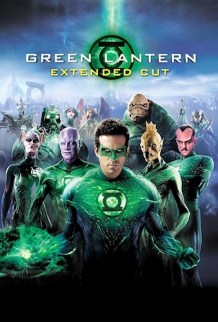 “Hype” has to be one of the biggest factors in how we view films these days. Technically it’s defined as “extravagant or intensive publicity”, I suppose thereby meaning something to “positive expectation”, but I think it also works the other way: if you’ve heard nothing but awful things about a film, its weakness has been ‘hyped’. It’s this latter point that applies to Green Lantern, which has an almost insurmountable degree of negative expectation attached. To summarise the headline points, it’s got a woeful rating of
 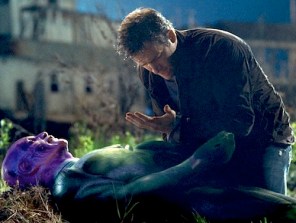 But I digress. Cocky jocky Hal is whisked off to the other side of the galaxy to learn how to be a Hero and use his ‘magic’ ring, which can conjure stuff up, then returns to Earth to save it from some menace(s). As superhero origin stories go, at least it’s got a couple of differences.
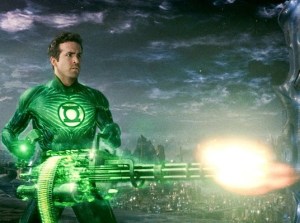 There are positives. The action sequences are good, which is a definite plus in this kind of film. The inventiveness with what the ring can do is fun. There’s a lack of relation to the sketchily-drawn characters that stands in the way of us truly engaging with them, and there’s a certain brevity and lack of scale that undersells the alleged threat to Earth (it’s a giant evil space-cloud that can barely cover a few city blocks, let alone the entire planet) — but, that aside, they’re entertaining enough. That said, much as the film pulls its punches with characterisation and threat, so it does with awe and spectacle. The Lanterns’ planet Oa doesn’t have the same impact as Asgard in
  Indeed, I’d say the Extended Cut doesn’t go far enough, with some of the disc’s deleted scenes meriting inclusion. However, the main one occurs on Oa, meaning an effects-heavy scene that hasn’t had CG work done or all the voices recorded, so couldn’t just be dropped back into the finished film as-is. I imagine that’s why it wasn’t. That said, even if they’d done such work, those scenes are minor points, not game-changers.
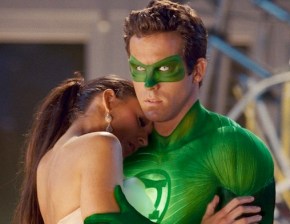 Still, I think there’s a better film lurking in Green Lantern, and it’s a shame it didn’t get the screenwriter(s) or director(s) required to bring it out. It’s even more of a shame that worse films than this have received a kinder critical consensus or huge box office. That leaves some suit feeling vindicated and churning out the same rubbish again, whereas with a bit more effort Green Lantern 2 could’ve been worthwhile.
 Picking up more or less where
  their presence and storyline drag the film down.
 Kurt Russell gets embroiled in a fever dream of mystical Chinese tomfoolery in San Francisco’s Chinatown in this cult ’80s adventure from writer/director John Carpenter.
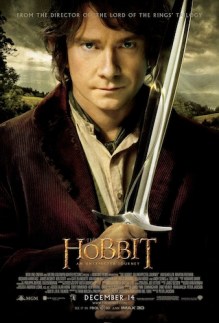 So here we are: nine years after his last tour of duty in Middle-earth, and after a Guillermo del Toro-shaped attempt at not having to serve again, Peter Jackson returns to the world of hobbits, dwarves, elves, orcs, and the rest, to tell the tale some have been clamouring for him to make since
 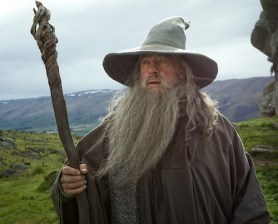 And, I have to say, as someone who hasn’t read the novel since primary school, I couldn’t spot the joins. I could take some guesses, but not many, and considering how long the film is I’m sure there must be quite a lot added.
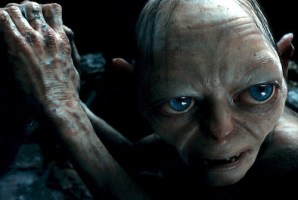 but I could have, and knowing you can do something makes all the difference. There’s also the little timer on the Blu-ray player, which means I can know that it took forty minutes to get out of Bag End rather than just thinking it feels like it. Does that somehow make it more palatable? Would I have been as bothered as others by the film’s length and pacing had I seen it in a cinema initially? It’s tough — nay, impossible — to say, because while there are those other subliminal factors, I also felt like I flat out enjoyed the film for itself, not just for my potential ability to escape it. But it is long and it is episodic, so maybe the association of watching individualistic episodes of TV back to back feeds into the acceptance of that? It’s a circular argument, so we’ll leave it there.
 Howard Shore returns to deliver another fantastic score. After he composed the iconic Fellowship theme for, um, Fellowship, I thought he could never muster anything else as monumental. And, in fairness, that theme is still the defining aspect of the series’ score (its absence here is at times felt, by me at least); but he produced another excellent motif for
 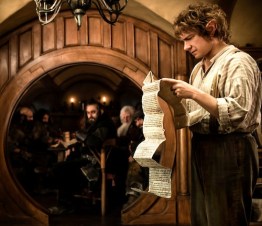 Without the breadth and world-changing story of The Lord of the Rings, The Hobbit was always going to be a somewhat smaller experience. By emphasising the backstory of the dwarves’ stolen homeland and the hints of war-to-come that will ultimately lead in to Rings’ story, Jackson has made it considerably more epic — for good or ill. For me, the whole experience clicked. I don’t think it’s as good as Lord of the Rings, but it is the next best thing.
 Most films have a reputation of one kind or another, even if it’s only in certain circles and you have to go searching to find it. I suppose Conan’s is best summed up by
  The guy doing the voiceover narration is godawful though, and there’s far too much of him. It’s never made clear why he’s the one telling the story either, unless I missed it.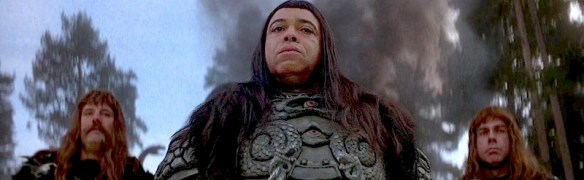
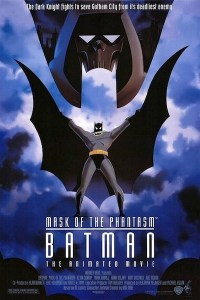 Batman movies have a habit of provoking strong reactions.
 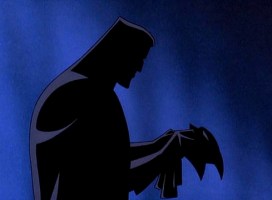 One of the main reasons the film succeeds is that look back at Bruce Wayne’s early days as a crime fighter. Batman’s origin is oft told — too oft, truth be told — but they thankfully don’t rehash it here. Instead, early in Batman’s career Bruce falls in love and finds happiness, causing him to question whether to continue down the path he’s already dedicated his life to. The scene where he talks to his parents’ grave, expressing his guilt at potentially finding happiness after so much mourning, is one of the most powerful, emotional moments in all of Batman’s many iterations.
 But instead of falling in some nasty halfway-house, Phantasm turns up trumps on all fronts.
 From the director of Oscar Wilde adaptation
  Two of them are very nearly inspired: a
  Apparently Ben Miller, English’s sidekick from the original adverts and first movie, filmed a cameo that was ultimately cut. A lot of people seem moderately upset about that on forums. I like Miller, but to be honest I’d forgotten he was in the first one.
 Seen by some as a
  100Films.co.uk