
Michel Gondry | 119 mins | Blu-ray | 2.40:1 | USA / English | 12 / PG-13
 Based on a radio serial that spawned film serials, a famous TV series, and, eventually, comic books, The Green Hornet is a ‘superhero’ saga with a difference. For one thing, technically he’s just a vigilante — no superpowers here — and for another, as noted, it didn’t originate as a comic book. But that’s the milieu the character slots into these days, and so this attempted revival plays in that ballpark.
In this version, rich-kid playboy Britt Reid (Seth Rogen) used to want to be a hero, until his domineering newspaper-magnate father (Tom Wilkinson) crushed his spirit. After daddy dearest drops dead, Britt and chaffeur/coffeemaker Kato (Jay Chou) accidentally save a couple from a mugging and decide to fight crime, using Britt’s newly-inherited newspaper, in particular the research skills of secretary Lenore (Cameron Diaz), to help their cause. But LA crime kingpin Chudnofsky (Christoph Waltz) is not impressed with this new threat…
Produced, co-written by and starring Rogen, and directed by quirky Frenchman Michel Gondry, anyone familiar with their CVs will find “a superhero movie made by Seth Rogen and Michel Gondry” to be a pretty adequate summation of The Green Hornet. To clarify, it’s pretty comical, sometimes in that man-child frat-boy way, sometimes with a leftfield quirkiness. The combination makes it unique in the world of superhero movies, but hasn’t gone down well with critics or many viewers.
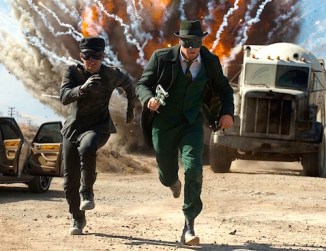 Well, screw them — The Green Hornet is brilliant. If you’re after the po-faced angsty worthiness of Christopher Nolan’s Bat-trilogy or the Spider-Man reboot, or even the X-Men films, then you need not apply. This has more in common, tonally, with Kick-Ass, or even Iron Man with the comedy bits dialled up further. That said, those two films were quite popular, so why isn’t this one?
For one, apparently Seth Rogen is doing his usual Seth Rogen schtick. That may be the case, but I’ve never actually seen a Rogen film, so I’m not over-familiar with his MO. His style isn’t top of my list of “how to do good comedy”, but it’s diluted enough here that it largely didn’t bother me. A couple of sections indulge it a little too much, but c’est la vie — it doesn’t ruin the whole film.
Another may be the film’s irreverence. That’s not to say something like Kick-Ass doesn’t have its share of genre disrespect, but while it allows its heroes to be comical it takes its villain seriously (so too Iron Man, actually). In The Green Hornet, everyone’s somewhere on the comic spectrum: Waltz’s villain is obsessed with being perceived as scary, in the end re-christening himself “Bloodnofsky”, dressing in red leather and coming up with an elaborate catchphrase to reel off before killing people. Waltz is, depending on your point of view, subtly ridiculous or phoning it in. It’s not as memorable a creation as his Inglourious Basterds Nazi, but you can rely on Waltz for a quality comic adversary.
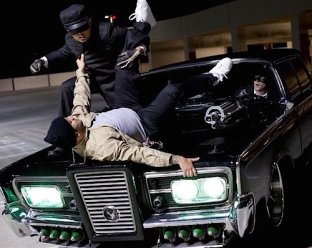 Then there’s Gondry’s direction, which is often as idiosyncratic as you’d expect. He’s at his peak during the action sequences, which explode in an array of effects and slow-motion to create multiple memorably unique fights and chases. Highlights are the first time Kato unveils his martial arts prowess, and the crazy car-driven climax. Chou and the tricked-out car, Black Beauty, are undoubtedly the stars of these bits — indeed, the film has an overall good line in making Kato the brains behind the operation. I imagine this is subverting the depiction of the Asian sidekick from previous versions, considering when they were made, but as I’ve never seen any I can’t comment fairly.
I imagine those who are enamoured of previous versions were also less keen on this one. There’s probably too much Rogen-esque comedy and Gondry-esque oddness for anyone used to a classic character from a previous era. I can’t blame them for being less-than-pleased by someone trampling all over something they love. For those of us without a previous attachment to the characters, however — and, crucially, with an open enough mind to accept a ‘superhero’ movie that brings a different perspective and style to an arguably-overworked sub-genre — this incarnation of The Green Hornet is a fine piece of entertainment. In fact, I’m tempted to say it’s one of the best superhero movies of the current generation.

The UK TV premiere of The Green Hornet is on Channel 5 tonight at 9pm.
It merited an honourable mention on my list of The Best Films I Saw For the First Time in 2014, which can be read in full here.
 Jennifer Lawrence (who, depending on your mileage, is either “the most charming young movie star in, like, forever” or “actually kind of a little bit irritating”) returns as the totally-plausibly-named Katniss Everdeen in this super-successful follow-up to the super-successful
 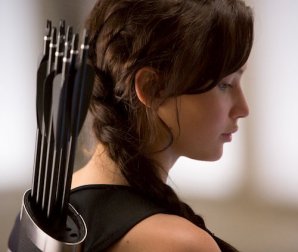 Tonally, however, it’s more similar to
 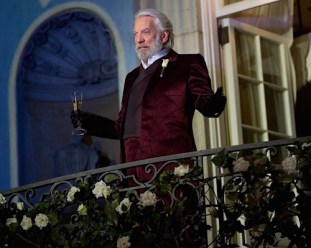 Of course, to an extent the tone of this ending comes from it being an adaptation: the filmmakers haven’t looked at the history of movie cliffhangers and chosen which to emulate, but instead brought someone else’s ending to the screen. Adapting doesn’t mean you have to take the original work faithfully, mind — you could go the
 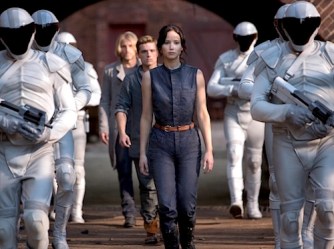 which seems richer, more detailed, despite no genuine increase in resolution. I guess it’s true what they say: if you start with a higher quality source, it filters all the way down. The “bigger screen” effect probably wouldn’t work for a film entirely shot on IMAX — it’d just fill your TV from the start — but, after an hour-or-so of black bars, it really feels like the screen has grown.
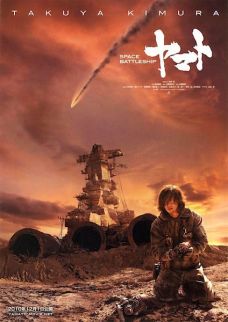 A live-action adaptation of the popular, influential and long-lasting anime franchise, known in the US as Star Blazers (here’s
  But this isn’t a mega-budget production (
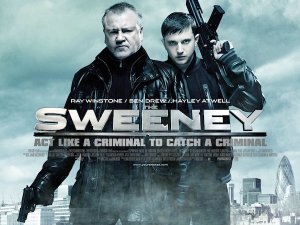 Despite a mediocre pedigree and TV-scale budget, this re-imagining of the iconic ’70s cop show is a solid thriller.
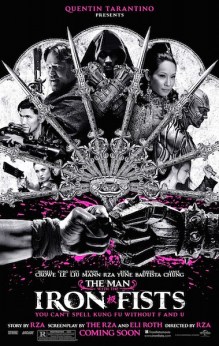 Starring, co-written and directed by rapper and Asian culture fan “the RZA” (he previously contributed to transnational anime
 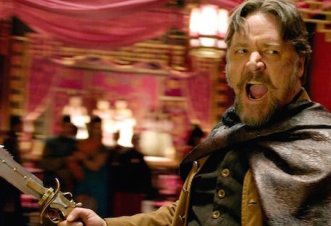 It’s a bit of a mess, then, yet somehow entertaining regardless. Despite a generally unfavourable reception, a (sadly Crowe-less)
 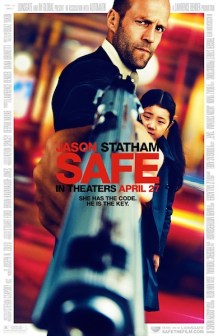 Jason Statham plays a cop turned cage-fighter turned vagrant, who rescues a young girl and finds himself amidst a three-way brawl between the Triad, the Russians, and corrupt cops. They want the child for a number she’s memorised, but what is its significance?
 Conceived by movie star Will Smith primarily as a vehicle for his wannabe-movie-star son, and helmed by auteur-apparently-turned-director-for-hire M. Night Shyamalan, After Earth is a far-future sci-fi actioner about a militaristic father and son who crash land on a long-abandoned Earth, which has evolved into a hostile environment from which they must try to escape, while also being hunted by an alien super-predator.
 I want to spot the neat callbacks and gradual character development for myself, not have the screenplay or direction screaming “look at the subtle thing we did! Wasn’t it subtle!”; I’d also quite like the film to set up some of its developments better, rather than charge ahead with “now he needs to fly — by-the-way, did we mention he can fly? No? Well, now he is.”
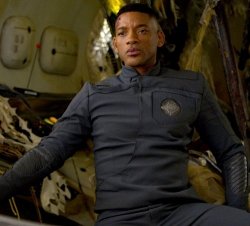 Even with these faults, however, I mostly quite enjoyed After Earth. For all the complaints levelled at it, primarily centred around it being a vanity project for the Smiths, there’s actually good stuff buried here — given more intelligent development and a different cast, perhaps it could even have been a genre classic. It certainly isn’t that, but it’s not as bad as some say. And it’s definitely M. Night Shyamalan’s best film for years. Sadly, that’s not saying much, is it?
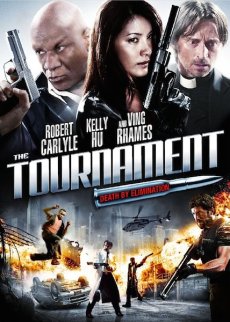 The Tournament is the kind of film where its relative quality is entirely dependent on what you want from a movie. Is it original? Not terribly. Is it clever? Not really. Is it action-packed and kinda fun? Yessir. If you just want to shift your brain into neutral and watch people punch, kick, shoot, stab, chase, and generally fight each other in a slickly-produced fashion, with a solid enough plot that (depending how brain-neutral you’ve gone) might offer an occasional twist… well, you’ve come to the right place.
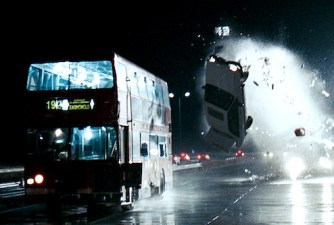 The action is the draw, of course, and fortunately the film delivers in spades. The best stuff involves Sebastien Foucan, who you may remember as Bond’s bomb-maker target in
 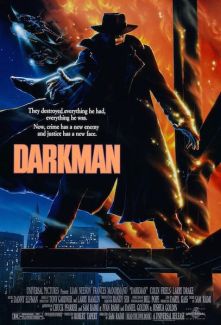 Before he made the insanely successful
  I don’t know if it says more about me or the two Harrison Ford-starring Jack Ryan movies that I wrote 250 words of this review before I realised I was actually talking about
 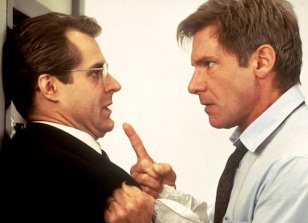 It’ll come as no surprise that Ryan ends up exposing the nasty conspiracy — which goes as high as the President! But what does a good American patriot do when he finds out the practically-holy President has committed such a sin?! The novel ends with Ryan confronting him… and then deciding not to expose his secret war. Presumably this is thanks to Clancy’s obviously-Conservative political views. “Liberal” Hollywood, on the other hand, has given us a more just — and more satisfying — conclusion. Thank goodness for that.
 100Films.co.uk