
George Miller & George Ogilvie | 107 mins | download (HD) | 2.35:1 | Australia / English | 15 / PG-13
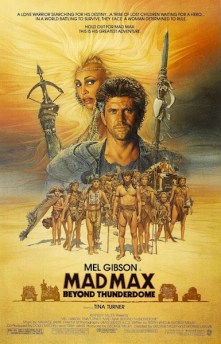 The third (and, for 30 years, final) Mad Max movie sees the titular post-apocalyptic drifter (Mel Gibson) rock up at last-outpost-of-humanity Bartertown in search of his pilfered car and camels. Max finds himself dragged before the town’s ruler, Aunty (Tina Turner), who has a job for him: kill the mutinous overseer of the city’s power supply, Master Blaster. As payment, she’ll arrange for the return of his belongings. The only conditions are he can’t reveal Aunty has employed him, and he has to do it in a fair fight in the town’s arena of combative justice — the Thunderdome. And then the story goes beyond that, funnily enough.
Writer/director/creator George Miller hadn’t intended to make a third Mad Max film, but when he conceived a story about a man stumbling across a gang of kids in a post-apocalyptic world, someone suggested that man should be Max, and Beyond Thunderdome was born. That might explain why the end result feels a bit like two different movies stuck together: the very Mad Max-y first part in Bartertown awkwardly transitions into the society-of-kids segment, before the two clash for a Mad Max 2-emulating chase-through-the-desert climax. It might not make for the smoothest throughline — the movie almost stops and starts again — but at least it exposes us to a different facet of the series’ post-apocalyptic Australia.
Not everyone agrees; indeed, I hadn’t realised quite how poorly regarded Beyond Thunderdome was by many fans (though not critics, who generally liked it). Reading up, there are some genuine criticisms — like that stop-start plot, or the kids’ cod-babyspeak dialogue — but an awful lot of it boils down to childish “it’s a PG-13 and I wanted R-rated violence” reactions. Which is kinda ironic. I have to say, 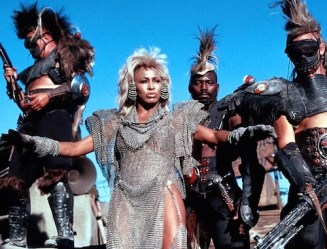 I didn’t even notice the change in level until I read those comments afterwards. The film still reaches a 15 certificate in the UK, so clearly it isn’t toned down that much. And the lack of visible blood doesn’t mean it lacks creativity: Roger Ebert described the Thunderdome duel as “the first really original movie idea about how to stage a fight since we got the first karate movies”, and he may well be right.
The changes do stretch beyond the level of violence, with a slightly slicker feel to the filmmaking. This is also viewed negatively, many attributing it to a reported influx of US funding that also led to the PG-13 and the casting of Tina Turner. Personally, I saw it more as part of Miller’s development as a filmmaker: Mad Max 2 is appreciably ‘slicker’ than Mad Max, after all. Some call Beyond Thunderdome “Indiana-Jones-ified”, though. I can see the similarities, but I didn’t find it so different from the previous Max film that it really bothered me.
And from a very personal, very 2015 point of view, Mad Max 2 has already earmarked itself a place on my year-end top ten, and if Fury Road lives up to the hype then it will surely prebook a slot too, so it’s probably for the best that Beyond Thunderdome isn’t quite up to that standard or my top ten would look a little bit weighted.
Nonetheless, I very much enjoyed Beyond Thunderdome. The Bartertown stuff works incredibly well, and a community of children who survived the apocalypse without an adult influence is also an interesting concept. It feels a bit like two Mad Max short stories 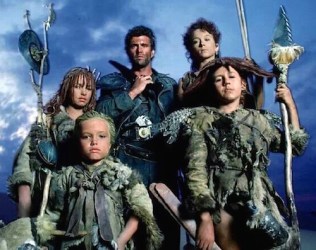 that have been forced to coexist because neither was enough to sustain an entire feature, but at least neither part feels unduly padded, meaning the narrative keeps on rolling. It doesn’t hit the same heights as the exceptional Mad Max 2 — especially with a climax that invites a direct comparison, and is good but not as good — but, as a post-apocalyptic action-adventure movie in its own right, it’s a good film.

The fourth Mad Max movie, Fury Road, is released in the UK on digital platforms today, and on DVD and Blu-ray on October 5th.
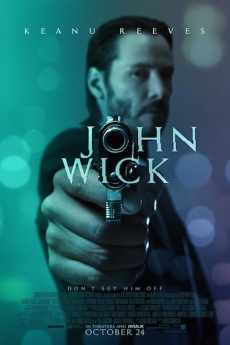 Keanu Reeves is John Wick, a nice guy whose wife sadly died. Now he lives alone with a puppy. Then he accidentally annoys a thug (
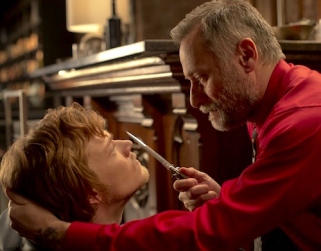 A decade and a half on from
 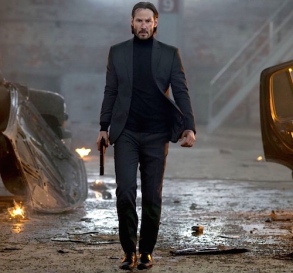 Combine that with the exciting, innovative, technically faultless action sequences and you have a distinctive, memorable movie. It seems to have gone down a storm with action movie fans, anyhow, and so those hoped-for sequels and/or spin-offs are most definitely in development. It’ll be interesting to see if it does what-I-call “a Bourne”, spiralling from a well-liked almost-sleeper-hit first film into an everyone-knows-it major franchise, or, well, not.
 Four years ago, DreamWorks’
  Tonally, DeBlois has been productively inspired by
  If there’s a flaw, it’s in some of the new characters. The primary villain is underused, introduced too late in the game to become a palpable threat. More time spent building him up, seeing his evil on screen rather than just being told about it, would’ve been appreciated. So too for the mysterious vigilante dragon-rider, who turns out to have a very significant role. The deleted scenes include a prologue that would have introduced the character at the start, which would have better established the mystery and import of their role. It’s clear why it was deleted (to focus on Berk and keep the initial tone light), but I still think it would’ve worked better in the film. In the final cut, the vigilante is mentioned all of once, then turns up and is unmasked about two minutes later. Really, though, these are niggles — even for them, the cumulative consistency is certainly better than, say, its Oscar conquerer
 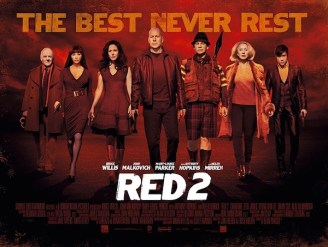 The “retired, extremely dangerous” agents return for more of the same.
 The kids’ phenomenon of the ’80s/’90s has never quite gone away, and this film is one thing that kept it ticking over in the ’00s. I watched out of nostalgia, which may’ve been a mistake.
 From the sword and sorcery ‘boom’ of the ’80s, Red Sonja concerns a warrioress going after the evil queen who slaughtered her family and has now seized a magical MacGuffin that will destroy the world or somesuch.
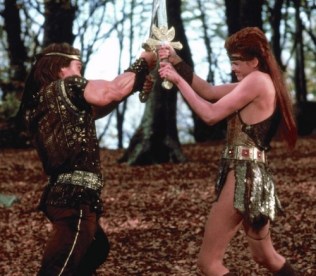 being a particular highlight. Veteran helmer Richard Fleischer’s direction seems to have come in for criticism from some quarters, but I found it adequately unremarkable. Damning with faint praise, I know, but it doesn’t merit slagging off either.
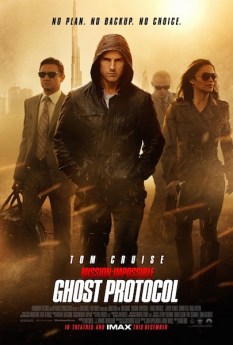 With Bond going “real world” and gadget-free in the Daniel Craig era, and the Bourne series having blazed a trail of “we shot it all handheld and shaky and grainy so it must be real” veracity, it seems the task of providing audiences with a contemporary version of the spy action, just-ahead-of-reality gadgets, and larger-than-life spectacle that the Bond movies specialised in during the ’60s and ’70s, has fallen upon the Mission: Impossible franchise. For my money, it’s taken the baton with aplomb.
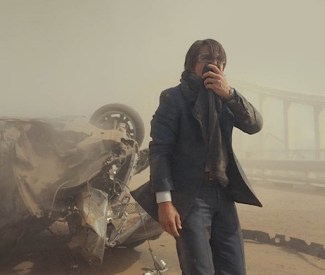 Somewhat unfortunately for pacing, they come halfway through. The climax is a mano-a-mano fight in an automated car park. It’s good, but feels underwhelming by comparison, with Michael “
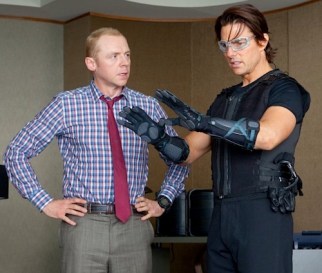 There’s a host of other gadgets to be going on with, though. It may be a side effect of having the writer-director of
 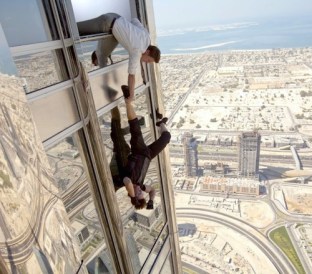 Still, that’s a fault of the home entertainment release, not the film itself. In all other respects, Bird’s work is first-rate. I like that the series consciously changes director with each new film to provide new ideas and voices, but if they were going to break the pattern then Bird would’ve been a good guy to allow back (certainly a superior pick than the third film’s J.J. Abrams, anyway, who was originally slated to tackle this sequel too).
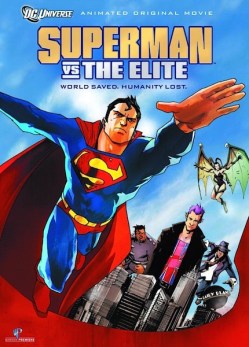 Adapted from acclaimed comic book story What’s So Funny About Truth, Justice & the American Way?, this DC animated movie sees the methods and morals of Superman (George Newbern) being questioned by the public and authorities alike when a super-villain escapes for the umpteenth time and kills more innocent bystanders. In the incident’s wake, a new super-powered team emerges — the titular Elite, led by Manchester Black (Robin Atkin Downes) — and their preparedness to execute criminals is met with great popularity around the world. How much humanity is humanity willing to sacrifice in the pursuit of conflict resolution? Are Superman’s high morals a thing of the past?
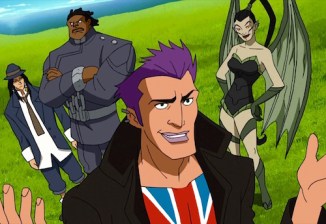 I assumed they were being faithful to a comic that hails from the ’80s, but it was actually published in 2001. It’s like Brit Pop never happened.
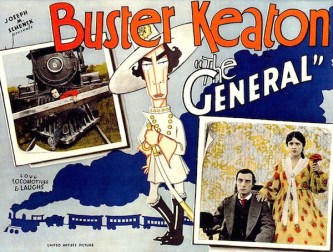 Poorly reviewed and a box office flop on its release, Buster Keaton’s The General has undergone a stark re-evaluation since: the United States National Film Registry deemed it so “culturally, historically, or aesthetically significant” that it was added to the registry in its first year, alongside the likes of
 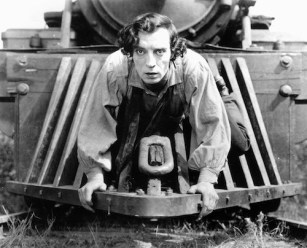 It was reportedly a very expensive film, and it looks it: there are tonnes of extras, not to mention elaborate choreography… of trains! Who knew old steam trains were so agile? There’s impressive physicality on display from Keaton, but the well-timed movements of those big old locomotives are quite extraordinary, especially for the era (I mean, for the past couple of decades you’ve been able to do pretty much anything thanks to a spot of computer-controlled what-have-you. Not much of that going on in the 1920s.)
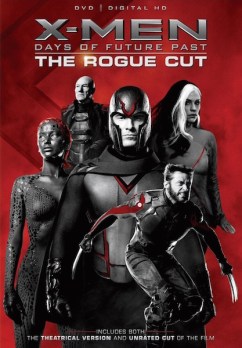 One of the big stories in the run-up to this fifth X-Men film’s release last year (my previous review is
 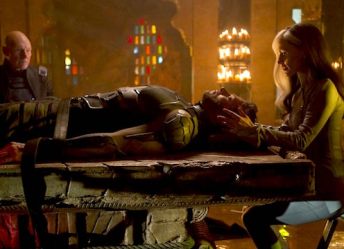 (though the theatrical cut only has 40 chapters, so I’m not entirely sure how that pans out). Most must be teeny extensions, however, and I look forward to
 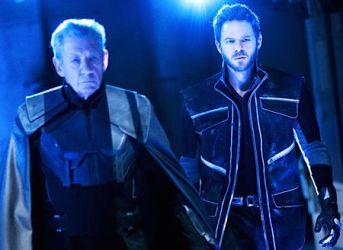 The Rogue Cut is worth seeing for anyone who enjoyed the theatrical version — and, in terms of a copy to own, the Blu-ray comes with both cuts and more special features (though it loses all the extras from the first release, including a few more deleted scenes) — but, unless you’re a huge fan of Rogue or Iceman, it’s not essential.
 100Films.co.uk