
I ended my last (ever so popular and entirely uncontroversial) TV column by asking, “what can possibly follow Game of Thrones?” Well, here’s the answer…
To get specific, this month’s column includes the first two seasons of BBC America’s big success, Killing Eve; the newest work from TV auteur Stephen Poliakoff, Summer of Rockets; the opening episodes of ITV’s new Downton-wannabe, Beecham House; and the latest season of internal affairs thriller Line of Duty. Plus the usual array of bits & bobs, and stuff I meant to watch but haven’t. (No Twilight Zone this month. It’ll be back.)

Killing Eve Season 1
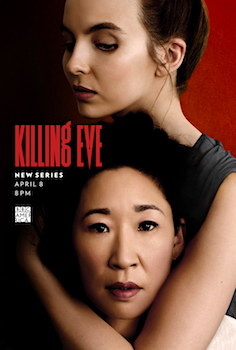 Adapted (loosely, I understand) from a series of novellas, BBC America’s Killing Eve is a spy thriller with a difference. Quite a few differences, really. That’s no doubt part of why it’s been such a success. Its US ratings aren’t huge, but it seemed to be talked about all over Twitter when it was airing there, and it went on to win some awards. When it finally made it to UK screens some five months after its US premiere, UK viewers went even bigger for it (it gets more than ten times as many viewers here as in the US, according to the figures I found), and it scooped up even more awards.
If you’re not familiar with it, it follows lowly MI5 agent Eve (Sandra Oh), the only person to spot a pattern in a string of unconnected murders. They have indeed been carried out by one person, assassin Villanelle (Doctor Foster’s Jodie Comer), a quirky, fun-loving young woman who brings that same attitude to her skilful kills. When Eve is appointed to lead an MI6 task force hunting Villanelle, the two women become fascinated with each other, and a strange bond grows between them.
The espionage thriller aspect is a mixed bag. There’s an early plot line about a mole that ended with the most obvious “could be a mole” character being ‘unmasked’ as a mole, but then there’s a lot more intrigue to be found in the secretive machinations of Eve’s MI6 supervisor (Fiona Shaw), Villanelle’s handler (The Bridge’s Kim Bodnia), and just who is employing Villanelle and why.
But, as written by Fleabag creator Phoebe Waller-Bridge (who served as showrunner for the first season), it all plays out with offbeat humour and a certain degree of comical groundedness — even as the life of an international assassin is as wildly improbable as, well, it is, Eve’s life is a recognisable world of church hall bridge clubs, wheelie suitcases, and microwaved shepherd’s pie. The comedy that arises from these culture clashes is a big part of the show’s charm.
Killing Eve Season 2
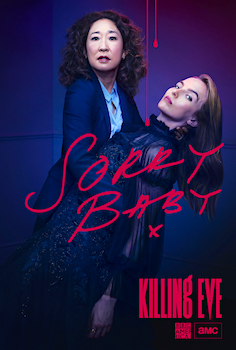 The second season is still airing in the UK (people who didn’t even notice that five-month wait for season one got ever so het up when the US got the second run two months before the UK), so no spoilers here. Season two brings with it a new showrunner, and it does seem to lack some of that special spark in the writing, although to emphasise that as a criticism would be unfair: it’s still a lot of fun, and the cast know how to get the most out of the material. With Villanelle on the back foot and Eve diverted onto another serial killer case (a subplot which peters out long before it’s been used for maximum drama, sadly), there’s a different dynamic to the early part of the season. Later on (in the episodes that’ll air next month over here) things come together in new and surprising ways, which is more rewarding. It lacks the striking freshness of the first season, but it still has its moments. And, of course, it leaves things in an intriguing place for the already-confirmed third season.
Summer of Rockets
 I’m not sure there are many people like Stephen Poliakoff working in TV nowadays — people who are seemingly given free rein to author standalone miniseries exactly how they want. I’m sure it’s more complicated behind-the-scenes than it looks from the outside, but it appears like Poliakoff’s reputation is solid enough that he’s allowed to write and direct with his own particular voice for entire six-episode stories. Honestly, I’ve skipped his last few, because I haven’t always found his work wholly engaging, but this espionage-tinged series sounded more up my street. Like Killing Eve, it’s an idiosyncratic take on the spy genre; though whereas that’s quirkily comical, Summer of Rockets is more rooted in period family drama.
It stars erstwhile Bond villain (and regular radio Bond) Toby Stephens as Samuel Petrukhin, a Russian-Jewish émigré who’s keen to be thought of as an Englishman but can’t quite escape his background in the highly structured society of the UK, especially as it’s 1958 and the Cold War is at its height. After accidentally befriending a society lady (Keeley Hawes) and her MP husband (Linus Roache), Samuel is approached by MI5 to feed them information about his new friends. But why? And are the men from MI5 actually on the level? Meantime, Petrukhin’s teenage daughter is being forced to attend society parties she has no interest in to help bolster the family’s status, and his son is being sent off to boarding school for the same kind of reasons. Apparently it’s semi-autobiographical — I guess that comes more from the latter subplots than the spying stuff. It all plays out with the pace and air of an auteur drama, making it feel a bit heavy-going and possibly impenetrable in its early episodes, but I warmed to it immensely as it went along. I love traditional, genre-based spy thrillers, but it’s also nice to see something that takes elements of that but plays it with a few different flavours.
Beecham House Series 1 Episodes 1-2
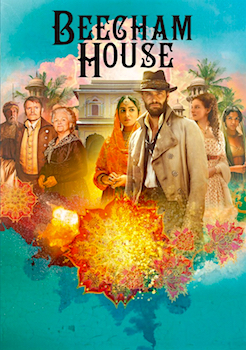 It’s been a few years since Downton Abbey ended now, so it makes sense ITV continue to search for a replica of its success. I think Victoria ticked that box for a while, until its ratings sloped off against Poldark… and so now we have Beecham House, which mixes a bit of Poldark into the familiar period soap opera mix. There’s also some pedigree behind the camera: the series is co-created, -written and -directed by Gurinder Chadha of Bend It Like Beckham fame. I think it’s meant to be vaguely educational, too, as it’s set in a period of Indian history a bit earlier than we’re familiar with from other British Raj dramas.
Well, I’m not sure how successfully any of that has translated onto the screen. Most of the main characters are white Englishmen and women, including the lead, John Beecham, a kind of Poldark-y, Indiana Jones-y figure — a former soldier who left the East India Company because he didn’t like their values. He believes India should be ruled by Indians, you see… although the current ruler is set up to be one of the series’ villains, as his suspicion of Beecham is standing in the way of our hero’s business plans. But it’s okay, because the house’s servants are all locals, and they’re a funny bunch so we like them. I guess your mileage will vary on whether the show is outright regressive or just not as progressive as it perhaps ought to be, given how they were talking it up.
But even leaving that aside, the exposition-heavy dialogue is frequently leaden and undramatic, leaving the cast floundering unsuccessfully to breathe some life into their characters. It all looks suitably lavish, thanks to copious location filming and a no-doubt-healthy costume budget, but the lack of polish where it matters will sink the programme unless it can somehow improve quickly. But then again, it is on ITV, so you never know, it might run for years and years at this level…
Line of Duty Series 5
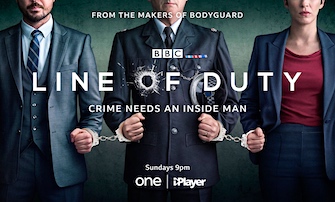 Every series Line of Duty introduces us to a new case of possible police corruption for the dedicated boys and girls of AC-12 to expose, and every series it turns out to tie into the overarching tale of deep-rooted links between organised crime and a never-ending parade of bent coppers. But could they finally be getting to nub of it all? They’ve got a solid lead… and so, it seems, does their newest case: an undercover officer who seems to have gone native, but might actually be onto the top man behind it all. The real problem is, he suspects it’s good ol’ Ted Hastings, the head of AC-12 himself. Well, who better to run police corruption than the guy in charge of investigating corruption? And it forces his underlings to ask: are his borderline-illegal actions just bold moves to get the job done, or is he trying to cover for something?
So never mind “who watches the watchmen,” who watches the watchmen who watch the watchmen? Well, turns out it’s Anna Maxwell Martin, popping in for the last couple of episodes as a very by-the-book copper to interrogate the suspected mole to end all moles. Except she’s so by-the-book, so keen to catch out our one-time (and possibly still) hero, that you may wonder: who watches the watchmen who watch the watchmen who watch the watchmen? If that makes your head spin… well, that’s Line of Duty for you.
Things to Catch Up On
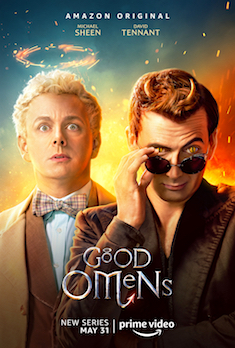 This month, I have mostly been missing stuff left, right and centre due to my house move. Sorry to bring that up again, but it’s really upended my viewing schedule. Headliners include the Amazon/BBC adaptation of Good Omens — it’s one of my favourite novels, it’s adapted by one of the original authors, and it stars some of my favourite actors, so I’ve been very much looking forward to it; but because of all that I want to be able to sit down and watch it properly, and I’ve just not found the time yet. Another is the final outing for the MCU on Netflix, Jessica Jones season 3, which is perhaps blighted by the fact it’s 13 episodes long — that wasn’t a lot once upon a time, but as things trend down to 10 or 8 or even the good old UK standard of 6, it feels like more of a commitment. Other things that have been similarly afflicted include the feature-length Game of Thrones making-of, The Last Watch; film-to-TV sitcom adaptation What We Do in the Shadows (and I loved the movie, so I must get round to it); the other new sitcom starring Matt Berry, Year of the Rabbit; and Chernobyl, which I was just going to skip (there’s so much “great TV”, no one can watch it all), but the extremity of the praise it’s garnered has changed my mind on that one.
Next month… Stranger Things 3 is out (in just a few days’ time, in fact), but I’m off on holiday, so it’ll have to wait ’til I get back.
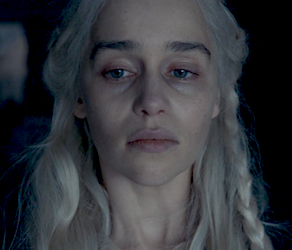 To call these two episodes “the climax” of Game of Thrones feels slightly disingenuous, because really the whole season has been the climax (to wit, my review of episodes one and two is
  Conversely, I thought the finale, The Iron Throne, was excellently handled in virtually every respect, including the pace. Well, mostly. I mean, I think it’s only during their conversation in front of the Iron Throne that Jon realises what he has to do to Daenerys, so that he then immediately carries it out is a little abrupt — should he have gone away, to steel himself for the task, and done it later? Maybe. Equally, why wait? And the scene needs to occur there for the powerful events that follow with Drogon’s grief and melting the throne. Some would also say the time jump to the Dragonpit court is a case of rushing the story, but do we need to see the Unsullied taking Jon Snow prisoner? Do we need to see the armies arrive at the gates of King’s Landing? You could draw the story out by putting all of that on screen, but what you actually need to know for the narrative is conveyed in the dialogue. Mind you, here I am wondering if it should’ve been slower when some of those petition-signing halfwits reckon “nothing happened” this episode. After weeks moaning about the pace being too fast, they think this was so slow that “nothing happened”! There’s no helping some people…
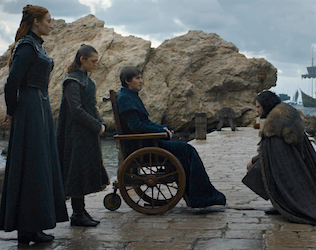 To cap it all off, both episodes were incredibly well made. That’s par for the course on this mega-expensive show, but it still merits observing. Okay, perhaps The Bells had a few too many scenes of King’s Landing’s destruction (a point on pacing again), but it was all spectacularly realised, keeping us mostly in the streets with the people who were really suffering. For striking moments, however, the finale was the place to be: that shot of Dany with Drogon’s wings (the subject of its own mini Twitter controversy, for yet more dumbass reasons); her speech to her assembled forces in the ruins, the staging and design evoking the the Nazis or Stalin’s Russia; the melting throne; the final montage, with the matching shots of Sansa, Arya and Jon embracing their destinies; and the very final scene, a mirror image of the opening scene of the very first episode. What a way to end; even with a green root poking through the snow north of the Wall — a dream of spring.
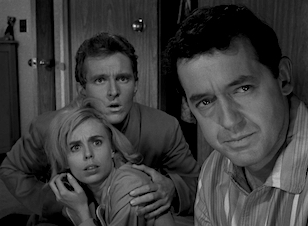 First, two episodes from season three. The Shelter is one of just four episodes in the entire series with no sci-fi or fantasy element (according to its IMDb trivia page). When the warning sirens go off that missiles, presumably nuclear, may be on their way to destroy the United States, a foresightful doctor and his family are able to retreat to their bomb shelter, but his less prepared neighbours want in too. It’s another of Rod Serling’s morality tales about the truth of human nature, and a particularly potent one because it’s very easy to relate to almost everyone’s position — there are no heroes or villains here (well, except for maybe one racist guy), just people who want to survive. The titular room is made for three people, not the dozen or so who try to break in to share it, which suggests perhaps the episode’s most universally applicable lesson: in panic, logic goes out the window.
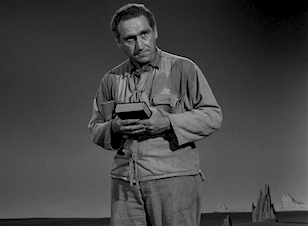 For its fourth season, Twilight Zone was scheduled as a replacement for another series, meaning it had to expand to hour-long episodes to fill the given time slot. This is largely regarded as being to the series’ detriment, and I can see why — I mean, some of the 25-minute episodes feel padded, so doubling the length…! Consequently, season four has very few episodes at the top of either list. The exception is On Thursday We Leave for Home, which is the highest-ranked season four episode on both: it comes 10th at ScreenCrush, but still only 24th on IMDb. This one is outright sci-fi from the off: it’s set on mankind’s first off-world colony, which has been a disaster, and after three decades a spaceship is finally arriving to take them back to Earth. What unfolds is another tale of man’s hubris and delusion with a self-wrought tragic ending — in other words, an episode of The Twilight Zone. But it has a unique angle and commentary on the corrupting influence of power; about how being in charge of the colonists has become Captain Benteen’s very reason to exist, to the point where he not only can’t imagine life any other way, but he can’t imagine his ‘subjects’ would want it any other way either. He’s thoroughly deluded.
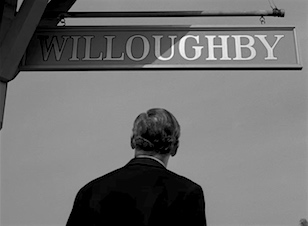 Finally for now, season one’s A Stop at Willoughby, which doesn’t quite make either list’s top ten (it’s 12th on IMDb, 17th on ScreenCrush), but I keep hearing it mentioned elsewhere as a favourite episode or referenced in other ways (as with Eye of the Beholder last time, it factors into Richard Linklater’s Everybody Wants Some!!). It’s about a harried ad exec in ’60s New York, whose boss’ motto of “push, push, push” pretty well tells how he’s feeling. On the train to his suburban home (there’s no real correlation here, but there are definite shades of Mad Men across this setup!) he falls asleep and wakes when the train stops at the village of Willoughby… in the year 1888. It’s an idyllic place on a warm summer day, with people enjoying leisurely strolls in the park — a simpler, calmer time. But then he really wakes up: he didn’t travel in time, Willoughby was just a dream; but it’s a dream of a place and time where he’d rather be — can he get back there? If
 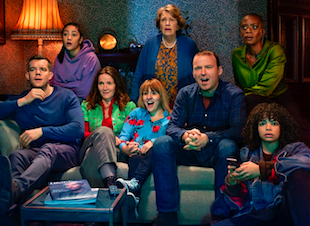 This fortnight I have mostly been missing Years and Years, the new drama from the pen of Russell T Davies that spans the next couple of decades to look at, presumably, how much worse things are going to get even than they are now. I’ve long been a big fan of Davies’ writing, though must confess I’ve missed most of what he’s done post-Doctor Who — I’ve been meaning to get round to A Very English Scandal ever since it aired, which was a whole year ago now. Hopefully I won’t take so long to get to this new one.
 Almost two years ago, just hours after Game of Thrones’ seventh season finale aired,
 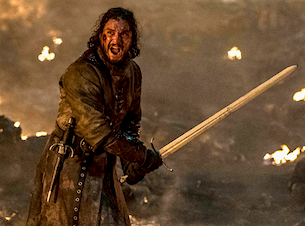 Content-wise, the episode was one long battle — the longest ever in film or TV history, apparently. More isn’t always more, mind. While I didn’t find it boring or drawn-out, it also wasn’t perfect. The battle tactics left a lot to be desired, something spotted by lay-viewers, never mind the “how it should’ve been done” articles by professional military tacticians that followed the broadcast. And the way things played out, a lot more deaths were warranted. Quite a few key characters did fall, and even more faceless masses, but the way it was staged made it a miracle that so many people escaped unscathed. There are three episodes left — you need characters to fuel the story, and major characters left to be sacrificed later too — but that doesn’t mean you have to stage it so everyone effects an improbable escape. There’s a balance to be found between “it looks like they’re all about to die” and “it seems literally impossible everyone would’ve survived those last-minute odds”. But hey, this isn’t the first time the show has succumbed to this, and there was a lot else to like: lots of effective individual sequences within the battle, great callbacks to previous lines and events, some heroic sacrifices, and a perfect ending. (I’m really not going to talk about some dickheads’ reaction to that.)
 It’s frustrating because I liked the tone of the episode overall — as I said, the return to human conflict and schemes; also a lot of the individual scenes between characters and so on. But it needs more room to breathe. It’s especially galling after the exceptionally spacious
 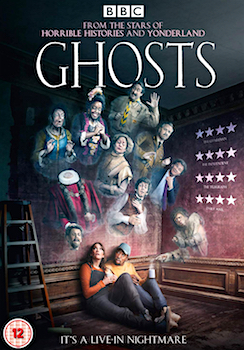 This new sitcom from the writing and performing troupe behind the original TV iteration of Horrible Histories and the Sky One fantasy comedy Yonderland is pitched as a more adult-focused series, but it’s not exactly 18-rated stuff, just a little cheekier than they might’ve done before. Anyway, it’s about a young couple who inherit a crumbling old mansion, which is home to the ghosts of various people who’ve died there down the centuries. As the couple attempt to make a life for themselves and restore the place on a budget of nothing, the ghosts cause various issues, while also having problems of their own — turns out being dead isn’t the end of your emotional woes. I wouldn’t say Ghosts is the most hilarious sitcom you’ve ever seen, but it has a definite charm. It also surprises with genuine emotion, particularly in the third episode, where we learn about the death and family of one of the more recent ghosts.
 I’ve never seen Columbo before, and despite this being the first episode (er, kind of — I believe it was preceded by two other pilots) this isn’t the start of me watching it regularly. No, I watched this for one simple reason: the director was a certain Mr Steven Spielberg, in his pre-movie days when he directed a handful of TV episodes. Unsurprisingly, such an early work contains little about its style that screams “Spielberg”, but it’s still a classily staged production, with a lot more going for its visuals than the point-and-shoot style we associate with old TV. The story’s not a bad one either, about a crime novelist who murders his co-writer following the methodology from an unused plot. He thinks he’s a clever bugger who’s got away with it easily, but Columbo seems to see through him right from the start. Well, I’m not sure dumping the corpse on your own front lawn is the best way to go about claiming “it wasn’t me.”
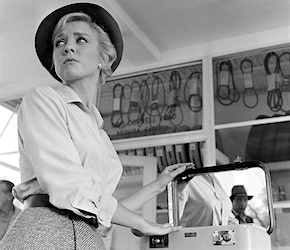 First up, season one’s The Hitch-Hiker is another Twilight Zone tale where we can’t be sure if the protagonist is experiencing paranoia or the supernatural — undoubtedly a recurring theme for the series, almost to the point where it’s less a “theme” more just a fact of its format. Anyway, this particular reiteration is effectively unnerving, with a scenario that’s relatable — you can just imagine how it would feel if you kept seeing the same hitchhiker by the side of the road, always somehow ahead of you, always staring at you with a despondent look… it gives me chills just thinking about it. Director Alvin Ganzer gets good mileage out of that element too, creating some effective shocks. Aside from that the execution isn’t top notch though, with Rod Serling seeming to have taken too much inspiration from the original radio play (by Lucille Fletcher) in his inclusion of some over-explanatory narration. The trademark twist ending is both altogether guessable for the savvy viewer, but also doesn’t really explain a whole lot.
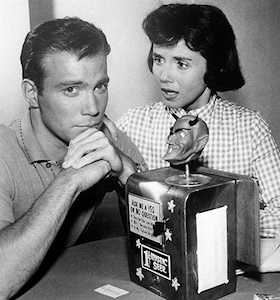 I was more taken with Nick of Time, written by the reliably superb Richard Matheson. Starring William Shatner as a superstitious honeymooner, it’s a neat little tale about a cheap fortune telling machine that might actually predict the future. As well as a genre tale about the perils such a machine might pose, it’s really about superstition and belief in fate vs. self determination — a strong moral life lesson bundled in a quirky supernatural fable. That’s Twilight Zone at its best, really. Similarly, season five’s Living Doll is another of the series’ most genuinely unnerving episodes. Telly Savalas stars as a man whose own insecurities make him paranoid and abusive towards his wife and stepdaughter. When the kid gets a new talking doll, it begins to taunt and threaten him, but only when no one else is around to hear. Again, it’s very creepy, but has a point to make beyond that.
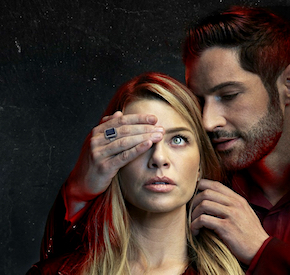 This fortnight, I have mostly been missing the fourth season of Lucifer, which just returned as a Netflix exclusive. I’ve not watched season three yet, though, so that’ll be a little while off. I’ve also successfully managed to avoid any spoilers about Line of Duty’s recently-concluded series (touch wood). I’ve got a plan to binge it in a few weeks’ time (so, not in my next TV roundup, but should be the one after) — hopefully nothing will blow its secrets between now and then!
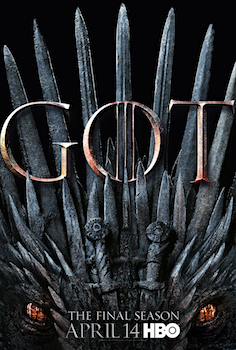 The final season of HBO’s fantasy epic began with its last two regular-length episodes (the remainder are each a feature-length 80 minutes, give or take), but they stand alongside the epics still to come as a kind of two-parter. Both episodes are set in the quiet before the storm(s) to come, with pieces being moved into place and everyone preparing themselves for what they assume is the endgame: a battle with the army of the dead. Of course, as outside observers we know the battle can’t be the end — there are whole characters and plot threads that will be left unresolved, whatever the outcome of the battle, and up to three (extra long) episodes to resolve them in. But such considerations are for future episodes; I mean, for one thing, next week’s big battle episode is likely to have a huge impact on who’s left standing, which will in itself indicate what ways forward remain possible.
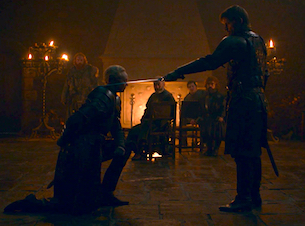 I’ve already slipped into discussing A Knight of the Seven Kingdoms, perhaps supporting my point that this is a two-parter in separate episodes’ clothing. Here we get more reunions, rehashes, and revelations. I mean, sure, Jaime arrives in Winterfell at the end of the previous episode, but it’s here that the meaning of that really plays out, with his trial-like scene before people he has wronged — and one he saved — before his one-on-one with the boy he pushed out of a tower all those years ago. In fact, if there’s one thing that does keep these two episodes distinct, it’s how much the season premiere mirrors the series premiere (i.e. season one episode one, Winter is Coming) — check out
 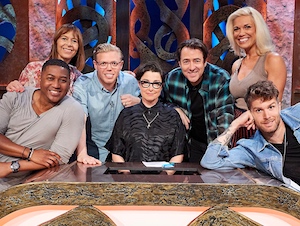 If you live outside the UK or watch Thrones via, er, other means, I guess you won’t know this: it’s UK broadcaster Sky Atlantic’s Game of Thrones aftershow — you know, one of those things where people connected to the show and sundry minor celebrities sit on a sofa and chat about the episode we’ve just seen. I’ve never watched it before because I’m normally one of those people who watches Thrones via, er, other means, and it rarely crops up on those, but I’ve had access for the first couple of episodes and, well, so far I’m not impressed. In the first episode, host Sue Perkins gamely struggled with guests seemingly dead set on chatting about anything other than what her questions asked, while the second felt like she was trying to get blood from three particularly reticent stones. The format’s not really at fault, but the guest booker might be… The Twitter reaction to these episodes suggests the show used to be better, so maybe they’ll re-find their mojo for the coming four episodes.
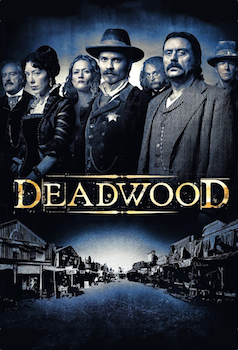 It’s quite a well-known piece of trivia that creator David Milch’s original pitch to HBO was for a series about two lawmen in the early days of Rome, thematically concerned with how we establish the rules and agreements of a society. With the series Rome already in development, HBO encouraged Milch to take the interesting theme but relocate it, and so he landed upon a frontier town in the old West butting up against the ever-widening reach of civilisation. Nowhere is this more apparent than in the show’s third season, with local elections looming and outside forces attempting to exert their influence over the town. The latter is represented by the arrival of mining magnate George Hearst (Gerald McRaney), who becomes a thorn in the side of both previously-dominant saloon owner-cum-gangster Al Swearengen (Ian McShane) and honourable but short-tempered sheriff Seth Bullock (Timothy Olyphant). Those two, once enemies, must join forces (along with most of the other regular characters) to attempt to counter Hearst’s moves. Where once Al could’ve just had the guy killed and fed to Wu’s pigs, his outside connections make that impossible — stakeholders would come looking, bringing even more attention and seeking justice. Civilisation, eh?
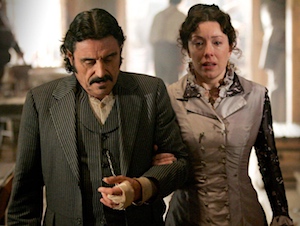 Not that the third season passes without fault, mind. By the middle of the season, episodes were being written so on the fly that they could only use standing sets and regular locations, because there wasn’t enough lead time to build anything new or travel to other locations. Later, outdoor scenes had to be cut back, as a tightening budget left no room for all the extras and horses needed to convey the town’s bustling streets. While these production issues are mostly covered for well enough, some storylines are also affected. For example, Wyatt Earp and his brother arrive in town, apparently with some big secret scheme in the offing, but in the very next episode that’s completely forgotten as they’re hastily written back out. Plus, considering the already sizeable regular and recurring cast, it’s mad that Milch decided to (a) add even more characters, and (b) devote an unwarranted amount of time to meandering subplots starring minor characters. It doesn’t ruin the show, but it means some good actors and characters go to waste as we while away time on things no one would miss if they‘d been ditched. The worst offender for me is Steve the Drunk and the never-ending kerfuffle around the livery, which starts out as an adequate and pointed subplot but eventually just drags on and on. Someone in the writers’ room must’ve loved that character and his (increasingly tiresome) verbal diarrhoea.
 Sadly, that arc was never completed. Milch knew the writing was on the wall before the season was completed, and there’s a very plausible theory that the second half of the season is actually an allegory for the conflict between Milch and the executives at HBO (you can read about that in W. Earl Brown’s comment on
 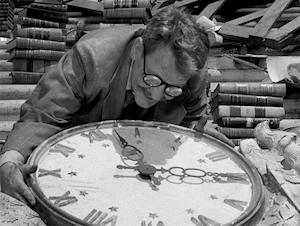 The new Jordan Peele-hosted iteration of Twilight Zone still doesn’t have a UK broadcaster, so I’m continuing
  Finally for now, two episodes that were remade in
 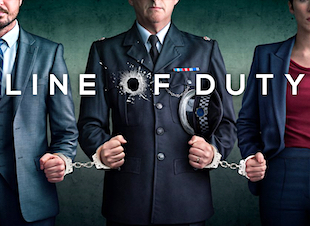 This month, I have mostly been missing the new series of Line of Duty, BBC One’s ever-twisty police corruption drama. Given that it’s been trending on Twitter every week, it’s a wonder I’ve not had it spoiled… yet. It’s now two-thirds of the way through, so I’ll watch it intensively once it’s over. I’d promise a review next month, but last month I said that about Hanna and I’ve yet to make time for that. Maybe they’ll both be here next month. Also: Ghosts, the new comedy from the cast behind Horrible Histories and Yonderland, which looks promising but, again, is a couple of episodes in and I’ve yet to start.
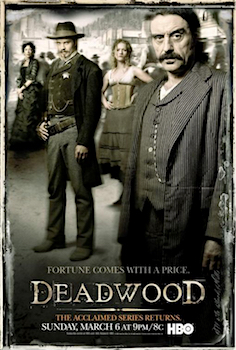 One of the early touchstones of the “peak TV” era we’re now right in the midst of, Deadwood is a kind of revisionist Western — revisionist in that it treats the West not as a time of myths and legends, as most movies still do, but as a real historical period like any other, populated by realistic people (more or less — I’ll come to that). The titular town began as a camp in Native American territory, established by gold prospectors. When they found success, more gold hunters followed, plus all the amenities they might require: supplies, tools, food, gambling, whores… Plus, the town was outside the jurisdiction of most law enforcement, thereby attracting a different class of person again. Naturally, illicit activity followed. At one point Deadwood averaged a murder a day — and those are just the ones that were recorded.
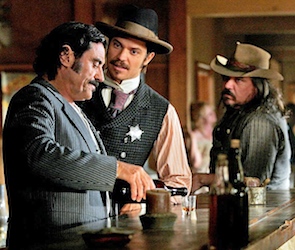 They’re aided by the extraordinary storytelling. It’s often said to be Shakespearean, but that’s not an empty epithet. The dialogue may be littered with expletives (not as shocking today as it was back in 2004, but still not for the faint of heart) and tailored for the understanding of modern ears, but there are still speeches and exchanges that you could put anonymously alongside writings of the Bard and laypeople would struggle to identify which was which. It’s a structural thing, too — I mean, there are characters who deliver soliloquies! How often do you see genuine soliloquies outside of classical theatre? Plus there’s the way that, again, it’s using personal conflicts to touch on bigger themes and points about human nature and society.
 Season two is a little more like the latter, and suffers for it. A major death about two-thirds of the way through comes to overshadow the rest of the season; while it doesn’t completely stall it, things begin to take longer to get anywhere. There’s also an early plot in season two designed to ‘depower’ Swearengen — he’d become such a dominating force in season one, Milch felt it necessary to take some of that away, if only for a while. A justifiable aim, but taking him out of play due to incapacity and recovery makes parts of the second season somewhat less fun. There’s a lot of entertainment value in Al’s scheming and swearing.
 Until a couple of years ago, my experience of The Twilight Zone was limited to the Tower of Terror ride at various Disney theme parks (and recognising the theme that everyone knows, of course). Then in 2017 I watched
 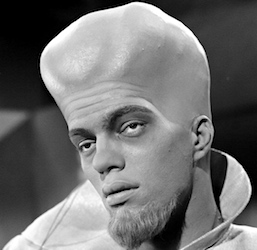 Secondly, IMDb user’s pick: season three’s To Serve Man (ranked 7th by Screen Crush and cited by Peele). This is, essentially, an entire half-hour story based around reaching a neat twist that’s staring you in the face the whole time, like a well-executed punchline on a dark joke. That’s the kind of thing The Twilight Zone is renowned for, so it feels very apposite as a “best ever episode”. That said, while the punchline attracts our focus, the story that gets us there does have some commentary about the nature of mankind. There’s no explanation for why the aliens spend most of the episode wearing such a dopey expression, though.
 This month, I have mostly been missing the back ends of the series I mentioned were starting
 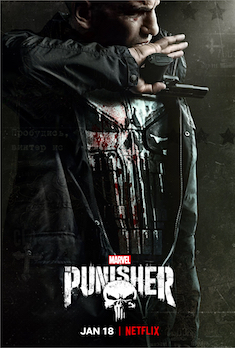 Earlier this month the news everyone had been expecting was finally made official: Netflix was cancelling The Punisher and Jessica Jones, thereby bringing to an end the era of the MCU on the streamer. Altogether it will have produced 13 seasons and 161 hours of television, ending with the release of Jessica Jones season three sometime later this year — which will be a more appropriate time to get into this, I guess. For now, there’s just the second — and, as it turned out, final — season of The Punisher.
 The two plots do converge somewhat, naturally, with Frank having to deal with the machinations of Russo/Jigsaw at the same time as Pilgrim is coming after him. That means the series has to juggle the two stories as well, and it does that less than effectively, swinging back and forth between which it wants to focus on. For me, the problem remained the same: the new plot is interesting with a lot of potential, while the season one hangovers feel like little more than unfinished business. The latter become stretched out to fill the season, going round in circles, rather than being dealt with succinctly. Conversely, with that stealing so much space, the Pilgrim and Rachel story doesn’t get the screen time it needs or deserves. It seems like there’s a half decent balance at first, but that ultimately goes awry, and the ins and outs of the new storyline (I keep wanting to call it the “main” story, but that’s only true in a couple of early episodes) aren’t as explored as much as they should be. Considering there’s some interesting potential in there (Frank and Rachel have great chemistry, and the plot shapes up as a kind of political thriller, in a
  You spend years wondering if anyone could re-do the premise behind
  Amazon are adapting Joe Wright’s 2011 film
 The run-up to this year’s Oscars seemed to be mired in a mix of controversy and disinterest. The former was provoked by a variety of poor decisions by the Academy, including fiascoes around a Best Popular Film award, over who would host (it was Kevin Hart, then it wasn’t, then it was no one), and over the decision to present some awards during the ad breaks (which was scrapped, thankfully). This whole palaver is part of what fed the disinterest, along with a slate of nominees that was regarded to be generally uninspiring. As it turned out, plenty of people still tuned in (US viewing figures were slightly up from last year) and plenty of conversation was sparked. Other people can dig into it in more depth than me (and have, of course, considering the ceremony was days ago), but I will say I was overjoyed for Olivia Colman (definitely the best speech, although a couple of others were quite good too) and Spider-Verse, was quite pleased Black Panther won Best Score (I don’t know if it was actually the best overall, but I really liked it), and its other two victories (costumes and production design) were also welcome, and Spike Lee’s ecstatic win was another top moment. It wasn’t all sunshine and roses, obviously, with Best Picture in particular being an underwhelming result; though I’m not as miffed about Bohemian Rhapsody’s multiple wins as some people (even if its awards for sound editing and mixing were more about “most” than “best”).
 This month, I have mostly been missing The Umbrella Academy, as I mentioned at the start. The trailers look good (love a bit of Hazy Shade of Winter), and it seems like critical and audience reaction has been positive, so it’s definitely on my watchlist. I’m also yet to start the new series of Scottish crime drama Shetland, or The Missing’s much-anticipated spin-off Baptiste. I expect I’ll be saving those up for a little while yet.
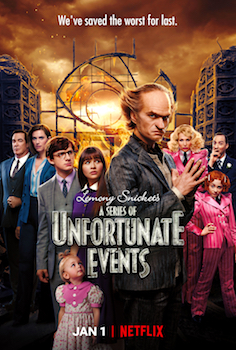 The third and final season of Netflix’s adaptation of
 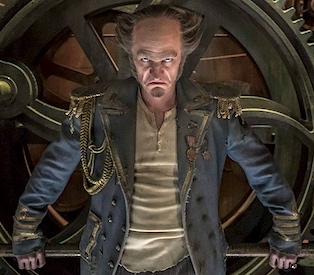 After that, we come to The End — that’s not emphasis, it’s the title of the actual finale. Every other novel in Snicket’s 13-volume series has been treated to a two-part adaptation, but The End is the longest book of them all, so it gets… one episode. A regular-length one, at that. Well, I’ve never read the books (I will someday…), so I can’t comment on why this should be, or if the programme-makers have done it a disservice, but I’m sure they had their reasons. That said, it’s even more intriguing given that the TV series manages to wrap up almost every on-going plot line and mystery, something the book series is notorious for not doing — you’d think they’d need more screen-time for that, not less.
 Back at
 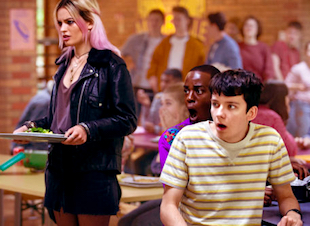 This month, I have mostly been missing Sex Education, Netflix’s comedy-drama about a sex therapist’s son who begins offering what expertise he’s picked up second-hand to his classmates. It attracted a bit of hype before release and has been much-discussed on social media, but I thought something looked kinda off about it… and then I saw
 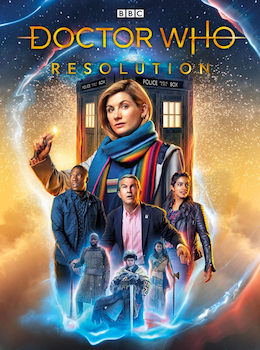 Now, that’s more like it! After the damp squib of alleged-finale
  Once upon a time it seemed implausible that anyone would ever try to play Poirot ever again, given how iconically (and thoroughly) David Suchet had embodied the Belgian detective during the 25-year series in which he starred. But I suppose it was inevitable that it would happen someday, and so following
  The BBC and Netflix teamed up for this £30 million CG animated adaption of Richard Adams’ children’s novel, perhaps most (in)famous for its 1978 film adaptation that is said to have traumatised all who saw it (I never have). I guess most of that money went on the all-star cast (seriously, the number of well-known names is mad — far too many to list here, so you can check out
  Normally I’d fold this into the comedy roundup (see below), but I enjoyed it so much I’m singling it out. As the title implies, this was a live edition of the long-running sitcom. What inspired that, I don’t know, but it paid off with the series’ best episode for years. The storyline didn’t necessitate the live-broadcast format in the same way as
 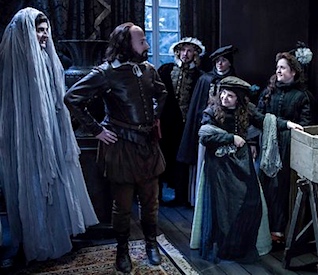 Also tickling my funny bone this season were a new Upstart Crow Christmas special, given a prime Christmas Day slot. It riffed off A Christmas Carol, which was unfortunate because I saw rather too many version of that this year (see below for another). I can’t say Crow’s take was particularly special, but I’m fond of the sitcom anyway so another episode is always welcome. The night before that (Christmas Eve, for those not keeping up), BBC One had one-off comedy-drama Click & Collect, with Stephen Merchant as a dad who must travel to the other end of the country to collect that year’s most-wanted toy for his daughter, accompanied by his irritatingly over-friendly neighbour. It’s the kind of fluff that would feel a bit too daft most of the time, but hits the right light-entertainment note at Christmas. A bit more cutting edge was Goodness Gracious Me: 20 Years Innit!, marking the 20th anniversary of the groundbreaking British-Asian sketch show with a special that used some of the series’ funniest sketches as examples to discuss what made the show so important. It was a subtly clever way to be both “greatest hits” clip show and retrospective documentary at once. Sadly, the repeat of an overlong old Christmas special that followed wasn’t quite as vintage. And, as I’m rounding things up, there were also seasonal editions of panel shows Mock the Week (the usual clips and outtakes), Have I Got News for You (more compiled clips), and Insert Name Here (actually a new edition! I’m fond of it and was happy to see back on our screens). Several others I’m yet to catch up on (Would I Lie to You, The Imitation Game), though I did see both new episodes of Mrs Brown’s Boys. I know I “should” hate it, but the Christmas Day one, at least, made me laugh.
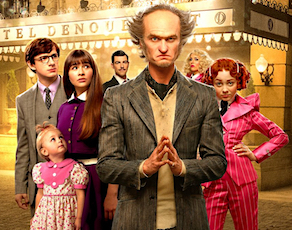 This Christmas, I have mostly been missing A Series of Unfortunate Events season three — the final one! Okay, it only came out yesterday, but I was with family and couldn’t watch it (ugh!) Not that I’d want to rush through it, anyway. By the time you’re reading this I’ll have made a start, and it’ll be reviewed next month. The same is true of Luther season four, which also started yesterday and which I’ll watch sometime later.


 The most recent season of Doctor Who went out, not with a bang, but with a whimper, in perhaps the most underwhelming “finale” the show has ever done. It wasn’t really a dramatic and exciting culmination of this year’s run of episodes, which is what a true “finale” is. Rather, it was just the last episode shown before the season… stopped. Fortunately, before that were two more episodes that proved this new era’s best stuff comes from its guest writers rather than its showrunner.
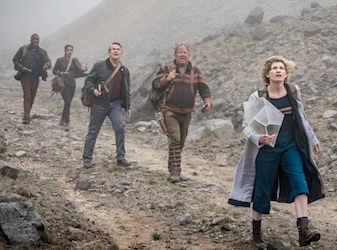 Typically for showrunner Chris Chibnall, it was a half-thought-through tale, with regular logic gaps and narrative dead ends, and none of the impact you expect from a season-ender. Kinder viewers may say that’s because there’s a New Year’s Day special imminent which is the real finale, but I think that’s just being optimistic. Certainly, the BBC haven’t seen fit to include the special in the season box set (even though it’s released a fortnight after the special airs), which I’m sure is partly a shameless cash grab, but also indicates its separate status.
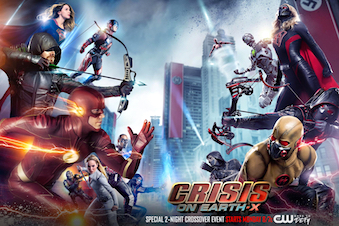 Whereas
  One day I’m going to watch all of Poirot from the start, but I happened to see these few episodes this month. They’re from the series’ early days (obviously), when episodes were an hour long and based on short stories (as opposed to the feature-length novel adaptations they did later). What’s remarkable is how different they are, structurally and tonally, from those later episodes, with which I’m more familiar. The feature-length ones each feel like a standalone movie, whereas these early episodes do feel like a TV series, with “case of the week” plots. For example, there’s a regular recurring cast (alongside the titular detective there’s his sidekick Captain Hastings, his housekeeper Miss Lemon, and trusty Inspector Japp), who all appear every week and each get some kind of subplot, even if it’s not tied to the main storyline — in one episode, while the other three are away solving a jewel theft, Miss Lemon has to hunt for her missing keys. And that’s another thing: there’s not always a murder. And there’s not always a pile of suspects, either — none of these episodes feature the famous “gather all the suspects in one room and explain what happened”-style finale, so synonymous with the series. So, in many ways it feels quite strange, but still entertaining.
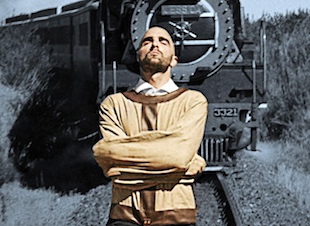 This month, I have mostly been missing Death by Magic — not a high-profile show, maybe, but a new Netflix thing that seems up my street. Other than that, I’ve been conspicuously failing to get around to a bunch of “box sets” (I hate calling digital collections “box sets” — there’s no “box” involved) that I’ve been meaning to get to for varying amounts of time: The Little Drummer Girl, Killing Eve, The Haunting of Hill House, Lost in Space, the Netflix years of Black Mirror, Ash vs Evil Dead, Chilling Adventures of Sabrina (which even added a new Christmas episode), Riverdale, Mindhunter, Inside No.9… Not to mention everything that’s on my long-term back-burner, like Breaking Bad, The Wire, The Sopranos, The Shield, The X Files, things that don’t begin with a definitive article… There’s no doubt many more that are currently slipping my mind, anyway. With an abundance of Christmas specials incoming, I guess whichever series I dive into next will have to wait until January.
 100Films.co.uk