
The flipside of watching a tonne of films during lockdown is that I haven’t watched much TV — I’ve still not even finished Picard, ffs. But I did make time for Quiz (which, as a three-parter, was basically just a movie anyway), another animated Doctor Who, a season of Archer (“a season” sounds like a lot, but it’s only 13 easily-digestible 20-minute chunks), more of the worst of the original Twilight Zone, and a few other bits and bobs — including Benedict Cumberbatch and Jonny Lee Miller in Danny Boyle’s stage production of Frankenstein, which the National Theatre made available on YouTube last week (sorry if you didn’t know; it’s gone now).

Quiz
 Adapted by James Graham from his own West End play and directed by Stephen Frears almost as if it were a movie (note how only the first episode has a proper title sequence), Quiz is the story of Major Charles Ingram, who in 2001 went on Who Wants to Be a Millionaire? and — allegedly — cheated his way to winning the million-pound jackpot with the help of his wife and someone in the audience coughing to indicate correct answers. But Quiz takes its remit wider than this, showing how Millionaire was born and spawned a nationwide community of quiz enthusiasts determined to game the system and make it onto the programme — and once on there, cheat in their own ways.
Obviously I knew the basic story of ‘the coughing major’ from all the news coverage, but I had no idea about all the stuff with the networks of dedicated fans. Quiz only touches on it as a side element in the Ingrams’ story, but it’s a fascinating aspect. The Ingrams were only passingly involved with it, but it makes you wonder: did that organisation cheat more successfully? Were the Ingrams caught and prosecuted because the programme had been driven to be hyper-vigilant but, in fact, were not cheating? They protest their innocence to this day. And while Quiz doesn’t come down on one side or the other, it throws enough doubt on the accepted narrative that you wonder how they were ever convicted.
The enthusiasts’ network; the lengths people went to get on the show; the media storm around the Ingrams… it’s all a reminder of what a phenomenon Millionaire was at the time (at its height, it was watched by a third of the UK population). The best thing about the first episode is how it digs into that, with the backstory of the show itself, the pitches and its early success. This stuff could be seen as an aside to the main story — as padding to make Quiz a three-parter — but it really isn’t: it was that very uniqueness, the specialness of the programme, that led to the ‘cheating’. It also makes for a fun drama, pillorying the behind-the-scenes world of television. Respect to ITV for commissioning a programme that takes so many potshots at ITV itself.
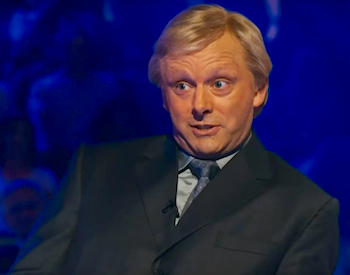 Indeed, even as there are serious events (watch out for the undeserved fate of the Ingrams’ pet dog), Quiz is consistently very funny. There’s a gag in the closing seconds of episode two (punctuated by a smash cut to black) that is golden. Michael Sheen’s uncannily spot-on impersonation of Chris Tarrant will also tickle anyone familiar with the man — i.e. UK viewers, but I guess it won’t translate internationally. Matthew Macfadyen is more understated but also excellent as Charles Ingram, while Helen McCrory burns up the screen as their barrister later on. Those are the obvious standout performances, but the whole cast are on form, in particular Mark Bonnar as one of Millionaire’s exec producers. He’s consistently superb in everything I’ve seen him in (if you haven’t, you should definitely watch Unforgotten series 2), and here adds a lot of nuance to what could’ve been an inessential bit part.
Ultimately, this is a pretty excoriating examination of what went on. Very few people come out if it well — certainly not ITV, the show’s producers, the media, the police, the general public, the jury, the British legal system… Maybe only the Ingrams. Did they do it? Possibly. But the evidence of their guilt is rather thin and, in some cases, ludicrously biased. Quiz itself doesn’t come down firmly on one side or the other, but it certainly seems to have convinced a lot of viewers of their innocence.
In the UK, Quiz is available on ITV Hub for another few days. In the US, it airs on AMC from Sunday May 31st.
Frankenstein
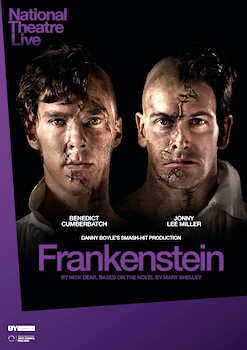 As theatre goes, this is a blockbuster: directed by Danny Boyle and starring Benedict Cumberbatch and Jonny Lee Miller, with the actors alternating who played Victor Frankenstein and his Creature for each performance. One of each was filmed for the National Theatre Live cinema screenings, and for the lockdown National Theatre at Home release they also made both available.
Cumberbatch-as-the-Creature came out first and consequently attracted the most YouTube views, but the consensus seems to be that Miller-as-the-Creature is the better version, so that was the one I watched (I’m curious to see both, but watching it twice in a week isn’t really my way).
Now, frankly, I’m not the biggest fan of Frankenstein. I like the concept a lot — it endures for a reason — but I found the novel an interminable slog, and faithful adaptations fare similarly. Fortunately, this one jumps right to the birth of the creature, thereby improving things considerably by getting to the meat of the issue. It also serves to almost completely refocus the narrative away from Frankenstein and onto his creation. After a brief appearance at the start, it’s another 45 minutes before Frankenstein enters the story properly. This feels like a very modern choice — siding with the downtrodden and oppressed, making him the protagonist rather than the genius inventor. Of course, the Creature is not without his crimes, and the production plays up the mirroring of creator and creation — as if the fact they’re played by the same actors alternating roles didn’t clue you in to that theme.
It’s an impressively theatrical production (a reason why, like One Man, Two Guvnors last week, I’m not counting it as a film), with some clever and effective staging, in particular a rotating multi-level centrepiece. That said, being able to view it from different angles via camerawork does add to the production at times, in particular with one or two moments that seem to have been staged for a bird’s eye view; but then, at others we’re clearly missing something of the atmosphere created in the physical space (for example, sometimes we get to see the massive lighting rig made of hundreds of individual bulbs, but some of its uses and effect is lost by not being in the room). Also, this YouTube release has been censored at one particular moment for the sake of a wider audience, which is a shame. It’s clear enough what’s happened, and some will be pleased not to see that depicted, but unfortunately the edit is wholly unsubtle and therefore completely jarring.
Whatever its other qualities, this production will remain best known for its role-switching gimmick. Some people do think it was just a gimmick — a way to show off and stand out, but not worth much else. I’m not sure that’s fair. If you only watch it once then obviously you’ll only see the actors one way round, even the mere existence of the alternative is somewhere in your mind, informing how you view the play, the notion that these two characters can be played by the same actor in the same production. It’s a neat way to underscore the connection between the two character, which, as much as they would both like to sever it, is seemingly unbreakable.
Doctor Who The Faceless Ones
 The most recent missing story to be animated (see last month for the history of all that) has the Second Doctor, Ben, Polly, and Jamie arrive at Gatwick airport in 1967, where there are mysterious things going on around the offices of airline Chameleon Tours, including young people flying off on holiday but never coming back…
The Faceless Ones gets off to a strong start, with suspicious alien-connected murders, disbelieving authority figures, Polly seemingly mind-wiped, and the Doctor and Jamie playing at Sherlock Holmes and Dr Watson — a bit of mystery, companions in peril, the TARDIS team on the back foot as they have to investigate while dodging the authorities. Unfortunately, this is a six-parter. There are many great Doctor Who six-parters, but there are at least as many (especially in the early days) where they seem to have commissioned six episodes by default and the writers didn’t really have enough story to fill them. The Faceless Ones is among the latter: as it heads into the second half, you can feel the plot begin to stretch itself out. There are some great cliffhangers to perk things up, at least.
Nowadays Who fans have a tendency to watch whole stories in one sitting, almost like a movie — most of them are about that length, after all. But someone once observed that a lot of overlong, awkwardly-paced serials suddenly make more sense if you watch them one episode at a time; that each part works as a 25-minute chunk of TV, and when you watch them in one go you don’t see the trees for the wood. The Faceless One is almost a case in point, because each of the earlier episodes are enjoyable in isolation, and the later ones have their moments; but, with hindsight, there is a lot of back-and-forthing, and I can well imagine that, watched all in one go, it feel long, slow, and spread thin.
The last two instalments are the worst culprits. The writing’s quality dive-bombs in the penultimate episode as other characters basically explain the plot to the Doctor and Jamie, while episode six offers a rather sedate finale, with a bit of drama early on giving way to a lot of protracted business to resolve the situation. It also features the most bored-sounding delivery of the line “you fools, how can you trust him” imaginable. To cap it off, this is Ben and Polly’s last episode, and they’re written out poorly. It’s nice that they decide it’s time to return to their own lives, rather than being forced to go or stuck with a thin romance or something (as other companions would be), but it’s terribly handled: they’ve not been in it for weeks, then suddenly realise it happens to be the same date they first joined the Doctor so, hey, why not leave now? And the Doctor’s goodbye speech: “Ben can catch his ship and become an admiral, and you, Polly… you can look after Ben.” Eesh.
As for this animated reconstruction, it looks a lot stiffer and flatter than Macra Terror, which feels like a disappointing step back. Some of the animation models are quite poor, suffering from Thunderbirds syndrome (i.e. too-big heads) or with odd posture, and sets are basic in places. I don’t know the behind-the-scenes details — maybe it was made on a reduced timescale or budget, or maybe it’s the strain of having to do 50% more episodes, or maybe they were trying to be more faithful to the live-action originals (two episodes of Faceless Ones survive, although they’ve been animated too, for consistency), or maybe it’s just that a ‘60s airport is visually duller than a far-future colony. Whatever, it does nothing to enliven the mediocre script. Still, I personally find these animated visuals better than nothing (others disagree), and I’ll happily buy every one they produce.
Archer Season 6
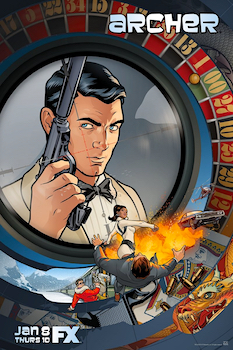 When I watched Archer’s fifth season (aka Archer Vice), I was picking it back up after years away and was set to continue it. That was in 2018. Although I was quite positive in that initial review, I was less positive by the end, and that was my enduring memory of it. Well, I’m happy to report I found season six to be a return to form.
I observed of Archer Vice that the change of setting from spy agency to drug dealers was immaterial because it was the characters not the situation that mattered. That’s true to an extent, but I suspect not entirely, because here they’re back to being spies and it all seems to have sparked back to life. That’s kind of ironic because, as anyone who follows the show will know, they eventually moved on from spies to rotate through a different setting/genre every season, which was because they’d run out of spy stories to tell; and yet comedic spy stories are clearly what these guys do best. So, I’m wary of where it’s going to go in seasons I’ve not yet got to, but, for the time being, I’m enjoying it again. This time I don’t think it’ll be years before I watch the next season.
The Twilight Zone ‘Worst Of’
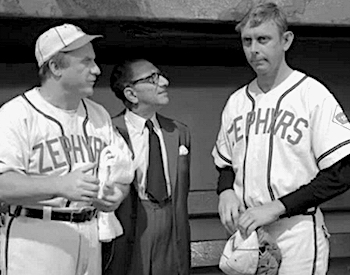 In last month’s initial selection of The Twilight Zone’s worst episodes I found one or two that weren’t wholly terrible. I’m not sure this selection fares even that well…
Going from worst to ‘best’, the episode placed 155th (of 156) on my consensus ranking is The Mighty Casey. It’s a very silly story about a robot baseball player, which substitutes loopy sound effects and the incredulous expressions of onlookers for its lack of special effects, and I guess also to cover for its lack of adherence to the laws of physics. The only interesting aspect of the story is the reactions — or lack thereof — from characters when they learn Casey is a robot. It appears to be set in the then-present of 1960, but no one’s like, “holy shit, you built a lifelike robot who can pass for human and play baseball!” No, they’re only concerned with whether his roboticness needs to be reported or kept secret. That dilemma ultimately leads toCasey needing to be given a heart, but once he gets one he’s too compassionate to keep playing. So the ultimate message is… you need to be heartless to be a sportsman? I mean, I don’t care for sports much myself, but even I think that’s stretching it. Maybe baseball fans would get a kick out of this episode, but for the rest of us it’s just rubbish.
Equally as daft is Black Leather Jackets, in 154th. A trio of young bikers move in next door to a nice all-American family, but there’s more to the lads than meets the eye. The kindest thing I can say about this episode is that some of it is nicely lit. Unfortunately, the script is pretty crap, with the dialogue being particularly awful. “Do you know the word… love?” Seriously. It’s like a spoof of bad ’50s sci-fi, but it’s real and it was made in 1964. ScreenCrush’s Matt Singer says it’s “arguably the most dated of The Twilight Zone’s 156 episodes” and I think he might be right. And after 20 minutes of uncomfortable ludicrousness, it comes to an entirely unearned bleak ending. Twilight Zone may be most famous for its last-minute surprise reveals, but when they were bad, they were really bad.
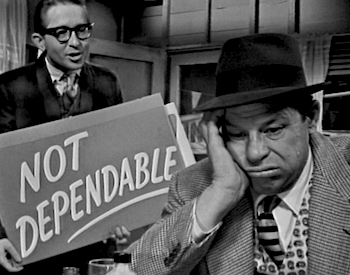 In 153rd is The Whole Truth, which is about a car that’s been haunted since it came off the production line — although this one’s considerably less threatening than Christine. Instead of a murderous machine, this ‘haunted’ car merely compels its owner to be completely honest at all times. Unfortunately for used car salesman Harvey Hunnicut, he only learns this fact after he’s bought it. It’s an obvious idea — forcing a used car salesman, that most dishonest of individuals, to tell the truth — but it doesn’t go anywhere particularly interesting with it, other than a totally far-fetched and implausible finale. Yes, far-fetched and implausible even by Twilight Zone standards! Singer calls it “the dumbest twist in the history of The Twilight Zone” and, again, I’m inclined to agree.
In the episode titled The Chaser, the eponymous character is a young man in love with a woman who doesn’t reciprocate his affections, but through a coincidental contact he meets a fellow who sells him a guaranteed love potion. The scene where he purchases the potion is really quite good, but on the whole it’s painfully obvious that this is going down a “be careful what you wish for” pathway, and all we can do is wait for it to play out. They’re not even nice characters to spend time with — he’s a pathetic obsessive and she’s a bitch. And after he gets what he wished for and doesn’t like it, he considers a spot of murder. It’s a bit… much. And the morals of it all are a little foggy, to say the least — as many commenters observe, it’s dated into being uncomfortably sexist. There’s an angle that could make this storyline worked (critical of the guy trying to drug a woman into loving him), but that’s not what’s played here.
The Incredible World of Horace Ford is one of The Twilight Zone’s most interesting failures thanks to its production history: the script was previously performed as an episode of a different show in 1955, and by the sounds of things it was just restaged wholesale for TZ. That’s probably why it doesn’t feel like it quite fits in properly — it’s something broadly Twilight Zone-ish that’s been recycled rather than a bespoke episode. It’s about a 37-year-old manchild toy designer who constantly reminisces about stuff he did when he was 10… and yet somehow he’s managed to find himself a caring wife, friends, and hold down a job for 15 years. Maybe we’re supposed to think he wasn’t always so stuck in the past, but the way other characters indulge him makes it seem like he was, even if he’s getting worse as the episode begins.
 The lead actor is Pat Hingle, of Commissioner Gordon in Batman ’89 fame. He gives a convincing performance… if this was about a Big-style situation of a stroppy 10-year-old boy trapped in a 37-year-old’s body, but that isn’t what’s actually happening. There’s an equally misaligned performance from Nan Martin as his wife: it constantly feels like she knows more than she’s letting on about what’s really happening, like the twist might be she’s responsible for, or at least knows, what’s going on… but she isn’t and she doesn’t. Honestly, I don’t blame the actors for struggling with how to play their roles, because it’s not like the story makes it clear for them what’s meant to be going on. At first it seems like another of the series’ “you can’t go home again” episodes about a man in love with nostalgic memories of his childhood, but then it turns out it’s some kind of time-loop thing… or… not. The resolution is maddeningly, deliberately inexplicable. And, yeah, turns out it is just another version of “you can’t rely on your memory of good times”. To compound the problem, it’s a season four episode, so of course it takes its sweet time playing out a storyline over 50 minutes when it only needs the 25 minutes of other seasons; and the time loop factor makes it literally repetitive.
Finally for now, Four O’Clock, which is about a mentally deranged man who wears a far-too-tight waistcoat — and, more importantly, arbitrarily decides he’s going to eradicate all evil in the world at 4pm that afternoon… he just hasn’t worked out how yet. You see, he’s spent his days investigating bad people (i.e. those whose lifestyle choices he personally disagrees with) and trying to rat them out to their employers and the like, but he’s not really getting anywhere. Naturally, it comes to an appropriately ironic ending. Paste’s Oktay Ege Kozak reckons it’s “like lazy Twilight Zone fan fiction: it exploits every pattern the series had developed so far and executes it without much originality or flair”, which is a bit harsh, but also kinda fair. Aside from the predictability of the ending, the episode’s only real problem is that it’s like spending 25 minutes in the company of an internet troll. It might be an accurate portrait of a self-righteous busybody, but that doesn’t mean it’s pleasant to be around him.
Things to Catch Up On
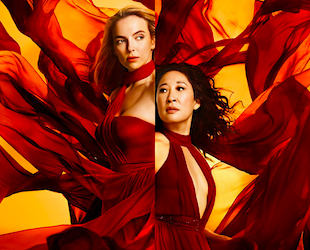 This month, I have mostly been missing Killing Eve, the third season of which is currently airing between iPlayer and BBC One. For the first two seasons we had to wait until after it had finished in the US so they could put the whole lot up on iPlayer at once, which no one noticed during season one but drew a lot of criticism during season two (you can work out why, I’m sure). Consequently, I binged those first two seasons (indeed, I came to it late, so went straight through them both), so I wasn’t sure about watching it weekly now. Also, Devs, the latest work from Alex Garland, which frankly I wasn’t even aware existed until it popped up over here (when it had already almost finished in the US). I’ve seen very mixed reviews of it, but I still intend to watch it. But, as noted above, I still haven’t finished Picard, and I’m determined to get that done before I start anything else. Hopefully next month.
Next month… hopefully I’ll finish Picard and get on to some of the stuff I’ve been missing. Also, I’ve got my eye on more classic Doctor Who, plus a third (and, I think, final) selection of the worst of The Twilight Zone.
 The 13th iteration of Red Dwarf eschews the normal episodic format for a single 90-minute special, in turn ditching the expected Red Dwarf XIII moniker for a subtitle. Well, the show has form in this: for its 21st anniversary revival we got Red Dwarf: Back to Earth instead of Red Dwarf IX, which wasn’t a whole series but instead a 90-minute single story (in that case split into three half-hours, but still).
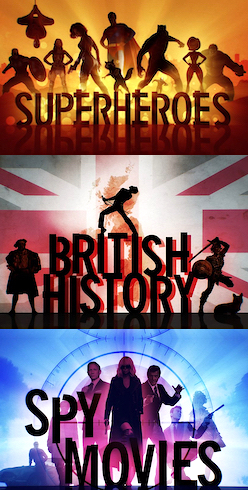 Mark Kermode’s insightful deconstruction of cinematic genres returns for a full second series (following a few occasional specials last year). I say “full” — three episodes. Whereas
  For
For 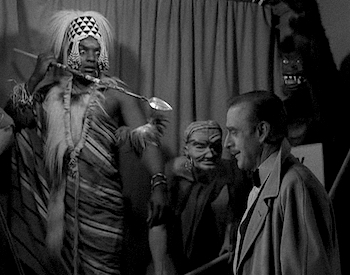 The worst episode according to Buzzfeed is The Jungle, which comes 148th overall. It’s about an American engineer who’s just returned from a trip to Africa where his company is planning to build a hydroelectric dam, and he may’ve been cursed by natives opposed to the project. As you’ve probably guessed, the episode’s biggest problem is some old-fashioned kinda-racist stereotypes about Africa and its people. I mean, the episode doesn’t even bother to say which country he’s been to, it’s just “Africa”. It’s not overtly racist, I don’t think, but it’s certainly tone deaf. There’s a scene where our hero discusses the project with the board of directors that juxtaposes the idea of witchcraft, which they all laugh at, with the irrational superstitions they all practice (not walking under ladders, etc), which is kinda neat, basically saying that “you laugh at their beliefs because you think of them as simple folk, but it’s no worse than our superstitions,” which is truthful and borderline enlightened. But that’s about all the episode has going for it. By the time he’s travelling home through the implausibly empty nighttime streets of New York City and being haunted by jungle sounds, it all seems pretty silly; and then his cab driver just drops dead, and a tramp appears and disappears out of thin air, and you wonder what all that’s got to do with anything. The only moral the episode can offer is “maybe some superstitions are right”, which is poppycock.
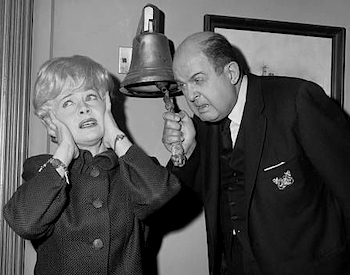 Finally, we end as we began, with an episode voted on by the public: at the bottom of Ranker’s list, and last on average too, is Sounds and Silences. It’s about an excessively-loud, domineering blowhard who gets some measure of comeuppance when he begins to be bothered by everyday sounds like a dripping tap or ticking clock. And then it goes the other way and he can’t hear loud noises at all. It’s poorly written and terribly performed — in the lead role, John McGiver is overacting something rotten. Some criticise the undercurrent of misogyny in the storyline, but I don’t know about that. He blames his mother and his wife for all his problems, but he’s an unlikeable sod so surely any misogyny is his rather than the episode’s — we’re not being asked to agree with him. The character’s ironic fate may be some form of poetic justice, but it’s too long coming to be entertaining, and too obvious to be satisfying. Whether I disliked this or Cavender is Coming more, I’m not sure, but they both merit their places at the bottom.
 This month, I have mostly been missing Westworld season 3, which is now four or five episodes in. I’ve not seen anyone talking about it on social media, so I’ve no idea if it’s good or bad, but I am inferring that not as many people are talking about it anymore, which is its own kind of criticism. One show I have heard mentioned is Tales from the Loop, Amazon’s new anthology sci-fi series. That’s been picking up good notices, and I thought it looked interesting anyhow, so I must make time for it.
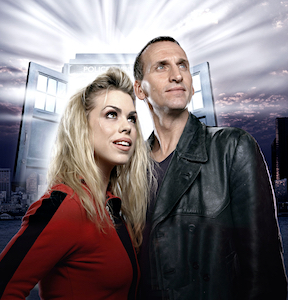 If you’re active (or looking in the right places) on social media, you may have noticed that there have been a bunch of Doctor Who watchalongs happening recently — you know, where people from around the world all watch the same thing at the same time and tweet about it. Organised by Doctor Who Magazine’s Emily Cook to provide something nice for Whovians in these trying times, they’ve been rather a big success — they’re always all over the trending topics on Twitter, and big names from the show have been persuaded to sign up and join in. The most recent one, to mark the 10th anniversary of Matt Smith’s debut episode, saw all three of its stars (Smith, Karen Gillan, and Arthur Darvill), plus writer/showrunner Steven Moffat and director Adam Smith, sharing thoughts and memories during the episode. Plus some of them have been accompanied by new fiction or stuff dug out from the archive.
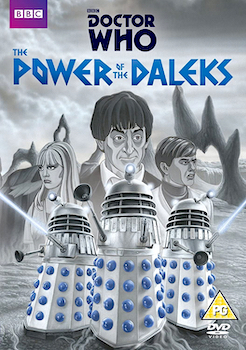 The first of the current wave of animations was The Power of the Daleks — a good place to start anyhow because it’s Patrick Troughton’s debut serial in the lead role. As he was just the second (canonical) Doctor, that makes the serial significant for the ground it was breaking — it’s the first time we’re introduced to a new actor taking over the series, something that’s become a staple of the programme (to the extent that the major plot lines and revelations of the most recent series were about the Doctor’s ability to regenerate). Sensibly, the production team paired their new leading man with the thing that had ensured the series’ popularity: the Daleks. And while the Doctor is dealing with a change of face and attitude, so are his enemies: these Daleks are keen to act as subservient aids to a human colony who have discovered their long-buried space capsule. Surely the evil fiends can’t’ve turned good?! (Spoiler alert: of course they haven’t.)
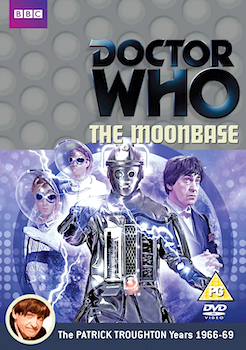 Next up by the series’ original chronology is The Moonbase — in terms of animation, Power was released in 2016 while The Moonbase was done in 2013; and half the serial survives, so it’s only half animated. It’s actually this older effort that looks better, the animation feeling much smoother and more realistic than Power, and making that look even more stilted and Flash-y by comparison. Apparently production on Power was incredibly rushed, and obviously they had to complete six episodes vs just two for The Moonbase, but the visual style is also slightly different; less obviously cartoonish.
 Much more successful in that department is The Macra Terror. No full episodes survive of this serial, so it’s back to 100% animation, and once again we have a change in style. It’s in widescreen, and it’s in colour, and the locations are bigger and more varied than they would’ve been on ‘60s TV, and the audio is so clean and clear it could’ve been recorded yesterday. It makes for a surreal viewing experience at first — are we sure this is a genuine Second Doctor story from over 50 years ago, not some recreation with perfect impressionists? After the previous animations tried to emulate the style of the original episodes, it’s a definite change of pace, but why not? It certainly brings some added dynamism to a few of the scenes — like Power, there are some all-but-silent sections; unlike Power, many of them now have some interesting visuals, which is most welcome. They had to make some trims here and there, I think for budget reasons (stuff that is inessential to the main narrative and would’ve been time consuming to animate), which is a shame (it would’ve been particularly fun to see the whole TARDIS crew dance a jig to escape at the end), but it is what it is.
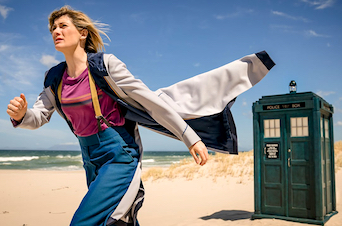 Most of the Doctor Who chatter of late revolves around what happened in the finale — no surprise there, given major revelations were teased in
 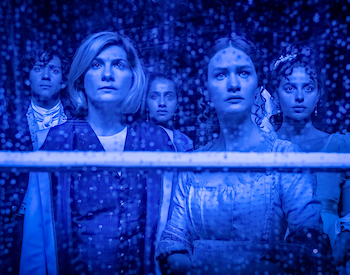 All of which means that the series’ penultimate story, The Haunting of Villa Diodati, was on a whole ‘nother level. For me, this might be the first genuine classic of this era. (If you’ve not seen it, spoilers ahead.) The first half is like a proper horror movie, complete with jump scares and other creepy effects (the dead-eyed little girl behind the door, but only when the lightning flashes… brr!) Naturally there’s a sci-fi explanation for it all, but even that was thrilling and chilling in its own way. It was the best use of the Cybermen since… er,
 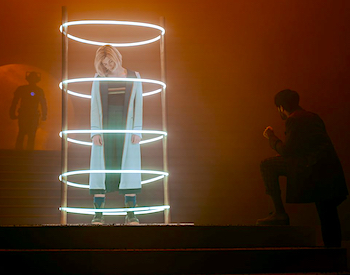 So the real point of it all comes in The Timeless Children, where the Master finds some new sources to rewrite the Doctor’s Wikipedia entry, then reads that revised version to her. I’m only half joking. Chibnall has managed to rewrite Doctor Who mythology in a way that both angers fans with its radical changes, and fundamentally makes no difference whatsoever. The Doctor used to be a mysterious alien from another planet who travelled the universe helping people. Now, she’s a mystery alien from another dimension who travels the universe helping people. Instead of being “just another Time Lord” who rejected the rules of their society and ran away to interfere, the Doctor is now a Special / Chosen One — the originator of the Time Lords’ ability to regenerate; her DNA copied and pasted into every other Time Lord… and then her memory wiped, so she grew up as just another Time Lord who rejected the rules of their society and ran away to interfere… but, y’know, was secretly special. I feel I should hate it, but, honestly, it was so guessable and so fundamentally immaterial that I just can’t muster the energy to care enough to hate it. It may yet go the way of “half-human” anyway, i.e. we’ll all just ignore and/or rewrite it as soon as someone other than Chibnall gets in charge.
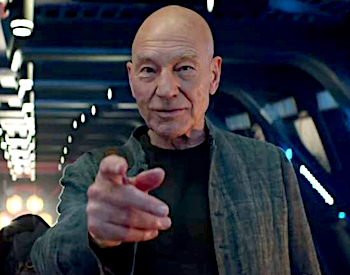 I’m a good few episodes behind on Picard now (episode 7 arrived this week), which is not because I’ve given up on it, but because it hasn’t engaged me quite enough to especially make time for it. It seems to have garnered quite the mixed reaction: the critics’ scores on Rotten Tomatoes are very strong; the user ratings on IMDb aren’t bad at all; but every time I see someone write about the show, on Twitter or another blog or what have you, it seems to be in criticism. I fall in between all these stools. There are things the show is doing well, or at least passably, but other bits that are awful; that feel like the worst of cheap made-for-syndication ’90s sci-fi, rather than the peak TV ‘prestige series’ it clearly wants to be.
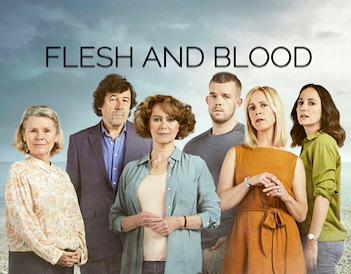 Between its short length (four parts), quality cast (Imelda Staunton, Stephen Rea, Russell Tovey), and condensed broadcast schedule (it was on four consecutive nights), this looked like a miniseries… until a last-second cliffhanger (plus some dangling plot threads) suggested there’ll be more to come. I watched it on that back of that cast and some strong reviews, which it only somewhat merited. It’s a decent family drama, about a 60-something widow getting into a relationship with a man her three grown-up children think might be conning her, with the added spice of a friendly/nosey next-door neighbour who might be a proper weirdo herself; but decent is about the extent of it — the cast elevate the material, which is fine but didn’t excite me otherwise. I expect I’ll keep watching if it comes back.
 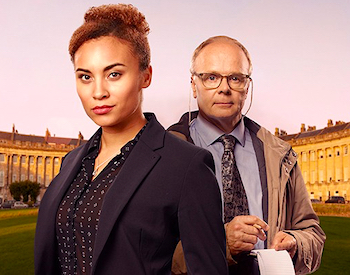 Normally I’d give a new ITV crime drama a miss, but this one is set and filmed in Bath (they got in my way one day by filming in the park I wanted to sit in for lunch, the bastards), so I had to see. It was… adequate. It’s about a hot-shot London detective who relocates to Bath, and lines like “that may be how things are done in London, but you’re in Bath now” were repeated to the point of absurdity. And don’t get me started on the accents (one local review derided the programme for thinking we all speak like Hobbits). Yet, inexplicably,
 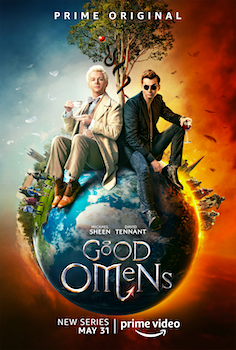 This six-part adaptation of the beloved fantasy novel by Terry Pratchett and Neil Gaiman debuted on Amazon last May, and by rights I should’ve been all over it from day one — I read the book as a kid, and loved it enough that I used to cite it as my favourite novel (the only thing that changed that was the fact it’s been decades since I last read it). But, as regular readers will know, life has got in the way of my viewing choices over the past year or so, and it was in fact that level of attachment that stopped me watching it — it needed my full attention. Obviously, that time has come.
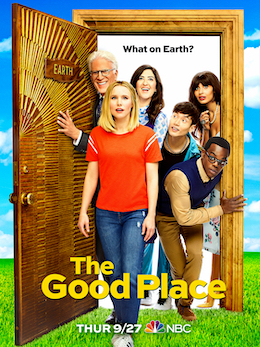 “Holy fork,” I said to myself when I saw that the series finale of this had aired at the end of January — I’d forgotten how much time had passed since I last watched it. If you’ve still not seen any of the show yourself, look away now — it’s the kind of series you want to experience knowing as little as possible, and if you read about later seasons before you’ve seen earlier ones it’s just gonna ruin stuff. (I know that sounds self-evident, but it applies to some shows more than others, and this is very much one it applies to.)
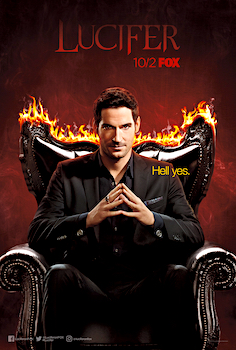 So, I’ve finally caught up on the Fox years of Lucifer — it was here that its original network cancelled the show (Netflix picked it up for a fourth season, recommissioned it for a fifth and supposedly final season, added more episodes to that fifth season, and now are reportedly lining up a sixth season too). I can see why fans were particularly enraged — the season ends on a massive change of circumstance that would’ve been a terrible place to leave it forever. Indeed, the most intriguing thing here is where it will go next, especially given the network change: Lucifer is an old-fashioned network procedural, as much concerned with case-of-the-week crime stories as it is with arc plots and the supernatural goings-on of its angels-and-demons universe; and that was to be expected when it was on an old-fashioned network, but now that it’s on Netflix, the home of bingeing, will it shift its emphasis?
 Jordan Peele’s new version of The Twilight Zone belatedly made it to UK screens a week or two back, almost 11 months after its US airing. I still haven’t watched any of it, but I am still going with cherrypicking the best of the original series.
 Moving on to
  On a lighter note, in 9th place at TV Guide is Twenty Two. I say “lighter” — the subject matter isn’t as heavy, but this is a creepy episode. It’s about a woman in hospital who has a recurring nightmare about visiting the morgue, but she’s convinced it’s not a nightmare, it’s happening. It’s the enactment of her nightmare that is genuinely creepy (just imagining having to ‘live’ it gives me chills), and the idea of not being sure what’s dreams and what’s reality is a very Twilight Zone concept. Unfortunately, some of the specifics are weak. Whether it’s a nightmare or not would be easy to disprove, considering it includes details like her breaking a glass every night, or that the morgue is room number 22 — if it is, how does she know that? (Her doctor does eventually realise this… after days of hearing about it.) And as there’s nothing else wrong with her, why not discharge her — the nightmare is so location-specific that it couldn’t happen at home. Eventually there’s a twist, and it’s a good’un, pushing the concept somewhere logical (within the bounds of paranormal ‘logic’, anyhow) and retaining the creepiness. (There’s also a question about whether it inspired a much later film series, with which it shares many notable similarities, but to say more would be a whopping spoiler.)
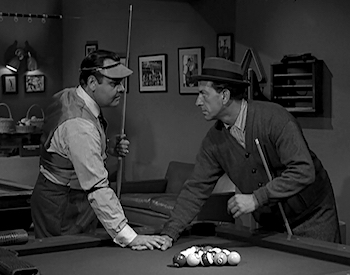 Finally for now, the one outstanding top-ten-er from
 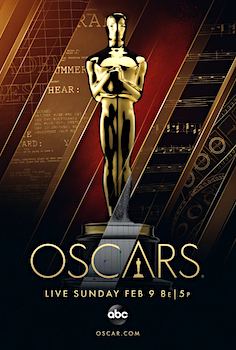 On Twitter in the run-up to the ceremony itself, there was a general acceptance that (a) Parasite was the best picture of the year, and (b) Parasite was not going to win Best Picture. As far as I could see, there was a sort of genial acceptance of these facts, which made a nice change from Film Twitter’s usual condemnation of everything. But then, blow us all down, Parasite did actually win! It’s noteworthy for all sorts of reasons — primarily because it’s the first ever non-English-language film to win Best Picture at the Oscars. It was also only the third time that the Palme d’Or and Oscar have gone to the same film. And director Bong Joon Ho became only the second individual to win four awards at one ceremony (after Walt Disney, and he did it across four different films). As for the rest of the ceremony, most of the other gongs went where expected, leaving 1917 the major victim of Parasite’s surprise success. But it still took home three well-deserved technical trophies, whereas Netflix’s The Irishman (which had the same number of nominations, ten) was shut out entirely.
 This month, I have mostly been missing Noughts + Crosses, the BBC’s high-profile adaptation of Malorie Blackman’s beloved alternate-world young adult novels. It seemed to go down very well on Twitter when the first episode aired, and the whole series is already available on iPlayer, so I’ve no excuse not to make time for it next month (other than all those Picards I have to catch up…)
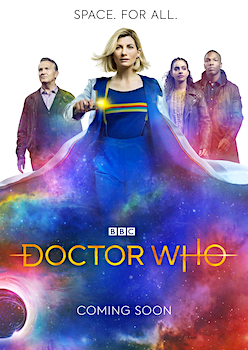 Well, it certainly has been an eventful first half to this series of Doctor Who! Never mind bringing back the Master and destroying Gallifrey (again) in
 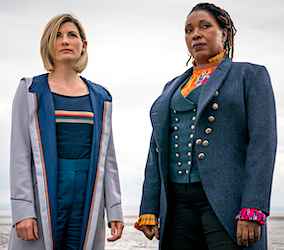 Social media and fan forums and whatnot have debated and analysed that revelation to death, so I won’t bother digging too much into all the possibilities of what it means — only time can tell. I will stake out this opinion, though: I am not a fan of the theory that she’s a pre-Hartnell version of the Doctor. The idea there were incarnations before the one we know as the first has always seemed disrespectful to me, somehow. Yeah, the Daleks ‘made’ Doctor Who, but Hartnell gave it his all too — without him week to week, and the effort he put into public appearances and the like, would the series have survived those early years? He’s not the only thing responsible for its success, and certainly not for its longevity, but he was The First — leave that be, thanks.
 The Star Trek series boldly goes where it’s never gone before: into the Prestige TV market. (Despite initial appearances, based on things like the reviews I’ve read and variably-sized season orders, I’m not sure Discovery was really “prestige TV” in the end.) Is it up to competing with the big boys of this peak TV era?
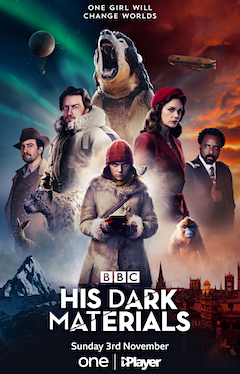 I reviewed the first three episodes of His Dark Materials in
  It’s been
 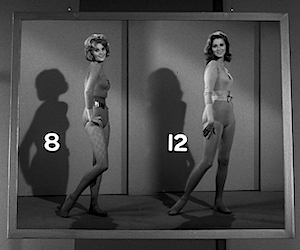 Moving beyond the top ten to complete the top 10% (i.e. the 16 best episodes), next is Number 12 Looks Just Like You (which, by-the-by, comes 10th on Thrillist). This is what some people might call “proper sci-fi” — an idea of the future spun out of what’s possible in the present, using it to present an analogy for the times we live in. And what is the analogy? In this case, there’s a few things you can read into it: mental health; conformism; the transition from childhood to adulthood; maybe all of the above; maybe something else. The only real downside is the episode hints at a wider world that isn’t explored. It’s mentioned in passing that the writing of Shakespeare, Keats, and others has been banned. Why? By whom? And while a bunch of middle-class white people are choosing which generic model they want to look like, what about other races? Class is less of an immediate issue because it seems this is a government-backed thing that everyone must undergo — but then, why do the lower classes get to look just the same as their ‘betters’? Surely there’d be different models depending on your social station? Never mind a 25-minute episode, someone could spin an entire series out of this… Still, having so much to ponder is one mark of a very good episode.
 Finally for now, the last episode in the top 16 (and the only one of today’s episodes not in anyone’s top ten), Nothing in the Dark. Probably best known for staring a young Robert Redford, it’s about an old woman who’s paranoid and agoraphobic due to her fear of meeting Death; but when Redford’s cop is shot right outside her door, she has to let him in to save his life. It’s a nice idea for a story, but (to loop back to what I was saying about The Masks) it feels a little slight in the execution. Half of the second act is taken up in a diversion with a demolition guy which is just that, a diversion. Still, there are very good performances from the two leads, and it comes with a well-meant little message by the end.
 This month, I have mostly been missing Good Omens… again! I
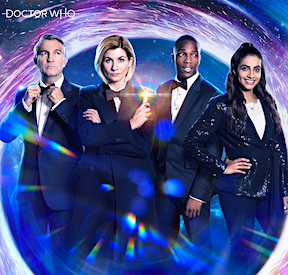 For the first time in 14 years, since the series returned, there was no Doctor Who Christmas/New Year special. Gasp! At least we got the first episodes of a new series, though — two slightly-longer-than-normal instalments (at 60 minutes each, which doesn’t feel that special when regular episodes are 50 minutes now). And a two-parter, too — the first of those since 2017. And a big two-parter at that, with big-name guest stars and big action sequences and big overseas locations.
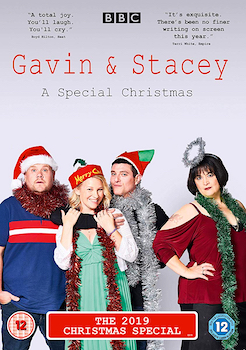 I won’t recap Gavin & Stacey’s ratings success (what with already having mentioned it at the start), nor will I touch on the controversy around its use of Fairytale of New York (I kind of get why people complained, but also, the song is the song). As for the episode itself, well, I thought it was masterful. It may be nine years since the last episode, but it was like they hadn’t been away. Not that they tried to ignore the passage of time — clearly, the best part of a decade had passed in the characters’ lives, and naturally changes had come with that — but the characters and performances felt true to their old selves, as if they’d never stopped playing them, with the rhythms and comedic style of the show fully intact. Some decade-later revivals feel like new shows — the writers have forgotten how to write it properly; the cast have forgotten how to play it right — but not this one. This was bang on what it should be. Tidy.
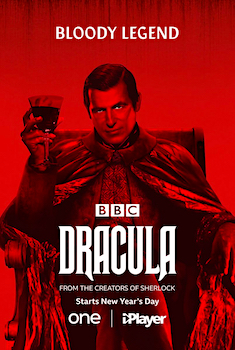 “From the makers of Sherlock”, declared the publicity for this new adaptation of the Victorian novel — so you’d be forgiven for thinking it was a present-day reimagining. But it wasn’t. Well, until it was.
 Oh my, what a treat! Regular readers will remember how much I loved
 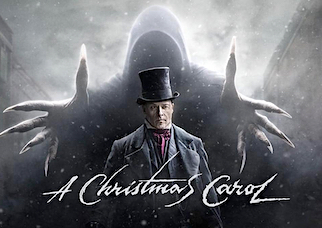 This month, I have mostly been missing the BBC’s new adaptation of A Christmas Carol, written by Peaky Blinders creator Steven Knight. I know it went down with some degree of controversy, but its revisionist, horror-tinged style looked right up my alley. Unfortunately, it was stripped over three nights, and because I knew I was going to be away for the third evening I didn’t start it. By the point I had enough time to make room for it, it was so long after Christmas that I wasn’t sure it was appropriate. Now, it’s January 12th and it’s definitely too late. Guess I’ll have to try to remember to watch it next year, then.
 When I reviewed the premiere episode of this
  This is good enough that it probably would’ve been A Major Series if it had been made 15 to 20 years ago; heck, maybe even 10 years ago. Today… well, as my previous comment implies, it just doesn’t feel slick enough in the modern TV landscape. It has its plus points (the recreation of Dunkirk was suitably epic, at least compared to the low-key-ish earlier episodes, and Lesley Manville is always magnificent), and it’s done well enough to get recommissioned (thank goodness, because the finale left a tonne of stuff dangling as if it was a midseason episode), but I’ll be surprised if it ends up in the zeitgeist in the manner of, say, Downton Abbey. (Brief thoughts on episodes 1 and 2
  This ITV-produced BBC-aired crime drama is so popular that they recently recommissioned it for both a sixth and seventh series. Originally it took the form of two-parters adapted from novels, but for the past few series they’ve done original season-long six-episode storylines. For this run, the gang find themselves up against human traffickers, using Shetland as a waypoint to get slaves into the UK. Overall it’s not as engrossing or remarkable a story as the ones told in the
  This month, I have mostly been missing Jack Ryan season 2 — perhaps not the most high-profile show I could mention here (it’s on Amazon Prime, which never gets the same buzz as Netflix, however hard they try), but I enjoyed
  On what you might unkindly call a superficial level, the third season of Netflix’s signature series was thoroughly entertaining — it’s frequently funny and exciting, with cool moments aplenty (especially in the last couple of episodes), and many enjoyable callbacks to both ’80s pop culture and within the show itself. But dig any deeper and it begins to seem less surefooted, with what felt to me like muddled themes and character arcs, and a sense that the mythology was treading water. I don’t particularly object to the way any characters were treated, nor the destinations any of them reached (especially as a fourth season was inevitable, so wherever this run finished up was only ever temporary), but I didn’t feel like they were being guided anywhere with any real purpose. There’s something to be said for storylines like that, but when you’re trying to play some kind of redemption arc, or a coming-of-age tale about burgeoning independence (or whatever), I feel like you need to be a bit clearer-eyed. But hey, I still enjoyed it a lot — it’s a fun watch, and I imagine even more so if you have nostalgic memories of an ’80s childhood — I just think there’s still some room for finessing.
 Alan Moore and Dave Gibbons’s graphic novel Watchmen is a seminal work of the form — I’m sure you don’t need me to tell you about that at this point. Over the past decade it’s been
 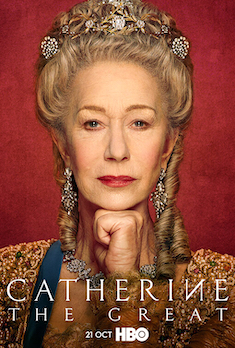 HBO and Sky Atlantic have teamed up for this lavish four-parter about the life of the famous Russian ruler, conceived by and starring Helen Mirren. The big bucks those broadcasters are known for are all over the screen here — it looks suitable sumptuous, with grand locations that positively shine, especially in UHD. Unfortunately, nothing else about the production is up to scratch. The writing is thoroughly mediocre — it most reminded me of The Tudors, although that seemed to know it was a bit of trashy fun, whereas I think Catherine the Great wants to be taken very seriously. But the dialogue is uninspiring, the characters uninteresting and underdeveloped (we’re told the relationship between Catherine and Potemkin is some great love affair, but they strop around like moody, jealous teenagers), and the flat performances do nothing to elevate any of it — and despite her general acclaim, Mirren is probably the weakest of the lot. Pretty, then, but vacant.
 The BBC’s 1970s policy of junking programmes because they supposedly no longer had commercial value is a familiar topic for Doctor Who fans, who’ve spent decades hoping and hunting for copies of missing episodes. But it was an organisation-wide policy, so Who was far from the only show that suffered — Dad’s Army was another. It’s a perennially popular sitcom here (even today repeats land among the most-watched programmes of the week), so you can see why it made commercial sense to invest in recreations of the missing episodes — especially as there’s only three of them.
 The writer most popularly known for reviving Doctor Who, Russell T Davies, returns to science fiction for the first time in almost a decade with this acclaimed miniseries. This is a very different kind of sci-fi, though — no space invaders or malicious AI or mad scientists here. No, this story begins in 2019 as we know it and then moves across the next 15 years to explore just where we’re headed, in a realistic and grounded way. It focuses on a normal family from Manchester — four siblings, their grandmother, and assorted spouses and children — and how the changes in society and technology affect them. It’s a story of the ordinary people; the folks who don’t shape history, history happens around and to them.
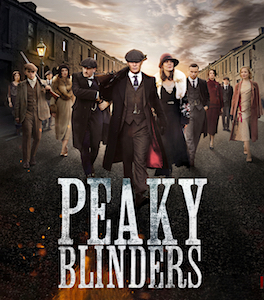 Birmingham’s premier gangsters return with a storyline that forces them to reckon with their past actions. So it’s unfortunate that this is a show that can’t be doing with recaps at the start of episodes. I spent most of the first instalment trying to remember the events of previous series and how they’d led to where things were, which is an unwelcome distraction that could be easily solved with a simple “previously on” at the opening. I don’t know why Netflix hate them so much (well, I do — it’s the assumption you’ll just binge-watch everything, and if you don’t then they want you to feel you have to; and we’re all just buying into what we’re told to do, which is half the problem (funnily enough, that’s a lot of what Years & Years was all about…)
 Where the other shows reviewed this month are big, brassy productions told on a mythic scale, Unforgotten is almost the opposite, and yet it tackles themes no less grand. But it’s a quiet, understated drama, as London detectives Nicola Walker and Sanjeev Bhaskar (along with their team) investigate a cold-case murder, in the process having to tackle the fallout that time has wrought on the victims left behind.
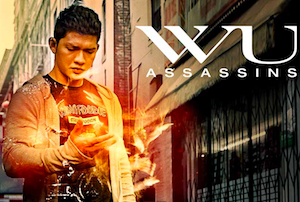 This month, I have mostly been missing Wu Assassins on Netflix, starring Iko “The Raid” Uwais. The trailers look perhaps a bit cheesy, but also promise regular doses of Uwais’ incredible combat skills, so that’ll do me. Elsewhere, Preacher has embarked on its fourth and final season. Considering I’ve not seen most of season two and none of season three, that’s a bigger catchup project. And talking of stuff I’ve not seen, I never got round to Mindhunter season one, even though David Fincher directed some of it, and now there’s a second season, which he’s also partly directed. Considering it’s been five years since
  Ripper Street gets a comedic makeover in Channel 4’s recent comedy series, which stars Matt Berry (of Toast of London fame, and also recently seen starring in the series version of What We Do in the Shadows) as a Victorian detective by the name of Rabbit. He investigates murders and other nefarious goings-on amid the scum of the East End accompanied by a rookie posh-boy sidekick (Freddie Fox) and the force’s first female officer (Susan Wokoma).
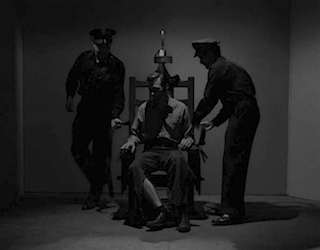 Having exhausted the top tens of both IMDb’s and ScreenCrush’s Twilight Zone episode rankings in my
 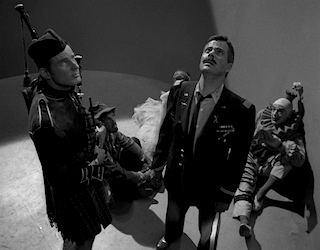 There’s closer agreement about Paste’s 6th choice, season three’s Five Characters in Search of an Exit, which ranks 14th on IMDb and 32nd on ScreenCrush. Singer writes that “if you enjoy the movie
 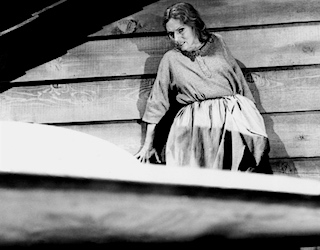 One of the series’ more famous episodes is in 7th place for Paste (IMDb #28, ScreenCrush #58): The Invaders, starring Agnes Moorehead as the lone inhabitant of a remote shack, who must suddenly deal with hostile six-inch spacemen landing their saucer on her roof. It’s a near-silent drama, as Moorehead is terrorised by the miniature monsters and struggles to fend them off. And, obviously, there’s a twist. I don’t want to sound boastful, but, yeah, I saw it coming. I’ve said this many times now, but I really do suspect the series is a victim of its own success in this regard — it’s 60 years old and highly influential, so of course all the media a modern viewer has experienced leaves us ready to guess the outcomes. Actually, I bet it’d be a great show for kids — a formative experience; and, with less media exposure, the twists might retain the appropriate level of mind-blowing-ness. Anyway, at least The Invaders has more going for it than just the final reveal, with the woman vs the mini-spacemen playing like a tense horror movie. There’s a lot of praise for Moorehead’s performance, but I thought she was overacting somewhat in compensation for her lack of dialogue. In fairness, though, this was made for 1961 TV sets — with no speech to work with, the performance needed to be ‘big’ to come over on those tiny tellies. Unfortunately, it’s another mark against the episode when watched in HD on a modern setup.
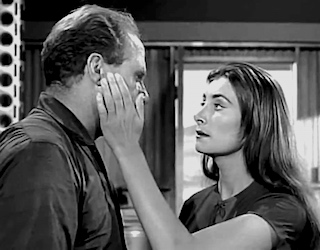 Finally for now is The Lonely, which is ranked 10th on Paste (obv.) but only 105th on ScreenCrush (IMDb is much closer at 27th). Sorry to harp on about this, but here’s another episode that may’ve been great once but recent years have seen other films and TV series tackle similar themes in much greater depth, far surpassing the mere 20-odd minutes it’s afforded here. Indeed, this is the rarest of things in my experience: a Twilight Zone episode where 25 minutes isn’t enough to explore its concept. It’s about a man imprisoned in solitary confinement. His cell? An entire asteroid (filmed on location in Death Valley, which adds a magnificent grit and desolation to the visuals). He’s visited quarterly by a supply ship, and after a few years the captain takes pity on him and brings a robot woman to be his companion. It’s as good a setup as any, but the episode simply doesn’t have the time to dig into the questions and musings it throws up — though it’s not helped by wasting most of the first half on chatter between the prisoner and the captain, establishing their relationship more fully than the one between the prisoner and his robo-woman; a relationship the episode supposedly hinges on.
 This month, I have mostly been missing Stranger Things season 3, which seems to have provoked controversy with some of its character decisions (I’ve been avoiding spoilers, but have seen news headlines that imply as much); and Veronica Mars season 4, which, er, seems to have provoked controversy with some of its character decisions (I’ve been avoiding spoilers, but have also seen news headlines that imply as much). As they’re only eight episodes apiece, hopefully I’ll have found time for them before next month’s column. (Veronica Mars still doesn’t have a UK broadcaster (in fact, I don’t think it has one anywhere outside of the US and Canada, I guess thanks to it being on Hulu (though other Hulu shows have international carriers, so who knows what’s going on here)), but where there’s a will there’s a way.) And if that wasn’t enough, Amazon also recently released subversive comic book adaptation The Boys, which also looks right within my wheelhouse. That’s also eight episodes, incidentally. I seem to remember reading a while ago that Netflix’s research suggested eight was the optimum number of episodes to have in a season nowadays. I guess everyone took that to heart.
 100Films.co.uk