The Rocky Horror Picture Show (1975)

100 Films’ 100 Favourites #76

Give yourself over to absolute pleasure.

Country: UK & USA
Language: English
Runtime: 100 minutes
BBFC: AA (1975) | 15 (1987) | 12 (1991)
MPAA: R

Original Release: 15th August 1975 (UK)
First Seen: TV, 31st December 1998

Stars
Tim Curry (Annie, Clue)
Susan Sarandon (The Front Page, Thelma & Louise)
Barry Bostwick (Weekend at Bernie’s II, Spy Hard)
Richard O’Brien (Flash Gordon, Dark City)
Meat Loaf (Roadie, Fight Club)
Charles Gray (The Devil Rides Out, Diamonds Are Forever)

Director
Jim Sharman (The Night, the Prowler, Shock Treatment)

Screenwriters
Richard O’Brien (Shock Treatment, Digital Dreams)
Jim Sharman (Shirley Thompson Versus the Aliens, Shock Treatment)

Based on
The Rocky Horror Show, a stage musical by Richard O’Brien.

Music & Lyrics
Richard O’Brien (Shock Treatment)

The Story
When straight-laced young couple Brad and Janet approach a spooky castle in need of shelter, they stumble into the strange world of Dr. Frank-N-Furter, who’s throwing a party to celebrate the ‘birth’ of his new creation: a tank-grown muscleman named Rocky. But it’s not only Rocky who’ll be getting an awakening…

Our Heroes
Good clean all-American kids Brad and Janet, newly engaged but forced to stop off at a creepy castle after their car breaks down in a storm. By the end of the night, they’ll certainly have learnt a new thing or two…

Our Villains
Dr. Frank-N-Furter — not much of a man by the light of day but by night he’s one hell of a lover. Just a sweet transvestite from Transexual, Transylvania, which would be fine if he didn’t get a bit murderous. Surrounded by a gaggle of home help and hangers-on, like hunchbacked handyman Riff Raff, mental maid Magenta, and vaudevillian groupie Columbia.

Best Supporting Character
Charles Gray is perfect as The Narrator, holed up in his wood-panelled study and telling the audience this fantastical story with admirable matter-of-factness.

Memorable Quote
“Let’s do the time warp again!” — everyone

Quote Most Likely To Be Used in Everyday Conversation
“I see you shiver with antici…

…pation.” — Dr. Frank-N-Furter

Memorable Scene
The title sequence: the opening number sung by a pair of very big, very red lips. Simple, but iconic.

Best Song
Rocky Horror is one of those musicals where almost every song is genius: the cleverly reference-filled, surprisingly melancholic, bookending refrain of Science Fiction/Double Feature; the wittily rhymed Dammit Janet; the mission statement that is Sweet Transvestite; the sweetly kinky Touch-A, Touch-A, Touch Me; the epic multi-part floor show climax… and more. That said, I always disliked the post-climax Super Heroes, and wasn’t alone: it was actually cut out of the original US release. But then I heard Richard O’Brien sing it with acoustic guitar on the DVD special features, and in that variation it’s a darkly beautiful song. But for all that, when talking about the best song in Rocky Horror you really can’t beat the utterly iconic Time Warp.

Making of
Many films have “Easter eggs” — little half-hidden treats for fans to discover — but not many have them literally. The exception, of course, is Rocky Horror. Apparently the crew had an Easter egg hunt (which, considering the movie was shot from October to December, doesn’t make much sense) but they weren’t all found, hence why some turned up in the final film. I won’t tell you where they are (I mean, five seconds on Google and you can find out), but there are supposedly three.

Next time…
Initially a flop, it was when someone got the idea to screen the movie for the midnight crowd that Rocky Horror caught on. The interactive, ritual-filled experience of these screenings is legendary, and they’ve continued ever since — to the point where some cinemas have it as part of their regular schedule, and the DVD & Blu-ray releases include alternate tracks featuring the audience participation. It also means that, officially speaking, Rocky Horror has the longest theatrical run in movie history. In 1981, Sharman and O’Brien produced a sort-of-sequel, Shock Treatment. A new adventure for Brad and Janet (both recast), it featured several Rocky Horror actors (O’Brien, Patricia Quinn, Little Nell, Charles Gray) in new roles. It didn’t go down very well, though apparently it has its fans — a cult following within a cult following, I guess. In 2010, once-popular high school musical TV series Glee aired a tribute episode, The Rocky Horror Glee Show. It is truly horrendous; a plasticky, sanitised, neutered version of something that should never be those things. So I don’t hold out much hope for the next thing the same network (Fox, of all places!) have planned for the property: after years (decades?) of rumours, they’re finally making good on the threat by remaking the film. Officially dubbed The Rocky Horror Picture Show: Let’s Do the Time Warp Again, the clips released so far look almost as bad as the Glee version. We’ll see. Finally, the original stage show has continued across numerous productions, and last year a 40th anniversary gala performance was simulcast to cinemas across Europe and later aired on TV. It’s now available on YouTube. I’ve not watched it, but I suspect it’s a better bet than that Fox version.

Awards
1 Academy of Science Fiction, Fantasy & Horror Films Golden Scroll nomination (Best Horror Film (it lost to Young Frankenstein))

What the Critics Said
Rocky Horror is actually a very good film in its own right; made on a small budget, it’s a triumph of clever filmmaking by Sharman, who should have gone on to bigger things (and might have, had he not arrived at the end of an era). Yes, there are little technical glitches, but rarely has there been a more cleverly and creatively shot and edited film. Nearly every angle, every cut, every zoom shot, every optical transition is used to effectively maximize its respective scene. […] Remember the cult status, yes, but sometime try watching Rocky Horror just as a movie. It pays real dividends.” — Ken Hanke, Mountain Xpress

You What?
“Viewed on video simply as a movie, without the midnight sideshow, it’s cheerful and silly, and kind of sweet, and forgettable.” — Roger Ebert, Chicago Sun-Times (Rocky Horror is many things, but “forgettable”? Hm.)

Score: 80%

What the Public Say
Rocky Horror is so distinctive, so unique, that it could’ve come off as bizarre, alien, and off-putting, but it didn’t. It has such self-aware charm, a catchy soundtrack that sticks in the head for days, and hilarious performers, that it overcomes its rather dull protagonists. Of course, Brad and Janet have their own charm as parodies of the square-jawed hero and his girl, but they will always be the least interesting characters on screen.” — That Other Critic

Verdict

Some people dismiss Rocky Horror as a film, thinking its only worth (if they acknowledge it has any) is as a live experience. I’ve never seen it ‘live’ (and don’t have an especially great desire to) but will happily fight its corner as a solo viewing experience. It’s camp and transgressive, but ‘safely’ so — that’s not a criticism, just an observation that it can work well as an eye-opener for the young or more conservative. But beyond that social impact, the outré style belies an underlying cleverness, with witty writing that features abundant references to sci-fi B-movie classics, precisely pitched performances, and, of course, the unforgettable toe-tapping tunes. Whether alone or in a packed auditorium throwing stuff and shouting back at the screen, it’s just fun. To watch it is to, indeed, give yourself over to absolute pleasure.

#77 will be… the greatest love story the world has ever known.

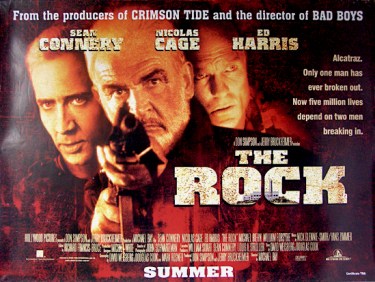
The Rock (1996)

100 Films’ 100 Favourites #75

Alcatraz.
Only one man has ever broken out.
Now five million lives depend on two men breaking in.

Country: USA
Language: English
Runtime: 136 minutes
BBFC: 15 (uncut, 1996) | 15 (cut on video, 1996) | 15 (uncut on video, 2002)
MPAA: R

Original Release: 7th June 1996
UK Release: 21st June 1996
First Seen: TV, c.2000

Stars
Nicolas Cage (Raising Arizona, National Treasure)
Sean Connery (You Only Live Twice, The Untouchables)
Ed Harris (Apollo 13, A Beautiful Mind)

Director
Michael Bay (Bad Boys, Transformers)

Screenwriters
David Weisberg (Payoff, Double Jeopardy)
Douglas S. Cook (Holy Matrimony, Criminal)
Mark Rosner (Blanco, Empire City)

Story by
David Weisberg (Holy Matrimony, Criminal)
Douglas S. Cook (Payoff, Double Jeopardy)

The Story
When a rogue US General and his team of Marines occupy Alcatraz, threatening to launch a gas attack on San Francisco unless their demands are met, a field-inexperienced chemical weapons specialist is paired with the only man to ever escape from the prison to break in and prevent the attack.

Our Heroes
Dr Stanley Goodspeed is a mild-mannered vinyl-loving FBI chemist, as unlikely an action movie leading man as… well, Nicolas Cage once was. His new partner is John Mason, a former SAS Captain who’s been imprisoned without charge by the US for decades. He’s also clearly more skilled than both an entire squad of mutinous Marines and, therefore, the entire team of Navy SEALs who initially fail to stop them. That’s the SAS for you.

Our Villain
Brigadier General Francis X. Hummel, a covert ops commander who is seeking recompense for his men who were killed in action but have gone unacknowledged due to the secretive nature of their missions. Fundamentally a good man, driven to less good methods. A particularly effective villain because he’s relatively sympathetic to the audience. Not all the men on his team are so trustworthy, however…

Memorable Quote
Stanley: “You’ve been around a lot of corpses. Is that normal?”
Mason: “What, the feet thing?”
Stanley: “Yeah, the feet thing.”
Mason: “Yeah, it happens.”
Stanley: “Well I’m having a hard time concentrating. Can you do something about it?”
Mason: “Like what, kill him again?”

Memorable Scene
Flarey goodBelieving the mission lost, the military has launched its back-up plan: an airstrike that will destroy the poison gas but also kill everyone on the island. Naturally our heroes manage to complete their mission nonetheless, and as the jets streak across San Francisco Bay, Stanley attempts to signal abort with two green flares. In slow motion, of course.

Making of
The final screenplay actually has many more authors than credited — not unusual for a Hollywood blockbuster, but the uncredited ones are of considerably higher profile. David Weinberg and Douglas Cook penned the original spec script, but Jonathan Hensleigh worked closely with Michael Bay on the final shooting script. When Writers Guild arbitration awarded the credit elsewhere, Bay wrote an open letter calling the process a “sham” and a “travesty”. Others who worked on the screenplay included Aaron Sorkin and Quentin Tarantino, with British screenwriting team Dick Clement and Ian La Frenais brought in at Connery’s behest to rework his dialogue, though they ended up rewriting everyone else’s too.

Previously on…
There’s a theory that Connery’s character is actually an older James Bond, incarcerated under a pseudonym. Obviously that isn’t actually there in the text, but is kind of a fun idea.

Awards
1 Oscar nomination (Sound)
1 MTV Movie Award (On-Screen Duo (Sean Connery & Nicolas Cage))
2 MTV Movie Award nominations (Movie, Action Sequence (for the yellow Ferrari’s chase through San Francisco))
2 Saturn nominations (Action/Adventure/Thriller Film, Music)

What the Critics Said
“the movie’s best asset is the old-fashioned, buddy-movie interplay between Cage and Connery — Cage as the frantic, white-collar lab technician who doesn’t like guns, Connery as the weathered, resourceful old pro who’s escaped from three maximum-security prisons and has a one-liner ready for every big, scary guy he kills.” — Gary Thompson, Philadelphia Daily News

Score: 66%

What the Public Say
“The screenplay […] does a sneaky thing on the way to Alcatraz. The two heroes are developed, or at least as much as one can expect for a standard action film. The action is diverted to the streets of San Francisco and a first-rate car chase. After an hour into the running time, the focus switches to the site in the movie’s title. These things are important in that they keep the film from stretching out the time spent on Alcatraz and becoming bloated on unnecessary action scenes. The audience has invested its interest in the heroes and can enjoy the shootouts now that more is on the line.” — Mark Pfeiffer, Reel Times: Reflections on Cinema

Verdict

Michael Bay has become a bit of a joke, thanks to his tendency to let his movies get distracted by explosions, special effects, and young women, while not paying enough attention to the screenplay. However, earlier in his career — and sometimes in later years, too — he’s produced enough quality work to suggest he does know what he’s doing… or maybe he’s just lucked out a couple of times. Either way, this is probably the pinnacle of his oeuvre. While it functions well in Bay’s familiar wheelhouse of adrenaline-pumping action-thriller, it’s elevated by a screenplay that offers dialogue which, at times, can be witty and/or intelligent; and, most importantly, which creates sympathetic characters on both sides of the conflict. There aren’t many actioners where you can say “the writing’s the best bit”, are there?

#76 will be… just a jump to the left…

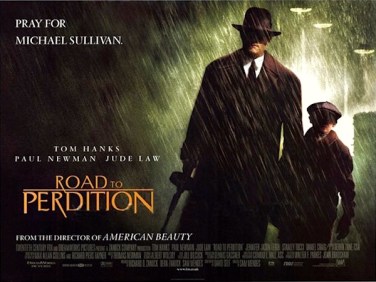
Road to Perdition (2002)

100 Films’ 100 Favourites #74

Pray for Michael Sullivan.

Country: USA
Language: English
Runtime: 117 minutes
BBFC: 15
MPAA: R

Original Release: 12th July 2002 (USA)
UK Release: 20th September 2002
First Seen: DVD, March 2003

Stars
Tom Hanks (Forrest Gump, Bridge of Spies)
Paul Newman (Cool Hand Luke, Butch Cassidy and the Sundance Kid)
Daniel Craig (Lara Croft: Tomb Raider, Casino Royale)
Jude Law (Gattaca, Closer)
Tyler Hoechlin (Everybody Wants Some!!, Fifty Shades Darker)

Director
Sam Mendes (American Beauty, Skyfall)

Screenwriter
David Self (Thirteen Days, The Wolfman)

Based on
Road to Perdition, a graphic novel by Max Allan Collins and Richard Piers Rayner.

The Story
1931: Michael Sullivan is an enforcer for mob boss John Rooney, who thinks of him like a son. When Sullivan escorts Rooney’s unstable real son, Connor, to a meeting, the guy snaps and the other side are murdered — an event witnessed by Sullivan’s own son, Michael Jr. In an attempt to cover it up, Connor kills Sullivan’s wife and other son, while Michaels Sr and Jr escape, and begin a journey to take revenge.

Our Heroes
Michael Sullivan Sr is, on paper, not much of a hero: a mob hitman, his trade is death. But when half his family is murdered, he’ll do what’s necessary to protect his surviving son and get justice — his kind of justice, anyway. In the process, he bonds with Michael Jr, finally developing the relationship they never had before. Perpetual nice guy Tom Hanks tones that way down to give what I think must be one of his best performances, which brings out the heart in Sullivan without tipping over into regular Hanks territory, in the process allowing the viewer to empathise with a man who in lesser hands would just be a cold-blooded murderer.

Our Villains
Connor Rooney is a liability, a deranged coward and crook who wishes he was a hard man. But he’s no threat — his father, mob boss John Rooney, is the one with the power and means. At heart he’s no villain to Michael Sullivan — he’s essentially his father — but after Connor murders Sullivan’s family, Rooney feels he must protect his own blood, despite caring for him less than Sullivan. With an actor of Paul Newman’s quality in the role, every nuance of Rooney’s complex emotional position is subtly explored.

Best Supporting Character
To try to stop Sullivan, the mob set hitman Maguire on his trail. He’s a crime scene photographer who uses his job to cover his crimes, and is a nasty, rat-like creep. Jude Law rejects his frequent pretty-boy-ness to really inhabit that part. (Basically, everyone is fantastic in this film.)

Memorable Quote
John Rooney: “This is the life we chose, the life we lead. And there is only one guarantee: none of us will see heaven.”
Michael Sullivan: “Michael could.”

Memorable Scene
Heavy rain falls as Rooney and his men cross an empty street to his car. When they reach it, the driver inside is dead, the door locked. They spread out across the street, guns ready, but there’s no one to be seen… Then a muzzle flashes and the men are slowly cut down — leaving only Rooney standing. As the shooter emerges from the shadows, the camera tracks in on Paul Newman, his posture and expression saying it all: he knows who it is, he knows his time has come, and he’s resigned to it. All of this set to just the sound of Thomas Newman’s mournful piano-and-strings soundtrack. Only when Rooney turns around does the rain begin to bleed onto the soundtrack, and we see the man is (of course) Michael Sullivan. “I’m glad it’s you.” With tears in his eyes, Sullivan finishes his job.

Technical Wizardry
There are several reasons the above scene works so well — the pace of the editing, the sparse sound design, the music, the performances — but one of the biggest is the cinematography. The work of Conrad L. Hall, this is just one of the most obviously beautiful sequences in a film full of gorgeous imagery. He won a well-deserved posthumous Oscar for his work, his third from a career that garnered ten nominations.

Making of
One of the locations found was considered physically perfect but the wrong way round, with room only to shoot from right to left and not vice versa. Rather than, say, find somewhere else, production designer Dennis Gassner and his team dressed the location to be flipped, not only reversing street signs and car number plates, but even changing the side of the steering wheels on all the vehicles.

Awards
1 Oscar (Cinematography)
5 Oscar nominations (Supporting Actor (Paul Newman), Score, Art Direction-Set Decoration, Sound, Sound Editing)
2 BAFTAs (Cinematography, Production Design)
1 BAFTA nomination (Supporting Actor (Paul Newman))
2 Saturn nominations (Action/Adventure/Thriller Film, Performance by a Younger Actor (Tyler Hoechlin))

Despite some initial build-up, Road to Perdition wound up an awards season also-ran, losing out to that well-remembered classic Chicago and everyone’s desire to try to give Martin Scorsese an Oscar for Gangs of New York.

What the Critics Said
“The greatest gangster film since The Godfather.” — News of the World

“To call this the greatest gangster film since The Godfather would be an overstatement, though not by much. It is, however, the most brilliant work in this genre since the 1984 uncut version of Sergio Leone’s flawed but staggering Once Upon a Time in America. Road to Perdition, a less sprawlingly ambitious movie, is without major flaws.” — Eric Harrison, Las Vegas Sun

Score: 81%

What the Public Say
“In a film about the mob and hitmen, the violence is generally kept to a minimum. And when it is done, it’s either very quick, or it’s shown partially offscreen or via a reflection. […] Throughout the film, the violence is never glorified as something heroic. But instead, it’s something that’s done only when it is necessary, and the weight of it is always felt. During the first killing in the film, the first one that Michael sees through a crack in the wall, it’s done unexpectedly and the victim falls to the ground in slow motion. When Mike brings out his Tommy Gun, it’s not something he does with glee, it’s something very deliberate as he solemnly takes the pieces out of the briefcase to assemble it.” — Bubbawheat, Flights, Tights, & Movie Nights

Verdict

Road to Perdition feels like a film that didn’t get its due at the time, and has become almost something of a cult favourite since. Not “cult” in the traditional “gaudy fun B-movie” sense, but in that it has a dedicated following of people who realise its power. On the surface it’s a revenge thriller, replete with ’30s mob style and Tommy Gun massacres, but under that is a more emotive tale about masculinity as it pertains to the father/son dynamic. It’s all handled with sensitive artistry by director Sam Mendes, supported by first-rate technical merits across the board (the design and music are particularly noteworthy, in addition to the cinematography I already mentioned), and career-best-level performances from a strong cast. It lacks the sheer scale and scope to go toe-to-toe with The Godfathers as the definitive gangster movie, but as a smaller, personal tale, it’s exceptional.

#75 will be… Bayhem.

Return of the Jedi (1983)

100 Films’ 100 Favourites #73

Return to a galaxy far, far away.

Also Known As: Star Wars: Episode VI – Return of the Jedi

Country: USA
Language: English
Runtime: 132 minutes | 135 minutes (special edition)
BBFC: U
MPAA: PG

Original Release: 25th May 1983 (USA)
UK Release: 2nd June 1983
First Seen: VHS, c.1990

Stars
Mark Hamill (The Empire Strikes Back, The Guyver)
Harrison Ford (Indiana Jones and the Last Crusade, Patriot Games)
Carrie Fisher (The Empire Strikes Back, The ‘Burbs)
Anthony Daniels (The Lord of the Rings, Star Wars: Episode I – The Phantom Menace)
Peter Mayhew (Star Wars, Comic Book: The Movie)

Director
Richard Marquand (Eye of the Needle, Jagged Edge)

Screenwriters
Lawrence Kasdan (Raiders of the Lost Ark, Silverado)
George Lucas (American Graffiti, Star Wars: Episode III – Revenge of the Sith)

Story by
George Lucas (Indiana Jones and the Temple of Doom, Radioland Murders)

The Story
As the Galactic Empire construct a new Death Star, Jedi-in-training Luke Skywalker — the Rebel Alliance’s best hope of defeating the evil Darth Vader — is busy rescuing his friend Han Solo from the clutches of crime lord Jabba the Hutt. Meanwhile, the powerful Emperor waits, intending to convert the young Jedi to the Dark Side…

Our Heroes
Luke Skywalker: Jedi Knight.
Han Solo: defrosted resistance captain.
Princess Leia: sister, love interest, bikini-wearer. Is it just me or does Leia get a pretty poor deal as the trilogy goes on?

Our Villains
Quite possibly the greatest villain ever created for the movies, Darth Vader. Here he’s on an arc of redemption, so there’s also the Emperor, who has the appearance of a wizened old man but is strong in the Force. As Vader himself puts it, “the Emperor is not as forgiving as I am.” Uh-oh!

Best Supporting Character
R2-D2 is the best supporting character in every Star Wars film, but in this one we are introduced to Jabba the Hutt (well, unless you watched Episode I or the New Hope Special Edition first). A giant, fat, slug-like crime lord who is impervious to Jedi mind tricks and apparently has a fondness for metal bikinis, he’s as physically repulsive as are his methods and mores.

Memorable Quote
“Many Bothans died to bring us this information.” — Mon Mothma

Quote Most Likely To Be Used in Everyday Conversation
“It’s a trap!” — Admiral Ackbar

Memorable Scene
The speeder bike chase — arguably the best action sequence in the entire original trilogy. Considering this is a series of films that include three or four duels with frickin’ laser swords, that’s some feat.

Memorable Music
John Williams’ music is an essential part of the Star Wars experience. While no single tune in Jedi is as iconic as the Main Theme from A New Hope or the Imperial March from Empire, the overall score is as good as ever.

Technical Wizardry
The background plates for the speeder bike chase were captured by having a Steadicam (operated by the system’s creator, Garrett Brown) walked through a forest while filming less than one frame per second. When played back at regular 24fps, this 5mph stroll came out more like a 120mph hurtle. They spent three days filming to get enough footage for the whole sequence.

Truly Special Effects
These days, the answer to the question “how did they do that?” is “CGI”. Back in the ’80s, however, they had to be a bit more creative — leaving an abundance of achievements worthy of inclusion here. For example, the shot where the Imperial fleet spring their trap on the Rebels was the most complex matte shot ever attempted, with dozens of separate model elements having to be printed in. Or there’s the puppet work. Jabba was full-size, of course, and the 2,000lb costume was operated by four puppeteers: one for his right arm and jaw, another for his left arm and tongue, both of whom moved his body; another had a cable control to move the mouth and nostrils, using his feet to work bellows to simulate breathing; and the fourth moved his tail. Plus the smoke for when Jabba uses his pipe was apparently created by someone smoking a cigar and blowing it up a tube. For the Rancor, on the other hand, Lucas wanted to use a Godzilla-style man in a suit, but the tests didn’t work very well. The final result is not stop-motion, as you might expect, but an 18-inch rod puppet. Filming it was treated as a live-action shoot, though various techniques were used to conceal the methodology, like slow-motion or running the film backwards — anything they could think of to help remove the sense of “Muppet-ness”.

Letting the Side Down
When it comes to Lucas’ Special Edition fiddling, most people focus on the “Han shot first” complaint. Personally, I find the change at the end of Jedi — where Hayden Christensen has been pasted over Sebastian Shaw as Anakin’s Force ghost — more egregious. That said, the stupid song & dance number in Jabba the Hutt’s palace runs it a close second. On the bright side, the added shots of planets around the Empire celebrating the destruction of the Death Star helps aggrandise an otherwise low-key post-climax celebration.

Making of
So, that metal bikini, eh? What a blatant bit of fan service by that dirty old George Lucas! Well, apparently it actually came about because Carrie Fisher herself complained about her all-covering costumes in the first two films meaning you couldn’t tell she was a woman. Costumer Aggie Guerard Rodgers’ design was inspired by the work of famed fantasy artist Frank Frazetta, but whoever decided it should be made as such a rigid piece wasn’t thinking ahead: the solidness of the top meant it didn’t move with Fisher’s body, and she refused to use double-sided tape, so before each take someone from wardrobe had to (to quote IMDb) “ensure that her breasts were still snug inside the costume”. Nice work if you can get it. Nonetheless, several scenes had to be reshot due to what we now call “wardrobe malfunctions”.

The Ewok Line
To quote from the How I Met Your Mother Wiki, “The Ewok Line correlates the birth year of a person and the subsequent appreciation of Ewoks […] Those born on or before May 25, 1973 have a low appreciation of the film’s creatures, while those born after this date have an affinity for them. This is because those who saw the Ewoks in Return of the Jedi, which was released theatrically on May 25, 1983, who were 10 or under still loved their teddy bears, giving them an increased appreciation for the Ewoks.” I was born in 1986 and, yes, I love Ewoks. I mean, how can you not enjoy their silly mix of teddybear cuteness, gobbledegook language, and Empire-beating military competence?

Previously on…
Return of the Jedi picks up on the cliffhanger from The Empire Strikes Back, which of course continued the story of Star Wars. Many, many other films, TV series, novels, comic books, computer games, and whatever other media you can think of, take place before and around these movies.

Next time…
Ooh boy… Well, primarily: 16 years later, George Lucas returned to the world he created for the infamous Prequel Trilogy, finally filling in those missing first three Episodes. Chronologically, the saga picks up after Jedi with last year’s Episode VII: The Force Awakens, and will continue in Episodes VIII and IX. Aside from those main tenets, there’s an unimaginable mass of stuff in what’s known as the Star Wars Expanded Universe: TV series, novels, comic books, computer games, and anything else you can imagine — and it’s only going to continue growing in the future. Most of what was generated before Disney bought Lucasfilm may have been wiped out by whoever’s in charge now, but that doesn’t mean people don’t care about what went on in it. Of particular note is Timothy Zahn’s Thrawn trilogy of novels, which kickstarted the prominence of the Expanded Universe, and which many fans used to view as effectively being Episodes VII, VIII and IX.

Awards
1 Oscar (Special Achievement in Visual Effects)
4 Oscar nominations (Score, Art Direction-Set Decoration, Sound, Sound Effects Editing)
1 BAFTA (Visual Effects)
3 BAFTA nominations (Make Up Artist, Production Design/Art Direction, Sound)
5 Saturn Awards (Science Fiction Film, Actor (Mark Hamill), Costumes, Make-Up, Special Effects)
5 Saturn nominations (Actress (Carrie Fisher), Supporting Actor (Billy Dee Williams), Director, Writing, Music)
Won the Hugo for Best Dramatic Presentation

What the Critics Said
“The characters and dialogue get lost somewhere between the bug-eyed monsters and the exploding spaceships, but it is all so much fun it probably really does not matter a whole lot. […] Because so much of Return of the Jedi concentrates on makeup and special effects, and perhaps also because much of the dialogue (and acting) is so bad, it is pretty hard to get too involved with the characters, who came across with much more human interest in The Empire Strikes Back, the second of the movies. In a sense, the extraterrestrials are a lot more human than the people.” — Harper Barnes, St. Louis Post-Dispatch

Score: 80%

What the Public Say
“[A] thing I like about the scene in Jabba’s palace is the teamwork between all of the heroes in their mission to rescue Han Solo. It reminds me of a heist in way, since you got the droids, Chewbacca, Lando, Leia and Luke all working together and serving different purposes in rescuing Han. I also love the fact that the reason they are all working together is because they all care about Han. It just goes to prove that Star Wars isn’t just a huge spectacle but a story about family and friendship, which makes it a lot more personable.” — Jacob Bartley, Apocaflix! Movies

Elsewhere on 100 Films
I’ve written about the original Star Wars trilogy twice before, both times back in 2007. Of Return of the Jedi’s modified DVD version, I said that “there seem to be only minor differences or effects improvements here — it does make you wonder what the fans were kicking up such a fuss about”, and noted that “the speederbike chase is one of the trilogy’s greatest action sequences. And Ewoks are cute.” Then, treating the film as the sixth part of the saga, I wrote that it had “the biggest failing of the films as a single series: the prequel trilogy is endlessly obsessed with the prophecy about Anakin bringing balance to the Force; it isn’t mentioned once here. A dubbed line or added shot with Yoda saying something would’ve been nice.”

Verdict

Once upon a time I decided Return of the Jedi was actually my favourite Star Wars movie. I watched them again last year and changed my mind again, and wondered quite what I’d been thinking before. Jedi does have a lot to commend it, from multiple memorable set pieces to some effective character work with most of the principals, but it’s certainly not without its flaws, which have only been exacerbated by the prequel trilogy — as the climax to a mythic six-film saga, the finale of Jedi lacks some heft. Arguably it only reaches towards classic status by association with its two predecessors, but on its own merits it’s still an exciting space adventure.

#74 will be… six weeks on the road in the winter of 1931.

The Past Month on TV #8

With lots of stuff still on a summer break, the last month has proven a handy time to catch up on things I’ve been meaning to get round to.

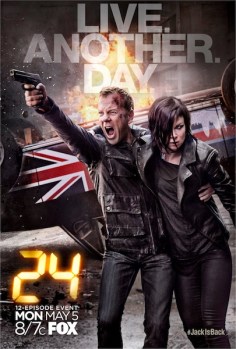
24: Live Another Day
24: Live Another DayThe “event miniseries” short-lived revival of a once-popular TV series is all the rage these days, with 24, Heroes, and The X-Files all trying it out in the past couple of years, Gilmore Girls doing essentially the same thing on Netflix in a couple of months, and Twin Peaks at it sometime next year. The thing that seems to have defined these revivals so far is that time has made no difference: none of them have come back radically new or changed, but have just been “more of the same” as the series they’re resuming, for good or ill. 24: Live Another Day is absolutely an example of this. It may be four years on, set in London, and only 12 episodes long, but if you didn’t know the circumstances behind production you’d be unlikely to think this was anything other than season 9 — after all, the show has always had years-long in-universe time jumps between seasons, and the last few have varied the location also (after seasons 1-6 were set in LA, season 7 was relocated to Washington, DC, and season 8 to New York). On top of that, the way the storyline drags back old characters who hadn’t been in the series for years cements the assumption that it’s a for-the-fans bonus run rather than a fresh-start relaunch attempt (which I guess next year’s spin-off, 24: Legacy, is hoping to be). All of this means that it has its good points, especially the action scenes, but some of the storytelling is overfamiliar, the dialogue at times terribly clunky, and there’s a continued half-arsed application of the real-time concept (which has been a bugbear of mine since season four or five). The fact it ends without really resolving the on-going story of Jack Bauer also feels like a daft mistake.

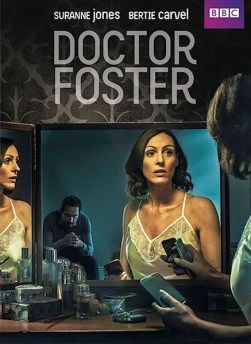
Doctor Foster (Series 1)
Doctor FosterFinally got round to this popular series (from a year ago! Time, where do you go?). I was pleasantly surprised by the plot. The setup was sold as a woman (the titular GP) becoming suspicious her husband was cheating on her — is he, or is she imagining things? For whatever reason I’d presumed that would be the mystery of the entire series, and it would inevitably turn out he was cheating because there’s not much story otherwise. But actually, that’s kind of dealt with in the first episode, and then it spins off in various twists and turns. It’s exciting and unpredictable without quite descending into the easy trap of having characters make completely ridiculous decisions or take extreme actions. It’s a pretty finite story, though, so quite where the commissioned second series is going is anyone’s guess.

One of Us
A new miniseries (it only finished on Tuesday — get me, watching something when it’s actually on!) from writers Harry and Jack Williams, who penned 2014’s excellent James Nesbitt drama The Missing (which, like Doctor Foster, has an unexpected second series in production). This is a slighter affair: essentially a murder mystery, but with a few well-executed twists along the way. It starts with the murder of a young couple whose families are neighbours on isolated farms in Scotland. When the suspected murderer turns up injured at those farms on the storm-afflicted night after the murder, they lock him in the barn while they await an ambulance… and then one of them murders him. Whodunnit? And what will they tell the police? And why the hell did he kill the couple, anyway? It’s funny to think of a four-hour drama as slight — imagine thinking a four-hour film was a bit short and lacking incident — but at least it’s not slow with it, somehow. A subplot about the investigating officer’s home life has no relevance to the main story and could’ve been cut, and the final revelations are somewhat farfetched, but other than that it’s a decent little thriller.

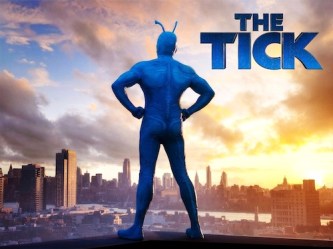
The Tick (Pilot)
I’ve never read any Tick comics, nor seen the ’90s animated series, nor the short-lived ’00s live-action series, but I am vaguely aware of it, so was somewhat looking forward to this Amazon pilot. For those not in the know, it’s basically a spoof of superheroes — what better time than right now to launch a show like that? Amazon should be chuffed to be hitting the zeitgeist on the head with this one. Unfortunately, on the evidence of this pilot, The Tick isn’t quite all it could be. It comes alive a bit whenever Peter Serafinowicz’s eponymous hero is on screen, but the rest of the plot is too serious — the central character (who’s not The Tick, incidentally) is a young man who has mental health problems after watching his father be killed during a supervillain attack! Unsurprisingly, this leaves it a little short on laughs for a half-hour comedy. Indeed, it finishes just as it seems to be getting going. They either need to extend it to 45 minutes, or get a wriggle on and squeeze more into the half-hour. If it manages to get the full series commission then I’ll probably give it a go to see if they can improve these aspects, but, on the strength of the pilot, I won’t be too upset if they don’t bother. Shame.

Also watched…
  • Castle Season 6 Episodes 1-7 — got fed up of waiting for Channel 5 to screen this, so I acquired it by other means… then they started it last week, buried on 5USA. Hey-ho. It’s always a fun time filler.
  • Friday Night Dinner Series 4 Episodes 4-6 — this does such a good job of mixing a plausible family dynamics sitcom with deeply silly storylines. Love it.
  • The Great British Bake Off Series 7 Episodes 1-4 — this is proving a tough series of GBBO, both in the tent (Paul Hollywood seemed to be in a particularly harsh mood during bread week) and out of it (“they sold it to Channel 4?!”, “Mel and Sue are leaving?!”)
  • Miranda Series 3 Episode 3-Series 4 Episode 2 — I do love Miranda, but the finale is a bit messy. The first two series are definitely the high point.
  • The Musketeers Season 2 Episodes 4-5Musketeers does Seven Samurai! Feels like an appropriate time to happen to reach that episode.
  • Paul O’Grady: For the Love of Dogs Series 5 Episodes 1-2 — aww, look at all the doggies!

    Things to Catch Up On
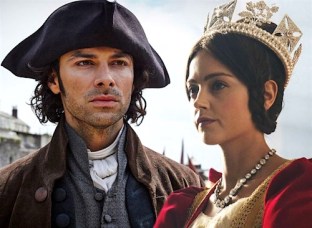
    This month, I have mostly been missing Poldark and Victoria, respectively the BBC’s big period drama hit and ITV’s big period drama hope, which are currently going head-to-head on Sunday nights. For some reason I find myself not caring one iota about the latter (has it gone down well, or not? I don’t even know), but will get round to Poldark eventually.

    Next month… Netflix time! Definitely Marvel’s Luke Cage; probably Stranger Things, to see who’s right: the fuss or the backlash.

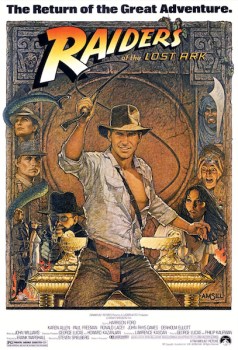
  • Raiders of the Lost Ark (1981)

    100 Films’ 100 Favourites #72

    The Return of the Great Adventure.

    Also Known As: Indiana Jones and the Raiders of the Lost Ark

    Country: USA
    Language: English (and German, Hebrew, Spanish, Arabic & Nepali)
    Runtime: 115 minutes
    BBFC: A (1981) | PG (1987)
    MPAA: PG

    Original Release: 12th June 1981
    UK Release: 30th July 1981
    First Seen: VHS, c.1991

    Stars
    Harrison Ford (Star Wars, Witness)
    Karen Allen (Animal House, Starman)
    Paul Freeman (The Long Good Friday, Mighty Morphin Power Rangers: The Movie)
    Ronald Lacey (Take a Girl Like You, Red Sonja)
    John Rhys-Davies (The Naked Civil Servant, The Lord of the Rings)

    Director
    Steven Spielberg (E.T. the Extra-Terrestrial, The Adventures of Tintin: The Secret of the Unicorn)

    Screenwriter
    Lawrence Kasdan (The Empire Strikes Back, The Bodyguard)

    Story by
    George Lucas (THX 1138, Return of the Jedi)
    Philip Kaufman (The Outlaw Josey Wales, The Right Stuff)

    The Story
    1936: adventurer Indiana Jones is hired by the US Army to retrieve the mythical Ark of the Covenant, which they believe is on the verge of being uncovered in Egypt, before the Nazis can get their grubby mitts on it.

    Our Hero
    Professor of archeology, expert on the occult, and obtainer of rare antiquities, Indiana Jones. Good with a whip; not good with snakes.

    Our Villains
    Dr. René Belloq, essentially the evil Indy: a fellow archeologist with fewer scruples, who often takes credit for Indy’s hard work and is now in bed with the Nazis. They’re most memorably represented by creepy Gestapo agent Toht, played by Ronald Lacey, who was cast because he reminded Spielberg of Peter Lorre.

    Best Supporting Character
    The daughter of Indy’s mentor, and his one-time love, Marion Ravenwood, who’s roped in because she happens to possess an artefact with a clue to the Ark’s location. Feisty and capable of holding her own (some of the time, anyway), it’s a shame she didn’t appear in the initial sequels — at Lucas’ insistence, apparently (he also kept her out of the spin-off novels). She eventually returns in Kingdom of the Crystal Skull, the only character from the first three films to be brought back for that adventure (besides Indy, obv.)

    Memorable Quote
    Sallah: “Indy, why does the floor move?”
    Indiana: “Give me your torch… Snakes. Why’d it have to be snakes?”

    Memorable Scene
    Goodness, where do we start? Well, how about the start! Having made his way safely through a boobytrapped cave, Indy switches a bag of sand for the idol he’s come to retrieve. Unfortunately the trap is not fooled, and Indy has to run out as the place collapses around him and all the traps are triggered — including, most famously, a giant rolling boulder.

    Write the Theme Tune…
    It’s only one of the greatest movie main themes of all time. Composed by John Williams (of course) it’s technically called The Raiders March, and is a combination of two ideas Williams wrote for Jones’ theme that Spielberg suggested be put together to make one piece.

    Technical Wizardry
    The film is naturally packed with stunts, one of the most memorable being when Indy is dragged under and out behind a moving truck. To achieve it safely, more clearance was created under the truck by constructing one that was higher than normal and digging out the centre of the road. The shot was filmed at 20fps, lower than the standard 24, so that when played back the truck appeared to be moving faster. The feat was performed by stuntman Terry Leonard, but Harrison Ford was actually dragged behind the truck for some shots. When asked if he was worried, Ford replied, “No. If it really was dangerous, they would have filmed more of the movie first.”

    Truly Special Effect
    The climax, when the Ark is opened, was a field day for ILM. Techniques used include “animation, a woman to portray a beautiful spirit’s face, rod puppet spirits moved through water to convey a sense of floating, a matte painting of the island, and cloud tank effects to portray clouds.” Plus the villains’ heads melt (a gelatine and plaster model exposed to a heat lamp), collapse (a hollow model with the air sucked out), and explode (which nearly landed the film with an R rating).

    Making of
    Have you heard the one about the scheduled sword fight and everyone being ill? You have? Oh, okay then.

    Next time…
    The film was a massive success, so has spawned tonnes of media. Primarily, three direct sequel films, with a fifth set for 2019. Then there’s the three-season TV series The Young Indiana Jones Chronicles, 13 adult novels, 33 Young Indiana Jones novels, 11 “choose your own adventure”-style books, eight German novels (which have never been translated into English), numerous comic books, and 19 computer games, including nine with original storylines and two Lego Indiana Jones games. Also, a stunt show at Walt Disney World in Florida based on Raiders that has been running for 27 years. Whew!

    Awards
    5 Oscars (Editing, Art Direction-Set Decoration, Sound, Visual Effects, Special Achievement in Sound Effects Editing)
    4 Oscar nominations (Picture, Director, Cinematography, Score)
    1 BAFTA (Production Design/Art Direction)
    6 BAFTA nominations (Film, Supporting Artist (Denholm Elliott), Cinematography, Editing, Music, Sound)
    7 Saturn Awards (Fantasy Film, Actor (Harrison Ford), Actress (Karen Allen), Director, Writing, Music, Special Effects)
    2 Saturn nominations (Supporting Actor (Paul Freeman), Costumes)
    Won the Hugo for Best Dramatic Presentation

    What the Critics Said
    “Yes, it’s as entertaining as you have heard. Maybe more so. Raiders of the Lost Ark is, in fact, about as entertaining as a commercial movie can be. What is it? An adventure film that plays like an old-time 12-part serial that you see all at once, instead of Saturday-to-Saturday. It’s a modern Thief of Baghdad. It’s the kind of movie that first got you excited about movies when you were a kid. (Translation for today’s children: It’s better than anything on TV.)” — Gene Siskel, Chicago Tribune

    Score: 94%

    What the Public Say
    “Spielberg and George Lucas had, in the same year, rewritten the rules of the science fiction genre; Lucas with Star Wars and Spielberg with Close Encounters of the Third Kind, but what could they do together? Greatness, it turns out. Their contribution: Raiders of the Lost Ark, one of the best, most exciting, most brilliantly written action movies of all time. It’s fun, it has a great sense of wonder and adventure. It’s scary, it’s bloody, it’s violent but you never come away feeling unclean. It has a hero, Indiana Jones, who is fallible but not a wimp. […] I can talk all day about Raiders of the Lost Ark, but I must simply conclude that the movie is just plain fun” — Jerry, armchaircinema

    Verdict

    George Lucas and Steven Spielberg teamed up for the first time here, recycled elements from movies beloved in their youth, and produced something new and exciting that is still a reference point for blockbusters 35 years later. (We’re getting homages to homages now, aren’t we? Weird.) It’s pretty much a perfect adventure movie: relentlessly paced, packed with action, lightened with humour, full of likeable heroes, who are brave and competent but also a little bit flawed, and hissable villains, with scene after scene of imaginative situations and fabulously staged derring-do. It’s perfectly distilled pulp adventure, and pure cinematic entertainment.

    Many Bothans… died to bring us #73.

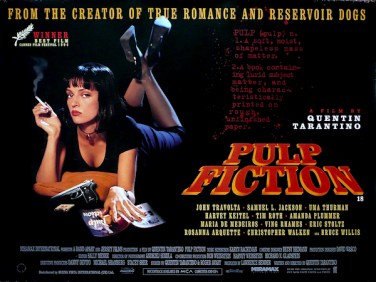
    Pulp Fiction (1994)

    100 Films’ 100 Favourites #71

    You won’t know the facts
    until you see the fiction.

    Country: USA
    Language: English
    Runtime: 154 minutes
    BBFC: 18 (uncut, 1994) | 18 (cut on video, 1995) | 18 (uncut on video, 2011)
    MPAA: R

    Original Release: 10th September 1994 (South Korea)
    US Release: 14th October 1994
    UK Release: 21st October 1994
    First Seen: TV, 18th December 1999 (probably)
    (I would’ve guessed several years later than that, but I definitely watched it on BBC Two and I definitely wasn’t 18, so (with reference to the BBC Genome Project) this is the only plausible option. That’s thrown all of my “first seen” guesses into doubt now…)

    Stars
    John Travolta (Grease, Face/Off)
    Samuel L. Jackson (Loaded Weapon 1, Unbreakable)
    Uma Thurman (Dangerous Liaisons, Gattaca)
    Ving Rhames (Dave, Mission: Impossible)
    Bruce Willis (Die Hard, The Fifth Element)

    Director
    Quentin Tarantino (Reservoir Dogs, Kill Bill)

    Screenwriter
    Quentin Tarantino (From Dusk Till Dawn, Jackie Brown)

    Story by
    Quentin Tarantino (Natural Born Killers, The Hateful Eight)
    Roger Avary (Killing Zoe, The Rules of Attraction)

    The Story
    A chronologically-shuffled collection of interconnected short crime stories, including a hitman who has to take his boss’ wife for a nice night out, a boxer who refuses to throw a fight, the clean-up after a misfire, and a diner hold-up gone sideways.

    Our Heroes & Villains
    Most films can be divvied up into heroes and villains one way or another — I’ve certainly managed it for the previous 70 films in this list. Pulp Fiction muddies its waters considerably, with criminals for heroes at the best of times, and the “short story collection” style meaning there’s an abundance of characters anyway, some of whom arguably change sides from one tale to the next. Nonetheless, you’d have to point to hitmen Vincent Vega and Jules Winnfield, and their ever-so-Tarantino rambling conversations about nothing and everything, as the film’s primary duo.

    Best Supporting Character
    Christopher Walken’s cameo turn as an army vet passing down a watch with an… unusual history. (You might argue for Harvey Keitel’s character, but his Direct Line adverts have rather soured that.)

    Memorable Quote
    Vincent: “You know what they call a Quarter Pounder with Cheese in Paris?”
    Jules: “They don’t call it a Quarter Pounder with Cheese?”
    Vincent: “No man, they got the metric system. They wouldn’t know what the fuck a Quarter Pounder is.”
    Jules: “Then what do they call it?”
    Vincent: “They call it a Royale with Cheese.”
    Jules: “Royale with Cheese. What do they call a Big Mac?”
    Vincent: “Big Mac’s a Big Mac, but they call it Le Big Mac.”
    Jules: “Le Big Mac. What do they call a Whopper?”
    Vincent: “I don’t know, I didn’t go into Burger King.”

    Quote Most Likely To Be Used in Everyday Conversation
    “You mind if I have some of your tasty beverage to wash this down?” — Jules

    Memorable Scene
    Uma Thurman and John Travolta dancing — about as memorable a movie moment as there is.

    Memorable Music
    Famously, Tarantino never used to use original music (that’s now changed with his Ennio Morricone collaborations, of course), instead selecting tracks from his record collection — but his choices were so eclectic, obscure, and personal that many of them are now most associated with the films he put them in. Stand outs in Pulp Fiction include the title credits track, Dick Dale’s version of Misirlou; the song Mia and Vincent dance to, You Never Can Tell by Chuck Berry; and Urge Overkill’s cover of Girl, You’ll Be a Woman Soon.

    Making of
    The famous Bible passage memorised by Jules is mostly fictional. While one line is similar to text from the book, apparently the speech is almost word-for-word identical to the opening scene of the Sonny Chiba movie Karate Kiba.

    Next time…
    Travolta’s character, Vincent Vega, is supposedly the brother of Michael Madsen’s character from Reservoir Dogs, and at one time Tarantino was planning a movie starring the pair. It never materialised, obviously. There’s also the theory that all of Tarantino’s films take place in the same universe, which the director himself has confirmed.

    Awards
    Won the Palme d’Or
    1 Oscar (Original Screenplay)
    6 Oscar nominations (Picture, Actor (John Travolta), Supporting Actor (Samuel L. Jackson), Supporting Actress (Uma Thurman), Director, Editing)
    2 BAFTAs (Supporting Actor (Samuel L. Jackson), Original Screenplay)
    7 BAFTA nominations (Film, Actor (John Travolta), Actress (Uma Thurman), Director, Cinematography, Editing, Sound)
    1 Saturn Award (Action/Adventure/Thriller Film)
    2 MTV Movie Awards (Movie, Dance Sequence)
    4 MTV Movie Awards nominations (including On-Screen Duo (Samuel L. Jackson & John Travolta) and Movie Song (Girl, You’ll Be a Woman Soon))
    1 American Comedy Awards nomination (Funniest Supporting Actress (Amanda Plummer))

    What the Critics Said
    “this dizzily convoluted noir epic — one of the year’s best and most wildly inventive American movies — plunges us into a kind of retro-nightmare fantasy land. In Pulp Fiction, time keeps looping back on itself and we’re trapped in a cul-de-sac of double-crosses, absurdity, arousal and danger, never completely sure of where anyone’s going or why. [It] is shockingly violent, provocatively obscene and profane. It won’t just offend some audiences; it will offend the living hell out of them. Tarantino intends to rile people up. But it doesn’t feel like the usual high-tech, nasty blood-and-guts movie thriller […] This movie gets its charge not from action pyrotechnics but from its electric barrage of language, wisecracks and dialogue, from the mordant ’70s classicism of its long-take camera style and its smart, offbeat, strangely sexy cast.” — Michael Wilmington, Chicago Tribune

    Score: 94%

    What the Public Say
    Pulp Fiction begins at its end. It is cyclical but we don’t realise this until we come to its final moments. Like many of Tarantino’s films, it is episodic and split into sections that overlap in both time and plot. It is far from linear; several threads occurring simultaneously, woven together by chance meetings, coincidence and common acquaintances. Travolta’s Vincent Vega is both alive and dead at the end of the film, such is the genius of the script. [It] is a film that demands a viewer’s attention, engagement and use of their brain to put the pieces of the puzzle together.” — Behind the Seens

    Verdict

    A defining movie for the American indie/auteur boom of the late ’80s and early ’90s, and consequently one of the most influential films of the ’90s… but it is itself heavily influenced by and recreated from styles and genres of the past… and yet, despite those two reflective sides, it’s not quite like anything else — Pulp Fiction is a rule unto itself. In only his second feature, Tarantino’s direction is remarkably self-assured; rarely flashy or showy, but not simplistic or uninteresting either. It’s a film where the famed dialogue is as vital as the characters’ actions, but it’s not one that’s solely driven by people talking to each other. Events interrupt them shooting the breeze, but it’s also them shooting the breeze that drives the action. It’s a film of many opposing facets, then, which is quite possibly what keeps it fascinating — almost as an incidental addition to the humour and style that keep it entertaining.

    #72 will have snakes… why did it have to have snakes?

    Pirates of the Caribbean: The Curse of the Black Pearl (2003)

    100 Films’ 100 Favourites #70

    Prepare to be blown out of the water.

    Country: USA
    Language: English
    Runtime: 143 minutes
    BBFC: 12A
    MPAA: PG-13

    Original Release: 9th July 2003 (USA)
    UK Release: 8th August 2003
    First Seen: cinema, August 2003

    Stars
    Johnny Depp (Edward Scissorhands, Finding Neverland)
    Orlando Bloom (The Lord of the Rings, Troy)
    Keira Knightley (Bend It Like Beckham, Pride & Prejudice)
    Geoffrey Rush (Quills, The King’s Speech)

    Director
    Gore Verbinski (The Ring, The Lone Ranger)

    Screenwriters
    Ted Elliott (Aladdin, Pirates of the Caribbean: On Stranger Tides)
    Terry Rossio (Small Soldiers, Pirates of the Caribbean: Dead Man’s Chest)

    Story by
    Ted Elliott (Treasure Planet, National Treasure: Book of Secrets)
    Terry Rossio (The Mask of Zorro, The Lone Ranger)
    Stuart Beattie (Collateral, 30 Days of Night)
    Jay Wolpert (The Count of Monte Cristo)

    Based on
    Pirates of the Caribbean, a theme park ride at Disneyland.

    The Story
    When feared pirate ship the Black Pearl lays siege to the British outpost Port Royal and kidnaps the governor’s daughter, Elizabeth Swann, her childhood friend (and secret admirer) Will Turner teams up with notorious pirate Captain Jack Sparrow to rescue her. Jack has his own axe to grind with the crew of the Pearl, who are afflicted by a supernatural curse that they believe Elizabeth may be the key to breaking.

    Our Heroes
    Will Turner, a humble blacksmith and self-taught expert swordsman. Doesn’t like pirates, but is forced to team up with one. That would be self-proclaimed captain Jack Sparrow, who is apparently a bumbling buffoon prone to wild exaggeration about his exploits, but is actually strangely competent and honourable. Not to forget Elizabeth Swann, the governor’s daughter who is more strong-minded and capable than women of her time are supposed to be. Hates corsets, too.

    Our Villains
    Captain Barbossa (a villain of Rickman-esque likeability) and his undead pirate crew just want to lift their terrible curse, but, being pirates, tend to go about that mission with excessive violence.

    Best Supporting Character
    Two of Barbossa’s crew, Ragetti (Mackenzie Crook) and Pintel (Lee Arenberg), who make a comedy double act. Or maybe triple act, with Ragetti’s wooden eye.

    Memorable Quote
    “You best start believing in ghost stories, Miss Turner… you’re in one!” — Barbossa

    Memorable Scene
    Barbossa orders his crew to attack a British Navy ship from underwater. As the moon emerges from behind a cloud to reveal the true skeletal form of the undead crew, they march along the seabed to their target…

    Memorable Music
    Originally set to be scored by Alan Silvestri, who’d worked with director Gore Verbinski on a couple of previous movies, the composer fell out with producer Jerry Bruckheimer and it was decided to go with Hans Zimmer instead. Unfortunately Zimmer was busy, but he pointed them in the direction of newer composer Klaus Badelt, one of Zimmer’s mentees at his company Media Ventures. Presumably Badelt struggled, because Zimmer ended up drafting several of the score’s main themes in one night, and a team of additional composers (anywhere from seven to fifteen, depending which source you listen to) was brought in to help finish it off. (One of them, incidentally, was Ramin Djawadi, who has since gone on to be noticed for Game of Thrones.) The final score is credited to Badelt, but the soundtrack’s most famous cue — He’s a Pirate — is actually a development of a piece Zimmer wrote for forgotten Wesley Snipes action-thriller Drop Zone. You can’t really argue a score created like that has any artistic integrity, but it’s fun and exciting, and He’s a Pirate is a really, really good piratical action theme.

    Truly Special Effect
    All of the CGI was strikingly photo-real at the time, the main showcase being the skeletal pirates, especially as they switched from being normal humans to skeletons (and back again) as they moved in and out of the moonlight. I guess it’s aged a little now, but, to be fair, it is 13 years old. Couple this with the even-better work featured in the sequels and it shows ILM are still at the forefront of the industry.

    Making of
    There’s always been something of a tonal similarity between the Pirates films and the Monkey Island series of computer games, which turned out to be more than coincidence when it eventually emerged that, just a couple of years before Pirates, screenwriter Ted Elliott had been working on a Monkey Island film for Steven Spielberg which never came to fruition. As if to compound the point, Monkey Island creator Ron Gilbert revealed in 2004 that the original game was inspired by the novel On Stranger Tides, and in 2007 Disney bought the rights to the novel and used its title and bits of its plot for the fourth Pirates film.

    Next time…
    Initially followed by a pair of shot-back-to-back trilogy-forming sequels, their cumulative success turned it into a franchise: a fourth movie followed in 2011, with a fifth shot last year for release next summer. Also inspired a host of piratical TV series, and Disney to attempt various other ride adaptations and genre mash-ups (see: The Lone Ranger).

    Awards
    5 Oscar nominations (Actor (Johnny Depp), Makeup, Sound Mixing, Sound Editing, Visual Effects)
    1 BAFTA (Make Up/Hair)
    4 BAFTA nominations (Actor (Johnny Depp), Costume Design, Sound, Visual Effects)
    1 Saturn Award (Costumes)
    10 Saturn nominations (Fantasy Film, Actor (Johnny Depp), Supporting Actor (Geoffrey Rush), Supporting Actress (Keira Knightley), Director, Music, Make Up, Special Effects, DVD Special Edition, Genre Face of the Future (Keira Knightley))
    2 MTV Movie Awards Mexico (Sexiest Hero (Orlando Bloom), Best Look (Johnny Depp))
    1 World Stunt Award (Best Fight for the blacksmith shop sword fight)
    Nominated for the Hugo for Best Dramatic Presentation Long Form

    What the Critics Said
    “it’s Johnny Depp’s inspired turn as Captain Jack Sparrow that really marks the spot. Depp, arguing that pirates were the rock stars of their day, models his entire performance on Keith Richards of the Rolling Stones: it’s there in every slurred vowel and every drug-fried wiggle of the head. There’s an endearing dignity to Sparrow’s hunger for fame. “You are, without doubt, the worst pirate I’ve heard of,” says one British officer. “Yes,” replies Jack, “but you have heard of me.” Gloriously over-the-top, this performance is pitched only as high as the film’s fun factor itself. In terms of physical precision and verbal delivery, it’s a masterclass in comedy acting.” — Alan Morrison, Empire

    Score: 79%

    What the Public Say
    “manages the weird assignment of capturing the sensibility of a theme park boat ride inside a Spielbergian adventure romp. This is all the things popcorn movies should be: fun, energetic, simple enough to quickly grasp but full enough to not seem stupid, anchored by strong personalities among all the side characters (Geoffrey Rush’s florid villain is a great bit of acting in its own right, unfairly overshadowed by Depp), and a cohesive world with a sense of history and depth.” — Tim Brayton, Antagony & Ecstasy

    Verdict

    It seemed like such a terrible idea when it was first announced: films based on Disney theme park rides? What the hell were they thinking?! The other movies produced by this initiative turned out to be as terrible as everyone expected, but somehow Pirates of the Caribbean — which also had to contend with the fact that cinematic pirates were deeply unpopular after the studio-killing disaster of CutThroat Island eight years before — wasn’t. Not just “not bad”, either, but an exciting, humorous, creepy, fun movie. That the sequels haven’t lived up to it is disappointing, but the first still stands as a near-perfect example of big-budget swashbuckling entertainment — it’s basically the dictionary definition of a summer blockbuster.

    #71 goes to show… you never can tell.

    Phone Booth (2002)

    100 Films’ 100 Favourites #69

    Your life is on the line.

    Country: USA
    Language: English
    Runtime: 81 minutes
    BBFC: 15
    MPAA: R

    Original Release: 4th April 2003 (USA)
    UK Release: 18th April 2003
    First Seen: cinema, 2003

    Stars
    Colin Farrell (The Recruit, Total Recall)
    Kiefer Sutherland (Flatliners, Dark City)
    Forest Whitaker (Ghost Dog: The Way of the Samurai, The Last King of Scotland)
    Radha Mitchell (Pitch Black, Silent Hill)
    Katie Holmes (Wonder Boys, Batman Begins)

    Director
    Joel Schumacher (The Lost Boys, Batman & Robin)

    Screenwriter
    Larry Cohen (Maniac Cop, Cellular)

    The Story
    Slick, smarmy Stu uses the last remaining phone booth in New York City to call the young woman he’s trying to cheat on his wife with. Then the phone rings: there’s a sniper rifle trained on him, and if Stu doesn’t follow the caller’s instructions, he’ll die.

    Our Hero
    Stuart “Stu” Shepard, a slimy publicist who’s trying to cheat on his wife, strings along a kid with hopes of getting in the game, wears Italian clothes to make himself look better than he is, and is generally a dick to everyone. So not a very nice guy, really… but does he deserve to be shot by a sniper, hm?

    Our Villain
    A mysterious voice on the other end of the phone, The Caller has some kind of moral code, has demands of Stu to fit that code, and also has a high-powered sniper rifle that he’s not afraid to use on just about anybody. Surprisingly witty, too.

    Best Supporting Character
    Captain Ramey, the cop in charge of the situation once the police get involved, who is at least bright enough to realise there’s more going on than meets the eye.

    Memorable Quote
    (After cocking his gun) “Now doesn’t that just torque your jaws? I love that. You know like in the movies just as the good guy is about to kill the bad guy, he cocks his gun. Now why didn’t he have it cocked? Because that sound is scary. It’s cool, isn’t it?” — The Caller

    Memorable Scene
    With both his wife and mistress on the scene, and surrounded by police and news cameras, Stu finally makes his confession. A heartfelt monologue that is definitely a showpiece for Farrell.

    Making of
    The whole film was shot in just 12 days: ten days inside the phone booth and two to shoot the surroundings. To do this the crew worked “French hours”, which involves not shutting down the entire production for lunch (which just sounds logical to me), and was aided further by Farrell nailing some big scenes in one take.

    Awards
    1 MTV Movie Awards Mexico nomination (Best Colin Farrell in a Movie — see also: Daredevil)

    What the Critics Said
    “The triumph of director Joel Schumacher and screenwriter Larry Cohen in Phone Booth is not just that they pull off the central gimmick but also that they fashion from it a creditable thriller. The result is a movie that combines a seriousness of purpose with a delight in craft in a way Hitchcock would have appreciated.” — Mick LaSalle, San Francisco Chronicle

    Score: 71%

    What the Public Say
    “It’s the kind of pulpy potboiler that is often wrecked by unnecessary padding, but the brisk no-nonsense approach here combines with its short length to make quite an entertaining off-beat thriller. Kiefer Sutherland’s vengeful psychopath who is only represented by a voice-over and a red dot for the majority of the film is the stand-out performance, but everyone involved acquits themselves admirably.” — Gary Anthony Cross, Film Noird

    Verdict

    Regular readers will know of my fondness for the single-location thriller, and this is one of the films that helped define that love. And events occur in real-time, which is just a bonus. Colin Farrell and Kiefer Sutherland are both on excellent form as the hostage who maybe has it coming and the hostage taker who maybe has a point. Larry Cohen’s screenplay takes a simple setup and follows it through, keeping it engrossing but still relatively plausible (something other such films struggle with in order to extend their concept), with some killer dialogue to boot. It all adds up to an immensely effective thriller.

    Next time… yo-ho, yo-ho, a pirate’s life for #70.

    The Story of Film: An Odyssey (2011)

    2015 #112
    100 Films in a Year #1000
    Mark Cousins | 915 mins | DVD | 1.78:1 | UK / English | 15

    The Story of Film: An OdysseyWritten, directed, and narrated by film journalist/historian/fan Mark Cousins, The Story of Film: An Odyssey is an epic 15-hour account of innovation throughout the history of moviemaking, which began its premiere broadcast five years ago today. It’s an acclaimed work, to be sure, but one that also attracts its fair share of controversy — about films and filmmakers that Cousins chose to leave out, in some cases about those he chose to include, and about how the documentary itself was made: the oddly framed interviews, the artistic shots of baubles, Cousins’ accent and vocal inflections. (Also, in the context of counting it as part of 100 Films, you may think it’s a TV series. Well, I went over that here.)

    In the booklet that accompanies the series’ film’s UK DVD release, Cousins explains how and why the project came about:

    There have been histories of the movie genres before, star histories, continental histories, histories of popular cinema, Godard’s essayistic history, etc. But no-one had tried to do a history of innovation in the movies. […] I was angry, too, that movie history is often so parochial, so provincial. We remember Garbo but not the great Chinese actress Ruan Lingyu, we worship Pixar but not the great Iranian kids’ films of Mohammed Ali-Talebi. This is blatantly unfair. The playing field is not level. The bullies with massive marketing budgets force their movies on us, whether they’re good or not, thus restricting our choice.

    Part of the point of The Story of Film, then, is to widen Western audiences’ understanding of film and its history — a position also not without controversy, but I’ll come back to that.

    The original concept was to tell this story over a handful of 90-minute episodes — “three chunky Saturday nights on BBC2 or C4”, as producer John Archer describes it in the DVD’s booklet. Unfortunately, the BBC declared the project was “too big”, which is ironic considering how it ended up. As Cousins describes in this making-of article, to help pitch the series they set out to produce a 10-minute test. When that clocked in at 50 minutes, they realised the final piece would have to be considerably longer than expected. By the time More4 got involved to buy the UK TV rights, the expected running time was 12 hours. It continued to grow, eventually looking like it would finish at 18 hours. Cousins decided this could be honed “to 15 hours but any less and — I told my producer and Tabitha Jackson our Exec Producer at More4 — we’d have to cut out Woody Allen, Robert Altman, people like that… So they gave me 15 hours.”
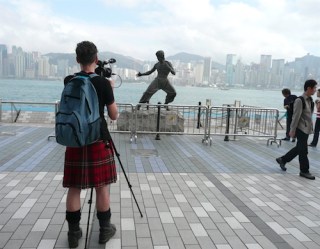
    Those final 15 hours represent tens of thousands of hours of work. Cousins estimates the work needed to prepare and finish the clips from other films (of which there are about 1,000) totalled 20,000 man hours, most of it completed by just Cousins and Archer, working 90-hour weeks on four hours sleep a night, with festival and broadcast deadlines looming. Before that, they spent six years travelling the world — “across China and LA, to Tokyo and the streets of Mumbai, to the urban canyons of New York, the film schools of Paris, to Eisenstein’s Moscow and Bergman’s Sweden” — recording interviews and scene-setting footage. It’s an epic undertaking, whichever way you cut it. As film programmer Thom Powers described it in the TIFF catalogue, “by taking a DIY approach, Cousins preserves an editorial independence that normally gets lost with a bigger budget and committee decision-making. […] After experiencing this history from such a distinctive viewpoint, you may crave similar treatments for music, literature, politics or whatever compels you.”

    The end result is indeed a magnificent viewing experience. Cousins’ chosen remit is so wide, and his knowledge so deep, that even the most seasoned cinephile is sure to learn something new at some point. It’s like attending a film course with an immensely well-read lecturer who’s keen to share his accumulated wisdom with you. Indeed, to quote from the man himself again, “in the era of DVD, Blu-ray, streaming and VOD, hundreds of thousands of movies are available, often a click away. At times of such plenitude, it’s easy to get bewildered — what should I watch next? The Story of Film: An Odyssey is […] our passionate suggestions of what to watch next.” Those suggestions encompass the whole history and world of cinema, in a very literal way. This manifestly isn’t just the story of Hollywood and European arthouse — Cousins is also keen to cover the emergent cinema of South America, Africa, and others. Including them isn’t a sop; a case of “everyone gets a prize!” It’s a case of films of genuine import or interest that have been overlooked, for various reasons, and Cousins makes a strong case not only for why these wrongs should be righted, but for why you’d want them to be, too.
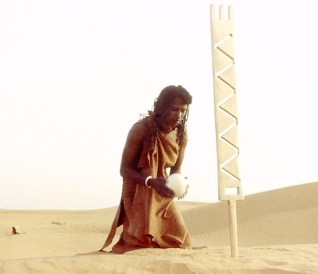
    Nonetheless, some have criticised the series for its lack of focus on American/Western cinema, which is to spectacularly miss (part of) the point. One of Cousins’ goals is to shake us out of our inward-looking learnt-by-rote Hollywood-centric history of the movies. He’s not seeking to ignore Hollywood, but to share what was going on elsewhere in the world — stuff that, sometimes, Hollywood later appropriated for its own. And besides, I don’t need him to tell me of the rise and fall of the studio system, of the arrival of the film school auteurs, of the birth and growth of the blockbuster, of the indie explosion and near-death, of the rise of a new studio system and the near-dominance of the blockbuster. Some people seem to want a documentary that tells the history of cinema as they already know it; a documentary that does so little to challenge their existing knowledge that they probably could’ve knocked it out themselves given an hour or two. Isn’t it better to have something challenging? Something that says, “you think you know the history of cinema, but are you sure?” Something that shows us something new.

    Cousins specifically outlines pretty much all of this in his eight-minute introduction right at the start of the series. He outright says the accepted history of cinema is wrong and needs rewriting. Now, that doesn’t mean you have to accept that he’s right to say that — and whether or not you feel his story adequately makes the case for it will be the deciding factor in whether you should believe him or not — but to expect anything different is to not be paying attention. He also makes clear that it’s the story of innovation in film. Does that make it comprehensive? No, of course not — there are surely many films that aren’t innovative in and of themselves but that are significant and immensely influential. That doesn’t make Cousins wrong to omit them, because that’s not exactly the story he’s telling. But it also validates the argument that this is “a” story of film rather than a catch-all definitive telling of everything important.
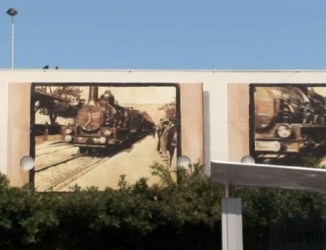
    The other main complaint about the series seems to concern Cousins’ voice, in particular citing a tendency towards AQI. This might sound like a witless niggle, but when you’re essentially listening to that voice talk for 15 hours, it isn’t a small issue. Personally, I find AQI intensely irritating and so think I’m quite sensitive to it, but I barely heard it at all. In fact, on the whole, I found Cousins’ narration to be uncommonly pleasant, especially as it so often comes with the benefit of some nice, crisp diction. Besides, that upward inflection “is also a feature of several UK dialects, especially in mid-Ulster and Belfast” — guess which city Mr Cousins hails from.

    Although The Story of Film works as one (very long) film, it’s also possible to see where the divisions into 15 TV-friendly parts occurred. Here are some of my thoughts on each section, using the titles as found in the DVD booklet (because not everyone agrees on those).

    Part One: Birth of the Cinema (1895-1920)

    Beginning at the beginning, the opening hour is like a “basics of film” class — it covers all the innovations of framing (close-ups), editing (parallel cutting; the 180 rule), and more. It teaches how films are built to this day from how those rules were discovered and established. When it moves on to things like the birth of the movie star, of special effects, of Hollywood, you realise that so much of what still defines the world of movies was set out back in its very earliest days.
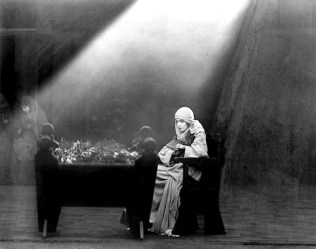
    As an opening instalment, it also gives you a sense of Cousins’ stylistic goals for the series. For instance, although this is an artistic history of film (of its concepts, ideas, and meanings), it’s one that’s cognisant of how external real-world forces played a part in that — for example, the American studios being located in Hollywood because of people wanting to avoid the copyrights and patents placed on filmmaking on the East Coast. It also tells the story across the ages at all times. The broad sweep of the narrative structure moves chronologically, but Cousins is unafraid to make connections to films made many decades later to help illustrate a point or to show how ideas or techniques have endured. It’s more effective and informative than remaining slavishly chronological.

    Part Two: The Hollywood Dream (1920s)

    Sticking with the silent era (more on the significance of that in a minute), this hour covers grand fantasies and romances, like The Thief of Bagdad; the innovations and influence of silent comedians like Keaton, Lloyd and, primarily, Chaplin; and the birth of documentary, not as mere observed non-fiction, but as storytelling in its own right. Cousins asserts that documentary is seen by most as being plainly factual, but it is actually one of the most innovative of all genres. Certainly, there’s more to the construction of documentaries than some people realise.

    Even this early in the series, there are so many films of which we get fascinating glimpses — it’s sure to leave you with a massive list of things you want to see. Similarly, it’s so dense with information and analysis that it feels wrong to watch too much at once. It’s like eating too much rich food: you still enjoy it, but you can’t separate it out in your mind, can’t appreciate or process it properly. But then binge watching is all the rage nowadays, so maybe that’s just me. (Or maybe people aren’t appreciating things fully, but that’s a debate for another time.)

    Part Three: Expressionism, Impressionism, Surrealism (1920s)
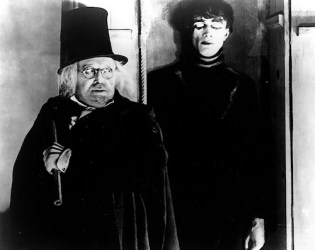
    The third hour explicitly concerns the people and movements Cousins sees as alternatives or rebels to ’20s and ’30s cinema, both what they did that was different and how it fed back into the mainstream. We’re talking the likes of impressionism (Abel Gance), expressionism (Caligari), surrealism (Buñuel), the Russians (Eisenstein), the Japanese (Ozu), the Chinese (Ruan Lingyu), and more. All innovated in different ways — ways that were either integrated into common filmmaking, or remain striking and boundary-pushing to this day, almost 100 years later.

    Some people write off the silent era as “that funny little bit at the beginning before sound came along”, dismissing a 35-year chunk of culture in a single swipe. That’s like ignoring every film made between 1981 and today (which, in fairness, I suppose some people do). Naturally, Cousins is not so foolhardy: it’s over three hours before he reaches the arrival of sound. When he ends this hour by foreshadowing the coming of sound, it’s constructed like a cliffhanger; not only that, but the narration disappears and is replaced by intertitles, to emphasise the point. This isn’t classical documentary making, but playful, individualistic, and clearly iconoclastic. It’s a personal visual lecture, rather than a glossy, polished, manufactured ‘product’.

    Part Four: The Arrival of Sound (1930s)

    Sound is obviously an important aspect of movies nowadays, but at first it was almost more of a burden. Cousins argues that its arrival standardised American cinema into only six genres: horror, Western, gangster, comedy, musical, and animation. It’s an interesting contention — I suppose his broader point is that Hollywood atrophied, to an extent; its camerawork certainly did, at least at first — but it doesn’t sound quite extensive enough. I mean, surely they made romances?
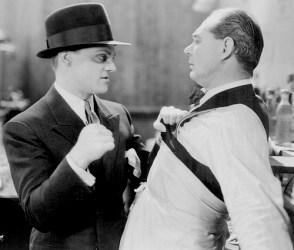
    Still, it’s easy to let such things slide when Cousins is busy drawing fascinating links elsewhere. Here, he discusses the contrast between the white light of Westerns (films about an idealistic age when laws were made) and the dirty light of gangster pictures (films about a dying world where lawbreakers are the heroes of a cynical age, when the making of the laws is long forgotten). These two genres co-exist, yet don’t consciously interact — except in the mind of the filmgoer, when we see both types of picture and can draw such links; links that none of the filmmakers involved ever intended, but which are unquestionably there. Cousins draws out these connections beautifully.

    Finally, Cousins paints the ’30s as being about the American genres vs. innovation in European cinema, before taking us to London to meet a man who was both a great genre filmmaker and great innovator: Alfred Hitchcock. Britain bridging the gap between Europe and the US? Twas ever thus.

    Part Five: Post-War Cinema (1940s)

    Hitchcock said cinema is life with the boring bits cut out; the neo-realists said cinema is the boring bits. That probably explains why I’ve yet to enjoy anything neo-realist. Aside from that, Cousins gives us a nice big chunk on film noir and how it combined multiple influences, and covers the importance of Welles, Stagecoach, and The Third Man, which Cousins thinks encapsulates all of ’40s cinema. As you can see, this is not a documentary maker who’s ignoring established and well-known texts, but is perhaps more selective about which merit inclusion.

    From a filmmaking perspective, between the film clips the series is what you might call “artistically shot” — there are very few talking heads; it’s all narrated by Cousins; and there’s lots of metaphorical imagery, some blatant (to represent the bauble of Hollywood we have… a bauble on a tree near Hollywood), others more ephemeral. However, at this point in the series we begin to see more taking heads, because we’re reaching eras where people (or people-who-knew-people) are still alive. It feels like a consequence of that is more close readings of specific films and/or filmmakers, with the series moving away from the “film theory” feel of earlier episodes a little bit, more into the territory of being the story of what occurred.

    Part Six: Sex & Melodrama (1950s)

    Talking of filmmaking technique, Cousins chooses to frame every interview differently. You might think it amateurism, not knowing how to frame interviewees consistently, but it was a conscious choice. He was, presumably, trying to convey something with how he framed them. Whether that was a worthwhile exercise or not is another matter. It certainly comes across as highly idiosyncratic at times.

    At this point, the story of film is really increasingly global: there are great films in America, Britain, Europe, and Japan, as you might expect, but also Egypt, India, and Latin America. On the surface, the different films of these different countries are completely different. Underneath, Cousins demonstrates, they’re linked by trying to come to terms with a new, changing world, repressed emotions bursting forth, and sex. Lots of sex.

    Part Seven: European New Wave (1960s)

    Cousins begins by tackling the new waves led by four European directors: Bergman, Fellini, Bresson, Tati. There are a couple of significant directors missing from what one typically thinks of as “new wave” there, but this isn’t Cousins being deliberately controversial: after talking about the innovations of those four, he says the directors of the French New Wave came along and “carpet bombed” their revolutions, describing Godard as “the greatest movie terrorist”.

    Here, Baz Luhrmann (believe it or not) makes a nice point about changing styles: the Nouvelle Vague wasn’t “real life”, it was an artifice, but an artifice that rejected the big costumes, pretty shots, vibrant colours, and romanticism of mainstream American cinema; and eventually that artifice came back in to fashion, and eventually it will be rejected again. Everything is cyclical, which is practically a philosophy for all life. Luhrmann compares it to language: the words change but the message remains the same; people always say “I love you” or “I want to kill you”, but how they say it is just fashion.

    Part Eight: New Directors, New Form (1960s)

    As the ’60s continue, new waves and revolutions are everywhere. There’s the Eastern Bloc and the cinema of protest (“rebels with a cause”, as Cousins puts it) and even more new, radical filmmakers in Japan, Africa, Iran, even the UK: Saturday Night and Sunday Morning, Kes, A Hard Day’s Night. It’s interesting to see very familiar films of British cinema put into this context — Ken Loach discusses the influence of Czech film on Kes, for instance.

    Not even America is exempt. In a world where JFK, Malcolm X, and a million civilians in Vietnam protests were all murdered, and where cinema attendance was falling as people stayed home with TV, there were radical filmmakers Stateside too — including Hitchcock! Psycho, for instance, which eschews Hollywood gloss with its plain costumes, plain locations, and plain black & white photography, which Cousins aligns with documentary-influenced independent cinema. More obviously, there was Easy Rider. It was innovative, throwing all kinds of techniques at the screen, and appealed to young people who were fed up with conservative mainstream cinema and wanted something groundbreaking, forward-thinking, revolutionary — and it was a box office hit. The series gets you in the mindset to go beyond the connections Cousins draws and begin to make links yourself. Like, if this is how film as a medium, and society as a whole, seems always to have moved forward, then what thrilling revolutions can we see young people flocking to in the modern day? Disney superhero movies. Belated sequels to childhood favourites. Adaptations of socially conservative novels aimed at teenagers. Oh. Such contrast between then and now is a bit depressing, really.

    Cousins concludes by saying this era of innovativeness wasn’t permanent — the ’70s would bring old-fashioned romantic entertaining cinema. As per Luhrmann’s theory, “what goes around comes around”, essentially. To be more positive about modern movies, I suppose this is an era we’re in now. I guess you could conflate the indie boom of the ’90s with the ’60s, or the auteur side of the ’70s; while the post-millennial special effects blockbusters are the latest incarnation of the Star Wars/Jaws/etc-driven ’80s. But then again, blockbusters also existed in the ’90s, and popular indie movies exist now — so how do you decide what’s the dominant form of an era? Is that purely the job of history — what gets remembered best. But what about when they all get remembered, as with the ’90s? I’ve diverged wildly into my own half-conceived theories here, but as if to back up my point about a time being more than one thing, the ’70s are about to get three whole episodes…

    Part Nine: American Cinema of the 70s

    In the first part on the ’70s, Cousins identifies three types of American auteurs/arthouse: mockery/satire (Buck Henry), dissident films that challenged conventional style (Charles Burnett), and assimilationist movies that told studio genre-style stories with new techniques (Robert Towne). Flying in the face of that criticism about Cousins ignoring US/Western films, in most eras he comes back to America, its story and innovations, after he’s done everywhere else. The exceptions are the birth of Hollywood in the ’20s and the radical ’70s, when he starts with America. Does Cousins want to get these famed and fêted eras in the US out of the way before he moves on to elsewhere, to avoid the nagging “but what about [major US film / director / movement]” question that many viewers would be troubled about otherwise? I doubt he’s so concerned with what you or I are pondering. Rather, these are the times when American cinema was most genuinely innovative (at least in Cousins’ opinion).

    Part Ten: Movies to Change the World (1970s)

    In the second part of the ’70s, Cousins has a particularly bold assertion: “Performance was not only the greatest ’70s film about identity. If any movie in the whole story of film should be compulsory viewing for filmmakers, maybe this is it.” I’ve not seen it, so I couldn’t say whether I agree or not, but it’s an unusual claim.

    Cousins rattles round the globe here (Germany, Japan, Italy, Australia), but the most interesting part comes in Burkina Faso. Today, tens of thousands of people there attend the opening of a film festival. Local director Gaston Kaboré argues that consuming film from other countries is interesting, but if that’s all you do then your lose your uniqueness, your own way of seeing and thinking, your identity. This is exactly what continues to happen in countries that primarily consume American movies — they are increasingly Americanised. I don’t think it would be unreasonable to argue that Britain is one of the worst hit by this. Unlike other countries, we have governments with no serious interest in supporting a national cinema, and the lack of a language barrier between us and the US (only aided by the internet, both in terms of global conversation and media piracy) has created an ever-strengthening supply-and-demand culture across both TV and film. Of course, it can go both ways: look at all the British TV series that have had relatively large US success in the past few years. Somehow I think it’s had more of an impact on our little island, though.

    Part Eleven: The Arrival of Multiplexes and Asian Mainstream (1970s)
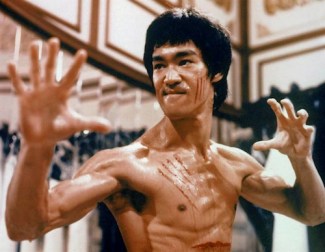
    As Cousins closes out his three-hour overview of the ’70s, we (or I) find ourselves in much more familiar territory: first Hong Kong, for the Shaw Brothers, Bruce Lee, John Woo, Tsui Hark, A Better Tomorrow, Once Upon a Time in China, Dragon Inn, Iron Monkey… then India, for Bollywood and Sholay… then the Middle East, with films about Mohammad and recent events… and then, most recognisable of all to Western audiences, and most influential of all to the world, Hollywood — Jaws, The ExorcistStar Wars. In all instances, this is cinema that moved away from intellectual thought and hard-hitting realism, and more towards feeling, sensation, emotion, fantasy. These things come and go (Luhrmann’s point about the cyclical nature of it all being perhaps the most pertinent observation of the entire series), but it’s hard to argue against the developments of the ’70s still being an influence today.

    Part Twelve: Fight the Power: Protest in Film (1980s)

    Much of this series is about things that are important within the world of film, but here we find movies that literally changed the world — like A Short Film About Killing, which contributed to the abolition of the death penalty in Poland. Elsewhere, director John Sayles and his producer/partner Maggie Renzi give birth to the methodology of what we now know as American independent cinema. Renzi says that Hollywood doesn’t even do what Hollywood does very well anymore — that it takes nine writers to produce a screenplay no better than the first draft — and she’s probably right.

    While the list of “films that look worth seeing” continues to grow, sometimes the speed at which they pass by makes it tricky to know how worth seeing they are. For example, in this hour Cousins discusses Yeelen, describing it as “one of cinema’s most complex works of art”. Based on a Malian legend, telling of a heroic quest featuring magic and precognition, it sounds interesting, but it’s also hard to infer if it’s complex in a good, interesting way or in a frustrating, pretentious way.

    Part Thirteen: New Boundaries: World Cinema in Africa, Asia, Latin America (1990s)

    With only a couple of hours left(!), Cousins reaches modern concerns — here, it’s the last hurrah of celluloid and realism, before digital and fakery took over. Part of Cousins’ thesis seems to be that world cinema filmmakers were reacting to fantasy cinema by trying to show the real world, but that became a last gasp before fantasy cinema took over. It’s almost like a battle for the fate of cinema, between realism and fantasy; and fantasy won. So we have Dogme 95 and La Haine, but also Iranian filmmakers who played with form and reality, like making fictional versions of true stories using the real people; or Abbas Kiarostami, who made a film, then made a film about searching for the actors from that film, then made a film about an incident from the making of the second film. And fantasy and reality collide in places, like Michael Haneke and Funny Games, where the evil youths wink at the camera and rewind life like we rewind videos. That was groundbreaking, and obviously only possible in the home video era when rewinding, y’know, existed.

    Part Fourteen: New American Independents & The Digital Revolution (1990s)

    As we get closer to today, you find more and more references to the past. Is film coming full circle? Or at least becoming more self-aware; referencing itself more often. We’re talking Tarantino’s post-modern screenplays, the Coen brother’s re-appropriation of classic genres and imagery, Gus Van Sant’s film-history-aware visuals, the satire of Paul Verhoeven, Baz Luhrmann’s flamboyant romanticisation of real life, and so on. It makes you think: is this the absolutely perfect time to be making a major “history of film” documentary?
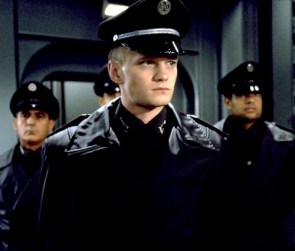
    It also reminds you that style or genre do not have to negate substance. Starship Troopers was born out of Verhoeven’s desire to make a film about young men coming into the prime of their lives at an exciting time for their country when everything was developing — that time and country being Germany in 1935, and the men being excited by Nazism. No Hollywood studio would ever make that movie, of course, but take those themes and do them as science fiction…

    Part Fifteen: Cinema Today and the Future (2000s)

    Unsurprisingly, the concluding hour feels somewhat less clear about what was particularly innovative and what exactly was going on that was most significant — it’s coming up to the present day and looking to the future, which is too recent to get a proper handle on. Nonetheless, Cousins does find genuine innovation, like the single-take Russian Ark. It’s not a film I liked, and even the analysis here incidentally alludes to why: you need to know what you’re seeing, and the context of what came next (in history) to get the point. If your knowledge of Russian history isn’t on the money, if you don’t know what you’re seeing depicted and what came after it, the film offers you no succour, and feels aimless. But innovative? Yes. Indeed, it’s a filmmaking feat that has only recently been emulated.
    Talking of emulation, it seems unlikely anyone else will make a documentary as comprehensive and insightful as what Cousins has achieved here. For anyone serious about a love of film, it is a must-see. That doesn’t mean you’ll always agree with it, or accept it as the definitive telling of the story of motion pictures, but it is nonetheless a wide-reaching and thoroughly educational overview of what is arguably modern times’ most significant artform.

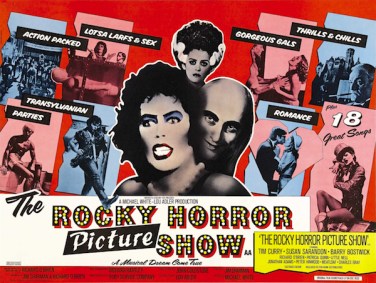
    5 out of 5