
Another later-than-usual TV review (originally these were meant to be on the third Thursday every month), which is simply because I didn’t have much to write about. Even still, it’s a less packed one that usual, with little more than a couple of seasons of Deadwood and a couple of episodes of The Twilight Zone to cover. Still, at least that’s some high-quality viewing.

Deadwood Seasons 1-2
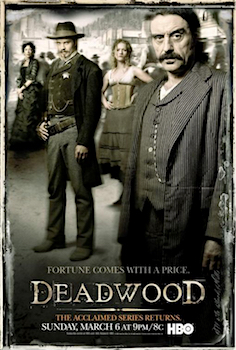 One of the early touchstones of the “peak TV” era we’re now right in the midst of, Deadwood is a kind of revisionist Western — revisionist in that it treats the West not as a time of myths and legends, as most movies still do, but as a real historical period like any other, populated by realistic people (more or less — I’ll come to that). The titular town began as a camp in Native American territory, established by gold prospectors. When they found success, more gold hunters followed, plus all the amenities they might require: supplies, tools, food, gambling, whores… Plus, the town was outside the jurisdiction of most law enforcement, thereby attracting a different class of person again. Naturally, illicit activity followed. At one point Deadwood averaged a murder a day — and those are just the ones that were recorded.
It’s a rich place to set a drama, then, especially when you learn how quickly the place changed: although it started as just camp for prospectors, within only a couple of years it had telephones, before major cities like San Francisco, and was eventually consumed into the US proper. Creator David Milch had wanted to tell a story about how society establishes and organises itself set in ancient Rome, but HBO already had Rome in the works (set in an entirely different part of that empire’s history, but the general milieu was similar enough), so he had a rethink and Deadwood was born. It seems at least as fitting a place to present that theme.
If that sounds like it’d be some heavy treatise, that’s certainly not how Deadwood plays out. It thrives on a human scale, with a large ensemble cast of characters to love and hate, sometimes within the same figure. Yet despite the sheer volume of people on screen, each one is well drawn, believable and relatable. It’s a fantastic feat of both writing and acting. There are standout performances, sure — Ian McShane as saloon owner and Machiavellian plotter Al Swearengen attracted the most attention at the time, and indeed if you had to pick just one he’s definitely the greatest character and performance here; but there are likely a dozen others who, in almost any other show, would overshadow the rest of the cast.
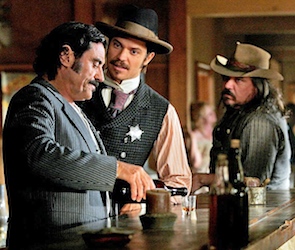 They’re aided by the extraordinary storytelling. It’s often said to be Shakespearean, but that’s not an empty epithet. The dialogue may be littered with expletives (not as shocking today as it was back in 2004, but still not for the faint of heart) and tailored for the understanding of modern ears, but there are still speeches and exchanges that you could put anonymously alongside writings of the Bard and laypeople would struggle to identify which was which. It’s a structural thing, too — I mean, there are characters who deliver soliloquies! How often do you see genuine soliloquies outside of classical theatre? Plus there’s the way that, again, it’s using personal conflicts to touch on bigger themes and points about human nature and society.
Although it’s based on a real time and place, Deadwood has a wavering attention to historical detail. Many of the characters are named after real people, both relatively unknown (Swearengen, Seth Bullock, Sol Star, E.B. Farnum) and famous from tales of the West (Wild Bill Hickok, Calamity Jane), and sometimes it depicts genuine events from their lives, but only really when it suits the stories Milch wants to tell. Other characters are amalgamations of real-life individuals, or else are archetypes designed to show another facet of life. Alma Garrett, for example, a rich society woman who’s ended up in the camp due to her new husband’s whims, is used to portray the difficulties women faced in this era. But, again, the show does this by making her a believable character with her own storyline, not by contriving to give us a lecture.
Of these initial two seasons, for my money the first is superior. It took me an episode or two to get back into the show’s unique rhythms (in particular, the way it’s shot looked suddenly very dated — a bit like how TV used to be done, a marked contrast to the cinematic visuals we’re used to today), but once the ball’s rolling it’s a thoroughly engrossing set of narratives. Indeed, it’s remarkable how much plot it packs into an episode, without ever feeling rushed or like it’s underserving characters. That’s another contrast to the way premium TV has gone since, where you have to watch a whole season to get a whole story.
 Season two is a little more like the latter, and suffers for it. A major death about two-thirds of the way through comes to overshadow the rest of the season; while it doesn’t completely stall it, things begin to take longer to get anywhere. There’s also an early plot in season two designed to ‘depower’ Swearengen — he’d become such a dominating force in season one, Milch felt it necessary to take some of that away, if only for a while. A justifiable aim, but taking him out of play due to incapacity and recovery makes parts of the second season somewhat less fun. There’s a lot of entertainment value in Al’s scheming and swearing.
The real problem with Deadwood, however, was that it was so short-lived. This is the kind of show that a network would never dream of cancelling today — artistically top-draw and critically acclaimed with it. I have no idea what viewing figures were like, but I remember it being well-discussed at the time, so I can’t imagine they were bad. But apparently there was some kind of dispute between the network and the production company about how much they’d pay for the show, and all that fell through after just three seasons. More on how the show does or doesn’t prematurely wrap-up next month, but it was definitely cancelled without notice, so I can’t imagine it’s too neat an ending. At least now we’re getting a sequel movie to put a proper capstone on it.
The Twilight Zone ‘Best Of’
 Until a couple of years ago, my experience of The Twilight Zone was limited to the Tower of Terror ride at various Disney theme parks (and recognising the theme that everyone knows, of course). Then in 2017 I watched the anthology film by Spielberg and co, which is good but still not the original. Well, with the new Jordan Peele-fronted revival on the way tomorrow (in the US, at least — no UK broadcaster or streamer has been announced still), Screen Crush ran an article ranking all 156 episodes of the original 1959-64 series. There are probably many such articles out there, but this is the one I saw, and, as I’ve long meant to watch some of the series, what better excuse to cherrypick the best-regarded episodes (cross-referenced with IMDb user ratings) and start there?
Well, I thought I’d have more episodes to discuss here, but I’ve only made time for two so far: the one Screen Crush picked as #1, and the one IMDb users rank as #1. Funnily enough, after watching these episodes I saw this article, in which new series execs Peele and Simon Kinberg recommend their favourites from the original series, a list which is also topped by this pair, so I guess these really are considered the best of the best.
First up, Screen Crush’s pick: season one’s The Monsters Are Due on Maple Street (ranked 5th on IMDb and cited by Kinberg), which presents a parable with a moral lesson about baseless paranoia that feels kinda obvious now. It may be that comes from endless imitation — the episode is 60 years old, after all. That said, it’s sadly a lesson plenty of people could still do with learning. So, the familiarity of the theme lets the episode down when viewed today, but it’s still a cleanly executed version of the story.
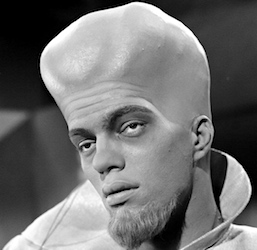 Secondly, IMDb user’s pick: season three’s To Serve Man (ranked 7th by Screen Crush and cited by Peele). This is, essentially, an entire half-hour story based around reaching a neat twist that’s staring you in the face the whole time, like a well-executed punchline on a dark joke. That’s the kind of thing The Twilight Zone is renowned for, so it feels very apposite as a “best ever episode”. That said, while the punchline attracts our focus, the story that gets us there does have some commentary about the nature of mankind. There’s no explanation for why the aliens spend most of the episode wearing such a dopey expression, though.
Hopefully I’ll tick off some more best-of episodes of the original series next month, and maybe the much-anticipated new incarnation will make its way to UK screens too.
Things to Catch Up On
 This month, I have mostly been missing the back ends of the series I mentioned were starting last month, like Shetland and Baptiste. More recently, there’s Amazon’s TV remake of Hanna — I reviewed the first episode after its 24-hour preview last month, and the whole first season was just released on Friday. Expect a review next month, then.
Next month… winter is here.



 Favourite Film of the Month












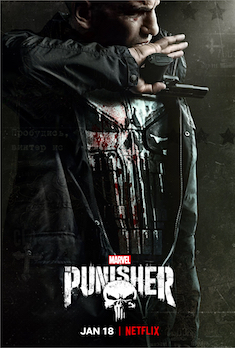 Earlier this month the news everyone had been expecting was finally made official: Netflix was cancelling The Punisher and Jessica Jones, thereby bringing to an end the era of the MCU on the streamer. Altogether it will have produced 13 seasons and 161 hours of television, ending with the release of Jessica Jones season three sometime later this year — which will be a more appropriate time to get into this, I guess. For now, there’s just the second — and, as it turned out, final — season of The Punisher.
 The two plots do converge somewhat, naturally, with Frank having to deal with the machinations of Russo/Jigsaw at the same time as Pilgrim is coming after him. That means the series has to juggle the two stories as well, and it does that less than effectively, swinging back and forth between which it wants to focus on. For me, the problem remained the same: the new plot is interesting with a lot of potential, while the season one hangovers feel like little more than unfinished business. The latter become stretched out to fill the season, going round in circles, rather than being dealt with succinctly. Conversely, with that stealing so much space, the Pilgrim and Rachel story doesn’t get the screen time it needs or deserves. It seems like there’s a half decent balance at first, but that ultimately goes awry, and the ins and outs of the new storyline (I keep wanting to call it the “main” story, but that’s only true in a couple of early episodes) aren’t as explored as much as they should be. Considering there’s some interesting potential in there (Frank and Rachel have great chemistry, and the plot shapes up as a kind of political thriller, in a
  You spend years wondering if anyone could re-do the premise behind
  Amazon are adapting Joe Wright’s 2011 film
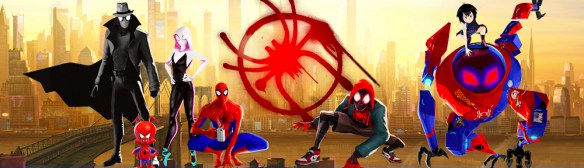
 The run-up to this year’s Oscars seemed to be mired in a mix of controversy and disinterest. The former was provoked by a variety of poor decisions by the Academy, including fiascoes around a Best Popular Film award, over who would host (it was Kevin Hart, then it wasn’t, then it was no one), and over the decision to present some awards during the ad breaks (which was scrapped, thankfully). This whole palaver is part of what fed the disinterest, along with a slate of nominees that was regarded to be generally uninspiring. As it turned out, plenty of people still tuned in (US viewing figures were slightly up from last year) and plenty of conversation was sparked. Other people can dig into it in more depth than me (and have, of course, considering the ceremony was days ago), but I will say I was overjoyed for Olivia Colman (definitely the best speech, although a couple of others were quite good too) and Spider-Verse, was quite pleased Black Panther won Best Score (I don’t know if it was actually the best overall, but I really liked it), and its other two victories (costumes and production design) were also welcome, and Spike Lee’s ecstatic win was another top moment. It wasn’t all sunshine and roses, obviously, with Best Picture in particular being an underwhelming result; though I’m not as miffed about Bohemian Rhapsody’s multiple wins as some people (even if its awards for sound editing and mixing were more about “most” than “best”).
 This month, I have mostly been missing The Umbrella Academy, as I mentioned at the start. The trailers look good (love a bit of Hazy Shade of Winter), and it seems like critical and audience reaction has been positive, so it’s definitely on my watchlist. I’m also yet to start the new series of Scottish crime drama Shetland, or The Missing’s much-anticipated spin-off Baptiste. I expect I’ll be saving those up for a little while yet.










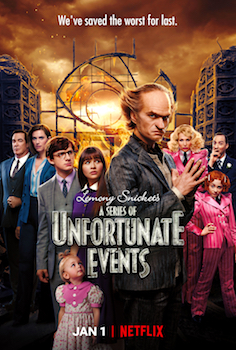 The third and final season of Netflix’s adaptation of
 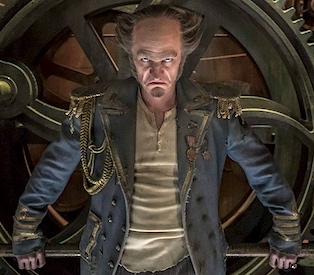 After that, we come to The End — that’s not emphasis, it’s the title of the actual finale. Every other novel in Snicket’s 13-volume series has been treated to a two-part adaptation, but The End is the longest book of them all, so it gets… one episode. A regular-length one, at that. Well, I’ve never read the books (I will someday…), so I can’t comment on why this should be, or if the programme-makers have done it a disservice, but I’m sure they had their reasons. That said, it’s even more intriguing given that the TV series manages to wrap up almost every on-going plot line and mystery, something the book series is notorious for not doing — you’d think they’d need more screen-time for that, not less.
 Back at
 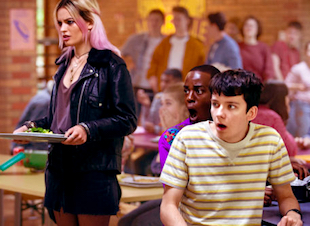 This month, I have mostly been missing Sex Education, Netflix’s comedy-drama about a sex therapist’s son who begins offering what expertise he’s picked up second-hand to his classmates. It attracted a bit of hype before release and has been much-discussed on social media, but I thought something looked kinda off about it… and then I saw
























































 100Films.co.uk