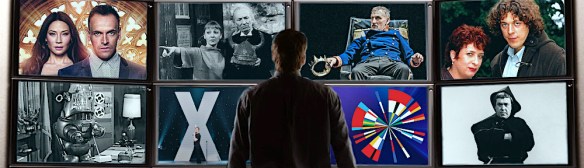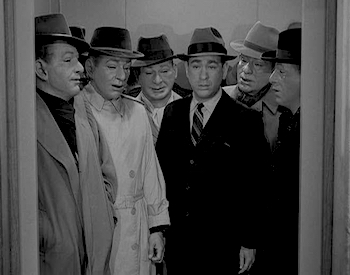
The Past Month on TV #60

I suppose lockdown is officially over now, for good or ill, but we begin this month’s TV review by reliving those heady days…

Staged  Series 1
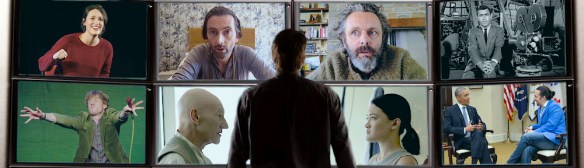
StagedThis filmed-in-lockdown comedy stars David Tennant and Michael Sheen as they attempt to rehearse a play over the internet, the goal being they’ll be ready to put it on as soon as theatres reopen. Naturally, there’s much more to it than two actors practising a play — indeed, I’m not sure they ever actually get round to any proper rehearsing. Conflicts abound, both broadly relatable (Sheen is blackmailed into helping look after his elderly neighbour, but develops genuine concern for her) and actorly (a running debate/gag about which of the pair should get top billing), and there are a couple of big-name surprise cameos along the way (no spoilers — the surprises are worth it). With all episodes in the 15- to 20-minute range, the series is hardly a big time commitment (it runs well under two hours in total), but it’s well worth it and consistently funny. Indeed, I wish there was going to be more. Well, a second lockdown isn’t out of the question yet, is it…

Lockdown may be over, but Staged is still available on iPlayer.

Hamilton’s America
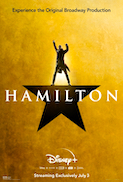
Hamilton's AmericaThis documentary first aired back in 2016, in the wake of Hamilton’s success on stage. I’m not sure if it’s ever been screened in the UK, but I tracked down a copy after watching Hamilton on Disney+. So, firstly, I’m glad I didn’t watch this before seeing the film — I feel like it would’ve somehow ruined, or at least tarnished, the experience of seeing the full production, because this contains extensive-but-far-from-complete clips from the show. I guess, back in 2016, when the only way to actually see Hamilton was by securing hard-to-come-by, insanely-expensive Broadway tickets, getting to see those clips was probably great for fans.

Aside from that, the documentary is part making-of (it follows lyricist, composer, and leading man Lin-Manuel Miranda starting in 2014, when he’s writing the musical with an impending rehearsal deadline, and then continues on to cover the show’s opening and success) and part history lesson (various cast members and experts discuss the real events and visit relevant historical locations to learn more about their characters). Rather than half-arse either of these aspects, the feature-length running time allows the doc to offer genuine insights into both. For just one example, there’s a bit where they discuss the issue of the Founding Fathers being slave owners, and although it’s only a couple of minutes long, it contains more intelligent commentary than the entire bloody social media debate about it that the film’s release provoked.

It’s a real shame this isn’t on Disney+ to accompany the film, because I think a lot of people who’ve enjoyed that would enjoy this as a chaser. It’s definitely worth a watch if you can track it down.

Star Trek: Picard  Season 1 Episodes 9-10
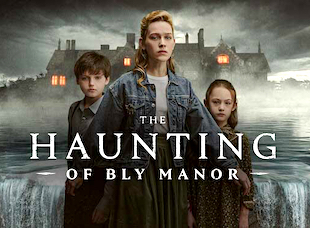
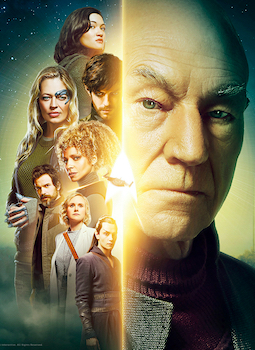
Star Trek: PicardI started this when it began in January, and have been slowly trekking through it ever since — it’s taken me six whole months to get through just ten episodes. That’s a commentary in itself as to what I thought of it, I suppose, though if you asked me I’d say it’s “not bad”.

From what I’ve seen of other people’s reactions, Picard seems to be a real “love it or hate it” show. A lot of people I read and/or whose opinion I respect either can’t stand it or find it thoroughly mediocre, but there are definitely people out there — more than an odd handful, apparently — who think it’s fantastic. As often seems to be the case with something so divisive, I find myself somewhere in the middle. After a rocky start (the first three episodes should’ve been condensed into one feature-length opener, at most), I felt the series settled down reasonably well, with a couple of almost-standalone episodes of varying quality eventually giving way entirely to its arc plot, which from then was executed with a relative consistency of pace — a major problem with many “one long story” streaming series nowadays. The quality of the dialogue and acting remained somewhat turbulent, which perhaps belies the franchise’s roots as predating “prestige TV” — what’s acceptable for Star Trek doesn’t necessarily wash with the modern sophisticated non-die-hard-fan viewer.

That said, for every scene or plot development that worked well, there was something truly ridiculous or implausible just around the corner, with the finale being one of the worst offenders. Some might say “it’s sci-fi — implausible is its stock in trade”, but even sci-fi has rules, and Picard seemed to merrily flout them, often in the name of fan service. And that’s why I end up somewhere in the middle, because overall I thought it was a solid-enough space adventure, undermined by frequent blips in quality and sense. I believe the writing team is undergoing some significant changes ahead of the already-commissioned second season, so maybe they’ll iron out the kinks.

Fleabag
Fleabag (the play)I’ve never got round to Phoebe Waller-Bridge’s much-acclaimed sitcom, but, during lockdown, Amazon offered the original one-woman-show stage version (recorded last year during a live cinema broadcast) as a charity rental, so I thought I’d see what the fuss was about. My reaction was… muted, to be honest. I can certainly see how it pushes at boundaries, both of the depiction of women in fiction and of taste in general, and for that reason it’s significant, but I only found it sporadically funny, which makes it somewhat unsatisfying as a comedy. Also, I wasn’t expecting it to get so dark — if you’re a lover of small furry animals, beware.

James Acaster: Repertoire
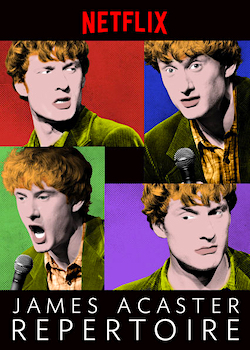
James Acaster: RepertoireAnother filmed stage comedy that left me somewhat underwhelmed. This is more straightforward stand-up, however, and as that it was more often amusing — whether you find Acaster’s “wacky” style (his word) to your taste will dictate exactly how funny. For me, he’s not the most consistently hilarious standup I’ve seen, but provoked laughs regularly enough. The real selling point here, however, is that it’s a four-parter. Ever heard of a multi-part stand-up gig before? Me either. These aren’t just four entirely independent gigs box-set-ed up either, but were conceived and shot as four connected sets.

Despite that high-concept pitch, it turns out the four-part structure isn’t particularly clever after all. The cross-episode callbacks are sometimes good and clever, but sometimes just elicit recognition (accompanied by an “I got that reference!” laugh from the audience). It’s not anything unique to the four-part structure — plenty of other comedians structure their standalone shows in the same way. The only differences are (a) if you watch it in four sittings then some of the callback are to a different episode rather than something earlier in the same set, and (b) it’s three-and-a-half hours of material, all of which were all performed on the same day, which is a remarkable feat. Otherwise, the connectivity is basically limited to episode 4 ending in such a way as to imply it’s ‘set’ before episode 1, including a cleverly staged final shot. But, unless I missed something, the other episodes don’t line up in such a way that 2 must follow 3 and 4 must follow 3, so it doesn’t create some kind of ouroboros loop, which I guess was the kind of structural inventiveness I was looking for.

Overall, Acaster is whimsically amusing — not my favourite standup, but solid with some excellent bits — and the sheer volume of material at a sustained quality level is impressive. But I don’t buy that this miniseries structure is innovative In any way except volume. And I can’t help but wonder if, had he condensed these 205 minutes into a normal 60- to 90-minute set, it might’ve felt like a higher density of pure gold.

The Twilight Zone  ‘Best Of’
After a few months spent scraping the bottom of what the original Twilight Zone has to offer, it’s back to the cream of the crop. (At this point you may be wondering “how many episodes can he reasonably class as ‘the best’?!” My final answer is: the top third. Yes, that’s quite a broad definition, but I like to be generous. For what it’s worth, today’s selection gets me to 20.5% on my consensus ranking.)

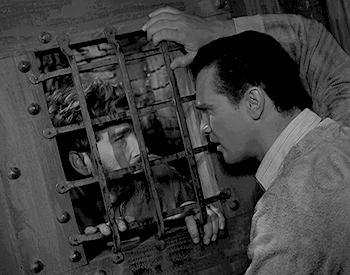
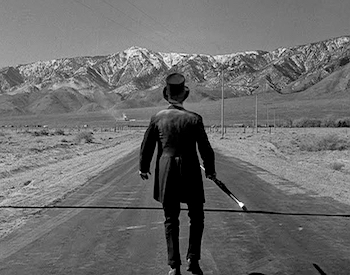
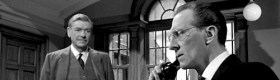
Where is Everybody?This month’s selection begins at the very beginning: the first-ever Twilight Zone episode, Where is Everybody? The title alone is a pretty succinct pitch of the episode’s theme, and the episode is as one-note as its premise. This is an exciting story in which a bloke… gets himself coffee, and… talks to a mannequin, and… tries to phone the operator but can’t get through, and… has an ice cream, and… yeeeaaah. The twist ending isn’t much cop either, 50% “it was all a dream”, 50% a thin moral about humans’ need for companionship. It could’ve been better: Rod Serling’s original pitch for episode one was a tale about a society where people were executed when they turned 60, which I think is a better concept, but it was deemed too depressing (imagine what they would’ve made of Logan’s Run, where the executions happen at 30!) That said, “everybody’s gone” is a reasonable starting idea, but the episode needs (a) more places to go with it, and (b) a more interesting reveal. (See The Quiet Earth for essentially the same premise being more thoroughly explored.)

Next is one of the very few Twilight Zone episodes that doesn’t have a sci-fi or fantastical element (apparently there are only four such instalments). The Silence concerns a wager between an old rich dude and a talkative guy at his club: if the latter can manage to stay silent for a whole year (while under constant observation, natch), the former will pay him $500,000 (equivalent to over $4 million in today’s money). What the episode really asks is how far would — could; should — you go to win (or keep) half-a-million dollars? Whatever your answer, the episode gives us a very dark version, primarily because of the ending — in traditional TZ fashion, there’s a twist (or two) and no one comes out of it well. Although it’s less allegorical than the series’ usual fantastical episodes, there’s no less of a lesson to be learned.

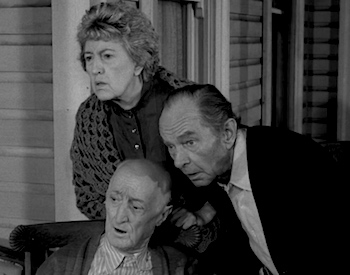
Conversely, some Twilight Zone episodes feel like a concept without a plot, and The Odyssey of Flight 33 is one of them. It concerns a transatlantic flight that finds itself in some weird midair phenomena, and to say where it goes would be to spoil the only card this episode has up its sleeve — as Oktay Ege Kozak of Paste puts it, the episode is “a light sci-fi rollercoaster ride” without “a clear sociocultural theme or complex existential narrative”. To be less kind, it’s a nice idea but the story doesn’t have anywhere to go with it — it doesn’t even end, just sort of peters out. Conversely, Matt Singer at ScreenCrush argues the ending is “an unsolved mystery [with] total ambiguity, which makes it … that much more disturbing.” Despite that, I actually think is one of those rare episodes that would’ve worked better with season four’s extended running time. Most of the story is set in the plane’s cockpit with its crew, but we meet a couple of the passengers, only for the episode to do nothing with them. At least if their reactions had been fleshed out, maybe there would’ve been more meat here.

Nightmare as a ChildI’ve written before that some episodes suffer from the series’ own influence, or just from an ensuing 60 years of sophistication on the part of the viewer, and Nightmare as a Child is a case in point. It has two reveals, and they’re both not so much guessable as obvious and inevitable. There’s even a bit of a coda to thoroughly explain it all again in case you didn’t get it. Maybe that was necessary back in 1960, when stories like this were breaking new ground in the audience’s minds, but today it feels like overkill. However, I wouldn’t say it’s a bad episode — indeed, the story of a woman meeting a strange little girl who seems to know an impossible amount about her life is still suitably eerie and tense in places — but it is one that plays less effectively today. That said, if you engage with it not as a mystery with a surprise but as simply a story, it has more to offer — Kozak compares it to “a tightly wound Hitchcockian thriller/murder mystery”, while Scott Beggs of Thrillist reckons it “replaces the usual slow burn of horrifying realization with tense, immediate danger” while it “confronts memory and PTSD in a fascinating way”. They’re not wrong.

Another episode with a tricky-to-parse twist is Third from the Sun. It’s a famous one — I won’t directly spoil it here, but I feel like the title gives it away rather. But, a bit like Nightmare as a Child, the episode is saved by being rather good even without the ironic final note (indeed, Kozak reckons the twist is “unnecessary… cheap and immediately predictable”). It’s about two families who, aware that nuclear annihilation might be imminent, try to escape, but a suspicious government figure potentially stands in their way. It’s a decent little tale of Cold War paranoia, but the twist probably is a little distracting. It reshapes what we’ve already seen, and explains some of the deliberate oddities in direction and set dressing, but it sort of doubles back on itself because the characters are now heading into the situation we thought they were in in the first place…

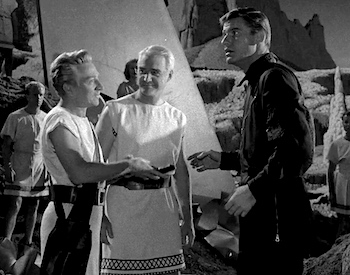
More successful, for my money, is And When the Sky Was Opened, about a pair of pilots of an experimental spaceship that crashed on its return to Earth — except one of the pilots maintains there used to be three of them, but no one else can remember him. A bit like Flight 33, there are no overt morals or explanations to be found here, just a lot of mystery and madness. Unlike Flight 33, I thought it had enough of that to fuel the narrative, leaning in to how the unexplainable phenomena affects the characters. It’s a neat little sci-fi tale — and, incidentally, is based on a story by Richard Matheson, making this his first credit on the series. I know in some circles Matheson is rightly exalted, but I feel like he’s not as widely known as he deserves — Serling gets much of the credit for TZ’s success, but several of the very best episodes are by Matheson.

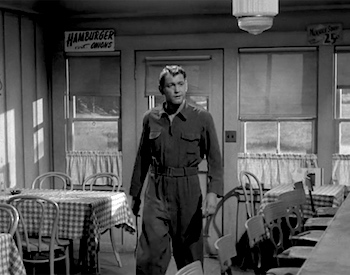
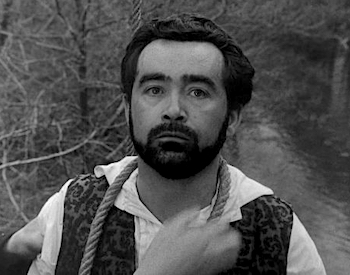
An Occurrence at Owl Creek BridgeHaving begun today with Twilight Zone’s first episode, we end with the last one produced — although they didn’t actually produce it. An Occurrence at Owl Creek Bridge is an award-winning French short film that Serling saw and liked so much he bought the TV rights (saving so much money on the cost of producing another episode that he brought season five in on budget). Even if Serling didn’t point out its alternate origin in his introduction, it’s immediately clear this came from somewhere else, because it doesn’t look or feel at all like a normal TZ episode. So what made Serling think it would fit the show? Why, it has an ironic last-minute twist, of course! This is regularly one of the best-regarded episodes of the series, and the short film itself has a pretty strong rep too, but I don’t get it. There’s some pretty photography and the beginning is fairly atmospheric, but it quickly starts to drag — the story is thin and slow, ending with a twist that I found inevitable from early on.

I feel like I’ve been quite negative on this month’s selection of episodes, but that’s only because I have very high standards for The Twilight Zone. Owl Creek Bridge was the only one I truly disliked, while The Silence and And When the Sky Was Opened are definitely deserving of their higher reputation.

Also watched…
  • Elementary Season 6 Episodes 15-21 — I guess the threat of cancellation hung over Elementary’s head as this season ended, because it very much gets to a place they could’ve left it if necessary. It’s one of those “that’ll do”-type endings, though, so I hope to find the final, foreshortened seventh run does a better job.
  • Jonathan Creek Series 2 — I didn’t remember this second series as vividly as I did the first, but it still has some very fine and baffling mysteries. Particular highlights include a man seen on two continents at the same time, and a priceless painting stolen from a closely-watched empty room.

    Things to Catch Up On
    CursedLast month, I didn’t include this section because I couldn’t think of anything to put in it. Naturally I then spent the next couple of days remembering things, like the recent re-adaptations of Alex Rider on Amazon and Snowpiercer on Netflix. Obviously, I still haven’t watched either of those. More recently, Netflix launched Cursed, a young adult (I think) take on Arthurian legend from the point of view of the Lady of the Lake. I’m not wholly convinced by the trailers or buzz, but I do love a bit of Arthurian whatnot so it’s on my radar. Also passingly of note is that Amazon just released season three of Absentia. I started out moderately enjoying the first season, but by the end was not at all impressed. I was surprised when it got a second run, so I’m even more flabbergasted to see it back for a third. I guess someone must be watching it. Each to their own.

    Next month… the second season of Netflix’s superhero show The Umbrella Academy is out soon, but as I never got round to season one, I doubt I’ll do season two next month. Elsewise, more of the best of The Twilight Zone, and I really should get round to The Mandalorian (how long’s it been now?!)

  • The Jaja Ding Dong (Ding Dong!) Monthly Review of June 2020

    My love for you is wide and long, dear readers, and so (one of) the breakout hit(s) from Netflix’s Eurovision movie seemed the only appropriate title for this month’s review.

    Also, I didn’t have any better ideas. I mean, I could’ve called it “halfway”, because we are halfway through the year and I’m going to talk about that… but it’s not as fun, is it?


    #128 The Children Act (2017)
    #129 Paris When It Sizzles (1964)
    #130 Shadowlands (1993)
    #131 E.T. the Extra-Terrestrial (1982)
    #132 The Gay Divorcee (1934)
    #133 The Last Black Man in San Francisco (2019)
    #134 The Peanut Butter Falcon (2019)
    #135 Split Second (1992)
    #136 Birds of Prey (and the Fantabulous Emancipation of One Harley Quinn) (2020)
    #137 The Old Dark House (1932)
    #138 The Rhythm Section (2020)
    #139 The Vast of Night (2019)
    #140 The Armour of God (1986), aka Lung hing foo dai
    #141 Gemini Man (2019)
    #142 Cairo Station (1958), aka Bab el hadid
    #143 Tomb Raider 3D (2018)
    #144 7500 (2019)
    #145 Do the Right Thing (1989)
    #146 Shazam! 3D (2019)
    #147 Crawl (2019)
    #148 Chicken Run (2000)
    #149 Man on Wire (2008)
    #150 Who Killed Captain Alex? (2010)
    #151 3:10 to Yuma (2007)
    #152 Polytechnique (2009)
    #153 Eurovision Song Contest: The Story of Fire Saga (2020)
    #154 The Invisible Man (2020)
    #155 Without a Clue (1988)
    Paris When It Sizzles

    E.T. the Extra-Terrestrial

    The Old Dark House

    The Invisible Man

    .


    • I watched 28 new feature films in June.
    • It’s my joint-3rd best month of 2020 (tied with March), which is right in the middle when you remember there have only been six months… but 2020 is clearly an exceptional year, because it’s also in the top 5% of months all-time.
    • It’s also my best June ever, beating the 21 of June 2018.
    • Naturally, that means it stomps all over the June average (previously 10.0, now 11.4).
    • It also sails past the rolling average of the last 12 months (previously 15.3, now 17.3), and also pips the average for 2020 so far (previously 25.4, now 25.8).
    • Reaching #155 means I’ve already passed my final total from last year, making 2020 already my fifth highest totalling year ever.

    Now, some observations on the actual films I watched…

    • They included my 2,000th film for this blog. I wrote about that here.
    • I was also particularly glad to get a chance to see Cairo Station, one of the five films I flagged from The Story of Film: An Odyssey (my 1,000th film) back in August 2015. In the almost-five-years since that post, I’ve seen two of those films. Of the other three, I’ve owned one on Blu-ray for several years; another was released on Blu-ray in the UK last November; and the fifth recently came out on Blu-ray in the US. So, I could/should be completing them by now…
    • This month’s Blindspot film: Spike Lee’s Do the Right Thing, which is exceptionally pertinent right now — which, considering it’s now over 30 years old, is rather depressing. A great film, though.
    • From last month’s “failures” I watched Crawl, The Last Black Man in San Francisco, The Peanut Butter Falcon, The Rhythm Section, and The Vast of Night.

    Finally, returning to statistics: the end of June marks the halfway point of the year, of course, and at #155 it’s the furthest I’ve ever reached by this point (beating #145 in 2018). So, to mark the occasion, I’ve gone back over previous years to see what I can learn about the first half of the year as a predictor for the second.

    • Logic might suggest the second half would be double the first, but that’s never been the case.
    • Of the previous 13 years, five saw the second half more than double the first, with the other eight showing a decrease (obviously).
    • The biggest discrepancy came last year, 2019, when I did 64.9% of my film viewing in the first half of the year, leaving just 35.1% in the second.
    • The biggest swing the other way was in 2009, when I watched 40.4% in the first half of the year and 59.6% in the second.
    • On average, the second half of the year accounts for 48.3% of my viewing; though if we look at just the last five years, that drops to 44.8%.
    • So, as a predictor for 2020, if I follow the all-time average I should end the year on #305 — holy moly! A feat that never seemed possible, considering I’ve only passed #200 twice.
    • If I take the average of just the last five years, I only reach #283 — which would still be my highest year ever by over 20 films.
    • And, compared to the two extremes detailed above, anything below #239 would be a new second-half low (in percentage terms), while a new high would see me watch over 383 films! The latter would mean a monthly average of 38.1 for the rest of the year — higher than I’ve ever reached in a single month. I really don’t see that happening.
    • Leaving percentages behind, the average number of films I’ve watched in July-to-December is 69, which this year would put my final total at 224.
    • Lest all this sound like plain sailing to a number definitively above 200, my weakest-ever July-to-December was 33 in 2011, which, if repeated, would see 2020 end on 188. Never say never…


    The 61st Monthly Arbitrary Awards

    Favourite Film of the Month
    Lots of stuff I liked a great deal this month, and as usual it’s hard to compare such wildly different films. For surprise value, I’m drawn towards Paris When It Sizzles — it doesn’t seem to be well-rated on the whole, but it’s a lot of fun as a kind of “insider’s view” Hollywood spoof that feels ahead of its time.

    Least Favourite Film of the Month
    No outright bad movies this month, in my estimation, but there were more than a couple that didn’t live up to my expectations. Perhaps the worst of these was Crawl, purely because it was doing so much better early on than it was by the end.

    Song That Most Stands a Chance at the Oscars of the Month
    God only knows what’s going to be going on at the Oscars next year, but they should be more amenable to streaming movies than ever, and that might open the door for a song from The Story of Fire Saga to get in — if there’s one thing most people who’ve watched it can agree on, it’s that the original songs are rather catchy (in a Eurovision-y way). Heck, why just one? In the past, multiple songs from the same film have made it, so never rule that out (I have no idea how the rules for the song category work). But if only one song makes it then… no, it won’t be Jaja Ding Dong (well, you never know). It might be Volcano Man, just because that had several weeks of advance play due to being released as a kind of teaser trailer. But judged as an actual song, the big emotive climactic number Husavik surely deserves a shot.

    Most Desirable House of the Month
    I can see why Jimmie Fails obsesses over restoring, maintaining, and (re)acquiring that house in The Last Black Man in San Francisco — it’s gorgeous. Until it gets that makeover at the end, anyway (um, spoilers? I dunno).

    The Audience Award for Most-Viewed New Post of the Month
    Maybe it’s because there’s nothing new in cinemas. Maybe it’s because Eurovision remains popular in many places, as does Will Ferrell. Whatever the cause, Netflix’s Eurovision Song Contest: The Story of Fire Saga has generated a lot of chatter since its release last Friday, and so it’s of little surprise that my release-day review has attracted a fair few visitors. It easily tops this month’s chart (both new and all-time posts), and has overtaken another Netflix original, Extraction, to be my most-viewed film review of 2020 so far.


    This month, my Rewatchathon movies forward at give-or-take its intended pace — which, after last month’s bumper crop, means I’m still over a month ahead of schedule.

    #27 The Scarlet Claw (1944)
    #28 Gambit (1966)
    #29 The Pearl of Death (1944)
    #30 The House of Fear (1945)

    Three of those continue my rewatch of the Sherlock Holmes series starring Basil Rathbone and Nigel Bruce. My original reviews are linked above; the following links are to new thoughts on Letterboxd. In summary, I think The Scarlet Claw remains my overall favourite from the series, but I enjoyed both The Pearl of Death and, in particular, The House of Fear a lot more this time — together, the trio are definitely among the series’ best.

    As for Gambit, it made my yearly top ten back in 2011, but if anything I enjoyed it even more on this second watch. I’d remembered the famous first-act trick, of course, but forgotten the substance of all the twists at the end, which kept it exciting. It’s so much fun in between too, and moves like a rocket without ever feeling rushed.


    Cinemas remain closed, but that hasn’t put a stop to new releases, with the likes of Woody Allen’s A Rainy Day in New York and Simon Bird’s Days of the Bagnold Summer heading direct to rental. Plus, there was an even more high-profile new release in Spike Lee’s acclaimed movie for Netflix, Da 5 Bloods.

    Other titles new to the preeminent streamer that caught my eye include action movie VFW; last year’s animated revival of The Addams Family; documentary The Show Must Go On: The Queen + Adam Lambert Story; and almost a dozen movies directed by Youssef Chahine — I watched the most noteworthy one, Cairo Station, but I’ve seen several others recommended. I also noticed Line of Duty pop up, but only because it was released theatrically here as In the Line of Duty, presumably to avoid conflict with the popular TV series, but Netflix have reverted to its original title. I don’t remember it being well reviewed, so I won’t be rushing to catch up with it.

    Meanwhile, Amazon Prime Video offered the new Shaun the Sheep movie, Farmageddon, which I’ve been looking forward to getting round to. Also a couple of documentaries, one titled Showrunners: The Art of Running a TV Show, which kind of sums up its topic, and the other about a pioneering early female filmmaker, Be Natural: The Untold Story of Alice Guy-Blaché (which still hasn’t been picked up by the site I use to track additions to Amazon, so it may’ve been there a while for all I know). Also standing out from the pack was the brilliantly titled Django and Sartana Are Coming, It’s the End (the titles seem to be the best thing about any of the movies starring Sartana) and a steampunk adaptation of The Secret Garden. Um, what? Colour me curious.

    Once again, Sky Movies / Now TV suffered by comparison. Mr. Jones sounds interesting, but has the kind of grim subject matter that’s going to make me keep putting it off; I didn’t mind the first one, which hardly pushes Maleficent: Mistress of Evil to the top of my must-see list (I didn’t even bother to put it on last year’s ’50 unseen’ list); and I’m not sure I’ve seen enough Kevin Smith films to really ‘get’ Jay & Silent Bob Reboot… but, hey, I guess it is a reboot, right?

    Oh, and lest you think I’d curbed my spending this month, oh dear me, no. Recent films finally hitting disc here included The Lighthouse and Pixar’s Onward (in 3D, natch), while new releases of catalogue titles included 88 Films’ latest Jackie Chan release, Armour of God II: Operation Condor (hence why I watched the first one this month); Eureka adding film noir Criss Cross to their Masters of Cinema line; and BFI issuing a restored Tokyo Story, a film I’ve been meaning to rewatch for a very long time. And offer pricing was once again the siren to my wallet’s sailor: from the BFI, The Crying Game, doco Mifune: The Last Samurai, and their Early Women Filmmakers box set (with seven features and 15 shorts, including several by the aforementioned Alice Guy-Blaché); from a Masters of Cinema twofer, Faust and Witness for the Prosecution; and from the recent UK Criterion offer, Fail Safe, Holiday, Kiss Me Deadly, and Solaris. I think I would’ve caved to more in the latter, but I’m trying to hold some money back for the Barnes & Noble Criterion offer that should be starting in a couple of weeks. I can never have enough set aside for that…


    UK cinemas are set to reopen… but how long will that last? Will anyone go? The major films scheduled for July have already been pushed (again) to August, leaving only re-releases and some small-scale new releases with nothing to lose by testing the waters. Hardly an enticing slate, especially when the safety measures on offer are dubious (personally, I’m almost entirely put off by the lack of reserved seating at Odeon). Some people would like to pretend this is all over, but anything could still change any day…

    Well, at least we’ll definitely have Hamilton on Disney+.

    The Past Month on TV #59

    Normally I format these TV columns with new (or new-ish) stuff first, followed by older/archive programmes, in a broad-sweep kinda way — i.e. it’s not strictly chronological. But this month not much truly counts as “new”, so I’ve gone for the strictly chronological approach.

    In order of appearance, then, this month there’s an RSC production of Macbeth (staged and filmed in 2018 but debuting on BBC Four tonight); the most recent standup show from Daniel Sloss; Netflix’s revival of Lucifer; classic murder mysteries with Jonathan Creek; an early Doctor Who serial; and more of the worst of The Twilight Zone; plus the usual bits & bobs at the end.

    Macbeth
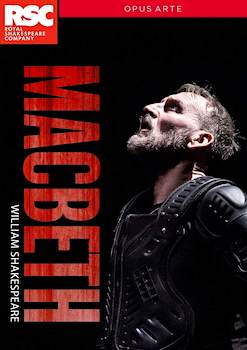
    RSC Macbeth (2018)This Royal Shakespeare Company production from 2018, starring Christopher Eccleston and Niamh Cusack, has apparently been on iPlayer since April, but only came to my attention thanks to a TV screening scheduled for tonight (on BBC Four at 9:30pm).

    You probably know the story: Scottish lord Macbeth bumps into three witches who prophesy he’ll become king, a goal he sets out to achieve by murder. This particular production has some nice ideas, including casting the witches as a trio of creepy little girls in pyjamas, covering the various ghosts in dust, and an ominously reimagined ending. The real high-point, however, comes when Macduff learns of the slaughter of his wife and children, which is thanks to Edward Bennett’s understated but powerfully emotional reaction. It justifies why it’s Macduff who gets to vanquish Macbeth at the climax. That’s another good bit, actually, with a convincingly-realised stage fight (something I’ve not seen achieved too often).

    There’s also a big countdown clock that starts ticking when the king is killed and then remains visible throughout — I feel like it takes some balls to have a countdown running during a live performance! Unfortunately, for much of the time the clock just serves to remind you how long is left during a production that I often found a bit slow. The cast frequently race through their lines and run about the place as if a race is on to the finish line, but, counterintuitively, that does not add pace. Altogether, it’s not terrible, but there have been better versions.

    Daniel Sloss: X
    Daniel Sloss: XHaving really enjoyed Sloss’s two Netflix specials back in 2018, I jumped on this 2019 one as soon as I became aware it existed (it was filmed for HBO in the US, but hasn’t made it to any UK broadcaster or streamer (though it had a theatrical release!) But where there’s a will there’s a way…) Hopefully it will become more widely available, because not only is it hilariously funny but it’s packed with so many insightful, timely routines that I don’t even know where to start. Some of the stuff he has to say should be glaringly obvious (about improvements to sex ed, for instance), and yet has society changed? Obviously not. And then, as is Sloss’s style, he blindsides you with a finale that is hard-hitting but still manages to elicit laughs. Few other comedians, or forms of entertainment fullstop, manage to be so funny or so effectively thought-provoking, and I’m not sure any others manage to combine the two so well.

    Lucifer  Season 4
    Lucifer season 4After three seasons on network TV (or Amazon Prime Video here in the UK), Lucifer fell prey to 2018’s bloodbath cancellation season. It was ultimately revived by Netflix, and it seems to have gone well for them: after this they commissioned a fifth and final season, then upped its episode count, then changed their mind and are negotiating for a sixth season.

    The move to streaming had minimal affect on the show itself, with many things remaining exactly the same: 45-minute-ish episodes, each with a case-of-the-‘week’ plot, and fades-to-black for ad breaks that will never, ever come. It’s only subtleties that are different; the kind of thing only production geeks might even register — that there’s marginally more swearing, violence, and nudity; more special effects, suggesting a slightly increased budget; and 4K HDR-enhanced photography, which makes the image richer and prettier without fundamentally changing the style or visual language of the show.

    As for stuff everyone would care about — plot, characters, etc — a lot of this season has to deal with the fallout from the revelations in the season three finale. That means the show becomes a bit more invested in the supernatural stuff than before, although that’s mainly left to the arc plots — the cases of the week are still grounded in the mortal realm, with the usual array of reasons and settings to motivate murder. Cunningly, it all ends in a place that would’ve been suitable (if unsatisfying) for the series to never return, had this revival been short lived. Fortunately, we’ve more to look forward to.

    Jonathan Creek  Series 1
    Jonathan Creek series 1I used to love Jonathan Creek back in the day. It was a huge hit, too, gaining high viewing figures and a BAFTA award. On the surface it doesn’t look so special: two mismatched individuals solve murders. But it’s the execution that’s different: these are all “locked room” mysteries, and rather than interview a small array of suspects to guess who did it, they must work out how the murder was even physically possible. Creek is a magician’s trick designer, and the stories kind of work like magic tricks: something seemingly impossible that has a hidden rational explanation. Personally, that’s right up my street, and while some elements of the show are obviously dated (the hairstyles; the cars; the pace is leisurely by modern standards), I think it holds up pretty well.

    Doctor Who  The Time Meddler
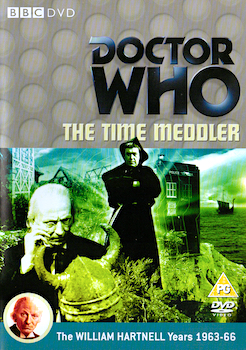
    The Time MeddlerLast month, Doctor Who Magazine ran a Twitter ‘world cup’ to find the most popular stories starring the First Doctor. Many of the usual suspects did well, but I was surprised to see The Time Meddler wind up in second place — I’d never realised how much love there was for this story. In fact, I’d never seen it, so naturally I was inspired to dive in.

    The serial is notable in the history of Doctor Who for being the first pseudo-historical — that’s to say, a story set in the past but with science-fiction elements (beyond the presence of the regular characters and the TARDIS, obviously). Also because (spoiler alert!) it’s the first time we meet another member of the Doctor’s race (besides Susan, obviously). That reveal is a long time coming, though. We get there in the Part 3 cliffhanger, which is one for the ages — I can only imagine how it must’ve played back in 1965. (Of course, without internet discussions or fandom as we know it today, I guess it wasn’t as impactful. But for those kids in the know, whew!) It cues a genuinely superb final episode.

    Unfortunately, the three before it feel like we’re taking the long way round to get to the point. The initial setup is enticing, with anachronistic technology turning up in 1066, given an extra zhuzh because new companion Steven doubts the TARDIS can travel in time, and the out-of-place tech seems to prove him right. After that, there’s a lot of back-and-forthing — the kind of stuff that feels like forward momentum in the moment, but ultimately just moves pieces back to where they were. The Doctor even goes missing for an entire episode (so William Hartnell could have a holiday), which leads to even more wheel-spinning. At least Douglas Camfield’s direction is really rather good… until he attempts to stage a multi-combatant sword fight within the budgetary, scheduling, and technological limitations of 1960s children’s television. It’s not really his fault, I’m sure, but it fails to be an exciting bit of TV.

    I feel like that’s an excellent two- or maybe even three-parter in The Time Meddler — when it finally gets to the point in the final episode, it’s fantastic, but the first three-quarters are much less engaging. It’s worth it for that final part, but there are more consistently excellent First Doctor stories that I’d rank higher.

    The Twilight Zone  ‘Worst Of’
    Jess-BelleThis third selection of episodes deemed the series’ worst (according to the consensus ranking I compiled) mean I’ve now seen the bottom 10% of episodes, which I think is a good time to call a day on being miserable and return to the good stuff. As for the following seven editions, many of them are not fundamentally flawed, but each has some element that doesn’t work or a stumble in their execution that prevents them from achieving the full quality of a good Twilight Zone episode.

    Continuing to move up the rankings, in 149th place is Still Valley, in which TZ basically tells us there are “good people on both sides” as a Confederate soldier is presented with a book of witchcraft that he could use to change the tide of the war, but refuses to do it because it means calling on the powers of Satan. And that’s all for your 25 minutes. As Oktay Ege Kozak of Paste writes, “we watch The Twilight Zone for its morally complex and hard-hitting narratives. Still Valley is so vanilla, it belongs in a show called The Light Zone.” It’s a solid episode for the most part, but with a maddeningly uninteresting conclusion.

    Next up is a season four episode (i.e. an hour-long one), Jess-Belle. At its core it’s a gender flipped version of The Chaser (reviewed last time), in which a young woman wants a particular man to fall in love with her. The main difference is that whereas before the (male) daemon was actually trying to help the main character (by hoping to talk him out of it), the (female) witch here seems more of a malicious, trickster-ish force. There are one or two effectively creepy bits, but it’s weak sauce by TZ standards, with no lesson to be learned and an irritating folksy song that keeps popping up throughout. On Blu-ray it comes with an audio commentary in which TZ expert Marc Scott Zicree spends the entire running time singing the episode’s praises and the writer, Earl Hamner, basically nods along with a “yes, I’m a genius” attitude. On the bright side, it did help me to see some of the episode’s qualities. For example, the extended running time allows room for scenes that would otherwise have been cut, and are actually among the episode’s better bits. And you learn that it was written in just a week as a last-minute replacement — bearing that in mind, it’s not so bad.

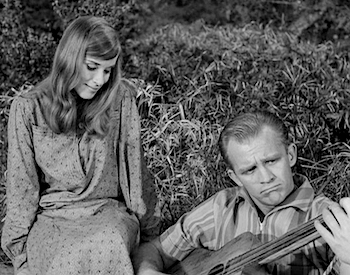
    Come Wander with MeThe next episode in our rundown is also based around a song: Come Wander with Me, in which a wandering singer attempts to buy a folksong from a young woman, only to find he might be living the lyrics… maybe. It’s a bit unclear what’s really happening, or why. It’s got some nice ideas, with mysterious characters, the haunting song, and some atmospheric direction by Richard Donner, but it comes to no kind of conclusion. How has this happened before? Has it happened before? Why is it happening again now? The episode barely even begins to ask those questions, never mind answer them; and not in a Lynchian “it’s up to your interpretation” way, which would be fine, but it doesn’t even seem to be aware those questions exist. Frustrating.

    The Brain Center at Whipple’s is set in the future year of 1967, when a company is replacing tens of thousands of staff with a machine. What an implausible notion, eh? This episode is no more than a rather dated lecture about automation — the warning has been ignored, but none of the terrible things foretold have come to pass (…yet). The ending is both painfully obvious (Mr Whipple himself gets replaced by a machine) and silly (said machine is Robby the Robot from Forbidden Planet, waddling around Whipple’s office spinning a keychain for no reason other than Mr Whipple used to). It doesn’t help any that “Whipple” is an inherently silly-sounding name.

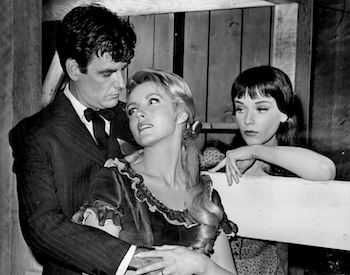
    Next up is one of the show’s frequent excursions into the Old West in Showdown with Rance McGrew. They surely made sense at the time, when Westerns were ubiquitous on US TV, but if you didn’t know that it can seem a bit weird that a sci-fi/fantasy show is so obsessed with the era. You do need to know that context for this episode, though, because it’s actually a riff on all those TV Westerns. The first half is basically a spoof of them, which I imagine was rather effective back in the ’60s, because it remains moderately amusing now. After establishing that the show’s star is a bit of a prima donna sissy, he’s magically transported back to the real West, where he must face up to the actual Jesse James, who’s been watching the show and is none too impressed. It’s quite a fun episode, but the idea that gunslingers in the afterlife spend all their time watching movies and TV and getting their feelings hurt about how they’re portrayed is… well, it feels kinda daft, but eh, why not? It makes me wonder if Serling didn’t like Westerns or their attitude to history, and so this whole episode was just an exercise in critiquing them. As such, it’s not too bad.

    The Mind and the MatterThe ‘hero’ of The Mind and the Matter hates people. They bump into him on the subway; they squish against him in the elevator; they accidentally pour coffee over him at work. If he had his way, all the people would just disappear. After he reads a book about the power of the mind, he instantly gains the power to make his thoughts real (no practice required, apparently), and so immediately does away with everyone else. Hurrah! But after a morning’s work in peace and quiet, he’s bored, with no idea what to do. So the first thing he imagines to enliven his world is… an earthquake. Um, what? Unsatisfied with imagining different weather phenomena, and apparently unable to conceive of anything else whatsoever to occupy his interest, he decides to fill the world with people just like him. That results in a world full of grumblers and moaners, which he finds even more distasteful than how it was before — so he just puts it all back. It’s almost a lesson in what happens if you give unlimited power to unimaginative people… except that’s not the point the episode actually wants to make, so it doesn’t really make it. Instead it’s going for “this world isn’t perfect, but it’s better than the alternative and there’s a lot to like”. But it doesn’t make us feel that, it just tells us it. Heck, even the character doesn’t feel it — he’s just as miserable at the end as he was at the start. The whole affair is sort of an infinitely stupider rehash of the classic Time Enough at Last, only without any ironic point. And there are some terrible prosthetic effects, which I struggle to believe convinced anyone even on low-res ’60s TV. Basically, it’s a wholly inadequate episode from every angle.

    Finally for now, The Mirror is the story of a Castro-analogous rebel general (played by Peter Falk) who has successfully taken control of his Central American country, when the former ruler introduces him to a magic mirror that will show any would-be assassins — which just so happens to be more-or-less everyone he knows. I guess it’s meant to be a study in paranoia, although Serling’s opening and closing voiceovers seem to be framing it more as a criticism of tyrants. As the latter, it borders on propaganda, which kind of undermines the former. It’s a reasonable concept, thinly executed.

    Also watched…
  • Elementary Season 6 Episodes 1-14 — I last watched this modern-day Sherlock Holmes in 2017 (and last properly commented on it here in 2016), which I guess shows my level of dedication to it. In truth, I’ve warmed to it over the years. I’m still not convinced it’s a faithful adaptation of the original characters (and certainly not of the stories), but, taken on its own merits, it has good qualities. My favourite of those: the way it’s sometimes prepared to offer quite outlandish storylines, ones that border on science-fiction or pulp genre fare, rather than your bog-standard procedural homicide stuff.
  • Eurovision 2020 — Didn’t actually happen, of course. In its place, the BBC offered a special called Come Together, in which past highlights chosen by a panel of experts were voted on by the public. There were some spectacularly weird choices in there, and of course Waterloo won. That was followed by the official replacement show, Europe Shine a Light. The title is a reference to the last time the UK actually won — were they attempting to keep us on side? It was an odd affair, but still entertaining in its own way. There’s nothing quite like Eurovision… and this wasn’t quite like Eurovision. Still, I suspect it’ll be better than that Netflix film, if its trailer is anything to go by.
  • The Great British Bake Off Series 9 — Beginning a catch-up on the last couple of series. This is the 2018 one, if you need a point of reference. Also watched all of companion show An Extra Slice, which is sometimes even better than the main programme, mainly thanks to Tom Allen’s caustic humour.
  • The Rookie Season 1 Episodes 16-20 — Another handful of episodes (spanning from the unexpected, emotionally devastating Greenlight to the gripping and now-timely season finale (it’s about the risk of a deadly virus released into the population)) that remind this is a more-than-solid example of a US network TV police drama. Looking forward to season two… though with US networks currently cancelling many police-related series, I guess a third season looks uncertain.
  • Star Trek: Picard Season 1 Episode 8 — Just in case you think I’d forgotten about it. Hey, next month I might finish it!

    Next month… I’m not aware of anything in particular coming up, so hopefully I’ll finally dig into my massive pile of “stuff I’ve been meaning to get round to”. Roll a dice for whether that means The Mandalorian or Devs or Killing Eve or Westworld or Jack Ryan or Jessica Jones or The Witcher or Veronica Mars or Peaky Blinders or The Boys or…

  • 100 Films in a Year’s 2,000th film is…

    Basic maths tells us that watching 100 films in a year should mean it takes 20 years — two whole decades — to reach 2,000 films. But nowadays I watch plenty more than 100 films each year, and so after 13 years, 5 months, and 6 days of my eponymous challenge, I have viewed my 2,000th film.

    And it is E.T. the Extra-Terrestrial.

    Normally this is the kind of thing I’d announce in my next monthly review, but as I made a song and dance about #1000, I thought #2000 deserved the same. It also allows room for some reminders and explanations.

    Firstly, how come I’ve only just reached my 2,000th film when my reviews archive lists 2,178 feature films? Well, this is my 2,000th “film that I’ve never seen before”, as outlined on my “about” page. In the past 13-and-almost-a-half years I’ve also reviewed sundry films that I’d seen before, not to mention alternate cuts that aren’t different enough to count as ‘new’, hence why I’ve amassed 178 more reviews than new films I’ve seen.

    Secondly, I’d like to point out that which film got the honour of being my 2,000th wasn’t just dumb luck. When I realised I was approaching this milestone, I set out to choose a title of enough significance to stand alongside the film I’d chosen for #1000 (Mark Cousins’s 15-hour documentary The Story of Film: An Odyssey), as well as some of the classics I’ve watched for my yearly #100s in the past — films like Citizen Kane, Lawrence of Arabia, One Flew Over the Cuckoo’s Nest, City of God, and Stalker. How E.T. squares up to those is hopefully self-explanatory.

    As I said, this is my 2,000th “film I’ve never seen before” — considering my age and film-viewing experience, it seems unlikely that I’ve never seen E.T., doesn’t it? Indeed, for years I struggled to decide whether I’d seen it when I was a kid or not. I certainly spent the first few years of the ’90s using TV screenings and the local video rental shop to consume a steady diet of family-friendly adventure/sci-fi/fantasy mainstream films from the preceding decade or so. I know I saw the Star Wars and Indiana Jones and Back to the Future trilogies. I remember watching both Ghostbusters, and Flash Gordon and Clash of the Titans and The NeverEnding Story and Dune and The Princess Bride and Who Framed Roger Rabbit and Honey, I Shrunk the Kids and Hook… I also saw more grown-up-minded sci-fi like Close Encounters and 2001. I even remember watching stuff like Return to Oz and Harry and the Hendersons. Sure, there were beloved films I know I missed — films like The Dark Crystal and Gremlins and The Goonies and Labyrinth and Willow — but they’re not on the scale of E.T. I mean, none of those overtook Star Wars to be the highest-grossing film of all time!

    Searching my memory, there are only two things I really remember about E.T.: (1) the “E.T. phone home” catchphrase (but everyone knows that, thanks to ubiquitous references in other media); and (2) the ride at Universal Studios. I don’t recall any moments from the film itself. If I did see it, the impression it left on me was exceptionally small, which seems implausible. So I’m forced to concede that, as unlikely as it may seem, I never saw E.T.

    Having come to that conclusion a while ago, it seemed right to hold it in reserve for a special occasion — and what better time to finally watch such a noteworthy film than as my 2,000th?

    E.T. will be reviewed in due course.

    Holy Monthly Review of May 2020, Batman!

    Altogether, I watched 39 feature films this month… but that includes my Rewatchathon tally, so it’s no record breaker. Further down you can find out how that total divides up between new viewing and rewatches, but it’s pertinent here because four of those films were Batman-related. That might not sound like many, but it’s 10.3% of my viewing this month. Couple it with some unwatched Bat-purchases (see the “failures” section), and recent headlines about Justice League (the Snyder cut) and Batwoman (resigning), and it feels like the Caped Crusader has been around a lot of late — hence the post title. Makes a change from something coronavirus related, eh?


    #96a DC Showcase: Jonah Hex (2010)
    #97 Batman: Under the Red Hood (2010)
    #98 Can You Ever Forgive Me? (2018)
    #99 August 32nd on Earth (1998), aka Un 32 août sur terre
    #100 Joker (2019)
    #101 The Head Hunter (2018)
    #102 Black Angel (1946)
    #103 Scooby-Doo 2: Monsters Unleashed (2004)
    #104 Ugetsu Monogatari (1953)
    #105 Scooby-Doo! & Batman: The Brave and the Bold (2018)
    #106 Top Secret! (1984)
    #107 American Animals (2018)
    #108 Belladonna of Sadness (1973), aka Kanashimi no Belladonna
    #109 Zero Charisma (2013)
    #110 Marriage Story (2019)
    #111 Zombieland: Double Tap (2019)
    #112 Stuber (2019)
    #113 Misbehaviour (2020)
    #114 Phase IV (1974)
    #115 A Bug’s Life (1998)
    #116 127 Hours (2010)
    #117 Hotel Artemis (2018)
    #118 The Goonies (1985)
    #119 Maelström (2000)
    #120 Intolerable Cruelty (2003)
    #121 The Sky’s the Limit (1943)
    #122 Philomena (2013)
    #123 Miss Fisher and the Crypt of Tears (2020)
    #124 Film Stars Don’t Die in Liverpool (2017)
    #125 My Favourite Wife (1940)
    #126 The Looking Glass War (1970)
    #127 Fisherman’s Friends (2019)
    Joker

    Marriage Story

    Philomena

    The Looking Glass War

    .


    • I watched 31 new feature films in May.
    • That makes it just my fifth ever month with over 30 films. It ties with October 2015 as my fourth highest month.
    • It flies past the May average (previously 14.8, now 16.1) and the rolling average of the last 12 months (previously 14.75, now 15.3), as well as the average for 2020 to date (previously 24.0, now 25.4).
    • This month’s other milestones include passing my eponymous goal of 100 films, which feels less of an achievement since the last time I failed it was eight years ago. However, it’s the earliest I’ve ever achieved it: I got there on 5th May, beating 2018’s 10th May.
    • I also passed my updated goal of 120 new films. Again, that’s the earliest I’ve got so far: I was there on 22nd May, beating 2018’s 29th May.
    • So it should come as no surprise that #127 is the furthest I’ve ever reached by the end of May. Next closest is, again, 2018, when I’d got to #124.
    • One thing I failed to do this month was watch a new film on the 23rd, one of the three remaining dates on which I’ve never watched a film in this blog’s lifetime (a thing I’ve been specifically working to iron out since July 2017). The other two are 5th January and 22nd December, which makes this May date feel like a real oddity. I mean, in early January I’m often so caught up in my review-of-the-year posts that I don’t watch many films; and December 22nd is a date I’m often doing Christmas stuff (family get-togethers, etc). 13 years is a long time for them both to go empty, considering 99.2% of the rest of the year has filled up over that time, but at least there are clear reasons that reoccur every year. Why May 23rd, though… I’ve not got the foggiest.
    • Attentive readers may’ve spotted two early Denis Villeneuve films amongst this month’s viewing. I’ve had copies of all of his early (i.e. pre-Prisoners) work for a number of years now, and I thought I’d finally get round to them in the run-up to Dune. Expect some more next month.
    • This month’s Blindspot film: Kenji Mizoguchi’s acclaimed fantasy drama Ugetsu Monogatari.
    • In a total about-turn from my last record-setting “failures” tally, I watched none of the ones I listed last month.


    The 60th Monthly Arbitrary Awards

    Favourite Film of the Month
    The more films you watch, the higher the chance more of them will be great, and so I have a few strong contenders to choose from this month. On balance, I give the gong to Belladonna of Sadness for being quite unlike anything else I can remember seeing. But any of the films whose poster I’ve pictured above (except Joker, which I have mixed feelings about) were in the running and are certainly on the long-list to make my year-end top ten.

    Least Favourite Film of the Month
    My most disappointing viewing experience this month was definitely My Favourite Wife, a screwball comedy starring Cary Grant that has its moments but overall made me appreciate how much skill was involved in the truly great screwball comedies — it has none of their pace or spark.

    Best Joker of the Month
    Look, I know Joaquin Phoenix won the Oscar ‘n’ all, but rewatching Batman ’89 reminded me just how good Jack Nicholson was in the role. I’m not saying he’s the greatest Joker ever (there’s strong competition), but I think people forget that he gave as effective and iconic an interpretation of the part as anyone else has.

    Best Double-Bill of the Month
    I realise this is kinda just praising my own film-choosing skills, but c’mon, Phase IV and A Bug’s Life is an amusing “talking ants” double-bill by anyone’s standards (right?)

    The Audience Award for Most-Viewed New Post of the Month
    For the second month in a row, and the third time this year, a film review has topped the table of new posts (that might sound like a silly observation on a film blog, but my TV columns usually do very well for hits. Indeed, taking all posts into account, 19 of May’s top 20 most-viewed posts were TV ones). The victor this month was, somewhat surprisingly, The Head Hunter — hardly a major film, nor a new release (though it was fairly new to the UK, so maybe that’s what helped). Meanwhile, the headline of this month’s TV column was Quiz, which only began airing in the US last night, so maybe that will make like Bodyguard and be a big draw next month.


    It’s been about a year, so today I’ve given the directors page header image its annual(ish) update. For those who don’t know, it displays the 20 directors with the most number of films I’ve reviewed. For the past few years there’s been a tie for the last few spots, but this year it happened to work out to exactly 20, thanks in part to this month’s viewing. (Honestly, that’s a coincidence — I didn’t choose the films I watched to break the tie.)

    So, what changes? Well, Stanley Kubrick, Richard Linklater, and M. Night Shyamalan all exit. David Lynch secured a place thanks to Dune (which I (re)watched last month) and the short film What Did Jack Do? (which I watched in January), while Danny Boyle did so via 127 Hours and Frankenstein (I reviewed the latter as TV rather than a film, but I’ve put it under his name on the directors page nonetheless, as I have done with some miniseries by other directors). Finally, nudging his way into the 20th spot via Intolerable Cruelty is Joel Coen, representing the Coen Brothers just as he did in credit form before they were allowed to both be named.


    My Rewatchathon goal is 50 films a year, which averages out at just over four films a month — so this month I watched a double quotient’s worth, in the process passing the halfway mark a month early.

    #19 The Green Hornet 3D (2011)
    #20 Flash Gordon (1980)
    #21 Mission: Impossible (1996)
    #22 Batman (1989)
    #23 Sherlock Holmes Faces Death (1943)
    #24 Tinker Tailor Soldier Spy (2011)
    #25 The Saint (1997)
    #26 The Spider Woman (1944)

    As usual, the above links are to my original review (where available). Rewatch thoughts follow…

    I happened to see an interview with the creative team behind a new Green Hornet comic book, and that was enough to make me decide to rewatch the film that evening. What can I say, I’m fickle and easily swayed sometimes — though, in fairness to myself, I bought it in 3D a little while back, so a rewatch has been on my mind. It looked pretty good. More thoughts on Letterboxd.

    Flash Gordon was similarly provoked: I was so excited for that gorgeous 4K box set StudioCanal announced, I had to watch my current copy. It’s such deliciously campy, gaudy fun — I love it.

    I last rewatched all the Mission: Impossible films in the first half of 2018, in the run up to the theatrical release of Fallout. That’s two years ago — a long time for some people, but by my timescales it feels like I’ve just watched them. But they’re fab films, and I’ve had the 4K box set waiting for a little while now (which features massive improvements to the PQ of the first two films), so… and, indeed, this one looks fantastic in 4K. The stuff in Prague, in particular, is gorgeously shot. And so many split diopter shots, some for absolutely no good reason! De Palma and/or DP Stephen H. Burum were just having fun here.

    I posted a long-ish comment about Batman on Letterboxd, but I’m also intending to give it the ‘Guide To’ treatment, so more then.

    I enjoyed Sherlock Holmes Faces Death slightly less than I remembered. I think that’s because, on a first viewing, it’s easily one of the series’ best to that point, whereas with hindsight there are better to come. Still, I don’t wish to damn it with faint criticism: if it’s not among the series’ very finest, it’s still a solid Holmes adventure. More on Letterboxd. And speaking of the series’ very finest, a contender for that crown is The Spider Woman. Again, more new thoughts on Letterboxd.

    As for Tinker Tailor Soldier Spy, I still think the miniseries has the edge, but the film is a really fantastic adaptation too. Shame we never got the mooted sequels. (Incidentally, the new adaptation of Rebecca I mentioned in the intro to my original review is finally due out this year, just seven years later.)

    Finally, the Val Kilmer-starring reboot of The Saint. I watched this Back In The Day and remember more or less enjoying it, but I also couldn’t recall anything specific about it. That’s probably because it’s actually rubbish. It clearly wants to be GoldenEye or Mission: Impossible, but doesn’t have the skills or ingenuity to get there. It has a kind of charm if you’re nostalgic for ’90s post-Cold War action-thrillers, but that’s all. When your cool leader character’s car is provided by Volvo, you know you’re onto a loser.


    For the second month in a row, cinemas remain completely closed. Perhaps the most-discussed “home premiere” title was Scoob!… but that didn’t get a UK release, so I definitely didn’t see it. In fact, I can’t think of a single other home premiere title this month — either they’ve dried up already, or what came out wasn’t significant enough to catch my attention. I did plump for a few discount rentals thanks to Amazon Prime, though, including The Last Black Man in San Francisco, The Peanut Butter Falcon, and The Rhythm Section. They should all pop up in next month’s viewing.

    My disc purchasing continues unabated, of course. As mentioned in the intro, I picked up a couple of Batman titles on offer: last year’s animations Hush and Batman vs Teenage Mutant Ninja Turtles, and the set of Burton/Schumacher movies in 4K — I already rewatched Batman, and have Returns, Forever, and & Robin to come in the near future. Other sale pickups included more films to rewatch in 4K: A Few Good Men, Gladiator, Hellboy, and It’s a Wonderful Life; plus one I’ve never seen, American Gangster; and a couple in good ol’ 1080p, Fritz Lang’s Man Hunt, and The Seven-Ups, which was recommended to me a good while ago.

    But most of this month’s buying was new releases, albeit many of them catalogue titles: Second Sight’s limited editions of The Man with the X-Ray Eyes and Revenge; 101 Films’ Black Label edition of Screamers; Masters of Cinema’s release of Johnnie To’s Throw Down; Arrow’s new Krzysztof Kieślowski box set, Cinema of Conflict; and 88 Films’ new edition of Mystery Men, one of my favourite films. In terms of new-new titles, there was Mark Cousins’ new 14-hour documentary, Women Make Film, and 1917 in 4K.

    The streamers were as busy with new additions as ever in May. Among Netflix’s was The Soloist, which I guess wouldn’t attract too many people’s attention, but it grabs mine because it’s on one of my ‘50 Unseen’ lists but has never seemed to be available anywhere. I’ll have to make an effort to see it before it disappears again. Also of particular note was Monos, which I remember attracting a lot of attention on Letterboxd at one point; original movie The Lovebirds, which sounds like it might make for a diverting-enough 90 minutes; and The First Purge, primarily because it means Netflix now have all The Purge movies except for the one I need to see next, The Purge: Election Year. Grr. They also gained a few titles that I’ve owned on Blu-ray for years without getting round to rewatching, like Miami Vice, Vertigo, and Waterworld, for shame.

    Over on Amazon, their most recent original is The Vast of Night, which I feel like I would’ve skimmed past if I hadn’t happened to see the review on Vodzilla that piqued my interest by describing it as an “affectionate and mischievous homage to 1950s sci-fi” and “Twilight Zone-esque”. (That said, in the past couple of days it’s also popped up repeatedly on Letterboxd and other blogs, so I guess I would’ve spotted it one way or another.) In the UK we also got My Spy — I believe Amazon have the worldwide rights, but here it snuck into cinemas before lockdown so they’ve already put it up to stream, whereas I don’t think it’s been released everywhere else yet (not in the US, at least).

    Catalogue additions included In the Name of the Father, which I don’t recall seeing available to stream before, but it’s on the IMDb Top 250 (at time of writing it’s 188th) so I should make the effort while I can; and even more things I own on DVD or Blu-ray but have never got round to watching, including 30 Days of Night, Cloud Atlas, Green Zone, Midnight in Paris, Monster’s Ball, and Joss Whedon’s Much Ado About Nothing. Also The Limey, which finally got a Blu-ray release recently but, sadly, Lionsgate fudged it up by not including the DVD’s special features (the commentary is legendarily great). It’s available in 4K, but sadly not on Prime (which is 1080p only) or disc. Regular readers may recall I ranked it in my top ten in 2016, so I’m miffed about all this mishandling. Similarly, they added The Hateful Eight this month, which is presumably why we’ve never received Netflix’s extended miniseries cut here in the UK — they just don’t have the rights. Frustrating.

    Netflix and Amazon may spoil us for choice (the ones I’ve listed are only a small selection of things I noted throughout the month), but it’s a different picture at Sky Cinema / Now TV. They may add at least one premiere every day, but few of their offerings caught my eye this month — just French submarine thriller The Wolf’s Call; ‘gator horror Crawl, which I’ve heard good things about; and Dora and the Lost City of Gold, which someone said is surprisingly good. I still doubt I’ll make time for it next month, but you never know.


    Parasite finally makes it to UK disc today — I saw it back in February while it was still in cinemas (remember those?), so maybe I’ll finally review it soon.

    As for likely new viewing… oh, who knows? It might be another record-challenging month, or it might not, or maybe we’ll all die because they lifted lockdown too early. Onward’s out on Monday, and The Lighthouse the week after (more belated UK disc releases), so hopefully I’ll at least get to watch those first.

    Oh, and there’s the small matter of 100 Films #2000…

    The Past Month on TV #58

    The flipside of watching a tonne of films during lockdown is that I haven’t watched much TV — I’ve still not even finished Picard, ffs. But I did make time for Quiz (which, as a three-parter, was basically just a movie anyway), another animated Doctor Who, a season of Archer (“a season” sounds like a lot, but it’s only 13 easily-digestible 20-minute chunks), more of the worst of the original Twilight Zone, and a few other bits and bobs — including Benedict Cumberbatch and Jonny Lee Miller in Danny Boyle’s stage production of Frankenstein, which the National Theatre made available on YouTube last week (sorry if you didn’t know; it’s gone now).

    Quiz
    QuizAdapted by James Graham from his own West End play and directed by Stephen Frears almost as if it were a movie (note how only the first episode has a proper title sequence), Quiz is the story of Major Charles Ingram, who in 2001 went on Who Wants to Be a Millionaire? and — allegedly — cheated his way to winning the million-pound jackpot with the help of his wife and someone in the audience coughing to indicate correct answers. But Quiz takes its remit wider than this, showing how Millionaire was born and spawned a nationwide community of quiz enthusiasts determined to game the system and make it onto the programme — and once on there, cheat in their own ways.

    Obviously I knew the basic story of ‘the coughing major’ from all the news coverage, but I had no idea about all the stuff with the networks of dedicated fans. Quiz only touches on it as a side element in the Ingrams’ story, but it’s a fascinating aspect. The Ingrams were only passingly involved with it, but it makes you wonder: did that organisation cheat more successfully? Were the Ingrams caught and prosecuted because the programme had been driven to be hyper-vigilant but, in fact, were not cheating? They protest their innocence to this day. And while Quiz doesn’t come down on one side or the other, it throws enough doubt on the accepted narrative that you wonder how they were ever convicted.

    The enthusiasts’ network; the lengths people went to get on the show; the media storm around the Ingrams… it’s all a reminder of what a phenomenon Millionaire was at the time (at its height, it was watched by a third of the UK population). The best thing about the first episode is how it digs into that, with the backstory of the show itself, the pitches and its early success. This stuff could be seen as an aside to the main story — as padding to make Quiz a three-parter — but it really isn’t: it was that very uniqueness, the specialness of the programme, that led to the ‘cheating’. It also makes for a fun drama, pillorying the behind-the-scenes world of television. Respect to ITV for commissioning a programme that takes so many potshots at ITV itself.

    Chris Sheen played by Michael Tarrant… wait…Indeed, even as there are serious events (watch out for the undeserved fate of the Ingrams’ pet dog), Quiz is consistently very funny. There’s a gag in the closing seconds of episode two (punctuated by a smash cut to black) that is golden. Michael Sheen’s uncannily spot-on impersonation of Chris Tarrant will also tickle anyone familiar with the man — i.e. UK viewers, but I guess it won’t translate internationally. Matthew Macfadyen is more understated but also excellent as Charles Ingram, while Helen McCrory burns up the screen as their barrister later on. Those are the obvious standout performances, but the whole cast are on form, in particular Mark Bonnar as one of Millionaire’s exec producers. He’s consistently superb in everything I’ve seen him in (if you haven’t, you should definitely watch Unforgotten series 2), and here adds a lot of nuance to what could’ve been an inessential bit part.

    Ultimately, this is a pretty excoriating examination of what went on. Very few people come out if it well — certainly not ITV, the show’s producers, the media, the police, the general public, the jury, the British legal system… Maybe only the Ingrams. Did they do it? Possibly. But the evidence of their guilt is rather thin and, in some cases, ludicrously biased. Quiz itself doesn’t come down firmly on one side or the other, but it certainly seems to have convinced a lot of viewers of their innocence.

    In the UK, Quiz is available on ITV Hub for another few days. In the US, it airs on AMC from Sunday May 31st.

    Frankenstein
    National Theatre Live: FrankensteinAs theatre goes, this is a blockbuster: directed by Danny Boyle and starring Benedict Cumberbatch and Jonny Lee Miller, with the actors alternating who played Victor Frankenstein and his Creature for each performance. One of each was filmed for the National Theatre Live cinema screenings, and for the lockdown National Theatre at Home release they also made both available.
    Cumberbatch-as-the-Creature came out first and consequently attracted the most YouTube views, but the consensus seems to be that Miller-as-the-Creature is the better version, so that was the one I watched (I’m curious to see both, but watching it twice in a week isn’t really my way).

    Now, frankly, I’m not the biggest fan of Frankenstein. I like the concept a lot — it endures for a reason — but I found the novel an interminable slog, and faithful adaptations fare similarly. Fortunately, this one jumps right to the birth of the creature, thereby improving things considerably by getting to the meat of the issue. It also serves to almost completely refocus the narrative away from Frankenstein and onto his creation. After a brief appearance at the start, it’s another 45 minutes before Frankenstein enters the story properly. This feels like a very modern choice — siding with the downtrodden and oppressed, making him the protagonist rather than the genius inventor. Of course, the Creature is not without his crimes, and the production plays up the mirroring of creator and creation — as if the fact they’re played by the same actors alternating roles didn’t clue you in to that theme.

    It’s an impressively theatrical production (a reason why, like One Man, Two Guvnors last week, I’m not counting it as a film), with some clever and effective staging, in particular a rotating multi-level centrepiece. That said, being able to view it from different angles via camerawork does add to the production at times, in particular with one or two moments that seem to have been staged for a bird’s eye view; but then, at others we’re clearly missing something of the atmosphere created in the physical space (for example, sometimes we get to see the massive lighting rig made of hundreds of individual bulbs, but some of its uses and effect is lost by not being in the room). Also, this YouTube release has been censored at one particular moment for the sake of a wider audience, which is a shame. It’s clear enough what’s happened, and some will be pleased not to see that depicted, but unfortunately the edit is wholly unsubtle and therefore completely jarring.

    Whatever its other qualities, this production will remain best known for its role-switching gimmick. Some people do think it was just a gimmick — a way to show off and stand out, but not worth much else. I’m not sure that’s fair. If you only watch it once then obviously you’ll only see the actors one way round, even the mere existence of the alternative is somewhere in your mind, informing how you view the play, the notion that these two characters can be played by the same actor in the same production. It’s a neat way to underscore the connection between the two character, which, as much as they would both like to sever it, is seemingly unbreakable.

    Doctor Who  The Faceless Ones
    The Faceless OnesThe most recent missing story to be animated (see last month for the history of all that) has the Second Doctor, Ben, Polly, and Jamie arrive at Gatwick airport in 1967, where there are mysterious things going on around the offices of airline Chameleon Tours, including young people flying off on holiday but never coming back…

    The Faceless Ones gets off to a strong start, with suspicious alien-connected murders, disbelieving authority figures, Polly seemingly mind-wiped, and the Doctor and Jamie playing at Sherlock Holmes and Dr Watson — a bit of mystery, companions in peril, the TARDIS team on the back foot as they have to investigate while dodging the authorities. Unfortunately, this is a six-parter. There are many great Doctor Who six-parters, but there are at least as many (especially in the early days) where they seem to have commissioned six episodes by default and the writers didn’t really have enough story to fill them. The Faceless Ones is among the latter: as it heads into the second half, you can feel the plot begin to stretch itself out. There are some great cliffhangers to perk things up, at least.

    Nowadays Who fans have a tendency to watch whole stories in one sitting, almost like a movie — most of them are about that length, after all. But someone once observed that a lot of overlong, awkwardly-paced serials suddenly make more sense if you watch them one episode at a time; that each part works as a 25-minute chunk of TV, and when you watch them in one go you don’t see the trees for the wood. The Faceless One is almost a case in point, because each of the earlier episodes are enjoyable in isolation, and the later ones have their moments; but, with hindsight, there is a lot of back-and-forthing, and I can well imagine that, watched all in one go, it feel long, slow, and spread thin.

    The last two instalments are the worst culprits. The writing’s quality dive-bombs in the penultimate episode as other characters basically explain the plot to the Doctor and Jamie, while episode six offers a rather sedate finale, with a bit of drama early on giving way to a lot of protracted business to resolve the situation. It also features the most bored-sounding delivery of the line “you fools, how can you trust him” imaginable. To cap it off, this is Ben and Polly’s last episode, and they’re written out poorly. It’s nice that they decide it’s time to return to their own lives, rather than being forced to go or stuck with a thin romance or something (as other companions would be), but it’s terribly handled: they’ve not been in it for weeks, then suddenly realise it happens to be the same date they first joined the Doctor so, hey, why not leave now? And the Doctor’s goodbye speech: “Ben can catch his ship and become an admiral, and you, Polly… you can look after Ben.” Eesh.

    As for this animated reconstruction, it looks a lot stiffer and flatter than Macra Terror, which feels like a disappointing step back. Some of the animation models are quite poor, suffering from Thunderbirds syndrome (i.e. too-big heads) or with odd posture, and sets are basic in places. I don’t know the behind-the-scenes details — maybe it was made on a reduced timescale or budget, or maybe it’s the strain of having to do 50% more episodes, or maybe they were trying to be more faithful to the live-action originals (two episodes of Faceless Ones survive, although they’ve been animated too, for consistency), or maybe it’s just that a ‘60s airport is visually duller than a far-future colony. Whatever, it does nothing to enliven the mediocre script. Still, I personally find these animated visuals better than nothing (others disagree), and I’ll happily buy every one they produce.

    Archer  Season 6
    Archer season 6When I watched Archer’s fifth season (aka Archer Vice), I was picking it back up after years away and was set to continue it. That was in 2018. Although I was quite positive in that initial review, I was less positive by the end, and that was my enduring memory of it. Well, I’m happy to report I found season six to be a return to form.

    I observed of Archer Vice that the change of setting from spy agency to drug dealers was immaterial because it was the characters not the situation that mattered. That’s true to an extent, but I suspect not entirely, because here they’re back to being spies and it all seems to have sparked back to life. That’s kind of ironic because, as anyone who follows the show will know, they eventually moved on from spies to rotate through a different setting/genre every season, which was because they’d run out of spy stories to tell; and yet comedic spy stories are clearly what these guys do best. So, I’m wary of where it’s going to go in seasons I’ve not yet got to, but, for the time being, I’m enjoying it again. This time I don’t think it’ll be years before I watch the next season.

    The Twilight Zone  ‘Worst Of’
    The Mighty CaseyIn last month’s initial selection of The Twilight Zone’s worst episodes I found one or two that weren’t wholly terrible. I’m not sure this selection fares even that well…

    Going from worst to ‘best’, the episode placed 155th (of 156) on my consensus ranking is The Mighty Casey. It’s a very silly story about a robot baseball player, which substitutes loopy sound effects and the incredulous expressions of onlookers for its lack of special effects, and I guess also to cover for its lack of adherence to the laws of physics. The only interesting aspect of the story is the reactions — or lack thereof — from characters when they learn Casey is a robot. It appears to be set in the then-present of 1960, but no one’s like, “holy shit, you built a lifelike robot who can pass for human and play baseball!” No, they’re only concerned with whether his roboticness needs to be reported or kept secret. That dilemma ultimately leads toCasey needing to be given a heart, but once he gets one he’s too compassionate to keep playing. So the ultimate message is… you need to be heartless to be a sportsman? I mean, I don’t care for sports much myself, but even I think that’s stretching it. Maybe baseball fans would get a kick out of this episode, but for the rest of us it’s just rubbish.

    Equally as daft is Black Leather Jackets, in 154th. A trio of young bikers move in next door to a nice all-American family, but there’s more to the lads than meets the eye. The kindest thing I can say about this episode is that some of it is nicely lit. Unfortunately, the script is pretty crap, with the dialogue being particularly awful. “Do you know the word… love?” Seriously. It’s like a spoof of bad ’50s sci-fi, but it’s real and it was made in 1964. ScreenCrush’s Matt Singer says it’s “arguably the most dated of The Twilight Zone’s 156 episodes” and I think he might be right. And after 20 minutes of uncomfortable ludicrousness, it comes to an entirely unearned bleak ending. Twilight Zone may be most famous for its last-minute surprise reveals, but when they were bad, they were really bad.

    The Whole TruthIn 153rd is The Whole Truth, which is about a car that’s been haunted since it came off the production line — although this one’s considerably less threatening than Christine. Instead of a murderous machine, this ‘haunted’ car merely compels its owner to be completely honest at all times. Unfortunately for used car salesman Harvey Hunnicut, he only learns this fact after he’s bought it. It’s an obvious idea — forcing a used car salesman, that most dishonest of individuals, to tell the truth — but it doesn’t go anywhere particularly interesting with it, other than a totally far-fetched and implausible finale. Yes, far-fetched and implausible even by Twilight Zone standards! Singer calls it “the dumbest twist in the history of The Twilight Zone” and, again, I’m inclined to agree.

    In the episode titled The Chaser, the eponymous character is a young man in love with a woman who doesn’t reciprocate his affections, but through a coincidental contact he meets a fellow who sells him a guaranteed love potion. The scene where he purchases the potion is really quite good, but on the whole it’s painfully obvious that this is going down a “be careful what you wish for” pathway, and all we can do is wait for it to play out. They’re not even nice characters to spend time with — he’s a pathetic obsessive and she’s a bitch. And after he gets what he wished for and doesn’t like it, he considers a spot of murder. It’s a bit… much. And the morals of it all are a little foggy, to say the least — as many commenters observe, it’s dated into being uncomfortably sexist. There’s an angle that could make this storyline worked (critical of the guy trying to drug a woman into loving him), but that’s not what’s played here.

    The Incredible World of Horace Ford is one of The Twilight Zone’s most interesting failures thanks to its production history: the script was previously performed as an episode of a different show in 1955, and by the sounds of things it was just restaged wholesale for TZ. That’s probably why it doesn’t feel like it quite fits in properly — it’s something broadly Twilight Zone-ish that’s been recycled rather than a bespoke episode. It’s about a 37-year-old manchild toy designer who constantly reminisces about stuff he did when he was 10… and yet somehow he’s managed to find himself a caring wife, friends, and hold down a job for 15 years. Maybe we’re supposed to think he wasn’t always so stuck in the past, but the way other characters indulge him makes it seem like he was, even if he’s getting worse as the episode begins.

    The Incredible World of Horace FordThe lead actor is Pat Hingle, of Commissioner Gordon in Batman ’89 fame. He gives a convincing performance… if this was about a Big-style situation of a stroppy 10-year-old boy trapped in a 37-year-old’s body, but that isn’t what’s actually happening. There’s an equally misaligned performance from Nan Martin as his wife: it constantly feels like she knows more than she’s letting on about what’s really happening, like the twist might be she’s responsible for, or at least knows, what’s going on… but she isn’t and she doesn’t. Honestly, I don’t blame the actors for struggling with how to play their roles, because it’s not like the story makes it clear for them what’s meant to be going on. At first it seems like another of the series’ “you can’t go home again” episodes about a man in love with nostalgic memories of his childhood, but then it turns out it’s some kind of time-loop thing… or… not. The resolution is maddeningly, deliberately inexplicable. And, yeah, turns out it is just another version of “you can’t rely on your memory of good times”. To compound the problem, it’s a season four episode, so of course it takes its sweet time playing out a storyline over 50 minutes when it only needs the 25 minutes of other seasons; and the time loop factor makes it literally repetitive.

    Finally for now, Four O’Clock, which is about a mentally deranged man who wears a far-too-tight waistcoat — and, more importantly, arbitrarily decides he’s going to eradicate all evil in the world at 4pm that afternoon… he just hasn’t worked out how yet. You see, he’s spent his days investigating bad people (i.e. those whose lifestyle choices he personally disagrees with) and trying to rat them out to their employers and the like, but he’s not really getting anywhere. Naturally, it comes to an appropriately ironic ending. Paste’s Oktay Ege Kozak reckons it’s “like lazy Twilight Zone fan fiction: it exploits every pattern the series had developed so far and executes it without much originality or flair”, which is a bit harsh, but also kinda fair. Aside from the predictability of the ending, the episode’s only real problem is that it’s like spending 25 minutes in the company of an internet troll. It might be an accurate portrait of a self-righteous busybody, but that doesn’t mean it’s pleasant to be around him.

    Also watched…
  • The Big Night In — The UK’s two big charity telethons, Children in Need and Comic Relief, teamed up for the first time ever in aid of charities who help the most vulnerable at this difficult time. The three-hour event attracted a lot of unnecessary bile on social media. Okay, it wasn’t the greatest TV programme ever made, but it was alright (not significantly worse than these things normally are, I didn’t think), and had a few genuine highlights. The best bits were probably a new Blackadder-adjacent sketch guest starring Prince William, and Catherine Tate’s Lauren being homeschooled by her teacher, played by David Tennant (reprising the role from an old Comic Relief sketch) — “Are you or have you ever been a doctor? Are you a member of the WHO?”
  • Farewell, Sarah Jane — The tie-ins to Doctor Who Lockdown events have only become more elaborate since I wrote about them last month. This is probably the highlight, though: a new, final story for spin-off series The Sarah Jane Adventures, written by creator Russell T Davies and performed by a host of cameos, all to pay tribute to the late, great Elisabeth Sladen via her iconic character, Sarah Jane Smith. You can watch it on YouTube here.
  • Star Trek: Picard Season 1 Episode 7 — I only watched one more episode all month?! Oh dear. Three to go…

    Things to Catch Up On
    Killing Eve season 3This month, I have mostly been missing Killing Eve, the third season of which is currently airing between iPlayer and BBC One. For the first two seasons we had to wait until after it had finished in the US so they could put the whole lot up on iPlayer at once, which no one noticed during season one but drew a lot of criticism during season two (you can work out why, I’m sure). Consequently, I binged those first two seasons (indeed, I came to it late, so went straight through them both), so I wasn’t sure about watching it weekly now. Also, Devs, the latest work from Alex Garland, which frankly I wasn’t even aware existed until it popped up over here (when it had already almost finished in the US). I’ve seen very mixed reviews of it, but I still intend to watch it. But, as noted above, I still haven’t finished Picard, and I’m determined to get that done before I start anything else. Hopefully next month.

    Next month… hopefully I’ll finish Picard and get on to some of the stuff I’ve been missing. Also, I’ve got my eye on more classic Doctor Who, plus a third (and, I think, final) selection of the worst of The Twilight Zone.

  • The Locked Down Monthly Review of April 2020

    In 2002, Blue got the city on lockdown.
    In 2020, Boris Johnson got the country on lockdown.
    Your move, noughties boy bands.

    One thing this stressful time has been good for is my film viewing. After a 2019 that saw some of my lowest months in years — indeed, ever — I’m pleased to say that April 2020 is a record breaker:

    100 Films has a new Best. Month. Ever!


    #59 Rang De Basanti (2006)
    #60 The Kid (1921/1971)
    #61 The Three Caballeros (1944)
    #62 Stop Making Sense (1984)
    #63 Burning (2018), aka Beoning
    #64 The Karate Kid Part III (1989)
    #65 Aniara (2018)
    #66 The Man Who Shot Liberty Valance (1962)
    #67 The Diamond Arm (1969), aka Brilliantovaya ruka
    #68 I Am a Fugitive from a Chain Gang (1932)
    #68a The Devil’s Harmony (2019)
    #69 The Next Karate Kid (1994)
    #70 Never Too Young to Die (1986)
    #71 It Chapter Two (2019)
    #72 Andrei Rublev (1966)
    #73 Dune: The Alternative Edition Redux (1984/2012)
    #74 Rambo: Last Blood (2019)
    #75 K-19: The Widowmaker (2002)
    #76 Near Dark (1987)
    #77 The Thin Red Line (1998)
    #78 Jumanji: The Next Level (2019)
    #79 Superman IV: The Quest for Peace (1987)
    #80 6 Underground (2019)
    #81 The Secret Life of Pets 2 3D (2019)
    #82 Look, Up in the Sky! The Amazing Story of Superman (2006)
    #83 Long Day’s Journey into Night 3D (2018), aka Di Qiu Zui Hou De Ye Wan
    #84 End of the Century (2019), aka Fin de siglo
    #85 Men in Black: International (2019)
    #86 The Sheik (1921)
    #87 The Son of the Sheik (1926)
    #88 Extraction (2020)
    #89 The Wedding Guest (2018)
    #89a The Escape (2016)
    #90 Ready or Not (2019)
    #91 Bill & Ted’s Excellent Adventure (1989)
    #92 The Two Popes (2019)
    #93 Ice Age: Continental Drift 3D (2012)
    #94 The Lunchbox (2013)
    #95 Zatoichi in Desperation (1972), aka Shin Zatôichi monogatari: Oreta tsue
    #96 Bill & Ted’s Bogus Journey (1991)
    Aniara

    I Am a Fugitive from a Chain Gang

    Dune: The Alternative Edition Redux

    Jumanji: The Next Level

    Ready or Not

    The Lunchbox

    .


    • I watched 38 new feature films in April.
    • As I said at the start, that’s my most ever in a single month, beating the previous record holder (May 2018) by four films. That’s noteworthy because May 2018 is only one film ahead of the month that’s now in 3rd, which is only two films ahead of the month now in 4th, which is only three films ahead of the months now in =5th. So, four is a pretty healthy margin.
    • Obviously, as my best month ever, April is going to smash any comparisons I care to make. So let’s start with the only thing it wasn’t guaranteed to do, but it has done nonetheless: #96 is the furthest I’ve reached by the end of April (next best is #90 in 2018).
    • Averages: it increases April’s average by two whole films, from 12.8 to 14.8; increases the rolling average of the last 12 months from 13.3 to 14.8; and increases the average for 2020 to date from 19.3 to 24.0. If I maintained that average until December, 2020 would become my biggest year ever (but things never work out like that).
    • It’s my 21st month with 20+ films, and my 4th month with 30+ films.

    Alright, now some notes on the films within those 38…

    • Back in February, I noted that I’d somehow never seen a film from 1932. That’s now changed, thanks to I Am a Fugitive from a Chain Gang. Now, since the year of the first feature films being produced in the UK and USA (1912), there are only four years from which I’ve not seen at least one feature-length film: 1912, 1914, 1915, and 1923. I have at least one title picked out from each of those years that I could use to settle this matter, so I ought to get on with them…
    • I’ve seen David Lynch’s Dune before, but it was over 20 years ago and it was the theatrical cut. The fan edit I watched adds material from a longer TV cut and deleted scenes, plus generally rearranges and rejigs stuff, so I figure it must be substantially different enough to count as new.
    • Having watched 92% of the alphabet in January, February, and March, only X and Z remained — with the latter now claimed by Zatoichi in Desperation. X will go whenever I get round to watching Dark Phoenix — I think that’s literally the only X film I have in my collection or on Netflix/Amazon/etc.
    • This month’s Blindspot films: Andrei Tarkovsky’s biopic of 15th century religious icon painter Andrei Rublev. I found it as dry as that sounds. Also, from my ‘overflow’ list, Terrence Malick’s The Thin Red Line, which I was also underwhelmed by. I knew it would be more Malickian than your typical war movie, but still, something about it didn’t connect with me.
    • From last month’s “failures” I watched Aniara, End of the Century, It Chapter Two, Rambo: Last Blood, Ready or Not, and The Secret Life of Pets 2, plus The League of Extraordinary Gentlemen (see Rewatchathon). That’s a record haul, besting the five failures I watched last April. It was driven by most of those being time-limited Amazon rentals.


    The 59th Monthly Arbitrary Awards

    Favourite Film of the Month
    How to define “favourite”? On the one hand you’ve got something like I Am a Fugitive from a Chain Gang, which is a weighty and still-pertinent condemnation of the American justice system. On the other, something such as Jumanji: The Next Level, which is just a whole lot of fun. More tickling my fancy in the former camp is Aniara, about the psychological strain of being stranded in space with little hope of ever returning home, some of which feels very pertinent to our current world situation (I know we’re all at home rather than far from it, but the cooped up with no hope of escape… yeah). And in the latter camp, Ready or Not is a deliciously gonzo horror-comedy, which didn’t quite push as many buttons as I’d hoped but is still massively entertaining. On balance, bearing in mind its unexpected timeliness, Aniara takes it.

    Least Favourite Film of the Month
    This is a more straightforward category… although, personally, I included Andrei Rublev on my shortlist, which is a Highly Acclaimed Movie (just check out how many Greatest Ever lists it’s on), but it bored me senseless. Still, it did have some parts I admired — I’m not sure I can say the same about Superman IV: The Quest for Peace. Actually, that’s not strictly true: Christopher Reeve was always perfect as Superman; but the film definitely lets him down.

    Best Musical Discovery of the Month
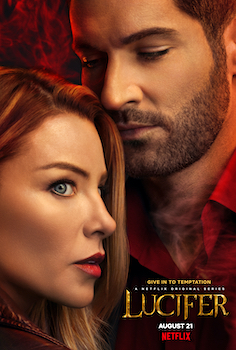
    I’d never consciously listened to Talking Heads before I watched Stop Making Sense. I recognised exactly two of the songs during that concert movie, and one of those I know best from a cover version. While I wouldn’t exactly call myself a convert to their music, I liked most of it well enough, with opening number Psycho Killer my favourite. In fact, I preferred the live version in the film to the original recording. Maybe it’s just because I heard that take first, I dunno.

    Best Audition to Be James Bond of the Month
    It never even crossed my mind that the skinny kid from Slumdog Millionaire could ever be considered for Bond, and I bet it didn’t yours either. It was David Ehrlich’s Letterboxd review of The Wedding Guest that first flagged up the idea for me, and, having seen the film, I can see what he means. Dev Patel as James Bond… it’d certainly be different.

    The Audience Award for Most-Viewed New Post of the Month
    The second half of last month’s TV review sat pretty atop the chart for most of the month (the Doctor Who half, meanwhile, wasn’t even close), but then Extraction came barrelling through my stats like Tyler Rake through an overcrowded Indian apartment block. Five older TV posts topped it overall, but it was by far my most-viewed new post.


    The name’s Connery, Sean Connery.

    Yes, there’s a distinct theme to this month’s rewatches. It wasn’t deliberate… well, not at first. Once I noticed it, obviously I had to maintain it.

    #15 Diamonds Are Forever (1971)
    #16 The Avengers (1998)
    #17 The Rock (1996)
    #18 The League of Extraordinary Gentlemen (2003)

    …and, if you want to take it further, you could argue they’re all movies where Connery returned to the role of James Bond. Sure, Diamonds Are Forever is the only one where that’s literally true, but there’s long been a fan theory that Connery’s character in The Rock is Bond under a pseudonym, and in The Avengers he plays an innuendo-spewing former British secret agent turned villain. As for LXG… yeah, okay, the idea runs out there.

    When I included The Rock in my 100 Favourites, I only rated it 4 stars. Now I feel like a fool — it’s easily a 5. Some thoughts as to why on Letterboxd. Mind you, that kind of thing cuts both ways: when I finally got round to rewatching Face/Off 18 months ago, I discovered I didn’t enjoy it as much as I used to, and if I’d done that before publishing 100 Favourites then I might’ve dropped it from the list entirely. I intend to update my favourites list someday, but I think I need to do a good deal more rewatching before then.

    My rewatch of LXG was prompted by this defence of the film. While I wouldn’t call the movie a masterpiece, I do generally agree with that article — the film has its moments (many of them thanks to Dorian Gray), and it’s certainly no worse than many other ’90s/’00s Hollywood blockbusters. Quite why it provokes such vitriol from anyone but fans of the book is beyond me. (Book fans have every right to be disappointed, because the film sanitises and Hollywoodises the concept. That said, as a fan of the books myself, I’m happy to take both forms as differing executions of the same idea.)


    This may be the biggest month in 100 Films history, but there was still plenty of stuff I failed to watch. Nothing in cinemas, obviously (though Trolls World Tour did get released direct to premium streaming, and consequently looks like it might change the world), but the other avenues for film viewing offered more than enough alternatives.

    For starters, Netflix completed their Studio Ghibli lineup with Howl’s Moving Castle (the only one I’d seen), From Up on Poppy Hill (which I own on Blu-ray), Ponyo (also on Blu-ray), When Marnie Was There (also on Blu-ray, jeez!), Pom Poko, Whisper of the Heart, and The Wind Rises. On the new films front there was CG animation The Willoughbys, which looks vaguely interesting, and for (relatively) recent releases they mustered the remake of Child’s Play. They also added the second Maze Runner film, The Scorch Trials. One day the whole trilogy will be available somewhere and I’ll give them a shot.

    Amazon actually had more to offer in terms of recent acquisitions, though the quality level is dubious — I’m talking of films like Angel Has Fallen (the second sequel to the less-good “Die Hard in the White House” movie), Playmobil: The Movie (a rip-off of The LEGO Movie that wasn’t as well received), 21 Bridges (which received middling notices), and The Current War (presumably in its director’s cut form, for which the most positive comment Rotten Tomatoes can muster is “a significant improvement over previous versions”). Additions from the archive include a handful of Hong Kong actioners, led by the appropriately-titled Police Story: Lockdown (the sixth film, and second reboot, in the Jackie Chan action franchise), plus unofficial prequel The Legend is Born: Ip Man (I believe Ip Man 4 is also now available to rent over here), and Donnie Yen in Legend of the Fist (a version of the story from Bruce Lee’s Fist of Fury and Jet Li’s Fist of Legend).

    Also new to Amazon was medical disaster movie Outbreak, which was already on Netflix; and they both added Contagion, after everyone was talking about it last month. I noticed it still made it into Netflix’s UK top ten, though.

    Over on Now TV, sequel-cum-reimagining Four Kids and It caught my eye because I remember enjoying the BBC’s 1991 adaptation of the original book when I was a kid, but this new one didn’t seem to go down terribly well (though the British critics collated by Rotten Tomatoes have got it to 61%, which counts as ‘fresh’). Other recent films now on Sky include Ma and Tolkien.

    Finally, I went a bit potty in Blu-ray sales again, this time mostly at Arrow, picking up a couple of Vincent Price horrors, Tales of Terror and Tower of London; a couple of artier titles from Second Run, Valerie and Her Week of Wonders and Ikarie XB 1; Third Window’s double-bill of The Whispering Star and The Sion Sono; and some Westerns and noirs and noir-Westerns that include The Ox-Bow Incident, My Name is Julia Ross, and Terror in a Texas Town. The latter pair were directed by Joseph H. Lewis, whose So Dark the Night I enjoyed last month, so I also bought his Gun Crazy in its HMV-exclusive edition, paired with their edition of Out of the Past in their 2-for-£25 offer. Meanwhile, Eureka tempted me with new releases, namely Zu: Warriors from the Magic Mountain and Masters of Cinema titles Rio Grande, Kwaidan, and their second box set of Buster Keaton features, which includes The Navigator, Seven Chances, and Battling Butler. International travel may be closed to humans, but it isn’t to Blu-rays, as evidenced by my imports of 3-D Rarities Volume II (which includes Mexico’s only 3D film, swashbuckler El Corazón y la Espada) and A Boy and His Dog (which I look forward to rewatching in good quality, unlike the print I saw on Prime Video a few years ago). I tried to resist the UHD upgrade of The Elephant Man, but then I saw the PQ comparisons and the limited-edition pop-up packaging (damn my love of a cardboard gimmick!) and caved.

    And, inevitably, I did purchase The Rise of Skywalker, in 3D. You know, I’ve never got round to rewatching The Last Jedi. The idea of pairing them up as a double bill should be the most natural thing in the world, but instead it feels like a bold experiment in combining chalk and cheese. Still, I might try it sometime.


    Barring any unforeseen circumstances (though, at the minute, who can accurately foresee anything?), I should definitely pass #100 early next month. As for my new-goal-I-keep-half-forgetting of #120, well, that’s within reach too. And then…

    In my final monthly review of 2019, I mentioned that “it’s entirely possible [2020 will] be the year I reach #2000”. Now, it’s all but certain that it will (unforeseen circumstances, remember). If May gets to 35 films (which, before this month, would’ve been a record for biggest month ever), that’ll be 100 Films’ #2000! Is it likely I’ll achieve two such huge months in a row? Funnily enough, the last couple of times I’ve set a new “best month ever” it’s been immediately beaten by the very next month: September then October in 2015; April then May in 2018.

    No pressure, May 2020…

    Sean Connery as James Bond, Part 2

    If everything had gone according to plan, this weekend Americans would’ve been flocking to cinemas to see Daniel Craig’s final performance as Bond, James Bond, secret agent 007, in No Time to Die (us Brits would’ve all been to see it last weekend, of course). As that’s not to be, here’s something both entirely similar and entirely different: my reviews of Sean Connery’s final performance in the role — both of them.

    This concludes my coverage of Connery’s time as Bond, the previous instalment of which I posted in, er, 2013. (And you thought No Time to Die had a long delay.) That covered his first stint as James Bond — the five films he starred in from 1962 to 1967. Now, here are his two remaining performances:

    Neither of these films is Connery’s finest hour as Bond — they’re his worst hours, in fact — but, I must say, they were both better than I had remembered.

    Click through to learn more about…

    That may be it for Connery, but — as always — James Bond will return… in Daniel Craig’s case, in November (fingers crossed!)

    The Past Month on TV #57b

    I’ve blathered on so much this month that, for the first time, I’ve split the TV post in two for ease of reading. It’s all about what’s best for you, my dear readers.

    For this month’s introduction and a bunch of Doctor Who stuff, look here. For everything else — Red Dwarf: The Promised Land; Mark Kermode’s Secrets of Cinema series 2; the worst of The Twilight Zone; odds & ends, and what I’ve missed this month — continue…

    Red Dwarf  The Promised Land
    Red Dwarf: The Promised LandThe 13th iteration of Red Dwarf eschews the normal episodic format for a single 90-minute special, in turn ditching the expected Red Dwarf XIII moniker for a subtitle. Well, the show has form in this: for its 21st anniversary revival we got Red Dwarf: Back to Earth instead of Red Dwarf IX, which wasn’t a whole series but instead a 90-minute single story (in that case split into three half-hours, but still).

    Indeed, despite the feature-length format, The Promised Land is not “Red Dwarf: The Movie” — it still very much looks and feels like the show has in its Dave era, not least because it was still shot in front of a studio audience. Fortunately, it does still justify its running time by being more than just three episodes strung together. Writer Doug Naylor probably could’ve separated ideas from the plot out into three separate storylines if he’d wanted, but as it stands it just plays like a super-sized normal episode. That’s not a criticism — everything’s on form, making this at least as good as any other episode the show has had recently (and, if you go looking through my previous reviews, you’ll see I enjoyed most of those too).

    The feature-length shape does allow for some variety in tone, including a strikingly emotional scene between Lister and Rimmer. As I saw someone say on social media, “I didn’t know this show was capable of that.” It leans on the fact these characters have an onscreen relationship lasting over 30 years — not explicitly, but you do feel the weight of that time spent together. It’s actually quite a beautiful moment, with a lovely analogy that has a part to play in the equally emotional finale.

    Talking of those 30-odd years, in so many ways this feels like an anniversary special. Not just because it’s a feature-length one-off (for which, as I mentioned earlier, the show has form), but in the way its plot calls right back to the very first episode of the programme, delivering on story elements not seen since that first series, and with a ton of nods and winks to episodes throughout the years too. It makes me wonder if it was written for the 30th anniversary (which was two years ago), but it took longer than intended to get the gang back together. Certainly, if it had been pitched as a 30th anniversary special, I don’t think anyone would’ve been disappointed.

    Indeed, they weren’t disappointed now, with the reaction on social media looking overwhelmingly positive. I don’t think that’s a given, nor newness bias — I remember Back to Earth facing a mixed-to-negative response — so I think The Promised Land can be judged a success all round. Personally, it’s made me want to dig out all the old DVDs (or perhaps upgrade them to Blu-ray) and rewatch the whole series.

    Mark Kermode’s Secrets of Cinema  Series 2
    Mark Kermode's Secrets of Cinema series 2Mark Kermode’s insightful deconstruction of cinematic genres returns for a full second series (following a few occasional specials last year). I say “full” — three episodes. Whereas the first series took on a fairly random selection of enduringly popular genres, this batch somewhat follows the example set by last year’s specials by being particularly timely. Those were themed around when they aired (Christmas movies at, obviously, Christmas; Oscar winners just in time for, obviously, the Oscars; and disaster movies ahead of, obviously, the current crisis. No, I jest, it was for Bank Holidays), whereas these episodes tackle the genres du jour: superhero movies (can’t get more top-of-the-zeitgeist than that), British history movies (including modern history movies like Bohemian Rhapsody and Rocketman, both recent hits), and spy movies (which would’ve coincided perfectly with the release of No Time To Die if that hadn’t had to be postponed).

    In typical BBC Four fashion, the series if both educational and entertaining. Even if you’re a well-read movie buff, Kermode (plus writer Kim Newman) are likely to draw out at least some connections or comparisons you haven’t thought of it, but are always on the money and enlightening. But as well as being information, they make for an entertaining overview of the genres in question, working both as a kind of clip show to relive each genre’s highlights, and, with their relative comprehensiveness, to suggest some films you might not have seen yet. For example, British history is such a broad catch-all kind of subject (as Kermode acknowledges in the programme, each time period is really its own subgenre) that I came away with a list of 17 films I wanted to watch or rewatch. I always think that’s a mark of a good film documentary: one that makes you want to see the movies it’s talking about.

    (Series 2 and the Oscars special are currently available on iPlayer. Kermode said on Twitter that they’ll be putting the older episodes back up too, but they haven’t yet.)

    The Twilight Zone  ‘Worst Of’
    Cavender is ComingFor the past year I’ve been working my way through episodes of The Twilight Zone that are considered to be among its very best. But if I carried on like that, my overall experience of the show would be to see its quality gradually tail off, and someday my time with it would end by watching its weakest instalments. That doesn’t seem a fitting fate for such a classic series. It’s too late for me to save some of the very best for last, but I can jump the gun a little and watch some of the most poorly-regarded episodes now. Naturally, I’ve used the lists I compiled for a consensus ranking to curate this selection. I’ve taken the last-place choice from each full-series ranking, and that also happens to include the episode with the lowest average score across all the lists.

    First up, the episode with the lowest rating according to IMDb users, Cavender is Coming. On average it comes 107th (out of 156), the highest of these five, with TV Guide even placing it in their top 50 (at #38), but clearly IMDb users have something against it. It stars Carol Burnett as a klutzy lady who keeps losing her job, so she’s assigned a guardian angel to make things better. Said angel is last-chancer Cavender — if he fails this task, he’ll be kicked out of angel school… or something. I don’t know. The Twilight Zone is notoriously bad at comedy, and this is probably the most outright sitcom-y episode of them all — it even aired with a laughter track originally. Nearly everyone reserves some praise for Burnett, which I guess is to do with her being an iconic figure of American TV or something. Not that she’s bad, but she does little to elevate a message-less episode. Even after watching the next four, I tend to agree that this may be the very worst episode of them all.

    Proceeding down the average rankings, next is ScreenCrush’s pick, Execution (135th overall). It’s an odd little story with a kinda daft premise: in the Old West, a criminal is about to be summarily hung, but he disappears into thin air… and appears in the present day, courtesy of a ‘time machine’ that randomly scoops a random individual randomly out of the past. How? Why? Who cares! No spoilers, but the unwitting time traveller finds the modern world all a bit much, and someone ends up being transported back. The point of the story is… cosmic justice? Or something? I guess? Getting into spoiler territory now, the episode almost poses an interesting moral question: “if a murderer deserves to be hanged, does the murderer of a murderer deserve to be hanged?” Unfortunately, it doesn’t actually engage with that at all. In fact, it seems to take it as read that the modern-day criminal who gets accidentally sent back to the 1880s deserves his fate. But, as far as we know, he only murdered another murderer — so, by that moral standard, don’t the rest of the “neck tie party” (as Serling repeatedly calls the group of hangmen) also deserve to be hanged? Food for thought. Unless you’re a brainless supporter of the death penalty, I guess.

    The JungleThe worst episode according to Buzzfeed is The Jungle, which comes 148th overall. It’s about an American engineer who’s just returned from a trip to Africa where his company is planning to build a hydroelectric dam, and he may’ve been cursed by natives opposed to the project. As you’ve probably guessed, the episode’s biggest problem is some old-fashioned kinda-racist stereotypes about Africa and its people. I mean, the episode doesn’t even bother to say which country he’s been to, it’s just “Africa”. It’s not overtly racist, I don’t think, but it’s certainly tone deaf. There’s a scene where our hero discusses the project with the board of directors that juxtaposes the idea of witchcraft, which they all laugh at, with the irrational superstitions they all practice (not walking under ladders, etc), which is kinda neat, basically saying that “you laugh at their beliefs because you think of them as simple folk, but it’s no worse than our superstitions,” which is truthful and borderline enlightened. But that’s about all the episode has going for it. By the time he’s travelling home through the implausibly empty nighttime streets of New York City and being haunted by jungle sounds, it all seems pretty silly; and then his cab driver just drops dead, and a tramp appears and disappears out of thin air, and you wonder what all that’s got to do with anything. The only moral the episode can offer is “maybe some superstitions are right”, which is poppycock.

    So far I’ve watched nearly a quarter of all episodes of The Twilight Zone, but I’d only seen one from its fourth season before today. That’s probably because I’ve been focusing on the show’s best episodes, and everyone seems to agree that season four is its weakest. Nonetheless, there’s only one episode from that season among this initial batch of bad episodes: I Dream of Genie, Paste’s pick for the very worst and 152nd on average. It’s about a downtrodden clerk who’s presented with the opportunity to wish for anything he wants, and considers carefully via a series of imagined alternate lives — which conspire together to pad out the episode’s running time, of course. In his first imagining he fails to conceive of a world in which he’s not being pushed around, and if that had continued through his other fantasies we might’ve been on to something here — a sad examination of how being so mistreated can seep into your very way of being. But it’s not aiming for that, because this is A Comedy One and so tragic insight is out of the question. The whole thing is half arsed in conception, and also flabby — Serling could definitely have told the same story in half the time without losing anything of value, which I think is a consistent problem with the season four episodes. I didn’t hate it — it’s probably the best of these five — but it’s far from a great episode.

    Sounds and SilencesFinally, we end as we began, with an episode voted on by the public: at the bottom of Ranker’s list, and last on average too, is Sounds and Silences. It’s about an excessively-loud, domineering blowhard who gets some measure of comeuppance when he begins to be bothered by everyday sounds like a dripping tap or ticking clock. And then it goes the other way and he can’t hear loud noises at all. It’s poorly written and terribly performed — in the lead role, John McGiver is overacting something rotten. Some criticise the undercurrent of misogyny in the storyline, but I don’t know about that. He blames his mother and his wife for all his problems, but he’s an unlikeable sod so surely any misogyny is his rather than the episode’s — we’re not being asked to agree with him. The character’s ironic fate may be some form of poetic justice, but it’s too long coming to be entertaining, and too obvious to be satisfying. Whether I disliked this or Cavender is Coming more, I’m not sure, but they both merit their places at the bottom.

    Also watched…
  • McDonald & Dodds Series 1 Episode 2 — The second episode (of two) in this (very short) series was slightly better than the first, but not by a huge amount. I’ll probably keep watching if they make more, mainly to spot filming locations that I recognise. If it weren’t for that I wouldn’t bother.
  • One Man, Two Guvnors — This isn’t really TV, but nor is it really a film (although it was released in cinemas, so I could’ve counted it if I wanted). What it is is a filmed stage production, which the National Theatre released on YouTube for free — but only for one week, so I’m afraid it’s gone now. It was really good. Sorry. Currently available is a 2015 production of Jane Eyre (their channel is here), with more to follow every Thursday (more info here.
  • The Rookie Season 1 Episodes 7-15 — Churned through a pile of this in next to no time because it’s relatively easy viewing but with enough bite to keep it interesting. One of those shows that will never be a classic or top of the zeitgeist, but is highly watchable.
  • Star Trek: Picard Season 1 Episodes 4-6 — Way behind on this because it never engages me enough to choose to put it on. That said, I’ve found these middle episodes a bit better — I quite enjoyed the silliness of episode five, Stardust City Rag. But it’s the series’ lowest-rated episode on IMDb, which suggests other Picard viewers and I may be at odds about what makes good TV…

    Things to Catch Up On
    Westworld season 3This month, I have mostly been missing Westworld season 3, which is now four or five episodes in. I’ve not seen anyone talking about it on social media, so I’ve no idea if it’s good or bad, but I am inferring that not as many people are talking about it anymore, which is its own kind of criticism. One show I have heard mentioned is Tales from the Loop, Amazon’s new anthology sci-fi series. That’s been picking up good notices, and I thought it looked interesting anyhow, so I must make time for it.

    Next month… more animated classic Doctor Who; more of the worst of The Twilight Zone; and maybe I’ll even finish Picard or watch The Mandalorian, too…

  • The Past Month on TV #57a

    I get the impression many people have been using their newfound homebound status to watch lots of TV. I’ve mostly been focusing on films, however, so this month’s TV update doesn’t actually have a whole lot of different things to cover (certainly not when compared to, say, last month). Even though I’m finally posting this about a week later than I originally intended, I still haven’t had much to add to it.

    That said, what I have been watching is the kind of stuff I write a lot about — mostly, classic Doctor Who and The Twilight Zone — so much so that I’ve actually decided to split this update into two posts, because it was getting unwieldy. Today: Doctor Who stuff. On Friday: everything else.

    Doctor Who  Rose
    Doctor Who series 1If you’re active (or looking in the right places) on social media, you may have noticed that there have been a bunch of Doctor Who watchalongs happening recently — you know, where people from around the world all watch the same thing at the same time and tweet about it. Organised by Doctor Who Magazine’s Emily Cook to provide something nice for Whovians in these trying times, they’ve been rather a big success — they’re always all over the trending topics on Twitter, and big names from the show have been persuaded to sign up and join in. The most recent one, to mark the 10th anniversary of Matt Smith’s debut episode, saw all three of its stars (Smith, Karen Gillan, and Arthur Darvill), plus writer/showrunner Steven Moffat and director Adam Smith, sharing thoughts and memories during the episode. Plus some of them have been accompanied by new fiction or stuff dug out from the archive.

    Personally, the only one I’ve joined in with was the 15th anniversary rewatch of nuWho’s first episode, Rose. I say “joined in” — I watched the episode, then went on Twitter afterwards to catch up. I mean, you can’t watch TV and tweet along, can you? I know people think they can, because they do, but they’re wrong — you can’t. Not properly, anyway. While you’re busy tweeting, you’ll inevitably miss something — lots of somethings, even. And as I hadn’t watched Rose in about 13 or 14 years, trying to read the thoughts of thousands of other people at the same time seemed a daft idea. So I didn’t. But, weirdly, even watching it alone but with the knowledge that other fans around the globe are doing the same thing, there’s an old-fashioned sense of community — a feeling you used to have every week, when watching a TV programme live was The Way We Did TV; a feeling that’s dissipated considerably in the modern streaming era, where even traditional-TV shows are on iPlayer or whatever and many people happily choose to catch up later.

    Still, the best bit was the surrounding tie-ins written by Russell T Davies, including a non-canonical prequel about the end of the Time War (I love The Day of the Doctor with all my heart, but good golly can RTD write epic mythic Time War stuff better than anyone) and a gently satirical sequel that revealed Boris Johnson is, in fact, an empty plastic clown. I do so miss the days when RTD was in charge…

    Aside from the watchalongs, I’ve personally been digging even further back into Who history…

    Doctor Who  Animated Missing Episodes
    Like silent cinema before it, early television was viewed as disposable, its value lying in the moment of its airing. The only reason to keep a TV programme after broadcast was to sell to other territories, or possibly to archive a handful of episodes as an example of what was produced. In the 1960s and ’70s, the BBC began to junk some of their archive, to reuse resources and make space for newer things. Many programmes fell victim to this destruction, but one of the highest profile has been Doctor Who. That’s what happens when there’s a dedicated fanbase who want to hang on to every second of something.

    By the time the junkings stopped, 152 episodes of Doctor Who had been lost. Over the years there have been extensive efforts to recover these missing editions. There have been many successes, but 97 episodes remain missing. (For far more detail on all this, you could do worse than this Wikipedia page.) But thanks to the efforts of a few determined fans who recorded the programme’s audio as it was broadcast, the soundtracks for every single episode survive. Over the years, these have been used to help plug the gaps in various ways — released on cassette and CD; paired with photographs to form slideshow-like visualisations; and, most recently, used as the soundtrack for animated reconstructions. I’ll spare you another potted history of those, but after a faltering start they’re turning into a regular drip feed.

    Now, during the most recent series of Doctor Who (reviewed in these three posts) I came to the realisation that I hadn’t watched any of the classic series in a long time — five years, in fact, back to when I paired up one classic serial to every new episode of Peter Capaldi’s first series. What better way to get back on the wagon than with the animated reconstructions, most of which have been released in that five year gap? So I’m beginning with the first of the current wave of animations, and more should follow.

    The Power of the Daleks

    The Power of the DaleksThe first of the current wave of animations was The Power of the Daleks — a good place to start anyhow because it’s Patrick Troughton’s debut serial in the lead role. As he was just the second (canonical) Doctor, that makes the serial significant for the ground it was breaking — it’s the first time we’re introduced to a new actor taking over the series, something that’s become a staple of the programme (to the extent that the major plot lines and revelations of the most recent series were about the Doctor’s ability to regenerate). Sensibly, the production team paired their new leading man with the thing that had ensured the series’ popularity: the Daleks. And while the Doctor is dealing with a change of face and attitude, so are his enemies: these Daleks are keen to act as subservient aids to a human colony who have discovered their long-buried space capsule. Surely the evil fiends can’t’ve turned good?! (Spoiler alert: of course they haven’t.)

    Away from such juxtaposition of temperament, it’s a good chance for the new Doctor to prove his mettle. It worked, too — obviously so in the case of ensuring the series’ longevity, but also as a story in its own right: in the last Doctor Who Magazine poll, this was voted the 19th greatest Who story ever (which, out of a list of 241 stories at the time, is no small achievement, especially for a missing black & white adventure. Indeed, if you limited the poll to just black & white stories, it came 3rd). It’s easy to overlook now, when we’re so used to regeneration, but Troughton comes in and makes the role his own, plays it his own way, isn’t even vaguely an emulation of Hartnell. It would’ve been the easiest thing in the world to cast someone like Hartnell and have them behave like Hartnell, but changing the character up so much is a braver, more interesting choice — and probably really helped the programme in the long run.

    As for the story itself, as well as the mystery and threat of the Daleks it has a nice line in the petty political squabbling and machinations of the human colony’s leadership. Almost as much time is spent worrying about rebels, sabotage, and plots to rule as there is about the Daleks. I feel like that’s the kind of extra angle that often gets overlooked in Who nowadays, what with the need to deliver fast-paced 45-minute blocks of entertainment. (Maybe that’s unfair — almost everything of interest gets overlooked in Who right now, and previous eras of the revived show certainly weren’t averse to a little commentary on the pettiness of humanity.) There are some great performances too, especially Robert James as the scientist Lesterson, who has the most prominent character arc of anyone across the serial. His ultimate fate is particularly well written and acted, his final moments tragic and hilarious and barmy all at once.

    As for the animation, it’s understandably a bit basic (these are not big-budget productions) and at times unsure what to do with itself — there’s the occasional bit of ‘dead air’ in the original soundtrack, probably where someone was just walking across a room or giving a reaction shot or something, and the animation isn’t quite up to filling the gap with something of interest. There are definitely times when it feels like you’re missing a little bit of business that was deemed too difficult or vague to animate. It would’ve been nice if they could’ve invented something to happen during those moments, instead of just holding on shots of literally nothing going on. But that’s probably nitpicking. As a visual to accompany the soundtrack, it’s more than adequate. Given the choice between this, a slideshow of rarely-changing photos, and audio-only, I’ll take the animation, thanks.

    The Moonbase

    The MoonbaseNext up by the series’ original chronology is The Moonbase — in terms of animation, Power was released in 2016 while The Moonbase was done in 2013; and half the serial survives, so it’s only half animated. It’s actually this older effort that looks better, the animation feeling much smoother and more realistic than Power, and making that look even more stilted and Flash-y by comparison. Apparently production on Power was incredibly rushed, and obviously they had to complete six episodes vs just two for The Moonbase, but the visual style is also slightly different; less obviously cartoonish.

    As for the story itself, we move from one iconic Who monster to another: the Cybermen. And it’s another landmark in Who history: the first base-under-siege story, a subgenre that would become a staple of the Troughton era and keep popping up in the decades to follow. It’s also only the second Cybermen story, and they show off a sleeker redesign, which sets a precedent — whereas the Daleks have looked fundamentally the same since their first appearance, the Cybermen are redesigned almost every time they appear. Personally, I love the Cybermen, but this is not their finest hour.

    The serial’s biggest problem is that it seems slow and uneventful. It begins with the Doctor and friends having a jolly holiday on the Moon, which I actually quite liked — bear in mind this was made in 1967, two years before man actually walked on the Moon, and you can see why the very fact of our heroes being there would be worthy of such emphasis. But it sets the tone for the story to come — Episode 2, for example, mostly revolves around the base’s crew spouting technobabble while they run checks to repair a machine. This came 113th in the aforementioned DWM poll, and with time wasting like that it’s easy to see why. At least the cliffhangers are effective, even if they don’t always make sense — but you can see how that would build the series’ reputation for them. It’s a shame such a defining aspect of the show has mostly been lost in the modern era.

    The serials was written by the Cybermen’s co-creator, Kit Pedler, an actual scientist who was brought on to bring “scientific rigour” to the programme. These scripts do feel like they come from someone with a keen interest in science — there’s plenty of jargon thrown around; the Doctor runs medical tests and experiments (rather than just waving his sonic screwdriver around as he would nowadays); Ben and Polly cooking up a plan to defeat the Cybermen with a solvent cocktail, based on Polly’s nail varnish remover…! It’s easy to joke about “defeating Cybermen with nail varnish remover”, but it’s a scientific way of problem solving, which is quite good really for a show that was still very much aimed at children and with some degree of an educational remit. It’s just a shame that the narrative around it is so sluggish. Maybe they were going for “atmospheric”. I don’t think it worked. Shame.

    The Macra Terror

    The Macra TerrorMuch more successful in that department is The Macra Terror. No full episodes survive of this serial, so it’s back to 100% animation, and once again we have a change in style. It’s in widescreen, and it’s in colour, and the locations are bigger and more varied than they would’ve been on ‘60s TV, and the audio is so clean and clear it could’ve been recorded yesterday. It makes for a surreal viewing experience at first — are we sure this is a genuine Second Doctor story from over 50 years ago, not some recreation with perfect impressionists? After the previous animations tried to emulate the style of the original episodes, it’s a definite change of pace, but why not? It certainly brings some added dynamism to a few of the scenes — like Power, there are some all-but-silent sections; unlike Power, many of them now have some interesting visuals, which is most welcome. They had to make some trims here and there, I think for budget reasons (stuff that is inessential to the main narrative and would’ve been time consuming to animate), which is a shame (it would’ve been particularly fun to see the whole TARDIS crew dance a jig to escape at the end), but it is what it is.

    As for the story itself, it offers an intriguing setup, with a good setting (a colony of happy workers) and mystery (what was seen by the ‘mad’ man they want to hush up?) It unfolds at a much better pace than The Moonbase, with a regularly developing and shifting plot. For example, many penultimate episodes of classic Who serials devolve into running around in place to delay the ending by another week. The Macra Terror is the antithesis of that, introducing brand new locations and plot points to genuinely further the narrative and mystery. There are exciting cliffhangers, too — again, probably much more so in animation than it was in the original live action. The Macra themselves benefit in particular. They’re basically giant crabs, which was a bit overambitious for the series to attempt in the ’60s. The originals have the look of an awkward primary school art project and aren’t actually that big, whereas the animated versions are huge and genuinely threatening. When one attacks Polly in Episode 2 it’s epic and exciting and scary… in animation. This is one of the few parts that survives from the original (thanks to censors in Australia) and… it ain’t that. The Macra is so much smaller and so much less manoeuvrable that you can see Anneke Wills and Michael Craze working overtime to convince you their escape requires any more than just getting up and wandering away. It’s a perfect example of how the artistic licence taken by the animators has paid off in dramatic terms.

    I’ve always got the impression that The Macra Terror has a pretty poor rep among Whovians. I hope the animation has caused it to be re-evaluated, because I think it’s really rather good.

    The Wheel in Space: Episode 1

    Finally for now, an abridged version of The Wheel in Space: Episode 1, which was created for the BFI’s annual Missing Believed Wiped event about missing TV. The Wheel in Space is a six-parter, meaning it runs approximately 150 minutes, but here we get just 11 of them. The animation itself is about the same quality level as the others, and it’s a nice little bonus in its own way, but ultimately it feels rather pointless; like an extended tease for a full-length animation that isn’t coming. The serial may well be animated in full someday (if they’re happy to do The Faceless Ones and Fury from the Deep, which have no obvious hooks to interest casual / on-the-fence viewers, then surely something with the Cybermen is a no brainer), but if they do then what purpose will this have served? I expect they’d want to do these 11 minutes again rather than make the remaining 139 to match. And if they don’t ever do it in full, well, the serial is still left with three-and-a-half episodes visually missing. But, like I say, it’s enjoyable enough for what it is.

    In Part 2… new Red Dwarf; Mark Kermode’s Secrets of Cinema; the worst of The Twilight Zone; and quickies on McDonald & Dodds, The Rookie, Star Trek: Picard, and National Theatre’s YouTube stream of One Man, Two Guvnors — which, I’ll tell you now, is great fun, worth your time, and you only have until 4pm tomorrow to start watching. It’s here.