That title is a slight misnomer, because this monthly review is bang on time (more or less), but everything else about my blog right now, oh, that could use a kick up the arse. I mean, I only posted one review this month. My 100 Week Roundups must be so far behind that I dread to even look. And when did I last post a TV column…?
And my actual film viewing was in similar doldrums: on the 22nd, I had the horrifying realisation that I had only watched three new films this month. My goal of at least 10 new films a month, which I’ve aimed for since c.2015, was again in jeopardy (I failed it multiple times in 2019 — and back then it was also June that broke my five-year-long streak). And that’s to say nothing of the 20+ new films per month I’d maintained throughout 2021 so far. Now, with 17 films to go for me to reach 20 in June, and just eight days left to watch them, it seemed virtually impossible. Sure, in theory that’s only two films a day (plus one), but, since I started my new job in May, my weeknight post-work film viewing had averaged 0.08 a day. No way was this happening.
Unless… there was one crazy idea that might just work…
“So,” I figured, “if I could manage one film per workday,” (which, despite the stats, seemed not unfeasible — recently of an evening I’d been catching up on TV), “then that would get me to six films. And if I could manage that, surely I could manage two on a Friday — so that’d be seven. Then on Saturday and Sunday I’d just need to watch…” (*gulp*) “…five films a day.”
I know some people marathon their way through films like nobody’s business — to them, five in a single day is virtually just “a day ending in Y” — but to me? Yikes. I’m not sure I’ve ever watched five films in one day. And to do it on two days, back to back? Well, I did say this was a crazy idea. But it was the only vaguely-plausible way I could still get to 20 films in June. “Vaguely plausible” is not “literally impossible” and, well, you don’t know if you don’t try, right?
Did I manage it? There’s only one way to find out…

#117 The Money Pit (1986)
#118 My Fair Lady (1964)
#119 Dumb and Dumber (1994)
#120 Seven Chances (1925)
#120a What! No Spinach? (1926)
#121 Rodan (1956), aka Sora no daikaijû Radon
#122 The Mummy (1932)
#123 A Brief History of Time Travel (2018)
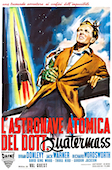
#124 Superman and the Mole-Men (1951)
#125 The Invisible Man (1933)
#126 Space Station 3D (2002)
#127 Rain Man (1988)


- To answer my previous question: no, I did not.
- I watched 12 films in June, which may not be close to 20 but, in the grand scheme of my blog, is far from the worst. To be precise, there have been 79 lower-totalling months in the blog’s history, which is 45% of all months. So, June 2021 is somewhere in the middle. That’s alright.
- I did, at least, slightly pass the June average, which is 11.4 (previously just under at 11.38, now just over at 11.43).
- Other averages… not so much. The rolling average for the last 12 months was 21.0, now it’s 19.7; and the average for 2021 to date was 23.0, now it’s 21.2.
- One thing that’s been somewhat overshadowed by all this: I reached #120, which is officially my main-list goal nowadays. Though that I’ve done that with half the year still to go does make me think I still need to rethink this whole “viewing goal” thing.
- On the other hand, What! No Spinach? is only the second short film I’ve watched in 2021. But I don’t have a short film viewing goal, so that’s okay.
- Also, I finished the Inner Sanctum Mysteries film series this month. Actually wrapping up a series rather than constantly adding new ones? Makes a nice change.
- This month’s Blindspot film: an Oscar winner in its day (over 30 years ago), but somewhat controversial now for its depiction of autism, I thought Rain Man still did enough right. Relatedly, I found this short Letterboxd review to be insightful.
- From last month’s “failures” I watched nothing, again.

The 73rd Monthly Arbitrary Awards
 Favourite Film of the Month
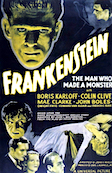
A few great-but-imperfect films compete for this month’s crown, but just edging it is the 1933 version of The Invisible Man. Director James Whale may be best remembered for his pair of Universal Frankenstein flicks, but I preferred this, which has a great mix of thrills, humour, and still-impressive special effects.
Least Favourite Film of the Month
This is an easy one for me: it’s a film that I felt lived up (or down) to its title, Dumb and Dumber. I only watched it because it’s on iCheckMovies’ Most Checked list and I’ve nearly completed that. It did have some moments that amused me, but overall, nah, I’d not really been missing anything by not watching it for the past 27 years.
Most Ropey-Yet-Still-Scary Special Effect of the Month
The “man in a suit” antics of Japanese monster movies are a bit of a “take it or leave it” style, but I think part of what makes them palatable is that the men in suits are stomping on miniatures — the whole thing is an affectation. But in Rodan, before the titular pterodactyl turns up, there are giant dragonfly nymphs that are played by men in suits opposite normal humans. Their blocky shape and waddly movement is kinda silly… and yet, at the same time, they’re man-sized baby insects, which I find inherently repulsive and terrifying.
Film Most Like a Twilight Zone Episode of the Month
I confess, I didn’t expect much of Superman and the Mole-Men, a film made primarily to instigate interest in producing a Superman television series (I guess the term “pilot” hadn’t yet been coined in 1951). And it’s far from the greatest screen realisation of the superhero ever, but what it does have is a neat little twist in who the villains are — at the risk of spoiling the surprise, it’s not the eponymous Mole-Men, but the small-townsfolk who get scared and turn into an angry mob. The social commentary isn’t exactly at Rod Serling level, but it’s surprisingly close.
The Audience Award for Most-Viewed New Post of the Month
It was very much a two horse race this month, considering I only managed two posts throughout June. The end result wasn’t close, though, with my guide to Indiana Jones and the Temple of Doom romping away to victory.

This section seems a bit pointless, considering I only posted one review and I’ve already linked to it, but the format is the format…


I came into June five films behind target, and I end it six films behind. Dammit. Well, with my main list having passed its 120-film goal, and my 20-per-month streak ending, maybe that’ll allow me to feel I can spend more time on rewatches in the second half of the year.
#17 Pride & Prejudice (2005)
#18 Indiana Jones and the Last Crusade (1989)
#19 The Naked Gun: From the Files of Police Squad! (1988)
Rather than repeat myself across the interweb, I’ll point you towards Letterboxd for some of my latest thoughts on Pride & Prejudice and Last Crusade. As for The Naked Gun, once I realised my crazy “get to 20” project had failed, I bunged it on one evening after work as something nice and easy. Most of it holds up very well, but I do feel it’s beginning to slip a little with age — it doesn’t feel quite as nonstop as it once did, and there’s the occasional topical gag that’s long past its sell-by (the film is almost 35 years old, after all). It also reminded me that about a year ago I bought Police Squad on Blu-ray and haven’t watched it (of course I haven’t).

Cinemas are back, and the idea of a joint theatrical/streaming release already seems a distant memory — which is funny, because in the US they’re still doing it all the time on HBO Max, and I think Disney still intend it for Black Widow, and I’m sure the kind of smaller films that were doing it even before Covid are still doing it now. But, here in the UK at least, the likes of Hitman’s Wife’s Bodyguard, The Quiet Place Part II, In the Heights, Nobody, and Fast & Furious 9 have all landed in cinemas without (as far as I’m aware) matching availability at home. Also finally gaining big-screen outings were the likes of The Father, Supernova, and, um, Dogtanian and the Three Muskehounds. None of these have tempted me out of the house yet, but something will at some point…
Whether by coincidence or design, big and/or interesting new offerings from the streamers seem to have dried up. I think it was MUBI who had the closest to anything ‘high profile’ with the UK release of Shiva Baby. All I have in my notes for Netflix is America: The Motion Picture, which came out earlier this week, and the global release of the fourth film in the Rurouni Kenshin live-action series (I really enjoyed the first three when I watched them a few years ago, so that’s definitely on my radar). Meanwhile, Amazon had another Liam Neeson actioner, The Ice Road, which I initially thought was just the one he’d done a year or two ago (that was Cold Pursuit). Ho hum. As for new-to-streaming titles, Amazon pretty much win the day with the acclaimed horror Saint Maud, because I’ve got nothing in my notes for Netflix except a couple of things I’d already seen but not reviewed. Meanwhile, new highlights on Sky Cinema / NOW included Kajillionaire, the very belated UK debut of Richard Linklater’s Where’d You Go, Bernadette, and the final Fox X-Men film, The New Mutants, which I own on disc anyway (but keep not getting round to).
Talking of discs, naturally I’ve continued to blow my disposable income on those shiny, shiny circles. Nowadays it feels like most of what I buy is stuff so obscure I hadn’t even heard of it until someone announced the disc release, and that certainly continued this month with Arrow’s Years of Lead box set, a collection of five Italian crime thrillers from the ’70s. Similarly, I bought the Masters of Cinema releases of PTU (a Hong Kong thriller) and The Hands of Orlac (an Austrian silent chiller); 88 Films’ new edition of giallo So Sweet… So Perverse; and Indicator’s release of Eye of the Cat.
In terms of more known quantities (in that I’d actually heard of them, even if I’ve not seen them), there were new editions for Waterloo and Sammo Hung’s Encounter of the Spooky Kind, and Indicator’s sixth Hammer box set. I’ve got four of those now, from volume three onwards, which makes me regret never getting the first two; but I bet they cost an absolute bomb on the secondhand market, so I’ll have to live with it. From StudioCanal came a 4K release of Basic Instinct (judging from the screencaps, it looks like the quality of the new transfer absolutely blows the Blu-ray away), and a similarly restored (but only on regular Blu-ray) Murder by Decree, with Christopher Plummer as Sherlock Holmes taking on Jack the Ripper. The same villain is taken on by H.G. Wells in ‘present day’ (i.e. 1970s) New York in Time After Time, which I picked up in HMV’s latest Premium Collection sale, alongside a literal pile of other stuff: Clash of the Titans and Mighty Joe Young (edging my Ray Harryhausen collection towards completion), plus Grand Prix, Murder, My Sweet, and A Scanner Darkly. Finally, another literal pile, this time of six Spaghetti Westerns: I wanted to import Arrow’s US-only 4K release of Sergio Corbucci’s Django (which comes bundled with Texas, Adios), and so to spread the postage I also threw in Kino’s 4K edition of The Good, the Bad and the Ugly and another highly-acclaimed one by Corbucci that I’ve wanted to see for yonks, The Great Silence; then, in an 88 Films sale, I also added another Django film, Django Kill… If You Live, Shoot! (love that title), and a third Corbucci, The Mercenary. Now I just need to make time to actually watch all (or any) that…

What will the second half of the year bring? All bets are off nowadays…

















































 The latest series from writer Russell T Davies is a story he’s been mulling for a long time — I seem to remember it first being mentioned in his book The Writer’s Tale, which chronicles his final couple of years on Doctor Who, over a decade ago now. It’s had a bumpy ride to the screen, with the pitch being rejected by several networks, and eventually the planned eight episodes being negotiated down to just five. If this were a lesser writer then you’d assume the concept must have some fundamental flaw(s), but perhaps it was just the subject matter that scared so many commissioners: it’s about the emergence of HIV/AIDS in the 1980s, told from the perspective of a gang of mostly-gay twentysomethings who’ll see the disease rip their world to shreds. Not exactly a cheery topic, and one still affected by taboos and ignorance all these decades later. But that’s why this is a story that needed to be told, and here it’s safe in the hands of a master screenwriter.
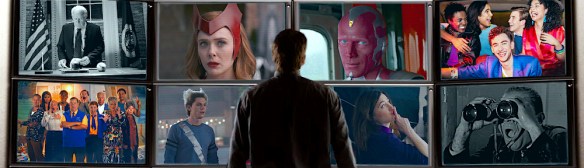
 WandaVision had seemed to settle itself into a nice little groove in
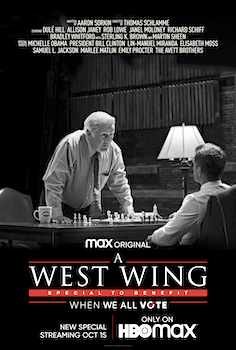 It’s been a very long time since I watched any of The West Wing, and I never saw it in full, but I always meant to go back and watch the whole thing properly. I thought watching this one-off charity reunion thingy might ignite my interest in finally doing that. And, indeed, this did make me want to go back and rectify that — by, ironically, clearly not being as good as the show used to be.
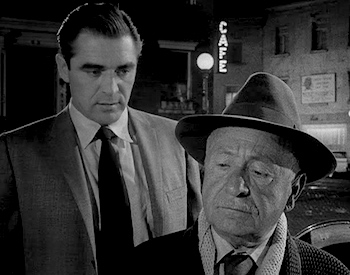 That news aside, let’s return our gaze to the 1959–64 iteration of the programme. Having already reviewed many of the best and worst episodes of that original run, I’m now covering episodes that happened to pique my interest. First up this month, What You Need, which jumps straight onto my list of the series’ best episodes. It’s the story of a peddler who can provide people with the one small item that will be of invaluable use to them shortly, and the punter who wants to exploit this power. The episode has a nice balance of sweet whimsy and darkness; the length is perfectly paced for the half-hour; and, although it’s not got one of Twilight Zone‘s famous massive twists, the end is fitting and in-keeping. It’s nicely directed too, particularly the scene where the punter confronts the salesman in his apartment. An excellent episode that deserves to be better regarded.
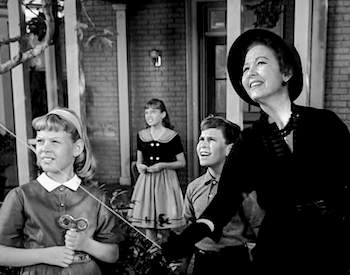 Famed sci-fi writer Ray Bradbury’s only formal contribution to the series, I Sing the Body Electric, is another case of a great premise writing cheques the rest of the episode can’t cash. Here, rather than running out of steam, the places it takes us to are morally questionable and raise more questions than they answer. The plot is almost like a sci-fi twist on Mary Poppins: a widowed father is struggling to bring up his three kids, so they get a robot grandma, but one of the daughters doesn’t like her. It’s eventually revealed that the daughter’s distrust stems from the belief that her dead mother “ran away” and she thinks robot-granny will do the same — but it’s okay, because granny’s a robot and can live forever. Hurrah! Maybe your mileage will differ, but the idea that mothers who die have run away from their kids, or that this grief is best handled by giving the kid a parental figure who will never die, all seems a bit distasteful. And that’s before we get to the ending, where we learn that RoboGran’s consciousness will gather with others of her kind so they can share what they’ve learned. It’s spun as if this is somehow a good thing, but to me it sounds like a prequel to




















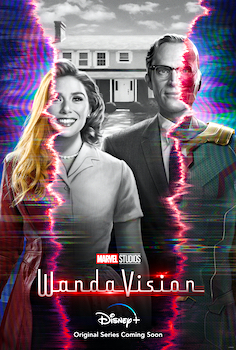 WandaVision isn’t the first television series set in the Marvel Cinematic Universe (in fact, it’s the thirteenth); nor is it the first to feature characters and actors from the movies (that’s been the case in at least two others, off the top of my head); but it is the first to be produced by the same division that makes the movies, so it’s set to be a lot more important (read: not totally ignored) going forward. Indeed, it’s already been reported that the events of this series tie directly into the storylines of
 The David Tennant- and Michael Sheen-starring (or is that Michael Sheen- and David Tennant-starring?) filmed-over-Zoom sitcom about lockdown life was a hit during one or other of the 2020 lockdowns, so here it is again — just in time for the 2021 lockdown, as things turned out. The second series is very much a follow-up — a sequel, if you will — rather than merely “more episodes of the same”. In fact, it’s a meta-sequel: the first series exists as a fictional project in the world of the sequel. This isn’t a continuation of the storyline(s) we watched in the first series; it’s a follow-on from the fact the first series was a success. Got that? The title card sometimes calls the series Staged², and one feels that’s more than just a typographical play on Staged 2.
 A trio of new editions of the critic’s explanation of cinematic genres, which play like the best Film Studies lectures you could imagine. Each explores and explains its chosen subject in depth, often spinning out into tangential and related branches of film history — see the episode on pop music movies, for example, which is primarily concerned with movies about pop stars or musicals starring pop stars, but takes a moment to explore the phenomenon of pop stars as proper actors, such as David Bowie’s secondary career. It’s like Kermode and his writers (which include the insanely knowledgeable Kim Newman) can’t help themselves: there’s so much interesting stuff to talk about, so many connections and parallels, and they’re going to squeeze as much of it in as possible. Cited examples are copious and wide-ranging — if an episode is about a subject you’re interested in, be prepared to see your watch list grow. The best of this trilogy is the third, on cult movies; a genre, as Kermode explains, that is defined not by filmmakers but by audiences. It’s also a particularly wide-ranging field, but one whose contents engender genuine love — what makes them cult movies, after all, is that someone loves them. Kermode helps us to understand why.
 The third season of this Karate Kid TV spinoff/continuation debuted at the start of the month, but I’ve been pacing myself: it’s a really good show and I didn’t want to just burn through it. While I thought season two lacked the moreishness I experienced during
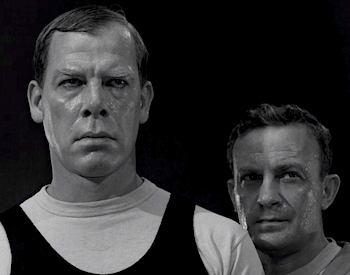 So far on my journey through the original 1959–64 series of The Twilight Zone, I’ve covered ten selections of the best episodes and three of the worst, as chosen by various critics. With 85 episodes still to go, I’m leaving the opinions of others behind (for the time being) to check out some episodes that caught my attention for one reason or another — not because they’re acclaimed as good or derided as bad, but something about the premise grabbed me while I was perusing all those various rankings.
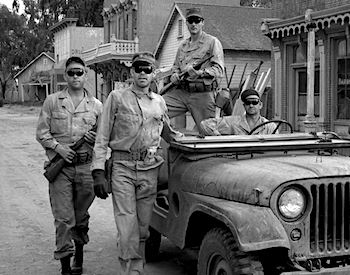 An altogether different vision of 1974 is presented in The Old Man in the Cave. This time, it’s a post-apocalyptic world after “the bomb” was dropped, and what’s left of humanity makes do as it can in the remnants of the old world. In particular, one town has survived by following the guidance of an old man who lives in a nearby cave, who seems to know where to plant food, what tinned goods are safe to eat, what the weather will bring, and so on. When a militia turns up (led by James Coburn) planning to bring order to the region, the townsfolk are faced with the choice of continuing to listen to the old man or side with the militia’s view that he’s actually an oppressor and they’re a lot nicer. It turns into a neat little sci-fi fable — the finale says it’s about the error of faithlessness, but I’m more inclined to say it’s about trust in experts vs selfishness and greed. The townsfolk have followed this expert’s guidance for a decade and it’s kept them alive, but that life hasn’t been easy or fun, so they’re tempted by the fantasy sold by the newcomers: that you can have whatever you want; the expert is keeping you down for no reason. Naturally, it can only pan out one way. It’s a story whose moral seems only more pertinent today.
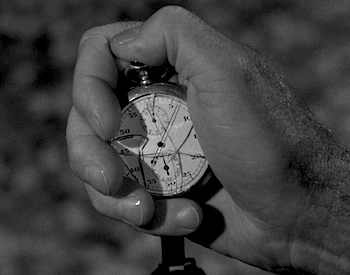 The same could be said of A Kind of a Stopwatch, which takes on a perennial “what if”: what if you could freeze time? It wasn’t an original idea even when this episode was made in 1964, with Serling once saying he received dozens of pitches a year along those lines. He didn’t think any of them had an original enough take on the concept to be worth adapting, until this one. Frankly, I’m not sure what’s so special about it. That’s not to say it’s bad — it’s a reasonably well handled version, although it falls victim to the series’ regular bad habit of having the main character take much longer than the audience to understand the rules of the situation. But the episode’s real flaw comes at the end, when the punishment doesn’t fit the crime: the main character’s fate is not an ironic twist especially suited to him. It’s that which stops Stopwatch from reaching TZ’s true heights; that leaves it a solid “good” episode when it could possibly have been a great one.
 This month, I have mostly been missing It’s a Sin, Russell T Davies’s new drama about a group of friends coming of age amidst the emergence of AIDS in the ’80s. It’s only a couple of episodes in on Channel 4, but the whole five-part series is already available via All 4 (FYI, it’s out in the US on HBO Max in mid-February). I intend to binge the whole thing and review it next month.