
Christopher Nolan | 169 mins | Blu-ray | 2.40:1 + 1.78:1 | USA, UK & Canada / English | 12 / PG-13
 Nine months on from its theatrical debut, I’ve managed to remain remarkably spoiler-free about Interstellar, the ninth feature from director Christopher Nolan. “Matthew McConaughey lives on a farm and somehow ends up in space with Anne Hathaway,” is about all I knew going in. That and the somewhat divisive critical reception it had received, leaving what many had assumed could be an Oscar favourite with a disappointing tally of nominations (and its studio to have backed the wrong horse, resulting in Selma’s even poorer showing — but that’s a story for another day). I don’t consider myself a so-called ‘Nolanite’, but I have enjoyed most of his pictures (I didn’t love Inception as much as many, but still placed it third on my top ten that year), and found Interstellar to be no exception.
The story (beyond “the McConaissance spreads into space”) sees a near-future Earth where most of the crops have died and mankind is struggling to survive. The US government even pretends the space race was a hoax, in order to put future generations off attempting such innovations. Former test pilot Cooper (McConaughey) holds little truck with such BS, trying to raise his kids, Tom (Timothée Chalamet) and Murph (a memorable Mackenzie Foy), to be a mite more intelligent. During one of the many dust storms that engulf their community, strange pockets of gravity in Murph’s bedroom point Cooper to somewhere secret where some people he used to know are doing something secret that, ultimately, sends Coop into space on a mission from which he may never return. Murph is not best pleased.
 More plot happens. Interstellar is the kind of film where you could get an awful long way through the story just trying to explain the setup. That’s a certain style of storytelling, and in its own way a positive one — a plot that is constantly moving and updating, rather than one that presents a basic setup, runs on the spot with it for a while, then wraps it up. The latter is how most narratives unfold, which is why reviews can so often summarise said setup and that’s fine. Nonetheless, Interstellar’s first act goes on too long, and could do with a good trim. (For an alternative view on why the first act is in some respects the best part of the film and needed more development, read ghostof82’s review. I don’t disagree, but I do think to give that area more focus would’ve necessitated a wholly different movie.) It’s important to set up Coop’s home life on Earth, as well as the near-future world from which the story springs, but all this could be achieved much more economically than it is here. This is a movie, not a miniseries: sometimes it pays to get a wriggle on. The whole film could’ve done with such a tighten, in fact, not just the sometimes-aimless first act and the flat-out overlong finale.
Flipside: maybe this is a “first viewing” problem. How many great films are there where, on the second or third or fourth viewing, you just wish it was a bit longer, had a bit more for you to see? Last time I re-watched The Lord of the Rings I was amazed how quickly they flew by, and that was in their extended form too. Yes, I’m now one of those people who thinks 12 hours of people walking across New Zealand countryside isn’t nearly enough. But I digress. I don’t know if Interstellar is one of those films that would end up with you wishing there was more of it, but if it is, well, there’s already some there.
 Based on a skim through online reaction, some viewers would indeed love even more, while others would despise it. One thing I find interesting about this apparently diverse reaction is that you can find an abundance of negative/semi-negative comments and reviews by people who write such things, but nonetheless the average user scores on the likes of IMDb and Letterboxd remain high. Maybe it goes down better with (for want of a better generalisation) the wider audience than film critic/blogger types?
For many (though not all), criticism/acceptance seems to hinge on the aforementioned final act. Without getting into spoilers, then, “it’s too far-fetched” is one criticism I’ve seen. Of a science fiction movie. I guess it depends what you’re expecting. The rest of the film is grounded in realistic or plausible science, so when it really pushes at the boundaries of the unknown at the end, some people struggle to accept that. But the vast majority of what we see isn’t yet possible — it’s all made-up science fiction (albeit based on real theories and, in some cases, expanded from existing technology) — so what’s wrong with a third act that does the same but in a more extreme fashion? Because it is, at least in part, inspired by some genuine theories. (So much work went into the science that it merited a 50-minute documentary on the Blu-ray. Which I haven’t watched, so I suppose it might say it’s all poppycock. Considering the film has inspired at least two genuine academic papers, though, I’m inclined to say not.) I think it’s very much a case of “your mileage may vary”. For all the people who think it goes too far but only at the end, I’m sure there are just as many viewers who thought the ending was exactly as daft and/or reasonable as the rest of the film, depending on their tolerance level for sci-fi.
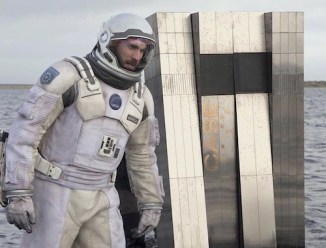 From a filmmaking perspective, there is surely nothing to fault. The visuals are incredible. As you’d expect, the IMAX footage looks absolutely stunning. Every time the Blu-ray reverted back to 2.40:1 I was a little disappointed. A sneaky part of me thinks Warner deliberately make these sequences look less good to ramp up the quality of the IMAX footage (I felt the same about The Dark Knight and The Dark Knight Rises on Blu-ray), but maybe I’m just being paranoid. The effects work is also sublime, once again demonstrating the awesomeness of modelwork for spacecraft and the like. The CGI vistas and space phenomena are nothing to be sniffed at either, mind. There’s also a particularly interesting featurette about how they created zero-G. Impressively, even in behind-the-scenes footage, where you can see the wires, it still sometimes looks like the cast are genuinely floating. (On another technical point, more than a few reviews complain of the sound design, specifically the music being too loud. Either the film has been remixed for home release or it just isn’t a problem on a home-sized surround sound system, because I had no such issues.)
A semi-regular criticism of Nolan’s work is the lack of focus on characters or emotion, often sidelined for an epic scope or tricksy narrative. Interstellar certainly has a… debatable climax, and it definitely has an epic scope too, but it’s also one of the most character-driven and emotional films on Nolan’s CV. In particular, there are strong performances from McConaughey and Jessica Chastain (as an older Murph); 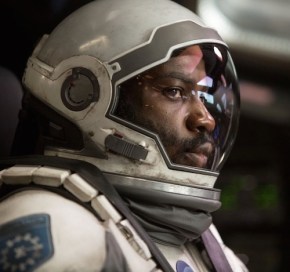 Anne Hathaway is largely understated, but slivers of emotion seep through when appropriate; and Michael Caine actually gets to do a bit of Acting in a Nolan film for a change, rather than just turning up as a wise old dispenser of exposition — though don’t worry, he does that too. One of the stand-outs for me was David Gyasi, getting a role that was subtly stronger and more thought-provoking than several of his more famous colleagues, and executing it with aplomb too. Similarly, the voices of semi-sentient robots TARS and CASE — Bill Irwin and Josh “he’ll always be ‘that guy from Dirt’ to me” Stewart, respectively — are highly entertaining. Apparently they were inspired by Marvin the Paranoid Android from The Hitchhiker’s Guide to the Galaxy, which is another mark in their favour, though thankfully they’re not just a rip-off used for comic relief.
Interstellar is a “big” movie — it’s full of big ideas, a big scope, big emotions, big stakes (the entire future survival of mankind!) Some people love that kind of scale; others hate it. Whichever camp you’re in, a bad or good movie (respectively) can sway you away. It’s tough to say which of those Interstellar is with any degree of objectivity, because so many people have had so many different reactions, from outright love to outright disgust. I’d say it’s certainly not perfect: it’s too long, and the qualities of the ending are debatable for all kinds of reasons — not least that any sense of it being a twist (which is how it’s structured) is negated by it being eminently guessable 2½ hours before it’s very, very slowly explained to us.
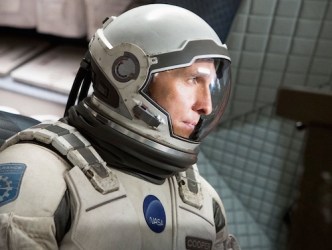
For all that, though, I loved it a little bit. It’s a spectacle, but a thoughtful one. Even if it doesn’t develop those thoughts as fully or comprehensively as it could, and arguably should, it really tries. If a few more big-budget spectacle-driven movies could manage even that these days, we’d all be better off for it.

Interstellar debuts on Sky Movies Premiere today at 3:15pm and 8pm.
 The kids’ phenomenon of the ’80s/’90s has never quite gone away, and this film is one thing that kept it ticking over in the ’00s. I watched out of nostalgia, which may’ve been a mistake.
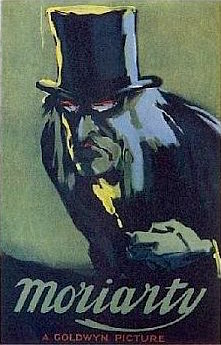 American actor William Gillette was the most iconic portrayer of Sherlock Holmes on stage, penning his own play (with permission from Conan Doyle) that he performed 1,300 times between 1899 and 1923. It was
 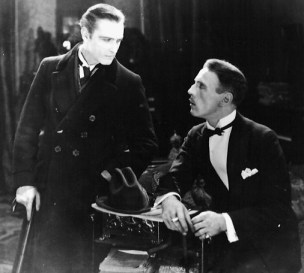 Yes, shades of 1985’s
  and in many respects they led to the abundance of crime-solving fiction that fills bookstores and TV schedules to this day, but there’s a reason most of Conan Doyle’s stories are prefixed with “The Adventure of” rather than “The Fiendishly Difficult to Solve Mystery of”.
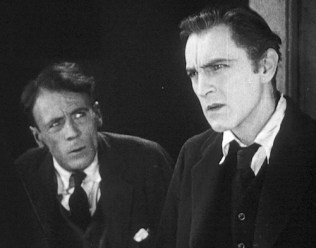 Barrymore makes for a solid, if perhaps unremarkable, Holmes. He has the right look for the role, and makes good use of the same staring-contemplatively-into-the-distance furrowed-brow expression that Basil Rathbone would employ a couple of decades later. He has down the precociousness of student Holmes, which develops into a kind of righteousness when older. He’s not as stand-offish and borderline unlikeable as some interpretations of the character, nor as affable as others. As I say, he sits in the middle, doing nothing wrong but not getting a chance to mark himself out either.
 He crops up in the years-later narrative too, used by Holmes to go undercover in the house where Alice is being held hostage by some of Moriarty’s many villainous associates. A major part of Holmes’ plan hinges on him turning up at these villains’ house, telling them what to do, and them obeying him. That this method succeeds is not due to Holmes’ considerable skill, but more due to the screenwriters’ lack of it.
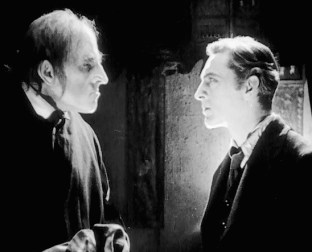 hardly seems worth such devotion except on a purely academic level.” He goes on to say that “it must be one of the blandest misuses of potentially exciting material ever,” that “it literally has no highlights,” that it “has no pictorial style of its own,” that Barrymore “clearly lends his profile to Holmes, and not much more,” that “if it is a major find, it is also a major disappointment.” Ooh, burn. (The
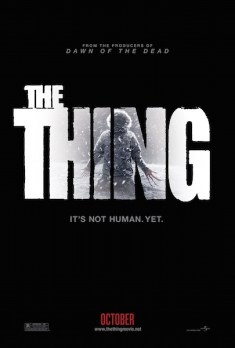 At some point during the process of remaking John Carpenter’s seminal 1982 sci-fi/horror
  Of course, it isn’t as good. There are many reasons for this, one of which is the fact that, because they haven’t just remade the other film, every homage/rip-off they come up with is inferior. So the blood testing scene from the ’82 film is replaced by shining a torch in someone’s mouth to see if they have fillings. God help you if you’ve taken care of your dental hygiene. The climax is typically overblown — this isn’t a spoiler, I’m preparing you if you’ve not seen it: the survivors venture into the alien’s spacecraft to stop it taking off. Some people get a kick out of getting to see inside the ship, and I suppose you could say that at least the remake-makers are trying to offer something new. Unfortunately, new is exactly what it’s not. The Thing is a bizarre creature, growing and morphing and warping in disgusting ways — what strange kind of spaceship would it call home? A bog-standard metal-corridors kind of one, apparently. The lack of imagination is staggering.
 The other element the making-of material is keen to underline is just how much effort was put in to make sure this ties back to its predecessor. Essentially, they looked at what was revealed about the Norwegian base in Carpenter’s film and used that to reverse engineer the events that had to occur in this film. However, the final result could’ve made some of these connections more explicit. For example, we don’t see when the guy who slit his throat performs that act. The moment is actually included among the disc’s deleted scenes, but why did they cut it?! The movie’s final scene, which directly links the two films, is intercut with the end credits — why?! It comes across as apologetic, like they’d rather it wasn’t there but feel it has to be. Either put the scene in the film proper, or put it as an after-credits easter egg for die hard fans; the halfway-house used in the final cut is just messy. If someone’s argument was, “casual viewers will find those linking scenes meaningless”, then watch your own movie! The helicopter being away for refuelling is referenced earlier in the film; Joel Edgerton’s character says they didn’t kill Lars but never says what they did do with him; and the last time we see Colin he’s alive (until a single shot of his frozen corpse, that is). To put it another way: they’ve done a bang-up job of making those things matter within the film itself, as well as in the context of linking up to the ’82 film, so why were they deleted or included only as an embarrassed afterthought?
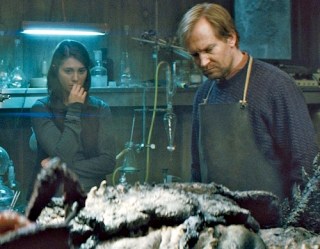 Or maybe they wouldn’t, because The Thing 2011 is a lesser film than the original. It does still offer some suitably gross effects work, albeit lessened by it being obvious CGI rather than gruesomely physical constructions, but there are still some resultantly tense sequences. Heck, it’s the first film in I-don’t-know-how-long that actually made me jump, once. Some viewers complain that there’s no “who might be an alien?”-type tension because the characters aren’t well-drawn enough, but I had that problem with Carpenter’s film too.
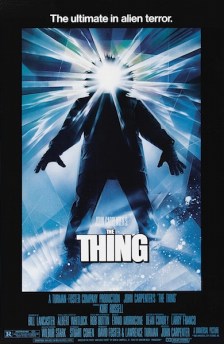 It’s just an ordinary day at the US Antarctic research base staffed by helicopter pilot MacReady (Kurt Russell) and his compatriots, until a helicopter buzzes overhead dropping grenades on a dog it’s pursued across the ice fields. The dog finds sanctuary in the US base; the helicopter and its crew are less fortunate. Realising it’s from a Norwegian facility an hour’s flight away, MacReady and the doctor brave inclement conditions to investigate. They find numerous corpses and the base burnt to ruins. What horrors befell the Norwegian base? And have they inadvertently brought them into their own…?
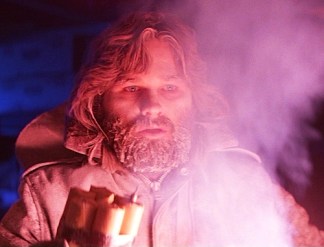 Even if you don’t want to get deep about it, The Thing has the “who’s human?” thrills to keep you engaged on that level. Accusations of boredom no doubt stem from the fact it’s a bit of a slow burn, the early acts building suspicion and unease as MacReady and co investigate. Even after the true nature of the threat is revealed, Carpenter paces himself, though the frequency of incidents begins to mount inexorably as we head towards the climax. Well, that’s just good structure.
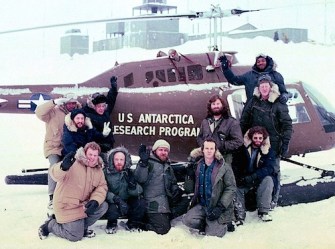 For me, it’s the psychological quandaries that are gripping and exciting, rather than any enjoyed disgust at the emetic special effects. However, knowing the characters a little better — thus caring if they’d been replaced or not, and also perhaps allowing us a chance to try to guess for ourselves — would have just made it that bit superior.
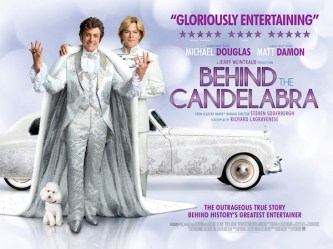 Steven Soderbergh’s supposed last-ever film (or, if you’re American, Steven Soderbergh’s first project after he supposedly quit film) is the story of Scott Thorson (Matt Damon), a young bisexual man in the ’70s who encounters famed flamboyant pianist Liberace (Michael Douglas) and ends up becoming his lover, which is just the start of a strange, tempestuous relationship.
 It looks great, too. The film, that is, not Rob Lowe’s face. The design teams have realised an excellent recreation of the period, which is then lensed with spot-on glossy cinematography by DP
  2013 Academy Awards
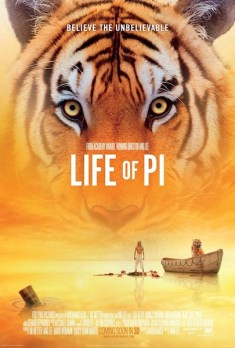 “Unfilmable” — now there’s an adjective you don’t hear tossed about so much these days. For a long time it seemed like it was all the rage to label novels “unfilmable”, but at this point too many ‘unfilmable’ novels have been filmed, and the wonders of CGI have put paid to anything ever again being unfilmable for practical or visual reasons. It may still be an apposite descriptor for works that feature very literary storytelling, though if you can render something like the subjective and unreliable narrator of
 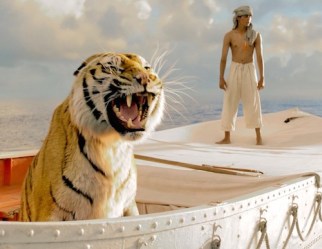 but because of almost-indefinable features of each shot’s crispness, its depth of field, even the compositions. It absolutely works in 2D, and it didn’t leave me longing for 3D in quite the same way as something like the swooping aerial sequences of
 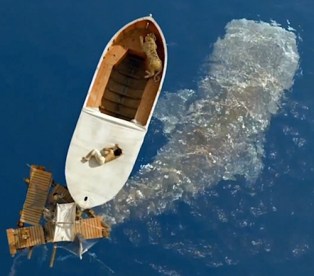 Later, the 4:3 “book cover” shot is just pure indulgence. There’s no reason not to just have empty sea to the left and right of frame, and the “it’s emulating the book cover!” reason/excuse doesn’t come close to passing muster simply because book covers aren’t 4:3. In both cases, then, what was intended to be striking or clever or innovative or in some way effective, I guess, comes across as pointless and distracting and pretentious.
 Reading around a little online, it seems that some people have interpreted the film’s message as being a defence of/justification for/persuasion towards religious faith, and hate it for that. This interests me, because I — coming, I suspect, from a similar perspective on religion — read it as a subtle condemnation of religious stories. Actually, not a condemnation, but a tacit acceptance of the fact that such stories are a nice fairytale, but not the truth. To put it another way, I took the message to be (more or less) that religion is an obvious fiction which people choose to believe because it’s a nicer story than the more plausible alternative, neither of which are provable. I think some focus on the point that the journalist hearing Pi’s story is told it will make him believe in God, and, at the end, the journalist seems to accept that it does. I don’t think that’s the film’s contention, though; I think the film is, in a way, explaining why people believe in God. Or maybe there are just no easy answers.
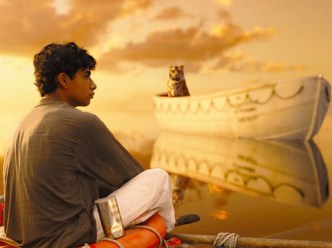 I found Life of Pi to be a little bit of a mixed bag, on the whole, where moments of transcendent wonder-of-cinema beauty rub up against instances of thumb-twiddling; where insightful or emotional revelations rub shoulders with pretentious longueurs. There is much to admire, but there are also parts to endure. The balance of reception lies in its favour, but while some love it unequivocally, a fair number seem to despise it with near-equal fervour. Either way, it’s definitely a film worth watching, and in the best possible quality you can manage, too. It also made me want to read the book, which for a movie I wasn’t even sure how much I liked is certainly an unusual, but positive, accomplishment.
 James Woods is the owner of a trash TV station who’ll do pretty much anything for ratings. His hunt for the next ‘big’ thing leads him to come across the signal for a channel that shows just one bizarre, disturbing programme. Obsessed with finding out the truth behind it, he gets suckered in to a conspiracy that blurs the line between reality and imagination.
 I guess for some people the “ew”-inducing effects are the primary delight of the film. These are the kind of people who complain about the UK version being cut. In truth, this is actually the originally-released R-rated version; the so-called Director’s Cut adds just over a minute. Having read about
 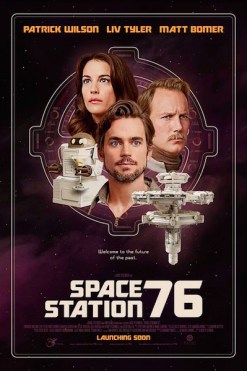 Liv Tyler is the new first officer on a space station commanded by Patrick Wilson in this retro-future-styled film, which is both a spoof of/riff on ’70s genre movies, and a character drama about people’s relationships. No, really.
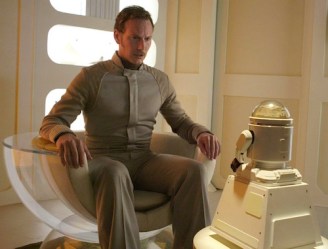 used to feed into the humour, that’s simply what makes it, a) a period movie (just a period movie set in the future), and b) a comedy-drama (as opposed to a drama). I think this is the real reason for its lowly regard on sites like IMDb: those expecting Anchorman in Space are going to be disappointed; but you can’t blame anyone for such expectations when that’s more-or-less how it’s trailed.
 The characters and their relations are well enough drawn to make it passably engrossing, even if not a stand-out contribution to any such genre, while the comedy pays off handsomely at times.
 From the sword and sorcery ‘boom’ of the ’80s, Red Sonja concerns a warrioress going after the evil queen who slaughtered her family and has now seized a magical MacGuffin that will destroy the world or somesuch.
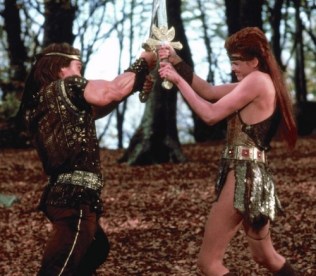 being a particular highlight. Veteran helmer Richard Fleischer’s direction seems to have come in for criticism from some quarters, but I found it adequately unremarkable. Damning with faint praise, I know, but it doesn’t merit slagging off either.
 100Films.co.uk