
Mark Burton & Richard Starzak | 85 mins | streaming (HD) | 1.85:1 | UK & France / silent (English) | U / PG
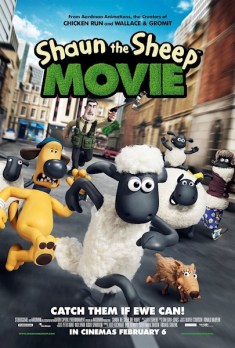 Shaun the Sheep started life in the 1995 Wallace & Gromit short A Close Shave. Eventually granted his own TV spin-off aimed at little kids, it’s become a global hit thanks to the decision to make it a silent comedy — no need to pay for pesky dubbing into other languages, while its sheer quality (it is Aardman, after all) helps it to transcend national boundaries. This year, Shaun and friends made the leap to the big screen, in what may be the year’s best animated movie.
The film begins with Shaun and the other ovine occupants of Mossy Bottom Farm getting fed up with the daily grind of being sheep, so they concoct a plan to distract sheepdog Bitzer so they can lure the Farmer into a slumber and take over the farmhouse for a well-earned break. Naturally things go awry, and the Farmer ends up whisked off to the Big City. With no one to feed or care for them, Shaun, Bitzer, and the rest hop on a bus and set off to retrieve their friend.
Expanding a series of five-minute-ish shorts to feature length is always a risky proposal, but fortunately we’re in the more than capable hands of Aardman Animation here, and they’ve come up with a plot big enough to fill a feature running time. In a style one might describe as ‘classical’, you can break the film down into individual segments and sequences, each one a crafted vignette of silent slapstick. That doesn’t make the story episodic, but rather serves to keep the humour focused — no gags are overused or outstay their welcome. Indeed, some fly so fast that they’re literally blink-and-you’ll-miss it. I suspect this means Shaun would reward repeat viewings, particularly to spot all the little background details.
It’s also in the details that Shaun proves itself to be a true family film. Like the TV show, it’s sweetly innocent and simple enough for little’uns (that US PG is thanks to a couple of oh-so-rude fart jokes), but there’s a sophistication to the way that simplicity is handled that adults can enjoy. There are also references and in-jokes for the grown-ups; not hidden dirty jokes that’ll put you in the awkward position of having to explain to the kids why you were laughing, but neat puns (note the towns that the Big City is twinned with) and references to other films (like Taxi Driver. Yes, really.)
Naturally, technical aspects are top-notch. Aardman are the kings of claymation, consistently delivering work in which the animation is polished, clever, and surprising, but which also retains the sense that it was achieved by hand (unlike some other films — Corpse Bride, say — which are so slick you begin to wonder if they’re actually CGI). I always marvel at stop-motion anyway — the persistence to animate something a frame at a time, taking days to create one shot and months to create one scene, is a dedication and skill I can barely fathom — but Aardman’s productions routinely push beyond your expectations of the form.
Aardman’s stop-motion silent comedy will certainly lose to Inside Out across the board come awards season (apart from at the BAFTAs, perhaps), but it’s the more inventive, amusing, innovative, accomplished, and impressive achievement. Delightful.

Shaun the Sheep’s Christmas special, The Farmer’s Llamas, is on BBC One on Boxing Day at 6:10pm.
This review is part of the 100 Films Advent Calendar 2015. Read more here.
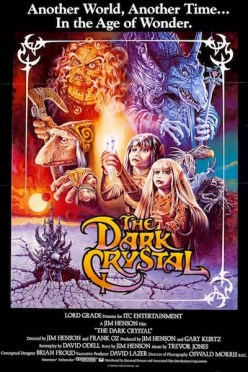 High-fantasy adventure about some elves trying to stop a crystal from destroying their planet.
 Essie Davis is best known for playing the sassy title role in
 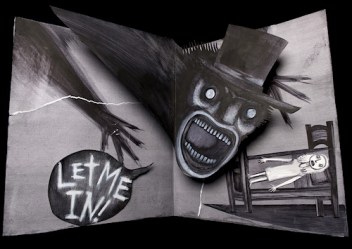 a horror film for people who think about what they’re watching, rather than just waiting for something to be thrown at the screen to make them jump. The slow burn tension will bore those content with the latter, who I suspect don’t tend to think a great deal (for one thing, they’d spot most of the jumps coming if they did).
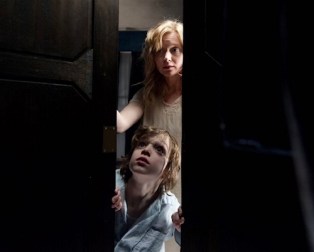 There is little in The Babadook that will make you jump, and even less that will make your stomach turn in disgust, but that’s absolutely fine. What it will do is chill your blood, make your hair stand on end, make you worry about every little creak or thump you hear elsewhere in the house after dark, and make you want to sleep with the lights on. Not just the bedroom lights, all the lights. Because once you’ve seen it, you can’t get rid of the Babadook.
 From the makers of
 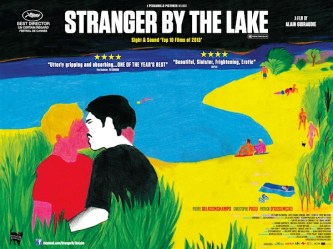 Iiiiiit’s the arthouse gay sex thriller!
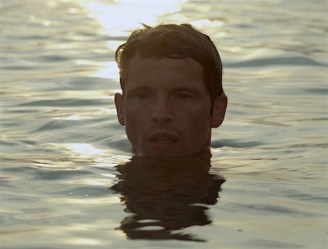 In this regard it has a very particular speed and style — even if there was a version without copious full-frontal male nudity and explicit sex, it still wouldn’t be for everyone. It helps to evoke both a certain time and place (lazy summer days on holiday) and a particular lifestyle (that of gay cruising — which, much to the (presumably straight) policeman’s bafflement, continues virtually unabated even after one of their number is murdered in unexplained circumstances). This is further emphasised by the gorgeous cinematography. Claire Mathon apparently shot it using only natural light, and it looks fantastic — understated (this isn’t a heavily-graded hyper-real kind of beauty), but sumptuous.
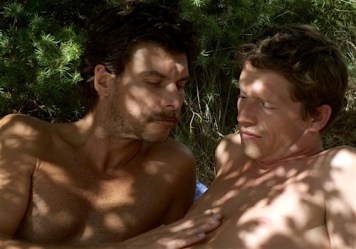 The style is supported by strong performances. I suppose some would say “brave”, by which they’d mean “they’re naked a lot and having gay sex”… so, I mean, maybe it is brave, but, still, that’d be a euphemistic description. What I mean is that they’re strong because they’re calm, understated, realistic, and believable without tipping over into amateurish. You feel Franck’s complex mix of fear and excitement, his lust overpowering common sense; there’s a certain timidity, maybe even naïvety, present in his eyes. Conversely, his lover Michel is unreadable; a closed book, where you never know what he’s thinking, feeling… plotting. Franck’s new friend Henri is similarly tricky to get an accurate handle on, but he’s the yin to Michel’s yang (or vice versa). He’s not plotting, he just is. Or maybe he was plotting all along…?
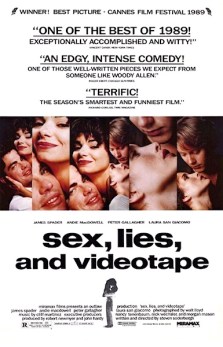 Four acquaintances partake in duplicitous relationships and candid sexual discourse in writer-director Steven Soderbergh’s debut drama.
 This melancholic apocalyptic comedy wasn’t too well received, which is a shame because I thought it was absolutely brilliant.
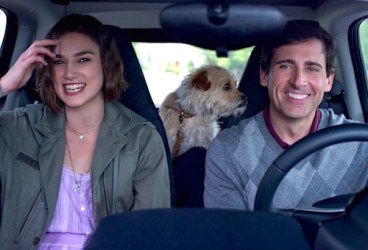 is an overwhelming sense of melancholy. It’s a hard feeling for films to evoke, I think — more complex than happiness or sadness, or excitement, or even fear. It comes to a head in an ending that actually brought a tear to my eye, a rare enough feat that it cemented a five-star rating.
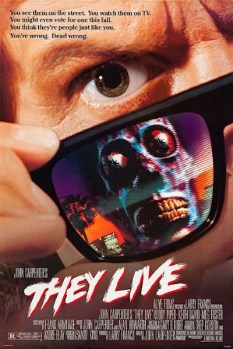 Sci-fi parable about aliens controlling us via subliminal advertising.
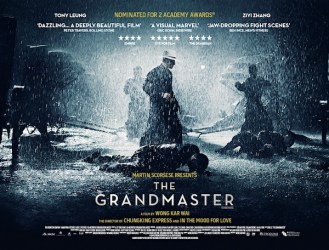 As a Western viewer, if you know anything about Ip Man beyond “he’s the chap who trained Bruce Lee”, it’s probably thanks to the
  It helps that it’s gorgeously shot. Ultra-crisp blue-black rain-soaked night time duels; rich golden hues in pre-occupation Foshan; cold bright-white snowy landscapes; a train platform fight that’s almost sepia-like. Between the photography and the ever-excellent action choreography of Yuen Woo-ping (
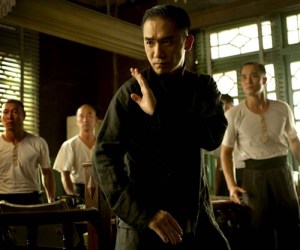 However you look at it, the other Ip Man films are undoubtedly more palatable to a mainstream audience. Does that mean they’re worse? No. Better? Not necessarily. But I don’t think The Grandmaster is all it could’ve been. It seems to run out of story and lose its way as it gets towards the end. The focus shifts entirely to Gong Er, and it feels less clear what it’s meant to about as a whole film. It becomes a movie of great moments, and maybe even scenes, but an unsatisfying whole. But oh, the images…
 This is not a well-reviewed film —
 100Films.co.uk