

Everyone has a secret.
Country: UK & France
Language: English
Runtime: 98 minutes
BBFC: 18
MPAA: NC-17 (uncut) | R (cut)

Original Release: 4th September 2003 (Netherlands)
UK Release: 26th September 2003
First Seen: DVD, c.2005
Stars
Ewan McGregor (Shallow Grave, Big Fish)
Tilda Swinton (Orlando, We Need to Talk About Kevin)
Peter Mullan (Trainspotting, Tyrannosaur)
Emily Mortimer (Lovely & Amazing, Match Point)
Director
David Mackenzie (Starred Up, Hell or High Water)
Screenwriter
David Mackenzie (The Last Great Wilderness, Hallam Foe)
Based on
Young Adam, a novel by Alexander Trocchi.
The Story
Joe is earning his keep helping transport coal on a barge between Glasgow and Edinburgh, spending his free time lusting after his employer’s wife, when he spots a woman’s dead body floating in the canal — something Joe knows more about than he lets on…
Our Hero
Joe is a young drifter, who’s wound up working on a barge with Les and Ella Gault and their son. He’s a horny bugger, sex obsessed to the point of distraction, which will have an effect on everyone’s lives.
Our Villain
It wouldn’t be quite accurate to say the film is a murder mystery — especially as it’s not clear if the woman was indeed murdered. But how did she die? How was Joe involved? He’s the main character, which makes him the hero, but is he actually a bad’un?
Best Supporting Character
Harried barge wife Ella is not anyone’s typical image of desirability, but nonetheless becomes the object of Joe’s own brand of affections, which brings her some happiness… for a while. Mainly, it’s a brilliant, layered performance by Tilda Swinton.
Memorable Quote
Joe: “Are you sorry?”
Ella: “Fat lot of good that would do me.”
Memorable Scene
Cathie, another of Joe’s lovers, comes home soaking wet. As she undresses, she berates him for doing nothing useful with his time. He informs he has made custard, which he throws over her, followed by various other condiments. Then there is, shall we say, an act with (at best) debatable consent. I believe this is a version of something called “sploshing” (thanks, internet).
Memorable Music
David Byrne’s ambient score haunts the soundtrack, as essential to the film’s grey mood as the drizzly Scottish locations and overcast photography. My favourite part is the plaintive closing song, The Great Western Road.
Awards
4 BAFTA Scotland Awards (Film, Actor in a Scottish Film (Ewan McGregor), Actress in a Scottish Film (Tilda Swinton), Director)
4 British Independent Film Award nominations (British Independent Film, Actor (Ewan McGregor), Actress (Tilda Swinton), Director)
3 Empire Awards nominations (British Film, British Actor (Ewan McGregor), British Actress (Emily Mortimer))
What the Critics Said
“Joe is a hard case. Opaque. Not tender, not good with the small talk. Around women, he has a certain intensity that informs them he plans to have sex with them, and it is up to them to agree or go away. He is not a rapist, but he has only one purpose in his mind, and some women find that intensity of focus to be exciting. It’s as if, at the same time, he cares nothing for them and can think only of them. […] He is not a murderer but a man unwilling to intervene, a man so detached, so cold, so willing to sacrifice others to his own convenience, that perhaps in his mind it occurs that he would feel better about the young woman’s death if he had actually, actively, killed her. Then at least he would know what he had done and would not find such emptiness when he looks inside himself. This is an almost Dostoyevskian study of a man brooding upon evil until it paralyzes him. […] The death of the girl and the plot surrounding it are handled not as a crime or a mystery but as an event that jars characters out of their fixed orbits. When you have a policy of behavior, a pose toward the world, that has hardened like concrete into who you are, it takes more than guilt to break you loose.” — Roger Ebert, Chicago Sun-Times
 Score:
 62%
62%What the Public Say
“McGregor, putting his meat and two veg on show once again, is really good as the conflicted and sex addict, Swinton does almost steal the show as the sex-craving barge woman, who also gets naked, and Mortimer in the flashbacks is very good, with her clothes off too. The film is just stuffed with sexual scenes, and with the dead body premise it combines film noir and melodrama, all adding up to a well crafted and most watchable period drama.” — Jackson Booth-Millard @ IMDb

Part murder mystery, part beat character study, part erotic drama, Young Adam is an enigmatic, moody, conflicted film — in a good way. It presents a grimily realistic view of life and sex, around which writhes a murder mystery that, as it turns out, doesn’t contain a murder and, relatively quickly, isn’t much of a mystery. Instead it’s something of an ethical dilemma, presented to a character who’s not exactly unethical but isn’t necessarily concerned about doing what’s right either, especially if it’s against his own interests. Not a cheery one, then, but a film of grey morals, grey imagery, and grey mood — in a good way.

Next time… looking back over my 100 favourites.





 I’m not sure I’d even heard the name Jeff Nichols before Midnight Special came along, at which point most of the gushing reviews that followed seemed to mention him with cult-like reverence. He’s the writer and director, by the way, for anyone still in the dark, and unbeknownst to me (and, I rather suspect, most people outside certain cinephile circles) he’d amassed something of a following over his first three movies (
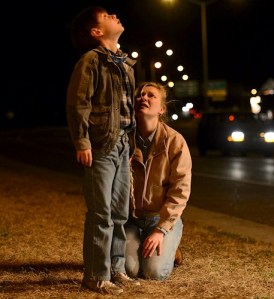 straight-up Spielberg rehashes we’ve seen over the past four decades; conversely, a strand of wilful obscurity means it may be ultimately less satisfying. Again, some people derive satisfaction explicitly from that lack of resolution or explanation, while others will find it damagingly frustrating. Even more than Spielberg, I felt the thing most evoked by this structure was
  I thought they perfectly conveyed what they were intending to convey — usually, just a kind of otherworldly light. It’s not like it’s even over-stretching its means, like so many network TV series or


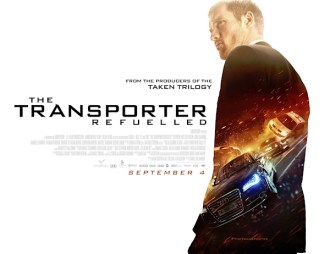 I kind of knew The Transporter Refuelled was going to be bad before I even began, but I watched it anyway because, well, I watched the
 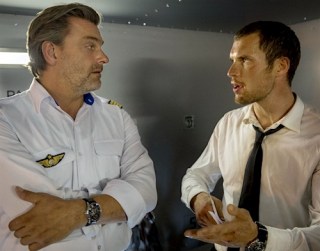 Unfortunately I wasn’t wrong about the acting, which is indeed pretty shit. Ed Skrein was truly dreadful in
 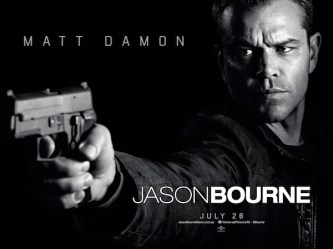 Much like the Bond films to which they’re so often compared, the Bourne movies have their devotees while only fitfully pleasing the critical establishment. This fifth movie — which is notable for marking the return of star Matt Damon and director Paul Greengrass after the semi-reboot of
 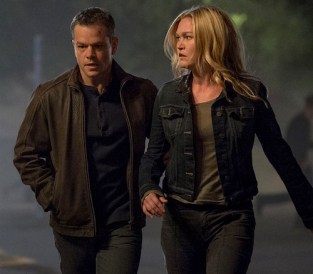 Action sequences ensue, shot with all the ShakyCam you’d expect from Greengrass. By now I imagine you have your own view on whether his style works or not. Personally, I think it’s considerably less bamboozling than when it made its debut in
 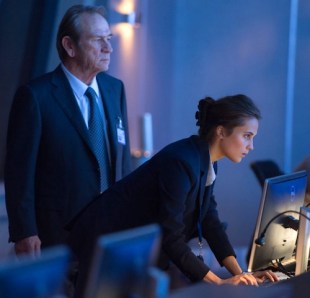 Frankly, Jason Bourne is at pains to mix in hyper-current iconography; the reasoning for Damon and Greengrass’ return now being that the world has changed and how does Bourne fit into that? So as well as social media and Greek riots we’ve got references to and riffs on hacking, Edward Snowden, government surveillance of its own citizens, the prevalence of Facebook/Twitter-esque tech companies, and so on. Sadly, I’m not sure the film’s actually got anything to say about any of these things. Greengrass and his co-writer, editor Christopher Rouse, have appropriated all these zeitgeisty concepts to make the film feel very Now, but that surface sheen is more or less where it ends. I mean, there’s a whole subplot starring Riz Ahmed as the Zuckerberg-like CEO of a social media company that I didn’t even mention in my plot summary because it’s kind of an aside. It’s kind of ironic, really, that it always seemed as if Greengrass’ more natural stomping ground was his documentary-ish real-world-exposé type movies, with his contributions to the Bourne series an unusual sideline; yet when he finally marries the two halves of his filmmaking career, it’s the action rather than current-affairs commentary that takes precedence.
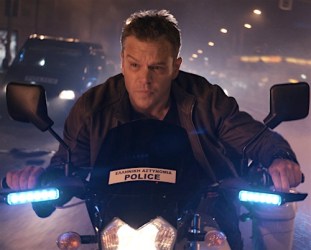 The end result is that Jason Bourne does thrill as an action movie, which seems to have been the primary goal of its makers, at the end of the day. As an action-thriller, however, the rinsed-and-repeated plot is a slightly faded imitation of former successes; a through-the-motions way to provide those impressively staged chases and punch-ups. It’s not the definitive Bourne movie one might’ve expected from the returning star/director combo (why else come back if not to perfect, or at least add to, the formula?), but instead means the film ends on an odd note: even though it wasn’t a wholly satisfying experience, and even though it doesn’t end with questions still blatantly hanging (as every Bourne movie bar Ultimatum has done), I want Damon and Greengrass to come back and do it all again, please. Only do it properly next time, yeah guys?
 100Films.co.uk