Emma. (2020)

2020 #20
Autumn de Wilde | 125 mins | cinema | 1.85:1 | UK & USA / English | U / PG

Emma.

According to IMDb, Jane Austen’s Emma has only been adapted for the big screen twice before — and one of those was Clueless. There have been multiple TV movie and miniseries takes on the novel, though, but as the most recent was over a decade ago I guess someone felt it was about time to trot it out again (after all, every major Dickens and Austen must be adapted for the screen at least once a decade or so, right?)

Following in the footsteps of the likes of Gwyneth Paltrow, Kate Beckinsale, and Romola Garai — and, I guess, Alicia Silverstone — in the title role is Anya Taylor-Joy. With her wide eyes, blonde ringleted hair, and silent, still demeanour, Emma is the very vision of loveliness. But, like so many stereotypical outer appearances, her sweet visage masks a manipulative schemer, obsessed with her own matchmaking ability; and, in private, her opinions of others are often not so kind. She is, in short, a bit of a bitch. Taylor-Joy is perfect in the role, doing an awful lot with subtle changes of expression in reaction shots — her Emma may often be silent and still, but she still conveys so much. Some have labelled Taylor-Joy a “scream queen” after her breakthrough roles in the likes of The Witch and Split, but she’s got a lot more range than that label implies.

Reader, I confess, I am jealous of that strawberry

Around her is a cast mixed of well-known faces and up-and-comers. For the latter, the standout is Josh O’Connor, who you may recognise from The Durrells, or The Crown, or God’s Own Country, or one of several other roles — he’s been an up-and-comer for a while and is about due a full-on breakthrough, which I guess all of these things combined have or will provide. Anyway, here he’s an obsequious vicar whose manner changes entirely once his true intentions and character are exposed, and O’Connor tackles both sides with the right amount of humour and churlishness. Johnny Flynn brings a rugged edge to Mr Knightley, Emma’s neighbour and lifelong friend, who disapproves of her meddling ways even as he clearly approves of her. Mia Goth brings a convincing wide-eyed innocence to Harriet Smith, a young girl of unknown parentage who Emma takes under her wing with the real motive of once again showing off her matchmaking skills, which is quite at odds with her previous roles in the likes of Nymphomaniac and The Survivalist.

As to the better-known cast members, Bill Nighy is reliably drily hilarious as Emma’s father, while Miranda Hart injects a lot of her familiar persona into the babbling Mrs Bates, before hitting you with an almost gut-punch of emotion (there were gasps at my screening, dear reader — gasps). Fans of the book / other adaptations will surely know which moment provokes such a response, so there’s the quality of Austen’s original storytelling at work there, and also that of the filmmakers and the rest of the cast — the reactions of the other characters; the way they hastily try to cover up the faux pas; and the exposure of Emma’s true character contrasting with the overall sugariness of the way this world has been presented.

Confectionary

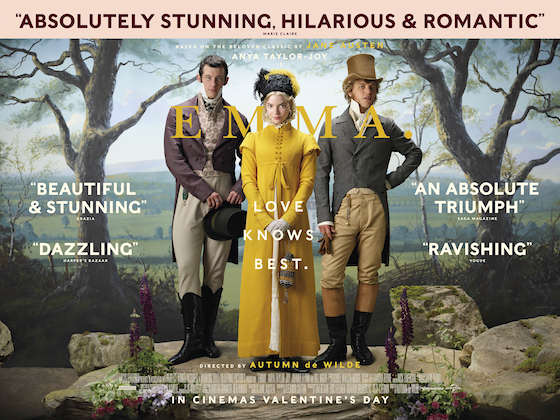
This is director Autumn de Wilde’s most striking contribution to the story. The colour palette evokes confectionary; the manner of framing and camera moves is sometimes Wes Anderson-esque. If this Austen adaptation lacks the pure satirical bite of, say, Love & Friendship, it counterbalances with a contrast between the prettiness of the design work and the true thoughts, feelings, and schemes of the protagonist.

Of course, at the end of the day, Emma is a romance, and all’s well that ends well, earned via a flurry of apologies and plotting that lands everyone just where they always ought to have been. I suppose such narrative tidiness is anathema to some, just as are the delightful visuals, the witty dialogue, or the fundamental triviality of a bunch of rich people fussing over each other’s love lives. Well, that’s Jane Austen, people. And, like the elaborate confectionary it so resembles, Emma may not be nutritional, but it is delicious.

4 out of 5

Emma. is released in the US today, and is in UK cinemas already.

Toy Story 4 (2019)

2019 #101
Josh Cooley | 100 mins | cinema | 2.39:1 | USA / English | U / G

Toy Story 4

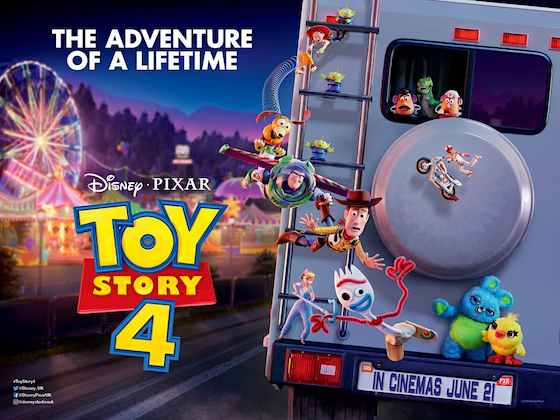
Last weekend, with dull inevitability, Toy Story 4 won Best Animated Feature at the Oscars. Of course it did — in the last decade, the award has gone to a Disney or Pixar movie eight times out of ten. I’ve not seen any of the four other nominees, but I strongly suspect at least one of them deserved it more, because Toy Story 4 is… fine. Heck, it’s good, even. But when the three films that precede it are all-time classics that formed a perfectly complete trilogy, just being “good” is not enough.

Its first mistake is that it doesn’t need to exist. The filmmakers have self-mythologised that Woody’s story wasn’t complete and so needed this final chapter, or some such gumph, but anyone who’s actually seen Toy Story 3 knows that’s not true. No, this is someone at Disney or Pixar hoping they can mine one of their most popular franchises for more gold. Whether or not they also believed lightning could strike for a fourth time, or they didn’t care so long as it made bank, I’ll leave up to your own levels of cynicism.

So rather than feeling like an equal part of a four-film series, Toy Story 4 feels like an afterthought; an addendum; a “here’s another one because you liked the others”. And at times it delivers on that — we like these characters, so they’re fun to be with; some of their antics are amusing or exciting; there’s a positive moral message or two about acceptance and seeing worth in yourself. There are attempts at emotional resonance too, particularly when the film tries to feel like an ending and a farewell; but 3 already did that, and did it extremely well. 4 has an uphill climb trying to match that, and even if it did (which it doesn’t), why should we believe it? It’ll only last until someone decides there’s a narrative for Toy Story 5 that simply has to be told (see you for that c.2026, I guess).

In search of a new story

Of course, there’s no doubting the film is well made. It’s easy to disregard that as just Pixar being Pixar, but there’s an ever-impressive technical skill on display here. Maybe on that level it does deserve award wins — although, while Pixar are undoubtedly frontrunners in such a race, there are other animation houses who can and do produce work that’s just as beautiful. (Besides, the Best Animation category is a funny one in that regard — is it rewarding the artistic/technical accomplishment of the animation itself, or is it “best film that happens to be animated”? A debate for another time.)

Toy Story 4 is the kind of film I enjoyed well enough while it was on. Whenever I get round to rewatching the series, I’ll happily include it. But, while it doesn’t tarnish the series’ legacy, it does blight its unbroken record. If it had never existed, I’d’ve been fine with that.

4 out of 5

Toy Story 4 is available on Sky Cinema as of this weekend.

1917 (2019)

2020 #6
Sam Mendes | 119 mins | cinema | 2.39:1 | UK & USA / English & French | 15 / R

1917

BAFTABritish Academy Film Awards 2020
9 nominations

Nominated: Best Film; Outstanding British Film; Best Director; Best Cinematography; Original Music; Best Production Design; Best Make Up/Hair; Best Sound; Best Special Visual Effects.

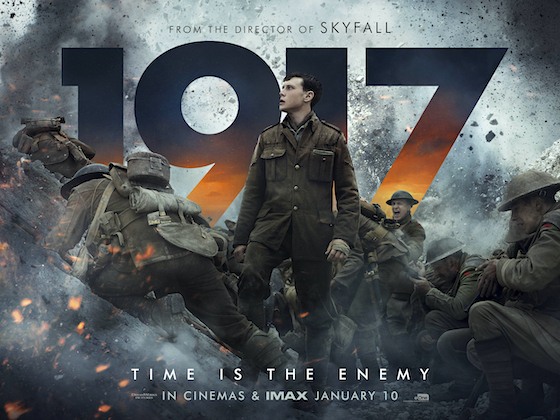
I haven’t been following awards season too closely this year, but from the snippets I have picked up here and there it seems to be quite a variable race — every time a frontrunner emerges, something else wins some other award and suddenly the field is open again. 1917 was one of the early tips, and now has several wins under its belt to back that up. It may not be a lock at the Oscars, where the latest works by American auteurs like Martin Scorsese and Quentin Tarantino will give it a robust run for its money (plus the six other contenders, several in with a shot), but tonight it’s BAFTA’s turn. The British Academy may seem to be more focused on being counted among the major Oscar forerunners than anything else, but they do still have a penchant for rewarding British films — and 1917 isn’t just “a British film”, it’s a British film about a key event in British history with an all-star cast of cameos from great British actors. So, as it’s a season-wide contender anyhow, if 1917 doesn’t win the big prize this evening it’ll be a genuine surprise.

Does it deserve it? Take a sample of social media and you’ll get different answers. As with any big, much-discussed film nowadays the initial reception has been followed by waves of backlash — or maybe that’s too grand a term for it; maybe it’s just been different ‘sides’ expressing their opinion in turn. If it wins, there’ll be a vocal contingent about how it didn’t deserve it. As someone observed the other day, literally the only way to avoid such a negative reaction nowadays is to literally take the award out of the incorrectly-named winner’s hands. (If you think that’s facetious, think about it for a second: do you remember any significant backlash to Moonlight winning? I don’t. Every other winner in recent years? Yep. I’m not saying it should’ve had one — it’s a great film — but it is unique in avoiding it.)

Personally, having seen 60% of this year’s BAFTA Best Film nominees, 1917 would be my pick (the others I’ve seen are Once Upon a Time in Hollywood and The Irishman; the remainder are Joker and Parasite, which is only out in UK cinemas next week so probably doesn’t stand a chance). My view may very well change once I’ve ticked all the boxes (Parasite is supposedly the greatest film ever made, after all), but that doesn’t lessen 1917 as an achievement.

War, huh? What is it good for? Winning BAFTAs, probably.

Famously, the film is a single take… sort of. That caveat comes for two reasons. First, because it isn’t a single take, because there’s a fade-to-black in the middle. It’s an effective, well-timed event — basic filmmaking technique as narrative twist, because this is so famous as “a single-take film” and, by that point (it comes fairly late in), we’re so embedded in the technique that the sudden blackness comes as quite a surprise. Second, because it isn’t a pair of single takes, because there’s no way you could shoot a film of this scale and complexity in a genuine single shot. Rumours abound of how many hidden cuts are in the movie. One said there were as many as five. Editor Lee Smith refuses to confirm the exact number, but makes a very sensible point: the film was shot over 65 days — you can’t put together 65 days’ worth of footage with only five cuts. But that shows how well it was achieved: people thought that, gasp, there could be as many as five, when actually there are far more.

“Wait, this film had an editor? That must’ve been a quick job!” Yeah, there’s been a lot of that on social media. People have been quick to dismiss it — people who should know better, quite frankly. As with so many things in life, just because it looks easy doesn’t mean that it was. There’s more to editing than just “sticking shots together”, and planning a film as complicated as this involved Smith’s input throughout shooting, not just in post-production. Plus, they didn’t just do one take that worked for each setup and call it quits — the job still involves choosing which take has the best performances, the right lighting, making sure it matches exactly enough for the transition to the next shot, and so on. The least number of takes for any individual shot was “five or six”, the most 39, so there’s plenty for an editor to do with choosing. I’m getting this info from an interview with Smith by Catherine Springer at AwardsWatch, which is worth a read if you’re interested in getting some insight into why there is actually a lot of difficult, impressive editing work going on here. One further titbit: some of the cuts were ‘improvised’, in that there are some cuts where a cut hadn’t been planned. You can’t do that kind of thing without a skilled editor, surely.

Deakins!

And it makes it all the more impressive that the end result is so seamless — you can buy that you’re watching a single take (okay, two single takes) rather than dozens strung together in pretend. Well, I say it’s seamless — yeah, sure, any Tom, Dick, or Harry can spot places where there are surely cuts (they walk through a dark doorway; someone/thing passes in front of the camera, blocking the view for a split second; etc). But unlike other faked single cuts I’ve seen, where the action doesn’t flow perfectly across a hidden cut, it’s at least conceivable that some of 1917’s hidden-cut-opportunities don’t actually mask a cut at all. Plus, as that interview suggests, there are actually dozens of cuts in the movie, and there aren’t that many glaring opportunities (which is probably how whoever it was arrived at their total of five).

The fact I’ve spent most of this review so far talking about the film’s single-take-ness is some people’s problem with 1917 — that it’s a filmmaking stunt and nothing more; that it’s a technical achievement at the sacrifice of character or narrative or anything but “look what we can do”. I don’t agree with that assessment. I think the single take serves a purpose beyond showing off. At the most basic level, it puts us on this mission with the characters, attaching us to them and their fate in a very intimate way. The camera rarely strays far from their side, choosing to remain at eye level and near to them when it could float off to give us a godly overview. Some have taken to describing it as “like watching a video game” for that reason, but I bet those people also refer to CG effects as “graphics” and, basically, spend too much time watching/thinking about computer games and conflating them with films (I’ll move on before I get distracted into a wholly different argument…) There are plenty of other ways for filmmakers to attach you to characters, of course, but that doesn’t invalidate this method.

The other thing it brings is a tangible sense of time. Our heroes are on a time-sensitive mission, and we’re with them every step of the way — they don’t get to jump from one side of a field to the other with the magic of editing, we must walk across it with them. (The film is certainly not as boring as “watching characters walk across a field” makes it sound — there’s plenty of action and incident.) Again, you don’t need a single take to create real-time — 24 proved that over ten seasons and a movie (not that all of those seasons take their real-time conceit wholly seriously, in my opinion) — but it does emphasise and enhance it.

Walking (running) across a field (a battlefield)

Regular readers will know I love a bit of real-time, so that was right up my street. I have similar feelings about single takes (fake or not), so I loved that aspect too. Plus I’ve got a long-standing interest in World War One, which I don’t feel is represented well enough on film (at least, not as well as its sequel), so getting a big-budget high-profile movie about it is something else I welcome. And I love the work of cinematographer Roger Deakins, who is absolutely on fine form here (when isn’t he?) The long and the short of it is, 1917 was always a movie almost tailored to things that interest me. Fortunately, it lives up to them. Is it the very best picture of 2019? I dunno, I’ve not seen Parasite yet. Will it be a worthy winner nonetheless? I think so.

5 out of 5

1917 placed 6th on my list of The Best Films I Saw in 2020.

The British Academy Film Awards are on BBC One tonight at 9pm.

Laputa: Castle in the Sky (1986)

aka Tenkû no shiro Rapyuta

2020 #12
Hayao Miyazaki | 125 mins | Blu-ray | 1.85:1 | Japan / English | PG / PG

Laputa: Castle in the Sky

The names Hayao Miyazaki and Studio Ghibli go hand-in-hand (I wouldn’t be a bit surprised if quite a few people think they’re synonymous, i.e. that all Ghibli films are directed by Miyazaki), but his first two features (The Castle of Cagliostro and Nausicaä of the Valley of the Wind) were produced before Ghibli’s formation. So it’s Laputa, his third film, that is actually Ghibli’s first — which makes it appropriate to look at today, as it’s also one of the first titles being made available under Netflix’s new deal with Ghibli.* (Though if you search Netflix for “Laputa”, you won’t find it.)

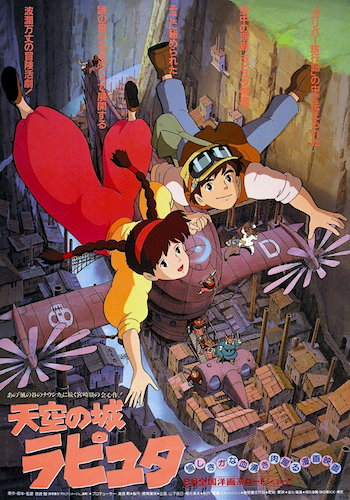
Acclaimed as one of the first major works in the steampunk subgenre, Laputa takes place in a Mitteleuropean alternate past — the architecture is inspired by Welsh mining villages; the uniforms and hardware by historical German military; there are steam-powered automobiles and flying machines; but there’s also magic-like stuff, so it’s not just tech-based. In this world we meet Sheeta (voiced in Disney’s English dub by Anna Paquin, retaining her New Zealand accent), a young girl wanted by both the military and sky pirates for a necklace she wears. When she falls from an aircraft, the necklace glows and lowers her gently to the ground — and into the life of Pazu (James “Dawson’s Creek” Van Der Beek), a young orphan who immediately resolves to help her. And so off they go on an adventure to find out just what’s so desirable about Sheeta’s necklace, and what it has to do with the legendary flying city of Laputa.

If you watched Miyazaki’s first three movies ignorant of the knowledge they came from the same writer-director, I’m sure you’d work it out for yourself. It’s an action-packed adventure laced with humour and morally grey characters, like Cagliostro, with a well-imagined fantasy world populated by flying machines and brave young heroines, like Nausicaä. But it’s no act of self-plagiarism — Miyazaki is too inventive for that. His world-building is first rate, sketching in the details of this alternate reality in between character building scenes and thrilling action sequences. If this were live-action, it would make an exemplary action/adventure blockbuster, so well paced and structured is it.

The castle in the sky

That’s why it immediately clicked with me as an instant favourite among both Miyazaki’s and Ghibli’s oeuvre. It’s unquestionably an adventure movie, so it lacks the heartfelt depths of something like My Neighbour Totoro, but it’s at least the equal of Cagliostro in terms of how wildly exciting the set pieces are. And it’s not as if it’s totally empty headed, touching on longstanding universal themes like the corruption of power, and with a minor-key ecological message too (another Miyazaki staple).

I always feel like I should watch anime in Japanese, and I often do, but when the English voice cast includes Mark Hamill, well, that’s good enough for me. He’s the villain, channeling a certain amount of his Joker (but not too much) into a government secret agent in pursuit of Sheeta and in search of Laputa. He’s just one of a memorable cast of characters — I mean, did I mention there were sky pirates? They’re as awesome as they sound, bringing both broad humour and fuelling several action scenes (you’d expect nothing less of frickin’ sky pirates, right?) One of the most memorable characters transcends the language barrier: a giant speechless robot, questionably friend or foe, who leaves a mark almost as great as the Iron Giant’s but in considerably less screen time. (Considering how much Pixar are renowned fans of Miyazaki, and that Brad Bird made Iron Giant over a decade after Laputa’s debut, I wouldn’t be surprised if there was at least a little cross-pollination.)

Like any good blockbuster, Laputa has it all: thrills, humour, emotion, wonder… It’s the complete package. Plus, that level of broad familiarity (it wouldn’t take too many steps to imagine this remade as a Hollywood blockbuster, although they’d inevitably mess it up somehow) probably makes it the perfect starting point for any newbies to anime or Ghibli.

5 out of 5

Laputa: Castle in the Sky is available on Netflix from today. It placed 11th on my list of The Best Films I Saw in 2020.

* If the news passed you by: Netflix have acquired the rights to 21 Studio Ghibli films (that is, their whole back catalogue of features except Grave of the Fireflies, which has separate rights issues, plus Nausicaä) for most of the world (the USA, Canada, and Japan are excluded). They’re being released in three batches of seven — the first lot today, the next on March 1st, and the final ones on April 1st. As well as Laputa, today’s selection includes My Neighbour Totoro, which I reviewed here, plus Kiki’s Delivery Service, Only Yesterday, Porco Rosso, Ocean Waves, and Tales from Earthsea. ^

Ad Astra (2019)

2020 #10
James Gray | 123 mins | Blu-ray (UHD) | 2.39:1 | USA & China / English | 12 / PG-13

Ad Astra

This review contains spoilers (though most of them are in the trailer).

Rad Astra”, “Bad Astra”, “Sad Astra”, “Dad Astra”, “Mad Astra”, “Glad Astra”, “Brad Astra”, “Fad Astra”… the puns came thick and fast when Ad Astra hit cinemas back in September (and, as you may see in some of those links, ever since). I’d love to contribute to the game, but I’m four months late so I think all the puns have been had Astra.*

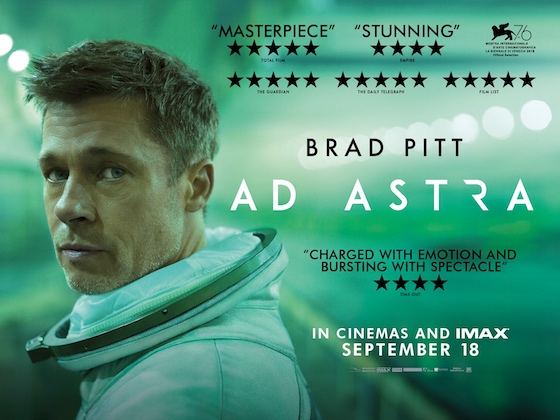
Resisting the urge to describe the film’s plot using some of those aforementioned puns (considering I already gave into that urge for the email notifications and social media posts promoting this review), I’ll instead do it in an equally pithy fashion: this is “Apocalypse Now in space”. Kinda. After unexplained energy waves from Neptune have disastrous consequences on Earth, astronaut Roy McBride (Brad Pitt) is informed that his believed-dead father may actually still be alive and be the one causing these waves, and NASA Starfleet his bosses want him to send a message into space in the hope his dad’s out there and it reaches him. But with Earth facilities damaged by the aforementioned energy waves, Roy must travel to Mars, via the Moon, to even send the message. Hence where Apocalypse Now comes into it: it’s about a man travelling ‘up river’ in search of a superior-gone-rogue.

Apocalypse Now is one of my favourite movies. Sci-fi is one of my favourite genres. “Apocalypse Now in space” sounds like a pitch aimed at me. Ad Astra doesn’t score a direct hit, but it gets pretty close. One thing is it’s not just an emulation of the previous film’s plot (which itself is, of course, rejigged from Joseph Conrad’s novel Heart of Darkness), but also adopts its meditative style. Roy is a man with emotional problems, struggling with the state of his relationship on Earth (with Liv Tyler) and with the comfort the isolation of space brings him. Is it comfort, or is it just escape? And is that healthy? These are the things the film has on its mind.

In space, no one can hear you ponder your own sense of isolation

While it does have something to say about them, I feel like it thinks it’s deeper than it actually is. The final act, in particular, gets a little muddled. Why did his father make the decisions he made? Thematically, what does Roy gain by learning the truth about his father? On a simplistic level, he sees what isolation taken to extremes does to you; but he and his father seem to have fundamentally different attitudes to disconnection anyway. I appreciate that the film dodged the easy blockbuster-y versions of things (it would’ve been a bit pat if his dad was either desperate to be rescued or outright insane and tried to stop the mission), but I’m not convinced what it did instead wholly hung together. Still, as third acts go, “not completely ruining the film” is better than some.

But it does seem like Ad Astra is at least a partially compromised movie. Co-writer/director James Gray has said that he had to make some changes to the ending to get a studio to finance it, and if you watch the trailers again after the film it’s clear that stuff was cut, including much of Liv Tyler’s character. How big an effect that had it’s impossible to say (unless someone inside the production speaks up), but it certainly implies some reworking in post-production. Another thing that makes me wonder this is the film’s use of religion. At times it seems fairly foregrounded — not in a heavy “this movie is about religion” way, but there are lots of references to it, people saying prayers for the dead, that kind of thing — but then the film doesn’t really seem to do anything with that. No one’s actions are different because they’ve found God, nor is caused to find God by the events of the movie, nor rejects God because of them, nor thinks they are God… Religion seems to be this underlying theme (it might be too kind to call it that, even) which ultimately disappears from the narrative just when it should, perhaps, be becoming more prominent.

On the flip side, perhaps it was meant to be this subtle. Ad Astra is certainly trying to say something about our place in the universe (are we alone? If we are, what does that mean? How does the vastness of space, the emptiness, the isolation, the distance from home, affect the mind?), and maybe that’s all implicitly tied to religion and our belief (or otherwise) in an all-powerful creator who made us in his image (and, by extension, no other ‘intelligent’ life). Or maybe the studio got cold feet about tackling religion and made Gray cut that, too.

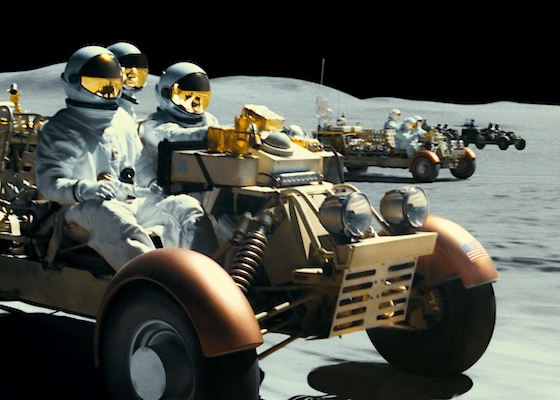
Moon pirates!

Nonetheless, there’s still a lot more good than bad in Ad Astra. Its depiction of the future is interesting; a plausible extension of the present, where space travel has been at least partially commercialised, the Moon more like a concrete shopping mall than a place of genuine wonder. That groundedness extends to the ‘action’ scenes. I mean, you wouldn’t expect a movie that I’ve described as “meditative” to feature “a chase/shoot-out with moon pirates” — that sounds like the pulpiest thing imaginable — but it’s here, and it’s achieved with what feels like a large degree of plausibility and realism. Personally, I like the way the film mixes together contemplativeness with such spikes of adrenaline — again, it’s quite like Apocalypse Now. There’s also the bold choice not to present sound in space. This isn’t the first film to make that choice, certainly, but it remains a noteworthy decision, and it has a more tangible impact than you might expect. Indeed, that seemingly-simple choice goes a long way towards that feeling of reality, though it is just one of several connected choices that ground the film’s vision of the future and make it plausible.

Ad Astra is certainly a journey into darkness — of space; of mind. Whether it gets to the heart of it, I’m not convinced. But it’s still a trip worth taking.

4 out of 5

Ad Astra is released on DVD, Blu-ray, and 4K Blu-ray in the UK this week.

* I’m so proud of that gag I’ve already used it on three different social media posts, and now I’ve worked it in here for posterity. ^

The Personal History of David Copperfield (2019)

2019 #136
Armando Iannucci | 119 mins | cinema | 2.35:1 | UK & USA / English | PG / PG

The Personal History of David Copperfield

A fresh perspective on Charles Dickens’s favourite of his own novels, from co-writer/director Armando Iannucci, best known for sitcom The Thick of It, its spinoff movie In the Loop, and The Death of Stalin.

Those are all political satires, of course, whereas David Copperfield is more of a shaggy dog story; though its attracted some degree of ‘political’ commentary thanks to its colourblind casting. So let’s get that out of the way first. Not every character here is played by a white actor. Is every character in Dickens’s novel white? I dunno, probably. Is it unrealistic to have people of colour in a story set in Victorian England? Well, considering England was at the heart of a worldwide empire with global trade links and had been through the slave trade, I would guess not everyone in the country was white by that point. I’m no expert on this, but I’ve certainly seen comments by experts that would agree with that.

Now, all of that said, David Copperfield’s attitude to casting is the most genuinely colourblind I’ve ever seen — it’s not concerned that related characters have ‘plausible’ similar skin tones, even. It seems Iannucci has just cast whichever actor he felt was right for the role. I guess that’s going to prove an insurmountable barrier to some people; too great an ask to accept the ‘reality’ of the story. Whereas a giant hand crashing through a ceiling to pluck little David from comfort, well, that’s just dandy. Anyway, I’m already getting bored with this debate and I’ve barely written about it. If it bothers you, I don’t think it should, but hey, you do you. For the rest of us, we can just get on with enjoying everything else the film has to offer.

Dev Patel IS David Copperfield

And that’s quite a bit. Dickens’s novel is a thick tome (768 pages, as per the film tie-in edition), and here it’s been condensed briskly into just under two hours, so there’s a lot more going on than the colour of people’s skin. It’s a semi-autobiographical tale, and Iannucci emphasises that side of it by framing it as David telling his own story at a staged reading. Such a framing device also allows for some flights of whimsy in the film’s treatment of certain things, especially scene transitions, but to say too much of those would destroy some delightful surprises. Trust that Iannucci is doing more than just showing off or messing around, however, instead establishing a style that allows for a neat twist or two later on.

I don’t know how thoroughly the film adapts those 768 pages, but it feels like it’s trying to cram in as much as possible. It rattles by at a whipcrack pace, which is both one of its greatest assets, because it moves like the clappers, and its biggest drawbacks, because it winds up feeling a bit too long. Every time you think it’s getting to the end, there’s another bit. (Maybe this is less of a problem if you’re familiar with the whole story, which I was not.) This is a minor complaint, though, because while those 119 minutes may be a few more than seems strictly necessary, what’s within them is frequently riotously funny. I saw the film with an almost-full house, and it was clear everyone was having a whale of a time.

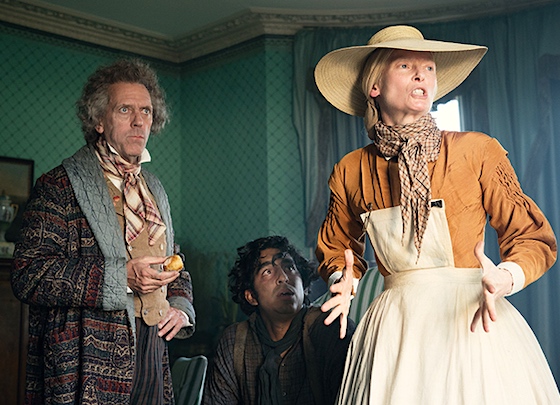
The same appears to be true of the cast. I suppose Dev Patel is best known for heavier stuff, like Slumdog Millionaire (though that was 12 years ago now (jeez)) and Lion, but here reminds us he’s adept at lighter material too (which shouldn’t surprise anyone who’s seen the Marigold Hotel films). Elsewise, the extensive and sublime supporting cast vie for attention in an array of standout performances. For my money the winner (if we must pick one) is Hugh Laurie as the flighty but unfailingly kind Mr Dick. Plus it’s quite nice (or you could say “nostalgic”) to see him back in bumbling toff mode after years of things like House and The Night Manager.

If he's Mr Dick, what's HER name likely to be?

Not that the others don’t get their moments to shine — when you’ve got the likes of Tilda Swinton, Peter Capaldi, and Ben Whishaw involved, you’d expect nothing less. I could go on listing recognisable names, for there are plenty here, but you can always just read the cast list for yourself. One of the most noteworthy is Morfydd Clark in a dual role, one of which likes to mainly talk through her dog. I suspect this may be another stop on her path to stardom — she was recently seen in the BBC’s Dracula and a small-but-memorable role in His Dark Materials, and has been cast as Galadriel in Amazon’s Lord of the Rings series.

So there’s a lot of talent on screen, but it takes that degree of skill to negotiate the tone Iannucci has set: a narrative full with comedy, but that doesn’t lose sight of an underlying heart. Indeed, the degree of humour is a welcome counterpoint to the machinations of the plot, which contain an array of miseries when looked at objectively — death, loss of home, betrayal, and so on. This is again perhaps where that framing device comes into play, setting the story as a man finding the (sometimes dark) humour in the list of tragedies that have befallen him, as well as his friends and family. David’s predilection for storytelling is an important throughline, and the film’s affection for the emotional power of the act of writing is sure to make it a favourite for many authors (and wannabes).

4 out of 5

The Personal History of David Copperfield is in UK cinemas now. It’s released in the US on May 8th.

Star Wars: The Rise of Skywalker (2019)

aka Star Wars: Episode IX – The Rise of Skywalker

2019 #147
J.J. Abrams | 142 mins | cinema | 2.39:1 | USA / English | 12A / PG-13

Star Wars: The Rise of Skywalker

Remember those people who tried to crowdfund a shitty fanwank-filled remake of The Last Jedi? Turns out J.J. Abrams let them make Episode IX under his name instead…

Before I expand on that, the ever-important note on spoilers. This review is mostly spoiler free. I say “mostly” because if you want to know absolutely nothing whatsoever, you should look away now (after saving this to read later, natch). I’m going to give my opinion on some things (obviously I am, this is a review), and so while I won’t give away the film’s revelations and surprises, what I say might sometimes indicate that there’s something there to be spoiled… if that makes sense. If you’re less fussy (e.g. if you’ve watched the trailers; if you’re only trying to avoid explicit details of things the film plays as a reveal) — or, of course, if you’ve already seen it — please read on.

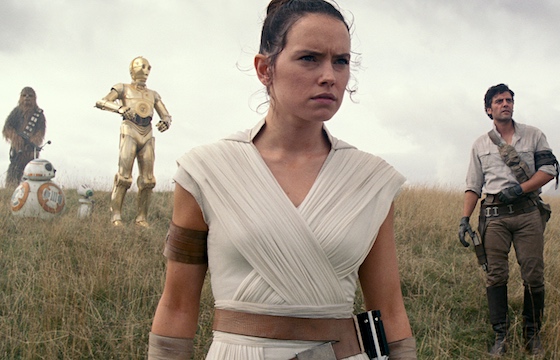
I won’t bother to recap the plot, because it launches into what some would consider full-on spoilers right from the start of the opening crawl. Put another way: there’s stuff in the trailers that some thought was a spoiler that shouldn’t’ve been there; but, really, the promos are almost necessary background info, because stuff that was played as a reveal in trailers is simply stated as information in the film itself. So, suffice to say this is the continuing adventures of Rey, Finn, Poe, and their Resistance friends as they fight Kylo Ren and the First Order, and it wraps up the whole nine-film saga. Or it intends to, at any rate. I mean, the sequel trilogy starts with the premise of “what if those bad guys who were defeated… just came back?”, so who’s to say in a decade or two’s time they won’t pull the same trick again for Episode X?

Rey and friends

But, okay, let’s take them at their word for now: this is the end of The Skywalker Saga (as it’s now definitely officially known — presumably so as they can keep producing lots more Star Wars stuff without the awkwardness of the nine-film saga being “real Star Wars” and everything else being “A Star Wars Story” or whatever). For my money, the saga here ends with so many bangs it amounts to a whimper. Abrams, serving as director and co-writer (with Chris Terrio, who seems to still be getting big-name work off the back of his Oscar win for Argo, despite the fact his only produced work since has been Batman v Superman and Justice League) seems to have no understanding of pace or nuance. It starts at a screaming gallop and doesn’t let up, often feeling like little more than a two-hour montage of fan service.

Well, it must have a lot to do, right? Wrong — it moves at that lick so it can cram in far more plot than it needed to. Most of the business here is not a story worth telling, it’s just one MacGuffin chase after another. If Abrams and Terrio had streamlined the story — had cut out all the unnecessary faffing about; the needlessly over-involved running around after various plot-furthering objects — then there would’ve been more room in the running time for light and shade; for such important and welcome things as character beats; even for something as simple as giving the audience a chance to breathe. The only time they step aside from the relentless plotting is to forcibly insert bits that seem to exist merely to look good in trailers. Maybe that’s unfair, but to me it did feel like there were bits where characters all but said, “hang on a minute guys, I’ve just got to go over here and play out something that’ll look super in a teaser.”

This shot doesn't mean what everyone thought it meant

Also awkwardly forced in is Carrie Fisher’s General Leia. We all know the backstory there, and it’s completely understandable they wanted her to have a presence and part in the film, rather than leaving her out or killing her off-screen. Sadly, what they’ve come up with is largely uncomfortable. Rather than recast her part (impossible!) or do a fully CGI recreation (which didn’t go down so well in Rogue One), they’ve taken the more respectful option of trying to cobble something together from offcuts from the last two films. The result unfortunately feels cobbled together from offcuts. Other characters’ dialogue jumps through hoops to set up replies from Leia that are only one or two words long and could just about be said to have some passing relevance to what she’s replying to. That said, there are plenty of other dialogue exchanges in the film that feel similarly forced — perhaps Terrio and Abrams were trying to make the Leia scenes seem more natural by making every dialogue scene as awkward… or perhaps the writing is just crap throughout.

Leia isn’t the only familiar face that’s revived here. This is both the third and final film in the Sequel Trilogy and the ninth and final film in the Trilogy of Trilogies, so of course there’s plenty of stuff from the past. The problem is how these elements are introduced and handled. Familiar faces and rivalries and lines and whatnot are dragged out for a last hurrah, but the film doesn’t really do anything with them beyond trotting them out to say “remember this?” And so they’re not hurrahs, it’s merely empty repetition. I suppose that will satisfy some — the kind of people who didn’t enjoy Last Jedi because they didn’t like how it chose to move things onwards. But if you were unhappy with, say, how little backstory Snoke received in Episode VIII — if you thought writer-director Rian Johnson basically dismissed the character as an irrelevance — then can you honestly claim to be happy with the manner in which Abrams brings back Emperor Palpatine here? Again, some will, because they hated Last Jedi so irrationally that they’re going to find excuses for why Abrams’ “greatest hits” approach is better. But it isn’t. It’s hollow.

Hollow

Abrams does seem to have taken certain parts of the Last Jedi criticism to heart. I agree with the view that it is in fact a vocal minority of hardcore fans who utterly despise that film (it did well at the box office and has good scores on websites that haven’t been subjected to a negativity campaign, after all), but that group are indeed very, very vocal in certain circles and maybe that’s persuaded someone in the Star Wars camp that they should be listened to. Or maybe Abrams’ own storytelling instincts align with what they were after. So while The Rise of Skywalker doesn’t ignore The Last Jedi in a literal sense (there are nods and references to stuff from it), really Abrams has made a sequel to The Force Awakens here. That’s not always a bad thing (it picks back up on Finn’s past as a Stormtrooper, for example; though, as I say, there’s no time spared to properly dig into character stuff like that), but at others he undoes some of the good ideas Rian Johnson brought. Of course, for those who viscerally hated Last Jedi that will be seen as a good thing. But, like the use of Snoke vs Palpatine, can you seriously say this film’s reveal about Rey’s parentage is better than what Johnson offered? I know some will just because it’s different to the thing they disliked, but… c’mon, is this really better? Is it more surprising or imaginative? I don’t think so.

When it occurred, after I was done groaning, I hoped there was going to be a further twist to come, but no, Abrams doesn’t have that much imagination. I felt the same about various other bits of business too: the film states or shows a thing, and if you’re like me you’ll think “surely that’s a bit obvious and there’s going to be a twist to it”, but no twist ever comes. I suppose that shouldn’t be a surprise: Abrams doesn’t do proper mysteries or twists, he does “mystery boxes” — i.e. we’re told there’s a mystery, but rather than clues for either the characters or audience to piece together for a reveal, all there is to be done is wait for someone to open the metaphorical box and reveal it to us. He tried to set such a game in motion in The Force Awakens. Johnson threw some of those away in The Last Jedi, which I felt he was right to do — simply disregarding those wannabe-mysteries was more surprising and interesting than any ‘reveal’ could’ve been. Here Abrams plays that game again by revisiting some of the stuff Johnson dealt with to give different answers, but I feel like his modified reveals prove my point: they’re not surprising, and they’re certainly not interesting. (This caveat should be obvious, but as it isn’t always: this is all just my opinion. Some will feel these new answers fix mistakes that Johnson made. I don’t. I think we’ll have to agree to disagree on that.)

Goodbye

For all of that, The Rise of Skywalker is not entirely a disaster — there were bits I felt worked. Sure, I thought several of the obvious ‘big moments’ were too corny, and some of the one-shot cameos too cheap, and Keri Russell is wasted, and Naomi Ackie’s character is good but there’s no time to develop her… sorry, this was meant to be positives. So, C-3PO kinda gets an emotional arc that’s quite effective. Tied to that is a new character, Babu Frik, who’s a lot of fun. New droid D-O is a brazen attempt to create toys, as are the red-hued Sith Stormtroopers… Oops, slipped into the negatives again. Adam Driver gives a pretty good performance, but he also gets a bit sidelined. Okay, almost everyone gets a bit sidelined — as I’ve said, there’s too much going on and not enough time to cover it. And yet the film still feels too long — I spent an awful lot of the climax wondering how much more of this could be left.

Following all that criticism, my middling score may look generous. But The Rise of Skywalker is not an entirely incompetent movie, just a deeply flawed and disappointing one. And, frankly, there’s part of me that simply doesn’t want to have to give it 2 stars. I’m not a dyed-in-the-wool Star Wars fanboy, but this saga has been with me throughout my film-viewing life — I don’t want to dislike its finale so much that I give it an outright bad score. Well, I guess I wouldn’t’ve given 2 stars to The Phantom Menace in 1999 either, but I did in 2007. Someday I’ll rewatch Episode IX, and maybe that’ll smooth out the cracks and cement this 3-star rating (I struggle to imagine it’ll go up); or maybe it’ll make the problems even more apparent and I’ll have to accept it’s really a 2 after all.

3 out of 5

Star Wars: The Rise of Skywalker is in cinemas virtually everywhere now.

It featured on my list of The Five Worst Films I Saw For the First Time in 2019.

Judy & Punch (2019)

2019 #143
Mirrah Foulkes | 106 mins | cinema | 2.35:1 | Australia / English | 15

Judy & Punch

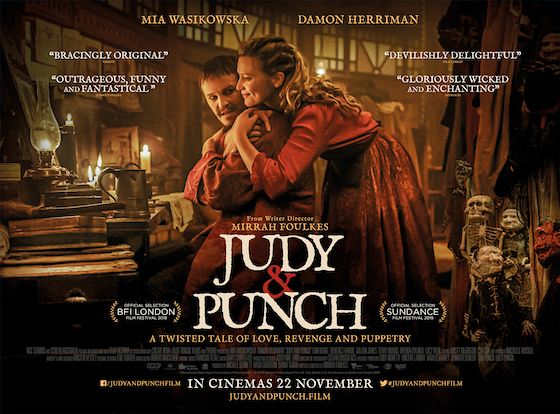
Australian actress turned writer/director Mirrah Foulkes makes her feature debut with this live-action version of the (in)famous Punch and Judy puppet show. I don’t know how well-known the show is outside the UK (I guess it reached Australia, at least), but here it’s a staple of seaside children’s entertainment — although given its propensity for violence and misogyny, it’s suitability has been the subject of a small degree of controversy over the last couple of decades, and its prevalence is on the wane.

There’s no set version of Punch and Judy — each puppeteer has their own spin on the events of the tale and which characters show up — but there are certain elements that are, I suppose, considered standards and widely associated with the show. Here, Foulkes takes all of those familiar tropes and remixes them into a freshly imagined origin story. The real Punch and Judy comes out of the 16th century Italian commedia dell’arte, a fact which has very loosely inspired Foulkes’s take.

The setting is somewhere in Europe (never specified, and there’s a wide-ranging mix of accents to be heard), sometime in the past (it seems quite medieval, but there are buildings and notions that date from later), in a town called Seaside… which is nowhere near the sea. Judy & Punch comes with a hefty dose of absurdity and whimsy that calls to mind the work of Terry Gilliam as a reference point, and with dialogue and music choices that range from cod-medieval to very modern-sounding (especially in some of the references thrown up, which I won’t spoil), it’s clear Foulkes is taking a playful attitude to the material. Well, fair enough — “a live-action version of Punch and Judy” does sound a bit ridiculous, and so the film takes an appropriately irreverent tack. It won’t work for some people, for various reasons, but I was easily on board with the concept.

Punch and Judy

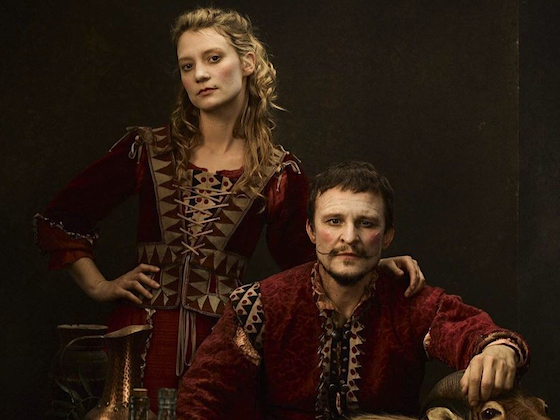
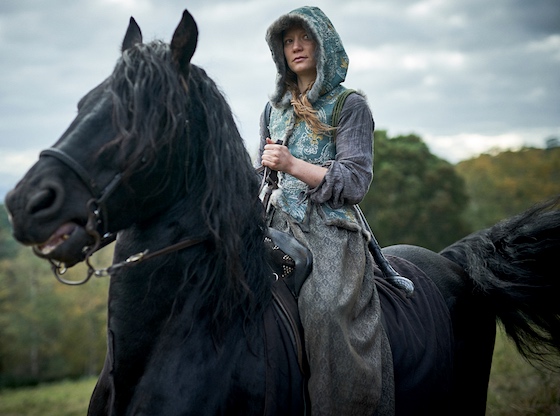
So, in this town we meet the self-proclaimed great puppeteer Mr Punch (Damon Herriman, most noticed for his small role as Charles Manson in Once Upon a Time in Hollywood) and his wife Judy (Mia Wasikowska), who is of course at least equally responsible for the brilliance of their show. Now, it will come as no surprise to those familiar with the original that Punch beats his wife. One day he takes it too far and he leaves her for dead. But this being a modern telling with feminist inclinations, that’s not the end of her role. No spoilers, but some viewers will consider where this ends up to be too preachy — literally, considering there’s a grand speech given at the climax. It’s a shame Foulkes pushes it to such a blunt point; not because I disagree with what she and her characters have to say, but because it ends up a little heavy-handed. The rest of the film makes its point well enough and is entertaining with it, so do we really need it to end with a polemic? Personally, I can let that slide because I was enjoyed the rest enough that it barely mattered by that point, but I know some other viewers found it a bit much.

And really, that could be said about the entire film. Like much of Gilliam’s work, it’s an acquired taste, with a distinct oddness and tonal mix that some will find distasteful. In my screening, one particular key moment drew what seemed to be a 50/50 mix of genuinely shocked gasps and stifled guffaws. I think that’s the kind of reaction it’s meant to provoke — a mix of shock and laughter — although I imagine anyone who genuinely found it gasp-inducing might not take to the fact that, actually, it is played for the laugh. But then there’s some quite genuine emotional fallout. Anyone who struggles with a variable tone, or with visual signifiers that don’t match said tone (the production design is muted and realist, not bright and whimsical), might not get along with the way the film dances merrily back and forth.

Horse and Judy

For me, it nailed what I was expecting in that regard. This is a film that kinda wants to tell the Punch and Judy story seriously, but knows it’s kinda silly to take Punch and Judy seriously, and so it manages a balance between a grounded grit and a comical daftness. There’s a lot of inventiveness in how it incorporates the familiar elements of the original, but, unfortunately, not quite enough to sustain it all the way — if it were a bit shorter (or pacier in the middle), or had just a few more bright ideas to see it through to the finale, I would’ve loved it. As it is, it’s a bold effort that I liked a lot. That is, indeed, the way to do it.

4 out of 5

Judy & Punch is in UK cinemas from today.

Shorts of FilmBath Festival 2019

Across the 2019 FilmBath Festival programme, 46 short films were screened — 23 attached to feature films, 17 at a dedicated ‘Shorts Showcase’, and six at the IMDb New Filmmaker Award ceremony (five in competition, one the film made from the winning screenplay of the IMDb Script to Screen Award). I saw 14 of these, one way or another, and have compiled my reviews into this (commensurately long) post.

First, the five films that competed for the IMDb New Filmmaker Award.

Gladiators on Wheels

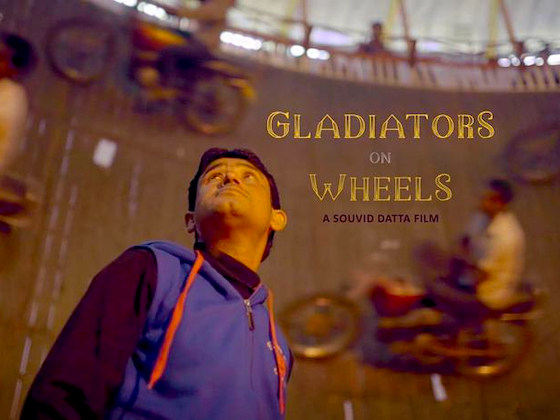
The winner chosen by the judges was Gladiators on Wheels (2019, Souvid Datta, UK & India, Hindi, 6 mins, ★★★★☆), a documentary about the ‘Well of Death’ — an attraction at Indian circuses where daredevils ride motorbikes and drive cars around 60ft vertical walls, literally defying gravity. It’s both impressive and terrifying, especially considering they’re doing it without any kind of safety gear — no helmets or padded suits here, never mind nets or something. But the film isn’t just about the actual act, also touching on the way of life, and how it’s fading. It’s a well-shot bit of filmmaking, especially impressive when you learn it was all filmed in a single day. The script was compiled from interviews with the drivers, then voiced by actors, but if anything it’s a little cliché — lots of talk of “living on the edge” and how dangerous it is but how they wouldn’t have it any other way, etc. Still, like many of the best documentaries, it’s a fascinating glimpse at another world.

The audience at the ceremony also got a say, favouring Hey You (2019, Jared Watmuff, UK, English, 5 mins, ★★★★★), which is about gay men hooking up via text messaging. At first it feels like a lightly comedic bit of fun, possibly with some drama in that one of the men is closeted, but then it develops into something more serious. It’s a very well made short, in particular the shot choices and editing at the climax, which combine to produce some incredibly striking imagery. It’s tricky to say why it’s such an effective and vital film without spoiling where it goes in that finale, but it’s a meaningful piece that’s worth seeing if you can. It would’ve been a worthy winner.

Facing It

The three other finalists were … Tight Spot (2018, Kevin Haefelin, USA & Switzerland, English, 4 mins, ★★★★☆), a comedy bit about a shoe shiner and a suspicious customer, which was amusing albeit a little predictable; although it did, again, look nice … When Voices Unite (2017, Lewis Coates, UK, English, 4 mins, ★★★☆☆), a mini tech thriller that was suitably tense in places, but really needed some kind of twist or final development to give it a reason to exist … and Facing It (2018, Sam Gainsborough, UK, 8 mins, ★★★★★), which presented an imaginative visualisation of a relatable social difficulty. Rendered in a mix of live-action and stop-motion animation, it’s by far the most technically impressive short here, but all in service of telling its story and conveying the requisite emotion. Another one that would’ve been a more than worthy winner.

(You can watch Gladiators on Wheels and When Voices Unite on Vimeo. Sadly the others aren’t publicly available, although there is a short making-of for Facing It which I recommend for appreciating the filmmaking skill on display there.)

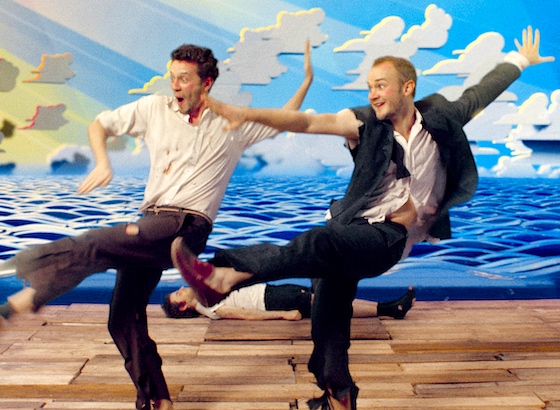
Of the other shorts I saw, my favourite was definitely Pleased to Eat You! (2019, Adrian Hedgecock, UK, English, 7 mins, ★★★★★). It’s a beautifully designed and hilariously funny musical comedy short… about cannibalism! Its colourful and clever staging evokes the handmade movie-reality worlds seen in films by the likes of Michel Gondry or Charlie Kaufman, while the full-blown song-and-dance number is like the best of old-fashioned Hollywood musicals, albeit twinned with a pun-filled cheekiness in its subject matter. An absolute delight from beginning to end.

Pleased to Eat You!

If I were to rank all the other shorts too, I’d probably put Woman in Stall (2018, Dusty Mancinelli & Madeleine Sims-Fewer, Canada & UK, English, 10 mins, ★★★★☆) in second place. A very timely thriller, it sees a woman innocently enter a public bathroom cubicle to get changed, only for a man to turn up outside and start chatting, her wariness of him trapping her inside. Is he a predator she’s right to fear? Or is she just being paranoid? Part of the short’s cleverness lies in the way it plays with our emotions and expectations, swinging us back and forth into where our trust should lie. Working with a limited setting, it’s neatly shot — never dull, but without going OTT to try to jazz things up — and gets edge-of-your-seat tense as it goes on. Regular readers will know how much I love a “single location thriller”, and this is a perfect mini example of the form.

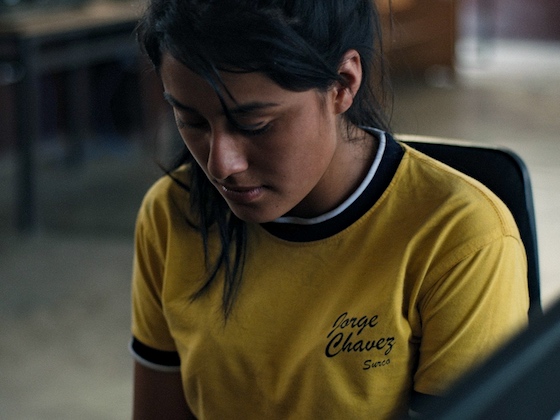
Quince: Fifteen (2018, Peiman Zekavat, UK & Peru, Spanish, 10 mins, ★★★★☆) is a real-time single-shot drama about a 15-year-old Peruvian schoolgirl whose carefree PE lesson turns into a tumult of life-upending dismay in just a few minutes following an unexpected discovery on social media. It’s another timely issue, and this is mostly a well-made short — I do love a single take, and the real-time aspect puts you in her shoes quite effectively. Unfortunately, it’s a bit inconclusive — it just stops, with no hint of how she’s going to deal with her new problem longer term, or what’s going to happen to her beyond a handful of initial reactions. It’s not bad as it is, but there’s also more to be told here.

Quince: Fifteen

On a snowy winter’s day, a postie makes his rounds on a London estate. Meanwhile, one woman anxiously awaits his arrival… With its brief running time, Special Delivery (2018, Robert Hackett, UK, 4 mins, ★★★★☆) almost feels like an extended edit of one of those soppy commercials the big retailers always put out at Christmas — you know, the ones that have just started to pop up on the telly. Nicely shot in 2.35:1, it evokes a Christmassy feel without being overtly festive, and manages to avoid becoming quite as saccharine as those adverts, instead earning the story’s sentimentality. A sweet little slice of romance.

Coming just behind those frontrunners would be Spooning (2019, Rebecca Applebaum, Canada, English, 6 mins, ★★★★☆), a one-woman-show of a mockumentary about a theatre actress who specialises in playing spoons. Not “playing the spoons”, like a musical instrument, but anthropomorphised spoons, like in Beauty and the Beast. It’s basically a comedy sketch as a short film, but it was largely funny so I don’t begrudge it that.

I’m six films deep into this loose ranking now, but that’s not to discredit Allan + Waspy (2019, James Miller, UK, English, 8 mins, ★★★★☆). It’s about two working class schoolboys who hang out in the woods on their way to school each day, observing a bird’s nest full of chicks hatching and maturing — but one of the lads clearly has problems at home, and it all takes a very dark turn. Initially it’s a likeable slice-of-modern-life tale, managing to find an element of old-fashioned bucolic childhood even in a modern inner-city setting, and unfurling at a gentle pace by mixing shots of the surrounding world into the boys’ activities. But then there’s a thoroughly glum ending. It kinda ruined my day, but I liked it as a film nonetheless.

Cumulus

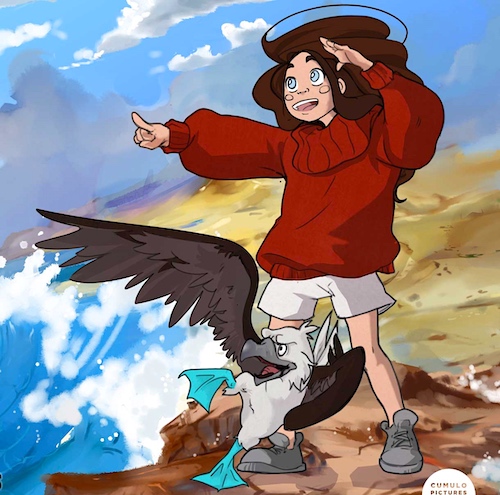
A young Welsh girl runs off from her dad and encounters a talking gull who’s worried about his kids leaving home in animation Cumulus (2018, Ioan Holland, UK, English, 9 mins, ★★★☆☆). Naturally, they both learn something from each other. It’s always nice to see 2D animation nowadays, especially when it’s as prettily designed as this, though it’s a shame that some of the movement is a little stilted and animatic-y. It’s also a bit longer/slower than it needs to be, but it’s still mostly charming.

Perhaps the most disappointing short was My Theatre (2019, Kazuya Ashizawa, Japan, 5 mins, ★★★☆☆), a documentary about an 81-year-old in Fukushima who closed his cinema 55 years ago but keeps it alive as a kind of museum. That’s mainly what I gathered from reading blurbs before viewing, though, because the short itself lacks any real context or conclusion, just presenting vignettes of life in this rundown old movie house. It’s perfectly pleasant, but ultimately unenlightening. My Theatre is listed on other festivals’ websites as running 20 minutes, so perhaps the five-minute version submitted to FilmBath is just an excerpt — that’s certainly what it felt like. A longer edit, with more of a sense of why this is a place and person worth observing, would’ve been better.

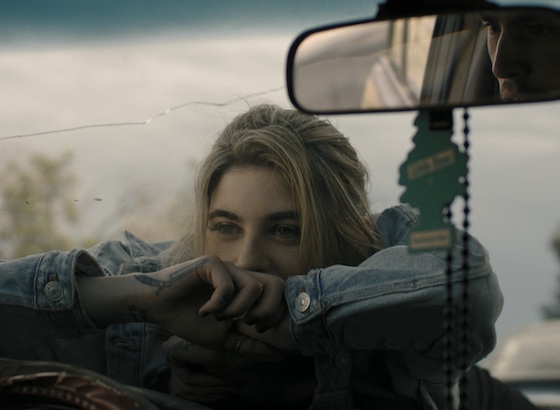
Finally, Terra (2019, Daniel Fickle, USA, English, 6 mins, ★★☆☆☆), which received some very negative feedback from a few audience members who didn’t feel it was appropriate for the film it was screened before, Honeyland. That’s a documentary about a traditional European way of beekeeping on the wane, whereas Terra is ostensibly about the tumultuous romantic relationship between two young Americans. The clue is in the title, though: it’s a metaphor for humankind’s relationship with Earth. Personally, I thought the analogy was a bit on the nose, but it seems others missed it entirely. The photography is quite pretty, in a no-budget-indie-drama kinda way, but other than that I didn’t think there was much to it. Other members of the FilmBath team were more impressed, so I think it’s fair to say it’s a divisive little number.

Terra

As I said at the start, there were 46 shorts screened at the festival, so this is just a small sampling of what was on offer (less than a third, to be precise). Although I didn’t love them all, I did enjoy most — and considering they would have entirely passed me by were it not for the festival, I’ll definitely take the handful of letdowns as part of the parcel for getting the good stuff.

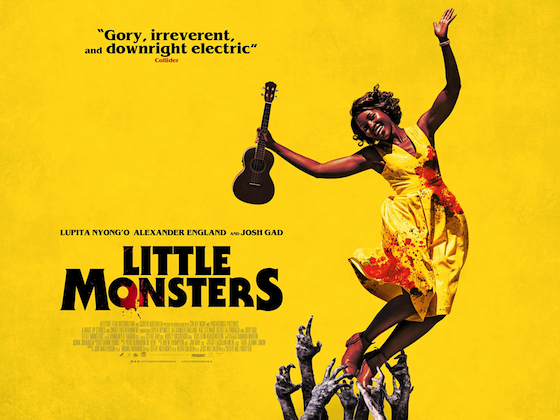
Little Monsters (2019)

2019 #138
Abe Forsythe | 94 mins | cinema | 2.39:1 | Australia, UK & USA / English | 15 / R

Little Monsters

The zombie comedy — or zom-com — is basically a recognised subgenre (or sub-subgenre, really) at this point, birthing both high-profile hits (Shaun of the Dead, Zombieland) and smaller cult successes (Cockneys vs Zombies). For some reason this doesn’t seem to work with other monsters (Lesbian Vampire Killers, anyone?), so what is it about zombies that lends them to comedy? Perhaps it’s their roots in social satire. Perhaps it’s just that an enemy who can only shamble along slowly is inherently ridicule-worthy.

Whatever, the latest entry in this sub-subgenre comes from Australian writer-director Abe Forsythe. We’re introduced to Dave (Alexander England), a washed-up wannabe musician whose argumentative long-term relationship has just imploded, leaving him on his sister’s couch being a bad influence on his young nephew, Felix (Diesel La Torraca). After he meets Felix’s kindergarten teacher, Miss Caroline (Lupita Nyong’o), Dave is smitten, agreeing to be a chaperone on a class trip to a farm. There they first meet kids’ TV star Teddy McGiggle (Josh Gad), and then an outbreak of zombies from a nearby military research facility.

I guess taking a leaf out of Shaun’s playbook, Little Monsters invests a lot of time in its setup before it gets to the promised zombie action. As we witness Dave’s life fall apart, it feels more like a blokey indie comedy than a genre sendup, and it’s an age before Nyong’o turns up, never mind the zombies. I guess this is meant to be character stuff to get us invested, but its problem is it’s not terribly original — Dave is basically Dewey from School of Rock, and/or every other character that has already imitated that. Later, Teddy McGiggle is revealed to actually hate kids; he wanted to be a serious actor; now he’s an alcoholic; etc, etc. Asking us to invest in the characters is fine, but it helps if their arcs aren’t entirely predictable.

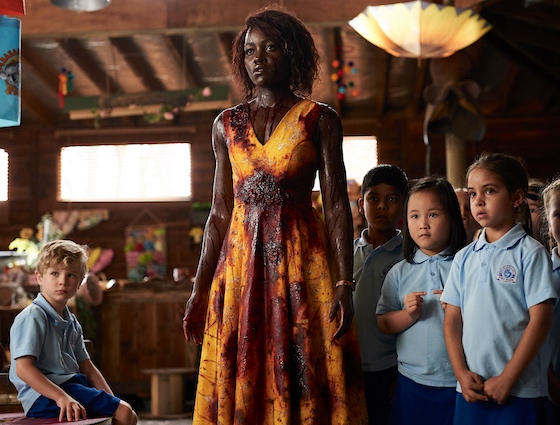
Miss, you've got red on you

Strumming a ukulele in her yellow sundress as she communicates with children on their level, Miss Caroline screams “Manic Pixie Dream Girl”. Fortunately, in the hands of Oscar-winner Nyong’o, there’s more to her than that, be it her savvy handling of Dave (clearly the latest in a long line of lustful dads) or wielding a spade to fight the undead. That sentiment perhaps extends to the film as a whole: it may be constructed from familiar building blocks, but its peppered with enough little moments of freshness that it provokes plenty of laughs. Most of that comes from having a class-full of little kids in tow, with the adults trying to pretend it’s all a big game for their benefit. Especially when watched with a late-night crowd up for the experience, it’s good fun.

Often with films of this nature I say they’re “for genre fans only” or something like that, but I wonder if Little Monsters might actually play best for those unfamiliar with all the other movies it’s a bit like. Of course, forgiving genre fans will also be entertained. It doesn’t reinvent the wheel, but it’s a light and largely likeable hour-and-a-half.

3 out of 5

Little Monsters is released on Sky Cinema and in some cinemas in the UK today.