
Matthew Vaughn | 122 mins | DVD | PG / PG-13
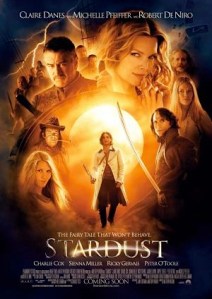 Perhaps the simplest way to describe Stardust — to a film aficionado, at any rate — is as “the British Princess Bride”. That may do it a disservice however, as this tale of a boy entering a magical realm to find a fallen star is sufficiently its own beast to stand apart from such (admittedly lofty) comparisons, and be much more than a simple rehash with different accents.
Stardust succeeds in numerous ways. The plot is a good mix of fantasy archetypes, fairytale morality, a slight-but-knowing modern filter (thanks primarily to top-and-tail narration from Ian McKellen), humour and action. It rattles along, occasionally running the risk of becoming episodic, but thankfully avoiding it by linking and returning to various episodes. For a British film the effects work is perhaps surprisingly good, with impressive sequences that neither suggest restraint or budget limitations, nor smack of ambitious overreaching by the filmmakers (unlike, for example, the recent Tin Man miniseries).
This sort of fantasy adventure film is a somewhat unexpected choice for co-writer/director Vaughn, who previously produced Lock Stock, Snatch and Mean Machine, and directed Layer Cake, but his direction is neither over-grounded in reality (as you might expect from his background), nor over-done to the point of distraction (as if he were compensating). Instead, he demonstrates an entirely appropriate flair and skill, which promises much for future work.
If you watch a lot of British TV the cast seems star-studded, though even if not there’s the likes of Robert De Niro and Michelle Pfeiffer in major roles. Both are clearly having a whale of a time — as is everyone else, to be fair. De Niro’s role is especially surprising and fun, though to say any more would ruin it. It stands out as one of the best and most memorable elements in a film loaded with them. Charlie Cox is a likeable lead, while Claire Danes’ fallen star is pleasing subversive — you’d expect her to be sweetness and light (literally), but she is in fact amusingly stroppy — and Mark Strong is a perfectly villainous villain. They’re just three further standouts from an almost uniformly excellent ensemble. “Almost” because, sadly, the film’s weakest links are also among the cast. Ricky Gervais plays himself, as ever, almost shattering the well-constructed universe in the process; and Sienna Miller is too bitchy — and, to be frank, too wooden — for us to believe our hero could ever really want her.
But these are minor, easily ignored flaws in what is otherwise a fantastically entertaining fantasy. In fact, in recalling it for this review, it’s just magicked itself an extra star. How very appropriate.

Stardust placed 4th on my list of The Ten Best Films I Saw For the First Time in 2008, which can be read in full here.
 I like to think I have a fairly high tolerance for ‘chick flicks’ — over the years I’ve rather enjoyed films such as
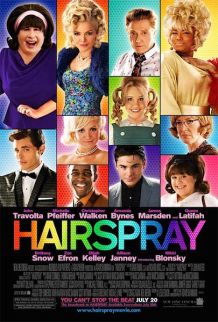 Who’d’ve thought a John Waters film could become a bright and breezy musical? It’s a bit of a surprise but, thanks to a successful Broadway version, that’s exactly what’s happened. But while the key to Hairspray’s success may be its positive attitude and memorable songs, perhaps the key to its quality — and the eventual score of this review — are the issues it tackles around those.
 Years ago, I saw
 This adaptation of the first novel in Philip Pullman’s His Dark Materals trilogy (known as Northern Lights in the UK, but adopting the US title for the film — unlike
  Following his success with
 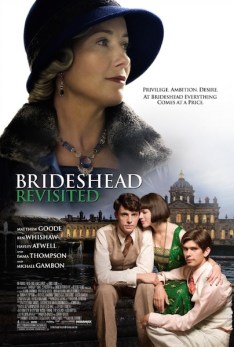 I’ve not seen the miniseries and I’ve not read the book, but I do know that both are considerably longer than Jarrold’s two-and-a-quarter hours film. So why does it feel so slow? Perhaps it’s the pair of opening flashforwards (easier to refer to them as that than to the majority of the film as one great big flashback), an overused technique these days that here serves no purpose whatsoever: there’s no additional insight on events that follow (or, rather, precede) by placing these snippets at the start, and there’s no new perspective on the snippets when we reach them chronologically (except that, second time round, we actually know who the characters are). It’s the most niggling fault in a film that, like my just-reviewed
 “Pixar films” seem to have become a bit of a genre unto themselves — yes, they fit into “animation” (always dubious as a genre), “family” (almost as bad), “comedy”, and occasionally a few others, but, much as the Bond films have their own rules and expectations outside the “action” and “spy thriller” conventions, the work of Pixar always achieves special and particular attention. WALL-E subverts some of these expectations (it’s not a buddy comedy, mainly) and has received huge amounts of praise — “consequently”, some might add. It is indeed a very good film, but you’ll surely have heard all that elsewhere; instead, I’m going to draw attention to a couple of things that bothered me.
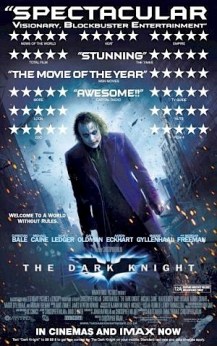 One of the joys of spending five weeks of this summer in New York is that I have the opportunity to see anything that’s out in the US before the UK early. I haven’t entirely used this to my advantage (no trip to
 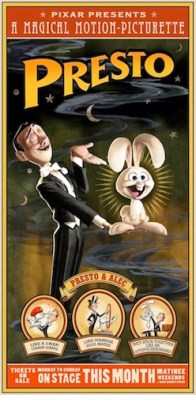 The last Pixar film I bothered to head to the cinema for was 1999’s
  100Films.co.uk