Wallace and Gromit in A Matter of Loaf and Death (2008)

2008 #88a
Nick Park | 29 mins | TV | PG

Wallace and Gromit are phenomenally popular, as proven this Christmas Day when their latest adventure became the most-watched programme on British TV for three years (and that was just the overnights — ratings will rise when official figures are released in a couple of weeks). Not only that, but the TV premiere of their big screen adventure also made the Christmas Day top ten, a not insignificant feat. Popularity does not necessarily mean quality, of course, and in this case such figures come on the back of three popular shorts and a successful feature film. They were all extremely good too and, luckily, A Matter of Loaf and Death doesn’t let the batch down. (I feel there should be a better baking pun there…)

As ever it’s packed with inventive humour, both visual and verbal, and Gromit remains one of the finest silent comedy characters ever created. The amount of emotion and story that can be conveyed with a lump of plasticine is tribute to the abilities of Park and his team of animators. The rest of the creation is top notch too, not just in terms of impressive craft on characters and sets, but also in the use of lighting and camera angles to evoke other films while not losing the series’ individuality. If anyone still thinks stop motion is about a locked-off camera at a flat angle they are sorely mistaken.

Film fans will also delight in a slew of movie references, from a poster for Citizen Canine to an Aliens-inspired climax, and numerous even subtler ones in between. This is a feast that will undoubtedly reward seconds — and more.

If there’s one problem it’s that it’s too short. I don’t mean that in the usual “I just want more” way, but literally that it could perhaps do with being longer. There’s easily a feature-length story here, meaning it feels a little abridged as a half-hour short. It’s not rushed, thankfully, just not played out as effectively as it could be with double the running time.

The last three Wallace & Gromit adventures have each won Park an Oscar (and the first only lost out to Park’s own Creature Comforts). Will this bring the series’ fourth? It would certainly be deserved.

5 out of 5

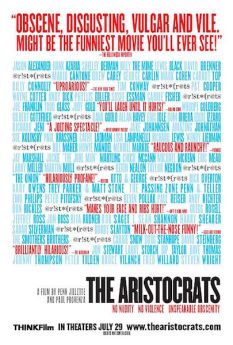
The Aristocrats (2005)

2008 #87
Paul Provenza | 85 mins | TV | 18

The AristocratsIt’s not unusual for films showing on TV to be prefaced with content warnings about language, sex or violence, but I don’t think I’ve ever previously seen one that feels the need to place such a warning after every single ad break. But if there’s one film that needs that treatment — or, rather, one film they could actually show on TV that needs that treatment — it’s The Aristocrats.

The Aristocrats is, apparently, an incredibly famous joke, well known to all comedians — and, generally, only told to each other, not to audiences — that is flexible enough for anyone to tell in their own way and still have it work. It’s also incredibly vulgar; in fact, the point is often to make it as vulgar as humanly possible. To explain much more would ruin the point of the film, which aims to expose and explain this cultish joke to the masses. Personally I’ve never heard of the thing, and for all I know The Aristocrats could be an elaborate Blair Witch-esque hoax — “oh yeah, all comedians know it”. Note this: the only people you’ll see throughout are comedians, and they all seem to know each other too.

Subject matter aside, there’s not much of a structure to the material presented. Mostly compiled from dozens of interviews, the resultant piece is a jumbled mix of comedians telling their version of the joke, comedians explaining variations on it (those whose telling completely changes it are the ones who succeed), comedians explaining why it’s funny, comedians explaining how it works, comedians explaining how and why it varies, comedians musing on the differences between male and female tellings of the joke…

On the other hand, even though there is a degree of repetition, there’s also a surprising amount to say about it — even by the end, when yet another comedian launching into their version has you reaching for the remote, there’s often another little titbit around the corner. In other notes: for British viewers, the biggest and most widely known names — Billy Connolly, Eddie Izzard — barely feature; for everyone, it features one of the worst ventriloquists I’ve ever seen; and a mime artist who singlehandedly makes the entire thing worthwhile.

The biggest problem with The Aristocrats — the film, not the joke — is quite a simple one: it’s about a single joke. Even the most meandering comedians tell several of those in an hour and a half. To compound the issue, said joke can vary so much as to defy a lot of comedy-killing “why’s it funny?” analysis. What you’re left with is repetitive retellings of a joke that, to be blunt, is rarely funny whatever you shove in the middle. It’s an insider’s film about an insider’s joke; for the rest of us, it rather over eggs the point.

3 out of 5

Madagascar (2005)

2008 #89
Eric Darnell & Tom McGrath | 82 mins | TV | U / PG

MadagascarIt had been my impression that this summer’s sequel, Madagascar: Escape 2 Africa, was a weaker follow-up to a middling original. Clearly I was reading the wrong review, because Rotten Tomatoes offers a different consensus: “an improvement on the original, with more fleshed-out characters, crisper animation and more consistent humor.” Oh. So what of the original?

The characters may not offer great depth, but they serve their purpose well enough. The plot focuses on Marty the zebra, voiced by Chris Rock, who wants to escape to the wild, and Alex the lion, voiced by Ben Stiller, who doesn’t — but doesn’t have a choice when they’re whisked off half-an-hour in. This might leave David Schwimmer’s giraffe Melman and Jada Pinkett Smith’s hippo Gloria with little to do but support, but in an 80-minute kids’ animation you can’t expect an Altman-esque portmanteau.

The animation is better than I expected. At the time, the angular style looked cheap, like a step back from the realism-aiming work of Pixar and the Shrek team. It’s just stylised however, still allowing plenty of expression in characters’ faces and detail in their movements and the locations. It’s not a exceptional example of how brilliant computer animated films can be (unquestionably Pixar’s forte, especially in the likes of Ratatouille and WALL-E’s earlier scenes), but it’s better than some sparse and clunky efforts (such as Aardman’s Flushed Away).

Equally, the humour is above average. Large laughs may be sporadic but are there, particularly in a few moments that nicely spoof other films. Standouts include Planet of the Apes and American Beauty — clearly aimed at the adult audience who have been dragged along by the kids, have come expecting Pixar-level entertainment, or want to see what Chris Rock and Sacha Baron Cohen can be doing in a family film. Plus there’s the penguins, a little band of wannabe escapees who thankfully aren’t overused, especially as the last few years have seen a severe overload of penguin movies (March of the Penguins, Happy Feet, Surf’s Up…) If there’s one element that could’ve been bumped up it’s the monkeys; on the other hand, like the penguins, they’re not done to death.

Madagascar doesn’t reach the highs of Pixar — no surprise there — but it’s at least nudging the ballpark. If the sequel’s better then I might even seek it out before it makes it all the way down to TV.*

4 out of 5

* I never did; and now it’s been on TV (several times), I still haven’t. ^

Enchanted (2007)

2008 #80
Kevin Lima | 103 mins | DVD | PG / PG

EnchantedYou’ve probably heard about Enchanted: it’s the one that starts out as a traditionally animated Disney film, before The Normal Girl Who Will Marry A Prince is thrown into a Magic Portal by The Evil Stepmother and finds herself in present-day New York. It’s one of those concepts so good it just makes you think, “why haven’t they thought of that before?”

Thankfully, they pull it off. It’s very funny, riffing on many recognisable elements from Disney’s considerable library of classics, and manages to produce a number of catchy songs of its own. Amy Adams is brilliant in the lead role, managing to be infectiously sweet rather than sickeningly sugary, while Susan Sarandon has a whale of a time in her boundlessly camp (though disappointingly small) role. The rest of the cast are good too, especially a wonderfully vacant James Marsden as The Prince.

The plot is ultimately predictable, but no more than you’d expect considering the target audience — certainly, kids will likely go through all the requisite emotions, and it would probably be more disappointing if they did try anything truly shocking. Still, it’s crammed with more than enough fun invention and new ideas to make up for any unsurprising plot beats.

Quite simply, Enchanted is a fantastic concept, beautifully executed. A veritable success.

4 out of 5

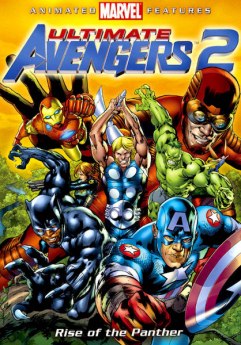
Ultimate Avengers II (2006)

aka Ultimate Avengers 2: Rise of the Panther

2008 #83
Will Meugniot & Richard Sebast | 70 mins | DVD | 12 / PG-13

Ultimate Avengers IISome things in life baffle me. Form dictates I now list a couple of humorous examples, but we’ll skip that and get to the point: why would you make a direct-to-DVD movie that has a subtitle on the box but not on the film itself? I can understand why titles get tweaked on cinema-release posters and/or subsequent DVD releases — for marketing purposes, say; or clarity — but why, when your title is going direct to the DVD stage, do the titles not match? And why does the box add the subtitle rather than remove it for on-shelf simplicity? I have no answers — it baffles me, remember — but this is the sort of thing I sometimes muse about. The sort of thing that most other people don’t even notice, never mind care about.

Insignificant title issues aside, the fact that (as of writing) 2,365 people have bothered to rate the first Ultimate Avengers on IMDb, while only 1,325 have bothered to rate this second, suggests many were so disappointed by the initial film they didn’t bother with the sequel. Which is something of a shame, because it’s a lot better. Problematically, it’s heavily grounded in the first, picking up several threads that were left hanging — enough so as to make that weak franchise opener required viewing, sadly.

Why’s it better? We’ll get the obvious out of the way: yes, it’s a modern genre sequel, so yes, it’s ‘darker’. In this case that means “more adult”, touching on issues you might not expect in superhero animation with such a low certificate — marital problems, survivor’s guilt, political isolationism, even vague allusions to alcoholism. None are dealt with in any great depth I should add, but it will likely please adult fans wishing for something more “grown-up”. There’s also a greater amount of violence, though much of it is implied, or just off screen, or against bug-like aliens. The animation still isn’t great, though at times seems improved. Equally, while both script and story are better — there’s no pace issue this time — there’s still plenty of clanging dialogue, and the adult subplots aren’t exactly subtly executed.

The climax also has its share of flaws. While most of the story is nicely balanced, it’s over-efficient in wrapping up, in the way that only animation seems allowed to be — for whatever reason, this exact story would comfortably fill a two-hour live-action version. The worst effect of this is that some points aren’t treated with their deserved weight — the death of a major character is so hasty and glossed over that I didn’t even realise it had happened until a brief shot of a memorial in the closing scene. On a less pressing note, the giant alien robots of the final battle leave the film just one leg (per robot) away from becoming a total War of the Worlds rip-off. But this tale is of American origin, so the aliens are defeated not by a clever plot twist, but by brute force.

Despite my attention to the film’s weak points there’s actually plenty to enjoy here, provided animated superhero movies are your thing. There’s more action than the first instalment, a more interesting story, more character development… Even if it’s done at quite a basic level it’s still adequately entertaining, enough that you might wish there was a third. An improvement then, if still flawed, but — ultimately — enjoyable.

4 out of 5

For my review of the first Ultimate Avengers, please look here. Live-action sequel Avengers: Age of Ultron is in UK cinemas from this Thursday, 23rd April 2015.

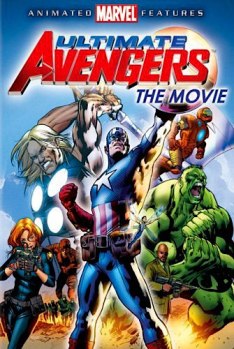
Ultimate Avengers (2006)

2008 #82
Curt Geda & Steven E. Gordon | 68 mins | DVD | PG / PG-13

Ultimate AvengersWith the big-screen live-action Avengers movie on its way in just two-and-a-half years — once we’ve had a variety of tie-ins to lead into it, of course — now seemed as good a time as any to check out this direct-to-DVD animated version (and its sequel).

I won’t say too much about the plot because, if the rumours are true, the live action film may follow it fairly closely — indeed, the first 15 minutes of Ultimate Avengers presents a roll call of elements already introduced in this summer’s Iron Man and The Incredible Hulk: the Avengers Initiative, a super solider serum, a black Nick Fury, Captain America frozen in ice (OK, so that was only in a deleted scene…) But to follow this story wouldn’t necessarily be a bad thing… as long as there were some tweaks.

The primary problem is balance. Ultimate Avengers spends the entire first half assembling the team, the story crawling along at a snail’s pace; consequently, there’s nothing like enough time to do the remaining plot justice, leaving much of it to feel rushed. However, the tale itself retains an appropriately comic-book feel — no surprise considering it’s adapted from a specific storyline — while still containing just about enough information to keep newcomers covered. Were it properly paced, and bolstered by the main characters being introduced in their own films, there’s no real reason this wouldn’t suffice in live action.

On the other hand, in its current incarnation it’s very much Captain America’s story — possibly a problem for the 2011 version, as it will follow Cap’s debut feature by just two months. If his solo outing isn’t a success — particularly if whoever plays him is no good — it would likely sink an Avengers movie that was as focused on him as this. Not encumbered with such problems here it works fine, though it’s disappointing how little we see of other major players — Tony Stark/Iron Man barely features and there’s even less of Thor. That said, Bruce Banner/Hulk gets a key subplot which could be even better if fully developed.

Dodging further predictive comparisons for a moment, the animation quality is variable. Some is very good — mainly the opening World War II-set action sequence — but most is no better than you’d expect from a kid’s TV cartoon (unless they’ve got even worse recently). It does the job adequately, but there’s little exemplary. If there’s a theme emerging it’s this: promise is shown, but not fully realised. That’s not the fault of the medium of course, but rather the brief running time and unbalanced structure.

When the live-action Avengers reaches our screens, I suspect this animated outing will be of greater interest — an intriguing point of comparison between a direct-to-DVD fan-aimed version and a Summer Blockbuster mass audience version of (possibly) the same story. Of course, by that point, Ultimate Avengers will be half a decade old and no longer such a contemporary — or memorable — example.

3 out of 5

Ultimate Avengers II will be reviewed tomorrow, Tuesday 21st April 2015. Live-action sequel Avengers: Age of Ultron is in UK cinemas from Thursday 23rd.

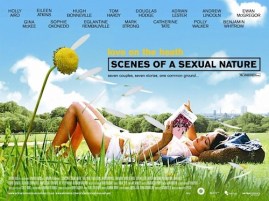
Scenes of a Sexual Nature (2006)

2008 #88
Ed Blum | 88 mins | DVD | 15 / R

Scenes of a Sexual NatureScenes of a Sexual Nature is a half-accurate and half-misleading title for this low-budget British comedy drama. The first half is spot on — the film’s made up of seven unconnected scenes — while the second implies it’s ruder than it is.

Effectively, Scenes is seven short two-hand plays stuck together, occasionally intercut for no good reason (only one runs throughout), all on a similar theme — which, despite the title, is really “relationships” rather than “sex”. And “plays” is the right word: the styles of dialogue and acting, plus the sparsity of locations and cast members, not to mention the thematic construction, all suggest theatrical roots. In fact, so much does it seem grounded in the stage that I was thoroughly surprised to discover it wasn’t an adaptation. One wonders if writer Aschlin Ditta has perhaps launched his work into the wrong medium then; on the other hand, a stage production would never have attracted such attention or such a high number of recognisable names and faces.

Most of the scenes can be simply labelled — the Gay Couple, the Old Couple, and so on — and, unsurprisingly, some are better than others. The Gay Couple is a textbook example of how to write conflicting motivations both between a loving couple and within a single character, nicely performed by Ewan McGregor and Douglas Hodge. Consequently, it’s probably the film’s best sequence. Elsewhere, the Old Couple are quite sweet, Ditta pleasingly taking their story beyond an obvious, clichéd end point, though it is lumbered with a bench metaphor that’s a touch heavy-handed. Similarly, the Blind Date Couple is initially hilarious but doesn’t seem to know where to go, a problem that afflicts most of the film as every scene is distinctly inconclusive.

Worst is the one starring Mark Strong and Polly Walker, in which nothing at all happens in the name of a closing twist. It’s like the antithesis of the Old Couple bits. The one that stretches credibility the most, however, is the Divorcing Couple. Amicable divorces surely exist, but not that amicable — it’s very hard to believably see why they’re not still together. On the bright side, at least they’re not reunited by the scene’s end; but then, like much of the film, they’re not definitely apart either — it’s inconclusive.

Scenes of a Sexual Nature isn’t a bad film, but it is a bit of a mixed bag. Some stories work, others don’t. It’s not badly directed, but the writing and acting is all very stagey. It’s more like a collection of thematically and stylistically linked shorts than a feature in its own right. Some will no doubt take more from it than others, but I can only fall down the middle.

3 out of 5

24: Redemption (2008)

Extended Edition

2008 #86
Jon Cassar | 98 mins | DVD | 15
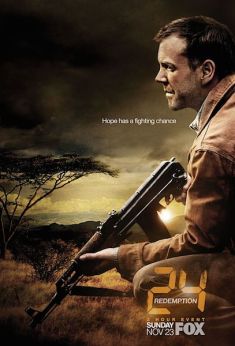
24: RedemptionRemember the ubiquitous Writer’s Strike in the US? It must be about a year ago now, but its effects are still being felt — Dr Horrible’s Sing-Along Blog, Joss Whedon’s rule-breaing internet musical, made during the strike, is about to hit region-free DVD in the US (albeit on DVD-R and only from Amazon.com); plenty of second-year shows are getting canned, probably because their truncated first years didn’t allow time to get decent audiences (that’s one excuse anyway); and 24’s seventh season, kicking off in January 2009, is a year late. Which allowed them to make this in the meantime.

The setup is simple: Jack Bauer’s trekking round the world, currently holed up with an ex-army buddy (played by the ever-excellent Robert Carlyle) in the African nation of Sangal where said buddy has set up a school. Yes, Jack Bauer is living a life of peace. But then Bad Men turn up wanting the kids for child soldiers, and within the hour they’re attempting a military coup — this is still 24 remember, the action all takes place “in real time”. What’s Jack to do? Why, return to his old One Man Army self, of course — if he can’t stop the coup, he sure as hell can save those kids! Meanwhile, it’s inauguration day for America’s new female (black? 24’s been there and done that — twice) President…

For a Fox action series, off screens for almost 18 months and undoubtedly designed as a starting point for new viewers, Redemption (not that that title’s seen on screen) has a surprisingly slow build up. That’s no bad thing — this is a story after all, not a 90-minute shoot-out — but there are times when one feels it should get a wriggle on. This is likely where most, if not all, of this extended version’s new material was added. There’s almost 15 minutes added to the running time here, though some is surely due to a 5-minute credit crawl that must be much longer than the TV version’s. Having not seen the broadcast edit I can’t comment on what new scenes, shots or lines are added, but there’s no greater violence or thematic density than 24 usually produces so I imagine what was cut was cut for time alone.

That said, Redemption certainly tackles its fair share of issues — primarily, the use of child soldiers, and the US involvement (or lack of) in African genocides. It’s certainly admirable and worthwhile for such a popular series to bring these important issues to the attention of a mass audience who might otherwise ignore, or at least not be aware, of them, but they’re still included in a “mainstream American action series” way — that’s to say, they’re ultimately a reason for a shoot-out. There’s also some subtle political commentary, such as the UN Peacekeeper stationed at the school being a coward who runs away at the first sign of violence… and then betrays them to boot! Of course, just because it’s unsubtle doesn’t make it wrong, but Blood Diamond this is not. Whatever the politics, the action sequences — and, once things get going, there are a few — are all carried out with 24’s usual panache.

Is this a suitable jumping-on point for newcomers? Yes, quite simply. It’s several years since the last season and Jack’s in a very new part of this life. Some old faces crop up and there are some backstory references, but these are more nods for returning fans than anything important. Everything you need to know for this story is contained herein, and fortunately that doesn’t involve great slabs of exposition about previous seasons. On the other hand, it fails as a standalone movie. While the main plot — Jack defends school — is kicked off and wrapped up in the space between the title and the credits, there are several US-based plot threads that aren’t even close to being resolved. These are clearly designed to flow on into season seven — presumably they’re either elements bumped from the early episodes up into the movie, or a fleshing out of information that would’ve just been exposition before.

It’s hard not to conclude that Redemption would’ve been better without the US scenes. They add nothing to the main action in Africa and they’re all quite flatly directed, forcibly reminding you that this is just a TV movie by being worse than most TV these days. Their one true benefit is an ending that juxtaposes the new President’s inauguration speech with the civil war beginning in Sangal, which, consciously or not, underlines the hypocrisy at the heart of America.

As a standard season-opening episode of 24, coming on the back of the weakest-yet sixth season, it may well have earned itself an extra star. Judged as a standalone film, however, I fear it has to be just

3 out of 5

Thinking “but that’s not a film”? Then please have a read of this.

The Cube Trilogy

Introduction

I watched the entire Cube trilogy in one night — boy was it a long’un.

“Three ninety minute films?”, some of you might think, “I’ve seen single films longer than that!” Yes indeed, this is true, and I’ve watched all of the extended Lord of the Rings in one day — but those are good, and the Cube sequels just aren’t.

Anyway, I’ve posted all three reviews at once — partly because things are lagging review-wise here and I want to get a wriggle on (17 days ’til 2009!) — and so here is a little summary of the trilogy, with a brief note on my thoughts on it as a whole at the end.

This is probably obvious, but in case not: click on each film’s title for the full review.


#83a
Cube
1997 | Vincenzo Natali | 87 mins | DVD | 15 / R

Cube manages to effectively juggle gruesome horror deaths, sci-fi mysteries, an awful lot of maths, and character-based drama. It’s a brilliant, low-budget, understated film [that] everyone interested in the more intelligent end of the sci-fi spectrum should see.”

5 out of 5


#84
Cube²: Hypercube
2002 | Andrzej Sekula | 90 mins | DVD | 15 / R

“The new cube set is bigger, shinier, simpler, emptier, always one plain colour, and devoid of traps. Consequently, but perhaps inadvertently, it seems to symbolise the film itself… Hypercube feels like expensive tosh based on a faux-intellectual idea.”

2 out of 5


#85
Cube Zero
2004 | Ernie Barbarash | 93 mins | DVD | 15 / R

“an entirely different setup: the people who observe the cube!… until one of them goes inside, and then we’re right back in familiar territory… Derivative and, worst of all, quite irritating.”

2 out of 5


Final Thoughts

I first saw Cube many years ago, certainly before it had any sequels, and have always thought it excellent. I picked up the trilogy DVD set a few years back, despite hearing advice that went, roughly, “never ever watch the sequels. Ever.” My God was that good advice.

The first remains a masterpiece, provided you can ignore the two sequels and their weak additions to the mythos. Try to integrate all three into the same fictional universe and you’re just going to wreck much of what’s great about the original. Watch that, love that, and pretend that was all there ever was.

Cube Zero (2004)

2008 #85
Ernie Barbarash | 93 mins | DVD | 15 / R

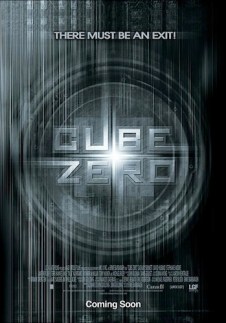
Cube ZeroI presume, from the title, that Cube Zero is meant to be one of them prequel things, going back before the original film to reveal more of the backstory and answer questions that probably didn’t need answering. It does some of this — there are unwelcome answers and an ending that explicitly links back round to the first film — but undermines it by apparently being set in some fantasy-future retro-industrial universe that doesn’t gel with the everydayness of the preceding entries. This design work is almost nice, reminiscent of films such as Brazil, The City of Lost Children, and even Blade Runner; but it’s all on a direct-to-DVD scale that feels oddly familiar from things I’m sure I haven’t seen. Derivative? Yes indeed.

One thing it isn’t especially derivative of — initially, anyway — is its two prequels. After the requisite gory opening, the camera pulls back to reveal an entirely different setup: the people who observe the cube! Except they’re still a small group (just two), confined to one room, with no idea about the people behind all this. They are, very literally, only one step removed… until one of them goes inside, and then we’re right back in familiar territory, except with an added outside perspective that sinks to new depths so low I don’t even want to explain them.

In the cube itself, we have the most gory deaths yet. Barbarash — here adding “director” to his list of crimes after producing and co-writing Cube² — lingers on the gruesome details, seeming to make the series bridge the gap between relatively old-style horror films and the new trend for sickening weirdness that Saw would kick off the same year. I’m sure gore-hounds will love it but, for me, Cube was never about how vile the deaths could be.

You have to admire them (albeit begrudgingly) for trying to do something different with the concept and give it some fresh spins. But, as ever, the series didn’t need those additions, and consequently it doesn’t need this sequel. It answers too many questions, which might be acceptable if the answers were remotely original or satisfying, but, of course, they aren’t: they’re derivative and, worst of all, quite irritating.

And that goes for the film too.

2 out of 5

For a brief overview of the Cube trilogy, please look here.

Cube Zero featured on my list of The Five Worst Films I Saw in 2008, which can be read in full here.