
Adrienne Shelly | 103 mins | DVD | 12 / PG-13
 Whenever a star, director, writer, or other key creative dies during or around the production of a film, it’s apparently tempting to draw some kind of correlation between their death and the themes or content of their work. To force such a link between the murder of writer/director/co-star Adrienne Shelly and Waitress seems inappropriate, however, when the film is so much about life.
The basic plot could be made to sound identical to Juno’s, if one really wanted (I don’t though, so this won’t): Keri Russell (TV’s Felicity) plays titular waitress Jenna, a genius creator of delicious pies, who finds herself unwelcomely pregnant after a drunken night with her controlling, abusive husband Earl (Jeremy Sisto, TV’s Kidnapped). When Jenna visits her (female) doctor, she’s been replaced by (male) Dr Pomatter (Nathan Fillion, TV’s Firefly), an awkward, slightly bumbling man who, to cut the story slightly short, she falls for and they begin to have an affair — despite his being married (to fellow doctor Francine (Darby Stanchfield, TV’s Mad Men)).
Jenna tries to keep her pregnancy secret from Earl, with the support of her friends Becky (Cheryl Hines, TV’s Curb Your Enthusiasm), who has a secret of her own, and Dawn (Shelly), who’s being stalked by her one-time five-minute-date Ogie (Eddie Jemison, TV’s Hung). And she tries to keep her affair with Dr Pomatter secret from everyone, though it seems she can’t hide anything from perceptive elderly diner-owner Joe (Andy Griffith, TV’s Matlock).
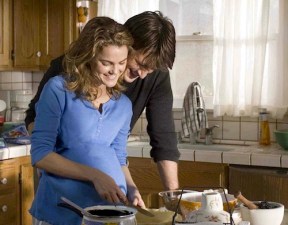 I know I recently said I don’t give plot descriptions, but it’s these threads that illuminate Waitress’ life-affirming themes. Becky and Dawn show there’s hope for happiness with whatever hand you’ve been dealt, even where you least expect it; Ogie, Joe (and diner chef Cal (TV’s occasional guest star Lew Temple)) show you can’t judge a book by its cover; Joe also offers Jenna the gift of premature hindsight thanks to his reminisces and regrets; and then there’s the baby, who, aside from the obvious, represents fresh starts. None of these are hammered home quite as bluntly as I have here — not even the baby one — but my observations show, I suppose, what I took from them.
Though every performance excels, Shelly’s screenplay is the real star. To bring up the Juno similarity again, it features a quite idiosyncratic style of dialogue, particularly when delivered through the cast’s Southern accents. It’s also very funny, but never allows this to interfere with the more serious elements. Some have criticised it for putting so much levity near such tragic topics; I can only assume they live in a different world to our’s, presumably one where either everything is punctuated by a laughter track or one where everything is underscored by Coldplay.
From its promotional material and vaguest of outlines (Keri Russell leaves unhappy marriage for lovely Nathan Fillion!), Waitress looks like another breezy rom-com, the kind of thing that stars Jennifer Aniston — a chick flick, or to sound inappropriately less derogatory, “woman’s film”.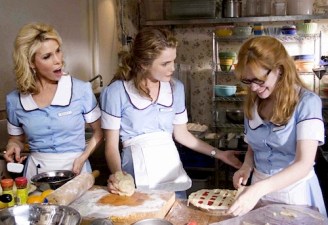 Waitress is a “woman’s film”, but in a good way: written and directed from a female perspective, with its central roles being female, it doesn’t pander to a perceived female demographic and nor does it bellow “this is what we women think, and it’s so different to you damn men” — it’s more subtle than that.
Kathryn Bigelow won the Oscar by beating men at their own game — and that was probably for the best as a first-timer, dodging accusations of “well, she just made a woman’s film, didn’t she?” from the off — but hopefully it’s nudged the door open for female voices on a wider range of subjects. To slightly go against what I said in that opening paragraph, it’s a loss that Adrienne Shelly won’t get a chance to be among them.

The UK TV premiere of Waitress is on Film4 tomorrow at 9pm.
Waitress is on Film4 +1 today, Monday 28th July 2014, at 7:50pm.
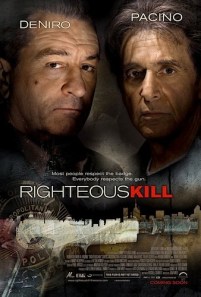 You remember Righteous Kill, right? It’s the film that reunited De Niro and Pacino, only the second time they’d appeared on screen together. And while the first,
  he’s lensing a procedural thriller about a pair of 60-something cops and not Miami Vice 2. Suffice to say, it doesn’t work; if anything, it makes it worse.
 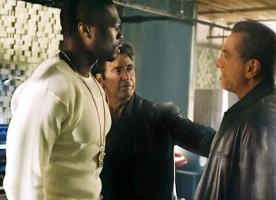 The film’s at its best when focusing on the De Niro/Pacino pairing, granting us the occasional good scene. Or just line — every little helps. But there’s not enough of that and too much of the dross. Other characters come and go with near-random irregularity, subplots are abandoned, or if they were resolved I missed it, and there are so many clichés you wish the DVD came with a spotters’ guide — at least ticking them off would give you something to do.
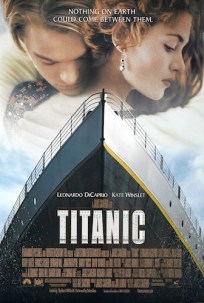 Before
  The scene the day after Jack saves Rose — where they have a natter on deck and she looks at his art for the first time; aka the primary scene for their falling for each other — is particularly weakly written. “Oh Jack, the plot requires me to look at your drawings now, so please hand them over.” The dialogue’s not actually that bad, but it’s bloody close.
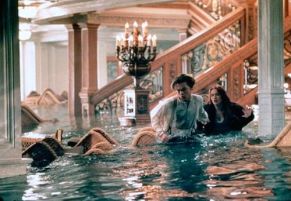 And Leo is pretty-boy Leo. I’m not saying he’s not a talented actor — that was something he’d shown before Titanic and has certainly proven since, though everyone seemed to forget it in the late ’90s — but Jack Dawson is hardly a tricky task for him. Clearly he looks beautiful, has the loveable rogue thing down, and that’s job done.
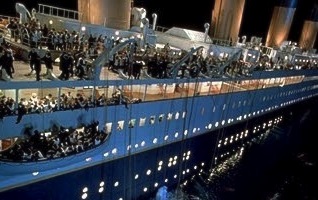 Indeed, Titanic’s literally phenomenal success, and the subsequent abundance of spoofs and homages across all media in the decade-and-a-bit since, is an obstacle for any new viewer. One can’t watch Jack declare “I’m the king of the world!” without thinking of Cameron’s much-derided Oscar speech; can’t watch Jack and Rose ‘flying’ without thinking of any number of piss-takes; and French and Saunders spring to mind quite all over the place.
 Apparently, the recent Michael Caine-starring
 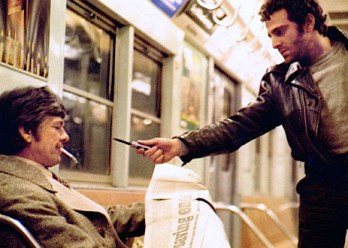 The strongest element is probably Wendell Mayes’ script, because it constructs all this. Weakest is Michael Winner’s direction — some of it’s fine, the occasional shot even good, but largely it’s pedestrian and sometimes mediocre. That said, Winner has become such an unlikeable public figure that it’s somewhat difficult to gauge how much of this is bad direction and how much bias. Still, it’s not the kind of work to make one think, “he’s an idiot, but he knows how to do his job”.
 I don’t really care about fashion, which means I really don’t care about Fashion — i.e. the world inhabited by Vogue and its American edition’s infamous editor, Anna Wintour. But I did watch
  Wintour, one suspects, will always be unknowable, a figurehead more than a person; but Grace is relatable, as human as the rest of us.
 Speed Racer feels like an unfair place to kick off
  Even some of the performances stand out, not something you’d expect from such a (for want of a better word) lightweight tale. Of particular note are Susan Sarandon as Mom and Christina Ricci’s Trixie, whose huge eyes help render her perhaps one of the most perfect live-action versions of an anime character ever seen. Yes, the characters mostly exist to service their place in the plot, but the odd scene or glance or line delivery adds some subtlety here and there.
 And, to specifically rubbish his opinions here, Phantom Menace is praised for being “made to be looked at more than listened to… filled with wonderful visuals” and condemns Speed Racer because “whatever information that passes from your retinas to your brain is conveyed through optical design and not so much through more traditional devices such as dialogue, narrative, performance or characterization… you could look at it with the sound off and it wouldn’t matter.” Not that Film’s unique factor (over novels or radio or what have you) is its visual sense, and a silent film that can be told through image alone, devoid of any intertitles, was once a lofty aim. I’m sure Ebert could readily explain why Phantom Menace’s visual splendour is a good thing and why Speed Racer’s is so terrible, but, on the other hand… pot, meet kettle.
 Back to Speed Racer. In every respect it’s like a living cartoon, and it’s the Wachowskis’ commitment to this aesthetic in every single respect that makes it work where others have floundered. It’s not perfect, I suppose. It may run a little long at two-and-a-quarter hours; but then, it so rarely lets up that I didn’t mind a jot. And the kid is often annoying; but then, as annoying little kids in films go, I’ve seen worse. At times I even liked him.
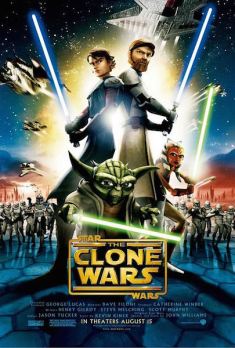 The Clone Wars can boast an awful lot of firsts within the
  Catherine Taber’s Padmé impression is probably the most convincing of the lot and, coincidentally sharing the same scenes, Corey Burton’s Truman Capote impression as Ziro the Hutt is entertainingly obvious. Count Dooku doesn’t particularly benefit from the involvement of Christopher Lee, but at least Samuel L. Jackson is vaguely recognisable lending his actual voice to Mace Windu. Most of the cast deliver the kind of performance you typically find in kids’ cartoons — i.e. not all that good, no doubt due to the pressures of producing as many episodes as possible as cheaply as possible. Dubious line readings abound, though in fairness this may be down to the awkward lines they’re forced to deliver.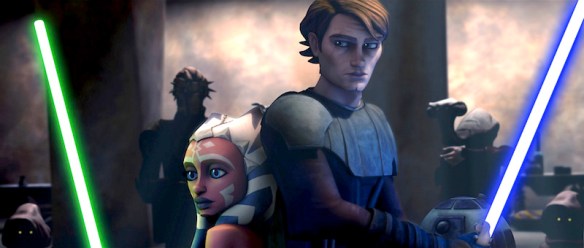
 It may sound like a piece of trivia that this was originally conceived as three episodes of
  it just doesn’t have the epic quality that imbued all the other Star Wars films. Not every film has to be an epic, even ones set within the same universe/storyline, but by wheeling out all the main characters and then showing them complete just one moderately low-key mission, The Clone Wars does feel like a single instalment of a TV series and not an appropriately-scaled cinematic experience.
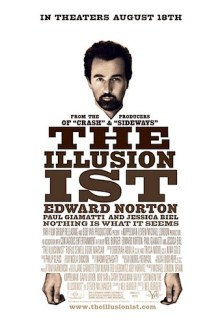 A Blu-ray release of The Illusionist has just
 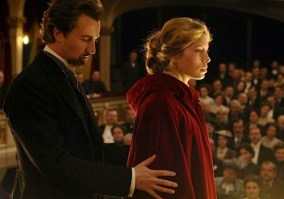 The story itself — you remember those? It’s the bit between the attention-grabbing opening and preposterous-twist finale — is mediocre with or without the finale. It’s a something-and-nothing account of a Poor Boy who loves a Rich Girl he can’t have and… oh, I can’t even be bothered to explain it.
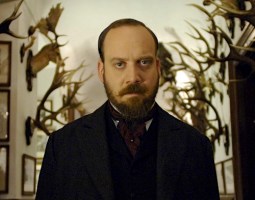 As comparisons with The Prestige are inevitable, particularly as both films were ultimately released around the same time, I’ll briefly put them head-to-head. Both concern stage magic in a similar-enough period setting, debate about whether the tricks are just that or actually supernatural powers, a love story that goes awry, which involves a fatal rivalry… But they’re actually very different films. The Prestige jumps about in time in a more complex way than The Illusionist, but this also has a point. The former’s story is more original, more engaging, its use of magic — real or not — more captivating. I fear I could go on, but it’s succinctly summed up thus: in this comparison, The Illusionist comes up short.
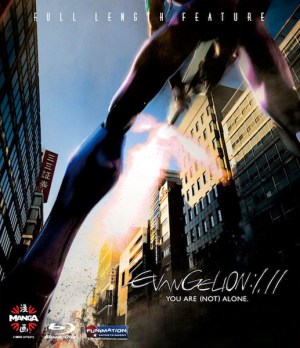 When I (first) reviewed
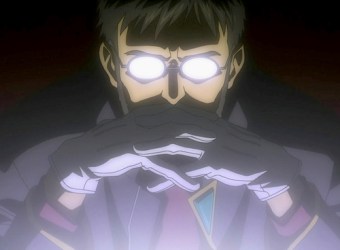
  is a new addition I swear, while he also listens to a (digital, at least) cassette player rather than an iPod (other MP3 players are available, naturally). It’s not a major flaw — unlike, perhaps, the fact that the “covert” and top-secret Nerv organisation has great big signs plastered all over town and everyone seems to know about them — but, still, maybe a new bit of animation to replace the tape-playing close-ups would’ve been nice.
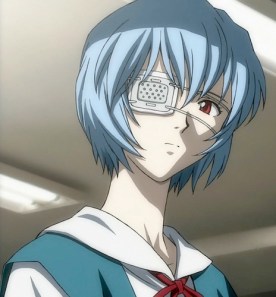 The pros and cons of the series remain. Shinji is alternately interesting, perhaps even complex, and a whiney little irritant. Here he has a character arc at least, suggesting he may be more sufferable next time out. His relationship with Major — sorry,
 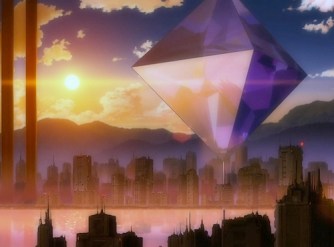 Another factor thrown up by the TV-series-to-feature conversion is the image quality. An HD big screen is a mixed blessing here. On one hand, it looks great on Blu-ray, with crisp lines and solid colours, the result of re-filming, colouring and CGI-ing the original animation elements rather than using the finished TV shots. On the other, such clarity sometimes shows up a lack of detail in the original animation — these elements were created for 4:3 mid-’90s TV, not a hi-def (home) cinema — and the solid colours and money-saving techniques (for example, showing something static rather than a lip-synched (ish) mouth during conversations) can remind the viewer of cheaper TV roots. Perhaps I’m being overly critical though, because much of it does look fabulous; at the very least, the thorough ground-up rebuild means it looks better than the TV series ever will, never mind has.
 It’s enough to make one scurry back to the series for answers, though the three movies still to come promise whole new characters, plots and a — frankly, much-needed — brand-new ending. After two misfires (one in the series, one in
 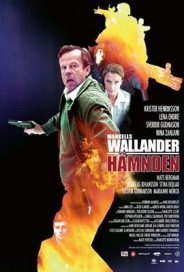 Krister Henriksson returns as the titular Swedish detective for a second — and final — series of feature-length investigations, though this time only this first has received a theatrical release (which means it’s likely the only one I’ll review, unless the series finale offers something that persuades me otherwise).
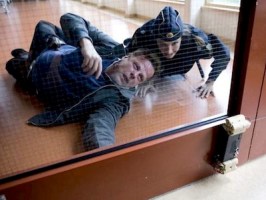 The climax is a case in point. There’s no grand shoot-out or serious race-against-time-for-the-last-bomb, just Wallander and the criminal having a calm chat. OK, so there’s a kidnapped government minister, a gun, snipers and a big vest-bomb, but these are set dressing to the conversation. It’s proof if proof were needed (it isn’t) of Henriksson’s controlled skill in this role. As great as Branagh could be, it’s hard to imagine his introspective interpretation of a weepy Wallander slotting into this scene without making it unpleasantly histrionic.
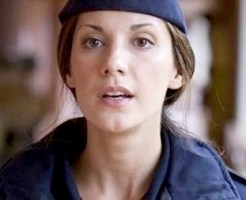 but also by adding two new recruits to Wallander’s team, Isabelle (Nina Zanjani) and Pontus (Sverrir Gudnason), and the introduction of prosecutor Katrina (Lena Endre). All are set up as key new characters for this run, though it’s clearly Only The Beginning here. Katrina is a little too blatantly a potential love interest for Wallander, while Isabelle and Pontus are… well, new characters. There’s little to say about them yet.
 100Films.co.uk