Encanto (2021)

Jared Bush & Byron Howard | 102 mins | digital (UHD) | 1.85:1 | USA / English & Spanish | PG / PG

Encanto

The 60th film in Disney’s animated canon was, despite that status, sent straight to streaming in the midst of the pandemic. Possibly because of that, it seemed to catch on quite quickly as their latest major success. Case in point: one of the songs — We Don’t Talk About Bruno — ended up having greater chart success than Frozen’s notorious Let It Go.

(I’ve got to take the time to say that I find this quite baffling. I don’t love Let It Go (I’m a 36-year-old man, not a six-year-old girl in 2013), but it’s clearly a catchy tune with lyrics that transcend its place in the film — you can understand how it became such a huge hit. But for the life of me I can’t work out why We Don’t Talk About Bruno has surpassed its success. It’s a likeable song that plays well in the movie — and I think hearing it in place is important, because the first time I heard it was on the radio and I couldn’t even work out what they were singing about. So, there’s nothing going on lyrically that makes it applicable in any other context, and I don’t think the underlying tune is so earwormy as to warrant play merely for that reason. Or maybe it is if you’re the right age, because clearly something made it a massive hit.)

Anyway, the film itself is about a family, the Madrigals, who live in a magical house in an isolated part of Colombia and all have magical powers — except Mirabel (Stephanie Beatriz), for reasons no one understands. But when the family begin to lose their abilities, finding out what’s going on and fixing it falls to Mirabel. Because of course it does.

Someone's gotta do the donkey work

Encanto doesn’t look like your typical Disney Princess movie, but it’s not functionally different to them. The Madrigal family’s powers mean they effectively rule over their small town, albeit in a benevolent way, which makes Mirabel a de facto Princess; and she has the usual Disney Princess hangups about feeling under-appreciated and needing to find her self-worth. But hey, at least she doesn’t also need to find a husband! Nonetheless, it’s welcome that the film is less traditional is its setting — present-day South America, rather than the typical fairytale land of historical Europe — and the pace is also up-to-date. In fact, it’s quite frantic. Like, okay, calm down a bit; take your time occasionally; let stuff stay on screen long enough for us to appreciate how good it looks. And the animation does look great, with detailed designs, fluid movement and dynamic camerawork, and an incredibly colourful palette, especially when fired up by HDR/WCG.

The songs are by Hamilton’s Lin-Manuel Miranda, unmistakably so. It’s something about the phrasing, the rhythm, the rhyme patterns… I’m no musicologist so I can’t adequately explain it, but they’re distinctively his work. But that’s what you want when you hire someone, right — their own voice. If you don’t like this style from his other work, chances are the music here won’t appeal to you either. If you do like it, there’s much to enjoy, from the opening number, The Family Madrigal, which introduces us to the large cast of characters at whipcrack pace, to my personal favourite, Surface Pressure, about one family member’s struggle with all the weight on her shoulders. And yet they put Dos Oruguitas up for the Original Song Oscar, apparently trying to emulate the success of Coco’s Remember Me. Oops. (Obviously they should’ve gone with breakout hit Bruno, but I reckon either of the other songs I’ve mentioned would’ve stood a better chance.)

One of Encanto’s directors is Byron Howard, whose previous work for Disney has encompassed Bolt, Tangled, and Zootropolis — three films I’d class as among the very best of Disney’s current purple patch. It’s a helluva record. Happily, Encanto continues it. I might rank it a little behind the other three when all is totted up, but being next in line to such strong movies is nothing to be ashamed of.

4 out of 5

Encanto is the 28th film in my 100 Films in a Year Challenge 2022. It placed 4th on my list of The Best Films I Saw in 2022.

2022 | Weeks 14–15

Only four reviews this time, taking us up to April 17th. It was going to be five, but then Spider-Man got far too long. So, we’re left with…

  • Withnail & I (1987)
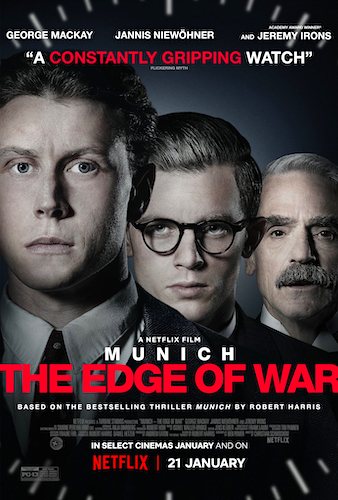
  • Munich: The Edge of War (2021)
  • tick, tick… BOOM! (2021)
  • Move Over, Darling (1963)


    Withnail & I

    (1987)

    Bruce Robinson | 103 mins | digital (HD) | 16:9 | UK / English | 15 / R

    Withnail & I

    This may be a beloved cult comedy in its own right, but I can’t help but make comparison to a certain other British cult property. You see, each of the three primary cast members — Richard E. Grant (Withnail), Paul McGann (‘I’), and Richard Griffiths (Uncle Monty) have an atypical relationship to the lead role in Doctor Who. That has no bearing on the film itself, not least because their involvement (or non-involvement, in one case) took place years later, but it’s a correlation I can’t shake. I mean, what other work can claim to star the man who was simultaneously the shortest and longest serving Doctor; the man who was definitely, officially the new canonical Doctor, until he wasn’t; and a man who might well have been the Doctor if things had gone to plan? Nothing else that I can think of, that’s for sure.

    Setting all that aside, everything about Withnail & I screams “cult favourite”, and I guess that’s what it is — not a film that started out with a dedicated fanbase before being subsumed into the mainstream, but one that remains beloved of a relatively few devotees. Perhaps that explains why it’s one of those films I thought would’ve wound up on my Blindspot list by now, but never has: because it lacks that crossover appeal. (Maybe I need to factor in some lists of cult and/or British movies when compiling my Blindspot choices.) Coming to it afresh in 2022, aware of that rep it’s built up over the last 35 years, does it no favours. The characters aren’t likeable or interesting enough to truly enjoy hanging out with (even as they’re convincingly brought to life by the talented cast); the “gay panic” stuff that drives several sequences lands differently now than I suspect it did in 1987; and the supposedly never-ending quotable lines didn’t materialise (there are a small handful of memorable ones, at least). That said, there are quite a few lines that would be fun for a game of “did Paul McGann say this in Withnail or in Doctor Who?” (Oops, sorry to bring that up again.)

    The best bits of Withnail have been dulled by repetition out of context (variations on “we’ve gone on holiday by mistake” are a certifiable meme at this point), and I suspect I personally left it too long to see it, allowing it to build up too much of a reputation. I didn’t dislike it, I just wasn’t won over.

    3 out of 5


    Munich: The Edge of War

    (2021)

    Christian Schwochow | 129 mins | digital (UHD) | 2.39:1 | UK & USA / English & German | 12 / PG-13

    Munich: The Edge of War

    Robert Harris has been a best-selling author for decades, but his works have had a rockier reception on the screen; perhaps not helped by the fact a couple have been helmed by director non grata Roman Polanski. Harris’s stock in trade is fictionalised tellings of historical events — the eruption of Vesuvius in Pompeii; the politics behind the invasion of Iraq in The Ghost; and so on. His 2017 novel Munich is set around war-avoiding negotiations between Adolf Hitler and Neville Chamberlain that took place in the titular city in 1938. This film adaptation gains a subtitle, presumably to differentiate it from Steven Spielberg’s Best Picture nominee, which retold entirely different historical events.

    The big names aren’t the main characters, however. Those would be a pair of low-ranking civil servants from the opposing sides: Brit Hugh Legat (1917‘s George MacKay) and German Paul von Hartmann (Jannis Niewöhner), former university chums who fell out when Hitler came to power. Now, von Hartmann is disillusioned with the Nazi regime and wishes to pass information to the British, but will only make contact with Legat, thus roping the inexperienced diplomat into the world of espionage, untrained. If the storyline is ringing bells, perhaps you too recently watched The Courier with Benedict Cumberbatch. It’s not an identical narrative — I’m not accusing anyone of plagiarism here — but there are definite parallels. Legat even has a strained relationship with his wife, who he has to leave at home and not tell the truth.

    But where the story in The Courier was true, and thus lent an inherent fascination, the story of Legat and von Hartmann is fictionalised. That’s not necessarily a problem — most thrillers are entirely made-up, of course — but Munich is hampered by feeling kind of muddy. It’s not so bad as to be described as muddled, but does seem like it’s perhaps the victim of being badly truncated from the book, or possibly just in its own edit. It’s not always clear what the point is of what we’re watching, or where certain characters have disappeared off to. That makes the overall experience longer and, occasionally, more plodding than it needs to be.

    That said, though it takes time, it does eventually develop the tension it needs; and it has definite merit for depicting a bit of history that’s normally relegated to footnote status. Indeed, it makes an interesting argument for “what Chamberlain did was good, actually”, which is not the normal point of view on politicians’ pre-WW2 actions.

    3 out of 5

    Munich: The Edge of War is the 27th film in my 100 Films in a Year Challenge 2022.


    tick, tick… BOOM!

    (2021)

    Lin-Manuel Miranda | 120 mins | digital (UHD) | 2.39:1 | USA / English | 12 / PG-13

    tick, tick… BOOM!

    Rent was one of the definitive Broadway musicals of the ’90s, but its creator didn’t live to see its success: composer, lyricist, and author Jonathan Larson died, with poetic timing, the night before the show’s premiere. It came after years of Larson struggling trying to break into the industry, much of which was documented in his semi-autobiographical (almost-)one-man show, Tick, Tick… Boom! This film adaptation broadens out and adds additional detail to become a more direct biopic of Larson, albeit one with musical numbers.

    Struggling musical theatre people in Manhattan… Yes, some people are going to find this insufferable. Others will look upon it as a dream life, especially as any actual hardship (Larson’s apartment didn’t have heating, for example) is played down or romanticised. Even setting that side, it remains the kind of movie that will speak to anyone who’s dreamt of making art (especially if that art is musical theatre), but might leave others (primarily those without such ambitions) identifying more closely with some of Jonathan’s friends — “there are bigger things to worry about,” they say.

    In the centre of it all is a pitch perfect performance from Andrew Garfield. He throws himself into the role, transformatively so: his Larson seems to be powered by a restless enthusiasm that I don’t think I’ve seen the actor portray in anything else. In the musical numbers, he holds his own against much more experienced singers (Garfield couldn’t even sing before production began — he spent a year learning and practicing).

    This is more than just a ‘one good performance’ film, though. Although based on a stage show, the screen version certainly doesn’t feel stage-bound, coming to cinematic life through Alice Brooks’s photography and Myron Kerstein and Andrew Weisblum’s editing as if it had always been meant for the screen. However, many people have been critical of Lin-Manuel Miranda’s direction. While I wouldn’t shout it out as anything amazingly special, I also don’t think it’s bad. You routinely see lesser work in Marvel movies, for example.

    4 out of 5


    Move Over, Darling

    (1963)

    Michael Gordon | 99 mins | digital (HD) | 2.35:1 | USA / English | U

    Move Over, Darling

    Doris Day and James Garner star in this remake of My Favourite Wife, one of the trio of screwball comedies Irene Dunne and Cary Grant made together, and which I watched back in May 2020. Two years ago?! Time flies. Despite which, I’ve not reviewed it yet.

    Well, Move Over, Darling is an incredibly close re-envisioning. If someone authoritative told me it used the same screenplay with only minor tweaks, I’d believe them. I’m sure it’s not that close, in actual fact, but it’s darn near it. Certainly, one bit is definitely new: a fun sequence that sees Day recount the plot of the earlier film. Very meta. Alongside the screenplay, the remake also carries the original’s primary flaw, which is that they both lack the pace and snap of the very best screwball comedies. Day does her best to enliven the material, being a consistent source of fun and clearly game for a laugh — a sequence where she goes through a car wash in a convertible is a highlight. Garner can’t manage to equal Cary Grant, but who can?

    Nonetheless, on balance, I slightly preferred this version. That might just be due to my lowered expectations — knowing it had the double drawback of being (1) a remake, and (2) of a film I hadn’t particularly loved the first time, it was able to overcome that by simply being not too bad.

    3 out of 5


  • Spider-Man: No Way Home (2021)

    Jon Watts | 148 mins | Blu-ray (UHD) | 2.39:1 | USA / English | 12 / PG-13

    Spider-Man: No Way Home

    I’m currently both behind and out of sync with my viewing of the Marvel Cinematic Universe. I’ve seen Black Widow, but overleapt Shang-Chi and Eternals to get to this widely-discussed and already-beloved instalment. And that’s without discussing the various canonical TV series there now are, which I think some of us still thought would be treated as ‘side projects’ but seem to be being used to introduce and explore key elements that underpin Phase Four. Which is another way of saying: hopefully this film makes sense without having seen Loki. (It does, assuming you know what a multiverse is — and as that was also discussed in the previous Spidey film, I think we’re good.)

    No Way Home picks up at the exact moment the last Spidey movie, Far from Home, left off: Peter Parker’s identity has been revealed to the public, and he’s accused of murder. Rather than make a whole story from the fallout, No Way Home uses it as a jumping off point. As revealed in the film’s own trailers, Peter asks Dr Strange to magic things back to how they were before, but the spell goes awry and drags in villains from alternate realities. As the trailers didn’t give away — but was, frankly, inevitable (and has been widely used in post-release promos, so I’m not counting it as a spoiler anymore) — it also pulled through alternate Peter Parkers, as played by Tobey Maguire and Andrew Garfield.

    And that’s not the half of it! It feels like they’ve gone out of their way to crossover with everything possible: as well as the two previous Spider-Man film series, there’s something from spinoff Venom, and even the MCU Netflix series, which were previously of dubious canonicity (of course, now they’re on Disney+ so they’re allowed to count again). About all that’s missing is Into the Spider-Verse, and there’s even an oblique reference to that. With all of that in the mix, it plays kinda like Fan Service: The Movie. Normally that would be a criticism, but it does it so entertainingly — and it’s so much the movie’s very raison d’être — that I think it works, in its own way. It feels similar to X-Men: Days of Future Past in the way it mixes different eras and facets of the same franchise together to create an ‘anniversary special’ kind of feel. That also means it doesn’t just feel like “The MCU: Episode 27”, but instead a climax to all the Spider-Man movies. That’s a pleasant change of pace, and one befitting such a storied superhero.

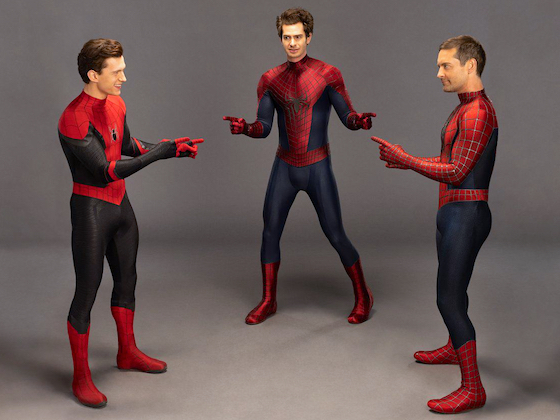
    Your friendly neighbourhood Spider-meme

    Keeping the appearance of the other Spideys out of the marketing may have seemed daft — of course we all knew they’d be in it — but it at least means we hadn’t already seen their best interactions in the trailer(s). How rare is it for a blockbuster nowadays to actually keep some of its biggest thrills for the film itself, rather than blowing them in advance! Indeed, my favourite bit of the whole film was the Spideys just hanging out and chatting while they waited for the villains to show up for the climax. It’s mostly fan service again — their discussion is almost entirely framed in references to previous films — but it’s nice as a moment of calm. And, like all of the film’s fan service, it tickles the nostalgia glands in those of us who get the references.

    It’s notable that each of the Spider-Men has a distinct personality. We’re now familiar with Tom Holland’s childlike, motormouthed take. Garfield brings the earnest, kinda skater/surfer dude feel that he sometimes has in real life — witness the moment he pauses mid action sequence to tell the other two Spideys, quite sincerely, that he loves them. Maguire, on the other hand, is very quiet and still. He only speaks if he needs to, and that doesn’t seem to be too often. It’s an innate calmness — perhaps also maturity — but it goes beyond that. It’s not that you feel he doesn’t want to be there, more like he’d feel exactly the same way if he wasn’t there — whatever; it’s all fine. If that sounds like “laidback” might be the right label, it isn’t. It’s almost that he’s doing… nothing. But that would be a rude thing to say to an actor, because of course he’s not doing nothing. It’s a bit of an odd one; or odd within the context of the hyperactive MCU, at any rate.

    The (literal) cheers that greeted No Way Home on its release have led to it being labelled a Great Movie by some (there was even a campaign to get it Best Picture recognition). Part of that is the regular thing of certain MCU fans apparently not watching anything other than MCU movies and so not having a proper frame of reference. But it’s also how the movie works: it tickles certain pleasure glands in such a way that, for some people, there’s confusion between “this is a lot of fun” and “this is a genuinely superb piece of cinema”. Heck, maybe, for some people, those are the same thing. Not for me. I don’t even think it’s the best Spider-Man film. But let’s not end on a negative, because it is a highly entertaining and, in its way, rewarding couple of hours of entertainment.

    4 out of 5

    2022 | Weeks 12–13

    So, it’s already the 15th — fundamentally halfway through the month — and this is just my ffith post in May. (It would’ve been third, but then my West Side Story and F9 reviews felt like they should have their own posts.) In my mind, I’ve raced this batch out as quickly as possible following my start-of-month posts, but it certainly doesn’t feel very speedy when you look at the dates.

    And, talking about messing with time, this roundup begins by taking us all the way back to March: week 12 ended on the 27th of that month. I might’ve posted sooner, were it not that week 12 seemed too small to run by itself. For what it’s worth, week 13 ended on 3rd April, so I’m still over a month behind now.

    Anyway, here are the rest of the new films I watched that fortnight…

  • Muriel’s Wedding (1994)
  • Cobra (1986)
  • Django & Django (2021)
  • A Man Escaped (1956), aka Un condamné à mort s’est échappé
  • Death on the Nile (2022)


    Muriel’s Wedding

    (1994)

    P.J. Hogan | 101 mins | digital (HD) | 1.85:1 | Australia & France / English | 15 / R

    Muriel's Wedding

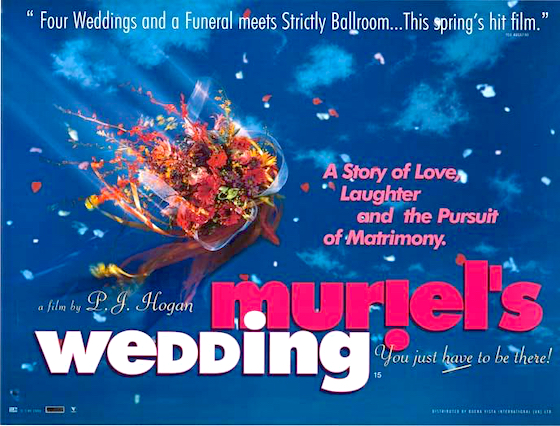
    This is one of those films I’ve been sort of aware of forever, but never really paid a huge amount of attention, until suddenly I’m watching it almost on a whim. It’s the story of the misadventures of small-town Australian girl Muriel (a breakout performance from Toni Collette), who doesn’t fit with her family or ‘friends’ and so sets off to the big city for a different life.

    I don’t know what I was expecting from the film, exactly — a kooky Aussie romcom, I guess — but not a surprisingly dark, quirky almost to the point of being twisted, black comedy. Not that that’s a bad thing, but it kind of bamboozled me by being a lot odder and more tonally complex than I’d anticipated. I liked it, but it’s a weird one.

    4 out of 5


    Cobra

    (1986)

    George P. Cosmatos | 87 mins | digital (HD) | 16:9 | USA & Israel / English | 18 / R

    Cobra

    This is the kind of film I might never have watched were it not for my WDYMYHS challenge. It’s a film I’d heard very little about, and what I had heard wasn’t good, but when it came to selecting the 12 most significant films I hadn’t seen from 1986, it scraped in. I’m glad things like that happen, because while Cobra is far from being a new favourite or something, I did enjoy it.

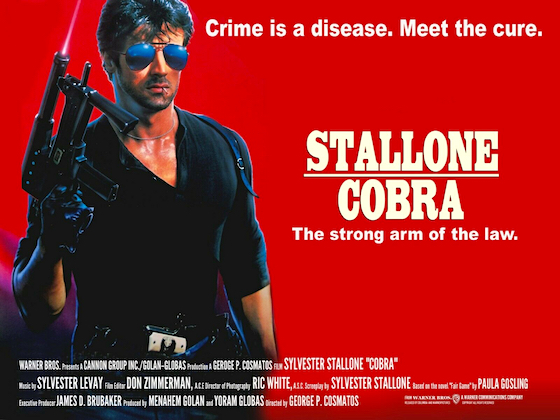
    Sly Stallone stars as a hot-shot cop on the trail of a serial killer with cult affiliations. That’s about it for the plot. This is a film that’s all style and no substance — though, when you’ve got this much style, maybe that is the substance. It’s so much a stereotypical ’80s macho action fest that it plays like a spoof of itself in places, with over-the-top editing, performances, and one liners that all seem driven by some sense of ‘cool’. I kinda love it for that. Take the car chase at the halfway mark: it’s a ludicrous sequence (one bit barely connects to the next; cars explode when shot; etc), but it’s filmed and cut with style and packed with excitement. It’s epic.

    Remarkably, it’s based on a novel. I say that’s remarkable because novels are devoid of being able to show off flashy visuals or dynamic action sequences, so you think of them as being heavier on things like plot and character — but, as discussed, this has very little plot, and even less character development. The already-brief running time seems to mostly contain music montages and extended action scenes. Reportedly the original cut was around two hours, which was then mercilessly shorn down to the under-90-minute final cut in an attempt to squeeze in more screenings per day. I imagine a lot of what went was the plot, although apparently there was also a lot of graphic violence — and what we’re left with still earnt an 18.

    I guess if a “director’s cut” was going to surface it would’ve done so by now (given all the other films that got them back in the ’00s). It’s something of a shame, because perhaps that version would round out the storyline enough to match the flair that’s all we get from the existing cut. Really, it’s a trashy film, but I rather enjoyed its trashiness. As stated, it’s all style and, at just 87 minutes, all business.

    3 out of 5

    Cobra is the 23rd film in my 100 Films in a Year Challenge 2022. It was viewed as part of “What Do You Mean You Haven’t Seen…?” 2022.


    Django & Django

    (2021)

    Luca Rea | 77 mins | digital (UHD) | 16:9 | Italy / English, Italian & French | 15

    Django & Django

    The work of the “second-best Spaghetti Western director”, Sergio Corbucci, is analysed by admirer Quentin Tarantino, and supplemented with a handful of anecdotes from a couple of people who worked with him. The small number of interviewees means the film is lacking in the depth you get from having multiple perspectives, but it’s a fine overview of Corbucci’s work nonetheless.

    Indeed, the title — implying a focus on two specific films — is a bit of a misnomer. Not only is it about Corbucci’s career as a whole, with Django just one film among many, but there’s only a single clip from Django Unchained, when QT mentions how Corbucci’s style influenced his choice of Southern setting. That’s it for discussion of Tarantino’s own work — barring a lengthy opening aside into the alternate history of Once Upon a Time in Hollywood; a ‘short story’ about Rick Dalton’s time in Italy and his meetings with Corbucci. Tarantino relates these events as if they’re historical fact — the guy really did thoroughly imagine his alternate history!

    3 out of 5

    Django & Django is the 24th film in my 100 Films in a Year Challenge 2022.


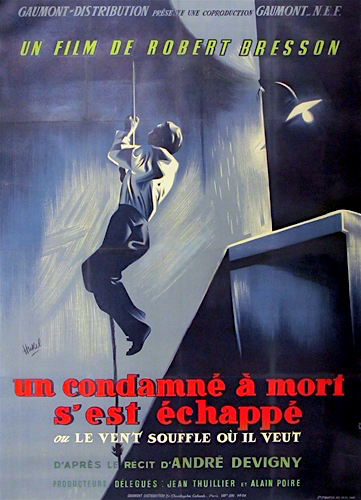
    A Man Escaped

    (1956)

    aka Un condamné à mort s’est échappé ou Le vent souffle où il veut

    Robert Bresson | 101 mins | digital (HD) | 1.33:1 | France / French & German | U

    A Man Escaped

    Most “prisoner of war” movies are about plucky Brits and/or Yanks stuck in jail somewhere behind enemy lines, working out ways to escape almost as a time killer, or at best a matter of honour. A Man Escaped is something different. Based on the memoirs of André Devigny, a member of the French Resistance held in a French prison by the occupying Germans during World War II, and written and directed by Robert Bresson, who was also imprisoned by the Germans as a member of the Resistance, you can’t doubt its pedigree for authenticity. Indeed, Devigny was an adviser on the film, and lent the production the actual ropes and hooks he had used in his escape. More than these points of fact, it’s the film’s overall tone that’s striking — more dour and pessimistic than the usual POW drama, at least as I remember them. Here, the need to escape isn’t a game, it’s literally life or death.

    Bresson certainly knows where he wants his focus to be. The film begins with our hero, Fontaine (François Leterrier), arriving at the prison, although an escape attempt on the way there sees him immediately condemned to solitary confinement. Nonetheless, we remain by his side, never leaving him or his point of view, right until the end, when… well, that would be a spoiler. In terms of background, there’s only what we can pick up along the way; the barest outline of who he is, why he’s there, and what awaits him on the outside. That’s extraneous detail — this is all about his time in prison, his mentality in prison, and how he intends to escape the prison.

    To that end, Bresson spends a lot of time detailing very little. The process by which Fontaine fashions ropes, or chips away at a crack in his door to facilitate a way out, is shown in almost-excruciating detail. It’s all about the prep. When something truly dramatic does happen — like Fontaine gaining a roommate, and the question of whether that man can be trusted — it’s dealt with quickly, confined to a couple of quick scenes. I can only think that’s part of the point: much of the work to escape prison is tedious preparation, but when a spanner gets in the works it has to be dealt with quickly lest it derail the whole enterprise. Such ‘big things’ are a potential threat, but it’s arguably the little things that are even more dangerous. Accidentally drop something noisily, thus alerting the guards to your suspicious activities, and it’s all over.

    As a film, it doesn’t feel as strikingly stylised as the other Bressons I’ve seen, but it definitely has a stripped-back simplicity that’s part of his overall ethos. It’s debatable if we need the semi-monotone voiceover that describes exactly what we can see on screen — I’m no expert, but such an unnecessary and purely cinematic addition seems out of sorts with Bresson’s usual style. That said, at points it adds insight into Fontaine’s thought process, so the narration is not without merit.

    4 out of 5

    A Man Escaped is the 25th film in my 100 Films in a Year Challenge 2022. It was viewed as part of Blindspot 2022.


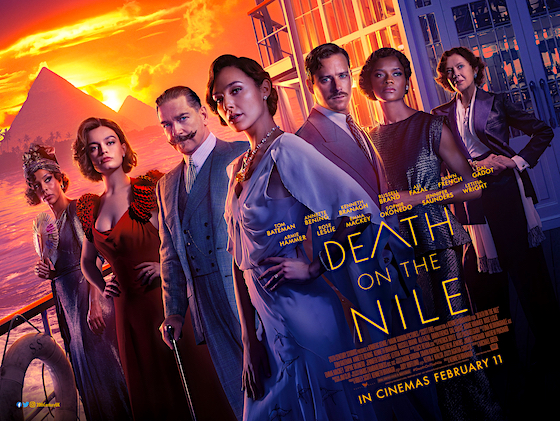
    Death on the Nile

    (2022)

    Kenneth Branagh | 127 mins | digital (UHD) | 2.39:1 | USA & UK / English & French | 12 / PG-13

    Death on the Nile

    Kenneth Branagh returns as both director and star for another Hercule Poirot mystery, after the somewhat-surprising success of his Murder on the Orient Express — “surprising” in the sense that it did better at the box office than I think anyone expected. It performed less well with critics, but I enjoyed it. Sadly, this followup is not its equal… though that’s not necessarily saying it’s bad.

    For me, it was a film of two halves — although, often as not, those two halves occurred simultaneously. For example: there’s an over-reliance on CGI for the Egyptian vistas makes many scenes look disappointingly fake; but then there’s a fantastic, huge set for the boat where much of the film takes place, and the real-life elements are quite handsomely shot on 65mm. Story-wise, there’s been a lot of rejigging (try to line up the cast with who played the roles in previous adaptations, for example, and you’ll soon discover a lot of the characters are amalgamations), but Christie’s typically excellent plotting survives mostly intact. That said, the ratio of buildup to detective work feels off, with the murder seeming to occur quite late in the film and the subsequent investigation feeling rather rushed.

    The motive behind screenwriter Michael Green’s remixing seems to be a serious attempt to make the film All About Love — not just the motive for the crimes, but all the subplots and whatnot too. I guess they were seeking some kind of justification for why this story is being filmed again, and what makes it worthy of the all-star movie treatment, rather than being just a run-of-the-mill, see-it-every-week-on-TV whodunnit. Plus, there’s a bizarre attempt to provide a backstory for Poirot’s moustache. No, seriously.

    Branagh initially seemed miscast as Poirot, but wasn’t bad in Orient Express, and that continues here. His version of the character is rather likeable, imbuing the Belgian with a neat sense of humour that marks his interpretation out from previous incarnations (Ustinov often played it for laughs too, but with less subtlety). There’s the customary all-star supporting cast, but they’re somewhat wasted, with some big names or talented performers left with too little to do. Though, when about half of them are employing dodgy accents, maybe that’s no bad thing.

    A mixed bag, then. It’s far from my favourite Christie adaptation; although it might actually be my favourite Death on the Nile by default, because I don’t think the previous versions (a Ustinov film and Suchet TV episode) are the best their respective series have to offer either. Whatever — I love this kind of stuff, and I’m glad to hear they’re intending to forge ahead with a third outing.

    3 out of 5

    Death on the Nile is the 26th film in my 100 Films in a Year Challenge 2022.


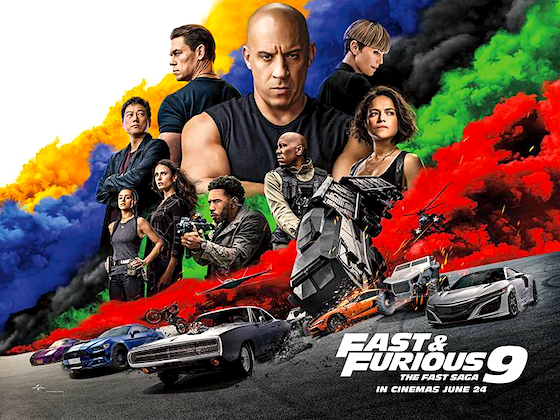
  • Fast & Furious 9 (2021)

    aka F9

    Justin Lin | 137 mins | digital (HD) | 2.39:1 | USA / English | 12 / PG-13

    Fast & Furious 9

    Between spinoffs and Covid-related delays, it’s been four years since the preceding film in what we’re apparently now meant to call “The Fast Saga”. As the series’ storyline has become increasingly serialised, I’m sure I can’t be alone in wishing they’d begin with some kind of “previously on”. That might sound a bit much for a series whose rep is, not undeservedly, “dumb action with cars”; but while that action was revving up, I was left digging around in my memory for where we’d left these characters and why some things were the way they were.

    But, let’s be honest, it doesn’t matter all that much, because before long they were racing around (literally) after one Macguffin or another, plus all the requisite shooting stuff and blowing stuff up and performing physics-defying CGI-aided stunts that have become The Fast Saga’s hallmarks. If that makes it sound a bit tired — just “more of the same” — well, remember, we’ve reached film #9. Now, in fairness, if there’s any franchise that bucks its numbering system, it’s The Fast Saga: it tried on different lead characters and various underlying formulae throughout its first four movies, only settling on one that sang in the fifth film. Nonetheless, that means we’re now on the fifth instalment that’s driven by said formula — sixth, if you count the Hobbs & Shaw spinoff, which we should — and it’s beginning to wear thin.

    Since landing on that magic formula, the series has walked a couple of tightropes: with its action, being outrageous and ridiculous but still exciting and fun; and with its mythology, being unnecessarily complicated but still followable. F9 is where, for me, it finally stumbles, and perhaps even falls off. Who can still remember the ins and outs of what went on with Han and when? Not me! And… rocketing a car into space? Seriously? Well, Top Gear almost did it for real once, so maybe it’s not entirely implausible. But that’s far from the only so-ridiculous-it’s-ridiculous stunt in the film. Fast’s stunts have never carried the same thrill as, say, Tom Cruise’s in the Mission: Impossibles because they’re unquestionably not being done for real. We’re not impressed by what they managed to physically pull off, more amused by what they dreamt up and rendered in a computer. Most of them are implausible. But here, it reaches the tipping point where I went from laughing along with it to just finding it silly.

    Sunday drivers

    What changed? Well, missing from the cast are Jason Statham and The Rock, perhaps the only two actors in the franchise who knew precisely where to pitch their performances to reassure us the filmmakers knew it was all ludicrous but it was ok. But they were only supporting players — does removing them from the equation answer every misstep? Surely not. Perhaps the director? But that’s Justin Lin, the man who saved the franchise in the aforementioned fifth film, continuing the style into the sixth; so he’s only sat out #7 and #8. But perhaps his taste or touch for the material has gone — he did recently abandon production of the series’ forthcoming two-part finale, after all.

    Whatever the root cause, I found F9 lacked the fun of the last four films (five, counting the spinoff). Looking at it another way, five entertaining movies is a good run — they were overdue another dud. As that, it’s certainly not the weakest film the series has to offer.

    3 out of 5

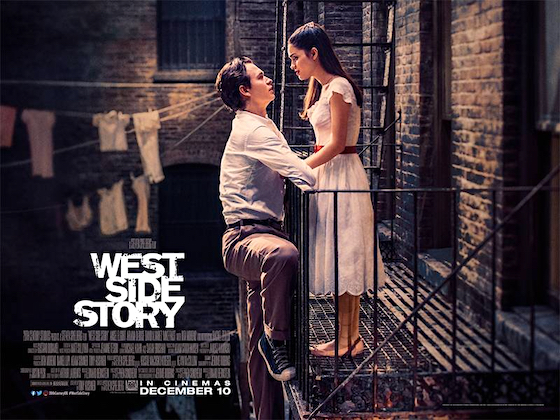
    West Side Story (2021)

    Steven Spielberg | 146 mins | Blu-ray (UHD) | 2.39:1 | USA / English & Spanish | 12 / PG-13

    West Side Story

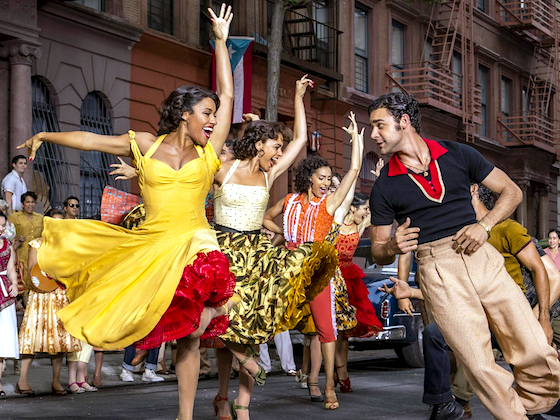
    I remember when I first heard about this remake, I couldn’t quite understand what they were going to add by redoing it. The original is a widely-acclaimed classic — why remake it? I should’ve remembered one of the golden rules of cinema: always trust Spielberg.

    If you’re somehow unfamiliar with West Side Story, it’s a reimagining of Romeo and Juliet set in 1950s New York City, with the two warring families replaced by two warring street gangs. Although the teenage love story is still present, obv., the strength here is more in its depiction of cultural clashes between different groups of immigrants — essentially, the heart of the American experience. Like most musicals, it started out on the stage before being filmed in 1961. I’m not going to dispute the classic status of that film, but it has dated — most problematically in the use of brown face to depict Puerto Rican characters, but also in its overall style, which, though shot in part on the real streets of New York, is quite stagey. Plus it made various changes to the original work, primarily in the order and therefore context of multiple musical numbers; something that Spielberg, as a fan of the stage production, sort to restore.

    In short, it worked. Well, I’ve never seen the stage production, so I don’t know if this film is more faithful to it, but it feels like a superior execution of the constituent elements. Primarily, it deepens some of the characters and their motives, most especially Tony (the Romeo figure) and Chino (his ostensible love rival, though you’d be forgiven for missing that entirely in the ’61 film). In the original film, I almost felt like Tony and Maria were a subplot, only being regarded as the leads because they’re Romeo and Juliet in what we know is an adaptation of Romeo and Juliet. Here, they get more screen time, both together and apart, and more shades to their characters, so it actually feels like they’re the leads. That doesn’t suddenly make them the most interesting characters, but you can’t have everything.

    Dance in the streets in America

    This added depth comes from the screenplay as much as the performances, which were great in the original but are fantastic here too. The Oscar-winning turn by Ariana DeBose as Anita is indeed the standout, but Rachel Zegler is perfectly sweet as Maria, and Rita Moreno thankfully has more to offer than just a tribute cameo in the Doc role. There was a lot of talk that Mike Faist was snubbed by awards for his Riff. He’s good, but doesn’t quite equal Russ Tambyln for me. The weak link is clearly Ansel Elgort as Tony. I had wondered if people were just saying that because of the allegations against him, but he’s not ideal for the role. That said, I do think he’s adequate, and the only reason to find his presence actively distasteful is if you can’t set aside the real-life stories.

    All these comparisons are inevitable, and it’s mostly in the eye of the beholder which individual aspect is better in which version; but I think it’s undeniable that Spielberg’s film looks more cinematic. It’s not just superior to the ’61 film, but a masterclass in itself: the lighting, the shot composition, the camera moves, the blocking; several songs are more excitingly staged than in the original, not least arguably the most famous, America. DoP Janusz Kaminski has been doing sterling work with Spielberg for decades now, so perhaps it’s easy to overlook just how talented they both are. In an era when mega-budgeted films increasingly look like TV shows that lean on green screen to scrape by, this is Cinema at its purest.

    Perhaps that’s why, overall, I prefer this version. Sure, the original is a classic, but Spielberg’s film is ultimately more cinematic (less stage-minded), less campy (though it doesn’t entirely ditch that aspect), and more modern, but appropriately so (with race-appropriate casting instead of awkward brownface). It’s perhaps proof that any remake can be worthwhile if done for the right reasons by the right people.

    5 out of 5

    West Side Story placed 7th on my list of The Best Films I Saw in 2022.

    2022 | Weeks 9–11

    Right, let’s try (again) to get things back on track.

    These compilations were/are meant to keep my reviewing roughly up-to-date with my viewing, but I don’t think stuffing them with too many films at once is the right way to go. I don’t know about anyone else, but I feel like five or six per post is about right (with some leeway, of course — I’m sure four or seven would be fine too). However, dividing like that means getting out of sync with Real Life, so I suppose I should clarify when “weeks 9–11” were: Monday February 28th to Sunday 20th March, to be precise. And back then, I watched…

  • Tintin and the Temple of the Sun (1969), aka Tintin et le temple du soleil
  • Los Olvidados (1950), aka The Young and the Damned
  • The Very Excellent Mr. Dundee (2020)
  • The King’s Man (2021)
  • Dirty Rotten Scoundrels (1988)
  • Nothing Like a Dame (2018)


    Tintin and the Temple of the Sun

    (1969)

    aka Tintin et le temple du soleil / The Adventures of Tintin: The Prisoners of the Sun

    Eddie Lateste* | 75 mins | DVD | 4:3 | Belgium & France / English | U

    Tintin and the Temple of the Sun

    This fourth big-screen outing for the Belgian reporter also continues the popular TV series, Hergé’s Adventures of Tintin, made by Belgian studio Belvision from 1957 to 1962. Having adapted ten of Hergé’s volumes for TV, here they tackled two more: two-parter The Seven Crystal Balls and Prisoners of the Sun. The story sees Tintin and chums head to Peru on the trail of their kidnapped friend, Professor Calculus, and to investigate an Incan curse that has befallen a previous party of archaeologists.

    Trekking up mountains and through jungles, with nefarious agents in pursuit, plus all the to-do with ancient curses and whatnot, this is chock-a-block with good old “Boy’s Own Adventure” stuff. As with so many of those, the joy lies in being swept along with the adventure rather than thinking about it too hard (our heroes are saved at the end because the Captain happens to have a scrap of newspaper that Snowy happens to steal that Tintin happens to fancy having a look at that happens to mention a handy forthcoming event). By the same token, there’s also the unavoidable effects of time: some of it feels a teensy bit racist nowadays; Tintin makes his way through the jungle merrily murdering animals left, right and centre. The animation itself is fine, with designs and an overall visual style that emulate Hergé well, but it does have a certain TV-ness.

    It’s also not available in the greatest of copies, at least to English-language viewers. Reportedly the original version contains two songs, both of which were cut from the UK video release, but only one of which has been restored for the DVD (and, I presume, the version currently available to stream from Apple, etc). Although most of the film is dubbed, the song is in the original French, unsubtitled; and has clearly been edited, because there are digital freeze frames around it. At the start of the film, the title card has been replaced in a similarly awkward fashion. Then there’s the 5.1 remix, which seems to be missing some effects and music cues. You can still enjoy the majority of the film despite these distractions, but it’s disappointing that we still have to put up with such palaver nowadays.

    3 out of 5

    Tintin and the Temple of the Sun is the 19th film in my 100 Films in a Year Challenge 2022.

    * Many (but not all) online sources list Lateste as the director, including IMDb, but the film itself doesn’t actually credit him — the only director-like credit is for “Belvision”. Lateste is credited as one of the screenwriters, at least. ^


    Los Olvidados

    (1950)

    aka The Young and the Damned

    Luis Buñuel | 81 mins | digital (HD) | 1.37:1 | Mexico / Spanish | 12

    Los Olvidados

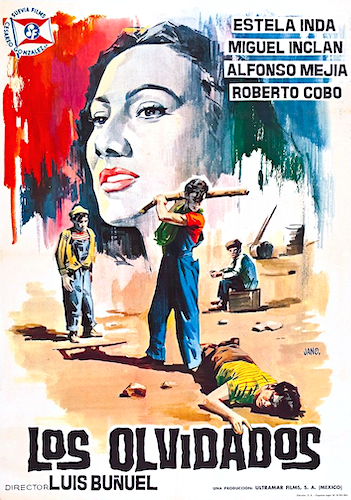
    Combine the literal translation of the film’s title — The Forgotten Ones — with the US retitling — The Young and the Damned — and you build a sense of what Los Olvidados (as it’s been released in the UK) is about. To be clearly, it’s a socially-realist depiction of life for children in the slums of Mexico City. Although initially condemned (according to IMDb, it only played for three days in Mexico before the “enraged reactions” of the press, government, and upper- and middle-class audiences caused it to be pulled), it’s since been reevaluated as one of the greats of Latin American cinema. Certainly, watching it after films like The 400 Blows (made almost a decade later), City of God (over 50 years later), and Capernaum (almost 70 years later), its influence is felt.

    The downside to that is the film feels somewhat less fresh and more worthy than the later efforts. It’s got an overt anti-poverty message that is admirable but sometimes heavy-handed (a school principal character feels like he’s been inserted just to state the film’s thesis out loud) or naïvely optimistic (the opening voiceover asserts that child poverty will ultimately be solved by progress. Over 70 years later, I don’t think progress is doing a great job…) While much of the movie works at its intended goal, when aspects like these intrude it stops feeling like a realistic depiction of poverty and more like a straightforward polemic about how it should be fixed. On the bright side, it avoids the lure of a pat happy ending — although one was actually discovered in 2002, apparently shot to appease Mexican censors. Clearly they managed to get the film released without having to cave on that point, and it’s better for it.

    4 out of 5

    Los Olvidados is the 20th film in my 100 Films in a Year Challenge 2022. It was viewed as part of Blindspot 2022.


    The Very Excellent Mr. Dundee

    (2020)

    Dean Murphy | 88 mins | digital (HD) | 2.35:1 | Australia & USA / English | 12 / PG-13

    The Very Excellent Mr. Dundee

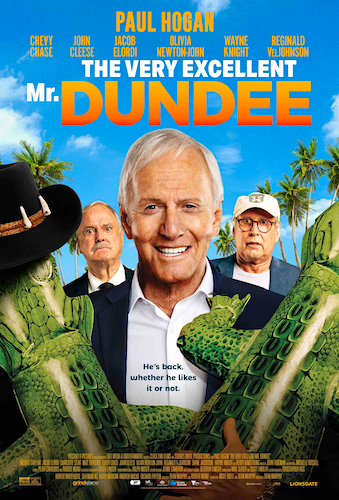
    Not a fourth Crocodile Dundee film, but rather a depiction of the accidentally-chaotic life of that series’ leading man, Paul Hogan, the archetypal Aussie now living in LA and, reaching his 80s, somewhat bemused by the modern world.

    Even from that quick summary, you can tell it’s not a terribly original premise. Couple that with a clearly small budget and you have a recipe for many dismissing the film out of hand. Personally, I found it to be surprisingly enjoyable, in a laidback, undemanding way. None of it is properly hilarious (though a bizarre musical sequence comes close), but it’s kinda amiable, and almost heartwarming at the end. Discerning viewers should perhaps not apply, but if you have any affection for the second or third Crocodile Dundee films (again, widely maligned instalments that I found passably entertaining), this is worth a punt.

    3 out of 5


    The King’s Man

    (2021)

    Matthew Vaughn | 131 mins | Blu-ray (UHD) | 2.39:1 | UK & USA / English | 15 / R

    The King's Man

    Co-writer/director Matthew Vaughn expands the Kingsman universe with this World War I-era prequel that delves into the backstory of how the eponymous organisation was founded. Unlike so many prequels, this does feel like a story worth telling — we don’t necessarily need it, but it’s not merely an exercise in visualising events we’ve already been told, or coming up with over-elaborate reasons for people’s names or whatever (why couldn’t Han Solo’s birth name have just been Han Solo, hm?)

    The story begins with Europe on the brink of war, and our heroes — led by the Duke of Oxford (Ralph Fiennes) — attempting to stop it. History tells us they fail, and so the narrative unfurls across WWI as they try to bring it to a close. That will see them come up against the manipulations of Rasputin (Rhys Ifans), who’s part of a secret organisation plotting to bring down the great empires.

    Let’s cut to the chase: the Kingsman films have a rep for elaborate fight scenes set to pop music. One of the major villains is Rasputin. You only need a passing familiarity with the disco hits of the ’70s to know what I was looking forward to here. Well, it doesn’t happen. Indeed, that stylistic calling card is more or less entirely abandoned (the fight does happen, of course, but it’s set to Tchaikovsky’s 1812 Overture — kind of like era-appropriate ‘pop’ music, I guess?) Apparently Vaughn did originally intend the sequence to be set to an orchestral version of the song in question, but ultimately felt it didn’t work.

    This, perhaps, speaks to another concern I had going in, which was that Kingsman’s highly irreverent, almost satirical tone might clash with the all-too-real WWI setting. Such an historical tragedy doesn’t feel right to be made light of in that way, even over a century later. So, as if to compensate, Vaughn and co have toned down the humour, making The King’s Man fairly serious… but without fully sacrificing the near-whimsy at other times, because, well, it’s part of the franchise. The result is a little awkward, tonally, swinging back and forth between historical seriousness and franchise-establishing fun. Put another way, it’s hamstrung by being an entry in a series known for its irreverence that feels the need to show due reverence to WWI. That’s a clash of values it struggles with, some might say admirably, but can’t quite reconcile. In short, it’s too serious to be a Kingsman film, but too Kingsman-y to be a standalone WWI-set action-adventure.

    I wouldn’t say it’s a disaster, by any means — but then, I enjoyed The Golden Circle when many lambasted it, so make of that what you will. Nonetheless, I’m looking forward to the next film getting back to Eggsy & co in the present day.

    3 out of 5


    Dirty Rotten Scoundrels

    (1988)

    Frank Oz | 110 mins | digital (HD) | 1.85:1 | USA / English | PG / PG

    Dirty Rotten Scoundrels

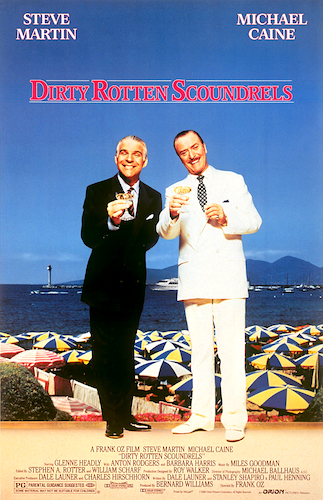
    Michael Caine and Steve Martin star as a couple of chalk-and-cheese con men, pilfering the fortunes of wealthy single ladies on the French Riviera, in this fun con caper with a neat sting in its tail.

    Caine hits just the right note as a charming con artist, his manner inspired by David Niven, who played the role in the original, 1964’s Bedtime Story. I was unaware the film was a remake until after watching it, though I did know it was itself subject to a gender-bent do-over in 2019, The Hustle. I don’t know how similar Bedtime Story and Dirty Rotten Scoundrels are, but, based on its trailer, The Hustle seems to be a direct lift from this, albeit peppered with the kind of pratfalling that’s de rigueur in modern big screen comedy.

    Marlon Brando was Niven’s co-lead, whereas here Caine gets Steve Martin as the very embodiment of a brash American — a little too brash, if anything, though reportedly there were bits he actually reined in. The running time could have done with a similar consideration, because it’s a little long for its breezy premise and tone (running 110 minutes, it would be better nearer 90), but that’s a minor complaint — it rarely feels too slow or draggy, just a little long overall.

    4 out of 5

    Dirty Rotten Scoundrels is the 21st film in my 100 Films in a Year Challenge 2022.


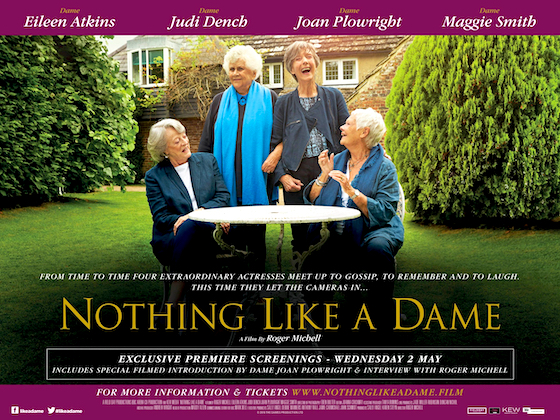
    Nothing Like a Dame

    (2018)

    aka Tea with the Dames

    Roger Michell | 77 mins | digital (HD) | 16:9 | UK / English | 12

    Nothing Like a Dame

    Four thespian friends, Dames all — Eileen Atkins, Judi Dench, Joan Plowright, and Maggie Smith — gather for a natter about their careers and lives. That’s it, that’s the film.

    Given the setup, plus the style of advertising and US retitle, you’d be forgiven for expecting a gentle bit of fluff; eavesdropping on a pleasant chinwag with four venerable British actresses. The film is that, in places, but it also has a surprising undercurrent of sadness running throughout, as these ageing ladies reflect on the ups and downs of their careers and personal lives now that they’re (shall we say) closer to the end than the beginning. It rarely bubbles to the surface, but it always feels like it’s there, somehow inescapable.

    If that gives proceedings more texture than you might’ve expected, then the film’s biggest flaw lies elsewhere. For me, it’s that it wasn’t long enough. The conversations are often delightful and occasionally insightful, but you feel like there’s so much more to be gleaned from these women. The film chops about between topics and pairings, always feeling like we’re getting snippets of the full conversation, never the true depth; like we’re watching a highlights reel of what should be a three-hour series, or something like that. I know it’s an old theatrical adage to “leave ’em wanting more”, but I really did want some more.

    4 out of 5


  • 2022 | Weeks 7–8

    It’s been a hectic time, both at work and in my personal life, these past few weeks. I’ve managed to carve out a small amount of time for some film watching (though not as much as I’d like), but little for film reviewing — hence why there’s not been an Archive 5 for a fortnight, and why this update comes over two weeks after the period it covers.

    But better late than never, and the only way to get back on track is to get on, so…

  • Shot in the Dark (1933)
  • The Brits Are Coming (2018), aka The Con Is On
  • Ode to Joy (2019)
  • The Courier (2020)
  • The Misfits (2021)


    Shot in the Dark

    (1933)

    George Pearson | 52 mins | digital (SD) | 4:3 | UK / English

    Shot in the Dark

    The works of Agatha Christie and G.K. Chesterton are casually evoked in this ‘quota quickie’ murder mystery, adapted from a novel by H. Fowler Mear, a screenwriter whose Wikipedia entry describes him as “competent but uninspired”. (FYI, the film is often listed as A Shot in the Dark online, I presume due to confusion with a couple of slightly later films that go by that title. As the title card makes plain, there’s no A here.)

    When a wealthy old man dies of a gunshot, it’s ruled a suicide; but when the family gather to listen to the will he recorded, the deceased claims he must have been murdered. Before he can make any further accusations from beyond the grave, the record goes missing. Fortunately, the local vicar (O.B. Clarence) happens to be passing at the time, and sticks his nose in — to find both the record and the murderer.

    There’s nothing particularly special about the mystery that unfolds. As a detective, the vicar is a cut-price Father Brown knockoff; a weak caricature of the Sherlock Holmes type: every time he interviews someone, he seems to already know everything they’re going to tell him, if not more. It’s quite fun that almost everyone confesses to the murder at one time or another, only to turn out to not actually be responsible, but I have trouble crediting that as a deliberate gag — it’s not emphasised enough for that to be the case. When the actual culprit is eventually revealed, how and why the crime was committed isn’t properly explained. This is the kind of film that doesn’t see the value in wasting valuable screen time on things like “motive” and “plausible opportunity” and “plot twists” when it can offer dark & stormy nights and people storing poison next to medicine and secret passageways. Indeed, when they find a secret room, it turns out to have its own secret room — that’s the kind of work we’re dealing with here.

    All in all, it’s not <i<bad for a quick little murder mystery, but it’s not strictly good either. It scrapes a 3 by the skin of its teeth.

    3 out of 5

    Shot in the Dark is the 16th film in my 100 Films in a Year Challenge 2022.


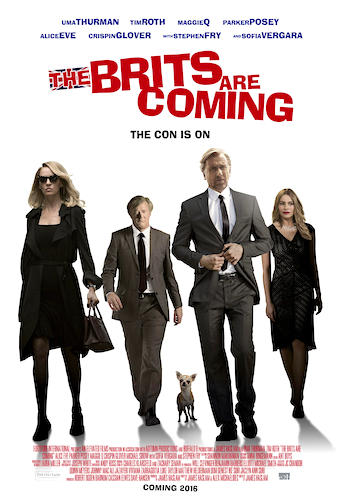
    The Brits Are Coming

    (2018)

    aka The Con Is On

    James Haslam | 91 mins | digital (HD) | 2.35:1 | UK & USA / English | 15 / R

    The Brits Are Coming

    Uma Thurman and Tim Roth star as a couple of British crooks who accidentally gamble away a pile of cash belonging to a crime lord (Maggie Q), so flee to LA to steal the expensive new engagement ring of his ex (Alice Eve).

    As a crime-comedy caper, you feel like this must have read funny — how else to explain such a starry cast in such a cheap-feeling production? Assuming that’s the case, something definitely got lost between page and screen: almost everything about The Brits Are Coming seems as if it should work, and yet almost none of it does. The occasional moment lands, amid a barrage of F-words so unnecessary you wonder if the film was in some kind of competition to use as many as possible. You sense the cast might’ve been having fun, at least, though supporting appearances from the likes of Stephen Fry and Crispin Glover do little to elevate the material.

    1 out of 5


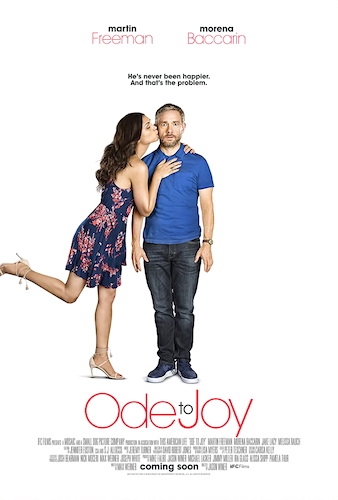
    Ode to Joy

    (2019)

    Jason Winer | 97 mins | digital (HD) | 2.35:1 | USA / English | 12 / R

    Ode to Joy

    Charlie (Martin Freeman) has cataplexy, a rare neurological condition that means if he feels a strong emotion — in his case, happiness — he passes out. Unfortunately for Charlie, he seems to be a bit of a softy: even just seeing someone with their baby or cute dog on the street is liable to make him wobbly. So Charlie lives an uneventful life, working in a library (what better place for calm?) and never doing anything particularly interesting. Certainly never dating. But then one day he defuses a situation involving Francesca (Morena Baccarin), who takes a shine to him; and of course he’s interested in her, because, duh, it’s Morena Baccarin. Can Charlie manage to be happy… but not too happy?

    If it all sounds a tad far-fetched, you should know that it’s inspired by a true story (there’s even a writing credit acknowledging the journalist behind the original piece). Nonetheless, the fictionalised version could easily have turned the premise into something ridiculous, but a solid screenplay and great cast ensure it stays balanced on just the right comedy-drama line. Freeman is perfect casting for “man who would like to be happy but must keep himself miserable”, playing to strengths he’s displayed ever since his breakthrough role in The Office. As his love interest, Baccarin could probably have got away with just looking pretty, but there’s more zest to her character than that. Among the supporting cast, The Big Bang Theory alum Melissa Rauch is particularly hilarious as Francesca’s ‘boring’ friend who Charlie ends up dating instead. She’s the closest thing the film has to an outright “comedy character”, but the screenplay and Rauch’s performance manage to round her out.

    Ode to Joy could’ve coasted on easy (if probably repetitive) gags derived from Charlie’s condition, or it could’ve more-or-less ignored it as simply a hook for a bog-standard romcom. Instead, it’s something a bit more thoughtful, exploring what it really means to be “happy”, as well as where and how we find happiness. Not to mention that age-old question, what’s the point in living if you don’t feel alive?

    4 out of 5


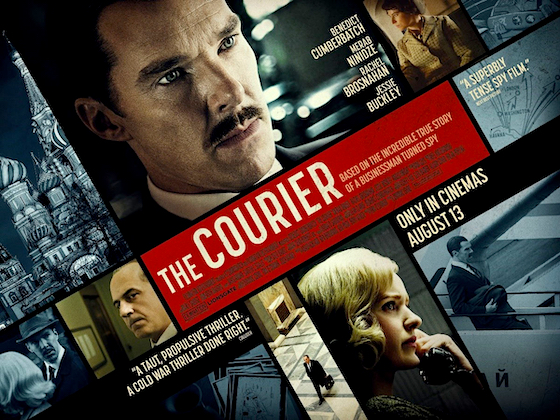
    The Courier

    (2020)

    Dominic Cooke | 112 mins | digital (UHD) | 2.39:1 | UK & USA / English & Russian | 12 / PG-13

    The Courier

    A fascinating true story that I wasn’t the slightest bit aware of, The Courier stars Benedict Cumberbatch as nondescript businessman Greville Wynne, who was recruited during the Cold War by MI6 and the CIA to travel to Russia and collect information offered by an asset in Soviet military intelligence, Colonel Oleg Penkovsky (Merab Ninidze), at that time the highest-ranked Soviet to leak intelligence to the West. Definitely sounds like spy novel stuff, but, as I said, it’s all true (well, except for the bits tweaked for dramatic licence, obv).

    As regular readers will no doubt have inferred from my reviews of James Bond, John le Carré adaptations, and other similar fare, I love a bit of Cold War espionage. Normally that’s of the fictional variety — I guess most of the true stories aren’t quite as exciting, or remain too classified — but there’s nothing quite like knowing the events you’re witnessing actually took place. That said, the events depicted here fall under the latter category, as they’re officially still classified. Screenwriter Tom O’Connor reportedly pieced the narrative together from various sources, which I imagine helps make this as close to the truth as we’re likely to get, for now at least.

    Either way, it’s a suitably thrilling tale, powered by two superb lead performances from Cumberbatch — initially reluctant and floundering, but increasingly self-assured and moralistic — and Ninidze — controlled and honourable, but with an emotional undercurrent. Strong supporting turns, too, from the likes of Jessie Buckley and Rachel Brosnahan, don’t let us forget the very human cost of the spy games, especially if things should turn sour…

    By the end, you definitely feel that the actions of Wynne and Penkovsky should be better known. Perhaps the need for keeping official secrets has stymied that — although (without wishing to spoil what happens) some events did make news at the time, and this isn’t the first drama or documentary to cover the case — but The Courier stands as a valiant effort to bring their tale to a wider audience.

    4 out of 5


    The Misfits

    (2021)

    Renny Harlin | 95 mins | digital (HD) | 2.39:1 | USA, UAE & Finland / English | 15 / R

    The Misfits

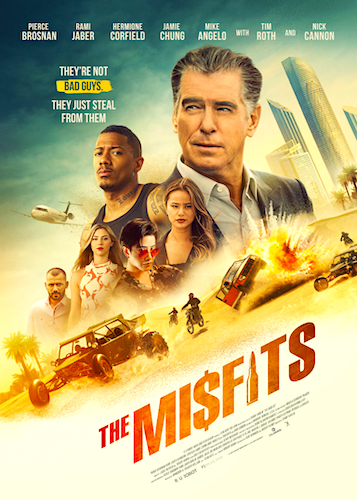
    If you thought Michael Bay’s 6 Underground was bad, The Misfits is here to show you what a properly poor “former crooks do good deeds from the shadows” action movie looks like.

    The eponymous ‘Misfits’ are a small group of international Robin Hoods, preying on the rich and selfish for the benefit of the poor and helpless. Their latest job is to steal the gold reserves of a terrorist organisation, which are kept safe in a prison owned by Warner Schultz (Tim Roth, slumming it again), so they recruit his nemesis: thief and multi-time Schultz prison escapee Richard Pace (Pierce Brosnan, only half succeeding to reconjure the roguish charm he deployed decades ago in similarly-themed films like The Thomas Crown Affair).

    Despite the involvement of a couple of big-ish names in front of the camera and a former blockbuster director behind it (Renny Harlin, whose credits included Die Hard 2 and Cliffhanger before a couple of flops relegated him to rental-shelf-filler fare), The Misfits looks like it was made for £3.50 and a favour from the Abu Dhabi tourist board (the city appears glamorous and expensive, unlike anything else about the film).

    The screenplay feels like it was generated by an AI fed on every low-rent heist movie from the last 30 years. It’s not just clichés, but the way it drifts along with a “this is the sort of thing that happens in this sort of movie” logic, not particularly caring if it makes objective sense. The construction is sloppy, too. For example, a ton of time is devoted upfront to introducing the ‘Misfits’, only for most of them to be 2D one-trick pies (a thief, a fighter, an explosives expert, etc) who are supporting characters in what is really Brosnan’s film. I thought it was going to be a case of bait-and-switch marketing — make the famous actor prominent on the poster, only for his role to be little more than an extended cameo when the film is really about these other guys — but no, he’s genuinely the lead, it’s just the film is weirdly built. And that’s before we get onto the centrepiece heist itself, where the inevitable twists and reveals are either too clearly telegraphed, or simply pulled out of thin air (the gold isn’t there, it’s here! Except it’s not here, it’s there! But it’s not there, it’s here!)

    If you are exceptionally forgiving, The Misfits has vague merit as entertainment, but it’s a very hollow kind of fun. If you’re in the mood for the particular joys of a heist movie, and you can’t think of or get hold of another one at that minute, it would probably scratch the itch.

    2 out of 5

    The Misfits is the 18th film in my 100 Films in a Year Challenge 2022.

  • Archive 5, Vol.5

    I have a backlog of 427 unreviewed feature films from my 2018 to 2021 viewing. This is where I give those films their day, five at a time, selected by a random number generator.

    Today, melancholic Frenchmen, screwball Americans, and royal Africans are followed by a superhero team-up and a lesson on the evils of social media.

    This week’s Archive 5 are…

  • La Belle Époque (2019)
  • The Awful Truth (1937)
  • Coming to America (1988)
  • Scooby-Doo! & Batman: The Brave and the Bold (2018)
  • The Social Dilemma (2020)


    La Belle Époque

    (2019)

    Nicolas Bedos | 115 mins | cinema | 2.35:1 | France / French | 15 / R

    La Belle Époque

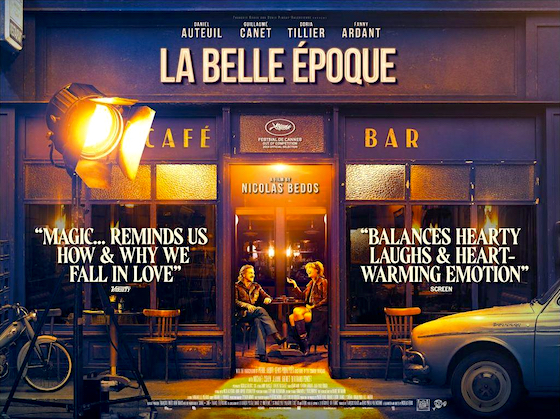
    Sixtysomething Victor (Daniel Auteuil) is officially a grumpy old man, and his marriage is on the rocks because of it. To cheer him up, his son buys him an experience with his friend’s company, who stage bespoke historical reenactments as a form of time travel. When Victor’s wife finally has enough and throws him out, he uses his experience to revisit 1974, when they first met and fell in love.

    To oversimplify things, it’s kind of like Groundhog Day by way of Charlie Kaufman: the immersive theatrical experience recalls Synechdoche, New York (in a superficial way, I guess), and Victor’s desire to live it over and over again is, well, obvious. Except he’s not stuck there, but choosing it. It’s a mix of nostalgia and melancholy, because, of course, he’s not actually reliving that day, however much he comes to believe in it.

    Advance reviews led me to believe La Belle Époque would be little more than a pleasant diversion, but there’s a lot more to it than that. It clearly has something to say as regards the power of nostalgia and the need to live in the present. But, deep thoughts aside, it’s also a charmingly romantic film — sharply witty, unexpectedly beautiful in places, and genuinely emotional by the end. It’s a shame that it seems to have had half-hearted distribution outside of France (perhaps the fault of it being acquired by Disney, I suspect with an English-language remake in mind, rather than a ‘proper’ distributor of foreign fare who would’ve shown it more love) because I think it deserves, and would reward, a wide audience.

    5 out of 5

    La Belle Époque was #140 in my 100 Films in a Year Challenge 2019. It placed 7th on my list of The 15 Best Films of 2019.


    The Awful Truth

    (1937)

    Leo McCarey | 91 mins | Blu-ray | 1.37:1 | USA / English | U

    The Awful Truth

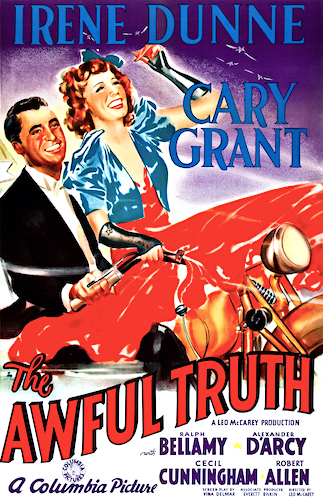
    When Leo McCarey received his Best Director Oscar for this film, he said that he got it for the wrong film — a clear reference to his fondness for Make Way for Tomorrow, which he made the same year. I’m not wholly sure I agree with him, although Tomorrow’s is clearly the ‘worthier’ picture — but that doesn’t always mean better.

    The Awful Truth was the first of three screen pairings of Irene Dunne and Cary Grant, and the film that refined the latter’s famous screen persona. Here, the duo play a married couple who begin to divorce, only to then interfere with each other’s further romances. When it’s on form, the film is up there with the best of its subgenre: a sparkling screwball comedy with glorious dialogue, a pair of splendid lead performances, and a magnificent dog. Unfortunately, it goes on a mite too long and begins to lose steam in the final act. While that might hold the film back from perfection (and so open the door to the idea that Make Way for Tomorrow is somehow superior), the magnificence of what comes before means it’s still a must-see for fans of this style of comedy.

    4 out of 5

    The Awful Truth was #95 in my 100 Films in a Year Challenge 2021.


    Coming to America

    (1988)

    John Landis | 117 mins | digital (HD) | 16:9 | USA / English | 15 / R

    Coming to America

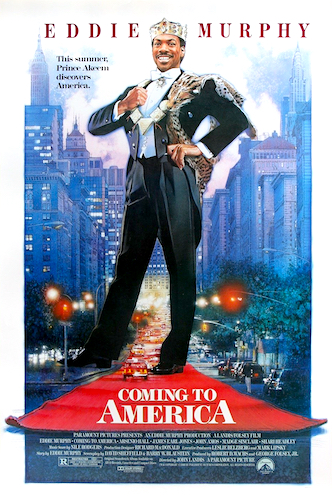
    Eddie Murphy plays a pampered but bored African prince, who dodges an arranged marriage to travel to America and find a bride. With that plot and the fact it was made a few decades ago, I was half expecting Coming to America to have aged badly. If nothing else, it seemed primed to base its humour around cringe-inducing culture-clash awkwardness — not necessarily an invalid kind of comedy, but not one I personally enjoy.

    As it turns out, it’s nothing of the sort. In fact, it’s actually rather sweet and kind-hearted, with just enough lewdness to give it a kick rather than make it eye-rollingly vulgar (I’m sure it would only take a couple of minor trims to get that 15/R rating down to a 12/PG-13). Some have criticised it for being too slow — including director John Landis, who asked Paramount if he could re-edit it for the Blu-ray release (they refused) — but I thought it was quite well paced. It doesn’t move at whipcrack speed, but it doesn’t need to. All in all, it holds up well enough that I can see why they decided to produce a belated sequel (which is still on my watchlist).

    4 out of 5

    Coming to America was #28 in my 100 Films in a Year Challenge 2021.


    Scooby-Doo! & Batman:
    The Brave and the Bold

    (2018)

    Jake Castorena | 75 mins | digital (HD) | 1.78:1 | USA / English | PG

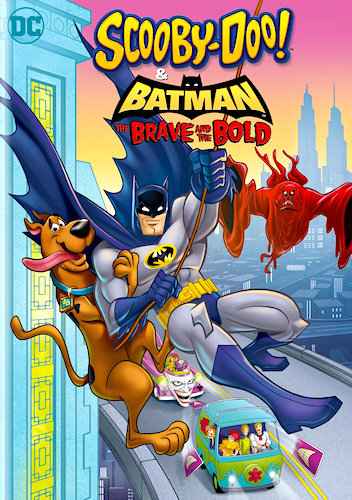
    Scooby-Doo! & Batman: The Brave and the Bold

    There are an awful lot of Batman movies nowadays (58 and counting, according to my Letterboxd list), but I thought I was at least aware of them all. Turns out not, because I hadn’t even heard of this one until I happened to see someone log it on Letterboxd several years after its release. (It’s a direct-to-video production that they didn’t bother to release on Blu-ray, so that’ll be a big part of why it slipped under my radar.)

    A plot description is pretty unnecessary here: the title tells you all you need to know. The reason it’s a particularly unwieldy one is because Scooby-Doo and friends team-up with, specifically, the Batman from animated series Batman: The Brave and the Bold. I watched a selection of episodes from that show a few years ago and, frankly, didn’t enjoy most of them (although a couple are excellent: Mayhem of the Music Meister is so good I watched it twice in as many days, which regular readers will know is very unlike me), so I didn’t have high hopes for this movie either.

    At least it’s an appropriate iteration of Batman to crossover with Scooby-Doo, because (a) the whole point of the show was team-ups, with every episode seeing Batman join forces with a different DC hero (the subtitle is derived from a classic DC team-up comic), and (b) the overall tone of the show was camp and comical, which chimes well with Scooby-Doo. In fact, despite Scooby-Doo getting top billing, the film is really a feature-length episode of Batman: The Brave and the Bold guest starring Mystery Inc, rather than the other way round. I mean, it’s set in Gotham City, stuffed with appearances and cameos by other DC characters, and (most of all) it uses The Brave and the Bold’s animation style, even featuring a version of the series’ title sequence and theme music — with a Scooby makeover, of course. Nonetheless, it also adopts plenty of the tropes of a Scooby-Doo story, like the unmasking at the end.

    Thanks to all that, it’s everything you’d expect from “Scooby-Doo meets Batman” — they leave nothing on the table, right down to having Scooby actually say, “Holy Scooby-Dooby-Doo, Batman!” And would you have it any other way? It’s a daft concept, mashing these two cheesy franchises together — there’s no point trying to be above it. By embracing what it is, it delivers what you’d expect as well as could be imagined. For that, I quite enjoyed it on the whole. And so I would say that, if the basic idea of it doesn’t interest you, give it a miss; but if you think it sounds potentially appealing, you should definitely watch it.

    3 out of 5

    Scooby-Doo! & Batman: The Brave and the Bold was #105 in my 100 Films in a Year Challenge 2020.


    The Social Dilemma

    (2020)

    Jeff Orlowski | 94 mins | digital (UHD) | 16:9 | USA / English | 12 / PG-13

    The Social Dilemma

    One of those Netflix documentaries that everyone seems to be talking about for a while but then forgets just as quickly, The Social Dilemma is essentially about how dangerous social media is, as told to us by the people who created it. Not the Mark Zuckerberg of the world, obviously — they’re still raking in far too much cash to want to dissuade us from using their products — but various other developers and whatnot who’ve been involved over the years.

    Naturally, the main reaction to all this information is: “OMG, I totally need to change all my social media habits!” And do people? Not as far as I’ve seen. As one contributor in the doc comments, “knowing what was going on behind the curtain, I still wasn’t able to control my usage. So that’s a little scary.” Eesh. We’re doomed.

    4 out of 5

    The Social Dilemma was #20 in my 100 Films in a Year Challenge 2021.


  • 2022 | Weeks 4–6

    It’s been a busy start to the year… at my day job, which has had the knock-on effect of lower film viewing than has been the case in recent years. (I say that, but as February passes its midpoint, I’ve actually watched slightly more films than I had at the same point in 2020; but the last time I was lower than that was right back in 2014, so…)

    As well as work, there’s the psychology of my new reviewing practices. These regular up-to-date roundups have taken me right back to the days when I used to review everything in order, and how not being caught-up on my reviews made me not want to watch anything more. I’m getting those same kinds of twinges now. I need to try to use them to my advantage — take the time to read more books or something.

    Anyway, enough about me — let’s have some film reviews…

  • Voyage of Time: An IMAX Documentary (2016)
  • L’avventura (1960)
  • She’s Gotta Have It (1986)
  • Don’t Look Up (2021)
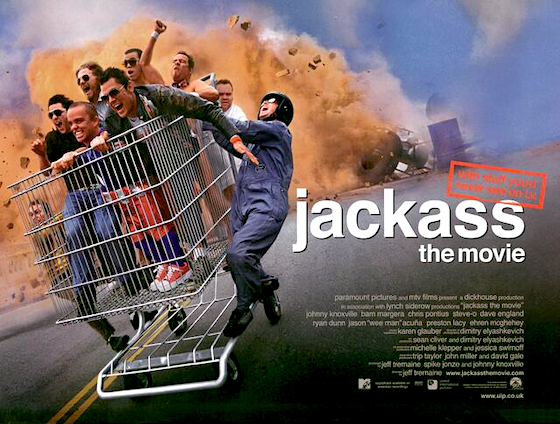
  • Jackass: The Movie (2002)
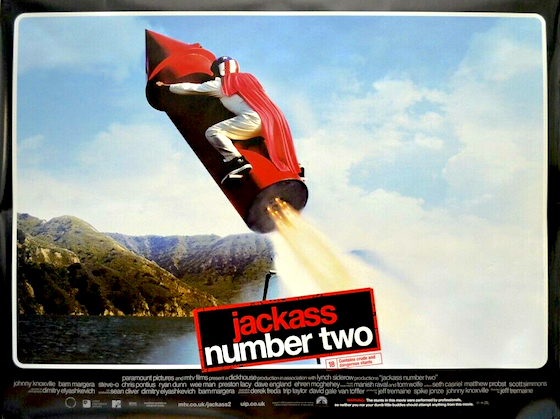
  • Jackass Number Two (2006)


    Voyage of Time

    (2016)

    aka Voyage of Time: An IMAX Documentary / Voyage of Time: The IMAX Experience

    Terrence Malick | 46 mins | digital (UHD) | 1.90:1 | USA / English | NR / G

    Voyage of Time: An IMAX Documentary

    Calling a film “a visual poem” sounds either clichéd or pretentious, or both, but how else to accurately describe this work by Terrence Malick? It’s labelled “a documentary”, because only because it’s not strictly fiction — if you come looking for the kind of education you’d get from something narrated by David Attenborough or Brian Cox, say, then I think you’d leave disappointed.

    No, film-as-poetry is the most appropriate way to attempt to engage with Voyage of Time; and, as with so much written poetry, your personal tolerance for and interest in it will vary. That’s how I found it, anyway: like most poetry, I felt I should appreciate it, but really was glad it was quite short. (The non-IMAX version of the film, subtitled Life’s Journey, runs about twice as long.) There’s some stunning photography, of everything from the birth of the universe to prehistoric vistas (presumably shot in remote modern-day locales rather than computer-generated), and Brad Pitt occasionally whispers some abstrusely meaningful ponderings over the top. As much as the pretty pictures are a draw, you can also find gorgeous nature photography in a BBC Attenborough documentary, and you’ll learn something at the same time.

    The IMAX version of the film has been streaming on MUBI since the end of last year, and they definitely sold it on the visual experience, boasting about offering it in 4K. I found the quality to be variable, with the stream unable to keep its end up for the whole running time, sometimes sinking to sub-1080p levels, becoming blocky and compressed. This is why physical media remains the best, when possible.

    3 out of 5

    Voyage of Time: An IMAX Documentary is the 11th film in my 100 Films in a Year Challenge 2022.


    L’avventura

    (1960)

    aka The Adventure

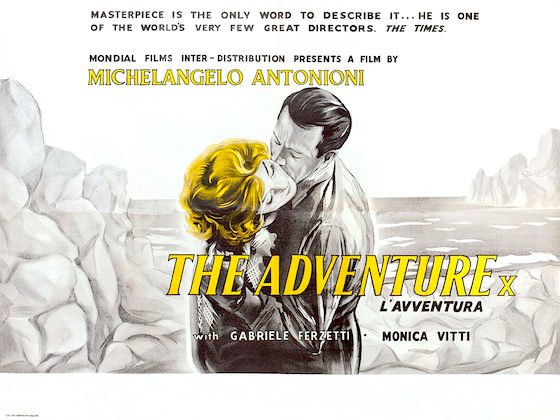
    Michelangelo Antonioni | 143 mins | digital (HD) | 1.85:1 | Italy & France / Italian, English & Greek | PG

    L'avventura

    I don’t have a great track record for enjoying acclaimed classic Italian cinema (neither Bicycle Thieves nor were to my taste, for example), so I’ve put off watching L’avventura for years, expecting I wouldn’t get on with it. But, inevitably, I had to face it someday… and, as it turned out, I really liked it… for a while…

    The film begins with Claudia (Monica Vitti) and her wealthy friend Anna (Lea Massari) meeting up with the latter’s wealthy boyfriend, Sandro (Gabriele Ferzetti), to go for a cruise on the yacht of some other wealthy friends. When they dock on a small island, Anna goes missing. The party scour the island, but there’s no sign of her. Police and divers arrive, but no luck. Reports suggest maybe she boarded another boat; possibly she was kidnapped. The wealthy friends quickly drift back to their lives, but Claudia and Sandro keep searching, following scant clues. Soon they too begin to get distracted — by each other.

    I don’t think it’s a spoiler to say that L’avventura starts out looking like a missing-person mystery only to get sidetracked into being a kind of romantic drama. I certainly knew that going in; and it’s probably beneficial to know it, spoiler or not, so as to manage your expectations of the film appropriately. Anyone expecting a Christie-style hunt through clues and suspects until the truth is unearthed will come away severely disappointed. No, this is the Mystery genre reimagined through an arthouse lens: it’s inconclusive, more interested in the characters than the hunt they’re on, and notoriously slow paced.

    With that in mind, I was surprised by how effective I found the mystery part of the movie. It’s not a whistle-stop action-adventure, but it’s not significantly slower than your average murder mystery, and accusations of it being uneventful seem misplaced — if I were expecting it to unfold like a regular mystery, there’d be plenty of places to look out for clues. It’s as the film shifts more towards Claudia and Sandro’s burgeoning romance that it begins to drag. The pair start just hanging around places as tourists, at which it does begin to seem like nothing’s happening and so what’s the point? The conceit of them falling for each other when they’re meant to be searching for someone they mutually care about is a good storyline, but I wasn’t convinced by how it played out. There doesn’t seem to be any time when they’re actually falling in love, they just suddenly are. Maybe I’m missing some point there. Or maybe it’s beside the point. Until I can work that one out, I’m going to have to chalk this up as half great, half A Shame.

    4 out of 5

    L’avventura is the 12th film in my 100 Films in a Year Challenge 2022. It was viewed as part of Blindspot 2022.


    She’s Gotta Have It

    (1986)

    Spike Lee | 84 mins | digital (UHD) | 1.66:1 | USA / English | 18 / R

    She's Gotta Have It

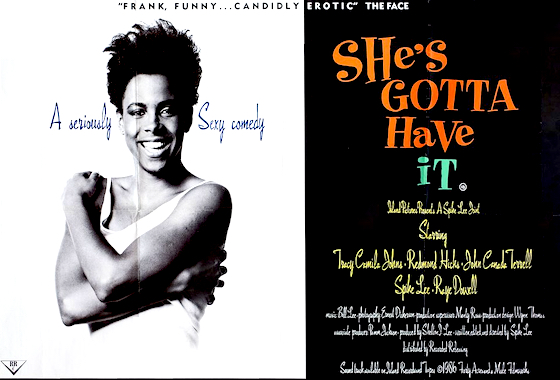
    Spike Lee’s post-student debut concerns twentysomething Brooklynite Nora Darling (Tracy Camilla Johns), who’s openly dating three men: upright ‘nice guy’ Jamie (Tommy Redmond Hicks), preening model Greer (John Canada Terrell), and streetwise Mars (Lee himself). And let’s not be coy (because the film certainly isn’t): she’s not just dating them, she’s sleeping with them all. The story of this love ‘square’ is partially narrated to camera by its four participants, as well as some of Nora’s other friends and acquaintances.

    It’s kinda crazy to think that the American indies were making sexually frank films like this and sex, lies and videotape in the late ’80s (a precursor, no doubt, to the wave of ‘real sex’ movies in the early ’00s), while nowadays we regularly get young people on Twitter arguing that no movie ever needs to have a sex scene, ever. So while I’m tempted to describe the film’s views on promiscuity as “then-modern”, perhaps just “modern” will still suffice — it’s certainly taken most (arguably all) of the intervening decades to get rid of the double standard for men and women as regards having multiple partners. That said, what has perhaps changed is our idea of what counts as “sexually explicit”. The film was obviously quite shocking back in its day, with the MPAA insisting on cuts before they’d give it an R (the unrated “director’s cut” had a Criterion LaserDisc release, but hasn’t surfaced anywhere else since), but you’ll see more nudity, more thrusting and moaning, on certain TV shows nowadays.

    Sexual stereotypes are not the only ones Lee sought to subvert here, as he also attempts to combat stereotypical depictions of African-Americans on screen — note the prominent message in the end credits that “this film contains are no jerri curls!!! and no drugs!!!” (punctuation as seen on screen). It extends beyond those basic signifiers; for example, how Nora’s three lovers are such different personalities. Partly that makes sense for the plot — that different sides of Nora’s personality like different types of guy — but also it shows different ideas of male Blackness; that The Black Guy is not just one thing. The jazzy score is another definite contrast to what you’d expect from a Hip Young Black Movie in the ’80s. Maybe that’s just Lee’s personal preference, but maybe it’s another conscious subversion of expectations.

    Lee’s politics are clear and forthright, but his filmmaking still needed some work. A lot of the film looks great, mostly shot in high-contrast black-and-white (plus one striking, ultra-saturated colour sequence), but some of the editing and performances could use refinement. Rough round the edges though it may be, She’s Gotta Have It is so clearly the calling card of a talented and individual voice with something brand-new to say that those rough edges are almost more of a feature than a bug.

    4 out of 5

    She’s Gotta Have It is the 13th film in my 100 Films in a Year Challenge 2022. It was viewed as part of “What Do You Mean You Haven’t Seen…?” 2022.


    Don’t Look Up

    (2021)

    Adam McKay | 138 mins | digital (UHD) | 2.39:1 | USA / English | 15 / R

    Don't Look Up

    Oscar statue2022 Academy Awards
    4 nominations

    Nominated: Best Picture, Best Original Screenplay, Best Editing, Best Original Score.
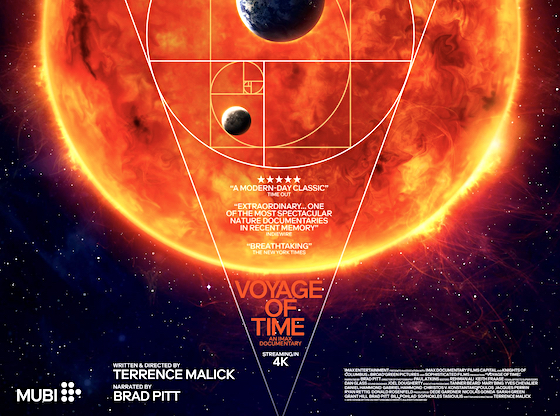
    Having targeted those responsible for the 2008 financial crash in The Big Short, and Dick Cheney and his responsibility for everything bad that’s happened in the last few decades in Vice, writer-director Adam McKay now turns his satirical attention to a fictional scenario, basically so he can have a go at anyone and everyone he feels like. The plot concerns a giant asteroid headed for Earth; an extinction-level event just 6½ months away. But, despite a handful of scientists trying to warn everyone, nobody seems in a great rush to do anything about it. It’s all an allegory for America’s carefree attitude to climate change, see.

    Really, this is a film I should be fully onboard with. It’s setting its sights on vacuous mainstream culture and Trumpian politics, after all. The problem is, these targets are low-hanging fruit, and — somewhat ironically, given its title — Don’t Look Up is satisfied with only plucking those lowest branches. Repeatedly. Unhurriedly. When they said the comet was 6½ months away, I didn’t expect the rest of the film to feel like it was covering that in real-time. It needed a better editor, or perhaps a studio who exerted a bit more quality control than Netflix’s famed “do what you want, we’ll just release it” approach. There are funny moments, certainly, but they’re literally few and far between when the pace is languid and the satire so broad, simplistic, and repetitious. Indeed, the most laugh-inducing stuff has nothing to do with the satire at all, just funny bits of business along the way (the best is a running gag about a general and snacks, which keeps cropping up unexpectedly).

    And for a film that’s entire thesis is being critical of American attitudes, it’s (again) ironic that it depicts this global crisis as so America-centric. Sure, there are cutaways to people watching events in other parts of the world, and a couple of belated nods to the idea that other countries might have their own thoughts on this impending disaster, but that’s all they are — sops and nods. “If America’s not going to fix this, no one can,” says the film. Ah, fuck off.

    2 out of 5


    Jackass: The Movie

    (2002)

    Jeff Tremaine | 85 mins | digital (SD) | 16:9 | USA / English | 18 / R

    Jackass: The Movie

    Jackass never appealed to me. I was a 14-year-old boy when it started, surely the franchise’s target audience; but I was an intelligent 14-year-old boy, so I was above it. Sorry, not sorry. But with everyone going on about the new movie, and reevaluating the whole franchise as some kind of essential classic of Cinema, I thought it was finally time to see for myself.

    For those not au fait with the series, it’s about a bunch of men who clearly aren’t old enough to know better performing stunts and pranks that no one in their right mind should ever want to do anyway. They’re frequently designed to induce pain. They’re often trying to be as crude or gross as possible. Some may make you feel ill just by watching them. And yet others are almost on the level of wholesome fun… albeit “wholesome fun” where you know participants will come away with bruises, at the very least.

    Almost everything the guys get up to is “dumb” — that’s kinda the point — and yet… It borders on “educational” when, for example, lead troublemaker Johnny Knoxville submits to being shot by “less lethal” riot control ammunition. The plan was for him to be shot in the chest, but the guys who make the stuff say if it hits his heart it could kill him, so they revise it to him being shot in the abdomen. Whereas most of the other stunts are followed by cutaways to the rest of the crew in hysterics, here the shocked silence of their reaction is telling. Or how about the kinda-feminism of a segment called “Ass Kicked by a Girl”, in which one of the gang enters the ring against a world champion female kickboxer. There’s no “haha, I can take her easily ’cause she’s a girl” posturing: the guy knows he’s about to get his ass handed to him. There’s some kind of respect for women in that, anyway, which you might not expect given the rest of the laddish antics.

    Taken as ‘a movie’, it’s rather formless — I suspect the TV show was exactly the same, just shorter — but the rapid-fire, standalone-stunt style does mean that no sketch hangs around too long. Some are literally seconds. But there’s not even a sense of escalation, say — it’s not like they save the largest or most outlandish stunt for the end (although there’s a post-credit scene that seems like it was probably the film’s most expensive single sequence). In some respects it doesn’t matter (who cares about the structure of a Jackass movie?), but in others, it’s what keeps it at the level of “feature-length special” rather than true Movie.

    But, ultimately, the important thing is this: some of it is funny. Reader, I laughed.

    3 out of 5


    Jackass Number Two

    (2006)

    Jeff Tremaine | 88 mins | digital (HD) | 16:9 | USA / English | 18 / R

    Jackass Number Two

    Even Jackass isn’t immune from the law of diminishing returns: after three seasons on TV plus a movie, this second big-screen outing feels kinda uninspired, like they’ve used up all their truly great ideas and are mostly running on fumes. That said, there are some good sequences — a variety of rodeo-based stunts with real live bulls are among the highlights — but other pranks feel reheated, or are just underwhelming; things you suspect would have been rejected in favour of better material before.

    In that sense it almost feels like it was rushed out to capitalise on success, but there’s a gap of four years, the TV show had ended, and they hadn’t necessarily intended to do any more — surely the only reason to return, then, was fresh ideas? Or, perhaps, being given the budget to do things they couldn’t before. That might be the case, because some of the material does feel like it’s got too much money and/or time behind it. I say “too much” because I think Jackass works best when it has a rough, cheap, “made at home” vibe. The finale here — a big “old Hollywood”-style musical number, with stunts mixed in — feels particularly out of place. Obviously it’s all a big joke, but the glossy, clearly-expensive visuals don’t feel of the right style.

    Plus, at various points you can feel some of the cast are getting genuinely fed up with this shit. Maybe they’d been doing it for too long by this point (I say there was a years-long gap, but some had been involved in spinoff projects). Whatever the reason, it serves to undermine the fun somewhat. One of the reasons you can enjoy these fools doing life-threatening stunts is because they’re volunteering for it and they seem to be having fun, however much they’re getting hurt or disgusted. But if they’re not enjoying it, aren’t we just watching people be tortured for our entertainment? It almost tips it from being stupid-but-funny into exploitative bullying. And we shouldn’t be having to think about anything that deep during a Jackass movie.

    As I’ve given both films 3 stars, let’s be clear: I’d definitely rate the sequel lower than the first movie, just not a whole star lower — it doesn’t merit being pulled down to a 2, while the first doesn’t merit a retrospective bump up to 4. If this kind of tomfoolery tickles you, there’s still plenty of entertainment to be had in Number Two, it’s just (mostly) not their finest output — which I guess is kinda apt, given the title.

    3 out of 5

    Jackass Number Two is the 15th film in my 100 Films in a Year Challenge 2022.