The Head Hunter (2018)

2020 #101
Jordan Downey | 72 mins | download (HD) | 1.78:1 | USA / English | 15

The Head Hunter

Originally released in 2018 but not making its UK debut (as a direct-to-DVD release) until earlier this year, The Head Hunter is a low-budget independent fantasy/horror movie. Such a description might conjure up images of fancy-dress-like costumes, plastic props, locations that venture no further than a mate’s back garden and a nearby bit of forest, cinematography with all the hallmarks of digital video, and some embarrassingly basic and boxy CGI. None of this is true of The Head Hunter, which marries some impressive production design to an understanding of its limits — its low budget shows only in its small scale, rather than uncomfortably forcing its reach to exceed its grasp.

The setting: a medieval fantasy world. It could pass for our medieval times (in Germany it was retitled Viking Vengeance), were it not for the presence of nasty monsters. The title refers to the film’s unnamed protagonist (Christopher Rygh), who lives alone in the a remote shack in the woods, where he prepares weapons and potions. Occasionally he hears a distant horn, which beckons him to ride out in full armour. When he returns, he carries a new monster’s head for his wall of trophies, and some serious injuries too. Fortunately, his potions seem to have magic-level healing properties. He once had a daughter, who now lies buried beneath a nearby tree. One day, the opportunity arises for him to hunt the monster who slew her. “This time it’s personal,” and all that. Only things don’t quite go to plan…

I have, perhaps, described altogether too much of the plot there, because there’s not much more to the film than that, narratively speaking. Not only does the film run under an hour-and-a-quarter, including credits, but it’s more about moody atmospheric shots than plot; more about the preparation for battle than the fight itself. The Head Hunter may ride out to meet various monsters during the course of the film, but we don’t get to go ride along to see him at work.

That's a nice head. I'll have that.

This is where the small budget shows. It was made for just $30,000, which would buy you under two seconds of a Hobbit film (literally — I did the maths), with a cast and crew of no more than five on set at any one time. All the more impressive that it looks as good as it does, then, from the Head Hunter’s detailed and threatening suit of armour to the remote locations that pass through a couple of seasons. It’s a film that relies on atmosphere more than thrills, and it has that in spades, with cold, misty daytime scenes and fire-lit nighttime sequences, where who-knows-what lurks in the shadows.

As impressive as it is, all things considered, it nonetheless feels a bit drawn out at feature length (even at under 70 minutes before credits). It would probably have made an incredible 30-minute short, though then it would likely have had an even harder time finding an audience than it already has. But that’s not to say it’s not worth your time. If an action-lite atmosphere-heavy fantasy/horror movie sounds appealing, this may just scratch an itch. And it should serve as a great showreel calling card for co-writer/director Jordan Downey, who hopefully will convert it into bigger — or, at least, more story-filled — things.

3 out of 5

The Head Hunter is available on Sky Cinema and Now TV from today.

The 100-Week Roundup III

In this selection of films I watched back at the end of May / start of June 2018…

  • The Wild Bunch (1969)
  • The Wild Bunch: An Album in Montage (1996)
  • The Warriors (1979)
  • Power Rangers (2017)
  • Three Billboards Outside Ebbing, Missouri (2017)


    The Wild Bunch
    (1969)

    2018 #115
    Sam Peckinpah | 139 mins | streaming (HD) | 2.40:1 | USA / English | 18 / R

    The Wild Bunch

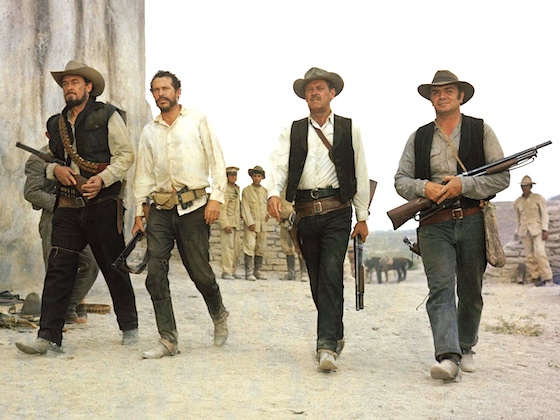
    After a gang of ageing crooks’ “one last job” goes sideways, they agree to rob a munitions train for a Mexican general, even as they’re hunted by a militia reluctantly headed by their leader’s former partner.

    The Wild Bunch is, of course, a Western, but it’s set in 1913 — not a time we particularly associate with “the Old West”. Well, change doesn’t happen overnight. And it certainly takes that “end of an era” thing to heart as a tale of old men, whose way of life is fading away. It’s also a ‘late Western’ in terms of when it was produced: this isn’t an old-fashioned “white hats vs black hats” kinda adventure, but one full of ultra-violence with a downbeat ending. The opening sequence gets pretty bloody, and then the climax is an absolute orgy of violence. It’s still almost shocking today, so you can see how it was controversial back in 1969.

    It’s not just the presence of violence and blood that’s remarkable, though, but how it’s presented, both in terms of filmmaking and morals. To the former, the speed of the cutting was groundbreaking at the time: reportedly it contains more cuts than any other Technicolor film, with 3,643 cuts in the original print. If that’s true, it gives it an average shot length of about 2.4 seconds. For comparison, the average in the ’60s was around 6 or 7 seconds, while even Moulin Rouge, a movie made decades later that was still notorious for its fast cutting, has an average shot length of 2.01 seconds. It’s not just speed that makes the editing so noteworthy, but its effectiveness, making juxtapositions and using shots to both tell the story and create the impression of being in the thick of it.

    Bad boys

    As for the morals, the film was all about showing these violent men as unheroic and unglamorous, setting out to “demystify the Western and the genre’s heroic and cavalier characters” (to quote IMDb). That piece goes on to say that screenwriters Sam Peckinpah and Walon Green “felt that this project required a realistic look at the characters of the Old West, whose actions on screen had rarely matched the violent and dastardly reality of the men on which they were based… Both Green and Peckinpah felt it was important to not only show that the film’s protagonists were violent men, but that they achieved their violence in unheroic and horrific ways, such as using people as human shields and killing unarmed bystanders during robberies.”

    Of course, antiheroes are ten-a-penny nowadays, so the idea that “men who commit violence are bad” doesn’t play as revolutionary anymore. Indeed, The Wild Bunch can be enjoyed as an action movie — there’s the opening and closing set pieces I’ve already mentioned, plus an excellent train robbery and ensuing chase in the middle too, and a couple of other bits. That said, the film has more on its mind than just adrenaline-generating thrills, and so (based on comments I’ve read elsewhere online) if you are watching just for action it can feel like a bit of a slog. While I wouldn’t be that critical, I did find it a bit slow at times. The original distributors must’ve felt the same, as the film was cut by ten minutes for its US release. (The version widely available today is the original 145-minute director’s cut. I watched a PAL copy, hence the 4% shorter running time.)

    4 out of 5

    The Wild Bunch was viewed as part of my Blindspot 2018 project.

    The Wild Bunch:
    An Album in Montage

    (1996)

    2018 #115a
    Paul Seydor | 33 mins | DVD | 4:3 | USA / English | 15

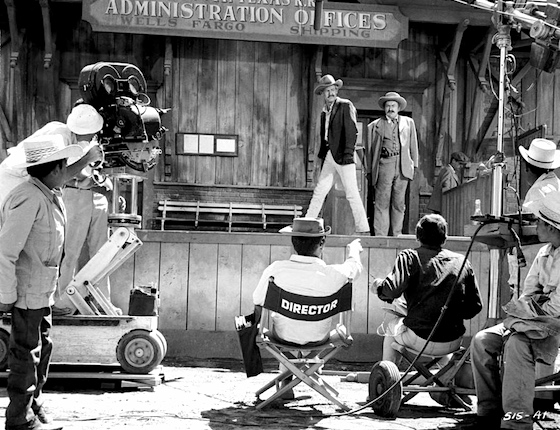
    Behind the scenes of The Wild Bunch

    This film came to exist because someone found 72 minutes of silent black-and-white behind-the-scenes footage shot during the filming of The Wild Bunch. No one knows why it was filmed — this was a long time before the era of EPKs and DVD special features. And, indeed, if it had been discovered just a couple of years later then a DVD special feature is exactly what it would’ve become; but, being just ahead of that, it ended up as a short film — an Oscar-nominated one at that, going up for the Best Documentary Short prize in 1997. Naturally, it has since found its rightful home as a special feature on DVD and Blu-ray releases of its subject matter.

    The silent film footage is accompanied by voice over of first-hand accounts from the people involved, either taken from recorded interviews (people like screenwriter Walon Green and actors Edmond O’Brien and Ernest Borgnine represent themselves) or actors reading out comments (Ed Harris is the voice of Sam Peckinpah, for example). From this we get not only making-of trivia and tales, but also discussion of the filmmakers’ intent and the film’s meaning. More material along the lines of the latter would’ve interested me.

    As it is, An Album in Montage feels very much at home in its current situation as a DVD extra. Fans of the film will certainly get something out of it, but I don’t think it’s insightful enough to stand independently. It’s by no means a bad little featurette, but it’s not worth seeking out outside of the context of the film itself.

    3 out of 5

    The Warriors
    (1979)

    2018 #123
    Walter Hill | 89 mins | streaming (HD) | 16:9 | USA / English | 18 / R

    The Warriors

    In the near future, a charismatic leader summons the street gangs of New York City in a bid to take it over. When he is killed, The Warriors are falsely blamed and now must fight their way home while every other gang is hunting them down.IMDb

    And that’s all you need to know, because The Warriors’ plot is really simple and straightforward, but that’s part of why it works. It doesn’t need dressing up; it’s got an almost an elegant directness, and it thrives off that. The action sequences feel unchoreographed, with a bruising realism in spite of their sometimes elaborate setups (duelling baseball bats!), and yet they carry an energy and impact that is wholly in keeping with something carefully designed and constructed. The characters are simply drawn, revealed through their actions rather than telegraphed Character Moments or heartfelt speeches. Similarly, the kind-of-romance between the Warriors’ leader and the girl they run into on the streets is so well handled — okay, there are some scenes where they almost talk about it directly, but mostly it’s just moments or lines that indicate a world of feeling. The way this character stuff is sketched in — subtly, sometimes in the background — is quite masterful, actually.

    Such skill extends throughout the film’s technical side. For all the film’s ’70s grit, there’s some beautiful stuff in the editing and shot choices, especially at the end on the beach. It’s not just beauty in an attractive sense, but meaningful, effective imagery, in a way that impresses without being slick or pretty. The music choices are bang-on too. The film intercuts to a radio station that functions like some kind of Greek chorus, linking the action and helping to create a heightened atmosphere — one that’s there in the whole film, incidentally, with its colourful gangs and detached police presence — without ever shattering the down-to-earth, gritty, almost-real feel the whole thing has.

    Gang wars

    I loved The Warriors, and I think that last point is a big part of why: it sits at an almost inexplicable point where it feels incredibly grounded, gritty and realistic, but at the same time a heightened fantasy kind of world. Here I’m trying to describe why I adored the film bu breaking it down into these constituent parts, but there’s something more to it than that — a kind of magic where it just… works.

    All of that said, it seems I was lucky to catch the original version (via Now TV / Sky Cinema), rather than the so-called Director’s Cut that seems to be the only version available on Blu-ray. Looking at the changes, they don’t seem particularly in keeping with the tone of the movie, smacking of decades-later revisionism. Apparently there’s also a TV version that includes 12 minutes of additional scenes, none of which are included on the film’s disc releases. I wish Paramount would license this out to someone like Arrow to do it properly…

    5 out of 5

    The Warriors placed 11th on my list of The 26 Best Films I Saw For the First Time in 2018.

    Power Rangers
    (2017)

    2018 #126
    Dean Israelite | 124 mins | streaming (HD) | 2.35:1 | USA, Hong Kong, Japan, Mexico, Canada & New Zealand / English & Mandarin | 12 / PG-13

    Power Rangers

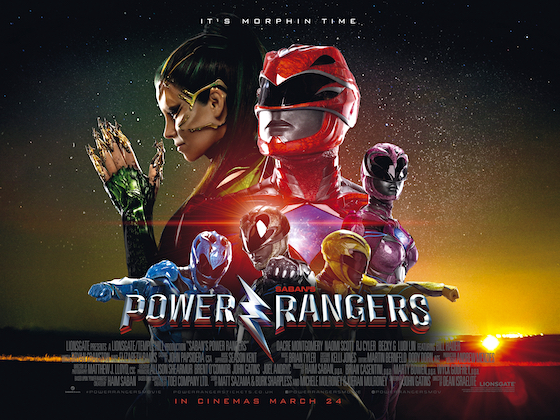
    High school outcasts stumble upon an old alien ship, where they acquire superpowers and are dubbed the Power Rangers. Learning that an old enemy of the previous generation has returned to exact vengeance, the group must harness their powers and use them to work together and save the world.IMDb

    Far from the cheesy TV series of old, this Power Rangers reboot clearly wants to be a somewhat gritty, largely realistic, socially conscious take on the concept. But it’s like it was written by people behind the original, because it’s still full of clunky dialogue, earnest characters (with a thin veneer of outsider ‘cool’), and nods to serious issues without having the time or interest to actually engage with them. Like, one of the kids is the sole carer for his sick mother, or another is on the autistic spectrum, but, beyond spending a line or two to tell us these things, those issues have no bearing on the plot or the characterisation. Plus, it can’t overcome some of the fundamental cheesiness of the original. And when it tries to give in to it, like by playing the Power Rangers theme the first time the giant “dinocars” run into action, it’s too late for such shenanigans and the tones clash horrendously. It wants to escape the tackiness of the original series, but simple can’t.

    And somehow it gets worse as it goes on. The early character stuff is derivative but alright. Then you begin to realise how shallow it is. You’re waiting for the super-suits to show up and the action to start. Then you have to wait some more while it works through plot beats so stale it can’t even be bothered to play them out fully. Then, when the suits finally arrive and the action starts, turns out it’s the worst part of the movie. Almost entirely CGI, under-choreographed, a mess of nothingness with little correlation from shot to shot, no sense of rhythm or construction. When their dinocars all merge into one giant dinocar, the villain screams “how?!”, and you will feel the same.

    Bryan Cranston (yes, Bryan Cranston is in this) tries to inject some character into his role, but it’s too underwritten and his screen time too slight to let him do much with his supposed arc. Elizabeth Banks, meanwhile, is barely in it and has no arc whatsoever, but she chews scenery like a pro. She seems to be aware it’s all stupid and over the top and plays it appropriately.

    2 out of 5

    Three Billboards Outside Ebbing, Missouri
    (2017)

    2018 #127
    Martin McDonagh | 115 mins | Blu-ray | 2.39:1 | UK & USA / English | 15 / R

    Three Billboards Outside Ebbing, Missouri

    a darkly comic drama from Academy Award nominee Martin McDonagh. After months have passed without a culprit in her daughter’s murder case, Mildred Hayes (Frances McDormand) makes a bold move, painting three signs leading into her town with a controversial message directed at William Willoughby (Woody Harrelson), the town’s revered chief of police. When his second-in-command, Officer Dixon (Sam Rockwell), an immature mother’s boy with a penchant for violence, gets involved, the battle between Mildred and Ebbing’s law enforcement is only exacerbated.IMDb

    As well as being as deathly serious and sometimes horrifying as the subject matter deserves, Three Billboards is also as funny as you’d expect from the writer-director of In Bruges. Not to the extent — the subject matter is far too serious for it to be an outright comedy like that — but in subplots and interludes it’s hilarious.

    It’s got a helluva cast, and all of the performances are excellent. Frances McDormand is so fucking good that she even manages to make talking to a badly CGI’d deer incredibly emotional. Apparently some people had a massive problem with the film’s treatment of Sam Rockwell’s character, I think because he was a bad guy who got redeemed. But, really, imagine thinking people who once did bad things can never turn themselves around and be better people. What a pessimistic way to view the world. And yet I guess that’s what today’s “cancel culture” is all about.

    Two outta three ain't bad

    It’s nicely shot by DP Ben Davis (except for that deer), while Carter Burwell’s Western-esque score has some really cool bits. It really emphasises the film’s formal overtures at being a revenge Western, even if the way it goes down in the end doesn’t necessarily support such a reading.

    There was a huge backlash to the film at some point; bring it up online and you’re likely to come across people who assume everyone hates it… but it’s got 90% on Rotten Tomatoes and is still ranked the 150th best film of all time on IMDb, so I think we know where the majority stand. I’m happy to stand with them.

    5 out of 5

    Three Billboards Outside Ebbing, Missouri placed 14th on my list of The 26 Best Films I Saw For the First Time in 2018.

  • Once Upon a Time… in Hollywood (2019)

    2019 #120
    Quentin Tarantino | 161 mins | cinema | 2.39:1 | USA, UK & China / English | 18 / R

    Once Upon a Time in Hollywood

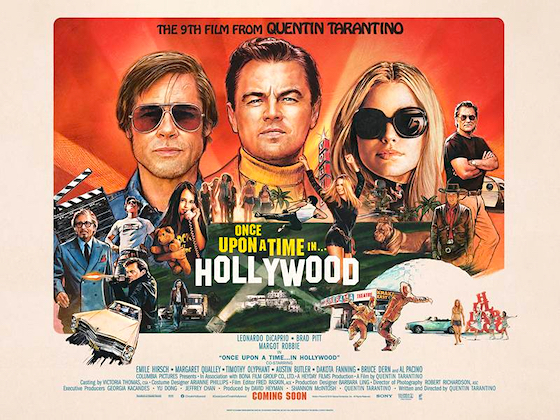
    The 9th film by Quentin Tarantino follows the fortunes of struggling actor Rick Dalton (Leonardo DiCaprio) and his stuntman and best mate Cliff Booth (an Oscar-winning Brad Pitt) over a couple of days in Los Angeles, 1969, when they were next-door neighbours to one Sharon Tate (Margot Robbie)…

    I haven’t reviewed Once Upon a Time until now because I didn’t have much to say about it (even my Letterboxd ‘review’ was just a comment on its variable title presentation). Even after reflecting on it, and reading other’s critical reactions, then reflecting on it some more (for over eight months at this point), I didn’t have much to contribute. Why was that? And I’ve kind of realised it’s because the film didn’t make me feel very much.

    Sure, there are moments where it did. There are plenty of scenes that are amusing, to varying degrees. The tension as Cliff explores the house of an old friend that’s been occupied by a bunch of hippies. The catharsis and humour of the ultra-violent climax, and the attendant cognitive dissonance of whether we should be revelling so in this historically-revisionist execution of real people — not to mention the factors that further complicate that (you know what they are by now).

    And overall I didn’t dislike the film. I wasn’t bored, despite the length; if anything, that helps suck you into the world of 1969. You can certainly feel Tarantino’s love for the era, his desire to recreate — and, indeed, improve — it. (It’s also clear that he really wants to make another Western. The excerpted scenes from Rick’s TV pilot go on for ages, ultimately contributing nothing to the overall story, other than getting to hang out in a ’60s TV Western.) The three main performances are all very good, DiCaprio and Pitt great both as a double act and in their own storylines, and Robbie off in her own little world in a role that arguably offers little on the page but she breathes so much life into.

    “Don’t cry, man. It’s only one blogger's opinion.”

    It’s all these successes that mean I do consider Once Upon a Time to be a very good film. But at the same time, I didn’t leave the cinema feeling moved or wowed. I expected the history-changing ending ever since the film’s plot was announced, that expectation only cemented further as I learnt of Tarantino’s love for Tate, so I certainly didn’t leave feeling surprised. It ended, and that was that, and I went home.

    Tarantino has talked in the past about how Jackie Brown is a “hangout movie”, where the point is not the story but spending time with the characters, and getting to re-spend that time when you watch the movie again, so that you enjoy it more and more with each viewing. I didn’t really get that feeling from Jackie Brown (I didn’t dislike it, but I was underwhelmed and in no rush to revisit it), but I wonder if that’s how Once Upon a Time will work best. The way it wanders through its loose narrative, before arriving at a climax that is, really, only tangentially related to everything else we’ve been watching, does suggest that’s the goal Tarantino had in mind. I can certainly believe he would like to just hang out in the world of Hollywood, 1969. I suspect that’s the driving factor behind why he even made this movie — getting to imagine an alternate history and career for his characters (I’ve seen interviews where he fills in way more backstory than is actually in the film), and using his clout to literally recreate that time and place in real-life rather than through CGI fill-ins.

    So, it’s a movie I’ll surely revisit at some point, which is more than can be said for many a film. Perhaps then I’ll have something to say about it.

    5 out of 5

    Once Upon a Time in Hollywood is available on Sky Cinema and Now TV from this weekend.

    The Lunchbox (2013)

    2020 #94
    Ritesh Batra | 99 mins | download (HD) | 2.35:1 | India, France, Germany & USA / Hindi & English | PG / PG

    The Lunchbox

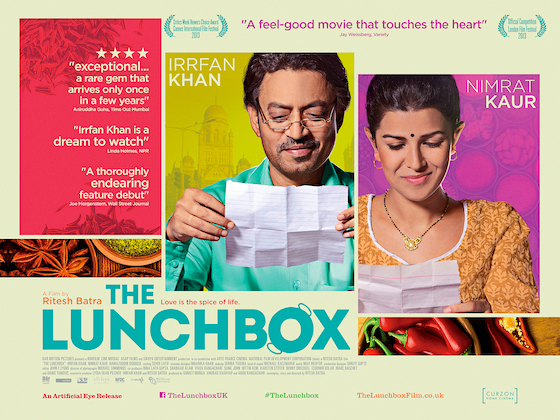
    Yesterday the world heard the sad news that the actor Irrfan Khan had passed away aged just 53. An award-winning film star in India, Khan also had a noteworthy presence as a supporting actor in Western films — the police inspector in Slumdog Millionaire; the owner of the eponymous park in Jurassic World; the adult version of the main character in Life of Pi; not to mention The Darjeeling Limited, The Amazing Spider-Man, Inferno, and more. I’d seen all of those films and noted Khan’s presence — he’s the kind of actor who turns up and elevates the film almost just by being there, bringing a depth and interest to even the smallest roles. But I’d never seen any of the many films (he has 151 acting credits on IMDb) in which he played the lead, so it seemed appropriate to turn to one of the most internationally acclaimed of his films, The Lunchbox, in tribute.

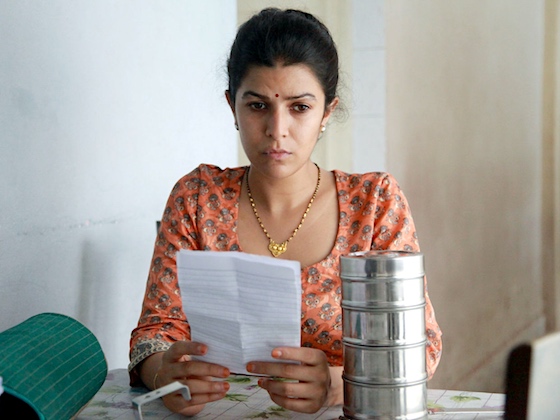
    Khan plays Saajan, an office worker who receives his lunch every day via the dabbawala service. It’s a remarkable network that delivers 200,000 lunches daily across Mumbai with unerring accuracy. Indeed, their precision is so famed that one of the major criticisms of this film in some quarters was that its premise is too far-fetched — that being that, due to a continued mixup, Saajan begins to receive the lunches Ila (Nimrat Kaur) has prepared for her husband, rather than the ones he ordered from a local restaurant. He’s so impressed with the quality of the food, when the lunchbox is returned Ila observes that it looks to have been licked clean. This is good news, because she was trying to up the quality of her lunches as a way to reignite her stagnant marriage; but when her husband returns home still disinterested, with only thin praise for something she hadn’t even included in his lunch, she realises the delivery mistake immediately. But politeness compels her to send lunch again, this time with a note explaining the mixup. After a rocky start, soon Saajan and Ila are in daily communication through short letters passed back and forth in the lunchbox.

    Saajan

    Both are characters desperately in need of that connection. Ila’s loveless marriage, and young daughter who spends most of the day at school, means her primary human contact comes in shouted conversations with her upstairs neighbour. Saajan, meanwhile, is taking early retirement, but first must train Shaikh (Nawazuddin Siddiqui), the overeager new recruit appointed to replace him. He tries to duck even this level of interaction; at home, he tells off kids for playing in the road outside his house, refusing to return their ball. We could infer Saajan is a misanthrope, and the impression is given that his colleagues do (they share a story that he once kicked a cat in front of a bus then casually walked away), but the film affords us more insight than that, primarily through Khan’s performance. It’s the underlying sadness in his eyes that first give the clue to his true loneliness, and the way his demeanour begins to brighten as the relationship with Ila brings a spark back into his life.

    Lest you think this is all somewhat dour, the way it plays is uplifting. Saajan and Ila may be miserable at the start, and continue to confront problems in their lives throughout the film, but their connection injects a measure of happiness into both their lives, the mutual support helping them through. Plus there’s a strong vein of humour, at first from the faltering beginnings of our leads’ relationship, then from the antics of Siddiqui’s junior employee. This isn’t the kind of broad comedy you might expect from a Bollywood movie, but something more grounded and closer to reality. At first Shaikh seems as irritating to us as he is to Saajan, but soon the latter’s growing empathy leads him to become a father figure to the younger man, and we too begin to see the truth underneath his cheery facade.

    Ila

    While that subplot is a bonus, the film really comes down to Saajan and Ila, and consequently the performances of Khan and Kaur. That’s particularly important because so much of the story occurs in the form of letters, and so the characters’ true reactions come across in doleful expressions, or changes in posture or behaviour; subtle, human indicators that leave us in no doubt what they’re feeling, and only strengthen our own connection to and investment in these characters. This pair of deeply-felt performances carefully steer The Lunchbox into being a heartfelt, quietly affecting film.

    5 out of 5

    Men in Black: International (2019)

    2020 #85
    F. Gary Gray | 115 mins | Blu-ray | 2.00:1 | USA & China / English | 12 / PG-13

    Men in Black: International

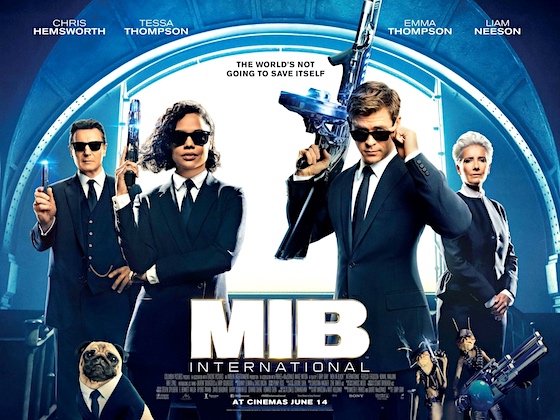
    When Men in Black: International* hit cinemas last summer, many, many, many critics used a neuralyzer-related pun prominently in their review. (Someone did a Twitter thread compiling all the near-identical jokes. It reached 120 examples.**) For those unfamiliar with the MIB franchise, the neuralyzer is a small device that can wipe people’s memories, used by the MIB to keep their activities secret. The repetitive and inevitable joke was that International is so bad you’ll want to be neuralzyed afterwards. Now, I swear the film itself is trying to get in on the gag: the only photo printed on its disc is of a neuralyzer, as if the Blu-ray itself is going to wipe your memory when you take it out of your player. If only it did…

    International is essentially a spin-off from the previous trilogy of MIB movies: whereas they followed Agents J and K (Will Smith and Tommy Lee Jones) on adventures in New York, this time we follow newbie Agent M (Tessa Thompson) as she’s relocated to London and paired with hot-shot-agent-gone-off-the-boil H (Chris Hemsworth) on a globetrotting adventure to unearth a mole in MIB.

    Reinvigorating the franchise with new blood isn’t a bad idea. The third film was a marked improvement on the second, but neither recaptured the glories of the first, and K and J’s story was pretty well played out. Hemsworth and Thompson are good picks for the leads, too, given he displayed noteworthy comedic chops in the Ghostbusters reboot and the pair had clear chemistry in the well-liked Thor: Ragnarok.

    Back in black

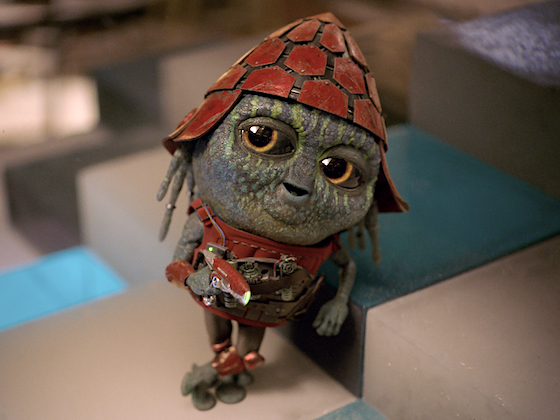
    But clear-eyed plans alone don’t make a good movie, as Men in Black: International proves. It’s not that the movie is bad per se, it’s just mediocre; bland; uninspired. It’s devoid of wit or charm — which, considering the cast, is kind of remarkable. I mean, it’s not just Hemsworth and Thompson — two appealing, capable leads. There’s also Liam Neeson and Emma Thompson, and Rebecca Ferguson pops up (I didn’t even know she was in it ’til she did), and there’s Rafe Spall (limited by having to be a blatant red herring), and the voice of Kumail Nanjiani. Whoever’s your favourite out of that talented cast, they’re wasted. Neeson is a particular bit of miscasting. Calling the head of London branch “High T” is a perfectly adequate joke, playing on Britishness and poshness… until you cast a guy with a pronounced Northern Irish accent, which just kills the gag dead. Nanjiani fares best as the voice of a little CGI creature, who’s probably meant to be cute but errs more towards annoying, though I didn’t hate him.

    Of course I didn’t hate him — nothing in this movie is emotive enough to be hate-worthy. But by being so bland, it becomes objectionable. MIB2 wasn’t great, but at least it was kind of entertaining in its poorness. International is playing it so safe that you can’t even groan at it, or be delighted when something half-decent emerges from the mire, or be amused by it in spite of itself.

    I guess this is what happens when you hire a primarily action director to helm a movie that should primarily be a comedy. F. Gary Gray did start off his career with a comedy, Friday, but that was 25 years ago. He’s better known for the likes of The Negotiator, the Italian Job remake, Law Abiding Citizen, and The Fate of the Furious. He hasn’t turned this into a straight-up action movie — it does still try to be amusing — but it’s clear the focus is in a different place to before. It’s partly because it’s far too long and lacking in pace. It’s always stuck in my mind that the director of the previous MIBs, Barry Sonnenfeld, once said he’s the only director whose Director’s Cut would be shorter than the original film because he’s always looking to strip things back. I suspect that may be part of why the previous movies worked, and it feels like International could really benefit from the same approach.

    Cute and/or annoying CGI creature? Check

    It certainly seemed to me like it was several more drafts away from completion. The twist is so obvious you can guess it just from looking at the cast list, underscored by a prologue that fades to white before it resolves and so may as well scream “what happened next is not what you’ll think”. More vitally, why is M a rookie agent? You’d think it would give an obvious and easy character arc, but that’s not really played. Instead, there are loads of times throughout the film where she Knows Stuff, so they have to explain it with “it says it in the handbook” or something similarly hand-wavy. The fact she managed to find the MIB, rather than them choosing to recruit her, is a cute origin but then has nothing to do with anything. It would’ve been better if she was a desk jockey forced out onto her first field assignment. Sure, that’s a tired characterisation too, but at least it’d be something a bit different for the franchise, and a bit more in keeping with how the movie wants to use her.

    At one point it was mooted that this would be an MIB / Jump Street crossover movie, which was a barmy idea; but with MIB in need of a fresh start and Jump Street already being pretty immune to the fourth wall, it could’ve been great. At least it would’ve been different — even if it hadn’t’ve worked, they’d’ve tried something bold. Instead, they went for the much safer option of a straightforward soft reboot, and everything about International screams “safe”. Earlier I said it wasn’t bad, but by being so dull, well, it kinda is.

    2 out of 5

    Men in Black: International is available on Sky Cinema from today.

    * Don’t get me started on that colon in the title. I could practically write an essay just about that choice. ^
    ** Most of the critics took it well, apparently. ^

    The 100-Week Roundup II

    I had a nice little introduction written for this post when T2 3D was going to be part of it, but then that got too long and I posted it separately. So, anyway, here are three other films I watched almost two years ago but haven’t reviewed yet…

    Laura
    (1944)

    2018 #93
    Otto Preminger | 85 mins | download (HD) | 4:3 | USA / English | U

    Laura

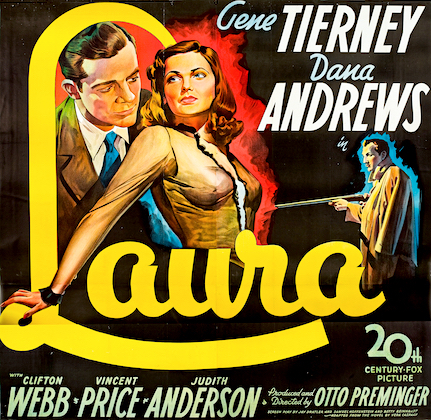
    This classic film noir stars Dana Andrews as a New York detective investigating the murder of an advertising exec and society girl played by Gene Tierney, the eponymous Laura. And there’s a good twist halfway through that completely turns the film on its head, so I’ll keep this vague. (We can debate the merits or otherwise of openly discussing plot points from 75-year-old films another time. Heck, go on Twitter — I’m sure someone’ll be ranting about it from one side or the other right now.)

    As a murder investigation, Laura is a decent little mystery — there aren’t a huge number of suspects, but enough to keep you guessing; though I did eventually wonder if it actually hangs together 100% as a case. But that doesn’t matter when everything else about the film plays out so well. For starters, it’s noticeably well directed by Otto Preminger, with some nice shot construction and editing. Then the screenplay (based on a novel by Vera Caspary, and penned by three credited writers and one uncredited, as per the interweb) boasts lots of great dialogue. It’s rarely show-off-ily snappy, but it is effective and sometimes witty. That’s only appropriate considering one of the characters (Clifton Webb’s Waldo Lydecker) has a rep as a wordsmith — that wouldn’t fly if he didn’t have plenty of bons mots to offer.

    The rest of the cast are similarly noteworthy. Tierney is very plausible as the kind of gal everyone would fall in love with, and Andrews is equally so as the solid copper. A key supporting role is filled by a young-ish Vincent Price. (Can we call 33 “young”? As someone who was born in 1986, I’m going to go with “yes”.) It’s an accident of history how effective his casting is — not that his performance is bad in and of itself, but his later reputation brings certain expectations about how things might pan out. Is that warranted? Well, you’ll have to watch it to see…

    5 out of 5

    Jigsaw
    (2017)

    2018 #104
    The Spierig Brothers | 92 mins | streaming (HD) | 2.35:1 | USA & Canada / English | 18 / R

    Jigsaw

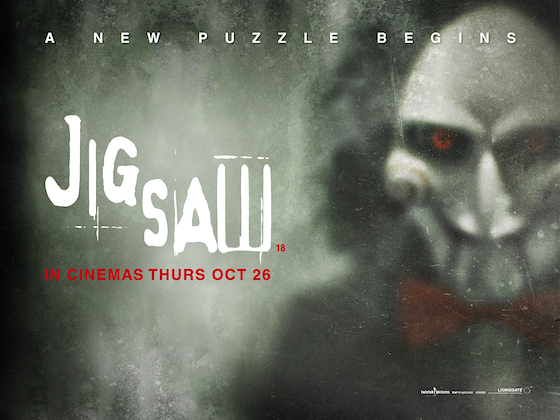
    After seven films between 2004 and 2010, the Saw series seemed well and truly done. But nothing once-popular can stay dead for long in Hollywood, and so 2017 saw this revival (and this year will see another, pandemic permitting). It seemed to go down quite poorly, and I’m curious as to why. It’s a Saw film through and through — if you don’t like the series, there’s no reason you should like this — so, I mean, why would you want or expect a Saw film to not be a Saw film? Maybe it’s just people who don’t actually liking Saw films all that much but chose to watch an eighth one anyway? Well, it’s up to them how they choose to spend their time…

    Anyhow, as a Saw film, I thought it was one of the better ones. Not the very best (that’s still the first), but definitely top end. I liked the final reveal, which is a big part of these films’ appeal — what twist they’re going to pull in the final moments. Sure, I’d guessed part of it well in advance, but it still had some neat aspects. (I do wonder how many people were fooled into thinking Jigsaw was still alive, somehow? He died many, many films ago; he’s not coming back.) In terms of the whole series, it does raise a load of questions — but digging into them is really getting navel-gazing about the series’ continuity. I’m not sure it’s worth worrying about.

    3 out of 5

    Inferno
    (1953)

    2018 #107
    Roy Baker | 84 mins | Blu-ray (3D) | 1.37:1 | USA / English | PG

    Inferno

    3D and film noir aren’t things you readily associate with each other, but there are a couple of them — see here for a few. Some might count Hitchcock’s Dial M for Murder, too. Inferno here is another borderline case. The plot definitely has a whiff of noir — a husband left for dead by his wife and her lover, which cause her moral quandaries but him not so much — but the telling is more of an Adventure movie, some might even say a Western, with the husband struggling through an arid wilderness. Plus it’s all shot in brightly-lit Technicolor.

    Whether you count it as noir or not, it’s most noteworthy for its 3D. It was one of the last films made in the format during the fleeting ’50s experiment, especially as its studio, Fox, were backing CinemaScope as a TV-beater instead (well, I guess they were right). It doesn’t make blatant use of its 3D — there’s no stuff poking at the camera (until the punch-up finale) — but it often brings a nice sense of depth often, including to the wide-open desert vistas. It was well received, too, with the New York Times saying it was where “3-D comes of age”, and others comparing it favourably to other movies of the era, which treated 3D as no more than a gimmick and squandered its potential. All of that said, a climactic fight does indulge in all the in-your-face aspects we associate with classic 3D movies — but it was a late addition forced on the film by studio head Darryl F. Zanuck, who wanted to see more overt 3D action. In summary up, director Roy Ward Baker commented, “the critics gave it unanimous applause, largely because it has a good story to which the process contributed greatly, as opposed to the usual stereo films which were simply exploitation stunts. However, we did include a few of the cliches, at the behest of DFZ. I guess he was right at that.”

    It is a pretty good tale. Baker wanted to make a film in which “the leading character spends long periods alone on the screen, where the interest would be in what he does, rather than what he says.” Nonetheless, we’re given a voiceover narration from the hero, which gets a bit twee, albeit with an enjoyable dry wit now and then, and an interesting pragmatism about his situation. There’s some neat editing to juxtapose his situation with that of his condemners, too: when he’s starving it cuts to wifey enjoying a lavish meal; as he digs in the desperate hope of water it cuts to her lover casually fixing himself a drink. Said wifey is played by Rhonda Fleming, who apparently was known as “the Queen of Technicolor” because of her complexion and vibrant red hair. Everyone in the film is in love with her — even the cops who’ve just met her comment on it — and, yeah, I buy that. There’s an amusing bit where her lover is desperate to throw caution to the wind and visit her room that night simply because it’s “been four days”, wink wink nudge nudge. Men, eh?

    4 out of 5

    Terminator 2: Judgment Day 3D (1991/2017)

    2018 #103
    James Cameron | 137 mins | Blu-ray | 2.40:1 | USA & France / English | 15 / R

    Terminator 2: Judgment Day 3D

    When I’ve previously reviewed 3D versions of films I’d already seen in 2D, I haven’t given them a new number — so why did T2 3D merit one? Partly it’s a ‘feeling’ that comes from it not being the original version. Most of those other re-watches were films that had a 3D release concurrent with their 2D one, but T2’s is a years-later addition. Still, that’s a thin justification. More importantly, however, they chose to perform the 3D conversion on the film’s theatrical cut, which I’m 95% sure I’ve never seen. The extended Special Edition was first released in 1993, which is before I first saw the film, and some of the scenes that have most stuck in my memory are from the longer cut. Is it shorter enough, and therefore different enough, to warrant a new number? Not sure. But combine that with the new 3D and I thought, yeah, that’s pretty different all round.

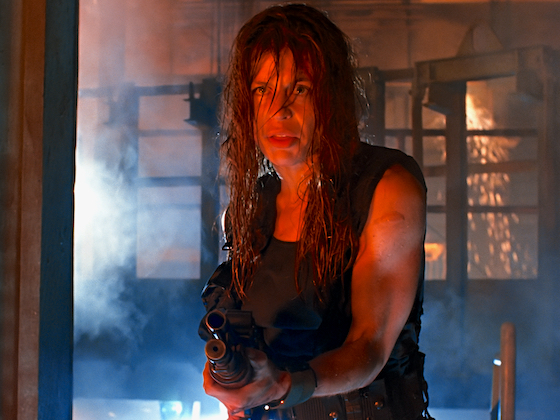
    The film itself… well, it’s an action/sci-fi classic, isn’t it? But I needed to rewatch it to remember how good it is — I left it off my 100 Favourites a couple of years ago because I decided it was on the long-list just because you’d expect it to be there; but, rewatching it, I realise I do agree with the consensus on its greatness. The most interesting ideas in T2 aren’t what it contributes to the series’ sci-fi mythology (though a liquid metal robot is pretty neat), but how it chooses to develop its characters. The T-800 now being a good guy is the obvious one, but check out the humans: sweet innocent Sarah Connor is now a hardened military-vet-type locked up in a mental institution where she rails against the system; and her son, destined to become the great leader of humanity, isn’t a hero in waiting but instead an irritating juvenile delinquent brat. It’s these extra dimensions, not just the sci-fi and the action, that make T2 such a great film.

    “Get away from him, you bitch!” ...no, wait, wrong Cameron movie

    That said, I think there’s an argument to be made that T1 has withstood the test of time better than T2. The original film is a grounded sci-fi thriller, its low budget working in its favour to emphasise those qualities: it’s fuelled by both big SF ideas and the grittiness of its present-day setting. T2, on the other hand, is pitched as an action-and-effects blockbuster — it was the first movie to cost more than $100 million (according to some reports, anyway) — but in that respect it’s been continuously surpassed by numerous other summer spectacles in the intervening decades. As I said, there are other reasons it endures, but I think on balance I might prefer the first movie.

    And talking of preferences, I definitely prefer T2’s extended cut to the theatrical one. There are numerous nice grace notes added to the longer cut, but it really comes down to one scene: the sequence where they take the chip out of the T-800’s head and Sarah considers destroying it, which includes the famous mirror shot. For me that’s one of the most memorable scenes from the entire film. It’s both a good scene in its own right and it’s neatly mirrored in the ending, when the Terminator makes Sarah lower him into the molten steel. I’ve always found it an odd idea that it wasn’t always there, and I continue to feel that way. The film seems incomplete without it.

    Now, the 3D… As you might expect from a genuine 3D advocate like Cameron, a lot of the effect is quite subtle — it’s aiming for realistic spacing, not an in-your-face exaggeration of depth. That kind of subtlety is arguably a reason a lot of people feel 3D adds little, because its benefit isn’t obvious. Heck, sometimes you don’t even notice it’s there. Ironically, that’s sometimes amongst the best 3D, but you might need a direct comparison with 2D to notice it. Put a good subtle-3D shot against its 2D counterpart and suddenly you’re aware of the natural awareness of shape and depth the extra dimension is adding. Now, T2 3D is not a prime example of this — it’s a film that was originally shot and designed for 2D, after all — but it does have moments that I think demonstrate that kind of effect. And, at other times, the 3D is much more obvious; mostly during big action set pieces, as you’d expect.

    Oh, if he only knew how many times he'd be back...

    The big downside is that they felt they had to apply a hefty dose of DNR before doing the 3D conversion. I’m sure there are reasons why film grain would get in the way of a conversion, but sometimes the DNR is too heavy-handed. It’s never at the level of the infamous Predator Blu-ray, where everyone looked like a slightly-melted waxwork, but there are times here when people seem to have been formed from smooth plastic rather than the natural pore-covered texture of real skin. How much this matters is a case of personal preference, but there were one or two times I did find it distracting — the meeting between Sarah and Dr Silberman, for instance, where the DNR has smoothed his skin so much that it looks like he’s been de-aged. If this was just on the 3D version then, hey-ho, that’s a side effect of the process, but I believe the same scrubbed version has been put out as the film’s official 4K restoration. That’s very disappointing.

    So, this is in no way my preferred version of the movie; but it’s such a great film anyway, and this re-watch has reminded me of that, that it can be nothing but full marks.

    5 out of 5

    Spider-Man: Far from Home (2019)

    2020 #49
    Jon Watts | 129 mins | Blu-ray (3D) | 2.39:1 | USA / English | 12 / PG-13

    Spider-Man: Far from Home

    For those not keeping track (who can blame you?), Far from Home is the third Spider-Man 2. It follows in the footsteps of Sam Raimi’s Spider-Man 2 from 2004, widely regarded as one of the topmost examples of the superhero genre, and Marc Webb’s The Amazing Spider-Man 2 from 2014, widely regarded as one of the poorest examples of the superhero genre. (As you can see, they’ve ditched the numbers. Probably wise at this point.) Personally, while I agree with the accepted view of Raimi’s film, I actually rather enjoyed Webb’s sequel. That’s important to know when I say that I think Far from Home is my least favourite Spider-Man 2 so far.

    This one is the sequel to 2017’s Spider-Man: Homecoming… except Spidey’s in the MCU now, so it’s also a sequel to Avengers: Infinity War and Avengers: Endgame. And that’s not just a checklist of “other Spider-Man appearances”, either: the events of Endgame are absolutely vital to the storyline of this movie. It may be another Spider-Man 2, but more than that it’s Marvel Cinematic Universe: Episode XXIII.

    Some people criticised Homecoming for having too much Iron Man and going too far in making Spider-Man into Iron Man Jr. I felt they got the balance about right, all things considered — it’s not very true to comic book canon, but, as the third big-screen iteration of Spidey in the modern era, it made a reasonable change. Far from Home is where it becomes overpowering. It has to lean heavily on the overall continuity of the MCU, which means all the business of The Blip (as what we call The Snap is called in-universe) and Iron Man’s death is front-loaded into the movie. The former is waived away as quickly as they can; the latter weighs heavy on the entire rest of the plot.

    We'll always have Venice

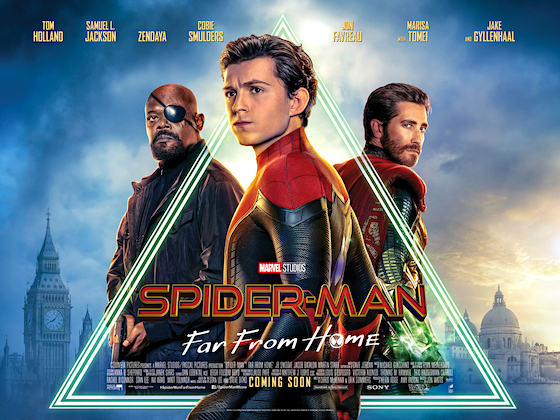
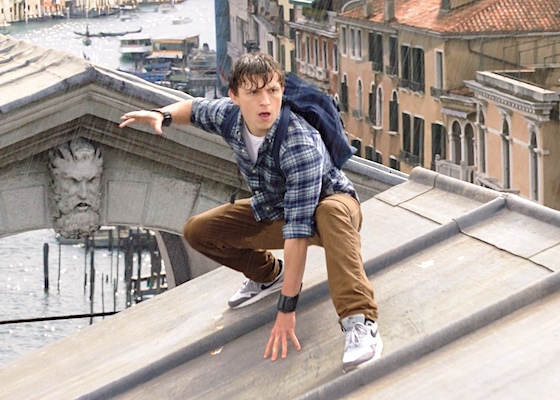
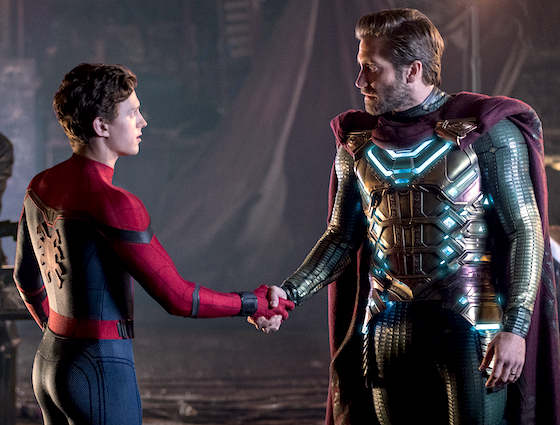
    Meanwhile, Nick Fury is trying to get in touch with Peter Parker, who isn’t interested in the big world-saving antics that implies. He’s more concerned with going on a school summer trip around Europe. How a poor kid from Queens is supposed to afford a weeks-long vacation around Europe isn’t even one of my issues with the film, but if you’re a Spidey devotee it might be. But go on this vacation he does, only to have it interrupted in Venice by a giant water man/monster thing, which is battled by a new hero Peter’s classmates reckon is a cross between Iron Man and Thor, and name Mysterio. Turns out he’s working with Fury, and Fury wants Mysterio and Spider-Man to team up to fight the possibly world-ending threat. But Peter doesn’t want to because he’s on holiday goddammit and he has a plan to woo MJ.

    So far, so Spider-Man — the conflict between his personal and ‘professional’ life is a regular feature of the character. But it’s the way this story unspools that didn’t work for me, as it drags its heels through every storyline it’s got going at once, indulging in comedic asides from a whole range of characters. Having a comic relief character or double act is fine, but four or five of them? It just eats up screen time. The lack of focus robs the film of impetus or tension, as the characters and plot both meander around Europe and from set piece to set piece.

    At least some of those set pieces are quite good. The Venice one is a nice change of pace, because Mysterio is off doing the main fighting bit, so Spidey’s left to tidy up around him. It’s something a bit different in a blockbuster action sequence. The real highlight, though, is an illusion trap Spidey endures, which is imaginative and creatively realised. Tom Holland gives the title role his all, but Jake Gyllenhaal is the standout as Mysterio, waltzing into the film and stealing it out from under everyone else’s noses. His real-life alter ego, Quentin Beck, has a really nice relationship with Peter, pitched as a kind of mentoring, older brother type role, admiring of the kid’s ability but not blind to his flaws. Even better, if you watch the gag reel you get the impression Gyllenhaal is kinda treating Holland like Beck treats Parker, which is… amusing.

    Super friends

    Like every other MCU film, Far from Home is competently made with occasional flashes of inspiration, so manages to dodge being an outright disaster. But, speaking as someone who thinks Homecoming is pretty great and saw a lot of promise in this sequel’s trailers, I was disappointed by the end result. Future Spidey appearances in the MCU are assured (naturally there’s a post-credits tease for them), so I hope they can recapture more of that Homecoming spark next time.

    3 out of 5

    Spider-Man: Far from Home is available on Sky Cinema from this weekend.

    As Far from Home is officially the final film of the Infinity Saga (I guess it works as an epilogue; or perhaps the saga’s very own feature-length post-credit tease), here are links to my reviews of every other MCU film so far… except for one, which this has reminded me I’ve forgotten to write.

    1. Iron Man
    2. The Incredible Hulk
    3. Iron Man 2
    4. Thor
    5. Captain America: The First Avenger
    6. Avengers Assemble
    7. Iron Man 3
    8. Thor: The Dark World
    9. Captain America: The Winter Soldier
    10. Guardians of the Galaxy
    11. Avengers: Age of Ultron
    12. Ant-Man
    13. Captain America: Civil War
    14. Doctor Strange
    15. Guardians of the Galaxy Vol. 2
    16. Spider-Man: Homecoming
    17. Thor: Ragnarok
    18. Black Panther
    19. Avengers: Infinity War
    20. Ant-Man and the Wasp
    21. Captain Marvel
    22. Avengers: Endgame
    23. this one!

    I’ve also reviewed a bunch of the shorts and (sorta-)tie-in TV series, but I’ll let you track those down if you’re interested.

    …and, in keeping with the style of the MCU, here’s a surprise post-‘credits’ mini-review!

    Peter’s To-Do List
    (2019)

    2020 #49a
    Jon Watts | 3 mins | Blu-ray | 2.39:1 | USA / English | 12

    Peter's To-Do List

    Sony chose to bill this as a short film on Far from Home‘s Blu-ray release, so I’m going to treat it like one and review it. Let’s begin with a dictionary definition (from, er, a very real dictionary, honest) of “short film”…

    short film
    noun

    1. an original motion picture that has a running time of 40 minutes or less, including all credits. “The Silent Child won the Oscar for best short film.”

    2. a deleted scene long enough that someone thought they could get away with pretending it was conceived and created as an original motion picture. “The Spider-Man: Far from Home Blu-ray includes a short film called Peter’s To-Do List.”

    That pretty much sums up my reaction to this — it’s a glorified deleted scene. To be precise, it’s several deleted scenes, so really it’s a deleted sequence — Peter running various errands before his trip to Europe. If you watched any of Far from Home‘s trailers then you’ll have seen almost all of this already because it’s footage that was used extensively to advertise the movie. I believe they also did some kind of special re-release of Far from Home with this bit cut back into the feature (an option not available on the home release).

    So, it’s not a short film, but it is a fun-enough deleted scene. It wouldn’t’ve been out of place left in the movie, but considering the first act is already too long and a trudge as it is, I see why they wanted to lose some stuff.

    3 out of 5

    Yesterday (2019)

    2020 #21
    Danny Boyle | 116 mins | streaming (HD) | 2.39:1 | UK, USA, China & Japan / English | 12 / PG-13

    Yesterday

    Jack Malik (Himesh Patel) is an aspiring — and failing — musician. He’s unlucky in love too, although that’s also his own fault, because he’s missed the blatant fact his friend-cum-manager Ellie (Lily James) has fancied him for the past couple of decades. One day there’s a weird blackout thing across the world, and (long story short) Jack is apparently the only person who remember the Beatles exist. Shocked that the world has been deprived of this amazing, culture-defining music, Jack begins to perform and record it… with zero success. Clearly, there’s more to it than just the music and lyrics. And he’s still none the wiser to Ellie’s obvious affections. Maybe Jack is just one of life’s losers?

    Ooh, that all sounds a bit depressing, doesn’t it? Don’t worry, this is a Richard Curtis movie — things pick up. Because of course someone notices the music Jack’s now playing is amazing, and of course that leads him to global success. Curtis is a massive Beatles fan — I believe that’s how the concept for the movie came about in the first place — so there’s no way he’s going to let what he believes is the wondrousness of their music go unnoticed. We know that as well, I think, so the bit where Jack still fails, despite now having good material, is a nice little plot red herring.

    It’s welcome, too, because the plot doesn’t have a whole lot else surprising going for it. (Well, there’s a subplot about the song Wonderwall that is such a plot structure red herring as to seem like a plot structure mistake, but I’m not sure it counts as a surprise when it’s only likely to be noticed by film buffs who incorrectly predict where it’s going.) It’s one of those films where the one-line premise is more interesting than what the film actually does with it. “What if only one man remembered the Beatles?” sounds like a neat idea for a story, but where is there to go with it? For the sake of there being any story at all, he has to be able to perform these songs that only he can remember. Then he either has to be a success or not, as discussed. It all feels inevitable, the only real question being what’s the ‘out’ — how does this end? Well, I shan’t spoil it.

    She loves you, yeah, yeah, yeah

    To add more bulk, there’s a romance storyline. Of course there is, it’s a Richard Curtis movie. But a romcom is hardly more original, is it? No, this is a very comfortable movie — you’re rarely going to be surprised about where it chooses to go. That said, I liked this side of the film more. In fact, I feel like the film would actually have been better without the whole Beatles thing — just a movie about a struggling wannabe musician realising he doesn’t really love music, he loves Lily James. As it is, at one point he has to choose between his lifelong dream of pop music mega-stardom or being with Lily James, and he choose the dream, which is wholly implausible because Lily James.

    But for all its predictability, there are some really nice bits along the way. (Proper spoilers follow.) It turns out there are two other people who remember the Beatles, and they begin to stalk Jack as he has success… but it turns out they’re just glad this music is back in the world. Neat twist. The surprise-cameo John Lennon scene is another unexpected moment heavy with emotion. The closing montage not being to any ‘big’ Beatles song, but to Ob-La-Di, Ob-La-Da (well, life does go on). Ed Sheeran ruining one of the greatest songs ever written. That one’s not so much nice as “funny because it’s true”, but I’ll take it. (If you thought Ed Sheeran was bad in his Game of Thrones cameo, just wait ’til you see him try to act as, er, himself. The role is very convincingly written, mind.)

    Perhaps the most fascinating aspect of the film is that it’s not only the Beatles that have disappeared in this alternate world. Oasis have gone too, which, as Jack observes, “makes sense” — though the film doesn’t go very far in this regard. It’s based on the notion that the Beatles’ music was The Best Ever, but what has removing them from history actually changed about pop culture? As far as we can see, all it means is that Oasis don’t exist. Is that really the sum total of the Beatles’ influence? Anyway, my point was that other stuff has disappeared too, including Coca Cola, Harry Potter, Saturday Night Live (although that’s just become Thursday Night Live for some reason), and smoking. So this isn’t just “a reality without the Beatles”, it’s a subtly different world entirely. That’s an interesting creative choice. It’s basically just used as a source of humour — an easy go-to gag — but it still provokes the question: why has this random selection of things disappeared? What else has gone that Jack doesn’t notice?

    Hey Dude

    Ultimately it doesn’t matter, because this is a comedy like Groundhog Day or Sliding Doors in that the sci-fi/fantasy aspect is a means to an end, not a thing to be queried in itself. But in those films the change only affected our hero: in Groundhog Day, Bill Murray is the only one in the time loop; in Sliding Doors, it’s only Gwyneth Paltrow’s life that’s significantly different (and none of the characters are even aware there are two versions of events). In Yesterday, Jack isn’t the only person this happened to, which emphasises the “what happened?” question. Why did it affect most people, but not these few? Why is so much of the world the same, but random things are missing? The film doesn’t care — it’s not about that — but, with the narrative choices the storytellers have made, it invites these kinds of wonderings.

    That is, unless you just switch off and let it be a pleasant bit of fluff about a guy becoming famous with borrowed music while finally realising that the girl who’s wasted her life waiting for him to realise she loves him, er, loves him (Jack doesn’t deserve Lily James). Yeah, it’s mostly predictable, but that’s part of the comfort factor. There’s some good music, some likeable performances, and a general amiability to its tone. Let it be, indeed.

    3 out of 5

    Yesterday is available on Sky Cinema from today. (Maybe I should’ve reviewed it tomorrow…)

    Hustlers (2019)

    2020 #39
    Lorene Scafaria | 110 mins | streaming (HD) | 2.39:1 | USA / English | 15 / R

    Hustlers

    A struggling stripper (Constance Wu) is taken under the wing of an older pro (Jennifer Lopez) at a club frequented by super-rich Wall Street types. The going is good… until the 2008 financial crash happens, knocking out their clientele and, in turn, them. Of course, the Wall Street guys got away scot-free after that debacle, even as others floundered — including our stripper friends. That is, until J.Lo and co come up with a scheme to rip the bastards off.

    Crime movies are sometimes criticised for glamourising the illegal acts of their characters. Sometimes that’s people misreading the film (in the case of many a Scorsese movie, for instance). Sometimes it’s true (the many rip-offs by people who misread Scorsese movies, for instance). Sometimes it’s unavoidable, because we’re going to be on the criminals’ side however you present it — and I think that’s the case here. Those fuckers had it coming, and these girls brought it to them. Not all heroes wear capes clothes.

    Even more satisfyingly, it’s based on a true story. Director Lorene Scafaria leans into the story’s caper movie parallels just the right amount, giving the movie a great tone — funny without turning it into an outright comedy; heartfelt without getting schmaltzy; a crime drama without getting self-consciously Gritty. Her direction is fantastic, with exciting shot choices, editing tricks, sound design, and fitting needle drops. But among the razzmatazz she doesn’t lose sight of the point: it’s about these women and their relationships as much as it is about the scam they pulled.

    Every day they're hustlin'

    And so the film rests heavily on the shoulders of Wu and Lopez, but they’re both strong enough to carry it. Wu gets the bigger arc — from nervous newbie to confident co-conspirator to a frustrated “only adult in the room” position when others begin to push things too far. We also see her in framing flash forwards, where she’s in a different position again. Normally I hold little truck with this kind of framing device, because it’s often a lazy shortcut through the story or gives away too much of where thing are going. Here, though, it’s just tantalising enough to make you wonder where exactly she’s ended up, and therefore how exactly she got there. J.Lo’s performance has attracted plenty of praise (there was widespread disappointment when she didn’t get an Oscar nom), and she is wholly convincing as an outwardly glamorous and successful woman with a steely survivor’s core.

    “Strippers rip off rich businessmen” sounds like the setup for an exploitation movie, and in other hands it probably would’ve been. But without a leering gaze, and with a true-story basis that remembers these women are human beings, there’s a dimension of reality that elevates proceedings — even as it’s still fun seeing the underdog pull a fast one on schmucks who deserved it.

    4 out of 5

    Hustlers is available on Amazon Prime Video in the UK from today.