2014 #14
Marc Forster | 123 mins | Blu-ray | 2.40:1 | USA & Malta / English | 15
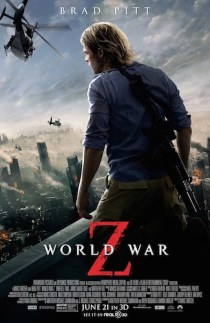 In the weeks leading up to its theatrical release, it was already known that World War Z was going to be an almighty flop. An unscrupulous movie studio had taken a cult novel and thrown away everything but the title, alienating its existing fanbase. They’d spent a fortune making a movie in a traditionally R-rated genre that, if released at R, could never make its money back, and if released at PG-13 would never attract an audience. Then they reshot the entire third act, pushing the budget through the roof and ensuring the resultant film would get critically mauled. A fanbase snubbed, an impossibly huge budget, a genre/rating disconnect, and unavoidably poor reviews to come — World War Z was going to flop, and it was going to flop hard.
Then it came out, and became the highest-grossing film to star Movie Star™ Brad Pitt, and the highest-grossing original film of Summer 2013, and made nearly triple its budget worldwide, and even got fairly good reviews. Maybe I was reading the wrong sources in the run up to its release, or maybe it really was that rarest of things, perhaps even unique: a movie hype-resurrection that was less zombie and more phoenix.
The film sees Pitt’s retired UN investigator called back to duty when a rapidly-spreading plague, which turns people into zombie-like rabid creatures, breaks out around the globe. With his family in tow, he escapes an over-run Philadelphia and ends up with what’s left of the US population on a small fleet of ships, before jetting off around the world on a hunt for answers and, hopefully, a vaccine. Cue large-scale action sequences as director Marc Forster aims for an apocalyptic sci-fi/action epic rather than the zombie genre’s usual stomping ground of claustrophobic supernatural scares.
 That, at least, is something different. The first half-hour races through stuff we’ve seen time and again: zombie attacks, humans turning on humans as they loot supermarkets, etc. Here the zombies are of the 28 Days Later-style speedy variety, all the better for creating blockbuster action sequences, such as a huge chase through crowded streets, or a running fight up the stairways of an apartment building. This is where the PG-13 certificate shows through (even though this cut is technically unrated in the US, the fact both versions received a 15 over here is telling): there’s little focus on violence or gore; which is fine, but won’t satisfy the more blood-hungry genre fans.
It’s after this that things, as noted, turn from claustrophobic to post-apocalyptic. The storyline feels moderately fresh, showing us the global scope of such an outbreak, rather than how a global event impacts a small group of people. I believe this is the closest the film gets to the spirit of the novel (which I’ve not read, so take that comparison with a pinch of salt). However, what’s new to the zombie genre isn’t necessarily new in any other respect, and by the time we get to Jerusalem and the characters are again being chased through crowded streets, it begins to feel a tad repetitive. Some of the sequences work well though, particularly a zombie outbreak on a passenger plane.
The re-shot final act is a breath of fresh air. Apparently the originally-filmed version was yet another epic battle, which has been switched for a more tense creep around a semi-abandoned research facility in… Wales. Yep, a big budget Hollywood action movie climaxes in the middle-of-nowhere in Wales. I quite like that.  It’s a Wales populated by a Londoner, a Scotsman and a Spaniard, but still. I say “more tense” because this is far from the most nail-biting zombie film you could see. The finale is a nice change of pace, and does work as a climax in spite of the bombast that precedes it, but these are zombies as teen-friendly action movie menace, not adult scare-inducers, so don’t except to feel much fear or surprise.
As to the extended cut, it adds only about seven minutes… but there are 121 differences. I can’t even be bothered to read that properly, never mind recount it. There seem to be myriad tiny extensions to all the action sequences, many of them literally lasting a fraction of a second — someone watched this really closely! I can only presume this is actually the original cut, which was then trimmed for the sake of the MPAA to create a theatrical version, because who would consciously go back to add so many little bits? Some are even described as “very unnecessary extension”s by that summary. Other moments do expand on character, though in a subtle fashion (looks like the attempted rape of our hero’s wife, and the murder of one of the wannabe rapists, previously got the snip), or do add to the gore — clearly, it’s too much for a PG-13, but certainly within the realms of a 15. I can’t imagine any of it makes a great deal of difference to the overall experience, however.
Generally, World War Z is a competently entertaining blockbuster. It moves pleasingly fast, with characters quickly and lightly sketched rather than lingered on — not to everyone’s taste, and I imagine some will find it emotionally cold in the way so many recent spectacle movies are. There’s perhaps room for more, particularly from Daniella Kertesz’s Israeli soldier, who is nonetheless somehow the film’s most appealing character;  but I don’t think it was the filmmakers’ aim to make us feel the characters’ plight, but instead to show the scope of a worldwide disaster. It does that pretty well, even if the occasionally-CGI zombies prove to be an I Am Legend-style plasticky distraction, especially when coupled with impossible swooping camera shots — it’s better and more effective in the sections where there’s a grittier feel to the camerawork and practical zombie make-up.
As it lacks the social subtext or extreme gore that the two branches of zombie fandom most value, I don’t think WWZ will find an enduring place in genre-fans’ hearts. As an epic summer action blockbuster, however, it largely passes muster.
World War Z is on Sky Movies Premiere this week, starting today at 4pm and 8pm. It’s also available on Now TV, where the running time suggests it’s the extended cut.

 Like a Doctor Who anniversary special, the fifth film in the Fast and the Furious franchise brings together its previous eras in an attempt to reach new heights of… something. Box office, most likely. Which worked. Fortunately, it also paid off as perhaps the most entertaining film in the series to date.
 The plot is essentially “Ocean’s Eleven with cars”, which is a surprisingly good concept. It also facilitates both the “getting the band back together” tone and a drip-feed of adrenaline. The notion of bringing in characters from every previous film serves its (presumed) purpose of making this feel like a bigger movie, a kind of celebration of the series to date. Whether it deserves such a party is beside the point — it ties together an increasingly disparate run of movies, in the process creating a surprisingly likeable team dynamic.
 with both this and last year’s sequel proving huge hits, and a seventh instalment rushed into production so quickly it lost its director. Even though the series’ longevity to this point was largely unmerited, if the makers can continue to produce films as unpretentiously entertaining as Fast Five, it earns its current place in the cinematic landscape.

 The writing and directing team from
  As for the veracity of the facts, I have no idea. Nothing seems implausible. And when condensing eight years of a manhunt into around two hours of screen time, of course some details will be lost, or truncated, or slightly modified to support the flow. I think those who allege the film is poppycock are accusing it of more than minor tweaks, but nonetheless, that’s inevitably part of the process. What’s perhaps most interesting is it hasn’t whitewashed the facts to make a film that feels like A Movie — this isn’t a relentless thriller-shaped eight-year chase, but a more methodical, occasionally messy, real-life-like quest for information.
 This carries through to the final half-hour (or so), which is a near-real-time rendition of the Navy SEAL mission to invade bin Laden’s compound in Pakistan. The unit assigned to the task turn up and get on with it — like the rest of the characters, they are no more than sketches. I read a review that asserted this is where the film’s focus should have been — on who these men were, what their home lives were like, on their training for the mission, and what effect it had on them after. All of which are valid points for a film, but that’s not what Zero Dark Thirty is trying to be.
 The one other criticism I do agree with is that we don’t see enough of the SEALs’ preparation. They built a full-scale replica of the compound and trained on it — was that not worth putting on screen? I know this is the story of Maya and her investigation, not the SEALs and their assault, but I think a bit of time could have been spent on that fascinating aspect of the raid. On the bright side, there’s a sequence where our characters collect their still-in-development super-top-secret stealth helicopters from Area 51. Yes, really. I guess that must be true, because without the reality-claim of the previous two hours it would come across as
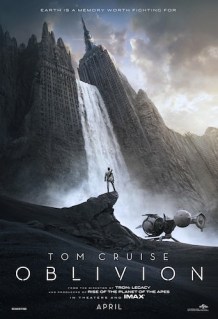 As Oblivion informs us in a hefty chunk of voiceover exposition at the start, the year is 2077, several decades on from a war with aliens that we won but left the Earth in ruins. Humanity fled to a colony on Titan, but the last party to depart remain in orbit aboard a giant space station. Waiting to join them are Tom Cruise and Andrea Riseborough, the last humans on Earth, serving the final few weeks of their mission to watch over the drones that guard giant water-collecting machines, sucking up the oceans for the benefit of the new colony.
 Also, as with many a tale desperate to surprise its audience thus, there are holes in the story and its logic (for a good summary of some of the major sticking points, check out
  I like a good action sequence, and some of the ones Kosinski presents have their moments, but I also found I could have done without most of them. To a degree they seemed to have been slotted in so it could look like an Action Movie in the trailers, the aim (as ever) being to pull in the punters, thereby justifying the budget needed to create such a slick SF world.
 With the aforementioned plot issues, not to mention an ending that some will find too twee (I saw the broad strokes of the epilogue coming from quite a way out, so can’t say I was surprised), Oblivion is not quite all it could have been. But it gets considerably closer than I expected — it’s undoubtedly an A for effort — and that, bolstered by faultless technical aspects, makes for an all-round enjoyable experience.
 Joseph Gordon-Levitt stars as a Manhattan bicycle courier in this near-real-time action-thriller from co-writer/director David Koepp. Charged with getting a letter from one end of Manhattan to the other through rush hour traffic ASAP, Gordon-Levitt finds himself coming up against a loony cop (Michael Shannon) who for some reason is desperate to get his hands on said envelope…
 Gordon-Levitt makes for as appealing a lead as ever, not that his charm is called on much, while Shannon is a memorably crazed villain. He’s a better fit here than he was as
  When
When  Personally, I find it a valid thing to attempt. Rather than take the Superman mythology as read, here Nolan and co — including screenwriter David Goyer and director Zack Snyder — have tried to imagine what would really happen if an alien baby with incredible powers arrived in our world. So Clark Kent hides his abilities, goes on a trek around the world to ‘find himself’, and when he’s uncovered there’s mass media and military interest. Which is pretty accurate, I think. If some guy started stopping oil rigs collapsing single-handed, or flying around the place, the military’s hardly going to sit back and go, “oh OK then”.
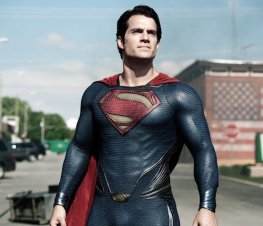 The filmmakers have certainly bought into their own conceit, to a frankly laughable extent. The Blu-ray contains a featurette called All-Out Action, which the menu describes as follows: “The action in Man of Steel soars to new heights with a level of realism never before seen in a super hero film.” Hahahaha! Realism my arse. Once the action kicks in it’s positively comic book. Men are hurled around like rag dolls; Metropolis is destroyed in a huge flying punch-up, which just feels like a less effective re-hash of
 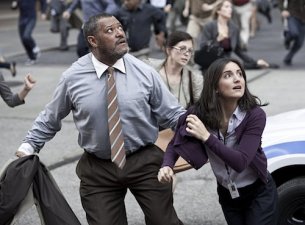 As to the destruction of the city, I think the criticism is right. The city clearly isn’t evacuated before buildings start falling — it’s being evacuated, but no one even knew to start running before the Massive Machine Of Destruction (I forget what it was actually for) turns up and starts destroying things. People run into the streets as buildings fall on them. As a viewer, how can you miss that hundreds, possibly thousands, of innocents are dying? The cinematography makes it look like 9/11 — incredibly like 9/11, in fact. That was 12 years ago by the time of the film’s release, but is it OK to trade on such iconography in a blockbuster entertainment? Should we just ignore the notion that so many ‘extras’ are dying because, hey, it’s just a superhero movie? But aren’t we meant to be taking this as Real World, chaps?
 There’s a lot else that Man of Steel plays with in the Superman legend besides the violence and cinematography. Some people will surely miss the bumbling Clark Kent, the burgeoning relationship with Lois Lane, and so on. These elements are eventually brought in, sometimes in a modified way, which makes it feel like they’ve been put in place — Superman Begins style — to be used in a sequel. Except we know
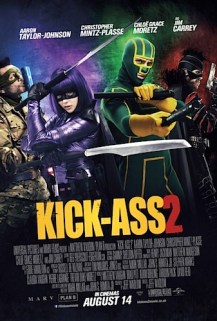 When
When  hiding that fact from her disapproving guardian (Morris Chestnut). Meanwhile, Chris D’Amico (Christopher Mintz-Plasse) wants revenge on Kick-Ass for murdering his father, but is being kept out of the way by his mother and the remains of his father’s mob organisation… until she dies in a freak accident, when Chris dubs himself “the Motherfucker” and sets about forming a gang of supervillains…
 the sequel doesn’t feel as focussed. The themes are somewhat familiar — superheroes leading to supervillains, as seen in
 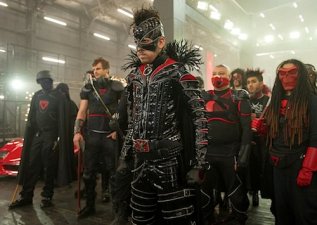 Wadlow does make welcome changes to Millar’s notoriously nihilistic comic, however: instead of gang-raping Kick-Ass’ girlfriend, the Motherfucker can’t get it up (I guess because Kick-Ass isn’t dating his mother (ho ho!)); instead of murdering Colonel Stars & Stripes’ dog, he remarks that “I’m not that evil!”; and so on. The film version still has its points of offensiveness and some outré ideas, certainly, but the needlessly-harsh edge has been taken off, especially when it comes to punishing characters who are innocent. With the exception of Kick-Ass’ dad, but then that’s a superhero staple… just one that’s more violently executed here than normal.
 So is Kick-Ass 3 a good idea? Kick-Ass 2 does provide a kind of conclusion to the story… but it also leaves it wide open for more, not to mention that Millar & Romita’s third comic book miniseries (currently running) is supposed to be the definitive final act for the characters. It would be a shame not to see that completed on screen, but perhaps with more care in how it’s executed.
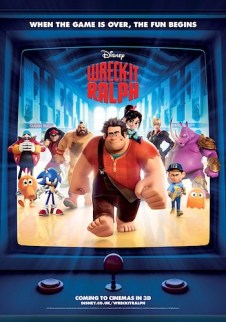 Disney’s 51st and/or 52nd animated classic (depends who you listen to) is, essentially,
  Unfortunately, despite the rarely-filmed milieu of video games, it’s all a bit predictable — like I said, it basically does with video game characters what Toy Story did with toys, both in terms of the story and its themes of acceptance. At least one wearing subplot had me involuntarily exclaim “oh get on with it!” out loud (and I was watching by myself). The pace rarely lets up, and at 101 minutes that becomes tiring. When it does give you a break, you kinda wish it would get a wriggle on, because it’s obvious where things are going and it’s wasting time getting there. Of course, most mainstream films (especially kids’ movies) are going to follow broadly the same arcs — however bad it gets we know the hero will win, etc — but the trick is to make you enjoy the journey, not long to arrive at the destination. I spent most of the third act almost drumming my fingers as I waited for it to get to the latter.
 Wreck-It Ralph isn’t actually a bad film. There’s a fair bit of inventiveness with the concept, and the makers have worked hard to establish a world with rules (though your mileage may vary on how successfully they’ve done that), but it descends into a breathless, sugar-fuelled, reheated runabout. I imagine young kids will adore its colourfulness and its energy, and won’t be bothered by the over-familiar plotting and life lessons; but, beyond nostalgia for arcade gamers, I don’t believe it has huge amounts to offer a grown-up viewer.
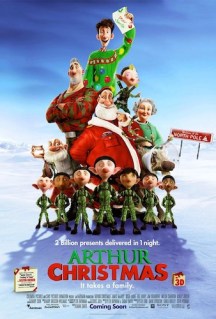 Aardman’s second CG feature attracts a starry cast (not just the leads — check out who’s credited as “Lead Elf”!) to the story of how Santa really delivers all those presents in one night: a giant spaceship-like craft and thousands of SAS-esque elves. But when one child is missed, Santa’s clumsy son Arthur resolves to fix it.
 Much was written about A Field in England at the time of its release, so if you frequent the right places online or in the press you can’t’ve missed it. Nonetheless, there’s a good chance you’ll have heard of it more for its release format(s) than for anything in the film itself: the fourth feature in just five years from new British critical darling Ben Wheatley, it was released to cinemas, DVD, Blu-ray, download, video-on-demand, and shown on free TV all on the same day, a first for British cinema. Any casual viewers who checked it out for that reason were in for a shock, because this certainly isn’t an easily-digested mainstream experience.
 That very subtlety leads some viewers to write this kind of movie off — and fair enough, because if you’re searching for any kind of mass acceptance you don’t do it with a black-and-white film about a few blokes in period dress running around a field doing weird, inexplicable things. Though you might top it off with a shoot-out that is arguably one of the year’s best action sequences, something Wheatley and co do do. And without making it feel tonally out of place, either. Impressive. In keeping but even more memorable is the moment you’ve surely heard about — “when he comes out of the tent with that look on his face”. I wasn’t able to watch the film until something like 24 hours after its Big Premiere, by which time I’d already heard everyone talk about that, and yet it was still uncomfortably uncanny. Kudos, Reece Shearsmith, you’re an odd’un.
 In terms of the new funding models and simultaneous multi-format release and all that… well, it depends what their goals were. If it was to make interesting, alternative, minority-interest films… fantastic, they’ve done it — and got a remarkable amount of interest in the process. If it was meant to be a way of turning a profit, or of reaching a bigger audience… well, it succeeded this time — but how many of those viewers are going to come back? A Field in England is definitely the kind of film that appeals to some people, but it is defiantly not “mainstream cinema”. No bad thing, and something that should be encouraged, supported and funded in some way; but however you do it, it’s not going to continuously bring in big bucks.
 100Films.co.uk