
Richard Linklater | 96 mins | streaming (HD) | 1.85:1 | USA / English | 12 / PG-13
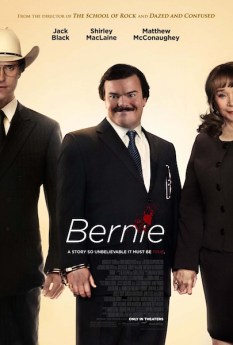 I seem to vaguely remember dismissing Bernie as just ‘Another Jack Black Comedy’ back whenever it came out (in the UK, that wasn’t until April 2013), and essentially forgot about it until earlier this month when it came up on the A.V. Club’s 100 best films of the decade (so far), at #38, which made it sound a very worthwhile watch for multiple reasons. Having seen it, however, I don’t think I’d rank it as one of the (half-)decade’s best. That’s putting an unfair burden on it, though: it’s a movie I’m glad I’ve seen, and certainly one with a good many points in its favour.
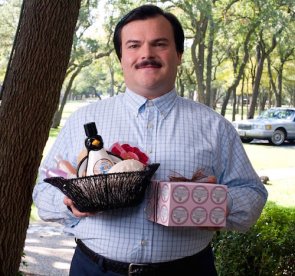
Black plays the eponymous Bernie Tiede, a mortician in the small town of Carthage, Texas, whose dedication to his job and friendly disposition, both far above and beyond the call of duty, soon find him at the centre of the community and beloved by its people. When the town’s renowned miser dies, Bernie forms a bond with his even-miserlier bitch of a wife (Shirley MacLaine), becoming about the only person she gets on with. They go on expensive holidays, dine at fine restaurants, and soon Bernie is managing her affairs. But she becomes increasingly controlling, making demands on his time that he struggles to meet, and treating him as wickedly as she does everyone else. One day, Bernie shoots her dead. When his crime is discovered, the people of his small town initially refuse to believe he did it; when it’s proven he did, they clamour for him to be released anyway.
By-the-by, this is a completely true story.
 (If you’re observing similarities to Midnight in the Garden of Good and Evil there, you’re not the first: the magazine article that inspired Bernie, published around the same time as that book’s film adaptation, is called “Midnight in the Garden of East Texas”.)
Co-writer/director Richard Linklater — who, as we know, often likes to mix up real-life and fiction in the way he produces his movies (cf. Boyhood; the Before trilogy) — tells this story in a docu-drama style, mixing talking head interviews with dramatic recreations. Many (most) of the interviewees are real-life Carthage residents, presumably giving their real recollections and opinions. It fits this narrative to a T, lending veracity to the unbelievable-if-it-weren’t-true story. They’re also amusing — not in a “laugh at the small town folks” kinda way (though there’s an inherent element of that for us as outside observers, let’s be honest), but in an honest-to-goodness “this is what real life’s like” fashion. This irreverence is how many people really react to and discuss momentous events, and in this case that gels with the tone of what happened.
No doubt spurred on by the fact he’s portraying a real person, Black gives a strong performance. It’s a comedy one, undoubtedly, but far more restrained than he normally offers. It doesn’t suggest a Robin Williams-esque versatility — I don’t imagine Black’s suddenly going to be popping up in serious parts all the time — but it is worthy of note. MacLaine does a lot with a little, her character’s vicious nature conveyed at least as much through glances, sneers, and a particular way of chewing food as it is through words and actions.
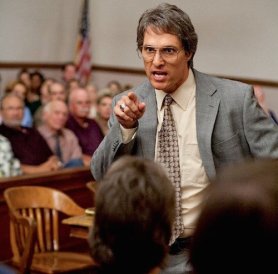 The local attorney seeking Bernie’s prosecution is played by man-of-the-moment Matthew McConaughey. I don’t know when we’re meant to deem the start of his “McConaissance”, but I’m not sure this really qualifies as part of it. Not that he’s bad, but it feels like the kind of played-straight comedy Southerner I’ve seen him do a few times now; indeed, it’s how he comes across in real life, from what I’ve seen. It fits the role like a glove, but doesn’t make for a remarkable performance.
Bernie is one of those stories that you’d never buy if it weren’t true, which makes it perfect fodder for the movies. Native Texan Linklater clearly understands the mindset of those involved and is the right kind of quirky-but-mainstream filmmaker to bring it to the screen. One might argue it doesn’t show suitable reverence to the fact a woman is dead, but the involvement of so many real townspeople suggests it’s got the level and tone bang on. It’s no true-crime mystery, nor the funniest comedy, but it is a tale so engrossingly bizarre that it begs to be heard in full. The real-life post-film ending — Bernie was released from prison last year on the condition he lives above Linklater’s garage — only adds to that fascination.

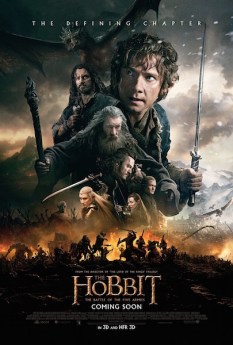 Peter Jackson’s epic Tolkien adaptation blunders its way to a conclusion with an instalment some have declared the trilogy’s best, presumably because they really enjoy watching someone else play video games. That’s what about half of this sextet-completing movie feels like, as it concludes the three-part Hobbit narrative with a CGI-riddled rendering of the titular battle. It’s the shortest film in Jackson’s Middle-earth magnum opus, though it comes to something when a film the best part of two-and-a-half hours long is described as “short”.
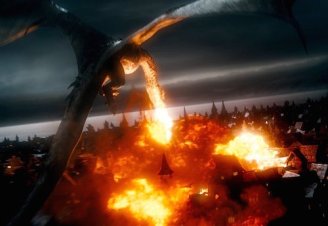 or he could have ended the second film with Smaug defeated and added more material to this third film to reach his desired running time. Or not even bothered adding stuff: if you lost the Smaug opener, The Battle of the Five Armies would still be over two hours long, which anywhere but Middle-earth is considered a decent length for a movie.
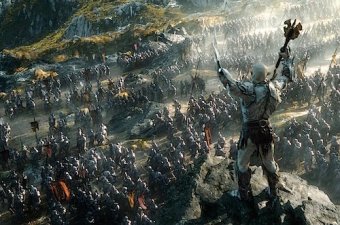 On the ground, the meat of the conflict only occurs when individual heroes are parcelled off into one-on-one duels. None of these particularly stand out, however, other than Legolas athletically jumping around a collapsing bridge that’s all so much CGI. This is where my earlier video game comparison really comes into play.
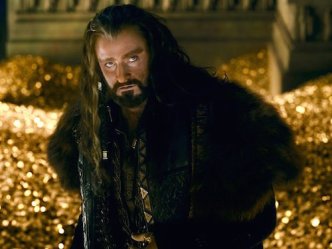 all of whom I’d thought would have more to do in the second and third parts of the trilogy. Turner, in particular, should have expected a bigger boost from Jackson’s decision to enrol him in an interracial romantic triangle, but it feels like they pulled back from that story thread a little after it proved unpopular in the previous film. It’s still obviously there, I just expected more of it.
 I was something of a defender of Jackson’s version of The Hobbit at first. I enjoyed An Unexpected Journey and stand by
  The second feature from
 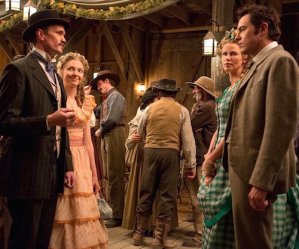 and two other men’s hats, briefly has a funny bit in the middle when he tries to acquire the second hat. The film also uses swearing as a comedic crutch too often. I’m not one of those people who’s only tolerant of swearing if they feel each and every use is absolutely justifiable, and I don’t object to it as just part of dialogue, but too often the film leans on someone saying “oh shit” (or whatever) as if that’s a serviceable punchline.
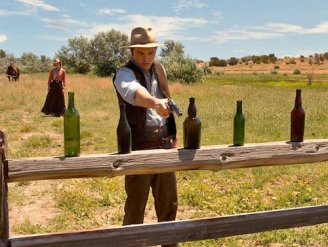 The movie’s best running gag is its titular one. At first it just seems like the concept is going to be limited to Albert sitting in a saloon and listing ways to die, which isn’t funny; but then it keeps cropping back up, sometimes unexpectedly, which really works. The whole fair thing — a running gag within a running gag — is particularly effective. If the film had traded more on this, less on farting and other bodily functions, it would’ve been much improved.
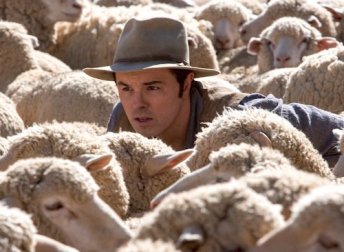 I dread to think what the
 As
As 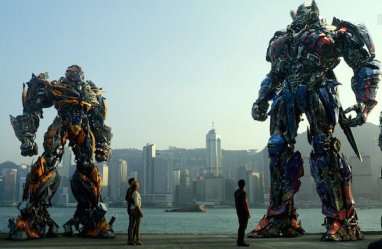



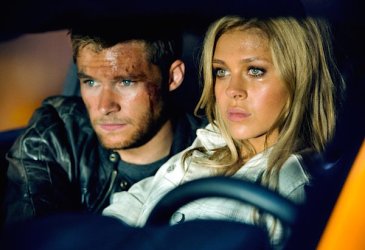
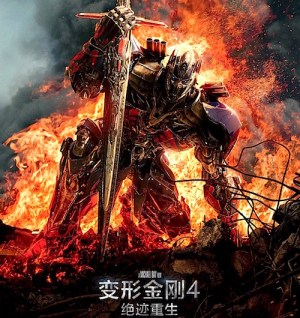
 Sometimes, films are so maligned that you feel you just have to see for yourself. Or I do, anyway. Crime thriller Runner Runner, with its
 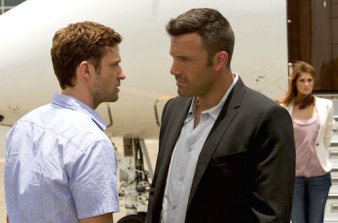 Brian Koppelman and David Levien’s screenplay is packed full of dreadful dialogue, which isn’t helped by phoned-in performances from all the principle cast, in particular Affleck. I guess he needed a payday between his Oscar-winning directorial efforts. I’ve seen some assert that the dialogue and delivery are meant to be mannered and stylised, but I just don’t buy it. Unless the style was meant to be “cable TV cheapie”, anyway. The Puerto Rican filming locations are quite prettily shot by DP Mauro Fiore, at least, but that’s scant consolation when everything else is so woeful.
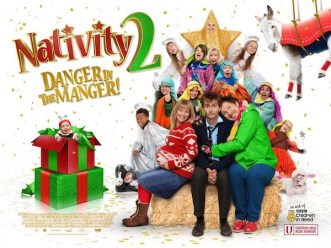 David Tennant replaces Martin Freeman as the teacher of a primary school class who enter themselves in a Christmas singing competition in this part-improvised sequel to the
 a supporting character who’s come and gone over the years, initially seeming one-note but revealing more in more recent seasons — but here you get that kind of arc condensed into 90 minutes. Barr is every bit his equal, the pair forming a genuine if sometimes complicated bond. That it acknowledges but dodges the whole “mid-life-crisis man and teenage girl” iffiness is further to its credit.
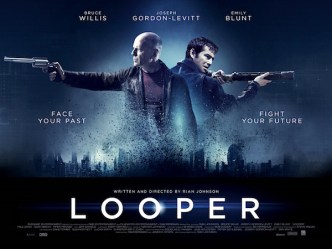 Writer-director Rian Johnson re-teams with the star of
 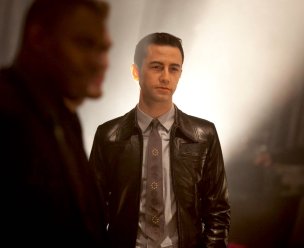 Firstly, the less you know the better. I pretty much knew the above before I went in, and that meant the film had surprises from the get-go. For instance, the near-future world most of the action takes place in has been well-realised by Johnson and his design and effects teams, and time travel is not the only SF concept or imagery employed here, which I wasn’t aware of. Their vision is
 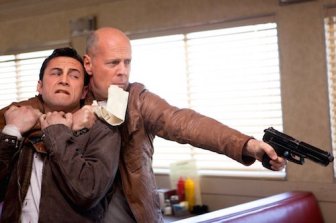 Heading up the cast, Gordon-Levitt does a good Bruce Willis impersonation — believable, but not a slavish impression. That was probably quite necessary, because I don’t imagine Willis has the thespian chops to emulate an older Gordon-Levitt. Notoriously, the younger actor does the whole thing under prosthetics designed to make it more plausible he’d age into Willis. They’re a bit weird: not badly done — far from it, in fact — but you’re always kind of aware they’re there. A highly able supporting cast flesh out the rest of the characters, though most memorable is young Pierce Gagnon as an imperilled child you wouldn’t necessarily mind getting killed. And I mean that in a nice way; about the film and his performance, if not the character.
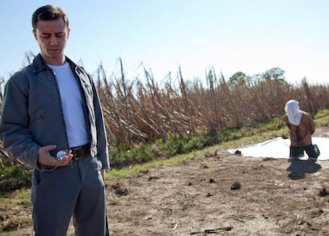 Even if there are some logic issues, it doesn’t fatally undermine the movie. Looper comes with the joys of a well-imagined future, a captivating storyline, engaging characters, and enough twists and turns along the way to keep you guessing at the outcome. The best genre movie of 2012? That was a year of stiff competition among SF/F pictures, but Looper may have the edge.
 Alex Cox was once the director of noticed movies like
  The way he’s gone about filming it is as, essentially, a giant student film. Cox currently teaches film at the University of Colorado at Boulder, and it was along with his students (plus some professional colleagues from previous films) that this movie was produced — that’s partly why there’s the lengthy list of directors (Cox actually directed “most of the first act and all the third”, as discussed in
  but there’s no transition from it into the black-and-white live-action main film, just an abrupt cut (a good place to have put the title credits, at the very least!) Worst of all, no effort whatsoever is made to establish that the cartoon guy we saw being enlisted at the start is now a live-action guy with a teddybear strapped to his spacesuit. It took me a minute to get it, and I’ve read the book.
 After a hurried start, the film does settle down to slightly longer scenes with more of a point, like Bill’s encounter with the Laundry Officer-cum-Chaplain, and some of these work pretty well. Sadly, too much of the time it’s a race through the novel’s story, feeling like a filmed recap for those who’ve read the book. Goodness knows what someone who hasn’t would make of it all. Goodness knows if they’d even be able to follow it at all, to be frank.
 Bill the Galactic Hero might be best described as a noble failure. It’s been created with the best of intentions, both in terms of adapting a quality novel that Hollywood had no interest in, and in training up a new generation of filmmakers in an independent and proactive way. It’s a shame the end result isn’t wholly as enjoyable as it might’ve been.
 At the start of their audio commentary on The Desolation of Smaug, co-screenwriters Peter Jackson and Philippa Boyens note that, when the decision was made to extend the already-shot Hobbit duology to a trilogy, it wasn’t a third movie that need to be created but a second. That is to say, it was the middle instalment that required the most extra material, including a new prologue and climax. The
 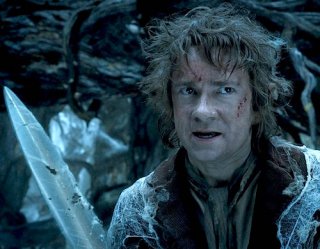 The extended cut amps him up even more, with an extra part in Mirkwood and a moment where he stands up for Thorin in Laketown. In fairness, he doesn’t have as much character development in this film as the first, while Thorin is on a definite arc and Gandalf is off on his own side-plot, but he’s undoubtedly a key character. I really don’t understand that complaint.
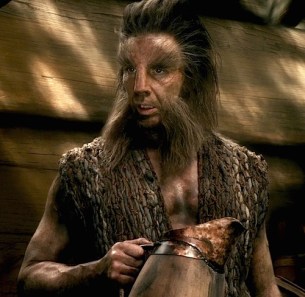 Even if some of the additions are worthless, on balance this is a better version of the film: more Beorn, more of the atmospheric Mirkwood, an additional character whose appearance will hopefully pay off in the extended
  100Films.co.uk