2015 #141
Carol Morley | 102 mins | streaming (HD) | 1.85:1 | UK / English | 15
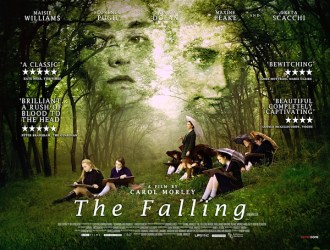 Inspired by real events, The Falling stars Game of Thrones’s Maisie Williams as Lydia, a 1960s teen with an awkward home life who is a student at a repressive girls’ school. She’s best friends with the popular and charismatic Abbie (newcomer Florence Pugh, next to be seen as the lead in Lady Macbeth (which seems to have bugger all to do with Shakespeare)). When Lydia starts fainting for no apparent reason, it leads to a fainting epidemic at the school that no one can explain. Is it caused by illness? Fakery? Something psychological? Or possibly even some kind of dark magic?
On Amazon Instant Video (where it’s available free to Prime subscribers from today), The Falling is billed as “a mesmerising psychological drama”, which isn’t too wide of the mark. However, presumably because of the prominent pentagram on the cover image there, all of the “customers also watched” recommendations are called things like The Exorcism of Molly Hartley, The Houses of Halloween, Haunt, Demonic, and Sinister House, or are other obviously-cheap-trashy-horror-looking films with less blatant names (like The Canal, Awaiting, and Robert (chilling!)). No wonder it has a low user rating if it’s a “psychological drama” being mainly watched by people who choose to pay to watch that kind of low-rent horror crap!
The Falling is certainly not low-rent horror crap. Is it a horror movie? Not really — there are no monsters, no jump scares, none of the obvious tropes; but it does have a distinctly unnerving air a lot of the time, and there are definite references to and hints about some kind of mysticism playing a role. It’s often incredibly atmospheric, with some beautiful cinematography courtesy of DP Agnès Godard and effective editing by Chris Wyatt.  Writer-director Carol Morley has kept the pace and tone slow, in an enchanting rather than ponderous fashion, but it’s a “not for everyone” pace nonetheless. For me, it only really lost its way as it moved into its final stages. Without wanting to spoil where it goes, in my opinion too much was explained, but at the same time it explained nothing.
Indeed, I feel it might’ve fared better overall if it had stuck with the magical-realist / folk horror / olde-worlde magik styles it veers towards early on. But then Lydia says she’s a rationalist, and I suspect Morley is too, and so they well know that such things as spells and lay lines have no bearing on the real world. If one wants to present the possibility of a real-world explanation for the film’s events — and, as they were inspired by actual events, I presume Morley does — leaving things at “because magik” isn’t going to cut it.
The immediately obvious explanation — certainly as far as the school’s teaching staff are concerned — is that the girls are faking for attention. One comment-review on a website asserts that “one of the central questions of the film is whether or not the girls were faking their illness,” before going on to outline how this could’ve been improved to make the film into an “entertaining thriller”. I think this is a prime example of reviewing what the reviewer expected or wanted rather than what they were given, because it didn’t seem to me that the issue of fakery was the “central question” here. Of course, that’s only my interpretation of the filmmaker’s intent, so no more or less valid than this other commenter’s; but I really don’t understand how you can watch The Falling and think it was anyone’s goal for this film to be considered an “entertaining thriller”. It’s simply not that kind of movie.
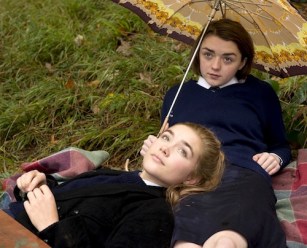 An element I do think was at the forefront of consideration is sensuality and sexuality, which plays a large and significant part in the film. Pretty much any movie bar “bawdy high school comedies starring obvious twentysomethings” seems to veer away from schoolgirl sexuality these days, wary of inevitable “OMG u a pedo” reactions, I guess. Sexuality does not equal pornography, though; and, as I alluded, here it’s played out as much through a heightened, tactile sensuality. It does probably ‘help’ that it’s a film written and directed by a woman — it would carry a very different, more Lolita-ish air if it had been written or directed by a man. What exactly it’s saying with all this is arguably as mysterious as the cause of the fainting epidemic, but then it’s all tied together: teenage years are a period of sexual awakening, of course, and if you’re in an environment where nearly everyone is of the same gender, and where such things are massively repressed… well, how is it going to manifest itself? If “sex” is somehow the cause of the fainting, it’s not because sex is bad, it’s because there’s no other appropriate outlet for it.
Or maybe that’s got nothing to do with it at all.
A lot of this has to be carried on the shoulders of a relatively young cast, but all are capable. Maisie Williams is by far the best known of the girls, though viewers of Ripper Street will recognise Anna Burnett. She was good in the Victorian detective series, but she’s even better here. Williams gives a strong performance too, afforded the ability to show some range and variety from Arya Stark (unlike her appearance in the currently-airing Doctor Who two-parter-that-isn’t, for instance). There’s also a quality adult supporting cast, including the likes of Maxine Peake (in an initially quiet but ultimately key role), Greta Scacchi, and Monica Dolan, while Peaky Blinders’ Joe Cole acquits himself well in the subtly complex role of Lydia’s brother.  Best of the lot, however, is Florence Pugh. Reportedly discovered when The Falling’s casting directors visited her school, you can see why she’s quickly been snapped up for a leading role. I wouldn’t be surprised if Hollywood come knocking looking to make her the next Kate Winslet/Keira Knightley/Gemma Arterton/etc “English rose”-type lead in some blockbuster or other.
The Falling is an odd film, really; though in many respects that shouldn’t come as a surprise. Some will love it; many will despise it. Personally, I felt a lot worked very, very well, but the bits that didn’t, well, didn’t. For what it’s worth, I ranked it 3.5, aka 7, on sites that have half-stars or are out of ten. It would’ve been a solid 4 if not for those niggles, but equally they’re not so bad to drag it down to a 3. Some viewers seem to put the niggles aside entirely and push it up into the 4.5 or even 5 margin; for others it doesn’t work at all, dragging it down much lower. Everyone’s reaction to any film is completely subjective and personal, obviously, but this is the kind of film where it’s more true than others — you can’t pigeonhole it like you can a superhero actioner, or a rom-com, or, well, most movies, to be honest. It’s part high school coming-of-age drama, part supernatural thriller, part kitchen sink drama, part arthouse tone poem. How well that uncommon mix works is entirely down to the individual viewer’s personal predilections.
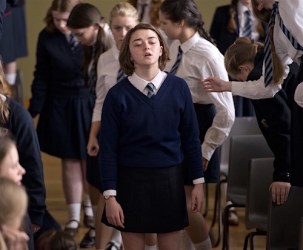 For me, it’s the kind of film that, with time and subconscious reflection, I may come to remember more fondly and be keen to see again, or all but forget. It’s the kind of film I could, without even re-watching it, re-evaluate and want on my year-end top ten, or could see on my top ten contenders long-list come January 1st and wonder, “dear God, what was I thinking?!” It’s the kind of film I’m not sure I wholly liked, but I’m glad I’ve seen.
As mentioned, The Falling is available on Amazon Prime Instant Video from today.

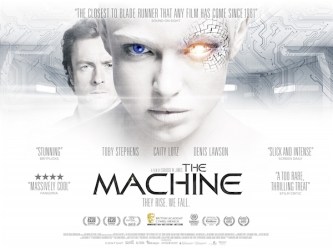 In a near future where Britain is part of a Cold War against China, a scientist (Toby Stephens) has been trying and failing to perfect artificial intelligence at a government research facility. When he hires a new associate (Arrow’s Caity Lotz) they make progress, crafting a machine in her own image (played by Lotz again, obviously). Unsurprisingly, their boss (Denis “turned down The Force Awakens” Lawson) has some less-than-ethical plans in mind for their new toy…
 This may explain why the performances are a mixed bag. Toby Stephens can’t seem to find much to work with in his lead role, despite supposedly having a couple of emotional arcs. Lawson sleepwalks through his turn as a shady government higher-up. Lotz is unremarkable as a human, but fantastic as the AI-driven machine. Her performance as the latter is the primary reason to consider watching the film.
 This informative documentary uses interviews with all the key players to tell the story of how a small indie comic, created incidentally and published almost on a whim, became a true cultural phenomenon.
 As for this documentary, it nonetheless finds an almost emotional conclusion with Eastman and Laird today talking about the chain of chance and coincidence that brought them together three decades ago to accidentally create something that transformed their lives, and which continues to endure in all kinds of media (no one liked
 The BBC’s long-running spy thriller series
  Early seasons focused at least as much on things like the mundanity of spycraft, or how one went about having a personal life while also being a sometimes-undercover agent, as they did on the exciting action of counterespionage — as evoked in the memorable tagline “MI5 not 9 to 5”, of course. As the years rolled on, things got increasingly outlandish and grandiose, just as almost every spy series that starts out “grounded” is wont to do. In season three, an entire episode was spent on the moral dilemma of whether it was acceptable to assassinate someone; a couple of years later, assassinations would just be a halfway-through-an-episode plot development. The one constant through all this was section chief Harry Pearce (Peter Firth), the M figure to a rotating roster of “James Bond”s, including Matthew “
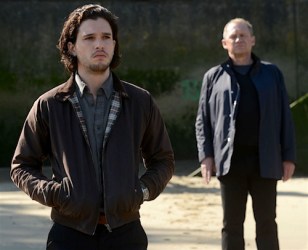
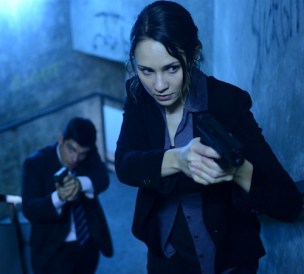 But I’m getting ahead of myself. The story begins with Harry running an op that goes wrong, during which terrorist Adam Qasim (Elyes Gabel) is sprung from custody just before being handed over to the CIA. Cue international incident. Naturally the blame is pinned on Harry, who consequently throws himself off a bridge. Except no one buys that, so they drag in Will Holloway (Kit Harington), a disenchanted one-time protégé of Harry’s (i.e. the series’ latest “younger man who can do the running around”). He knows nothing about it (
 The trailers attempt to promise some of that kind of action, but they’re a bit of a cheat: what adrenaline the film has is mostly released in tiny bursts, scattered throughout. That strategy is fine if you’ve got the money to make each little burst a solid sequence, but when the entirety of some sequences is “jumping through a window” or “climbing a wall to get into a flat”, well… Sure, it looks good in the trailer — it promises lots of action in different places at different times — but that’s also a promise the movie can’t fulfil. The Greater Good certainly isn’t just a low-rent action movie — it’s driven by its plot — but if they’d saved up the filmmaking time, effort, and expense afforded to those single-dose action moments and poured it all into one sequence (in addition to the two or three fully-realised action sequences that the film does have), it might’ve paid dividends.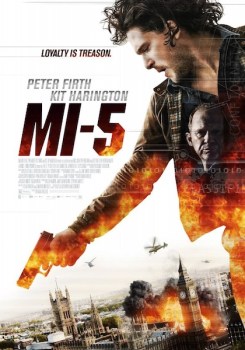

 Director Chan-wook “
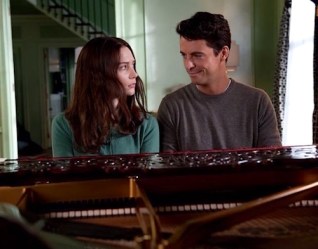 I’m sure the story could be shunted back to a crumbling pile in 19th Century England. So precise is the mood of this secluded household, it’s kind of weird when, a little while in, we get to see India’s place of education: a typical US high school. In another film I might call this sudden change of locale a misstep, a breaker of tone, but in the world Park has created it just feels like a point of contrast.
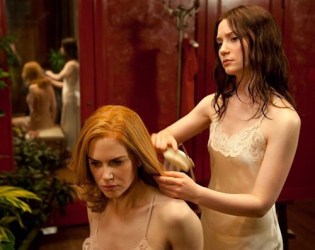 not a soul-bearing artistic portrait of humanity. And as for the style… well, I’ve already talked about that. Whether you can have “style” for style’s sake, or whether it needs to be in aid of something, is a debate for another day. Here, it is in aid of something: amping up the Gothicism of the inherently Gothic story, which in other hands could have just became any-old present-day-set family thriller.
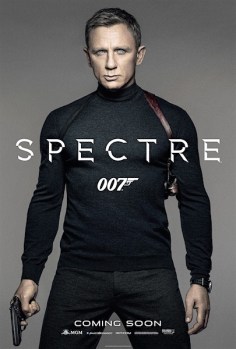 It’s been quite the year for spies on the big screen: mega-success for
 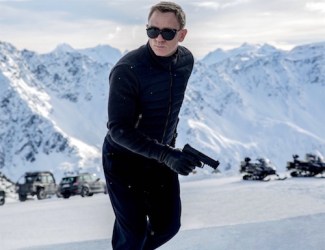 or, “they’ve merely brought back the classic Bond formula, albeit in the Craig-era style — what a regression”. You only have to look at the
  Craig’s films have stuck to the older formula of casting a respected/famous European: Dane Mads Mikkelsen, Frenchman Mathieu Amalric, Spaniard Javier Bardem, and now German “European actor du jour” Christoph Waltz. The double Oscar winner is on fine form at times, but there aren’t quite enough of those times. Again, without aiming to spoil anything, I’d say he’s not so much underused as misused.
 Well, I did too. Now I want a cake. And if you’d like to watch someone eat a Madeleine, check out
 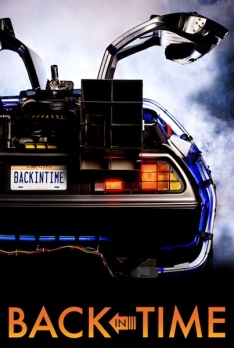 If you’re on social media (or even just frequent pop culture news sites), you can’t fail to have noticed that Wednesday just passed was “Back to the Future Day”, the exact date Marty McFly and Doc Brown (and Marty’s girlfriend) travel to in
 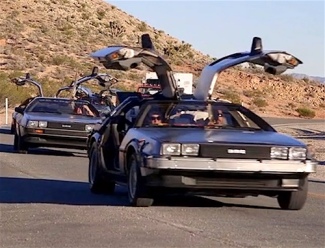 Then it moves on to the fans — what the film means to them, and what that’s led them to do. Those we meet include a couple who travel around the US in a DeLorean fundraising for Michael J. Fox’s charity; the team of aficionados who restored Universal Studios’ decrepit display DeLorean; the family of collectors who own the only film-used DeLorean that will ever be in private ownership; a guy who built a mini-golf course in his yard with a Back to the Future-themed hole that he’s used for charity events with some of the films’ cast; the people who have had some success developing a real-life hoverboard; and the guy who set up a fansite that was so good it became the official site, and is now regularly employed as an official consultant about the films, not least for the rafts of merchandise that comes out these days. We also get a look at the Secret Cinema event in London from a year or two ago that made headlines for all the wrong reasons. Naturally, none of that gets mentioned here (in fairness, because it has nothing to do with Back to the Future itself).
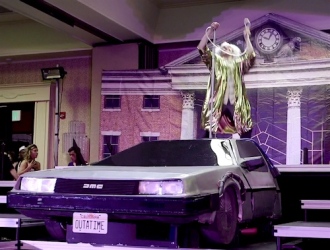 That glaring error aside, Back in Time is not a bad film, provided you know what to expect. It’s a shade too long and the storytelling is occasionally a little jumbled, but there are some nice interviews and stories — hearing Michael J. Fox recount the Royal Premiere where he was sat next to Princess Diana pretty much makes the whole exercise worthwhile.
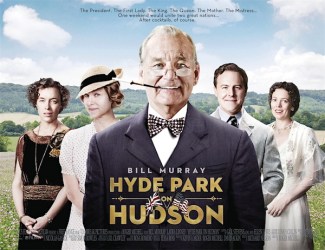 Wannabe-prestige picture Hyde Park on Hudson is like two films playing at once: the dramatic/romantic story of President FDR’s (Bill Murray) burgeoning affair with his distant cousin Daisy (Laura Linney), and the comedy-drama of his meeting with King George VI (aka “the one Colin Firth played in
  For what it’s worth, the film was born of the discovery of Daisy’s letters and diaries, which told of the relationship. Apparently the screenwriter was one of the people who found these, so I guess that’s where his interest lies. The film is a UK production from Film4, however, and made in the wake of the global success of The King’s Speech, so perhaps that explains the root of the royal involvement. While both stories have some potential, they aren’t made to gel, switching back and forth as if in some kind of narrative relay that enables the film to run a theatrical distance.
 with vibrant colours evoking a place of sunny happiness, but anything set at night is graded with a terribly extreme, not to mention awfully rote, case of teal-and-orange.
 Screened at the London Film Festival earlier this month, then made available on MUBI in the UK (where you can, if you want,
  That’s the whole movie, more or less. I haven’t spoiled it for you because you’re not going to watch it because why would you? There is no discernible story or meaning; there is no characterisation; there is nothing but imagery and snippets of moments that signify nothing. It is a movie that has deliberately left out any explanations. Apparently the director has said it’s all a criticism of global capitalism, or something. Even with that extra-filmic information, it’s still difficult to ascertain much meaning. This isn’t realism — this isn’t avoiding “hello, person who is my brother” dialogue — this is obtuseness for obtuseness’ sake.
 In 2006, the body of 38-year-old Joyce Vincent was found in her London bedsit, surrounded by Christmas presents and with the TV still on. Sad, but largely unremarkable, were it not for the fact that she’d been dead for three years.
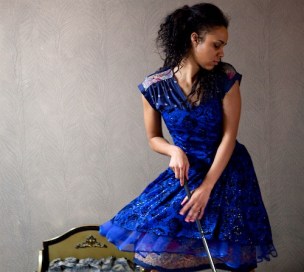 Some people seem to view this as little more than a detective mystery, and are frustrated that Morley ‘chose’ to leave out details. I guess such critics have no understanding of things like confidentiality (when it comes to why Joyce was in a women’s refuge and what she disclosed there), rights to privacy (if the family don’t want to be interviewed, you can’t force them), the realities of investigating a real-life case (maybe some people who knew her in those final years just don’t want to be found), or human decency (Joyce led a fragmented life that came to a terribly sad end, and all you can think about is why she didn’t leave a few more clues around for you to deduce what happened and why?!)
 On the more considered side of the internet, there’s a reasonable debate to be found about the filmmakers’ right to tell the story at all. Joyce kept her life story secret even from some of her closest friends, and yet here it is being picked over in a movie for anyone to see. Is it moral to do such a thing? Should she not just be left in peace? Are the extraordinary circumstances of her death a good enough reason for this level of prying? Surely her death and how it came to occur needs to be understood, though, and surely the only way to do that fully is to examine her life. But is that not the business of inquests and the like, not films? But then, the filmmakers seem to have dug up information the inquest didn’t get close to unveiling. Perhaps the question is, when does society’s interest justifiably overtake the rights of the individual? Does it here? I’m not sure. Maybe.
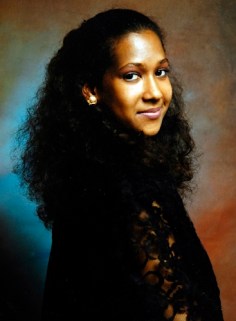 Nonetheless, these flaws can’t detract from the fundamental power of the story being told. If you come away from this thinking not about how sad it was for both Joyce and the people who knew her (especially Martin, especially in the film’s final moments), or what you should or could perhaps be doing better in your life, but instead being angry that it didn’t satiate your ghoulish need for full and frank revelations… well, I don’t know what to say about you, but it wouldn’t be very nice. Through this incident, Morley and her interviewees are really making bigger points about our society and our relationships. It’s no one’s fault, per se, that this happened to Joyce, but that it can happen is horrendous.
 100Films.co.uk