The Twilight Saga: Eclipse (2010)

2017 #142
David Slade | 119 mins | streaming (HD) | 2.35:1 | USA / English | 12 / PG-13

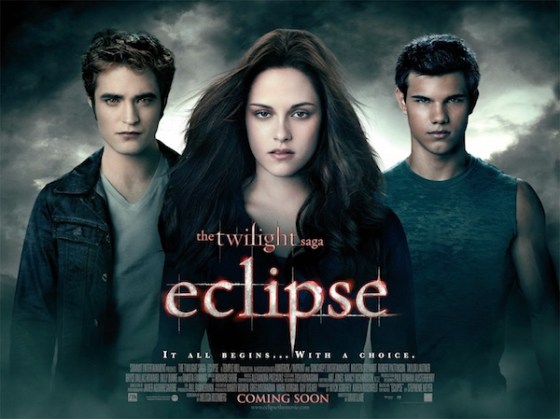
The Twilight Saga: Eclipse

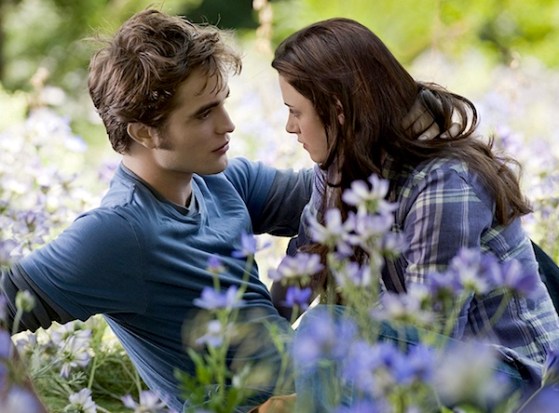
For the third Halloween in a row, I’ve subjected myself to true cinematic horror: a Twilight film. I suppose this one’s theoretically the turning point of the franchise: it’s the middle movie in the film series, while in the books it’s the penultimate instalment — surely in every regard placed to set up the final conflict. Well, you wouldn’t know it, because this is another Twilight film where very little happens.

The plot, such as it is, sees Bella (Kristen Stewart) trying to juggle her romantic relationship with vampire Edward (Robert Pattinson) and her just-about-platonic friendship with werewolf Jacob (Taylor Lautner), which is tricky because the pair don’t get on owing to an ancient feud between their species. Just your regular high school problems, then. Meanwhile, a series of mysterious murders in Seattle have caught the attention of Edward’s de facto vamp family, because they reckon it’s probably not your bog standard serial killer, but rather something in their neck of the woods. (Their neck of the woods. Geddit? Neck of the woods. Nothing? Okay then.) What do they plan to do about it? Watch it… on the news… and… er… wait and see… if it comes near them… maybe?

So, that, but for two hours.

I know how to settle this... a stare off!

So yes, nothing happens — and yet, somehow, nothing happens less boringly than last time. I mean, it’s not great, but it’s not as bad. It actually has some passably good scenes and conflicts, for example. That said, it spends the whole movie getting to basically where the last one ended. The dialogue’s still shit as well. Especially the supposedly passionate stuff, which is like some 11-year-old-who’s-watched-too-many-movies’ idea of what would be romantic. Most of the scenes go on far longer than needed. Plots go round in circles (as I said, nothing happens). And there’s nothing as brilliantly awful as Face Punch, though Edward and Jacob do get one passingly amusing one-liner each. And I have absolutely no idea whatsoever why it’s called Eclipse. I suppose Twilight and New Moon didn’t mean a great deal either, but I still think they meant more than Eclipse.

This may sound a strange thing to say, but this one’s very much a romance movie. The first two must’ve been as well, because that’s what Twilight is, so I’m not sure why I felt it more this time. I suppose the first one had a lot on its plate establishing all the supernatural stuff, and New Moon had a lot of palaver building out the world further, mixing in werewolves and the vampire high council (or whatever). Eclipse does have the Seattle stuff, but that just pops up now and then in between Bella umming and ahhing over her relationships.

Team Abs

As to that, the story tries so. hard. to make you believe it’s possible Bella could change her mind and switch affections from Edward to Jacob — but did anyone ever really believe that was an actual possibility? The story just isn’t built that way. Before I watched the films, I could never understand why anyone would be Team Jacob. It seemed so obvious she’d end up with Edward, why waste your energy? But now, even still thinking it’s inevitable, if I had to pick a team it’d definitely be Team Jacob. The reason is Taylor Lautner. No, not because of his phwoarsome abs. I remember everyone being very surprised when Lautner joined BBC Three sitcom Cuckoo, but actually watching these films you can see he has at least some ability with comic timing. His character is also more down-to-earth and levelheaded than his vampiric rival. Put together, these traits make Jacob much more likeable than bloody Edward.

The rest of the cast are as much nonentities as ever. It’s no wonder it’s taken Kristen Stewart years to re-establish the positive career path she was on before Twilight. Original Victoria actress Rachelle Lefevre was fired because her schedule for another film overlapped, and her replacement is Bryce Dallas Howard. Although Victoria has been an antagonist throughout the series, and her storyline ostensibly comes to a head in this instalment, she’s barely present. Quite why they cast a relatively well-known actress in such a minor role, or why she agreed to do it, is a mystery. At least it doesn’t seem to have harmed her career.

Team Sparkles

Others have been less fortunate. I mean, Robert Pattinson still works, but in what lately? I thought the same about director David Slade, whose work here is perfectly serviceable while at no point being memorable. Previously he’d helmed well-received horror/thrillers Hard Candy and 30 Days of Night, a promising start to his career. However, since taking the Twilight dollar (he’d previously slagged off the series, comments he tried to pass off as a joke when he signed on for Eclipse) he’s shifted to TV, starting off poorly with a raft of pilot episodes like This American Housewife (not picked up), Awake (ditched after a half season), Crossbones (cancelled after nine episodes), and Powers (only available on PlayStation). But more recently he’s been an executive producer and director on Hannibal and American Gods, and has a Black Mirror coming up. I guess the era of prestige TV is working out for him.

Anyway, back to Eclipse. For a movie in which so little happens, I found it surprisingly unobjectionable. It’s not good, but I’d say it’s the least-bad Twilight so far. Of course, it wouldn’t make any sense to watch it without sitting through the previous two first, so my assessment is even more damning with faint praise than it sounds.

2 out of 5

See you this time next year for Breaking Dawn Part 1… and maybe Part 2, just to get this thing over with.

Transformers: Age of Extinction 3D (2014)

2017 #90
Michael Bay | 165 mins | Blu-ray | 2.40:1 + 1.90:1 + 2.00:1 | USA & China / English | 12 / PG-13

Transformers: Age of Extinction

I thought I was done with Transformers movies. I watched Dark of the Moon back in 2014 and hated it — I gave it two stars and later couldn’t remember why I’d given it more than one. Fortunately that rounded out an initial trilogy, so when this fourth movie came out I didn’t feel I had to bother, especially when the reviews were even worse. When it made its debut on Sky Movies, rather than watch it I summarised other writers’ insightful/amusing commentary — though I acknowledged that “maybe one day I will cave and check out this renowned piece of cinematic excrement, because I am a completist and having seen three of the films I feel compelled to watch every new entry that turns up”.

Obviously, that day has come. The reason is 3D.

Regular readers will know I caved to imminently-obsolete technology back in April and bought a 3D-capable 4K TV (I wrote about it here). Long story short, the third and fourth Transformers movies were shot in 3D and are well-praised on the format. So after I rewatched the third in 3D and enjoyed it more than I remembered, the fourth called.

Here come the Transformers... again

On a purely technical level, Age of Extinction is a masterpiece. As well as 3D, significant chunks of the film were shot for IMAX, and the IMAX 3D stuff is incredible. Sometimes director Michael Bay uses it for just regular scenes, like Mark Wahlberg driving his truck or walking around an old theatre, and even those bits are a riot of depth and dimensionality. So when it opens out to show wide scenery, or for the action sequences… wow! And Bay chooses to use IMAX, like, all the time — as I said, for low-key regular stuff as well as the “epic” stuff you know it’s made for — so much so that it’s kinda weird they didn’t just shoot the whole movie in an expanded aspect ratio. (There are at least three aspect ratios used. I believe the fifth movie has five or more.) Some people hate shifting aspect ratios on Blu-ray, finding it odd when the screen suddenly fills up. Age of Extinction has the opposite effect, feeling odd when black bars appear to make it 2.40:1 for the odd shot here or there. Personally I love a shifting aspect ratio, but generally that’s because it’s the expansive IMAX stuff intruding now and then to impressive effect — when it does the opposite, it has a lessening effect.

And to round out my praise for the film’s technical merits, the sound design is positively thunderous. On a pure show-off level, this may well be the greatest Blu-ray I’ve ever seen.

As for the film itself…

Just normal people, standing around normally like normal people do

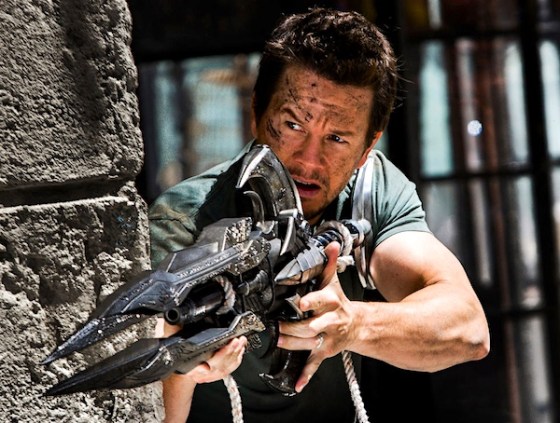
Age of Extinction is not really a movie for anyone interested in such trivial things as plot or character or internal logic. They certainly don’t concern Bay. He’s almost solely driven by the visual. It’s almost a different way of approaching the movie. If you can take it that way, I think it at least explains how some of its apparent missteps come about. For example: Wahlberg’s 17-year-old daughter is dating a 20-year-old fella — barely worthy of a raised eyebrow here in the UK, but a Shocking Thing in the US where the age of consent is (mostly) 18. But in Texas, where the film is set, they have this thing called the Romeo and Juliet law which, long story short, makes the relationship okay. Except the guy has this law printed on a card in his wallet. How skeevy is that?! I mean, why does he need it on him at all times in the form of a handy little card? What’s that for? But you see, here we are applying real-life logic. In BayWorld, having a little card with the law on it is a handy way to quickly dramatise the existence of said law and get it on screen. No, I agree, this doesn’t make a great deal of sense — as I said, if you think through the implications of why the character might possess this card, it makes the guy a massive creep — but the way Bay uses it in situ, I can kind of see what he was thinking. This kind of reasoning — of moviemaking driven more by visual thrust and expediency rather than plot coherence or character motivation — can be expanded to explain almost every plot hole, logic gap, or sudden time jump in the whole movie.

Elsewhere, It’s like someone set a challenge for how many explosions it’s possible to have in one movie. It’s just… mind-boggling. The film makes little sense as a story, or a series of events with cause and effect, or a paced action sequence with ebb and flow — it’s just a relentless assault of set pieces; things that would be a showcase stunt or effect in another movie just piled atop each other in a never-ending tumble of action. It’s, in its own strange way, impressive.

SPLOSIONS

It’s hard to describe the cumulative effect of these features, because the impact it has on the viewer is so rooted in the visual, the aural, the… not emotional, because there’s little feeling. The adrenal? As in adrenaline-generating. It makes no sense, and yet it makes its own sense. It’s almost avant-garde.

However, lest you think Bay is deliberately thinking everything out, just in a different way to the rest of us, there’s plenty of evidence that he isn’t. An obvious one is the film’s weird vein of anti-American-ism. Not overtly so, but it presents the CIA (and other US law enforcement) as corrupt and the government as incompetent because it can’t oversee them properly. This feels very odd from Bay, who’s usually so worshipful of the armed forces. Maybe he’s actually one of that weird breed of right-wingers who think it’s somehow most patriotic to hate the government and all of its institutions? Or maybe Bay is secretly left-wing — I mean, the entire ethos of Transformers is pro immigration and asylum. Or maybe he just doesn’t know what he is, or doesn’t see the inherent contradictions in what he’s putting on screen. Yeah, that version sounds about right.

It’s definitely way too long. In fact, it’s so long that when it finally finished I felt the same as if I’d just binge-watched an entire miniseries. Ironically, for a movie that doesn’t care about plot, there’s too much of it. Ironically, for a movie that uses visual shortcuts for expediency, it allows some scenes to run much longer than they need to. You could easily lose 30 to 45 minutes of this movie, either by ditching some of the plot or ditching some of the repetitive explosions; or, ideally, a bit of both.

It's a sword... that's also a gun!

Despite supposedly being a fresh start for the series, Age of Extinction spins out of the events of the last movie (it’s set five years later, with both Autobots and Decepticons persona non grata after the destructive Battle of Chicago), but doesn’t even mention Sam (Shia LaBeouf’s character) or any of the other films’ humans. Optimus Prime and Bumblebee don’t seem in the least bit bothered to have nothing to do with their former friends. Why? Who knows. Do we care? I guess not. Maybe it’s just that the Autobots, the film’s supposed heroes, are actually horrible, horrible people. Rather than good and kind and fighting for righteousness or something, their behaviour is frequently mean and cruel. A couple of them are desperate to give up on humanity (the only reason they don’t? “Optimus said we can’t”), while another kills an alien just because it looks ugly. That’s literally the only reason.

At least with the humans there are actually seeds of character arcs, and attempted developments and payoffs too — like Marky Mark and Stanley Tucci both being inventors and so sharing a commonality, or the rivalry between dad and boyfriend that eventually sorts itself out (and creates one of the film’s few genuinely good lines). But screenwriter Ehren Kruger still doesn’t really know how to do his job — or, if he does, Bay must’ve come along and torn it up to the point where it doesn’t matter — so while you’re left able to see the germs of an idea and the broad shape of how it should work, it still kinda doesn’t quite gel (unless you’re kind enough to fill in the blanks yourself). Tucci, incidentally, is great. Goodness knows what made him agree to do the movie, but he’s clearly having fun with it.

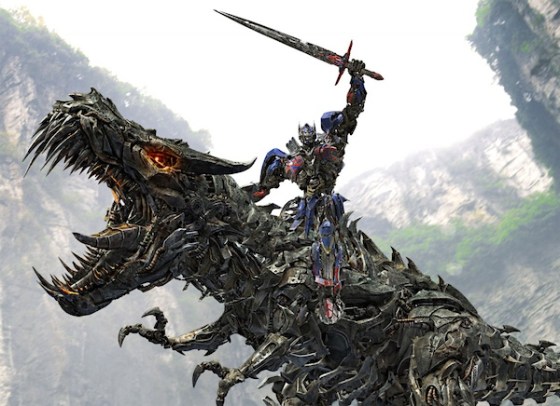
A robot knight riding a robot dinosaur, as you do

As a narrative movie, Transformers: Age of Extinction probably merits a two-out-of-five, at best. Approached purely as a demonstration of the visual splendour possible with IMAX 3D, it deserves full marks. As a sensory experience that combines both those things and everything else you get with a movie, it’s somewhere between the two.

3 out of 5

The fifth Transformers movie, The Last Knight, is released on DVD and Blu-ray in the UK on Monday. I’ll be getting it in 3D, of course, and reviewing it at a later date.

Thor: Ragnarok (2017)

2017 #148
Taika Waititi | 130 mins | cinema | 2.35:1 | USA / English | 12A / PG-13

Thor: Ragnarok

It’s been a busy year for the MCU. Long gone are the days of Marvel Studios putting out one or two movies a year — this is their third theatrical release in 2017, alongside three full seasons of Netflix shows and two network TV series currently running. Whew! Nonetheless, according to Rotten Tomatoes this Thor threequel is the best-reviewed thing they’ve released this year (so far). Some critics have even said it’s the best Marvel Studios movie ever made. Well, let’s not get too hasty.

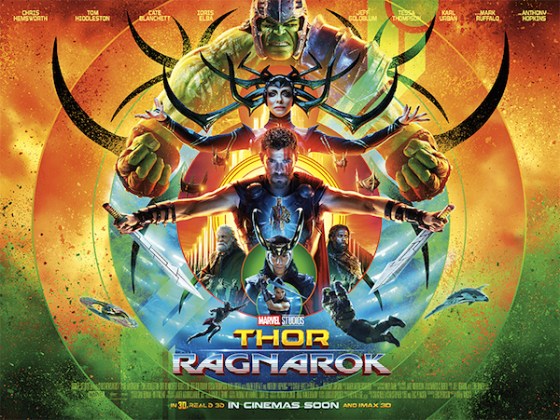
Two years on from Age of Ultron, Thor (Chris Hemsworth) has been scouring the universe in search of Infinity Stones, to no success. After the Goddess of Death (Cate Blanchett) emerges from her prison intent on conquering Asgard, the God of Thunder is cast out to a remote world ruled over by the Grandmaster (Jeff Goldblum). There he must compete in gladiatorial championships in order to escape and prevent Ragnarok, the long-prophesied destruction of Asgard.

Having previously attempted to make the Thor movies Shakespearean (by hiring Kenneth Branagh to direct the first one) and Game of Thrones-esque (by hiring Alan Taylor to direct the second), to diminishing returns as far as critical reception and audience responsiveness went, Marvel have tried a different tack for this third instalment. Essentially, they’ve done what they’ve done to most of their movies of late: made it funny. Tonally, you could be forgiven for thinking this was a Guardians of the Galaxy sequel (apart from it not starring any Guardians characters, that is).

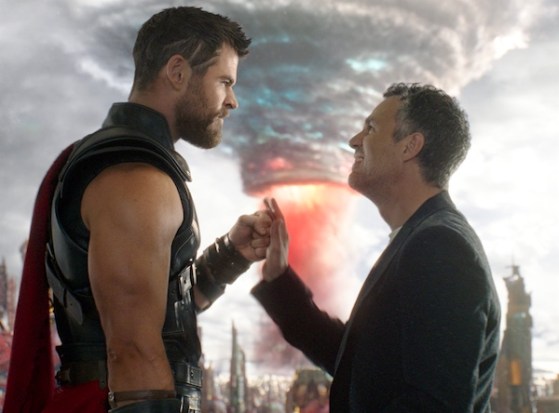
Not a buddy movie

To this end, they hired director Taika Waititi, who’s been gaining attention with this comedies What We Do in the Shadows and Hunt for the Wilderpeople. Waititi’s influence is definitely felt in the film’s splashes of irreverent humour, but everything else about Ragnarok is a typical Marvel Studios blockbuster. Critics who’ve said it’s more a Waititi movie than a Marvel movie were overselling it. The plot, the locations, the characters — they’re all your standard Marvel stuff. It’s colourful, it’s fun, it’s exciting — all standard Marvel operating procedure.

Therefore, just as with almost every Marvel movie, the devil is in the details. Ragnarok is a good one because of Waititi — because of the extra humour he injects, a consistent presence throughout the film, but also because he clearly has a good eye for imagery. If you want a taster, a lot of the most striking stuff is, unsurprisingly, included in the trailers. (Though, interestingly, there are several shots in the trailer that have been modified for the sake of spoilers. But to say more would be, y’know, a spoiler.) Action and more dramatic material are handled as well as ever. That’s the way the cookie crumbles with Marvel Studios movies: a bad or unremarkable director will make a bad or unremarkable Marvel movie, but a good or unique director can seemingly only make their presence felt so far as making “a good Marvel movie”, perhaps with a few of their own flourishes.

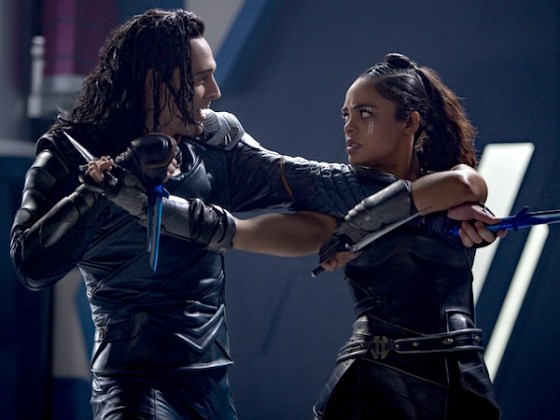
They're not buddies either

You may have heard some reports claim Ragnarok is an intergalactic buddy movie. It isn’t. Or, if it is, it’s a buddy movie where one of them’s Thor and the other one’s constantly changing. As the eponymous hero, Hemsworth gets to flex the comedic chops he revealed in movies like Ghostbusters. Everyone’s favourite Marvel movie villain, Loki (Tom Hiddleston), is back as well. While Ragnarok may ignore its predecessors tonally, it does a good job of continuing to build on Loki’s character arc. Blanchett is, if anything, under-hammy as the villain, pitching it too low when she’s sharing space with the likes of Goldblum. The expansive cast list means that both returning characters (such as Heimdall (Idris Elba) and Bruce Banner (Mark Ruffalo)) and newcomers (such as Skurge (Karl Urban) and Valkyrie (Tessa Thompson)) can only snag so much screen time each, but several of them are given efficiently-told arcs nonetheless (as usual, Heimdall mostly misses out).

Arguably the film’s standout character is Korg, voiced by Waititi and spewing lines that feel very much from the director’s wheelhouse, even though he’s not credited as a writer. Most of the biggest laughs come from him, especially as bits like “friend from work” are now very familiar from the trailers. There’s also a cameo from Dr Strange (Benedict Cumberbatch), which feels like it’s there just because they included that credits scene in his movie and so were committed to paying it off. I suppose it may have future benefits, as I believe Thor is now the only Avenger to have met Strange, but we shouldn’t be thinking about that — what have we all said before about the MCU being needlessly over-connected?

She's definitely not got any buddies

Talking of credits scenes, you may wish to know that there are two here, Marvel’s default number nowadays. Without spoiling anything, one is the vaguest of vague teases, the other a funny button on one of the film’s subplots. Neither are going to be remembered among the studio’s best credits additions.

If Thor: Ragnarok has a problem it’s the hype that’s been attached to it since the likeable trailers and glowing reviews started coming out. For those with appropriately managed expectations, make no mistake, it is a highly entertaining couple of hours. But it doesn’t break the Marvel mould, instead just filling it with more colourful materials. The best Marvel movie ever? No. The best thing they’ve released this year? Maybe.

4 out of 5

Thor: Ragnarok is in cinemas in the UK and various other countries now. It rolls out across the world in the coming weeks, ending with the US on November 3rd.

Now You See Me 2 (2016)

2017 #54
Jon M. Chu | 129 mins | streaming (HD) | 2.35:1 | USA & France* / English, Mandarin & Cantonese | 12 / PG-13

Now You See Me 2

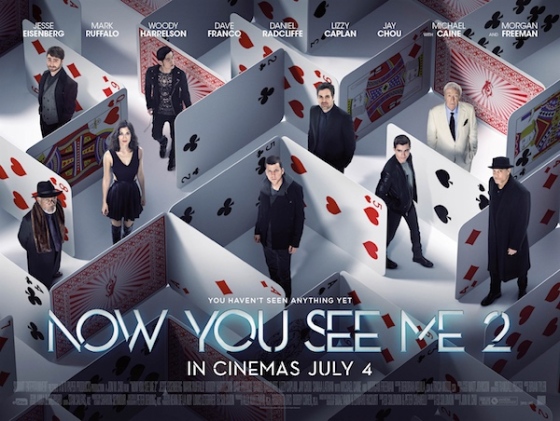
Con thrillers are much like magic tricks: they set you up to expect one thing, then reveal something else was going on all along. The major difference is that, unlike most magic tricks, con thrillers eventually show you how it was done. So whoever came up with the idea of combining those two things into a movie where magicians use their skills to pull off elaborate heists was practically a genius in my book — what a magnificent marriage of ideas! Unfortunately, the resulting films — Now You See Me and this sequel — aren’t much good at magic, routinely substituting CGI for the tricks, and they’re not great at cons either, substituting a headlong rush and a barrage of twists for a plot that hangs together. And that’s why these films are fundamentally empty: they don’t understand that the impressiveness of both magic and reveal-based narratives lies in doing it for real, not in pretending to do it.

Nonetheless, I quite enjoyed the first movie — in spite of its flaws, it was a daft bit of fun. The sequel (which misses a trick from the off by not being titled Now You Don’t) is too stupid to even manage that level of entertainment, instead devolving into a morass of nonsensicality. It’s not even that its plot has zero credibility as a plausible story — it’s the very way it’s put together as a film. Scenes feel disconnected from one another. Bits within them seem to have been snipped out. Sequences of varying scales seem to have been created from the notion of “what if we had a scene like this?” with no thought given to if it fits in the film, or even if it makes sense within itself. I’m left wondering if the movie had to be heavily trimmed for time; or did it never make any sense and this is the best they could stitch together?

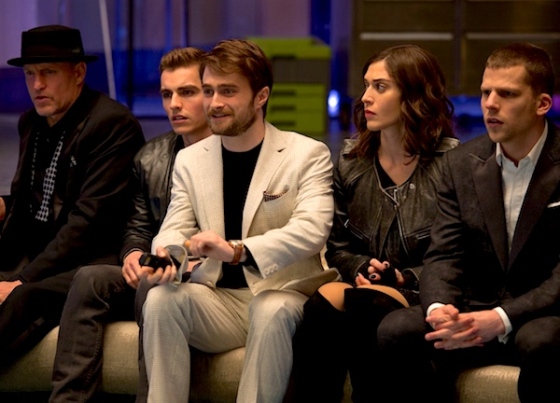
The cast try to understand the plot...

Some spectacle-driven movies can drift by without too much sense, but a con movie — where a major component is the explanation — is not one of them. Indeed, Now You See Me 2 endeavours to make sense. It tells you there was a twist; a clever plan; that someone pulled the wool over someone else’s eyes. Sometimes it does even pretend to explain how they supposedly achieved that… but it doesn’t actually explain it. It tries to just sweep you along in a whirlwind of “surprise!” moments. That might be fine if you don’t care how it hangs together, but if you pause to consider who knew what when, and who plotted what and how… well, the film doesn’t want to give you a chance to think about any of that. That just contributes to my belief that, if you did stop and try to piece it all together, you’d discover it doesn’t actually make sense.

A few minor positives come from the new cast members. Lizzy Caplan is really good, a funny addition to the team, and Daniel Radcliffe entertains as the smiling villain, although thanks to the flurry of reveals he doesn’t get as much screen time as he deserves. Actors like Jesse Eisenberg, Mark Ruffalo, Morgan Freeman, and Michael Caine feel like they’re phoning it in for a paycheque. Well, sometimes a movie’s worth doing if it, say, pays for a nice house, eh Michael?

Watching it doesn’t bring any such benefits, though, so don’t bother.

2 out of 5

* I had this down as a USA/UK/China/Canada co-production. IMDb now says USA/France. Other places say just USA. One of the main production companies is from Hong Kong, according to IMDb. So who the hell knows? ^

Vixen (2017)

aka Vixen: The Movie

2017 #137
Curt Geda & James Tucker | 75 mins | download (HD) | 16:9 | USA / English | 12

Vixen

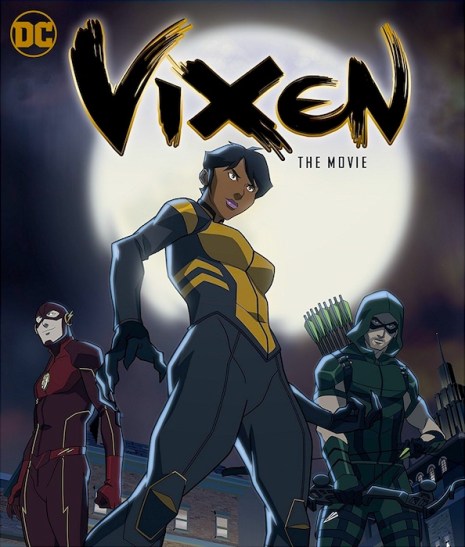
Received wisdom is that while DC comics adaptations are floundering on the big screen (because $3.1 billion from four movies is such a failure), they’re flourishing on the small one, with their ever-growing Arrowverse suite of shows a huge success on the US’s CW network. So named because it began with Arrow in 2012, said ‘verse now also encompasses The Flash, DC’s Legends of Tomorrow, and Supergirl. As well as these main shows, they’ve produced a couple of animated spin-offs for their online platform. The first of these was Vixen, which has so far produced two seasons of six five-minute episodes. Here, those two runs are combined with about 15 minutes of extra bridging material to produced a movie.

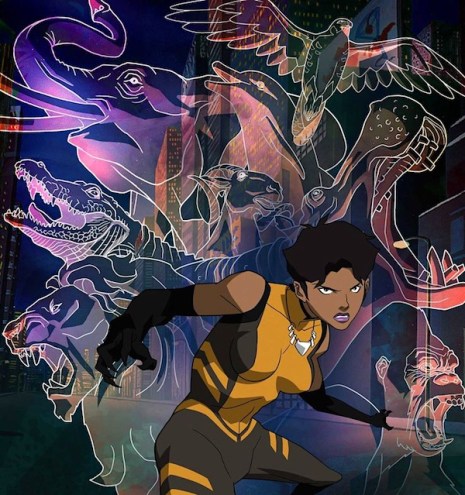
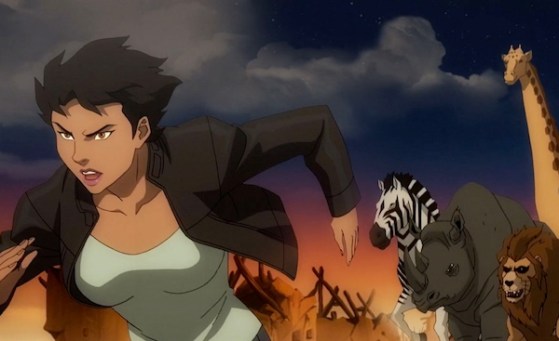
The titular Vixen is Mari McCabe (voiced by Megalyn Echikunwoke), who discovers that her family-heirloom necklace has the ability to grant her the power of any animal — so she can run like a cheetah, climb like a spider, stomp like an elephant, fly like an eagle, etc, ad infinitum. While contending with these new skills, she’s also accosted by superheroes Arrow and the Flash (Stephen Amell and Grant Gustin respectively, reprising their roles from the live-action shows), and has to battle with, first, Kuasa (Anika Noni Rose) trying to claim the necklace for herself, and then Eshu (Hakeem Kae-Kazim) trying to, er, claim the necklace for himself…

Foxy lady! Also lion lady, gorilla lady, elephant lady...

Firstly, it must be said that it’s really obvious Vixen consists of multiple episodes and seasons stitched together. It’s probably not so bad on the episodic level — me being me, I was watching out for where the breaks likely fell in the original five-minute-ish format — but it’s undeniable that it wraps up its first story in about half-an-hour, then moves on to a new story that lasts about 15 minutes, before finally telling another half-hour tale. It feels a bit like watching a movie and its sequel back-to-back, with a related aside in the middle, though in this case each ‘movie’ is the length of an animated TV episode. So, releasing it as Vixen: The Movie was perhaps a bit silly and/or disingenuous. It doesn’t desperately need to retain its original short form, but putting it out as two half-hours — with the added value of a bonus mini-episode containing that bridging story — might’ve felt more satisfactory.

Putting issues of form and presentation aside, the story — or, unavoidably, stories — are alright. The first has the shape of a pretty standard superhero origin story, given some added flavour thanks to the character’s African roots and the relationship with the villain. The short linking part feels like a run-of-the-mill episode of any superhero cartoon series. Apparently some fans complained that Vixen had mysteriously learnt to use her powers between the end of season one and start of season two, so this section attempts to address that point. The final section, as alluded to above, feels like a sequel, with a new primary antagonist but still carrying over threads and points from the first. It goes a bit awry the longer it goes on, with some very for-the-sake-of-it random cameos from the live-action shows, and a disappearance of internal logic during the climax.

At times its own format works against it: Mari says she has no identity and needs to find one, but the narrative doesn’t have enough room to let her. It probably would have if Vixen originated as a 70-minute movie, but in the form of five-minute episodes, which need to use their limited space to fulfil fan expectations of things like action sequences, there’s little to no room for genuine character development. The overall quality is often a bit cheesy and blunt — again, in part to make it satisfying for viewing in five-minute bursts, no doubt, but it does also feel in keeping with the overall style and tone of the Arrowverse.

Queen of the jungle

The animation itself is relatively cheap and basic — on a par with the lower end of Warner’s other direct-to-DVD DC animations; probably even a bit simpler. It’s not bad, but no one’s likely to be impressed. That said, when they pop in for cameos, the likenesses of the live-action actors is shit. On the bright side, they’ve used the animated format to create powers and action sequences that would require expensive CGI in a live-action show. These days they can manage that kind of thing, of course (Vixen eventually turned up in an episode of Arrow, in fact, and a version of the character is now a regular on Legends), and you can believe Vixen’s first season wouldn’t’ve been a huge problem for one of the live-action shows. The second season, perhaps as a result of that, goes more all-in on the effects-y action.

Fans of any or all of the other Arrowverse shows may well find something to enjoy in Vixen. Otherwise, it’s newcomer-friendly (aside from those cameos it’s fundamentally standalone) but I doubt it would do much to persuade the uninitiated that they’re missing out.

3 out of 5

The Arrowverse returns to UK screens this week, with new episodes of Supergirl on Mondays, The Flash on Tuesdays, DC’s Legends of Tomorrow on Wednesdays, and Arrow on Thursdays. That’ll certainly keep you busy (if you let it).

Blade Runner 2049 (2017)

2017 #132
Denis Villeneuve | 163 mins | cinema | 2.39:1 | USA, UK & Canada / English | 15 / R

Blade Runner 2049

Last weekend, a film about an android negotiating an existential crisis when he learns he may actually be human, told over almost three hours with a slow pace in an arthouse style, topped the US box office. Put like that, Blade Runner 2049’s debut sounds like a stonking financial success. Alternatively, it’s a widely-advertised critically-acclaimed $150-million-plus effects-heavy sci-fi spectacle with a pair of movie-star leads, in which context its $33 million opening weekend only looks remarkable for how poor it is. For those of us who did bother to see it (and us Brits turned out — it did good numbers on this side of the pond), such concerns are almost immaterial. In creating a belated sequel to an innovative, influential, and beloved classic movie, 2049 has (to borrow a phrase from another unexpected big-screen sci-fi sequel) done the impossible — because it’s really bloody good — and that makes it mighty.

Set 30 years after the original movie, 2049 introduces us to new characters and a new mystery: when blade runner K (Ryan Gosling) makes a shocking discovery at the home of a Replicant he’s just retired, it starts him on a mission to find something previously thought impossible that could have world-changing implications; something with connections to the events of 30 years earlier. While unfurling this mystery/thriller plot, 2049 is also about K’s personal development/crisis as a character. Although they kept it out of the marketing, it’s only a mild spoiler to say he’s a Replicant (as if the single-letter name didn’t hint at that already, it’s also mentioned casually within the first couple of scenes), and the case he works causes him to question his place in the world.

Buried secrets

This is a movie with a lot to think about. It doesn’t do the thinking for you either, instead leaving space for the viewer to interpret not only what themes they should be thinking about but also what they should be thinking about those themes. This seems to have been a little too much for some viewers — I’ve seen anecdotal reports of people falling asleep or walking out. That’s not necessarily just because they were asked to do some work, of course: it could also be the pace and length. It’s definitely a long film — a shade under 2 hours 45, though obviously there’s a fair chunk of credits — and, watching it with a grotty cold, as I was, it certainly felt long. But I would also put that entirely down to the cold. It’s not a mile-a-minute thrill ride of a movie, but I think it’s the length it needs to be. It leaves room for ideas to sink in.

Not only that, it allows you time to luxuriate in the visuals. This is possibly one of the finest-looking films ever shot. Cinematographer Roger Deakins is long overdue an Oscar, we all know this, but if he doesn’t finally earn it for 2049 then there is no justice. If you’ve seen the trailer then you know the kind of thing to expect. When people say “you could hang any frame of this movie on your wall” it’s usually a ludicrous overreaction, but here it’s as true as it ever could be. (Also, having complained in several reviews recently that I think my cinema of choice is showing films too dark (a not unheard of problem — they run the bulbs too dim to save costs), 2049 looked absolutely fantastic. Maybe it’s just that other filmmakers aren’t as good as Deakins.)

Hot robot-on-robot action

It’s not just the film’s technical merits that recommend it either, as there’s an array of superb performances here. Gosling has a difficult job as K: he starts out almost as a blank, an emotionally reserved Replicant but also a character that we need to identify with, and later struggling with his innate programming as he’s presented with challenging ideas. It might be easy to do this in a very outward manner, all handwringing and moistened eyes and so forth, but Gosling keeps it low-key — in keeping with the overall style of the film, of course. I guess some will find him cold, but I still thought he was a relatable, likeable character.

Elsewhere, Harrison Ford is definitely a supporting character, despite his prominent billing. That’s okay, though. He gets some great, meaty material — surely the best stuff he’s had to work with in a long time, and he delivers on it too. Deckard isn’t as obvious a personality as Han Solo or Indiana Jones, but it doesn’t really matter how much Ford does or doesn’t feel like his role of 35 years ago: Deckard has a place and a function and a story in this new narrative, and that he sells. As a fan, it’s impossible not to think of the long-standing debate from the first movie: is Deckard a Replicant? 2049 manages to smartly dodge this question that you’d’ve thought it has to answer. If you’re watching out for how it handles it, it’s an impressive bit of work. And the debate does still rage: as shown in a recent joint interview, Ridley Scott still thinks Deckard definitely has to be, but Denis Villeneuve disagrees. You can make up your own mind (if you think it even matters).

Blade Runner 79, more like

Among the rest of the supporting cast, the stand out for me was Ana de Armas as Joi, K’s hologram girlfriend. You may’ve seen some reviews that say 2049 has a “a woman problem”, and maybe it does, but I still thought Joi was an interesting, nuanced character. Her role is very much in how she affects K, that’s true, but that the film tackles a love story between a robot and an AI is fascinating in and of itself. Maybe theme trumps character. Maybe they contribute to each other.

Really, it’s no surprise that 2049 has struggled at the box office. Despite trailers that emphasised the action, reviews were keen to point out it isn’t an action movie. Although they’ve mostly been glowing, maybe people looked beyond the star ratings to the content, which highlighted the truth: it’s a slow, considered movie; one that makes you think, rather than simply entertains. It’s not for everyone. All of that said, it’s kind of surprised me how few people it’s for: I’ve not even seen reviews pop up from many of the blogs I follow that routinely review new releases. (If you’ve posted one and think I’ve missed it, feel free to mention it in the comments.) One I did see is by long-time Blade Runner fan the ghost of 82, which is more spoilersome than this piece and so digs deeper into some of the film’s questions.

Shoot to retire

Now that it’s ensconced as a classic, it’s perhaps easy to forget that the original Blade Runner wasn’t massively popular with critics and didn’t do well at the box office back in 1982. It started out with a cult fanbase, which grew into the more widespread esteem it enjoys today. 2049 isn’t doomed to the same fate, but perhaps it’s destined for a similar one. Mainstream audiences might be ignoring it right now, but this is a movie that many people are going to be thinking about, talking about, rewatching, thinking and talking about some more, and being influenced by, for years — decades — to come.

5 out of 5

Blade Runner 2049 is in cinemas now. Go see it.

My review of the film’s 3D version can now be read here.

It placed 1st on my list of The 17 Best Films I Saw For the First Time in 2017, which can be read in full here.

Blade Runner 2022-2048

You’ve probably heard that three short films have been released as part of the promotion for forthcoming sci-fi sequel Blade Runner 2049. More than just trailers, these shorts go some way to bridging the 30-year gap between 2049 and the original Blade Runner. They were released out of sequence over the past couple of months, but here they’re reviewed in chronological order.

Blade Runner: Black Out 2022
(2017)

2017 #130a
Shinichirô Watanabe | 16 mins | streaming (HD) | 1.78:1 | USA / English

Black Out 2022

The first short is an anime directed by Shinichirô Watanabe, best known for Cowboy Bebop and, I guess, helming two of the Animatrix shorts. Set a couple of years after Blade Runner, it tells the story of some Replicant rights activists and their successful attack on LA, which will lead to a ban on Replicant production.

As a story it is, of course, background detail — presumably not essential enough to be included in 2049 proper, but filling in the backstory for fans. It’s the kind of thing you could read about in just a line but is more exciting dramatised. That said, with such a short running time there’s no space to grow attached to characters, so the ultimate effect on the viewer isn’t so different to just reading about the events depicted.

As a short animation, however, it’s a quality production. Animation allows it to do things a live-action short couldn’t — you’d need a blockbuster CGI budget to pull this off for real. It’s a good marriage of form and intent: in the context of a prequel short, it’d be pointless to do an anime of people sat in a room talking. It has a bit of needlessly fiddly story structure at the start (including one of my pet peeves: “two weeks earlier”), but mostly it puts its short running time to decent use. There are a couple of striking, effective images, alongside various nods to the original film — visually, a lot of tributes are paid. Plus, look for cameos by Edward James Olmos’ Gaff and Dave Bautista’s character from 2049.

It may be worth noting that it’s nothing like Cowboy Bebop, either. No surprise — Bebop‘s tone hardly fits the grim world of Blade Runner. If you wanted an anime comparison, it’s more like a Ghost in the Shell short — again, not so surprising given the source similarities.

Despite my complaints about its structure and ultimate purpose, this is probably the best of the three shorts.

4 out of 5

Watch Blade Runner: Black Out 2022 on YouTube here.

2036: Nexus Dawn
(2017)

2017 #130a
Luke Scott | 7 mins | streaming (HD) | 2.40:1 | USA / English

2036: Nexus Dawn

2049 director Denis Villeneuve introduces each of the three shorts, explaining how he tapped filmmakers he respected to create these little tales. This one is by, to use Villeneuve’s word, his friend Luke Scott — director of Morgan and (most pertinently of all, I suspect) Ridley Scott’s son. We’re in live-action now, as entrepreneur Niander Wallace (Jared Leto) meets with some committee to convince them to re-legalise Replicant production.

It might seem odd, given their very different production styles, but this works well as a pair with 2022. It’s all in the story: the anime is about the final straw that banned Replicants; Nexus Dawn is about how they were brought back. Despite their short form, these films aren’t telling side stories, but revealing major points in Blade Runner‘s future history. There are also several direct references to the black out which further ties the shorts together. It might not be wholly clear in the anime itself, but that event was clearly world-changing. Perhaps that’s why 2022 was initially released last, to pay off the teasing references which feature in both live-action shorts.

For those seeking a tease for 2049, we get an indication of what Jared Leto’s performance will be like. I imagine those who find him inherently annoying will see nothing to challenge their preconception. For the rest of us, he’s okay. He suits the possibly-mad genius role, and thankfully keeps it understated. There’s also a supporting cast of names bigger you’d expect from just a prequel short (Doctor Strange‘s Benedict Wong, Peaky Blinders‘ Ned Dennehy), which I’m not sure adds a huge amount but perhaps indicates the esteem of the Blade Runner name.

Technically, the short itself is well shot — in both content and form, it could conceivably be a deleted scene from the main film. That’s both a blessing and a curse, I guess.

3 out of 5

Watch 2036: Nexus Dawn on YouTube here.

2048: Nowhere to Run
(2017)

2017 #130a
Luke Scott | 6 mins | streaming (HD) | 2.40:1 | USA / English

2048: Nowhere to Run

The final short, again helmed by Scott the Younger, is set just the year before the new film. It introduces us to Dave Bautista’s character, a kindly but down-on-his-luck kinda guy who one day finds himself in a violent altercation that will clearly change his life.

Even more than Nexus Dawn, this feels like a deleted scene — I won’t be at all surprised if this leads directly into the events of 2049. As it’s not dramatising a turning point in history, it feels the most trailer-like of the three shorts. It’s still a little background narrative that’s (presumably) not to he found in the film proper, but it seems to be teasing where 2049 will begin rather than filling in important backstory blanks. Plus, an opening montage of clips from 2049 includes another reference to the black out, again suggesting that the anime is actually the most significant and worthwhile of the three shorts.

Bautista continues to be a surprisingly charismatic actor — even with very little to do here, and keeping it low-key, you warm to him. Perhaps that’s the point of this short: for us to like Sapper, and understand what he’s capable of and why, before his appearance in 2049. Perhaps it’ll even be deserving of a higher rating after seeing Villeneuve’s film. As a film, the side-street setting is probably not that much more logistically complex than Nexus Dawn‘s single room (aside from all the extras involved), but Scott makes it feel more expansive.

At first blush Nowhere to Run feels like the least essential of the three prequels, but we’ll see if that changes with hindsight after viewing 2049.

3 out of 5

Watch 2048: Nowhere to Run on YouTube here.

As a final thought, I’ll note that on Letterboxd I rated all three shorts 3.5 out of 5, and on IMDb gave them the equivalent 7 out of 10. Obviously I’ve separated them slightly here, with the anime getting 4 and the other two getting 3s, which would suggest an even finer gradation of marking (that I then rounded up/down). I don’t know if that’s really the case, but I think the reason why I settled on these differing scores is that the two live-action shorts feel like deleted scenes, while the anime feels like it’s expanding on something that would otherwise just be backstory. In other words, it depicts the most significant event in its own right.

Anyway, perhaps these scores will change after seeing 2049. Whether they do or don’t, all three shorts are essential viewing for fans, but probably inessential for the casual viewer — after all, if they really mattered, they’d be in the film.

Blade Runner 2049 is in cinemas tomorrow.

Kingsman: The Golden Circle (2017)

2017 #125
Matthew Vaughn | 141 mins | cinema | 2.39:1 | UK & USA / English | 15 / R

Kingsman: The Golden Circle

Critics, eh? There’s a lot you could say about them, both individually and en masse, but right now I’m concerned with the fact they’ve given Kingsman: The Golden Circle a Rotten Tomatoes score of just 50%.* More than that, many have gone further: I’ve read one-star reviews from several major outlets. Audiences disagree. On IMDb it’s got a very respectable 7.4 (just a few points down from the much better-received Wonder Woman, for comparison) and it topped the box office this past weekend, beating the latest LEGO movie in the US and almost doubling the first film’s opening weekend in the UK. Well, I’m definitely an audience member rather than a critic. In fact, I’m still weighing up the possibility that The Golden Circle might be even better than its predecessor.

I’ll return to both the critics and the two films’ relative merits later. For now, the obligatory plot summary: a year on from the events of the first movie, Eggsy (Taron Egerton) is a fully-fledged Kingsman agent and is dating Swedish princess Tilde (Hanna Alström). An encounter with former wannabe-Kingsman Charlie (Edward Holcroft) sets Eggsy on the trail of Poppy (Julianne Moore), a drugs kingpin with a ’50s Americana fetish and a plan for global domination. Eggsy and tech whizz Merlin (Mark Strong) travel to the US of A to team up with their sister organisation, Statesman, in a bid to stop Poppy’s nefarious scheme.

Magic us out of this one, Merlin

That’s the coy version of things — more coy than the trailers, certainly, which brazenly gave away major developments and revelations. (You’ll note my summary’s shortage of big-name stars, for example, who have been plastered all over the advertising.) Director Matthew Vaughn even asked the studio not to reveal one thing in the marketing — namely, that Colin Firth was back — but they went ahead and did it anyway. I know they had a movie to sell, but I’m not convinced they needed to ignore him on that. Actually, that connects to my first complaint about how critics have treated the film: those one-star major reviewers seemed to hate the film so much that they were happy to spoil bits left, right, and centre. No such disregard for the audience here (though there will be minor spoilers, if you’ve not seen it yet). Nonetheless, if you were one of those people who seemed to find the first film’s anal sex joke to be the most heinously offensive sin committed by cinema since The Birth of a Nation, maybe read a couple of those reviews for a benchmark if you’re undecided about seeing this sequel — it may also offend your delicate sensibilities for reasons I can only vaguely comprehend.

To me, The Golden Circle represents a commitment to being purely entertaining. It’s consistently funny and at times laugh-out-loud hilarious. The action sequences are crazily hyperkinetic to the nth degree. It mixes in all the classic spy movie shenanigans, like far-fetched plots and cool gadgets and exotic locales; but it also works to subvert, expose, or develop some of those things. Beyond that, however, it has surprisingly good character work for what could’ve been a mindless comedy shoot-em-up. I mean, Merlin’s arc… well, i said no spoilers. But the film also makes time to be concerned about Eggsy’s relationship and how his work might affect it. It’s almost a good subversion of the gentlemen-spy sleep-around stereotype, though the Glastonbury sequence rushes through that rather than meaningfully deconstructing it (more about that already-infamous scene later).

The Lepidopterist

Then there’s Harry’s return — not just a pleasant surprise, but an emotional minefield for our other heroes, who were still coming to terms with his demise. Now, some critics reckon that Harry’s revival lowers the stakes for the rest of the movie. Well, only if you choose to disregard the details of his return. OK, yes, there’s now a safety net in some scenarios; but a gel that slows the effect of a headshot isn’t much use if, say, you get blown to pieces. Also, the idea that Harry was “very much dead” is actually an assumption that’s not wholly supported by the first film. I mean, obviously it was implied that Harry is very much dead — that was the point at the time — but watch it again: you don’t actually see much detail of what happens, other than that Valentine shoots him somewhere in the head and he collapses to the ground. The scene ends almost immediately. Vaughn and co use this to their advantage, having the Statesman turn up with seconds of the shot being fired. Yeah, it’s still implausible, but then I don’t think people’s heads explode in choreographed light shows either, and that was a big part of The Secret Service.

Comparisons to that previous movie abound in other reviews, I guess because it went down well while this one, which is ostensibly more of the same, hasn’t. Also, to be fair, because the film itself is constantly making such references too. Consequently, some critics are focused on the idea that what The Golden Circle lacks is the freshness of the original. Well, personally, I enjoyed the first one more when I re-watched it a couple of days ago than when I first saw it back in 2015, so the “I’ve not seen that before” factor is not its defining quality for me. Nonetheless, this is the kind of sequel that’s somewhat derivative of its own predecessor, with many riffs on stuff you’ll remember from before. The most regularly repurposed is the famous church fight, though I’d argue that it’s taken the style of that sequence and then applied it to several more in this film, rather than merely producing an outright copy of what came before — something I would (and did) accuse, say, X-Men: Apocalypse’s Quicksilver sequence of doing (even though it tried to find fresh angles on the same basic concept).

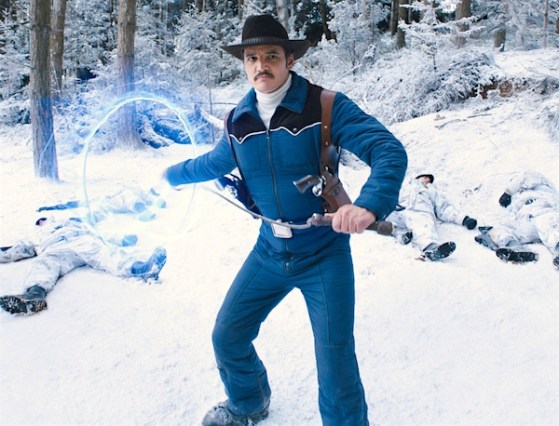
Skipping rope in the snow

One particular way that half the action sequences feel like they’re deliberately riffing off / ripping off that church fight is that they’re set to pop songs, and often unexpected ones. It may be repeating a trick, but this use of music is consistently entertaining — I mean, hasn’t Saturday Night’s Alright for Fighting always wanted a fight set to it? And the country-fied cover of Word Up for the finale is bang on. That’s not to mention the score by Henry Jackman and Matthew Margeson. I always liked the main theme from the first film, which is carried over here, along with effective action cues (for those times it goes without a pop song) and a neat integration of melodies from John Denver’s Take Me Home, Country Roads. That song is used to very particular effect at one point, and, listening to the soundtrack while writing this review, the bit of Mark Strong singing it that’s included did actually leave me with a little something in my eye — again, not what you expect from a film like Kingsman. Though I must clarify, that is due to the memory of the film, not the quality of Mr Strong’s singing, which is certainly… Scottish-accented. Something I didn’t notice particularly when watching the movie (and why would you on a first viewing?) is that those melodies are there right at the start, played on bagpipes and segueing into the opening theme. Cheeky foreshadowing beggars.

While there may be some dimension of merit to some of the criticisms I’ve referenced so far, others merit mention only to be ridiculed. I mean, one critic slagged off the fact that most (but not all) of Poppy’s scenes take place in one location, which must be the most ludicrous factor contributing to a film getting one star that I’ve ever read. Relatedly, that the big-name new cast members are given less focus than the returning characters seems to be a recurring sticking point. Well, what do you expect? In fact, what do you want? It’s like thinking the solution to Quantum of Solace’s woes was to spend less time with James Bond and more with Agent Fields. Plus, surely the fact that some prominently-billed new names turn out to be glorified cameos is more to do with the marketing overhyping them — as you do when you’ve got genuine movie stars in your movie — than the film itself fundamentally underserving them. Sure, I’d like more of Channing Tatum’s character too, but hey-ho; and it’s not like his limited screen time isn’t put to memorable effect, several times over. The same can be said for Julianne Moore and, arguably best of all, Elton John. They may reuse the same Elton gag a couple of times too often, but on the whole he has a surprisingly effective part to play. On the other hand, after “more Halle Berry” was something that eventually undermined the X-Men films, I’m fine with her role being kept to a minimum. Still, for everyone who wished for more of Tatum and co, there are already rumours of an extended cut coming to DVD and/or Blu-ray. Oh, but those critics moaned about it already being too long. There’s no pleasing some people…

More Tatum, less Berry

There is perhaps a case to be made that the film has bitten off more plot than it can comfortably chew. I’ve already said that some sequences feel a little too hasty, and there might be one big set piece too many — I assumed the film was about to head into its final act, before remembering we hadn’t had all the snowbound set pieces from the trailers yet. Personally, I didn’t mind this additional length — at no point did the film bore me. I’ll be more than happy if that extended cut does materialise. Perhaps the paciness despite the length is what led many critics to call it out for having too complex a plot, an accusation I find somewhat implausible. I can only assume they weren’t expecting to think at all and so almost literally turned their brains off, because this isn’t some intricate thriller, it’s a big action spy movie that moves pretty linearly from plot point to plot point. That’s not a criticism, just an observation.

And if you want to go the other way and overthink the film, some people do get very het up about what the political messages and affiliations of these two movies may or may not be. Now, I’m not going to argue they don’t have a political dimension — that would be a patently ludicrous position to take, given how much they both allude to real-world issues like climate change and the drug trade — but, allowing for that, I don’t think the films care what their political allegiance is. That’s how some people can manage to read a movie in which the working-class hero blows up the world’s conspiring elites in order to stop the common folk from massacring each other as nothing but a right-wing fantasy, and how other people can manage to read a movie in which an unaccountable intelligence organisation gentrifies a lower-class kid to make him worth something, before blowing up an environmentalist and President Obama, as proletariat wish-fulfilment. Both of those describe The Secret Service, but there are elements in the sequel that have the same effect — this time, it’s your stance towards the war on drugs and how we deal with addicts that is being prodded.

View to a kill

All of that said, the more I’ve thought about the film afterwards (as you do, especially if you’re going to, say, write a review for a blog or something), the more some issues do begin to become apparent. While I don’t inherently object to the Glastonbury sequence (I’d wager it in part exists as another way for Vaughn to thumb his nose at critics of certain parts of the first movie, and he got ’em too), I do think there were cleverer ways to handle it. Vaughn has said that sequence is meant to be about having to do something you don’t want to do for the sake of your job, but that doesn’t wholly explain the teenage smuttiness of how it plays out. I mean, wouldn’t it be funnier if Eggsy felt he had to stick to his principles and find a way to clumsily shove his finger up Clara’s nose? Then phone Tilde back: “It’s okay babe, I only put it up her nose.” “You did what?!”

So yeah, it’s not a perfect movie. But, at least while it was on, I was having way too much fun to care. If you’re the kind of person who found something (or lots of things) about the first movie offensive to your moral fibre, chances are slim that you’ll like this sequel. Conversely, if you’re the kind of person who misses ’90s lads-mag culture, you’ll bloody love it, mate. For those of us somewhere on the (very broad) spectrum between those two points, other reviews make it clear that it’s not to everyone’s taste, but it was very much to mine. The niggles I’ve mentioned have led me to give it a lower score than the first film, but I reserve the right to change my mind as soon as I get a chance to rewatch it — I can envision myself ultimately revisiting The Golden Circle more regularly than The Secret Service.

4 out of 5

Kingsman: The Golden Circle is in cinemas most places now, and in the other places soon.

It placed 15th on my list of The 17 Best Films I Saw For the First Time in 2017, which can be read in full here.

* At time of writing. It was 49% on Saturday and 51% on Sunday, so it might be different again by the time you read this. ^

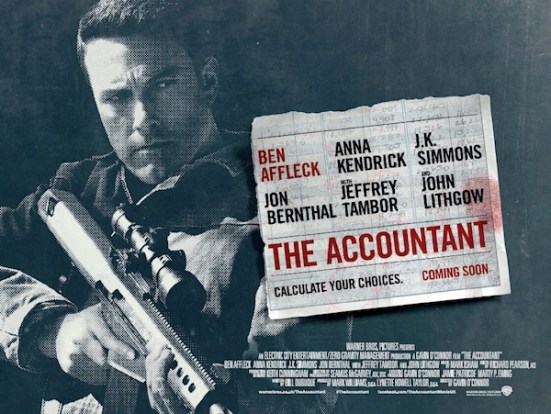
The Accountant (2016)

2017 #73
Gavin O’Connor | 128 mins | download (HD) | 2.40:1 | USA / English | 15 / R

The Accountant

In this action-thriller from the director of the overrated Warrior, Ben Affleck stars as Chris Wolff, an autistic accountant who excels at auditing complex financial records. No, wait! I did say action-thriller, because Chris’ clients are mostly criminal organisations, and he uses the martial arts training his father instilled as a child to double up as a hitman. See, it’s exciting really.

When Chris is called to audit a robotics company (run by John Lithgow) who have found irregularities in their books (why this criminal accountant is called to work for a legit company I can’t remember, but I’m sure it was explained in the film), he unexpectedly bonds with Dana (Anna Kendrick), the company accountant who spotted the problem. After his audit unearths evidence of embezzlement, both Chris and Dana find themselves the target of bad people (led by Jon Bernthal) who want to keep the company’s secrets. Meanwhile, a couple of FBI agents (J.K. Simmons and Cynthia Addai-Robinson) are on the trail of the mysterious criminal known primarily as “the Accountant”…

Maths!

The Accountant has lots of moving bits and pieces — I’ve not even alluded to all of them in that summary — but to call it a complicated film would be either too generous or a disservice, depending on your point of view. There’s a clarity to it all that keeps it easy to follow but suitably engaging, even as it plays out multiple storylines in a couple of time periods (there are flashbacks aplenty to Chris’ childhood training). And if you’re thinking, “finally a film that makes accounting exciting!”, I’m sorry to disappoint you but Chris’ maths skills are really just a MacGuffin to get the ball rolling. What it does deliver is a decent thriller plot, with a couple of twists to keep things lively. It’s also a pretty satisfying narrative — I’m not sure there’s ever been another movie that so thoroughly tied up everything into nice neat little bows. I suppose that’s at least kind of appropriate given the hero’s condition.

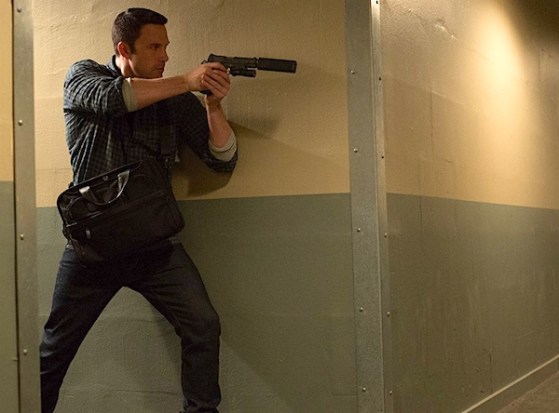
The action element is mainly reserved for the second half, when Chris has to deal with the people out to get him. This isn’t one for adrenaline junkies — it’s not a nonstop fight-fest like, say, a Bourne movie — but there’s a suitably violent climax nonetheless.

Shooting!

In some respects The Accountant shouldn’t be a good movie. It treats autism as a superpower, which is both inaccurate and turning into a cliché; but it doesn’t do it so egregiously that it feels entirely tacky. The whole side story with the FBI also feels kind of clunky, though at least eventually goes somewhere — whether that somewhere is relevant and clever, or pointless and daft for the sake of a twist, is up to your own judgement. Same goes for the other major final-act reveal.

Yet, for all that, it’s kind of fun. Not in the obvious jokey way that, say, Guardians of the Galaxy is fun, but in the way that it provides decent characters, decent thrills, decent action, and a thorough set of conclusions that put pins in everything, including things you didn’t even think needed tying up. There may be points in the middle when you come close to rolling your eyes and almost wanting to give up on it, but by the end it’s all pretty satisfying.

4 out of 5

The Accountant is available on Sky Cinema from today.

Musical Review Roundup

My blog is alive with the sound of music, courtesy of…

  • Sing Street (2016)
  • Jersey Boys (2014)
  • Sing (2016)
  • Into the Woods (2014)


    Sing Street
    (2016)

    2017 #13
    John Carney | 106 mins | streaming (HD) | 2.35:1 | Ireland, UK & USA / English | 12 / PG-13

    Sing Street

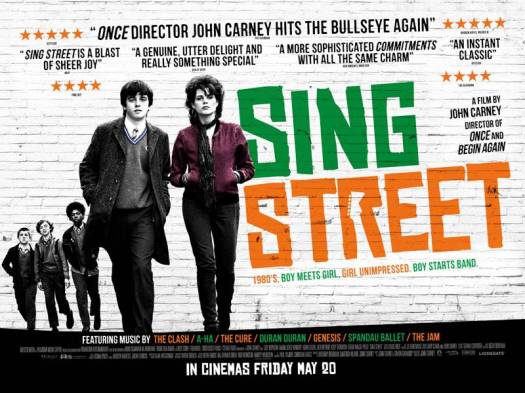
    A struggling busker — sorry, a failing record exec — no, sorry, a misfit teenage boy… sets out to impress a beautiful fellow busker — sorry, a promising singer-songwriter — no, sorry, a cool girl… by helping her record a record — sorry, by coercing her to record a record — no, sorry, by persuading her to star in the music video for the record he’s recorded. Except he hasn’t actually recorded that record yet. In fact, he doesn’t even have a band.

    Yes, the writer-director of Once and Begin Again has, in some respects, made the same film again. Yet somehow the formula keeps working. Here there’s extra charm by it being school kids dealing with first love and finding their place in the world. It’s something we all go through, so there’s a universality and nostalgia to it that perhaps isn’t present in the story of twenty/thirty-somethings who are still floundering around (especially Begin Again, which made them cool twenty/thirty-somethings living in cool New York).

    It’s fuelled by endearing performances, particularly from young leads Ferdia Walsh-Peelo and Lucy Boynton, and a soundtrack of era-aping toe-tappers — in an alternate (better) universe, The Riddle of the Model and Drive It Like You Stole It competed for the Best Original Song Oscar, and one of them won it too. And those are just the highlights — the rest of the soundtrack is fab as well. I imagine if you were a music-loving teenager in the ’80s, this movie is your childhood fantasy.

    5 out of 5

    Sing Street placed 7th on my list of The 17 Best Films I Saw For the First Time in 2017, which can be read in full here.

    Jersey Boys
    (2014)

    2017 #97
    Clint Eastwood | 134 mins | streaming (HD) | 2.35:1 | USA / English | 15 / R

    Jersey Boys

    A musical biopic about Frankie Valli and the Four Seasons doesn’t seem like a very Clint Eastwood film at first glance, but when it turns out to be kind of Goodfellas but with the music industry, it becomes at least a little more understandable.

    Based on the hit Broadway musical, it retains a staginess of structure — the four band members take turns narrating the story by speaking to camera — while also opening out the settings so it feels less “jukebox musical” and more “biopic with songs”. It takes some liberties with the chronology of events for dramatic effect, but that’s the movies for you.

    The shape of the story feels familiar and it feels leisurely in the time it takes to tell it, but the songs are good and most of it is perfectly likeable. It’s by no means a bad movie, just not one that’s likely to alight any passion.

    3 out of 5

    Sing
    (2016)

    2017 #107
    Garth Jennings | 108 mins | download (HD+3D) | 1.85:1 | USA / English | U / PG

    Sing

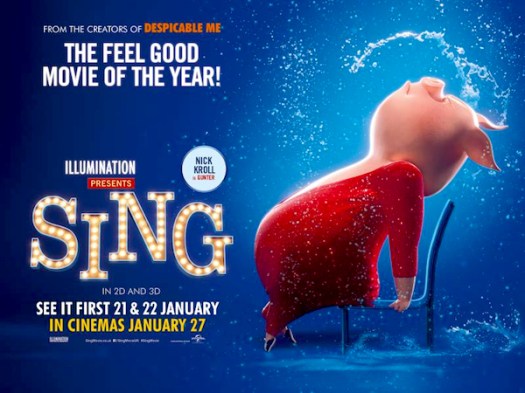
    The seventh feature from Illumination (aka the Minions people) comes across like a cut-price Zootopia: in a world where animals live side-by-side in cities like humans, a struggling theatre owner launches an X Factor-esque singing competition to revive his fortunes. Naturally there’s a motley cast of participants, all with celebrity voices, and hijinks ensue.

    Apparently the film features 65 pop songs, the rights to which cost 15% of the budget — if true, that’s over $11 million just in music rights. The big musical numbers (all covers, obviously) are fine, with the best bit ironically being the new Stevie Wonder song on the end credits, which is accompanied by Busby Berkeley-ing squid. Elsewhere, there are some moments of inventiveness, but it doesn’t feel as fully realised as Zootropolis. Perhaps that’s part and parcel of Illumination’s ethos: to make films that translate internationally, presumably by being quite homogeneous. And to make them cheaply (their budgets are typically half of a Pixar movie), which has its own pros and cons.

    Anyway, the end result is fine. Much like Jersey Boys, Sing is perfectly watchable without ever transcending into anything exceptional.

    3 out of 5

    Into the Woods
    (2014)

    2017 #118
    Rob Marshall | 125 mins | streaming (HD) | 2.39:1 | USA, UK & Canada / English | PG / PG

    Into the Woods

    Fairytales are combined and rejigged in Stephen Sondheim’s Broadway musical, here brought to the screen by the director of Chicago. The original is a work that definitely has its fans, but doesn’t seem to have crossed over in the way of, say, Phantom of the Opera or Les Mis — I confess, I’m not sure I’d even heard of it before the film was announced.

    The film adaptation readily suggests why that might be. For one, it’s light on hummable tunes. It’s almost sung through, with only a few bits seeming to stand out as discrete songs in their own right. For example, it takes the opening number a full 15 minutes to reach its culmination, having been diverted into a few asides. Said song culminates with most of the main characters going into the woods while singing about how they’re going into the woods, and yet the film doesn’t put its title card there. The placement of a title card is a dying art, I tell you.

    Performances are a mixed bag. Everyone can sing, at least (by no means guaranteed in a modern Hollywood musical adaptation), and the likes of Emily Blunt, James Corden, and Anna Kendrick are largely engaging, but then you’ve got Little Red Riding Hood and her incredibly irritating accent. Fortunately, she gets eaten. Unfortunately, she gets rescued. On the bright side there’s Chris Pine, his performance well judged to send up the romantic hero role. You may remember Meryl Streep got a few supporting actress nominations for this, which is ludicrous. It’s not that she’s bad, but she’s in no way of deserving of an Oscar.

    There are witty and clever bits, both of story and music, but in between these flashes it feels kind of nothingy. It’s also overlong — the plot wraps up at the halfway point, with the second half (presumably what comes after an interval on stage) feeling like a weak sequel to the decent first half. All in all, another one for the “fine, but could do better” pile.

    3 out of 5