Trekkies & Trekkies 2

In today’s roundup:

  • Trekkies (1997)
  • Trekkies 2 (2004)


    Trekkies
    (1997)

    2018 #97
    Roger Nygard | 83 mins | streaming | 4:3 | USA / English & Klingon | PG / PG
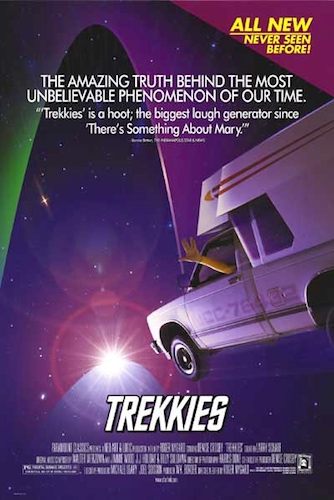
    Trekkies

    There are quite a few fan documentaries out there nowadays (a few years ago… wait, ten years ago? Bloody hell. Anyway, back then I reviewed the likes of Starwoids, Ringers: Lord of the Fans, and Done the Impossible: The Fans’ Tale of Firefly and Serenity). But before all of those, and I think the first of its subgenre, was Trekkies, which examined the phenomenon of Star Trek fandom — or, rather, the wild, weird extremities of it.

    Trekkies begins with the proclamation that “Trekkies are the only fans listed by name in the Oxford English Dictionary.” That’s not true anymore (“Whovian”, at least, is in there), and that speaks to an interesting truth about this entire documentary. When it was released 21 years ago, Trekkies was exposing a niche thing to wider awareness, and these fans were seen as weirdos, fundamentally. Watching it today, though, you see that it’s mostly just cons and cosplay — stuff that’s been virtually mainstream for a few years at this point. It may’ve once seemed odd for these people to define their lives as “Star Trek fan”, but now, for many people (especially younger people), it’s perfectly routine to be defined by which fandom you’re in.

    Gabriel Koerner in 1997

    That said, Trekkies still managed to find some people who are pretty weird by any standard. At the time the filmmakers received some criticism for this — for creating a film that got laughs out of “look at the weirdos!” while ignoring the more normal side of fandom. That’s not a wholly baseless critique, but I didn’t think the film was cruel. As well as going “aren’t these people nuts!”, I think it does try to dig into why they do it, what they get out of it. I’m not sure how well it reveals the former (I mean, how did any of them go from liking a TV show to… this? It must be some personality thing), but it does a decent job of showing what benefits it brings them. And there are some incredible stories (mainly from interviewed cast members) about how Trek has changed, or even saved, people’s lives.

    Trekkies may’ve lost the uniqueness it once had, with elements of the lifestyle it depicts coming to increasing prominence, but it still remains an interesting look at that kind of world, with some very memorable characters. And if you think it might’ve aged into irrelevance after all this time, there’s a bit about the importance of Captain Janeway as a role model for female leadership and what women can do — we’re still having debates and arguments about that sort of thing over twenty years later, which is, frankly, depressing.

    4 out of 5

    Trekkies 2
    (2004)

    2018 #98
    Roger Nygard | 93 mins | download | 4:3 | USA / English, German, Italian, Portuguese, French & Serbian | PG / PG
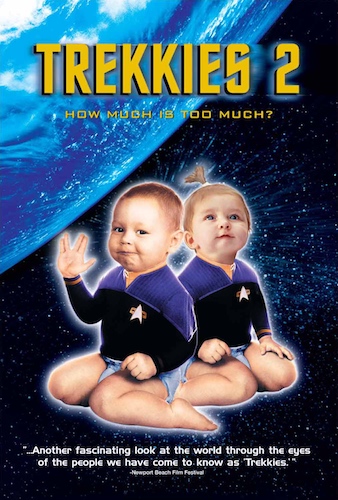
    Trekkies 2

    Such is the strangeness of Time that, just 24 hours after I watched Trekkies, I jumped forward seven years to catch up with some of that film’s featured fans in this lesser-seen follow-up. It’s not just repeat visits to old friends, though — if you thought America had a monopoly on crazies, well, Trekkies 2’s got news for you!

    This time out director Roger Nygard and host Denise Crosby take us to Germany (visiting the set of a fan film); the UK (with a guy who turned his flat into a starship, which he’s listed on eBay for $2 million (a couple of years later it sold for c.$840,000, which was still 16 times what he paid for it)); Italy (where fandom is apparently centred around food); Brazil (where a collector has a rare playset from the ’60s… which Crosby accidentally knocks over); Australia (where the fans mainly seem to be female and obsessed with the sexy male cast members); France (which is really just “more international fans”, to be honest); and Serbia (where the series and its values has brought a lot of hope to people in a tumultuous region).

    We also meet more US fans, as the sequel tries to rectify some of the first film’s shortcomings. For example, there’s a much greater section on filk music (which is, basically, music tied to sci-fi/fantasy fandom), as well as some crazy-funny Star Trek punk tribute bands — there’s a whole scene of that kind of thing in Sacramento, randomly. Plus we’re shown the lighter side of fandom, like the theatre company staging a satirical Trek-ified version of Romeo & Juliet.

    German fan film

    And, as I mentioned, we catch up with some old friends, including Barbara Adams, the lady who wore her Trek uniform while on jury duty (and who has a hilarious Trek vs Wars debate with a coworker that’s like something out of The Office), and the film’s break-out star, Gabriel Koerner. A super-geeky teen in the first movie, seven years later he has a wife and has turned his hobby into a career in visual effects. It just goes to show, there’s someone and something for everyone.

    Indeed, overall it’s not quite as “look at the freaks!” as the first film. It takes time to explicitly discuss what’s going too far and what’s normal, and it also highlights how Trek fandom has been a force for good, like raising money for charity, or giving hope in war-torn regions. Consequently it’s not as funny as last time, but probably in a good way — this one’s a bit more thoughtful, a bit fairer to its subjects as people. Ultimately, I think the two films work quite well as a pair. There’s also been talk of a Trekkies 3, which I hope happens — as I mentioned about the first film, attitudes to this kind of fandom have changed massively in the past decade or so (for example, the rise of Comic-Con and its influence), so it would be very interesting to explore that.

    For my money, the most insightful moment in either film comes from Pierluigi Piazzi, a Brazilian publisher of Star Trek books, when he says that “this is a wonderful way to be crazy. Everybody’s crazy, but it’s wonderful this way.”

    4 out of 5

  • Coco (2017)

    2018 #109
    Lee Unkrich | 105 mins | Blu-ray (3D) | 2.39:1 | USA / English | PG / PG

    Coco

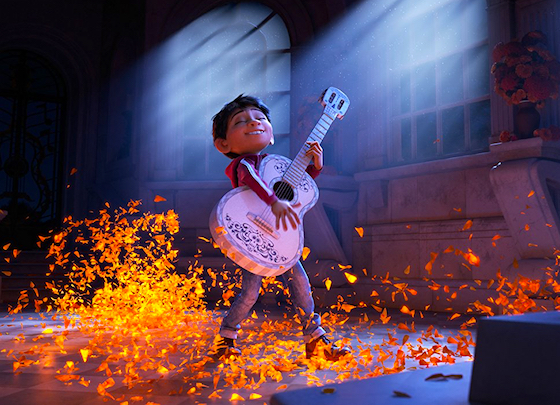
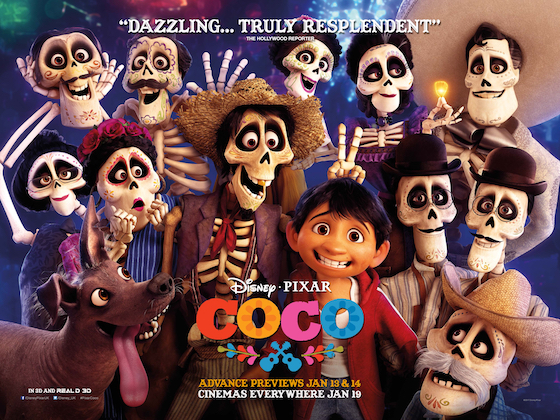
    Pixar’s 19th feature is an American-produced animated fantasy movie that co-opts a foreign culture to tell a story about a guitar-playing kid remembering his dead family — wait, doesn’t that sound familiar? Yes, in broad strokes, Coco is Kubo and the Two Strings Pixar-style. But, instead of Japan, this is Mexico, based around the famed Day of the Dead festival — which has also already been the subject of an American animated movie, The Book of Life. But that didn’t get the best notices, and Kubo didn’t get the respect it deserves, and this is Pixar in non-sequel mode, and so Coco has been praised to the high heavens. And it is good. But I didn’t think it was that good.

    So, to start again: Coco is the story of Miguel (Anthony Gonzalez), a kid who desperately wants to be a musician like his idol, Ernesto de la Cruz (Benjamin Bratt). Unfortunately for Miguel, all music is banned in his family, due to his great-great-grandfather abandoning his wife and young daughter to pursue it as a career. On the Day of the Dead, a convoluted and overlong first act eventually gets us to a point where Miguel finds himself actually in the Land of the Dead, surrounded by the skeletal form of everyone who’s passed away. To get back to the land of the living he must go on a quest, accompanied by downtrodden Héctor (Gael García Bernal), who’s being forgotten by the living and needs Miguel to reestablish his memory in the real world. More or less. I mean, the rules get more fiddly and complicated than that.

    The magic of music

    Frankly, the rambling length was my biggest problem with Coco. It’s not badly flabby, but it’s not as taut as I’d’ve liked it to be either, especially during stretches where you’re waiting for it to get to an inevitable plot twist or development. That’s not to say it’s without surprises — it pulls quite a dark plot twist about an hour in — and surprise isn’t the only virtue a story can have, of course, but it did reach a point where I was virtually shouting at the screen for them to finally get on with what was inevitably going to happen. Surely that’s a sign of something not working.

    Maybe that was the music — quite a central part of the storyline, as you may’ve inferred, but I can’t say I was a fan. Mostly it’s fine, but there’s the occasional musical number that just slowed things down. It’s not a musical in the strictest sense either, so the film does stop a bit in order to get each song underway (at least it usually then tries to progress the narrative while the song continues). The big number is the Oscar-winning Remember Me, which has grown on me slightly since I first heard it but, again, I’m not particularly a fan. I don’t know what it is, really, because when I’ve come across mariachi-style music in movies before I’ve often quite liked it. I guess it’s this particular set of tunes, then.

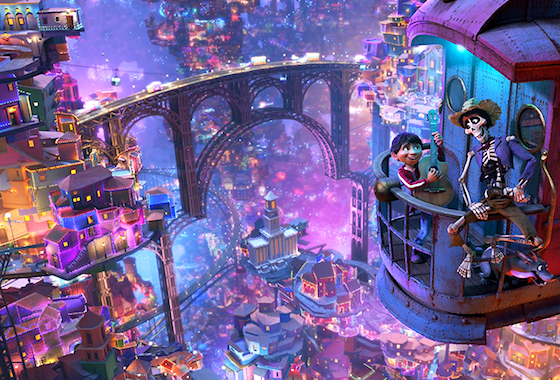
    Naturally it looks great — it’s Pixar, would you expect anything less? The colourful Land of the Dead stuff is the best visually, wide shots creating epic vistas, with stunning architecture that suggests quite a world… not that we get to explore it very thoroughly, even though the quest narrative takes us to a few different locations. We certainly don’t get any indication how it functions for the other 364 days of the year. Zootropolis showed us a glimpse of a well-imagined full-scale world, teasing enough that I wanted to explore it comprehensively in further stories. Coco’s just looks pretty.

    Colourful vistas

    Maybe I’m being too picky? Maybe I’m just trying to work out what it was everyone else loved so much, when I saw a pretty standard Pixar buddy quest story with new surface flourishes. Or perhaps I’m right, and other people were blinded by the emotional ending? The final few minutes are certainly effective at tugging at the heartstrings — even though I hadn’t fully invested in the rest of the film, even I felt a pang… albeit slightly undercut by once again having to yell at the characters to get on with what they were inevitably going to do. Not everything should move at a mile a minute, but c’mon, sometimes you’re just being languorous.

    Reportedly Coco had the longest active production of any Pixar movie, with work beginning in 2011 and (obviously) being completed in 2017. There are quite a few deleted scenes included on the Blu-ray which (from a brief flick through) seem to suggest the story once went in quite a different direction. I saw one person say those scenes suggest a much worse movie, too. I guess they kept tweaking the plot, then, maybe until it eventually resembled that familiar broad Pixar shape that dates right back to the original Toy Story.

    Coco is good, but I certainly wouldn’t say it’s perfect. And I think I might go watch Kubo again now, actually.

    4 out of 5

    The UK becomes probably the last major market to get Coco on disc with its release on DVD, Blu-ray, and 3D Blu-ray today.

    Atomic Blonde (2017)

    2017 #166
    David Leitch | 115 mins | Blu-ray | 2.40:1 | USA, Germany & Sweden / English, German, Russian & Swedish | 15 / R

    Atomic Blonde

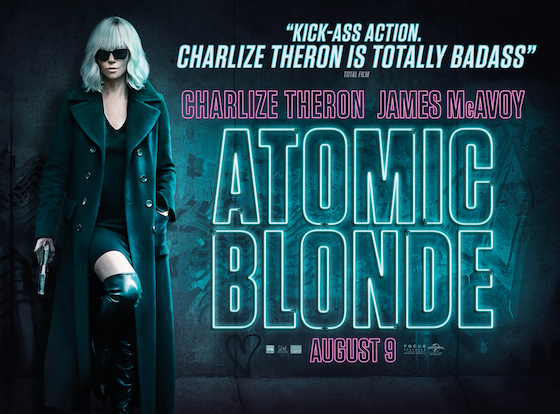
    The uncredited co-director of John Wick takes sole charge for this action thriller set at the tail-end of the Cold War, which sees Charlize Theron’s British spy dispatched to Berlin to find “The List”, a document naming all the active intelligence agents in the city, which has fallen into the hands of the KGB.

    It’s based on The Coldest City, a graphic novel that came out during my relatively brief flirtation with being a proper comic book reader a few years ago. Back then it caught my eye (though I never got round to buying it) because I got the impression it was a Le Carré-style thriller, so I was very surprised to eventually learn it was the basis for this film, the trailers for which promised a hyper-stylised actioner from the director of combat-focused John Wick. Watching the film, however, it’s easier to see how I might not’ve been wrong about the novel after all — take out the elaborate fight scenes and shoot it more like Tinker Tailor Solider Spy than The Guest, and this could indeed be a Le Carré-esque Cold War thriller.

    Lots of style, little substance

    Or maybe that should be “Le Carré wannabe”. The filmmakers were probably right to shift the focus in that way, because the plotting here isn’t up to that standard, particularly in a bevy of last-minute twists that bog down the final ten minutes, especially with their burst of misplaced patriotism (though I won’t say for which country lest it spoil something). Le Carré’s plots feel almost like the definition of substance being more important style (I’ve never actually read one of his books so certainly don’t mean that to be an insult), whereas Atomic Blonde is good ol’ style over substance. The best stuff here lies not in the intricacies of its spy-vs-spy storyline, but in the starkly coloured visuals, the cool ‘80s soundtrack, and (as you’d expect from the stuntman-turned-director behind 50% of John Wick) the expertly realised fight scenes.

    Chief among these is an incredible single-take action sequence that goes from a sniper-beset protest march, into a building, up in the elevator, back down the stairwell — all in a series of bruising hand-to-hand fights — and then, for good measure, continues back outside and into a car chase shootout. Obviously the single take aspect must be as faked as Birdman (according to IMDb, it actually includes almost 40 different shots, many stitched together with the aid of CGI — I’d wager mostly during the car chase, which feels less smooth than the rest), but it’s still impressively crafted. The choreography of it all — both the fight moves and the camerawork — really is something else.

    Fight!

    Despite the flashiness of that one long section, what’s really effective about all the fight scenes is the level of groundedness. I’m sure they’re not what a real fight is like — they’re still choreographed brawls between trained combatants — but Theron doesn’t take down an army singlehanded, she fights a couple of guys, it’s hard work, and she ends up battered, bruised, and exhausted.

    Sadly, between the confused plot and the irritating ending, Atomic Blonde ultimately rubbed me up the wrong way. Still, it’s worth watching for the style and the impressive action scenes. If only they’d managed to combine those with a better story, then this would’ve been something really special.

    3 out of 5

    Atomic Blonde is available on Sky Cinema from today.
    David Leitch’s new film,
    Deadpool 2, is in cinemas everywhere now.

    Batman: Gotham by Gaslight (2018)

    2018 #105
    Sam Liu | 77 mins | Blu-ray | 1.78:1 | USA / English | 15 / R

    Batman: Gotham by Gaslight

    I was all up for this adaptation of Gotham by Gaslight when it was first announced — I’m a fan of the original book, as well as the sequel (which they’ve also used parts of); and, I thought, even if they chose to deviate from it then I like the basic concept of “Batman meets steampunk”. But then the last few DC animations I’ve seen have been subpar, and the trailer for this one looked rather bland, so I decided to opt for a rental instead of purchase. Well, I never got round to doing that, and then Amazon slashed the price of the Blu-ray, so I ended up buying it — it still cost more than a rental, but if I liked it I’d save money in the long run. Fortunately, that turned out to be the case.

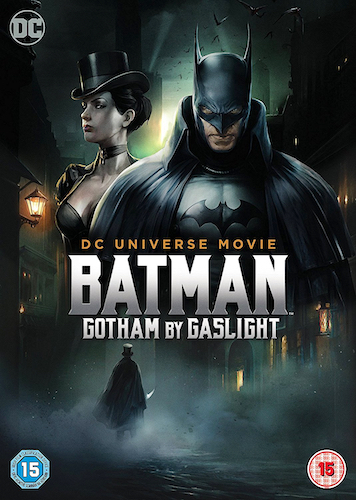
    If you’re not familiar with Brian Augustyn and Mike Mignola’s original tale, it involves Batman battling Jack the Ripper in late 19th Century Gotham City. It’s regarded as the first Elseworlds story, which is DC’s branding for stories that take place in different times, places, or “what if” scenarios — “what if Superman had landed in Russia?”, for example. This animation is a rather loose adaptation, which takes the basic concept from Augustyn and Mignola’s work but otherwise almost completely rebuilds it, mixing in a lot of ‘Easter egg’ stuff (like appearances from many more well-known Bat-characters) and some elements of the sequel comic, Master of the Future.

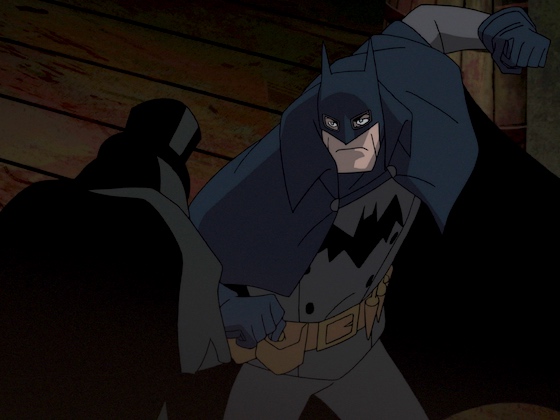
    Fisticuffs!

    So anyone expecting a straight-up adaptation may be disappointed, but taken as a film in its own right, for the most part it works. Having all the different familiar characters pop up makes it feel like a proper Batman tale, rather than a Ripper story that happens to have a costumed vigilante in it. Most prominent is Selina Kyle, aka Catwoman, although she isn’t really the latter here — Batman gets fully suited up, but the most Miss Kyle gets is a whip. The relationship between Bruce Wayne and Selina is one of the film’s best aspects, in fact, with the Elseworld setting seeming to allow a different focus than the usual antagonism that pairing has in screen adaptations — as one of the filmmakers says in the audio commentary, “it’s not a movie about Batman and Catwoman, it’s about Bruce and Selina.” Jim Krieg’s screenplay is good across the board, with several nice passages and scenes, even if at times it rests too heavily on exposition and speachifying.

    The one change that didn’t work for me is that it glosses over the bit about Bruce have recently returned from Europe, his return to Gotham coinciding with the Ripper’s arrival, thus making Bruce Wayne a suspect. Perhaps this isn’t a major point, but it’s a grace note that helps sell the whole concept for me. This wasn’t an oversight, however: they consciously decided to make Jack the Ripper a Gotham serial killer in this universe, so his London crimes never happened. But surely the point of using Jack the Ripper is the crimes he’s famous for? I think everyone knows he was a London serial killer, but the film does nothing to dispel this prior knowledge, nothing to establish that this version emerged for the first time in Gotham.

    The idea behind the change was to widen the suspect pool for the “whodunnit” element — if the Ripper had just come from London, his identity has to be someone who’s just arrived in Gotham. I can see where they’re coming from, but there are other ways round the problem — for example, the Gotham Ripper could’ve turned out to be a copycat, which would’ve added to the twist. As it stands, the identity of the Ripper (which has been changed from the book) is a huge twist, and, fair play to them, they pull it off. I’ll say no more because of spoilers, but I’m surprised it didn’t seem to cause outcry online. Maybe after the furore around The Killing Joke people just stopped paying attention.

    Miss Selina Kyle

    As with most of these DC animations, the quality of the visual is more TV than feature film, but they make the most of what they’ve got. There’s a squareness to the character designs, using few and simple lines, that is almost appealing. Perhaps it was inspired by Mignola’s artwork, though it does still feel sanitised compared to his exaggerated style. Also, a lot of effort is put into establishing this version of Gotham, with plenty of wide shots and scenes set in many different locations. Those were both deliberate choices to help make the city a major part of the film, and to give it life and texture as a Victorian metropolis. It’s an admirable effort considering the new era was a bit of a production headache: on their other movies, things like generic background characters and props can be recycled from film to film, but here every single element had to be designed and created from scratch.

    Voice casting is mostly spot on. Again, effort was put into evoking the period without wanting to go overboard — they didn’t want the voices to sound modern, but they didn’t want everyone doing English accents or something either. Bruce Greenwood makes for a dependable Batman and Anthony Head is perfectly dry as Alfred, but the foremost performance is perhaps Jennifer Carpenter as Selina. She’s most famous for Dexter, where she’s such a tomboy, but here she conveys a kind of Victorian elegance, with a hefty dash of feminism, very well. Inspired casting. Just as good is Scott Patterson as Commissioner Gordon. Best known for his modern, working-class character in Gilmore Girls, I didn’t even realise it was him until the credits rolled. Well, partly this is a problem with billing — only Greenwood and Carpenter get it. They’re the leads, so of course they’d get top billing, but Head and Patterson have sizeable roles and are surely just as famous? I guess it doesn’t matter, but it was a bit of a surprise to hear a recognisable voice crop up when they hadn’t been announced (as it were) by the opening credits.

    The Ripper approaches...

    In other merits, there are some surprisingly decent action sequences — a mid-way one atop an airship is the highlight — plus a nice music score by Frederik Wiedmann, which was partly influenced by Hans Zimmer’s work on the Guy Ritchie Sherlock Holmes films, but I swear I heard some overtones of Danny Elfman’s Batman in there also. In all the film is only an hour-and-a-quarter long, but it doesn’t feel like too much of a quickie — there’s enough incident here to fuel a ‘proper’ movie. I mean that in a positive way.

    As I said at the start, I expected very little of Gotham by Gaslight, for various reasons. I came away pleasantly surprised. In the commentary they talk about how much they enjoyed making it — how everyone involved, from the executives down to the storyboarders, all thought it was a particularly special project — and how they’d like to make a sequel, and they’ve got an idea for one involving the Joker. I’ve no idea how this has performed commercially, but I hope they get the chance.

    4 out of 5

    Another Elseworlds-y Batman animation, Batman Ninja, is released on DVD and Blu-ray in the UK this week, and will be reviewed in due course.

    The Hangover Parts II & III

    In today’s roundup:

  • The Hangover Part II (2011)
  • The Hangover Part III (2013)


    The Hangover Part II
    (2011)

    2018 #56
    Todd Phillips | 102 mins | streaming (HD) | 2.35:1 | USA / English | 15* / R

    The Hangover Part II

    The Hangover was a surprisingly big hit back in 2009 (was it really so long ago?), so naturally it spawned a sequel. That went down less well, mired in criticisms of just being a rehash of the original. I don’t know what people expected, really — The Hangover was sold on its high-concept setup, so naturally they repeat that for the sequel.

    For those who don’t remember said setup, it’s a bunch of mates gathering for a bachelor party, only they wake up the next morning with no memories of the night before, surrounded by evidence that a bunch of crazy random stuff has happened, and one of their party missing — in the first film it’s the groom, which naturally has potential to upend the wedding; in this one it’s the bride’s brother, which is almost as bad. So they must retrace their steps to find the missing person, along the way learning what the hell they got up to the night before.

    The devil, then, is in the detail. The big change is that the first film was set in Las Vegas and this one is in Bangkok. Other than that… look, I’m not going to list specifics, because what would be the point? But as I say, it’s the same broad outline, only with different specific events. I suppose I can see why some might feel they’d seen all that before, but when so many movies have the same plot without even meaning to, can we really begrudge a sequel for sticking to the same shape and structure as its forebear?

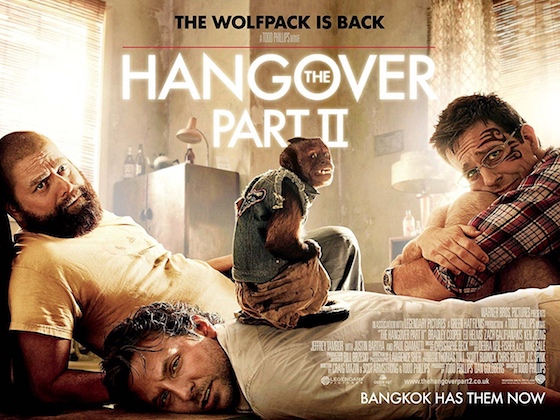
    Monk-eying around

    I wonder if part of the reason some people were so disappointed was their heightened expectations. The first was a very popular film, so I guess its fans expected a lot of a sequel. Receiving something that was almost a copy must’ve felt inferior. Personally, I only thought the original was okay — quite amusing, for what it was. I thought the sequel was at least equally as good. If anything, being free of expectations, I enjoyed Part II more. Thinking back on it, I didn’t actually laugh that often… but, somehow, I didn’t mind. So I guess I… kind of like the characters? And so hanging out with them for another couple of hours… was enough? Well, I didn’t expect to have that reaction.

    Anyway, clearly fans of The Hangover need to approach this rehash sequel with caution; and if you hated Part I then Part II is samey enough that you don’t want to bother. But if, like me, you enjoyed the original well enough but that was all, this follow-up might surprise you.

    3 out of 5

    The Hangover Part III
    (2013)

    2018 #102
    Todd Phillips | 100 mins | streaming (HD) | 2.35:1 | USA / English | 15 / R

    The Hangover Part III

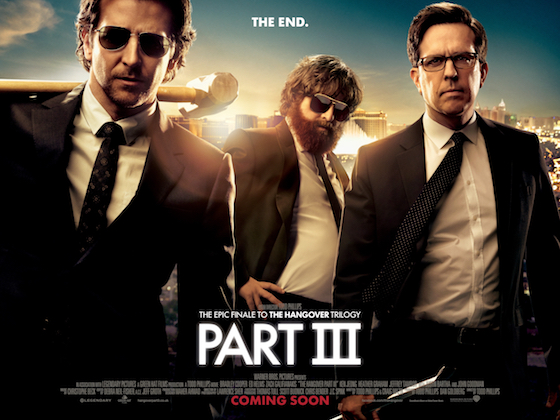
    Clearly the people in charge of the Hangover series took on board criticism that Part II just rehashed Part I’s plot, because Part III takes the same characters and spins them off onto a wholly different narrative. There isn’t even a hangover involved. Unfortunately, that didn’t work either: based on ratings found across the web, it’s the least popular of the trilogy.

    Picking up after the events of the second film, it begins with Chow escaping from prison, leading a former criminal rival to force the Wolf Pack to track him down. Cue the gang finding themselves involved in a heist in Tijuana, before events take them back to Vegas to bring the series full circle. In the most fundamental change to the series’ MO, these events unfold linearly, meaning it ditches the piecing-the-night-together element of the previous two films. You can see why they tried to put the same characters through a new crazy adventure, but it’s missing something without that mystery structure.

    Even worse, it’s just not as funny and the story isn’t as engaging. Some people say it’s completely humourless, which I think is a bit harsh, but it’s also a more serious film than it should be. The stakes are too high, and the need to construct a story that progresses sequentially leads to a focus on plot. Say what you will about the repeated structure in the first two films, but it allowed for the insertion of almost any random situation that seemed funny — what occurred the night before only has to just about hang together, because the guys are re-encountering their adventures out of order and without all the facts. Here, with the characters sober and the story unfurling in chronological order, there must be clear cause-and-effect from one scene to the next. That seems to have hampered the writers’ funny-bones. It almost becomes a comedic crime thriller rather than just a comedy — albeit a ludicrous, derivative one — which feels like it’s missing the point.

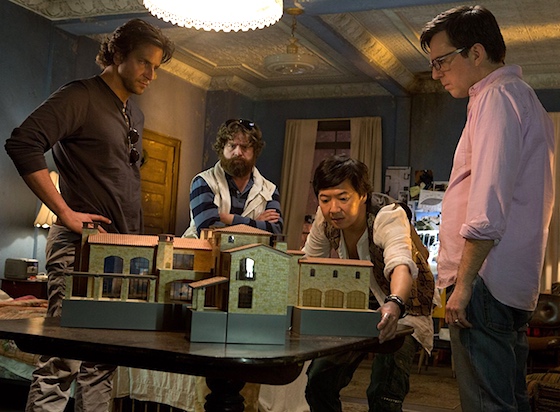
    A model heist

    It’s also too long, especially when it moves onto an epilogue that seems to keep reaching an endpoint only for there to be another scene. Eventually there’s a montage of clips from all the previous films, which seems to be under the impression this was some epic saga and something more significant than it actually is. And then, to rub salt in the wound, there’s a mid-credits scene that suggests a better Hangover movie than the one we just watched.

    Apparently the lead cast members all took convincing to return for this film, eventually being swayed by a $15 million payday (plus gross points). I mean, fair play, I’d appear in worse movies than this if I was being offered $15 million. At least it’s kind of alright, depending on how forgiving you’re feeling, with a few funny lines and bits; but it is also definitely the weakest and least memorable of the trilogy.

    2 out of 5

    * Just as with the first film, the BBFC took issue with some of the photographs shown during the end credits, and so they were cropped to secure a 15. The version streaming on Amazon is unedited, however, meaning that technically what I watched hasn’t been passed by the BBFC. But there’s nothing there that your average fifteen-year-old hasn’t already seen on the internet anyway. ^

  • Anon (2018)

    2018 #95
    Andrew Niccol | 100 mins | download (HD) | 2.39:1 + 1.78:1 | Germany / English | 15

    Anon

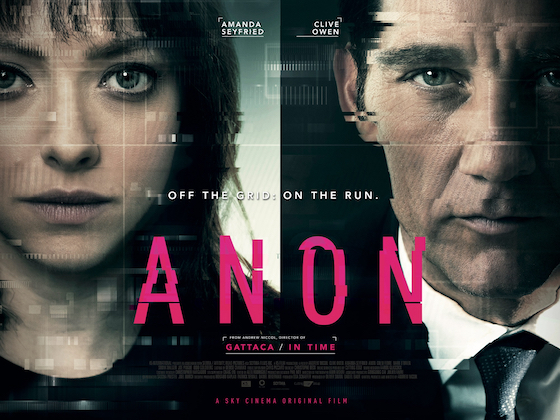
    Sky Cinema’s latest acquisition in their attempt to establish a “Netflix original”-style brand is, ironically, also a Netflix ‘original’… just not in the UK (in the US, it was released on Netflix last week). It’s also probably their most promising grab yet… although when its forerunners are Monster Family and The Hurricane Heist, that’s not saying much. But this is a new sci-fi/thriller from the writer-director of Gattaca, so that’s gotta be worth a look… even if he has spent most of the intervening two decades making some, shall we say, less-well-regarded movies.

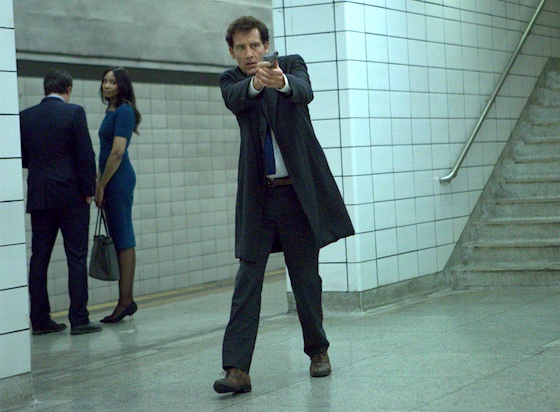
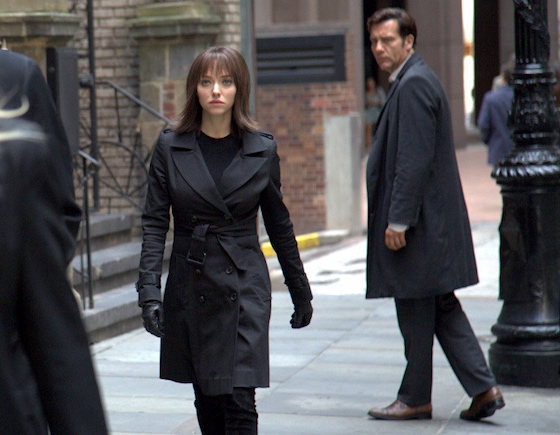
    It’s set in a near future where everyone has ocular implants that feed a constant stream of data, like non-stop augmented reality, identifying people and places, putting digital adverts on the side of buildings, and so on. These devices are connected up to a central network that allows what everyone sees to be monitored and played back when needed — for example, if a crime is committed. It’s the ultimate eyewitness, literally. When someone’s murdered, the police can just play back the last few moments of the victim’s life to see the killer. But when bodies start turning up whose final moments have been tampered with, detective Sal Frieland (Clive Owen) finds himself on the trail of an off-the-grid hacker (Amanda Seyfried) with the ability to alter records — and when the entire system is based on the notion that what’s recorded is unequivocal truth, her skills are a massive potential threat.

    Mad skillz

    Many a lazy review has described Anon as “like a Black Mirror episode”, which is not wholly inaccurate but is getting to be a stale descriptor — Charlie Brooker didn’t invent high-concept dystopian sci-fi about the dangers of future technology, so why wheel out the comparison every time anyone else dares venture into the same ballpark nowadays? Nonetheless, that is the ballpark Anon is playing in, but mixing speculative sci-fi with an equal dose of hardboiled noir to keep things spicy.

    That’s not my only problem with other reviews, though, many of which have put forth low scores and negative reactions. I saw some of them in advance of my viewing, so while watching I kept thinking, “it must go badly wrong later, because so far it’s great.” Well, that moment never came. I wouldn’t say the film is perfect — some parts, especially later on, are a tad hurried, meaning more clarity of motive would be nice — but, for me, the whole worked. There are some interesting sci-fi ideas (all the stuff about being able to trust what you see, including a standout extended sequence where the hacker messes with Sal’s head), plus it feeds some ever-relevant commentary on privacy and surveillance, with the added texture of a noir-shaped plot and atmosphere for good measure.

    In fairness, there’s clichéd stuff too, though I’m not sure how much it should bother us. For one example, it’s not much of a spoiler to say that Sal has a “dead kid” backstory, something which is a bit overdone at this point, but your mileage will vary on how much that stuff bothers you — while some of us just think it’s a tired trope, for others it seems to completely ruin the film. Conversely, I read someone criticise it for using “noir clichés” and just thought “that’s called genre, kid”. I also saw a review which decided the film was worth 1-out-of-10 just because there was a scene where they were smoking indoors, so there’s no accounting for what different people will consider important in their assessment of artistic quality.

    Gunning for other reviewers

    In my opinion, Niccol and co have offered up a well-realised near-future world — not necessarily fully imagined (it’s never explained how we got to a point where everyone has these implants, seemingly enforced by law, but that doesn’t really matter), but the way the tech is depicted and how it affects everyday life is very believable. We’re thrown into the deep-end of this environment, with just enough exposition to keep up, before the film quickly moves onto the intriguing mystery that challenges the rules of this world — and considering we’ve only just learnt the rules, being able to get straight to how they’re being circumvented is impressively economical storytelling. It’s also a neat setup for having to go back to old-fashioned cloak-and-dagger-type detective work in a modern setting — this future is so high-tech, the only way to stop the criminal from detecting the operation against her is to put Sal undercover using no-tech communication.

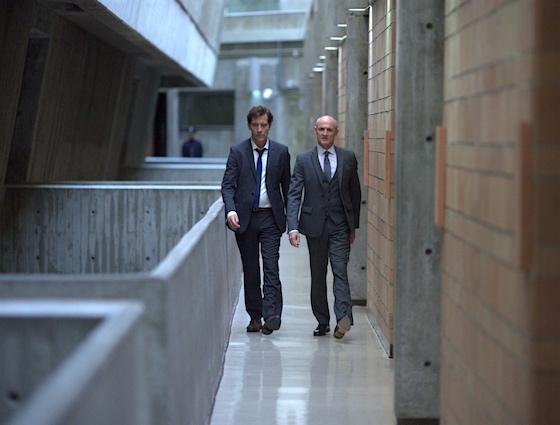
    It’s a really well made film, too. The locations are suitably evocative — the police buildings are defined by huge brutalist concrete slabs — which have been attentively framed and shot, without show-off-y camerawork. Then there’s the on-screen graphics during the point-of-view shots, which are detailed and thorough in their content, design, and execution. Their plausibility lends an automatic verisimilitude to the whole situation. And the POV shots had another nice surprise in store…

    Brutal

    Regular readers may recall that I’m a fan of a good variable aspect ratio, so it was a pleasant surprise to find that Anon features that technique — it’s unusual to see it outside of huge-budget films that have been shot/formatted for IMAX, and even then there’s no guarantee the multi-ratio version will be widely available (cf. Marvel only including them on 3D Blu-rays; Brad Bird not allowing Ghost Protocol to be released with it at all). In Anon, the ‘drama’ scenes are presented in your movie-standard 2.35:1, but it expands to a screen-filling 16:9 every time we see through someone’s eyes. These changes are very effective. The film employs the technique early and then often, so it doesn’t have the “wow” factor that some IMAX films achieve even when viewed at home, but it’s suitably immersive. Indeed, this would probably play really well on a vision-filling IMAX screen. The fact I wouldn’t have a chance to see it even if it did get IMAX showings means I’m not too sad it’s a direct-to-streaming release.

    That said, it’s kind of a shame Sky snapped it up over here. This is anecdotal evidence I know, but I know far more people with Netflix (like, pretty much everyone nowadays) than with Sky Cinema (I’m not sure I know anyone but me, actually, and I only subscribe occasionally), and I’d like to be able to recommend this to people, especially so as to go against the grain of the criticisms that I feel have been unwarrantedly negative. Well, obviously I can still recommend it, but how useful is that if people aren’t going to get the chance to see it on the basis of that recommendation?

    Who's that girl?

    Nonetheless, recommend it I shall. Perhaps Anon can’t equal other works at the top-tier of its genre, but I feel some have been unfair in writing it off. Any familiarities in the shape of its plot are in aid of creating that noir atmosphere, while the sci-fi concepts are reasonably considered and executed. For fans of the genres involved, it’s definitely worth a look.

    4 out of 5

    Anon is available on Sky Cinema from today.

    Drew: The Man Behind the Poster (2013)

    2017 #127
    Erik Sharkey | 97 mins | streaming (HD) | 16:9 | USA / English

    Drew: The Man Behind the Poster

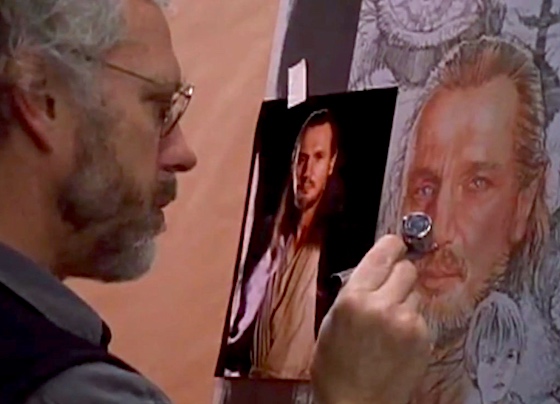
    If you don’t know the name Drew Struzan, there’s a fair chance you know his work: he’s the poster artist behind the likes of the Back to the Future trilogy, almost everything Indiana Jones related, many iconic Star Wars posters (including the primary art for the prequel trilogy), and so many more. Even when not painted by Drew himself, his style has been a major influence on blockbuster posters across the board, even in today’s era of Photoshopped collages. Nonetheless, you may wonder if the topic can really support a feature-length documentary. How much is there to say? Turns out, plenty.

    It starts out, as the title might suggest, in the form of a biography — rather than just looking at Struzan’s famous posters, it talks about his days as a struggling artist; literally starving, choosing to spend his limited money on paint rather than food. Once it reaches his move into film posters it goes more topically, covering a series at a time. He started on B-movies, which led to doing a poster for Star Wars’ 1978 re-release, which led to Indiana Jones, which was his big breakthrough: his poster for Temple of Doom established him as the Indy artist, and he went on to do video covers, book covers, and the rest.

    Painting Menace

    Despite the biographical start, the film is really an appreciation, if that were a genre, but a well-deserved one. There are stories about how the posters were commissioned, or designed, or painted, or whatever, but also about their impact, effect, and significance, and what it’s like for filmmakers to work with Struzan. In that regard the list of interviewees is impressive, including the likes of Steven Spielberg, George Lucas, Frank Darabont, Guillermo del Toro, and more. Their presence speaks not only to the awe-inspiring people Struzan has done posters for, but also how much they admire him. As Spielberg says, he was trying to make a movie that would live up to the art they’d later commission from Drew.

    Movie posters are just advertisements, really; certainly in the minds of executives — I mean, why else are the Marvel ones overloaded with every possible character and location featured in the movie? But to the public they’re more than that. Michael J. Fox makes the point very well right at the start of this film: the poster is the first part of the story; it’s where the film begins for the audience. There’s definite truth to that — the ad creates an expectation, and the resultant film has to match it. With Struzan’s work, the bar was never set higher.

    4 out of 5

    My Cousin Rachel (2017)

    2018 #33
    Roger Michell | 106 mins | streaming (HD) | 2.35:1 | UK & USA / English | 12 / PG-13

    My Cousin Rachel

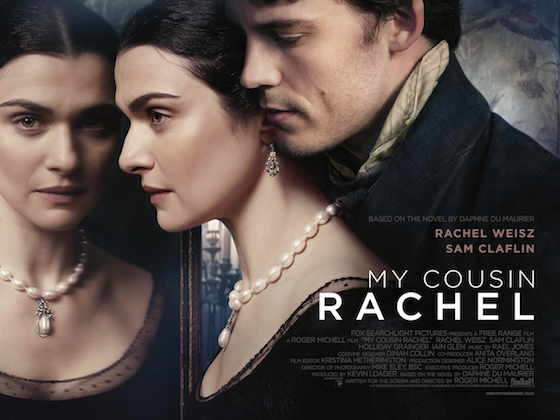
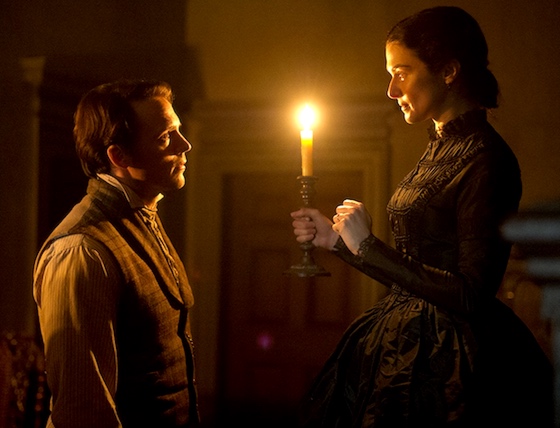
    Adapted from a lesser-known Daphne Du Maurier novel (previously filmed in 1952 with Olivia de Havilland, and here relocated from Cornwall to Devon to avoid comparisons to Poldark (really)), My Cousin Rachel is the story of an orphaned young man, Philip (Sam Claflin), who’s raised by his older cousin Ambrose until the latter’s health forces him to leave for Florence. There Ambrose falls in love with their cousin Rachel (Rachel Weisz) and marries her, but shortly after dies. His final letter to Philip implies Rachel may’ve had a part in his demise. When she arrives at their estate in England, Philip is determined to confront her, but soon finds himself entranced by her, as does everyone. Is she a scheming murderess intent on using her wiles to acquire the family’s estate, or did Philip’s imagination get the better of him?

    That mystery is really the heart of My Cousin Rachel, which unfurls as a classy, lightly Gothic melodrama. It’s a puzzle that’s not so much investigated as gradually hinted at, leaving the audience to make up their own mind. It certainly was successful in having me change my opinion on where it was headed multiple times. The pace is fairly leisurely, which some reviewers have found to be trying; but while it’s certainly a slow burner, for me that was part of why it worked. The passage of time and the opportunity it grants for overthinking sways Philip’s mind hither and thither, and so the film gives the viewer similar space to think, for their opinion to shift, back and forth. It makes you a part of his paranoia.

    Who's playing who?

    Rachel Weisz is typically excellent, delivering a finely balanced performance that is at once charming and suspicious — is Rachel simply quietly enigmatic, or she hiding a scheming and deadly nature? Sam Claflin is very effective as the hot-headed, easily-led young man at the centre of the story, exhibiting these characteristics which sell Philip’s flip-flopping opinions, which could otherwise have come across as inconsistent. You can believe their passion of each other — or, certainly, his for her — which leads to some earthy bits that might surprise anyone expecting a quaint Heritage melodrama. Thrusting among the flowers aside, the overall style does evoke those Sunday evening costume dramas (you can see why they were wary of a Poldark comparison), as does the pretty photography by DP Mike Eley — it’s not the most outright gorgeous film you’ve ever seen, but it’s a bit of a looker.

    My Cousin Rachel’s unhurried storytelling may put off some viewers, but if you settle into its rhythm then it’s a paranoia-fuelled guessing game that will keep you rethinking the truth up until its closing moments.

    4 out of 5

    My Cousin Rachel is available on Sky Cinema from today.

    ManHunt (2017)

    2018 #94
    John Woo | 109 mins | streaming (HD) | 2.35:1 | China & Hong Kong / Japanese, English & Mandarin | 15

    ManHunt

    John Woo’s latest movie is now “A Netflix Film” in the UK, US, and presumably some other territories too. After almost 15 years spent making period dramas, it’s a return to the contemporary action-thriller genre that made his name. Whether it represents a return to his previous quality… well…

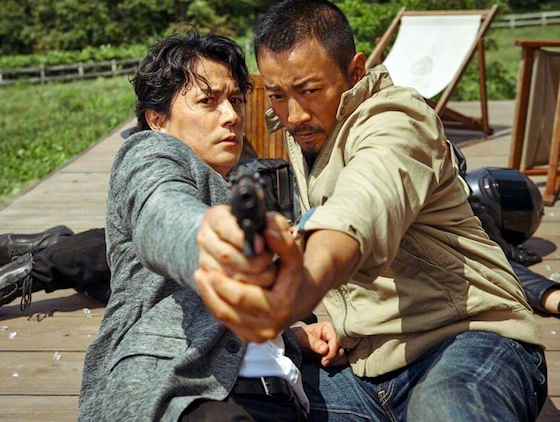
    ManHunt introduces us to Du Qiu (Hanyu Zhang), a Chinese lawyer for a Japanese pharmaceutical firm, credited with saving the company when he won a court case three years ago. Now he’s leaving to head to America, but the company’s president tries to persuade him to stay by sending a sexy lady to wait at his house. Unfortunately for Du, when he wakes up the next morning she’s dead and he’s the prime suspect. Soon he’s on the run to clear his name, with hot-shot cop Yamura (Masaharu Fukuyama) on his tail, though he’s not convinced of his target’s guilt. That’s just the start of it — why would someone want to frame Du for murder? Well, it gets complicated…

    For the first half of its running time, ManHunt is a baffling experience. Not so much because of the plot — though that sets so many wheels in motion that one must pay attention — but because of how it’s put together. One major problems is the way it casually mixes together multiple languages, leading to some flat translations (that’s being kind — maybe the screenplay, which comes courtesy of seven screenwriters, was unexciting to begin with) and clunky line delivery. But hey, this is an action movie, so we can forgive some iffy performances. A greater barrier to enjoyment comes in the form of Taro Iwashiro’s underpowered, plinky-plonky score. That might be fine during chatty scenes, but it continues into the early action sequences, robbing them of pace, dynamism, and excitement. It’s a thoroughly bizarre choice that undermines the film’s raison d’être.

    Not chuffed to be cuffed

    With its unoriginal innocent-man-on-the-run story and disengaging production quirks, it’s tempting to give up on ManHunt before the half-hour mark. However, director John Woo does begin to sneak in some of his trademark flair. One particularly good bit sees Yamura and his new partner visit the crime scene to go over what they think happened. Woo mixes together their reenactment with flashbacks in interesting, increasingly overlapping ways… until the sequence ends with the female officer getting hysterical, the old-fashioned-ness of which undercuts the sequence a little right at the end.

    As the various plot strands kicked off at the start begin to come together, the film becomes increasingly worth watching. If you can make it through the first half, the second begins to revel in its own silliness. It stops mattering that everyone has to deliver dialogue in at least two languages but none of them can actually act in more than one. It stops mattering that the plot barely makes sense — in fact, it actually improves the crazier it gets. A framed man on the run? Yawn. A pharmaceutical company searching for a secret formula to perfect the currently-lethal super-soldier drug it’s testing on homeless people, which is in the possession of the widow of a former employee they killed for alleged corporate espionage, and using drug-enhanced hitwomen to do its dirty work while corrupt addict cops cover up the indiscretions of its president’s son? Awesome. And the action finally kicks into gear too, gradually shifting first into having some good moments, then into whole sequences that are worth your time. Is it all too little too late? Kinda. But at least it rewards those prepared to stick with it.

    Sharing is caring

    In many ways I should give ManHunt just 2 stars, but that would be to ignore the fact that I’m glad I watched it. But if a 3-star rating is any kind of recommendation, here it’s a very cautious one.

    3 out of 5

    ManHunt is available on Netflix now.

    Review Roundup: 3 Long Films That I Didn’t Enjoy Directed by Martin Scorsese

    The title’s pretty self-explanatory, isn’t it?

    Those films were:

  • Silence (2016)
  • Casino (1995)
  • New York, New York (1977)


    Silence
    (2016)

    2017 #141
    Martin Scorsese | 161 mins | streaming (HD) | 2.35:1 | USA, Taiwan & Mexico / English, Japanese & Latin | 15 / R

    Silence

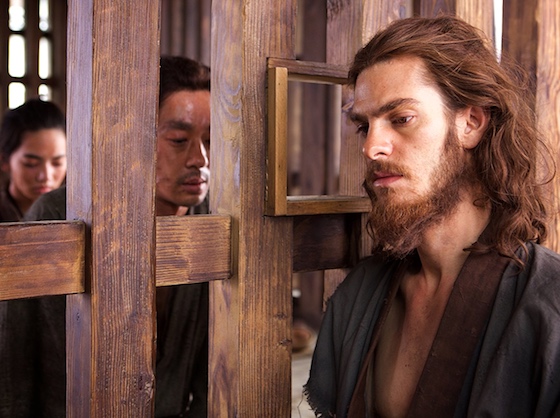
    A re-adaptation of Shūsaku Endō’s novel (previously filmed in 1971), Silence is gorgeously produced but torturously dull Christian propaganda. The plot is about two priests travelling to anti-Christian Japan to find their mentor, who’s rumoured to have renounced the Church, but really it’s about faith and the testing of it.

    The foremost of the two priests is Rodrigues (Andrew Garfield), the kind of Christian who lets others die for his faith even as he doubts it. Like many a preacher before him, Rodrigues’ sin is pride — too proud of his faith, his culture, his rightness, his superiority, to consider another point of view; to bend to help others. Conversely, his accusers and persecutors lack compassion or fairness, torturing and killing from exactly the same position as Rodrigues: that their beliefs are correct, all others be damned. Well, of such things are all religious wars made, I guess. At least the Horrible Japanese are better than the Christians’ own Inquisition was: if people renounce Christianity the Japanese sometimes set them free; the Inquisition just used it as another reason to murder them. God, religious people can be shits.

    There are no good people here. The Christians are colonialists with a monomaniacal belief in their own faith. The Japanese are so set against it that they’ll torture and murder their own people just to get back at the Christians. It’s a world full of hatred. So much for the love of God. All this intolerance is as pointless then as it ever was before or has been since. If we just let others go on how they want to go on — live and let live — then the world would be such a nicer place.

    Rodrigues in prison

    For all the violent torture depicted on screen, the hardest thing to take is the film’s slow, slow, slow pace. It does have some theological points to make, but they’re thin gruel for the time it takes to make them — or, rather, the time it wastes before it really starts to consider them. If the first hour was a lot shorter it would improve the whole film; indeed, it would’ve made me better disposed to the rest. It does improve, but by the time it improved I was already bored and annoyed with it. Its best qualities by far are visual: as well as stunning cinematography by Rodrigo Prieto, the whole production is beautifully mounted — the locations, sets, costumes, make-up, and so on, are all very well realised.

    To say Silence was not a box office success is an understatement: off a budget of $46 million, it took just $23.7 million worldwide, and only $7.1 million of that in America. I think it must’ve been promoted badly — I’m sure it’d appeal to the Bible Belt crowds who flock to that niche Christian shit that’s always turning up nowadays. And if you’re in any doubt that it’s meant to be a pro-Christian film: the premiere was held at the Vatican and it was screened early for 400 priests.

    2 out of 5

    Casino
    (1995)

    2018 #19
    Martin Scorsese | 178 mins | download (HD) | 2.35:1 | USA & France / English | 18 / R

    Casino

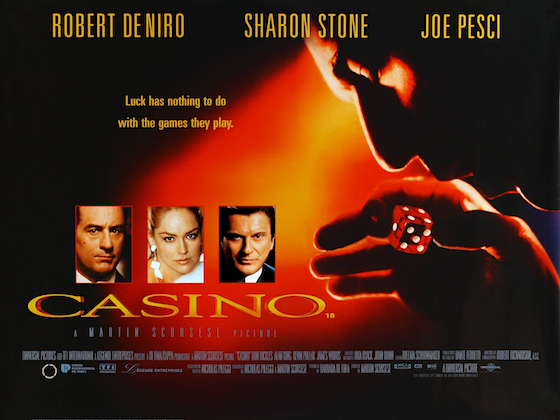
    “A fictional story with fictional characters adapted from a true story,” as the film’s own credits describe it, Casino tells of the rise of Sam ‘Ace’ Rothstein (Robert De Niro, of course) in Mob-controlled Las Vegas, whose life is made awkward by his loose-cannon Mob-enforcer best friend Nicky Santoro (Joe Pesci, of course) and his tumultuous marriage to hustler Ginger (Sharon Stone).

    “There’s no plot at all”, says Martin Scorsese in an interview included on Casino’s Blu-ray (per IMDb). “It’s three hours, no plot. […] There’s a lot of action, a lot of story, but no plot.” Well, er, he’s not wrong. Casino seems to skip around at random, devoid of a throughline to guide its narrative. It flies off on so many different tangents, it takes a while to get a handle on what it’s about — if it’s about anything. Or possibly it’s about too much. For example, there’s a lot of “how the casino business works” stuff early on, which is quite interesting in itself but only some of it has any relevance later on; and eventually the film gets sidetracked wholesale into De Niro and Stone’s marriage woes, which are at best a subplot earlier on. Whatever it was supposed to be, I was never hooked and never engaged.

    De Niro blows

    Part of this is the film’s storytelling style — I didn’t know Scorsese was in the business of making visuals to accompany audiobooks. Well, that’s what Casino felt like. Naturally there’s skill on display (they’re very, very good visuals to accompany an audiobook), but the voiceover-driven style really alienated me. It makes the characters feel at arm’s length: despite De Niro and Pesci constantly taking directly to us, I didn’t feel like I was getting to know or connect with them, I was just being told about them. The endless narration constantly skims through events too, making it feel like a summary rather than an actual story. You might think that would give it pace, but it does the opposite: the first hour drags and drags, and then drags some more, and eventually this three-hour film feels every minute of it.

    I read one review of Casino that concluded, “I don’t feel like watching it again, but it certainly made me want to watch Goodfellas again.” I know the feeling.

    3 out of 5

    Casino was viewed as part of my What Do You Mean You Haven’t Seen…? 2018 project.

    New York, New York
    (1977)

    2018 #88
    Martin Scorsese | 156 mins | DVD | 16:9 | USA / English | PG / PG

    New York, New York

    Once again, this is a lengthy Martin Scorsese movie that seemed terribly unfocused for so long that it lost me ages before it found what it wanted to be about. (Well, it predates the other two, but whichever order you put them in it’s looking like a definite pattern.)

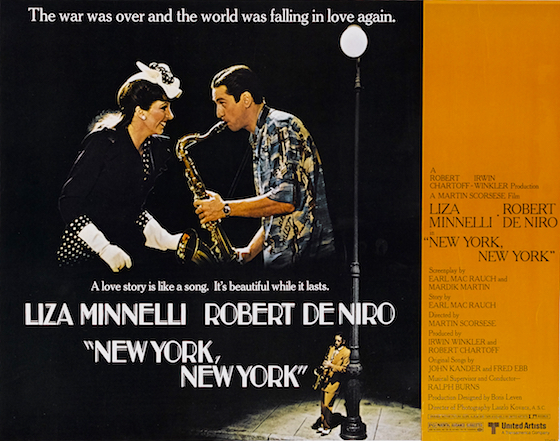
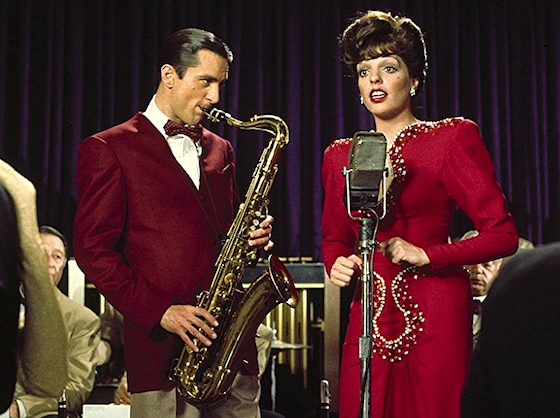
    Starting on VJ Day in New York, it stars Robert De Niro as a wannabe musician and Liza Minnelli as a wannabe singer who wind up in a romance and co-dependent career, until one outshines the other. De Niro is playing an angry young man who has talent but whose temperamental nature may well get in the way of success — yes, it’s Any Robert De Niro Movie. But, wow, his character is annoying, and I imagine his actions are only getting more distasteful with time — the way he badgers and cajoles Liza into going out with him (something she eventually agrees to) is the kind of behaviour that gets regularly criticised nowadays (rightly). Well, I don’t think he’s meant to be a nice guy — the film seems to be about their tempestuous relationship and how that helps and hinders their careers — but I wasn’t sure the film knew how unlikeable he was.

    I wasn’t sure the film knew much of anything, really. Apparently much of the dialogue was improvised, which in turn made it a nightmare to edit into a coherent narrative, which would explain the messiness — everything feels overlong, unfocused, and increasingly dull. Consequently there have been several cuts of the film, with this being the longest “director’s cut” released in 1981. It has some good bits, foremost being the extended Happy Endings musical interlude, which at one point was ditched to create one of the shorter versions. I like the idea of this film being less long, but don’t lose the only really good bit!

    So good they named it irrelevantly

    Just to wind me up further, the content has fundamentally nothing to do with the title. I mean, it begins in New York, and when the characters go on tour they’d like to get back there, and eventually they do and so some more of it’s set there, and occasionally they’re writing the titular song (which, I confess, I was unaware hailed from this film — I assumed the movie was named after the famous standard, not that it spawned it), and in the epilogue Liza performs said song (post-2016 observation: said epilogue is gosh-darn similar to La La Land’s!) Anyway, my point is: this film could’ve been set almost anywhere and not affected anything much, so why the title?

    2 out of 5