Seoul Station (2016)

aka Seoulyeok

2018 #184
Yeon Sang-ho | 92 mins | streaming (HD) | 1.85:1 | South Korea / Korean | 15

Seoul Station

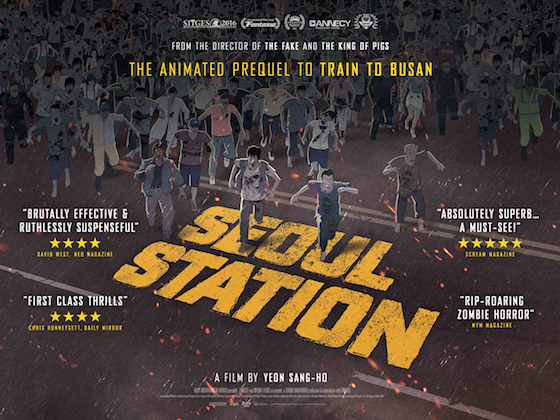
Before he made zombie masterpiece Train to Busan, director Yeon Sang-ho was an animation director with several features to his name. So perhaps it’s not surprising that, to accompany his aforementioned live-action debut, he also helmed this animated prequel.

Apparently set one day before the events of Busan (there’s no obvious indication on screen of how the films’ timelines line up), Seoul Station depicts events as the zombie outbreak expands at the titular transportation hub. Through this we follow Hye-sun (Shim Eun-kyung), a young runaway struggling to make ends meet living with her good-for-nothing boyfriend, Ki-woong (Lee Joon). Hye-sun’s father, Suk-gyu (Ryu Seung-ryong), has finally tracked her down, but arrives just after his daughter and Ki-woong have an argument and she runs off — and then the zombie thing happens. As Hye-sun struggles to escape the undead hordes, Ki-woong and Suk-gyu team up to search for her.

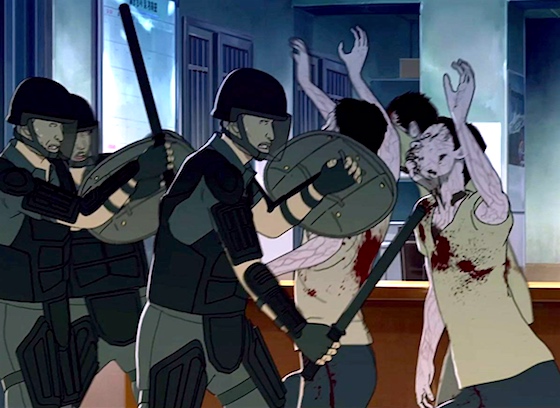
Like Train to Busan, then, Seoul Station revolves around a struggling father-daughter relationship — though this one’s of a very different sort. That’s apparent from the off, but to say too much more would be a last-act spoiler. Suffice to say, it all comes to a very dark, grim ending, with none of the redemption or hopefulness of the main film. It also continues the live-actioner’s theme of other humans being the real villains, with the actions of selfish cowards being as much a threat to survival as the flesh-eating monsters. It feels like Yeon is being critical of Korean culture, taking potshots at the treatment of the homeless, the uselessness of the police, and more. Most of that stuff plays universally, mind, but the film hardly connects with it in a meaningful way. For example, we see one homeless guy struggle to get help for his injured and dying brother, as person after person either refuses help or begrudgingly does the least they can. “They should do more,” the film implies. But if they had, what would change? In this scenario, nothing — the guy’s been infected by zombie-disease; they’d all wind up undead too and it would spread faster.

Police brutality

Half-assed social commentary aside, there are some really neat, original ideas in here, like a scene where Hye-sun must hold her nerve as she precariously tightrope-walks across the empty shell of a building, while behind her the mindless zombies throw themselves off the building onto the structure, their lack of dexterity leading most of them to plummet straight through it… but not all of them. Plus, as alluded above, there’s at least one solid twist. On the down side, it’s a bit slow — it takes 20 minutes for the zombie outbreak to start, for no particularly good reason; and though it mostly picks up after that, it occasionally loses focus again. The animation is of variable quality, too: some of it is very good, but at other times it feels kind of floaty, and there’s a very bizarre motion-blur effect applied to character movement.

Unlike Train to Busan, Seoul Station can’t quite coalesce its good ideas into anything more meaningful than a zombie thriller. Plus, the ultimate grimness of the finale feels almost mean-spirited and cruel rather than pointed. It’s not a bad zombie flick by any means, but there’s an even better movie waiting to be refined out of its best ideas, and so it’s not as transcendentally great as its live-action forebear.

3 out of 5

The UK TV premiere of Seoul Station is on Film4 tonight at 11:15pm.

Christopher Robin (2018)

2018 #180
Marc Forster | 104 mins | cinema | 2.39:1 | USA / English | PG / PG

Christopher Robin

Disney appear to have found a rich seam to mine for box office gold when it comes to live-action remakes of their most popular animated properties. Some have been variations different enough to almost stand on their own two feet; others have been straight-up remakes, because why mess with success. Christopher Robin is, perhaps, the most original so far. There have been many Winnie the Pooh adaptations down the years, as well as original movies and TV series featuring the same characters, so rather than remake any of those, here Disney have set about telling another brand-new story (although it begins with an adaptation of one of A.A. Milne’s very best Pooh stories, which is nice). This new tale justifies its live-action form by moving beyond the confines of the Hundred Acre Wood; and it also, smartly, trades on our own childhood nostalgia for the silly old bear.

We all remember Christopher Robin as a small boy, but small boys grow up, and now Christopher (Ewan McGregor) is an adult in post-war London with a wife (Hayley Atwell) and young daughter, Madeline (Bronte Carmichael). He works for a luggage company that is facing the prospect of firing most of Christopher’s team, unless he can find 20% of cuts; so instead of going away with his family for a nice weekend in the country, he must stay and work — again. With both his personal and professional lives on the brink of collapse, Christopher is very stressed.

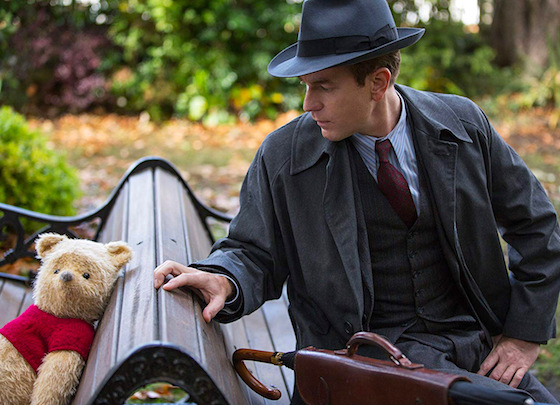
Pooh in the park

Meanwhile, in his childhood playground of the Hundred Acre Wood, Winnie the Pooh (a convincingly cuddly CGI creation, given voice by Pooh’s regular performer, Jim Cummings) awakens one morning to find all his friends are missing. Deeply concerned, he wanders through the door through which Christopher Robin used to appear, and finds himself in London, where who should he bump into but his old childhood friend — now all grown up and serious. But Pooh is still a childlike innocent, of course (don’t worry, they haven’t given him a Ted-style makeover), and maybe that attitude is just what Christopher needs.

Having said they haven’t made Pooh into Ted (thank goodness — I like Ted, but that really isn’t the spirit of this franchise), there’s more than a little whiff of Paddington here. It’s not the exact same plot, but the overall theme — of a naïve but good-hearted bear arriving to help humans overcome their problems with kindness — is certainly similar. Indeed, many beats of the story that unfolds are familiar — the climax is somewhat borrowed from Mary Poppins, for example; and you’ll know how every subplot will end as soon as it’s introduced. For some viewers, this will render the film pointless and clichéd. For others… well, it’s not really the point.

The joy of Christopher Robin is it takes those recycled elements and filters them through the prism of Pooh. If you too loved Pooh as a child, or an adult, then Christopher’s journey to rediscover that connection is relatable and supportable. And it’s simply a delight to spend time with the characters, as Pooh casually (and accidentally) dispenses heartfelt wisdom that both delights and, occasionally, may even cause you to think.

Tigger on the loose

The other denizens of the Hundred Acre Wood do pop up too: miserable old Eeyore (Brad Garrett) stole the show for the audience I watched with; Tigger (also Cummings, after test audiences objected to Chris O’Dowd’s English-accented take on the character!) is as exuberant as ever; and Piglet (Nick Mohammed) remains the voice of caution and cowardice, and as sweet as ever. As “the main ones”, those four get the most to do in the story, but there are also appearances from Rabbit (Peter Capaldi), Owl (Toby Jones), Kanga (Sophie Okonedo), and Roo (Sara Sheen) to complete the set; and with actors that good providing the voices, they make their mark.

But, really, this is all about Pooh. Well, Pooh and Christopher Robin — the title’s not inaccurate. For those who don’t feel a connection to the bear of very little brain, I guess the familiarity of the narrative he’s part of in this film will drag down enjoyment — this, I presume, is why the reviews have been somewhat mixed. But, in my opinion, a little Pooh goes a long way — as Christopher says, he may be a bear of very little brain, but he’s also a bear of very big heart. The combination makes for a film that is amusing, sweet, and thoroughly delightful.

4 out of 5

Christopher Robin is in UK cinemas now.

A Quiet Place (2018)

2018 #177
John Krasinski | 90 mins | download (UHD) | 2.39:1 | USA / American Sign Language & English | 15 / PG-13

A Quiet Place

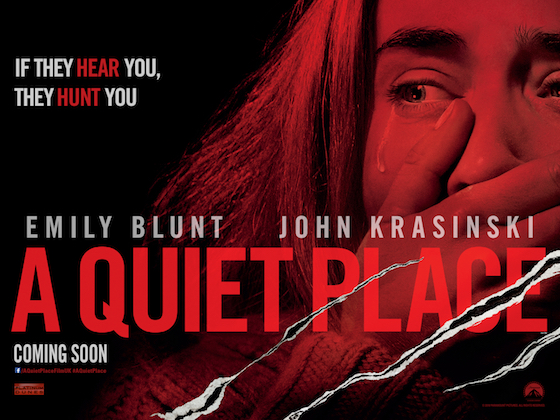
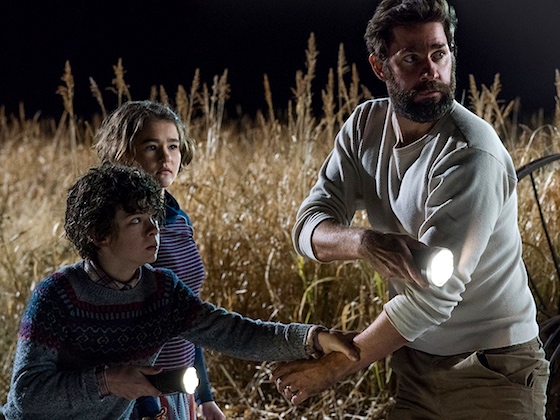
Not, in fact, the directorial debut of John Krasinski (aka Jim from the US remake of The Office, aka Mr Emily Blunt, aka Jack Ryan Mk.V later this month), but the first one that’s really gained any attention (to the tune of a sizeable $332.6 million off a budget of just $17 million), A Quiet Place is a post-apocalypse survival movie cum horror thriller. In the near future, the human race has been seemingly decimated by a race of aliens that hunt via sound. The film introduces us to a family — parents Emily Blunt and John Krasinski, kids Millicent Simmonds, Noah Jupe, and Cade Woodward — who have managed to survive by living on an isolated farm and communicating via sign language, which they’re fortunate to know thanks to a deaf daughter. Naturally, their carefully-constructed safety is threatened when Something Goes Wrong and the creatures are attracted to the farm.

A Quiet Place’s USP is the “must stay quiet” aspect, which reportedly led to less chatter and popcorn-munching during cinema screenings. If only all moviegoing experiences were so blessed. Of course, a similar conceit was only recently deployed in Don’t Breathe, but here the threat level is upped by the almost supernatural enemy. The film’s PG-13 rating in the US means it occasionally pulls its punches on going all-out terrifying, but, as the UK 15 certificate may indicate, it’s still loaded with sequences of tension and suspense.

Fingers on lips!

Some have questioned the film’s adherence to its own rules, or the practicalities of the characters’ decisions, or the ‘luck’ of them having a deaf child and so being able to communicate via sign language. I don’t hold much truck with any of those criticisms. In the latter case, is it not logical that those who already know non-verbal communication have an advantage when it comes to silent survival? Maybe everyone who didn’t know sign language just got killed already. In the first, I think the film sticks closely enough to its conceit: small or disguised noises can go unnoticed, but anything big or obviously human is going to attract attention. Besides, there are only two or three of the creatures in the area — even with their super-hearing, surely some stuff is going to pass them by.

The issue with the characters’ decisions perhaps comes down to the fact that the film leaves a lot unsaid (ho-ho) when it comes to their relationships and thought processes. Big events and the emotional fallout have occurred offscreen, leaving the family in the position we follow them for most of the film. Those viewers demanding 100% foolproof logic from every aspect of the movie are clearly left out in the cold by the lack of exposition, but more creative minds can fill in the blanks. Arguably it leaves the film wanting as a character drama, even as it strives for the kind of subtly and understatedness that is usually lauded in such a genre.

The family that stays together fights sound-hunting aliens together

But, really, it’s a horror-thriller, designed to have you biting your nails and on the edge of your seat as you wonder where the monster will spring from next and whether the characters can survive the assault. As a genre piece of that kind, half the running time is the film’s climax, and it’s an effective one at that.

4 out of 5

A Quiet Place is released on DVD, Blu-ray and UHD in the UK this week.

Killing Gunther (2017)

2018 #83
Taran Killam | 93 mins | streaming (HD) | 1.85:1 | USA / English, German & Spanish | 15 / R

Killing Gunther

Do you ever have that feeling where you want to watch a film but you don’t want it to be anything too demanding or important? I do. I’ve watched (and subsequently reviewed) plenty of films with that underlying motivation. Killing Gunther is the latest that absolutely fits that bill. I had paid it absolutely no heed whatsoever until I happened to see a trailer that looked moderately amusing. Bolstered by a Rotten Tomatoes pullquote that described it as “a very affectionate take on the [hitman action] genre, so it’s much easier to overlook its shortcomings if that happens to be a genre that you’re a fan of,” I decided it was worth a punt.

Framed as a mockumentary, it’s the story of a hitman (Taran Killam) who sets out to kill the world’s greatest hitman, Gunther (Arnold Schwarzenegger), and assembles a team of oddball fellow hitman to do so. Unfortunately for them, Gunther is so damn good that he’s always several steps ahead.

As a comedy, I thought it was funny. Not always super original or absolutely hilarious, but ticking enough. As an action movie, some of the single-take assassination scenes are done quite well. It was clearly produced on a low budget, so the action sequences don’t really fulfil on an adrenaline-junkie level, but they work decently in context.

Gunther vs... that other guy

For Arnie fans, it’s worth noting that he doesn’t actually turn up until over an hour into the movie. Put another way, he’s not in 72% of the film. Really, it’s just an extended cameo. It would’ve been a neat surprise if his appearance was a secret, but the whole marketing campaign is based around him (which makes sense, but still).

If you hate mockumentaries, or indie comedies with more ambition than budget, or are coming just to see plenty of Arnie, then Killing Gunther is one to skip. If the concept and style appeals, however, it’s a decent 90 minutes for a lazy evening.

3 out of 5

Train to Busan (2016)

aka Busanhaeng

2017 #140
Yeon Sang-ho | 118 mins | streaming (HD) | 1.85:1 | South Korea / Korean | 15

Train to Busan

Zombie movies have really risen to prominence this decade, for whatever reason (the success of The Walking Dead is an obvious culprit, though it would seem to have begun slightly before that, with Zombieland coming out in 2009, for example). You’d think that would result in the subgenre feeling played out, and there are certainly plenty of lesser efforts churned out, but films like the exceptional Train to Busan show there’s still quality to be found.

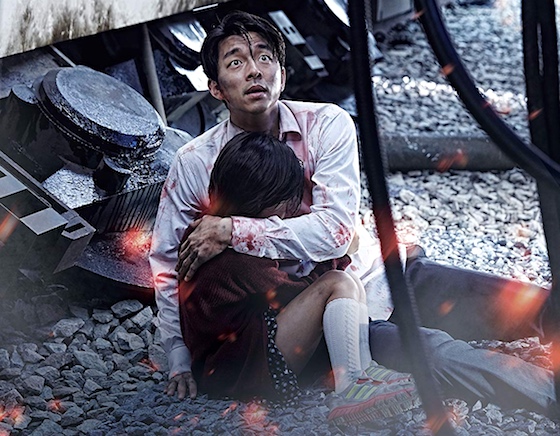
The film centres on Seok-woo (Gong Yoo), a fund manager living in Seoul with his young daughter, Soo-an (Kim Su-an). Seok-woo’s work-focused attitude has left his relationship with his daughter strained and distant, so he acquiesces when she requests to visit her mother in Busan. As they board the train — alongside other passengers that represent a cross-section of society, natch — a zombie apocalypse breaks out. Initially safe in their carriage, the passengers must hope they can make it to safety.

The family that fights zombies together...

As you might expect, the mismatched group of passengers fall prey as much to their own infighting and prejudices as they do to the zombie hordes, and the situation works wonders for the father-daughter relationship of the lead characters. Despite that apparent predictability, co-writer/director Sang-ho Yeon and his cast earn our sympathies and create an attachment to these characters, such that we’re along for the journey with them. Whether or not you guess the letter of the plot is beside the point if you feel it along with the characters — when you’re on edge to see if they can make it, upset by their failures, and cheered by their victories. This also contributes to some effective suspense sequences, and the film is also peppered with intense, pulse-racing action scenes that have been impressively mounted. World War Z may’ve seemed to corner the market for “zombie movie as action epic”, but there are sequences here that give it a run for its money.

Train to Busan shunts aside any tiredness you may feel about zombie flicks to demonstrate that, however overdone a genre may seem, there’s almost always room for fresh voices and creativity to produce remarkable work.

5 out of 5

Train to Busan placed 14th on my list of The 17 Best Films I Saw For the First Time in 2017, which can be read in full here.

And that completes the reviews of my 2017 viewing (at last!)

The LEGO Ninjago Movie (2017)

2018 #167
Charlie Bean, Paul Fisher & Bob Logan | 101 mins | Blu-ray (3D) | 2.40:1 | USA & Denmark / English | U / PG

The LEGO Ninjago Movie

After the somewhat surprising success of The LEGO Movie, both critically (96% on Rotten Tomatoes) and commercially ($469.2 million worldwide), Warner Bros and LEGO realised they were on to a good thing and so did what any movie studio does in such circumstances: plowed ahead not only with a sequel (out next February), but also spin-offs. The first one, The LEGO Batman Movie, continued the trend (90% Tomatometer; $312 million gross); the next one — this one — …didn’t. With a rotten 55% on the Tomatometer and a worldwide box office take of just $123.1 million (less than either previous film’s domestic gross alone), what went wrong? Did they flood the market with LEGO movies too quickly? Was Ninjago just not as attractive or familiar a brand as Batman or LEGO generally? Or is it just not a very good movie? Well, I’ll come to that.

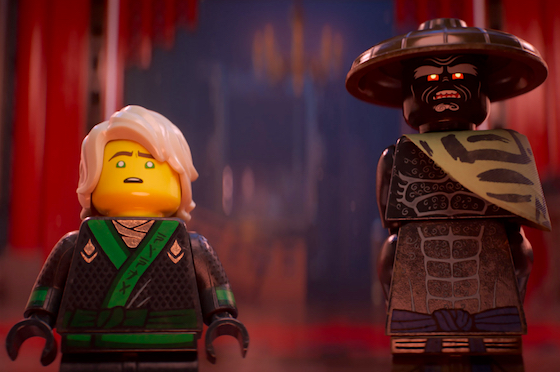
The film sets its scene in Ninjago City, which is constantly terrorised by villain Garmadon (Justin Theroux) and his armies. Fortunately for the good folk of Ninjago, they have a team of mech-driving colour-coded super-ninjas to protect them. In real life, those ninjas are just high school kids, and not particular popular ones — especially Lloyd (Dave Franco), aka the Green Ninja, who everyone knows is Garmadon’s son. When Lloyd’s daddy issues lead him to slip up, the ninjas have to save the city — and, in the process, Lloyd and Garmadon have to sort out their differences.

The Garmadons

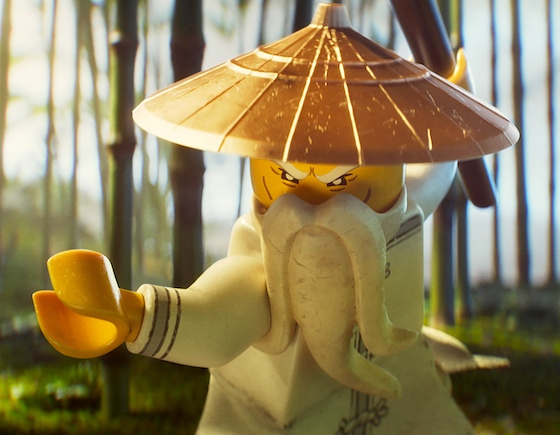
The LEGO Ninjago Movie is quite clear that the focus of its story is the relationship between Lloyd and Garmadon, but it’s perhaps a little too focused on that. There are a bunch of other characters thrown into the mix — Lloyd’s five teammates; their master, Wu (Jackie Chan); Lloyd’s mother (Olivia Munn) — but the film doesn’t afford the screen time to do any of them justice. In fact, the film probably would’ve been a lot better if it had cut back on the number of beats in the Lloyd/Garmadon story and devoted a bit more time to giving everyone a little subplot. If it kept busy doing that it might’ve picked up the pace a bit as well, because although Ninjago is more or less the same length as the two previous LEGO movies, it feels much longer.

Partly this is because it just doesn’t feel as inspired as the other movies — it lacks the spark of ingenuity that ignited their characters, humour, and stories. At times it feels entirely half-hearted. For example, Lloyd’s big mistake makes his teammates all hate him, but they immediately go on a journey with him anyway; Master Wu says the length of that journey will give them time to come back round to Lloyd, but the film never bothers to suggest that’s happening — as soon as they need to all get along again, they do. Clearly this was meant to have some emotional effect on Lloyd (even the handful of people who used to like him don’t anymore), but that’s never really given the emphasis to be felt either — so what was the point of them falling out with him in the first place?

Even in LEGO, Jackie Chan kicks ass

That said, it does muster suitable amusement in places, though not as regularly as the other two films. And if you’re a fan of Eastern genre movies — kung fu, giant monsters/mechs, samurai, etc — the whole shape and style of the film is a broad reference to that kind of cinema, which is fun for those in the know. Unfortunately, it comes up somewhat short in the action stakes — the mech sequences seem to be inspired by the Michael Bay school of throw tonnes of visual information at the screen and whizz through it at lightning speed, making some of it hard to distinguish, even with the separation benefits of 3D.

Despite all these negatives, I didn’t actively dislike The LEGO Ninjago Movie. It’s good in places, most of it ticking along at a level of passable entertainment — but it ticks along for too long, it’s not funny enough, and it can’t bring it all together in the way the other two films did. It suffers most of all from those comparisons, because it’s simply not a patch on the other two LEGO movies.

3 out of 5

The LEGO Ninjago Movie is available on Sky Cinema from today.

Mission: Impossible – Fallout (2018)

2018 #164
Christopher McQuarrie | 147 mins | cinema | 2.39:1 | USA & Hong Kong / English & French | 12A / PG-13

Mission: Impossible - Fallout

You can keep your Infinity Wars and your Incredibles 2sthis is the movie I’m most hyped for in 2018. I’ve been looking forward to it ever since it was announced we’d be getting another impossible mission from writer-director Christopher McQuarrie, who knocked it out of the park with the superb Rogue Nation. Anticipation only intensified with the fantastic trailers (that first one, scored to a Lalo Schifrined-up version of Imagine Dragons’ Friction, is a work of art in itself), and reached fever pitch with the influx of super-positive reviews in the past couple of weeks. Living up to the hype began to seem like an impossible mission all of its own.

Well, if there’s one thing Ethan Hunt and his IMF teammates can pull off, it’s… a rubber mask. But if there’s another, it’s the impossible — and how!

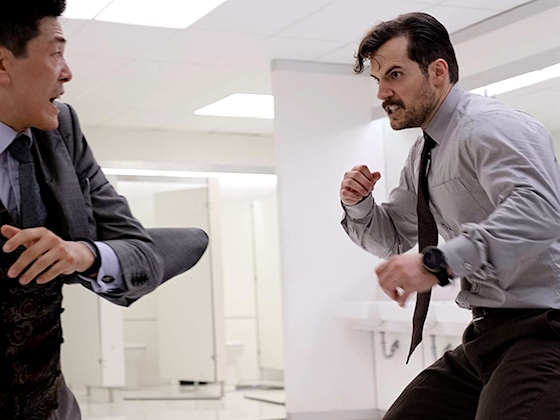
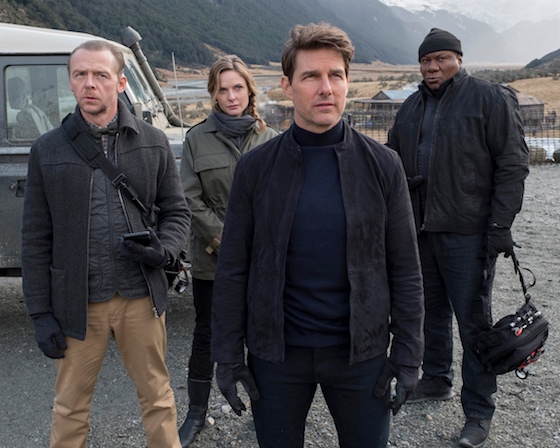
Two years after the events of Rogue Nation, Hunt (Tom Cruise, obv.) and his regular sidekicks Benji Dunn (Simon Pegg) and Luther Stickell (Ving Rhames) are after three stolen plutonium cores that could be used to make nuclear bombs. They must stop them falling into the hands of The Apostles, a radical group seeking to execute the manifesto of John Lark, a shadowy figure the intelligence services have been unable to identify, who seeks to bring about a seismic change in the world order. When the IMF’s attempt to acquire the plutonium goes sideways, Hunt is assigned a CIA minder, August Walker (Henry Cavill), with orders to let nothing get in his way of finding The Apostles — including Hunt.

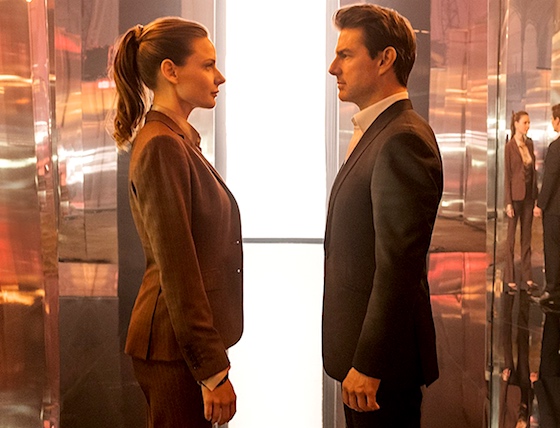
From there, we’re heading into proper spoiler territory (I already rewrote that last paragraph to avoid giving away an early twist. You’re welcome, readers). However, as the trailers have already revealed, the storyline brings back into action the last film’s antagonist, Solomon Lane (Sean Harris), as well as Ilsa Faust (Rebecca Ferguson), the MI6 agent whose allegiances were constantly under question in Rogue Nation. She was ultimately confirmed to be on the side of good, but was supposed to be leaving the game. Why is she back? And whose side is she on now?

Faust-Ethan pact (that's a pun, FYI)

The plot that mixes all of this together gets… complicated. In some respects there’s a clear throughline from one action set piece to the next, but in others it can leave you reeling as it rockets from twist to reveal to counter-twist to counter-reveal. Mostly I think you have to go with the flow and accept whatever’s happening in the moment — if you start to think about the bigger picture (how people knew what when, and how they planned for this, that, and the other), it’ll make your head spin. Naturally, I was trying to do the latter, and got completely lost at one point in the middle when there’s an assault of back-and-forth twists about who has the upper hand. Again, if you just accept it and go with it, it’s fine, but try and unpick the logic of the whole thing in the moment and, well, you’ll be so busy thinking that you’ll probably miss another twist. Personally, I have a lot of faith in McQuarrie as a screenwriter, and I have no doubt the whole thing does make sense (or enough of it, at any rate), but he’s too busy racing along to let the film stop and allow you to confirm it for yourself.

Fiddly plots are nothing new to the Mission franchise, of course: the very first one was (and often still is) criticised for having a story that’s more impossible to follow than a typical IMF mission is to execute. What is new to Fallout’s story is that it’s a sequel. Obviously, there are four other Mission: Impossible sequels, but they’re all standalone movies really. With the return of Lane and Faust, plus some of the baggage they had with them, a lot of Fallout spins out of Rogue Nation — it’s unquestionably a direct sequel. And, once again without wanting to get spoilery (though, again, this is partially given away in the trailers), it also picks up on hanging threads from movies even further back in the series. In this respect it’s a great film for certified Mission fans: there are a number of payoffs and answers to questions that are only still thought about by such devotees; but it’s also done in such a way that it never obstructs the fun for casual viewers. That goes for the whole sequel thing: although the storyline is grounded in the events of Rogue Nation, Fallout gives you enough info that you could watch it as a standalone.

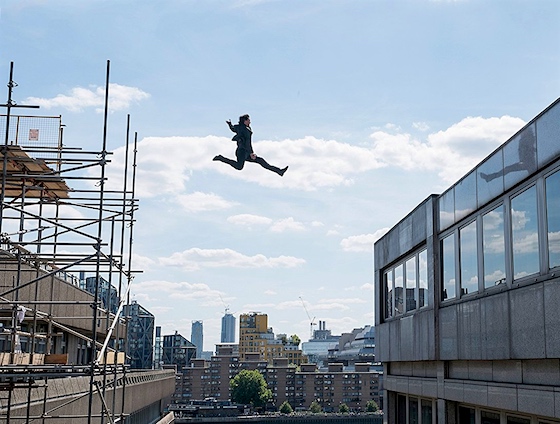
Long walk off a short aeroplane

Talking of Rogue Nation, about 24 hours before seeing Fallout I listened to Empire’s legendary three-hour Rogue Nation spoiler podcast, in which McQuarrie talks a lot about the writing process of a Mission movie, and what he learned about that during Rogue Nation. With his observations fresh in my mind, it shed an interesting light on Fallout — how and why it was doing certain things, as well as about when it chose to do them. Perhaps that’s why I was able to spot some of the reveals and stuff, because I knew the (self-imposed) rules McQuarrie was playing by. But there are some fascinating contrasts, too. For one not-really-spoilery example (because I’m going to talk about literally the first scene of the movie now), in the podcast he talks about how Mission films have to begin with a burst of action — no plot, no story, just straight into an action scene. It’s partly about giving the audience an instant thrill, but it’s more about letting them settle into watching the movie before you throw important information at them. But Fallout does literally the opposite: the first scene sees Hunt receive one of the series’ famous briefings (delivered, as always, in a completely different manner to how we’ve seen it done before), and that, as it’s precisely designed to do, delivers a massive infodump of plot. Now, how much of it you need to take in I’m not sure — various bits are explained again later as they become pertinent — but it certainly implies you should be paying attention. I’m in no way criticising this (I really liked everything in the pre-titles), it’s just an interesting contrast to how McQuarrie said things ‘needed’ to be done last time.

Another thing from the podcast: one rule they set themselves on Rogue Nation, which ended up being a massive thorn in their side, was that there had to be constant escalating tension, meaning the film had to end with the biggest action sequence of all. This was a self-imposed rule, but they struggled with it for ages before they finally realised it just wasn’t what the story demanded, which was when they alighted on the ending that saw Hunt outsmart Lane rather than engage in a massive action scene with him. Clearly McQuarrie came into Fallout more prepared, however, because while there are big stunts and action scenes throughout the film, the finale is the largest, most complicated, most dynamic, and most impressive sequence of the lot.

Watch that ankle...

And so we’ve come to the real point of the movie; the thing the trailers and posters and behind-the-scenes videos have all sold it on: the action sequences. Simply, they’re incredible. Cruise’s dedication to giving the audience something new and exciting and awe-inspiring to watch is second to none. He spent literally years preparing for this film, learning to fly a helicopter and perform HALO skydives. That’s him flying the helicopter. That’s him jumping out of a plane. That’s him doing all sorts of other stuff too, like riding against traffic on a speeding motorbike, or jumping across rooftops, or falling off the side of a mountain. The only effects work here is for the odd spot of safety-rig removal or, I presume, one or two moments that would be impossible to achieve safely in real life. And this dedication has paid off: it’s so much more thrilling when you know this has all been performed for real than it is to watch some pixels or someone on a green screen. Those kinds of effects have their place in other movies, and can provide a thrill within the context of the story, but they nonetheless lack the tangibility that doing it for real provides, and the knowledge it’s a genuine feat you’re watching adds a whole extra thrill of its own.

In filmmaking terms, McQuarrie does all he can to match Cruise’s drive to entertain us with his daring — not by being daring himself, but by showing off Cruise’s efforts in the best way possible. McQuarrie favours going without score for the action scenes, letting the sounds of revving engines, squealing brakes, thumping punches, and all kinds of crunching and smashing and thudding, be the only music you need. The tension and excitement comes purely from the physical feats on display, plus the camerawork and editing that showcase them. It works like a charm. I’ve seen music-less action sequences in the past where you feel the absence on the soundtrack; like something more is required. Early on in Fallout, I noticed the absence of music during these scenes only because I was aware McQuarrie favoured it that way, and because of how much it wasn’t needed. But by the end of the film, I was too hooked to care — I honestly can’t tell you if Fallout’s big finale sequence has music or not, because it grabs the attention so thoroughly that I’d just stopped being aware.

Arms fully loaded

Of course, other parts of the movie do have a score, provided by Lorne Balfe. Thanks to where it’s been applied, much of it is atmospheric rather than the pulse-racing theatrics you expect of an action movie score, though he makes nice use of Lalo Schifrin’s original themes — both the main one and The Plan — to provide grace notes where required. Plus there’s the big title sequence to really show off that iconic main number — and, like Rogue Nation, we’re treated to it twice. At my screening the houselights came up and people started walking out during the second one, which kind of bugged me — it’s not just names scrolling, it’s part of the movie, McQuarrie using it as a kind of final hurrah to send you away with (just as he did in Rogue Nation — he’s repeating the ‘trick’ because it works so damn well). Personally I prefer Joe Kraemer’s rendition of the title theme from last time, but Balfe’s is a worthy alternative.

Also new to the franchise is cinematographer Rob Hardy, who’s delivered some gorgeous photography here. Not in a showy way, but there’s a richness to some shots, plus consistently great choices of angles and camera moves. The entire thing is about forward momentum — from set piece to set piece to set piece — and that’s conveyed by the way the camera moves, too. Even, for example, when cars drive up to buildings: rather than just observe it, the camera’s behind them, low to the ground, speeding along. Rarely has some people arriving at a near-empty airfield to get on a plane felt so exciting. I believe the film was shot mostly on 35mm, and those who care about such things will surely notice the benefit in many sequences. The big exception is the couple of sequences that use an IMAX ratio if you attend such a screening, which were shot in digital 8K (the need for small, light cameras precluded the use of genuine IMAX ones). Long gone are the days when mixing film and digital would make the difference obvious, however, and the switch between formats is entirely unnoticeable.

IMF class of 2018

If there’s one disappointment, it’s that the trailers gave too much away. Technically there’s a shedload of plot stuff they didn’t reveal, but honestly, the plot’s not where the real entertainment value lies. For one thing, seasoned viewers will see most or all of the twists coming. Maybe they could’ve kept some returning characters a surprise, but they’re all in the trailer too. No, this film is all about the incredible action, and story context only adds so much to that. What it does add, at least, is tension: the “oh my God, Tom Cruise is doing what?” factor may’ve been burned up by the trailers, but the edge-of-your-seat suspense about whether Ethan Hunt can achieve his goals is still there. And while the mind-boggling-ness of a first impression may be gone, the stunts are still genuinely spectacular — so much so that you can watch them again and again and still be thrilled, which means they do survive being in the trailers. Of course, if you were lucky (or sensible) enough to avoid those advertisements… boy, are you in for a treat!

Even if you didn’t, I still think it’s a treat — they went and put all the best bits in the trailer and yet it’s still bloody spectacular. I think Rogue Nation may’ve had a better story, but nothing beats Fallout for adrenaline and spectacle. Well, every Mission movie is different in its own way, has its own strengths, and it’s clear what Fallout’s are. Personal preference will therefore dictate where you rank it next to the other movies, but what I’ll say is this: in a series where the level of consistency is so high that my personal favourite is usually whichever one I happen to be watching at the time, Fallout easily stands toe to toe with the rest.

5 out of 5

Mission: Impossible – Fallout is in UK cinemas now, and in the US from this evening.

It placed 1st on my list of The 26 Best Films I Saw For the First Time in 2018.

The Great Wall (2016)

2017 #158
Zhang Yimou | 103 mins | download (HD+3D) | 2.39:1 | USA, China, Hong Kong, Australia & Canada / English, Mandarin & Spanish | 12 / PG-13

The Great Wall

This movie was on a hiding to nothing from the moment people got wind of the fact it was a China-set action movie starring white American Matt Damon. Increased representation is all well and good, but you still need a big-name star in order to get funding for your movie if it’s a $150 million production aimed at a global audience, and the stars who can sell movies that big around the world are almost exclusively white. It’ll be a positive thing when that changes, but it’s the way it is right now. Should we write off entire movies just because they have to think about budget more than political correctness?

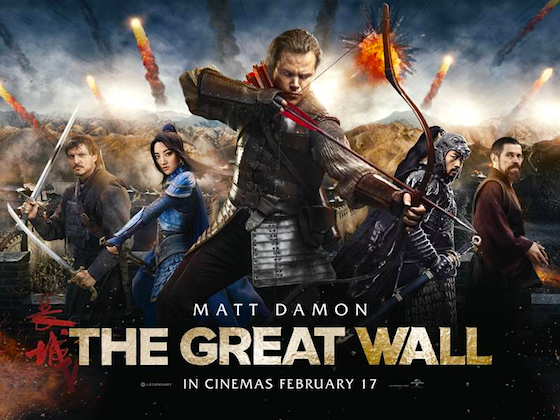
There are pros and cons within the film itself. Damon plays a mercenary who stumbles upon China’s national secret: that the Great Wall was built to keep out monstrous beasts, and when they attack it has to be defended. An outsider character works as a good way into this story, though of course there are “white saviour” issues with it being someone who looks like Matt Damon. If you want to object to the movie entirely for those reasons, that’s your prerogative. There were other criticisms of it as a piece of entertainment, but I hold even less stock in those, because I thought it was highly entertaining.

The best bit is the first 25 minutes. This opening salvo is phenomenal: a huge, well-made battle sequence with tonnes of cool moments. It’s so epic, it feels like the climax. That leaves you wondering where the film possibly has left to go for the next hour-and-change — can it possibly have something up its sleeve to top that? Unsurprisingly, it heads away from huge battles and into skirmish territory. Fortunately, inventive ideas keep these sequences from feeling like lesser fodder than the epic opening act. In the end, it never does top the opener, but hey-ho.

Colourful diversity

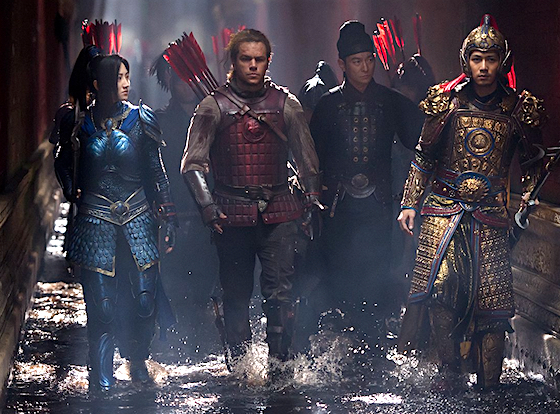
As for the plot, well, it is what it is. There are some obvious holes and contrivances (most obviously: why do they hold back some weapons and tactics to only use in later battles?), but nothing I found too bothering for the type of entertainment the film seeks to provide. Character work is also about what you’d expect from an action-adventure blockbuster, though Damon and Pedro Pascal have a buddy relationship that’s a lot of fun. Despite the presence in key roles of Damon, Pascal, and Willem Dafoe, most of the cast are actually Asian, with the standout being Jing Tian as a strong female co-lead.

As you might expect from the director of Hero, the film is a visual feast. There’s vibrant design work, emphasised by cinematography from DPs Stuart Dryburgh and Zhao Xiaoding that makes things like the colour-coded soldiers really pop. And the 3D is spectacular. Although it’s a post-conversion, the film definitely seems to have been shot with it in mind. The massive scale of the wall allows for both deep scenery shots and extreme height, especially when we follow the class of warriors who dive off the wall to fight while abseiling down it. Then there are the arrows, throwing axes, leaping monsters, exploding monsters… Of course the rest of the film has visual depth too — facial details in close-ups, the scale of a large banquet hall, and so on — but the action scenes are a riot.

That’s why I enjoyed The Great Wall, despite its daft plot. The action is a lot of fun, and the whole thing looks spectacular in 3D. From an action-adventure blockbuster, that’ll do me nicely.

4 out of 5

Despicable Me 2 (2013)

2018 #155
Pierre Coffin & Chris Renaud | 98 mins | download (HD+3D) | 1.85:1 | USA, France & Japan / English | U / PG

Despicable Me 2

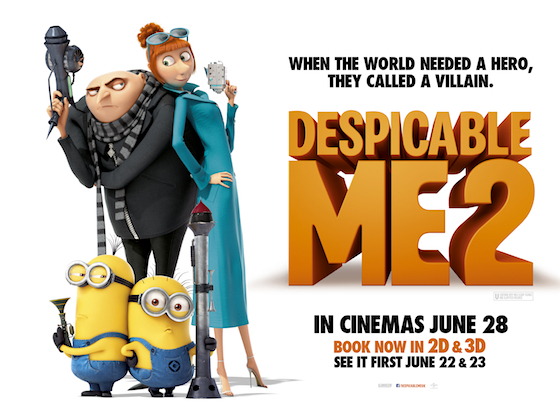
In this sequel to the popular animated comedy (which I wasn’t that fond of, personally), supervillain turned adoptive dad Gru (Steve Carell) is dragged back into his old world when the Anti-Villain League recruit him in order to track down the villain who stole a dangerous serum. Meanwhile, Gru’s daughters think he needs a girlfriend, and the AVL agent assigned as his partner, Lucy Wilde (Kristen Wiig), seems the perfect fit. Also, his yellow Minions are still around, getting up to all sorts of ker-azy antics.

That’s the concise version, anyhow. This is a film that rambles around a lot in the telling, presumably out of fear that it might ever become boring to hyperactive youngsters. Unfortunately, it almost had the opposite effect on me. The main plot just felt like a shape on which to hang the romantic and Minion subplots, but those subplots just felt like a constant distraction from the main plot. The end result is a film that’s narratively unsatisfying on all fronts.

So. Many. Minions.

Instead, entertainment value comes from individual scenes or moments. Personal preference will dictate just how entertaining those are, however. I didn’t feel there was much consistency, with the humour able to spin on a dime from being pretty amusing to falling flat. It doesn’t help that it feels way too long, overloaded with subplots that don’t go anywhere meaningful and the Minions’ sketch-like shenanigans. And there’s a lot of the Minions, clearly the breakout stars of the first movie (and hence why the series’ next film was entirely centred around them). While they amuse me on occasions, I mostly find them annoying, and am slightly baffled that anyone over the age of about six can find them significantly amusing.

But it looks pretty great in 3D, at least — turns out Gru’s long pointy nose was made for the format — and it’s quite funny and imaginative in places. Still, a good trim would’ve benefitted it enormously. Unless you do really enjoy the Minions, I guess.

3 out of 5

The UK network TV premiere of spin-off Minions is on ITV today at 6:15pm.

Godzilla: City on the Edge of Battle (2018)

aka Gojira: Kessen Kidō Zōshoku Toshi

2018 #156
Hiroyuki Seshita & Kôbun Shizuno | 101 mins | streaming (HD) | 16:9 | Japan / English | PG

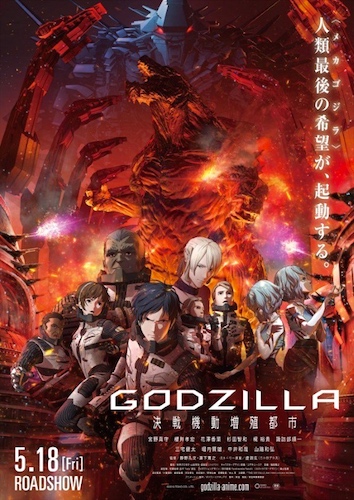
Godzilla: City on the Edge of Battle

The 31st official Godzilla film from Japan’s Toho studio is the second part of their anime trilogy. Released theatrically in Japan, it’s a Netflix exclusive in the rest of the world — which is probably for the best, because it means we don’t have to pay money specifically for this shite.

Picking up where the previous film left off, City of the Edge of Battle is set on Earth 20,000 years in the future, where a 300-metre-tall Godzilla (the largest ever, fact fans) rules the planet. I could go into the rest of the backstory, but we’ll be here for a paragraph or two — you can either watch the first film or, better yet, save yourself a couple of hours and just don’t bother with any of it. But anyway: in this instalment, the party that have landed on Earth to defeat Godzilla discover a tribe of humans (or, possibly, just a human-like species) who have somehow survived Godzilla’s reign. They in turn lead them to the remains of Mechagodzilla, a failed project by alien chums to help defeat Godzilla. Left alone for 20 millennia, the mech’s “nanometal” has grown into an entire city, which they now hope to use to defeat Godzilla.

There are some neat sci-fi ideas in this trilogy — aside from the Battlestar Galactica-esque stuff I talked about last time, there’s some interesting notions about how the planet might’ve changed and evolved over 20,000 years without us, and a city that’s grown itself has potential — but promising concepts alone are not enough to overcome the clunky dialogue, dull visuals, unmemorable characters, turgid philosophising, and sauntering plot. And if you’re here for the eponymous big guy, once again he doesn’t even get involved until over an hour in, just in time for the final big action sequence. That’s so badly done, it requires constant narration from the human command centre to explain what’s supposed to be going on. It would make as much sense as an audio drama as it does as a film.

Look, Godzilla is in this film! (Eventually.)

Another way this second film suffers is that many actions are built on motivations that were established and explained in the first film, but which aren’t restated here — and they were easy to miss in the first one anyway, because it was overloaded with exposition and jargon. It should be no surprise that this sequel is no better in that regard, justifying my decision to watch it in English this time. It did seem weird to switch language part way through a trilogy, but it’s not like any of the characters were memorable enough that I associated their voices with them, so why not? Well, I always feel I should watch anime in its original Japanese, for purism’s sake, but English is just easier — especially when the amount of made-up jargon flying around made the first film something of a chore to read.

I didn’t really enjoy the first film, but generously gave it 3 stars on the basis that it wasn’t completely terrible and had some ideas with potential. This sequel squanders most of that. I still like the mythology they’ve loaded into this universe — the conflicting ideologies of the different species on the spaceship; the situation on Earth when they return (the human-like tribe; the self-built city-with-a-brain) — but it’s all bungled in the execution, coming out as gloop that is, at best, barely intelligible, and, at worst, flat out boring. And if there wasn’t already more than enough backstory, mystery, and potential conflict to be going on with (which there was), City on the Edge of Battle throws a ton more into the mix. But hey, maybe the third film will actually generate some excitement if it has to rush to wrap all that up?

2 out of 5

Godzilla: City on the Edge of Battle is available on Netflix now. The final film is scheduled for release in Japan in November, and worldwide in early 2019.