The Night Comes for Us (2018)

2018 #215
Timo Tjahjanto | 121 mins | streaming (UHD) | 2.35:1 | Indonesia / Indonesian, English, Mandarin & French | 18

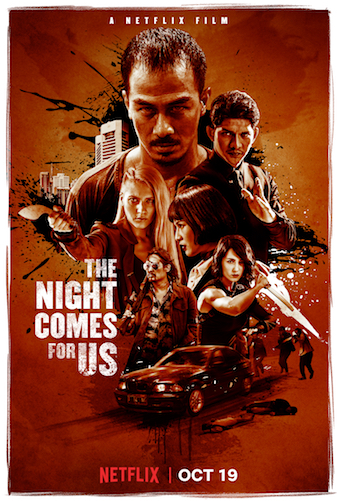
The Night Comes for Us

Tucked away amongst the raft of original content Netflix decided to release all at once yesterday was this, which caught my attention by dint of one of its stars: Iko Uwais, the action genius best known for starring in The Raid and The Raid 2 (or, alternatively, his cameo in The Force Awakens). Intrigued, I gave it a quick Google, coming across this piece at Birth.Movies.Death., which propelled the film straight to the top of my watchlist. Well, that BMD review majorly oversells it, in my opinion, but the film has its moments.

Joe Taslim (who played Uwais’ boss, the leader of the raid, in The Raid) is the star this time. He plays Ito, a Triad enforcer who suddenly grows a conscience halfway through massacring a village, killing his Triad underlings to rescue a little girl. He turns to his old pre-Triad gang for help, because sure enough the Triad want their revenge. To achieve this they send a whole army of henchmen (naturally — you need plenty of people for our hero and his chums to slaughter, right?), led by Arian (Iko Uwais), another member of Ito’s old gang who joined the Triad at the same. Cue person conflicts and switching allegiances.

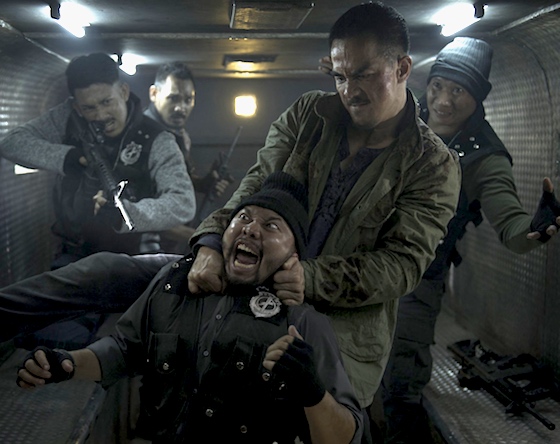
The whole storyline is quite perfunctory and rather something-and-nothing (and, considering that, gets a bit too much screen time), but it’s a sideshow because the real star is, of course, the action choreography. That’s as relentless and barmy as you’d expect given the pedigree of the cast and crew (director Timo Tjahanto was also responsible for another Uwais vehicle, Headshot), but it’s not just martial arts acrobatics being splattered across the screen: there’s enough blood and gore on show to rival any horror movie. It’s not just dainty little bullet wounds, knife scratches, or even some blood splatter — limbs are broken and dismembered, faces are graphically smashed in, and at least one person literally spills their guts. Viewers with a weak disposition need not apply.

One of the film's less brutal scenes

Uwais may be the most recognisable name, and Taslim is the main character, and they both get impressive action sequences (including a climactic one against each other), but mention must be made of Julie Estelle (who also starred in The Raid 2 and Headshot) as the mysterious Operative, whose role in all the plotting is never fully explained (or if it was, I missed it) — but she gets perhaps the best fight of all, taking out a couple of waves of henchmen with guns and explosives, before engaging in hand-to-hand and blade-to-blade combat with two fellow female equally-badass assassins.

But, all in all, it’s no The Raid 2. Well, that’s one of the greatest action movies of all time, so perhaps the comparison is unfair. But, personally, I would also put it a step behind something like The Villainess, another underworld actioner with a flair for crazy set pieces. Still, put aside the hyperbole you might encounter elsewhere online and, for viewers after a brutal, skilful action extravaganza, The Night Comes for Us does hit a spot.

4 out of 5

The Night Comes for Us is available on Netflix now.

Behind-the-Scenes Comedy Review Roundup

A lot of people seem to enjoy spending October watching and reviewing horror movies all month, just because of one day at the end. Well, fair enough, if that’s your bag. But for now, let’s lighten the mood with a handful of pretty good comedies, all of which are related to the making of film and television… in one way or another…

In today’s roundup:

  • Mindhorn (2016)
  • In & Out (1997)
  • Zack and Miri Make a Porno (2008)


    Mindhorn
    (2016)

    2018 #34
    Sean Foley | 88 mins | streaming (HD) | 2.35:1 | UK / English | 15

    Mindhorn

    Back in the ’80s, actor Richard Thorncroft (Julian Barratt) starred in Mindhorn, a successful TV show about a detective on the Isle of Man who has a cybernetic eye that can see the truth — think Bergerac meets The Six Million Dollar Man. When an escaped lunatic insists he will only speak to Mindhorn, a washed-up Thorncroft sees an opportunity to revive his career by solving a real crime.

    Produced by and co-starring Steve Coogan, there’s definitely something a little bit Alan Partridge about Mindhorn — the blustering nobody who thinks he’s a star, rubbing people up the wrong way but carrying on regardless. It’s just one of several things Mindhorn is likely to vaguely remind you of. Even if it feels somewhat derivative, it’s still pretty funny, with some of the best bits coming from throwaway cameos. The whole supporting cast is very good indeed, actually, full of strong British actors having some fun. The film seems to derail a bit when it pretends to wrap the case up after half-an-hour, but it gets funny again once it has the common sense to restart it.

    So, not the greatest Brit-com ever — heck, it’s not even the greatest action-movie-spoofing Brit-com ever (*coughHotFuzzcough*) — but it’s mostly pretty amusing.

    3 out of 5

    In & Out
    (1997)

    2018 #39
    Frank Oz | 87 mins | streaming (HD) | 16:9 | USA / English | 12 / PG-13

    In & Out

    Inspired by Tom Hanks’ acceptance speech at the 1994 Oscars — when, after winning for Philadelphia, he thanked a gay teacher — In & Out is about a teacher whose former pupil wins an Oscar and, during his acceptance speech, outs the teacher as gay. The twist is, the teacher in question (Kevin Kline) didn’t know he was gay, and nor did anyone else — including his fiancée (Joan Cusack). As the media descends on the quiet little old-fashioned town and whips up a frenzy, the whole thing turns into a bit of a farce, albeit with a positive underlying message about sexuality and, ultimately, community. The premise barely sustains even this brief running time, but it’s all quite good-natured and likeable.

    3 out of 5

    Zack and Miri Make a Porno
    (2008)

    2018 #179
    Kevin Smith | 98 mins | streaming (HD) | 16:9 | USA / English | 18 / R

    Zack and Miri Make a Porno

    It’s funny how some movies cause a stir on release and then get kinda forgotten. The very concept of Zack and Miri Make a Porno (it’s in the title) was enough to give some people palpitations a decade ago, and the poster that alluded to oral sex (less a visual double entendre, more a single one) did nothing to help. And yet, does anyone really talk about it now? It’s only stuck in my mind because it’s on my 50 Unseen list from 2008, and I’ve not been able to cross it off because for a very long time it was never available to watch anywhere (it finally popped up on Netflix a couple of months ago). Well, I’m glad it did, because I really enjoyed it.

    As I said, the pitch is in the title. Zack (Seth Rogen) and Miri (Elizabeth Banks) are two old friends and housemates struggling to make ends meet, and who (through various plot machinations) decide to make a porn film together. As you do. Despite that risqué theme, the main relationship follows all your typical romcom beats; but those work because they work, and the edgy subject matter covers them up somewhat. Most surprisingly, their romance turns out to be actually quite sweet — even if major turning points hinge on things like them fucking for the first time in front of an audience. Aside from that, the film is full of the rude, crude, gross-out style humour that you’d expect, but I found it very funny nonetheless.

    4 out of 5

  • Happy Death Day (2017)

    2018 #43
    Christopher Landon | 96 mins | streaming (HD) | 2.35:1 | USA / English | 15 / PG-13

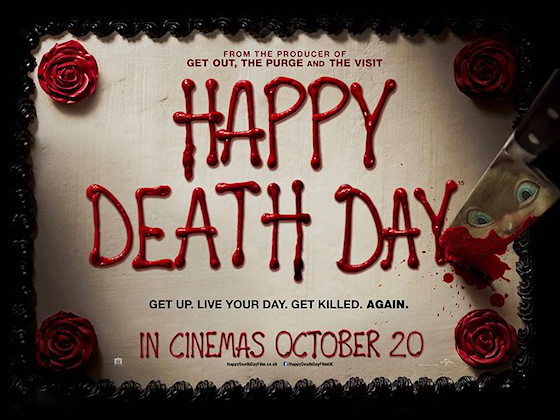
    Happy Death Day

    How much does pure originality matter? Happy Death Day is a high-concept slasher movie that could be described as Groundhog Day meets Scream via Legally Blonde. Normally those kind of “X meets Y” descriptions give a general sense of tone or some coincidental similarities, but if you could put those three films in a blender, Happy Death Day is almost certainly what would come out. (There’s probably a more apposite sorority comedy than Legally Blonde for the third ingredient, but that’s not my subgenre of expertise.) But while there’s no doubt that Happy Death Day is derivative, that doesn’t mean it’s not entertaining.

    The film introduces us to college student Tree (Jessica Rothe), who wakes up hungover in a stranger’s dorm room on what turns out to be her birthday. Later that day, she’s murdered… after which she wakes up hungover in the same stranger’s dorm room on her birthday. Later that day, although she takes steps to avoid it, she’s murdered again… after which she wakes up hungover in the same stranger’s dorm room on her birthday. Yes, she’s in a time loop — one which, she theorises, can only be stopped if she finds and stops her killer.

    It’s a clever conceit — yes, borrowed from Groundhog Day, but utilised in a different way. For me, the plot/structural similarity is easy to overlook because, hey, it’s a great idea, why not recycle it with a different kind of story? This variation is enjoyably done, too — not an outright comedy, but with enough wit to make for a fun movie. There’s a very real danger of it being repetitive — repetitiveness is baked into the very concept, obviously — but, like Groundhog Day, it dodges that with amusing variations and intelligent filmmaking. Okay, the logic is sometimes a little askew (for example: no matter how quickly or slowly Tree leaves the dorm room at the start, the same random events happen outside), but that’s storytelling expediency rather than a major problem with the film’s logic, in my opinion.

    Screaming groundhog

    In the lead role, Jessica Rothe is excellent. She fills what could’ve been a pretty standard slasher movie heroine with different levels of reconcilable personality and a surprising amount of heart. She’s a likeable, root-for-able character to spend the day with over and over (and over) again. And when you know how the movie was filmed (i.e. like almost every other movie: not chronologically, but by location, having to shoot scenes from different time loops side by side), the way her performance is accurately nuanced becomes even more impressive.

    In my opening comparison I picked Scream specifically because Happy Death Day has the feel of those late ’90s / early ’00s teen horror movies — the heyday of franchises like Scream, Final Destination, I Know What You Did Last Summer, etc. Back then this surely would’ve been a huge hit, but I feel like very few people were talking about it when it came out last October. That said, it achieved a respectable Rotten Tomatoes score (70%), grossed $122.6 million (off a budget of just $4.8 million), and this week they made headlines by announcing the sequel’s title, Happy Death Day 2U, which seemed to go down rather well. So maybe I just missed everyone celebrating it first time round.

    I hope it continues to find a wider audience, because I think it’s a lot of fun. It may be built from blocks borrowed from other films, but they’ve been arranged in such a way that I think it still feels fresh, and they’ve been assembled skilfully enough that it’s enjoyable either way.

    4 out of 5

    Happy Death Day 2U is scheduled for release on Valentine’s Day 2019.

    Gods of Egypt (2016)

    2018 #198
    Alex Proyas | 127 mins | download (HD+3D) | 2.40:1 | USA & Australia / English | 12 / PG-13

    Gods of Egypt

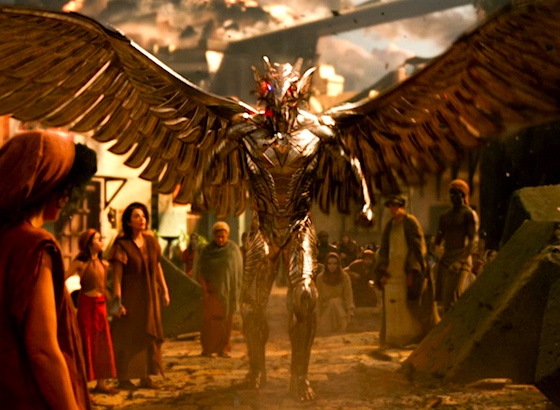
    If you remember Gods of Egypt, it’s likely because it was excoriated on its release back in 2016.* Many were predisposed to hate it before it even came out thanks to its whitewashed cast: as the title might indicate, it’s set in Ancient Egypt and many of the characters are Egyptian gods, but most of the lead cast are white; and of those that aren’t, none are Egyptian. Even if that didn’t bother you, it was slated for its poor dialogue, flat performances, bland direction, reliance on green screen, and cheap-looking CGI. Oh dear. But every film is for someone and there’s someone for every film, and it turns out I’m one of the few (the very, very few) who actually rather enjoyed Gods of Egypt.

    Based more on legend than any relation to history whatsoever (in one rather stunning sequence, we see that the world is, in fact, flat), it’s set in a time when super-powered gods walked the Earth among humans. Well, less “among”, more “ruling over”. A squabble between the gods sees nasty-piece-of-work Set (Gerard Butler) steal both the throne and eyes of heir-apparent Horus (Nikolaj Coster-Waldau), before going on to steal the abilities of other gods to make himself more powerful. Human thief Bek (Brenton Thwaites — between this and Pirates 5, dude must’ve thought he was gonna be a star… ’til they came out) doesn’t care for the gods, but he wants to free the love of his life (Courtney Eaton and her cleavage — I don’t want to be lecherous, but seriously, her costumes are all boobs, boobs, boobs), and the only way to do it involves stealing back one of Horus’ eyes and using it to persuade the god to take on Set.

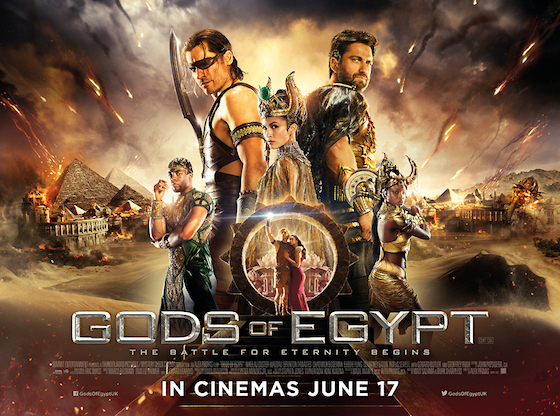
    Gods and men

    And that’s the part of the plot that’s kinda reasonable. No, really: it gets a whole lot madder as it goes on. In fact, everything about it is so consistently batshit crazy — the concepts, the plot, the visuals — that it wins you over with its utter barminess. Or maybe it won’t win you over. Maybe you’ll think all those things make it utterly awful. As I said at the start, you certainly wouldn’t be alone. But the “you couldn’t make it up (except someone did)” mentalness of it will win over a certain kind of viewer. A viewer like me.

    I’m not really going to deny any of those criticisms I cited in the opening paragraph, because it is kind of a terrible film… but if you embrace it, it’s also campy fun. It’s a film where the men are burly, the women are breasty, and the CGI is blurry, but there’s a certain irreverence that stops it from being stodgy, and a light-hearted tone to the dialogue that occasionally hits home. For all the whizzy video game-ish visuals, it’s an old-fashioned adventure quest at heart, capable of pulling off the occasional thrilling sequence or amusing verbal exchange.

    All of that said, one does have to wonder how director Alex Proyas ended up here. If you don’t recognise the name, he was once known for visionary noir-ish filmmaking in the likes of The Crow and Dark City. At some point he wound up sidelined into less invigorating fare, like Will Smith vehicle I, Robot and Nic Cage vehicle Knowing, but while neither were groundbreaking they had a certain something (and, personally, I quite liked them both). Here, though, the direction is so… uninspired. Anyone competent could’ve made it. And people say filmmaking is collaborative and directors don’t deserve all the credit, but bear this in mind: Gods of Egypt and critically-beloved Oscar winner Mad Max: Fury Road share 295 cast & crew members.

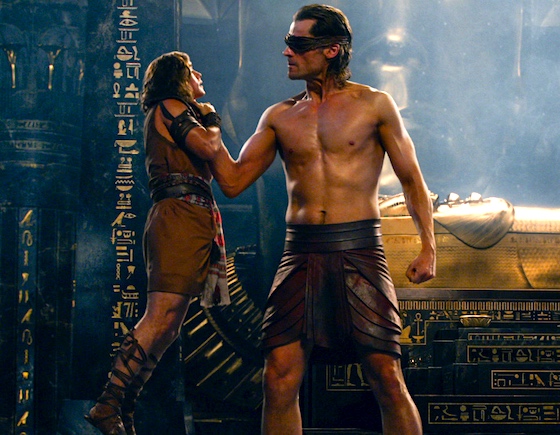
    Robot god... on a budget

    I don’t know who deserves credit for the film’s 3D, but it’s consistently excellent and occasionally spectacular. That’s the benefit of almost all the film being created in a computer, I guess. But still, the colourful visuals and wide-open locales really help with the effect — what looked gaudy and ludicrous in 2D trailers… still pretty much is, let’s be honest. But it’s less bad when it’s doing so much to help create an epic-scaled dimensionality.

    I know I should hate this silly, cheap-looking, over-CGI’d, whitewashed hot mess… but I actually thought it was a lot of daft, campy fun. There are plenty of very good movies that I’ll likely never get round to watching again — probably some great ones, even — but I’d wager Gods of Egypt is going to end up in my Blu-ray collection someday. In 3D, of course.

    3 out of 5

    The UK network premiere of Gods of Egypt is on Channel 4 tonight at 9pm.

    * I was going to say “summer 2016”, but that wouldn’t be entirely correct: weirdly, although it was a February/March release in much of the world, it somehow got given summer status in the UK and Ireland (and, er, Spain…?) ^

    The Post (2017)

    2018 #125
    Steven Spielberg | 116 mins | Blu-ray | 1.85:1 | USA & UK / English | 12 / PG-13

    The Post

    Perhaps the timeliest historical movie ever made, The Post is, in its plot, about the publication of the ‘Pentagon Papers’, a leaked report that examined decades of US government decisions about the Vietnam war; but, thematically, it’s about press oversight of a government lying to its people to cover up their own wrongdoing, including trying to forcibly stop the press from performing that role — sounds familiar, doesn’t it? Not to mention that it also concerns itself with matters like whether sources who leak classified information are whistleblowers or traitors, and attitudes towards women in positions of power in the workplace.

    For various reasons related to these elements, it’s attracted a lot of comparisons and accusations. For example, some have criticised it for being about a case in the ’70s rather than one in the present day. I guess allegory is tricky for some people to understand… Or, alternatively, that any such parallels were accidental, as if experienced director Steven Spielberg wasn’t aware of them. I think the film went from script to screen in just nine months for a reason…

    Then there’s the inevitable comparison to Spotlight, another recent newspaper journalism-themed true-story movie, and a Best Picture winner to boot. Those who thought Spotlight was exceptional tend to think The Post doesn’t measure up. Personally, I thought Spotlight was good, but I didn’t love it as much as some others. I would hesitate to say The Post is better than it, but I would be equally as hesitant to say it isn’t as good. Arguably Spotlight is a better movie about journalism, focusing as it does on the everyday legwork and procedure that go into putting together a major story, whereas The Post has more on its mind than just the facts of how reporting works. There are also many comparisons to All the President’s Men, but I’ve still not seen that so can’t comment fairly (there is this rather excellent trivia/connection, though).

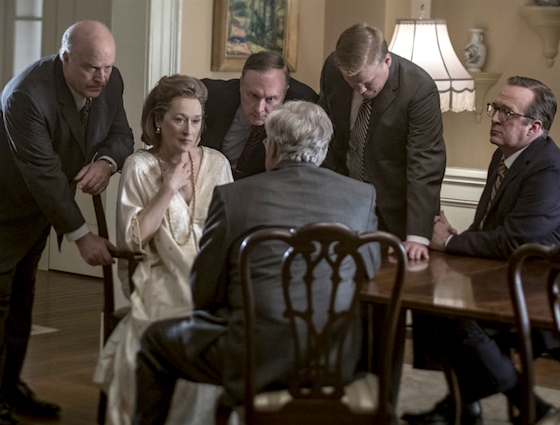
    Reading the papers

    Relatedly, some people think this film should’ve been about the New York Times, as they were the paper that first broke the Pentagon Papers story and initiated the legal case it all led to (and, later, they were the only paper awarded a Pulitzer Prize for the publication). There’s certainly an argument for that being the real story, but, conversely, that would be to assume the focus of this movie is solely the publication of the Pentagon Papers. In fact, The Post is the story of Katharine Graham and the Washington Post, and how the Pentagon Papers changed them both. It’s the story of an underdog-like local paper making an (inter)national mark by doing something at odds with a legal ruling — the fact they chose to back-up the Times by publishing too (even if the action was instigated as much by friendly rivalry/jealousy as it was by “freedom of the press” ethics) is an important point in itself.

    It’s also the story of a woman — a business owner at a time when women didn’t hold such roles; and not a woman who confidently elbowed her way in either, but one who found this position thrust upon her — going from meek and overpowered to confident in her own mind and running the show. I’ve read reviews that think this latter element is somehow forced on the film, as if the makers didn’t notice it until halfway through and only decided to draw it out when they reached a shot near the end where Streep walks past a crowd of other women with admiring expressions. That’s not the case, obviously — that’s simply not how movies are made — and that arc is clearly in mind from the very first scene where we meet Graham. Meryl Streep is excellent in the role, which is easily the film’s most fully-realised character. Everyone else is certain of themselves and what they believe is the right thing to do, but over the course of the film she goes from quiet, uncertain, and reliant on her trusted advisor, to believing in her own instincts and standing up for them. It’s a clearly-charted but believable journey.

    A man's world

    Nonetheless, it’s somewhat hard to divorce The Post from the context of when it was made — the way it reflects the current climate in American politics and the news coverage thereof. But then, is that a problem? Are works of art not as much about the time in which they were made as the time in which they’re set? I guess that’s a whole other debate. That said, it carries a message that would be important in any era, about the need for reasoned, responsible, independent oversight of those who govern us.

    4 out of 5

    The Post is available on Amazon Prime Video UK from today.

    All the Money in the World (2017)

    2018 #121
    Ridley Scott | 133 mins | streaming (HD) | 2.39:1 | USA, Italy & UK / English, Italian & Arabic | 15 / R

    All the Money in the World

    All the Money in the World does not star Kevin Spacey. But I expect you knew that. Indeed, if you only know one thing about the film, I expect that is what you know. Spacey’s firing, and his speedy replacement by Christopher Plummer, was such a big news story that it instantly became what the movie was most famous for — and, I suspect, is what it will always be most famous for, because the film itself isn’t good enough to transcend its own reputation.

    Before I get into that, let’s do the film the courtesy of describing what it’s actually about. Based on true events, it tells the story of the kidnapping of teenager John Paul Getty III (Charlie Plummer, no relation) in 1973 thanks to his family ties: his grandfather, J. Paul Getty (Christopher Plummer), was the richest man in the world. He was also a miserly old codger who refused to pay his grandson’s ransom, and the film follows his daughter-in-law Gail (Michelle Williams) as she desperately tries to arrange to get her son back, aided by the employee Getty assigns to investigate the case, former CIA operative Fletcher Chase (Mark Wahlberg).

    Even before the point of contention that drives the plot, various examples are given of what a piece of work Getty was. Whether these are based on true stories or not, I don’t know, but the film seems almost heavy-handed in creating this impression. For instance, although he’s the world’s first billionaire, he’ll do his own laundry in his hotel bath rather than pay the hotel $10 to do it for him; or he’ll spend an hour haggling a poor beggar down from $19 to $11 for an item that’s actually worth $1.2 million — although it later turns out there’s another side to that story… not that the it paints Getty in any better a light. Anyway, it’s to Plummer’s credit that he can take this kind of material and make it work, especially considering it was captured in just nine days of shooting with very little prep time.

    Can you put a value on a child's life? J. Paul Getty can.

    When those reshoots were first reported, it was said to be possible because Getty wasn’t actually in the film much, so it wouldn’t take long to remount just his scenes. Then the film started screening, and critics said he was in a lot of the movie and the amount they must’ve reshot was phenomenal in such a short space of time. Personally, I think the truth is somewhere in between: Getty pops up throughout the film, and his presence is huge, but I’d wager his actual screen time is smaller than you’d think — similar to Anthony Hopkins in Silence of the Lambs, who notoriously won Best Actor from less than 25 minutes on screen, it feels like Plummer’s in it more than he actually is. That’s partly the film’s structure, but also the quality of his performance.

    In discussing the reshoots, director Ridley Scott has commented on the differences between the two actors’ takes on the character (Plummer wasn’t shown any of Spacey’s performance before he filmed). According to IMDb, Scott felt Spacey portrayed Getty as “a more explicitly cold and unfeeling character”, while Plummer found “a warmer side to the billionaire, but the same unflinching refusal to simply pay off his son’s kidnappers.” I can’t help reading between the lines to infer that Scott felt Plummer’s performance was more nuanced, and therefore better. It beggars belief that Spacey was cast at all, really: Scott wanted Plummer, who was 88, to play the 80-year-old Getty, but the studio insisted on 58-year-old Spacey, who then had to be caked in prosthetics. Supposedly it’s because Spacey was a bigger name, but that much bigger? Really?

    Anyway, it turned out for the best, because Plummer is probably the strongest element of the finished product. Although Michelle Williams is top-notch as ever, too. Mark Wahlberg has been worse than this, but he still seems slightly miscast. Ridley Scott, also, is not on top form, his direction merely unremarkable. Oh, it looks nice enough — it’s well done — but there’s little beyond glossy competence.

    Negotiations

    Arguably its biggest sin is that, for a movie about a high-stakes kidnapping, it’s remarkably free of tension. The closest is the climactic manhunt around a village at nighttime (an event which is an entirely fictional invention, incidentally), but even that doesn’t seem to ring all that’s possible out of proceedings. The blurb sells the film as a “race against time”, but it’s almost the opposite of that: the kidnappers hold the kid for literally months while the Gettys bicker. But maybe Scott wasn’t going for thrills? There’s definitely a thematic thing in there about wealth and power and what it does to people, and what that represents versus the importance of family or morals. But I’m not sure those issues are really brought out or explored either.

    It leaves the film feeling not tense and on-edge enough to be a thriller, nor thoughtful and considered enough to be a message-driven drama. The real-life story behind the film is a compelling hook and definitely sounds like it’d make a great movie, but the conversion process has perhaps not done it justice. Maybe someone else should have a crack at it…

    3 out of 5

    Trust, a miniseries from Danny Boyle and Simon Beaufoy retelling the same events, begins its UK airing on BBC Two tonight at 10pm.

    The Tree of Life (2011)

    2018 #192
    Terrence Malick | 139 mins | Blu-ray | 1.85:1 | USA / English | 12 / PG-13

    The Tree of Life

    Writer-director Terrence Malick made just five films in the first 38 years of his directorial career, this being the fifth. In the seven years since it came out, he’s made five more. Why the long gaps before, or the sudden increase now? Who knows — Malick is notoriously interview-shy. But the answer may indeed lie with this film, sitting as it does at the fulcrum of his career. It was a project Malick had on his mind for decades (he shot material for it as far back as the ’70s), which for various reasons — primarily funding and technology, I think — it took him until this decade to achieve. Many think it was worth the wait: lots of people love it, including the Cannes jury, who awarded it the Palme d’Or. Many others… don’t: plenty of people regard it as pretentious, or at least too abstruse to care about. It’s a film that, I think, can only elicit an entirely personal reaction. So here’s mine.

    The Tree of Life is about… um… oh dear, we’ve hit a snag already. Well, once it settles down (which takes the best part of an hour), what it’s literally about is a family living in Waco, Texas, in the 1950s — dad (Brad Pitt), mom (Jessica Chastain), and their three sons, Jack (Hunter McCracken), R.L. (Laramie Eppler), and Steve (Tye Sheridan). The kids play around doing the kind of thing young lads did in the ’50s — running around in the woods, swimming in rivers, throwing stones through windows, murdering frogs — while being torn between the influences of their parents: their kind, gentle, caring mother, and their strict, authoritative, borderline abusive (or just straight abusive?) father.

    But the film also occasionally shows us Sean Penn as grown-up Jack, working some high-level job in a present-day city. And it also shows us an extended sequence about the birth of the universe and the evolution of life on Earth. And that’s to say nothing of the epilogue… Or, indeed, the prologue, which introduces a massive event in the family’s life that is then, arguably, unreferenced by the rest of the movie.

    So… yeah.

    Pondering or ponderous?

    Much of The Tree of Life is more like visual poetry than a traditional narrative film. Beautiful images glide before our eyes, some with obvious meaning, others less so. Some of the images resonate or rhyme with each other, urging us to infer our own interpretation of what we’re seeing, and why, and what it signifies. This is mostly true of the opening chunk — which lasts a good 45 to 60 minutes — and the ending. In between, more of a narrative is discernible — the stuff about the young family — although it’s constructed in a poetic fashion, with minimal dialogue, lots of vignettes, fragments of day-to-day life that don’t necessarily have an immediate significance.

    To me, it felt like we were watching someone’s dreams or memories, presented as we really remember things: random fragments from our lives. If you think about your memories of childhood, they don’t take the form of a neat narrative in concise scenes with all the important landmarks accounted for. We do remember big events, of course, but also many small things; and some things we remember extensively, but others only fragmentarily. If you could view a person’s memories, they’d create, not a biopic, but an impressionistic collage or our lives — and this film is that, I think.

    But that can still leave the viewer to question what it’s all about, especially given the extended sequence of space gases, forming planets, burgeoning microscopic lifeforms, and dinosaurs. Yes, in arguably the film’s most baffling sequence (there are many contenders), we see an event in the life of some dinosaurs. Actually, I say it’s the most baffling, but only if you stick to the film itself: of all the confusing things herein, that’s the one with the most concrete explanation, thanks to visual effects supervisor Michael L. Fink having a little chat with critic Jim Emerson about Malick’s intentions for the scene. Not everyone likes firm answers to this kind of stuff, so I’ll just link to where you can read it if you want to.

    Motherly love

    That said, some of the stuff I’ve already mentioned in passing I only know definitively thanks to extra-textual sources. Well, if you count the film’s end credits as extra-textual, which I suppose they’re not. But it’s only thanks to those that I know for certain which of the boys Penn was supposed to be, or that the creation-of-the-universe stuff is indeed meant to be that (based on genuine science, donchaknow), and that these scenes show us the “astrophysical realm”, because there are effects credits for that. And more still can be learnt from, of all places, the Blu-ray’s chapter menu: the long creation sequence is indeed called “creation”, in case you weren’t sure. The ending is “eternity”, followed by “was it a dream?” Others include “grief”, “innocence”, “mother”, “father”, “I do what I hate” — all showing us the way towards important themes… maybe. Or perhaps they’re just convenient chapter points…

    Praise for the film’s imagery is due not only to Malick, but also cinematographer Emmanuel “Chivo” Lubezki. And it’s not even the guy’s best work — I’d argue for consistent beauty he’s surpassed it with some of the stunning, Oscar-winning stuff he’s done since — but you can see how he got from here to there: the very best shots in The Tree of Life are kind of what he does all the time in films like The Revenant. As for constructing those images into a meaningful flow, I’m never sure how much is down to an editor’s own creativity and how much is them operating machinery under the director’s instruction — I guess, like most things in the movies, it’s a collaborative mix of both. Anyway, the film has five credited editors — Hank Corwin, Jay Rabinowitz, Daniel Rezende, Billy Weber, and Mark Yoshikawa — who I’m sure must’ve been vital to the process. (Relatedly, here’s a fun anecdote from IMDb: “an Italian cinema showed the film for a week with the first two reels switched. Even though the film starts with production logos, no one in the theater noticed and thought it was all part of Terrence Malick’s ‘crazy editing style’.”)

    Creation

    There’s a lot of really great music and sound design as well — something Malick clearly considered important to a Lynchian degree, given that before the film plays the Blu-ray flashes up a notice advising you to “play it loud”. Alexandre Desplat is credited for the music, but a very, very long list of sourced tracks too hints at what actually happened: most of his music went unused in the final cut, with only a few minutes making it in. I imagine that feels quite unedifying, to have your work sidelined; but maybe it’s better than being ditched entirely in favour of a new score, as has happened to plenty of other composers in the past.

    It’s easy to get hung up on all this filmmaking when thinking about The Tree of Life, because that’s where its own focus seems to be, as opposed to the usual things a reviewer might think to discuss first, like the screenplay or performances. But there are still actors here, and good ones at that. The movie is really centred around Hunter McCracken, and he’s very good. The casting directors saw thousands of Texan school kids while trying to cast the boys, and the effort paid off; though McCracken hasn’t done anything else since, so maybe not for him personally. The other two brothers don’t have so much to do; in fact, I kept almost forgetting one of the trio existed, so little is he on screen or relevant to events. Ironically, he’s the only one of the three who’s gone on to have a career: it’s Tye Sheridan, most recently seen as the lead in Ready Player One.

    As for the adults, Sean Penn is one of the many lead actors in a Malick film whose performances have wound up on the cutting room floor. According to Lubezki, there’s enough deleted footage to make a whole movie focused on Penn’s character. Yep, sounds like Malick! Obviously such a movie would be completely different to this one, but I’d be curious to see it. More screen time is devoted to Jessica Chastain and Brad Pitt, who both achieve a lot with comparatively little. Chastain is the focus early on, but it later becomes apparent that Pitt has a showier role, in a way, because of his character’s arc. There’s a pullquote on the back of the UK Blu-ray that calls it “the strongest performance of his career”, but considering his performances in the likes of Se7en and The Assassination of Jesse James, or that he’s been Oscar-nominated for his turns in Twelve Monkeys, Benjamin Button, and Moneyball, I thought that was a bit of an outlandish claim to make. To each their own, though.

    Affection or headlock?

    Anyhow, all this is “technical” stuff quite apart from what The Tree of Life is really about. Not that I’m totally clear on what that is, still. I guess maybe it’s there for us to infer what we like from it, be that religious, scientific, humanistic, or, for many a viewer, just boredom. Whether you love it or hate it — and there are certainly plenty of perfectly reasonable people at both extremes — it’s definitely an Experience; one every person who considers themselves serious about film appreciation needs to have.

    4 out of 5

    A new edition of The Tree of Life, which includes a different cut that’s 50 minutes longer (but, intriguingly, is not an extended cut), is released by Criterion in the US tomorrow and in the UK on November 19th.

    The Disaster Artist (2017)

    2018 #82
    James Franco | 99 mins | streaming (HD) | 2.39:1 | USA / English | 15 / R

    The Disaster Artist

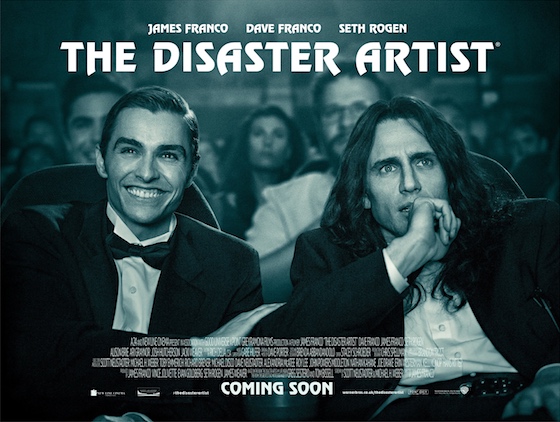
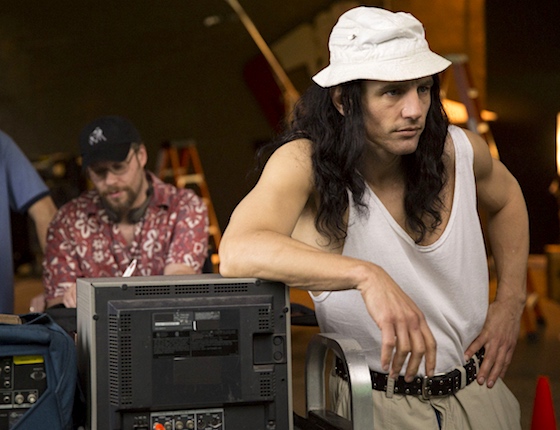
    James Franco’s 18th feature as director* is the story of the making of The Room, the cult favourite “Citizen Kane of bad movies”. Franco also stars as the bizarre Tommy Wiseau, a figure of mysterious background who one day decides to make a movie, funded out of his own inexplicably wealthy pocket. Along for the ride is Greg (Dave Franco), a wannabe actor who befriends Tommy at acting class before inspiring Wiseau’s divergence into auteurism. So unfurls a crazy tale of ultra-independent moviemaking by someone who doesn’t seem to know how to be human properly, never mind produce a movie. By which I mean Wiseau, not Franco.

    Franco and friends (the lead cast includes his brother, his brother’s wife, and his best mate) seem to be having a jolly old time recreating their favourite bad movie, and they’re certainly not above patting themselves on the back for how well they’ve done it (there’s a self-congratulatory “look what a good job we did recreating the film!” montage at the end that lowered my opinion of the film somewhat. By all means put that as a Blu-ray special feature, but putting it in the film itself feels boastful). Of course, for aficionados of The Room such dedication pays off: there are lots of fun references — not just the obvious stuff (the recreation of actual scenes), but scattered lines and nods throughout the movie.

    For those of us uninitiated, The Disaster Artist provides mixed results. For example, the sequence about the shooting of the famous “Oh hi Mark” line, which played so well as the teaser trailer, is more long-winded in the final film (unsurprisingly), but consequently it doesn’t work as well — it’s lacking the conciseness of the trailer, which emphasised the ludicrousness of the process and therefore made it funny. But, hey, if you haven’t seen the trailer…

    Artists at work

    Where the film manages to surprise is that it kind of has something serious to say. Obviously it’s funny — the premise, the very fact of Wiseau’s existence, inherently calls for that — but around the laughs it wants to comment on the worthiness of dedication to artistic endeavour. Wiseau may be a weird guy who made a terrible movie, but he still made that movie — when Hollywood rejected him, he had the dedication to write and produce his own film, following his own vision. His weird, terrible vision. It’s little surprise that Franco — the guy who’s somehow made 20 feature films (including another two since this came out less than a year ago, with three more beyond that completed or in post) — should be on board with that as a worthwhile achievement.

    The trailers mismanaged my expectations for The Disaster Artist. They promised more hilarity than the film delivers — it’s played a little straighter than you might assume, especially given the people involved. But while it’s not consistently funny enough to land as a pure comedy, it’s also not quite heartfelt and meaningful enough to sing as a drama. It’s good, but I felt like it could’ve been better.

    3 out of 5

    The Disaster Artist is available on Sky Cinema from today.

    * That’s not a typo — James Franco has directed 17 other movies that you’ve probably never heard about. And now you’re probably wondering, “how can someone as famous as James Franco have directed 17 movies without me ever hearing about it?” I know, because I’ve been there. ^

    My Life as a Courgette (2016)

    aka Ma vie de Courgette / My Life as a Zucchini

    2018 #3
    Claude Barras | 66 mins | streaming (HD) | 1.85:1 | France & Switzerland / English | PG / PG-13

    My Life as a Courgette

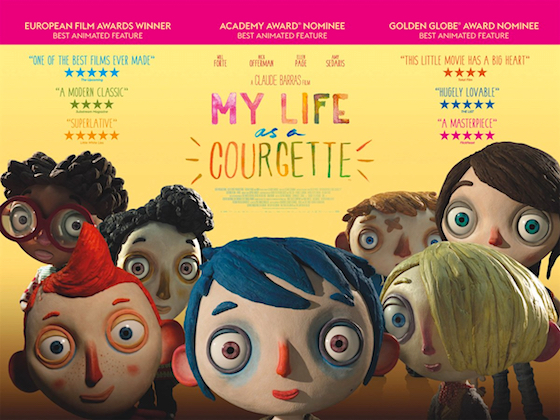
    My Life as a Courgette (or, to use the American name for the vegetable, Zucchini) is the story of young lad Icare — who prefers to be called “Courgette”, his mother’s nickname for him — and his life after he is taken into an orphanage. If you’ve heard of it, it’s most likely because it was nominated for Best Animated Feature at the 2017 Oscars.

    It’s adapted from the novel Autobiographie d’une Courgette by Gilles Paris, which was apparently a realistic portrayal of the lives of orphans in France. As you can see, the film takes a more cartoonish style, at least on the surface. In fact, the whimsical production design belies the very serious nature of the story — it’s not as monumentally grim as it could be, given the subject matter, but it doesn’t shy away from some very dark areas. It handles these with an understated, calm maturity that is both befitting and refreshing. The animation itself is equally sophisticated, with innumerable little touches that add finesse and richness to the work.

    Orphaned

    I watched the English dubbed version, because Amazon Prime gave me no choice (the original French version is available on Amazon Video, but for some reason not also included with Prime). Fortunately, despite having a US voice cast, they stuck with “Courgette”, meaning there’s no constant annoyance of the main character being called the wrong thing. (I do wonder, though: did they have to record it all twice, or did the American release rename the film My Life as a Zucchini but then call the kid Courgette anyway?) Fortunately, the dubbing wasn’t at all bad. Of particular note is Nick Offerman, giving a remarkable restrained performance as the gentle and kindly cop Raymond. As for Courgette and his fellow orphans, I don’t know if they cast actual kids or used adult soundalikes, but they also provided uniformly strong voice work.

    My Life as a Courgette is one of those “weird foreign animations” that often manages an Oscar nod but doesn’t stand a snowball’s chance in Hell of winning thanks to the conservativeness of Oscar voters — there’s no way a mature, restrained animation with a quirky visual style is going to beat the latest shiny-CGI fun-time from Pixar or Disney. For those with broader tastes, however, it’s definitely worth a look.

    4 out of 5

    Jack Reacher: Never Go Back (2016)

    2018 #38
    Edward Zwick | 113 mins | streaming (HD) | 2.35:1 | USA & China / English | 12 / PG-13

    Jack Reacher: Never Go Back

    It’d take a braver man than me to name a sequel Never Go Back; doubly so a sequel to a film that garnered an at-best mixed reception; triply so a sequel to an adaptation whose star was vocally and unrelentingly regarded as being terribly miscast by the book’s own fans. But Jack Reacher star — and, more importantly, producer — Tom Cruise is the kind of man who jumps out of planes all day every day for weeks on end merely to capture one relatively minor sequence in a film, so I think we can safely say he’s a much braver man than me.

    For those unfamiliar with the character, Jack Reacher (Tom Cruise) is a former military police officer turned drifter — why he quit and why he hasn’t settled down like a normal person is probably explained somewhere, but I can’t remember. Naturally, as he drifts around the US he keeps finding himself involved in escapades — there wouldn’t be stories worth telling otherwise, would there? In this one, one of Reacher’s friends, Major Susan Turner (Cobie Smulders), is arrested for espionage. Reacher is certain she’s being framed, and his investigations lead to him being set up too. As the pair go on the run to uncover a conspiracy and clear their names, there’s the added complication of having to protect teenager Samantha Dutton (Danika Yarosh), who may be Reacher’s daughter.

    What plays out is a solid plot, smattered with decent action sequences. Frankly, it’s nothing incredible, and you’d have reason to expect more distinctive work from a director of the calibre of Edward Zwick (helmer of well-regarded films like Glory, The Last Samurai, and Blood Diamond), but it’s still a good action-thriller.

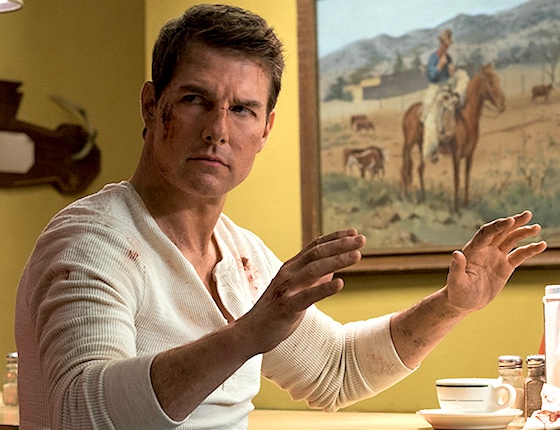
    Cruise in for a bruisin'

    In the title role, Cruise is good. It’s different to his usual routine — the familiar grinning charm is dialled way down, in order to facilitate Reacher’s trademark stoicism — but he’s got a charismatic enough presence that he remains an engaging lead even without it. Smulders and Yarosh also acquit themselves well. Together, the trio make for a neat de facto family. Once they’ve been brought together, the way they move through the narrative as a unit gives the film a different vibe from the “lone hero” thing you’d expect. Unfortunately, the bad guys are as bland as anything. It lacks even one really good villain, which is an especially noticeable problem after the first film had Werner bleedin’ Herzog to chew up the scenery.

    The title Never Go Back became a truism for some observers, because the film was not a success, either with critics (38% on Rotten Tomatoes) or at the box office (just $58.7 million in the US, though it drummed up a solid $162 million worldwide). Part of that is Reacher fans’ enduring dislike for Cruise’s casting. When they were bemoaning it before the first film’s release, I thought it was probably a storm in a teacup; that they’d get used to him over time. I mean, their sole objection seemed to be that he was too short, and how important was that, really? Incredibly important, apparently, because six years and two films later they still really, really hate him in the role. (Personally, I think him being a bit of a short-arse suits the characterisation better. Reacher seems to be a guy who gets underestimated; you don’t underestimate someone who walks in with the bulk of, say, Arnie. But then I’ve never read the books, so I may be wrong about this somehow.)

    A woman's place is in the kitchen

    Fans are one thing, but what put wider audiences off? Maybe it was just the poor reviews. Producer Christopher McQuarrie (who directed the first one, but was too busy on Mission: Impossible to return for the sequel) thinks one problem was they adapted the wrong book. I believe I saw him talk about this on Twitter, which means his comments can’t be referenced (because his tweets self-destruct), but if I remember correctly he didn’t say it was a bad novel, just that it didn’t work when placed as the second in the series. He speculated that more films were needed to establish Reacher’s character and world before they told this particular story. I tend to agree. For one thing, the film has to resort to an early montage to show Reacher and Turner’s friendship growing, which could’ve been more naturally handled by spreading it over a film or two. I think the possibility of Reacher having a kid would also carry greater weight if we were more familiar with the character from multiple adventures.

    Well, it’s all academic now, given the film series is most likely over: just this week, creator Lee Child announced he intends to take the rights to TV, primarily to cast a more faithful actor after those continuing complaints about Cruise. It’ll be interesting to see if it really does make a difference having a taller actor in the role. Somehow, I suspect not. Child also said he’s aiming for the mooted series to adapt one book per 10-12 episode season. Considering he’s written 22 books already, I wonder if he believes they’ll ever get through them all…

    “Sorry son, you just don't measure up.”

    Hopefully whatever they do works, because I’ve enjoyed these Reacher films so far. Never Go Back may not be all it could be, but it’s not so poor as to merit abandoning the film series entirely — it’s above average rather than exceptional (my score errs on the harsh side, in part to differentiate it from the superior first movie). It’d be a shame to see the films tossed aside for something lesser.

    3 out of 5

    The UK TV premiere of Jack Reacher: Never Go Back is on Channel 4 tonight at 9pm. It’s also available on Netflix UK as of yesterday.