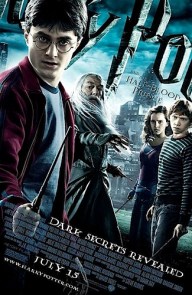
Harry Potter and the Half-Blood Prince (2009)

2009 #84
David Yates | 153 mins | Blu-ray | 12 / PG

Harry Potter and the Half-Blood PrinceBy this point I imagine everyone has a pretty clear idea what they think of Harry Potter, and this latest film certainly isn’t going to change that. That’s not to say it’s bad — in fact, it’s rather good — but Harry Potter is what it is, and nothing’s going to change that, least of all these thoroughly faithful adaptations.

This particular entry is well adapted from its huge source. I remember the novel as being somewhat turgid, a 600-page slab of flashbacks and exposition provided so one could understand the events of Deathly Hallows (for the uninitiated, that’s the final book, arriving as two films in 2010 and 2011). Thankfully, returning screenwriter Steve Kloves (who has adapted every Potter bar the previous one) and director David Yates liven it up considerably.

Adapting a 600-plus-page book is always a gargantuan task, something the Potter series has struggled with before (at times, Order of the Phoenix felt like an hour-long highlights montage), but Kloves manages to keep the thrust of the dark primary plot while peppering it with humour- and romance-based asides. (Calling it ‘romance’ may be a little generous — ‘teenage snogfest’ seems to be the preferred term by critics. And it is that, really. But ‘snog’ is such an ugly word, so I shall stick to ‘romance’.) The film could have been all Dark and Grim — and people doubtless expected, and probably would have accepted, that — but the sizable amounts of humour and romance keep the tone more appropriate to the series’ kid-centred roots, as well as adding light to the shade in a way that should please everyone. The titular Prince, however, is barely a subplot, but that’s a flaw of the novel rather than Kloves’ work.

Yates pitches the humour right, though the romance is occasionally overbearing for my taste, but the action sequences are well handled. Unfortunately, while entertaining in their own right, the majority are an aside to the main plot, which is perhaps where the two-and-a-half-hour running time comes from. The return of Quidditch is welcome to some fans, but would surely have been dropped without the fan pressure. That said, it feeds into both the Luck potion and romantic subplots, as well as providing its own doses of humour and action. Still, it’s a missed opportunity to further establish the character of Katie Bell, who has a moderately significant part to play a bit later on.

Worse is the opening bridge attack, which feels fairly pointless. Again, in itself it’s a dramatic event, expanded from a passing reference in the novel, but it bears little relation to the rest of the plot. In the novel it has a point — the wizarding world is finally impacting on the normal one — but that thread remains unexplored by the rest of the film, rendering the opening a visually exciting but empty sequence.

The still-young cast are intermittently believable. Rupert Grint still has a talent for comedy — enough to fulfill his role here, anyway — while Tom Felton is finally treated to a decent part as Draco. Formerly just an irritating bully, here he has a larger and more complex part to play, allowing Felton room to become one of the few child actors who can still live up to their part now. The adults are excellent as ever, particularly Jim Broadbent in a guest-star-level part and, naturally, Alan Rickman, who remains underused but may yet be treated to some material worthy of his talents in the final films. Additionally, Julie Walters conveys more with one expression in her brief cameo than some actresses can manage with half a dozen scenes.

With numerous plot elements left brazenly gaping ready for the next instalment (just as in the novel, of course) — including at least one thrown into the mix in the closing seconds — and Yates’ promise of an ‘urban thriller’ style for at least Part I (a genre he mastered in the outstanding State of Play), the two-part Deathly Hallows is a relatively tantalising prospect. Just eleven months to go…

4 out of 5

Avatar [3D] (2009)

2009 #89
James Cameron | 162 mins | cinema | 12A / PG-13

AvatarAvatar is The Film That Changed Cinema. The past tense can safely be used, despite the film only having been out a couple of days — it doesn’t matter if we like it, filmmakers and Hollywood executives have decided it’s the artistic and commercial way forward, and so it shall be. It barely even matters if people actually go to see it; not that it’s in much danger of flopping, coming in the wake of years of extreme hype and numerous sycophantic reviews.

What’s almost more irritating than that, however, is that it’s actually quite good. Flawed, unquestionably, and probably undeserving of the volume of advance praise heaped upon it, but far from a disaster.

It’s too long, for one thing. The end of Act Two feels like the end of the film… until it insists on going on for goodness-knows how long (my watch stopped working, I couldn’t check). It might not be so bad if it didn’t take its time getting to this point. Swathes of it feel like a dramatised nature documentary, only this time it’s about a fictional alien world. Talk of Cameron having created a fully-realised, living, breathing ecosystem are over-egged: there’s a half dozen creatures, at most, and their only relation is that they have these weird tentacle things in their hair that allow them to connect up to one another, like nature’s own biological USB. Maybe he knows who eats what and when and how and mating rituals and all that jazz, and if he does we should be thankful it’s not plastered all over the screen, but the creature creation/world realisation here isn’t anything beyond Jurassic Park.

The story itself isn’t bad. It certainly has an epic quality, which at least justifies the running time, though it’s a collation of elements from elsewhere. Of course, such things can be said of most stories these days, but with Avatar it seems even more obvious — a bit of Aliens here, a bit of The Matrix Revolutions there, a bit of An Inconvenient Truth for good measure, and so on with countless other recognisable tropes. The sin Cameron commits is that he mostly does it in quite a clichéd manner — it’s not just that you have seen it before, but it feels like you have too. Even the learning-to-fly bit, much praised in some quarters, reminded me of something else: slightly-rubbish TV miniseries Dinotopia, of all things. And don’t get started on the dialogue — “Try not to think of anything. That shouldn’t be too hard for you.” Dear God, how many times have we heard that line?

Towards the end Cameron does pull a few things out of the bag, mainly involving who gets killed and who doesn’t. Mostly, the story is a framework to allow the visual spectacle and an ecological/anti-war message. It’s as subtle as a nine-foot-tall blue alien. From crystal clear uses of familiar phrases like “shock and awe” and “hearts and minds”, to unconcealed references to our dying planet, Cameron attempts to criticise both American military tactics (invade, crush the locals…) and the destruction of the planet (…take all the natural resources for ourselves, no matter what the cost). It’s not that the message is wrong, it’s just that Al Gore did it with greater subtlety in a 90-minute lecture on that specific subject. From the outset, the military — specifically marines, of course — are quite clearly The Bad Guys Here, which is a refreshing change from the man who brought us Aliens. Quite what the American public are/will make of this outright criticism of both its military and energy consumption remains to be seen.

All this is realised through unrelenting CGI. It’s very good, but here Avatar falls victim to its own hype once again, because it’s still not 100% perfect. Perhaps it’s the closest yet seen — it certainly remains consistent throughout — but nothing had me wondering if they’d perhaps used prosthetics in addition to the CGI, as Davy Jones did at several points during Dead Man’s Chest, and I remain convinced that wonderful modelwork, as seen in the likes of Lord of the Rings, is still an unbeatable tool for creating convincing environments. Some will argue that we remain unconvinced of the alien creatures’ authenticity because we know they can’t be real, but some occasionally exhibit the plasticky shine of CGI or the jerky movement of motion capture. The Na’vi are certainly a step up from Robert Zemeckis’ dead-eyed humans in The Polar Express or Beowulf, but are they that much better than Gollum? Or even Jar Jar Binks? (In terms of the competency of the effects, I hasten to add.)

It’s hard to resist flaw-spotting with Avatar after reading so many praise-filled reviews. At the risk of sounding like one of those irritating people who sits at their keyboard declaring “ah-ha, I’ve realised something all you professional reviewers weren’t clever enough to see!”, I think this is in part due to the final act. Avatar has a stonking finale, from a huge Apocalypse Now-styled 9/11-echoing moment of destruction, to a thrilling and epic final battle (albeit interrupted by a mass of unwelcome pace-challenging plot). These sequences excel on almost every level, from visual wonder to the odd spot of emotion. And this is what your final impression of the film is, which can banish memories of the crawl through the middle, replete with those niggling flaws. I won’t be surprised if DVD/Blu-ray reviews commonly lose a star, robbed as it will be of the huge screen spectacle and reviewers forced to remember what they had to sit through to reach the big climax.

Oh yes, and Avatar’s meant to be convincing us that 3D is the future, isn’t it? And actually, 3D is quite nice. This is the first time I’ve seen a film in RealD, so I was pleased to discover how perfectly it works. No ghosting that I noticed and minimal discomfort even after such a long film, so from a viewing point of view I was happy with it. It adds depth to the image as well, rather than throwing things in your face — this too was pleasant. As I’ve noted on previous 3D reviews, this depth can bring a scene to life… not in the sense that you believe it’s genuinely happening behind that screen in front of you, but it does liven the images up.

What it doesn’t do is improve the storytelling — but then, what does? Some actors in a black box can convey a story wonderfully — look at Dogville, or any number of theatre productions — you don’t need sets, or costumes, or CGI, or even music or any number of other things we associate with the film experience. You could lump 3D in with these, or you could say it’s even less necessary — sets, costumes, and all evoke a time and place and create a realistic world in a way a black box doesn’t, but what does 3D bring to the table? It’s purely about spectacle, in the same way CGI or helicopter shots or using IMAX usually are. And that’s fine. But directors who’ve expressed an interest in shooting a ‘normal’ domestic drama in the format may be overestimating its import.

But for all the derivative plot, blunt message, cheesy dialogue, thrilling action, spectacular imagery, pretty good CGI and debatable 3D, Avatar may have a greater problem in gaining anything like widespread acceptance. It’s set 145 years in the future, on an alien world with floating mountains and other such fantastical elements, where a significant chunk of the story centres on a group of nine-foot-tall aliens (who fall in love and kiss, much to the loud derision of a group of 13-year-old boys in my screening) in a weird alien jungle with prehistoric-like alien creatures, and semi-scientific religious imagery and plot points that I haven’t even touched on… It’s pretty hard science-fiction, to put it simply. It’s not the accessible historical romance/disaster of Titanic, it’s not the real-world-styled action-based superheroics of The Dark Knight, it’s not an accessible adaptation of a widely-loved book like Lord of the Rings or Harry Potter… One could go on in this vein through all the highest-grossing movies of all time.

Instead, it’s the cover art from a pulp science-fiction/fantasy novel or short story magazine writ large with the budget required to pull it off, and it’s that for almost three hours. For every SF/F-loving sycophant there’ll be a member of the general public who thinks it’s a load of old tosh. The truth is somewhere in between, as ever, but I won’t be surprised if the style of Avatar’s business is closer to Watchmen than Titanic. (I don’t think this is too delusional, incidentally. It will perform more strongly than Watchmen, obviously, because it has that all-important PG-13 certificate in the US and a helluva lot more hype in the mass media. But I remain convinced it won’t manage to be a phenomenon to rival Titanic or The Dark Knight, or The Lord of the Rings, or Harry Potter or Pirates of the Caribbean or Star Wars.)

Avatar is a significant film. Thanks to the hype and importance attached to it, by both Cameron and the industry at large, this can never be taken away from it — even if we’ve heard its story before, seen 3D before, seen effects as good before. I don’t believe The Future Of Film is riding on it as much as some would claim — after all, so convinced are They of its status as a hit that an endless stream of 3D movies heavy on CGI have arrived ahead of it and will continue for years after. In itself, it’s quite entertaining and probably deserves to be seen on the big screen. But, as expected, it’s not the revolution that was promised.
4 out of 5

Blade Runner: The Final Cut (1982/2007)

2009 #58
Ridley Scott | 118 mins | Blu-ray | 15 / R

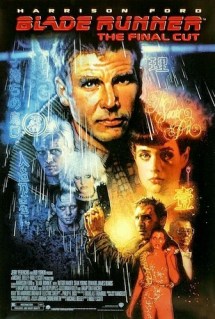
Blade Runner: The Final CutYou don’t need me to tell you about Blade Runner. It’s one of the most popular movies ever, if not with a mass audience then with a significantly-sized cult following and even wider-spread respect. Still, I’m going to go on about it for a bit anyway.
First off let me say that I have seen it before, in the guise of its 1992 Director’s Cut, the only cut available on Home Entertainment/TV since I’ve been old enough to know the film exists, and which is surely to blame for almost every blockbuster getting a Director’s/Extended/Unrated/Ultimate/Complete/etc Cut on DVD these days. Ironic, really, considering it’s a slight misnomer as Ridley Scott wasn’t properly involved with its creation. The Final Cut isn’t fundamentally different to that Director’s Cut, however. Yes, there are an array of editing tweaks and myriad effects fixes, but the meat-and-bones of the story and the content of the scenes — including the removal of the voiceover and the foreshortened ending — remain the same as the Director’s Cut. (If you’re interested in a blow-by-blow account of all the differences between the five cuts now available, try here.)

Normally such minor surface changes wouldn’t warrant a new number on this blog. But this is Blade Runner — or should that be Blade Runner, undeniably one of the most significant films of the last quarter-century thanks to its enduring influence. Yes, it is heavily influenced itself — by the likes of Metropolis and the whole of film noir, primarily — but its dystopian future — all constant night-and-rain, busy streets, neon advertising, canyon-like decrepit skyscrapers towering over dirty streets, high technology rubbing with the everyday detritus of humanity — has been copied everywhere. Without this there’d probably be no Ghost in the Shell, no Dark City, no Matrix, no re-imagined Battlestar Galactica, no thousand other things that have nothing close to the brains but do have the look, the style, the feel. Not to mention Red Dwarf: Back to Earth, of course (he says, as if that has greater significance than the rest!), which sits somewhere between homage and rip-off, surprisingly large chunks of it making almost no sense without at least a passing familiarity with Blade Runner. And the whole thing’s cyclical, because look how The Matrix has gone on to influence countless other lesser efforts. But that discussion is for another time.

In fact, the film can also be seen all over the real world, in what is doubtless the skill of those who predicted its future rather than a genuine influence on Real Life (though you can never be sure). It’s not all true, obviously, but for all the outdated technology (look at the computer displays!) or never-likely technology (flying cars!) there’s an example of the way the world’s headed or already gone. Video phones? Look at Skype, or video inboxes on the iPhone. LA’s skyscrapers, gaudy neon signs, huge video-screen advertisements, rundown areas of the city that are so unrestored they seem to be from decades ago (because they are), the increasingly widespread integration of Eastern culture, photo manipulation available in the home to anyone… it, and more, is all already here, or just around the corner.

But being Surprisingly Accurate does not a popular film make (well, not necessarily), and so of course Blade Runner has a lot more to offer than “ooh, I can do that too!” Putting the future setting aside for a moment, it’s plain to see that the film is as shaped by film noir as by other sci-fi, if not more so. The dark cinematography is perhaps the most obvious area of influence: shafts of light breaking up shadows; imposing cityscapes; constant rain, constant night (with any daytime scenes stuck indoors, often with blinds drawn and/or the light made hazy by smoke). There’s the plot too: it’s packed to bursting with sci-fi concepts underpinned by metaphysical discussions (who is God? what does it mean to be human?), but these are driven by a pure noir narrative, complete with beaten-down reluctant detective (who even loses the final fight), a femme fatale, a questionable moral perspective and a storyline that is predicated on an investigation/manhunt.

That this tale unfurls at a relatively slow pace is surely not to everyone’s taste, but it suits the film’s somewhat intellectual bent. The pacing renders it majestic, stately, both thoughtful and thought-provoking. Even the action sequences tend toward this. This overall languidness frequently allows moments of beauty to leap out, from the visuals, the ideas, the dialogue — Batty’s dying words, for example, are beguiling, elegant and meaningful, mixing the fantastical with an identifiable reality to memorable effect.

The image that most stands out is, appropriately, eyes: the V.K. test, the occasional orange glint in Replicants’ pupils, Batty squeezing out Tyrell’s eyes, the latter’s huge glasses, Pris’ spray-painted eyeliner, Gaff’s odd-looking eyes, and so on. It succinctly reflects the themes of what things seem to be and what they actually are — “seeing is believing”, if you will, although in Blade Runner’s world that clearly isn’t true. The famous photo manipulation scene also feeds into this. One of the great things about the eye motif is that you can’t exactly miss it — the very first thing seen is an extreme close-up of an eye — but it’s obvious not in a batter-you-round-the-head-so-even-the-most-simple-simpleton-will-notice way, but the if-you’re-an-intelligent-viewer-you-shouldn’t-fail-to-spot-it-on-a-repeat-viewing kind of way.

Elsewhere in the filmmaking pantheon, the specials effects are astounding. They look brilliant today, easily besting most of the still-obvious CGI we’re bombarded with. Yes, they’re now aided by some digital clean-up, wire removal and that kind of thing, but the basic models and composites remain untouched and are beautiful. Similarly, Vangelis’ score should by all rights sound dated and discordant, filled as it is with early-80s synths. Fortunately, it has a kind of unusual beauty that matches the visuals it drifts over, complementing as it should rather than providing an uncomfortable reminder of exactly which decade produced the film.

Blade Runner is by any count an incredible piece of work (something the extensive making-of documentary on The Final Cut DVD/BD only emphasises, incidentally). Not everyone will (or does) like it, but I should imagine even they find it hard not to admire (an altogether different thing to “like”). Either way, I think it’s safe to say it can lay claim to a place on the relatively select list of films everyone really must see.

5 out of 5

BBC Two are showing Blade Runner: The Final Cut tonight at 9pm.
Blade Runner: The Final Cut is on BBC Four tonight, 26th September 2013, at 10pm.

I covered the 1992 Director’s Cut as part of my 100 Favourites series, here.

Sky Captain and the World of Tomorrow (2004)

2009 #63
Kerry Conran | 102 mins | TV (HD) | PG / PG

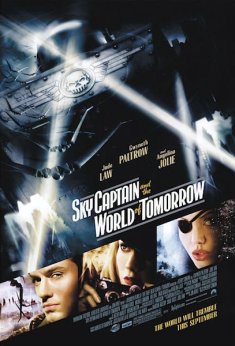
Sky Captain and the World of TomorrowIf the Indiana Jones series was a bit more sci-fi (even than Crystal Skull, that is), it might be rather like this. First time writer-director Kerry Conran evokes ’40s cinema serials more thoroughly than Lucas or Spielberg ever dared with a globe-hopping tale of a mad scientist’s giant robots doing all sorts of damage in a quest for… well, that would spoil the ending.

In the telling, Sky Captain is every inch a Boy’s Own adventure, packing every facet of that genre of storytelling into its brisk running time. There’s secret bases, ray guns, giant robots, flying aircraft carriers, snow-bound Himalayan treks, creature-infested secret jungle islands, huge underground bases, space rockets, planes that are also submarines, tree bridges over impossibly deep gorges… If it’s part of the genre, it’s probably here, and all finally executed with ’00s-level special effects. In some respects it does move between set pieces and locations in an episodic fashion, but then that’s more a trait of the films it emulates — i.e. episodic serials — than a flaw in Conran’s plotting.

Still, some might view Sky Captain as little more than an exercise in filmmaking — it was one of the first movies to be shot entirely on blue-screen, around the same time as Sin City and a couple of others. There’s more to it than that, but it’s also hard to ignore the style this creates. The shooting process is far from perfect if one were trying to recreate real life, but here the whole look is so stylised that it hardly matters. The period setting is nicely evoked, combining myriad influences into an intricately realised retro-future style, coupled with a lovely sepia sheen over everything. It’s beautifully lit, while individual shots and editing are frequently reminiscent of a style from the ’40s (and earlier). Again, Conran is being deliberately evocative of films of the period, rather than a modern film set then; more La Antena than Star Wars.

Another much-discussed feat of technology is the resurrection of Sir Laurence Olivier as the film’s villain. Unfortunately, his brief appearance is underwhelming. Perhaps we’ve become too accustomed to modern technology resurrecting deceased actors for ‘new’ performances (not that it happens that often); but then again, what was done with Oliver Reed for Gladiator — four years before this — seemed more impressive than the small amount of hologram we see here, even though the digitally created shots were equally brief. It’s a shame, because using Olivier for this key role is quite neat, certainly better than casting a glorified extra. In fairness, then, it’s a part so small that very few appropriately-big names would agree to it, which perhaps permisses resurrecting Olivier after all

Among the real performances, the acting is a bit flat. Perhaps this is deliberately in-keeping with the emulated style, though Jude Law is always this bad so maybe not. Similar comments could be made of the screenplay, if one were being unkind. What it does manage is a good amount of humour — an essential part of the genre, as any Indiana Jones fan will tell you, but it’s by no means guaranteed in these over-serious times (thankfully, the likes of Star Trek and Transformers are occasionally breaking down this barrier to fun).

Breaking free of any self-imposed period constraints, Conran also produces a few exciting action sequences, such as a plane chase through the streets of New York. It’s incredibly hard to create spectacle these days, but Sky Captain occasionally manages it. There are also lots of fun little references to other things for the keen viewer to pick out. 1138 crops up, inevitably, but my favourite is some dialogue lifted from Orson Welles’ War of the Worlds.

Sky Captain is a healthy dose of retro-styled fun. Perhaps that makes it an acquired taste, but there’s certainly nothing wrong with that.

4 out of 5

My review of the proof-of-concept short that inspired Sky Captain can be read here.

Shadow of the Vampire (2000)

2009 #56
E. Elias Merhige | 81 mins | TV | 15 / R

Shadow of the Vampire“What if Max Schreck really was a vampire?” is the simple, thoroughly daft, and equally promising, premise of this low-budget horror/drama/comedy.

Having the advantage of such a good concept to kick things off, all starts well, but the longer it runs the more it loses it. Screenwriter Steven A. Katz seems unsure of what Shreck/Orlok actually wants or what the rules governing his existence are, leaving him little more than a threat for the sake of a threat. Still, Willem Dafoe’s performance in the role is brilliant, reveling in the chance to overact — and yet, somehow, subtly overact — as a silent movie vampire. The rest of the cast are fine; in particular, the obsessive and mildly unhinged Murnau seems to suit Malkovich down to the ground. It’s also scary in places, as it should be, because it’s a vampire horror movie that just happens to take the making of another real one as its starting point. Unfortunately, as the plot becomes confusing and ill explained towards the end, so the scares dissipate alongside the viewer’s understanding.

My confusion over the film’s third act may have an external explanation, however. The BBFC list the PAL running time as 88 minutes, but BBC Four’s showing only just hit 81. It certainly felt like there was a chunk missing somewhere in the middle — a slew of characters just disappear and there’s an unexplained leap in the plot — but I can’t think of a reasonable explanation for why or how the BBC would cut seven minutes out of the middle of a film, and the only detailed plot descriptions I can find don’t describe anything I missed.

Nonetheless, even allowing for omissions Katz gives up on any semblance of following the facts toward the end (and throughout, apparently): almost everyone involved is slaughtered, even when they clearly survived in reality, while one character is driven out of his mind, even when he clearly wasn’t… well, presumably. That said, we all know Schreck wasn’t a vampire — his life isn’t nearly mysterious enough to allow for the possibility, should you even believe in such a possibility being possible — so with that leap already taken, why not take as many others as you fancy? Perhaps because it’s not as clever, and not nearly as much fun, as fitting the preposterous tale around the known facts.

Merhige’s direction is occasionally very interesting, such as a couple of grand shots early on, but at other times is perfunctory. To be kind, one might say he goes too far in the aim of replicating silent film style — certainly the intertitles that needlessly replace chunks of the plot are a step beyond. He does manage to create and maintain a weird, unsettling atmosphere, which remains even when all sense disappears.

It’s difficult to accurately assess a film when it appears a good chunk has been lost somewhere in the middle, especially when one suspects some of its major flaws — namely, a lack of coherence at the end — may be due to this omission. On the other hand, I can’t find any evidence that something has been cut, so maybe it just doesn’t make sense? Either way, even on the evidence of what I’ve seen it feels like Shadow of the Vampire takes a good idea, runs well for a while, but winds up uncertain of what to do with it. Though it remains interesting, I won’t be rushing to see any fuller form.

3 out of 5

Transporter 3 (2008)

2009 #27
Olivier Megaton | 100 mins | DVD | 15 / PG-13

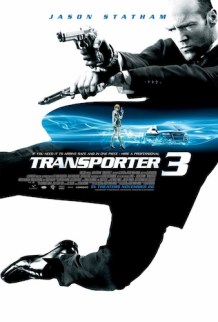
Transporter 3I very much enjoyed the first Transporter film. No, it wasn’t high art, but it did what it did very well — even managing a few outstanding moments — and in a pleasantly efficient running time too. 2005’s sequel kept the latter but sadly lost the former, pushing things too far into the realm of CG-aided silliness. With sequel director Louis Leterrier off bringing some of his much-needed CG silliness to the Hulk franchise, it falls to the amusingly-monikered Olivier Megaton to try to navigate this cars-and-kung-fu series back onto the right road.

Film credits sometimes baffle me. As you may guess, Transporter 3 has a perfect example: “Written by Luc Besson and Robert Mark Kamen. Based on characters created by Luc Besson and Robert Mark Kamen.” I honestly can’t comprehend the need for that second credit. Some may not even comprehend the need for the first one in a film like this, and usually they’d be right. Here, however, Besson and Kamen seem to have decided the presence of writers should be remembered and so stuck in an awful lot of character development. Not only is it not wanted — one of the best things about the first two films was their efficient 80-something minute running times, while this sprawls out to a full hundred — but it’s not very well done either.

Equally, the plot really makes very little sense for much of the film. Worse, when someone eventually explains it, it turns out to be no great shakes, especially as by that point the viewer’s just about pieced it together. I can’t compare it to the first two because, to be honest, I can’t really remember what their plots were, but I don’t remember thinking they were quite so ill conceived. It’s almost a shame, because it isn’t wholly a rehash of the first two — it’s still little more than an excuse to string together some fights and chases, but that doesn’t mean it can’t be different. There’s also a weak villain — never much of a threat, with an attempt at character development that is (of course) misplaced — who’s granted a logic-defying death (albeit with a nice surround sound mix). Overall, the film lacks both the humour and excitement of earlier instalments.

Megaton over-directs and over-edits the action (and a lot else besides) too often — it would be nice to tell what’s going on. Someone also needs to tell him that speeding up footage of two cars racing doesn’t make it more exciting, it just makes it look silly. And he misses apparently-obvious things that would improve sequences. For example, we know Frank’s bracelet flashes between yellow, orange and red as he gets too far away from the car — a conveniently visual warning system — so when someone takes the car and Frank has to run (and cycle) after it to avoid his wrist-bomb going off, we expect a fairly tense chase where the light on Frank’s bracelet-bomb constantly changes colour. But there’s just one half-glimpsed shot of the bracelet in the entire sequence. It’s a glaring omission that robs the setpiece of much of its ingenuity, rendering it a bog-standard chase.

After all the criticism of Transporter 2’s reliance on CGI, most of this sequel features no significant use of it — and that, of course, is a good thing. A car driving at high speed on two wheels between two articulated lorries is just silly if it’s all done with computers; done for real, as it is here, it’s somewhat impressive — exactly as it should be. (By ‘for real’ I mean a real car, real lorries, etc. I’m sure rigs of some kind must’ve been used to actually pull it off.) Unfortunately, after almost an hour and a half of keeping it real, Megaton mucks it all up again by resorting to CGI to pull off the ludicrous climax. Personally, I’d find it pleasantly ludicrous if they’d managed to film a real car doing that stuff on a real train, but the CGI just compounds the silliness.

When a film that exists solely to provide some nice action sequences can’t even do those well, you know you’re in trouble. Transporter 3 should be a mildly diverting piece of action fluff; just a bit of violent fun. I’m not sure if it’s trying to be something more with its added character development, or just generally failing in its primary aims. Either way, it’s still fluffy, but not actually much fun.

2 out of 5

Transformers: Revenge of the Fallen (2009)

2009 #80
Michael Bay | 150 mins | Blu-ray | 12 / PG-13

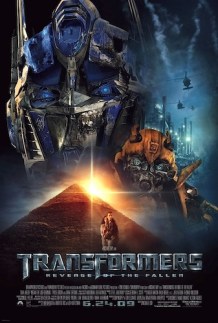
Transformers: Revenge of the FallenIf Transformers was “from the director of The Rock and Bad Boys”, then Revenge of the Fallen is “from the director of Pearl Harbor and Bad Boys II”. If you don’t get what I mean by that… well, let me explain…

The most striking thing about Transformers 2, as it inconveniently isn’t called, is that it’s over-long and indulgent. Has Bay never heard of an edit suite? The writers of a delete key? Anyone of quality control? There are too many ideas, when some should’ve been dropped for clarity and speed; the film could — nay, should — have been seriously trimmed down at every stage of production. By my reckoning, as much as an hour could be lost while still retaining all the best bits of action, humour and plot. Consequently, it’s simply not as much fun as the first film, exacerbating rather than fixing all its flaws and losing most of its charm (it didn’t have the last in spades, but it had enough).

There are good bits though. The humourous scenes highlight this contrast the most: some are genuinely amusing, others simply not, and typically go on too long. All the stuff with Sam at college — why? Especially his mum accidentally eating drugs. Or the jive-talking twins, who’d be this decade’s Jar Jar Binks if only they were as memorable. There are countless other examples — if you’ve read almost any other review you won’t need me to mention the robot balls. When the writers don’t try so hard, however, there are pleasurably funny scenes.

This applies to the action too. Some of it is exciting, but Bay has no genuine concept of rest or pause — sequence after sequence is thrown at the viewer with mind-numbing intensity. There are good beats liberally scattered throughout, but so many sequences means no stand-outs are left because there’s no time to properly process any of them. As in the first film, robot-on-robot fighting is hard to decipher. These Transformers are too realistic (as it were) — they’re all made up of thousands of gunmetal-grey parts; as soon as they come into contact you can’t tell which bit belongs to who and what exactly is hitting where. Even with the extended slow-mo shots — of which there are a lot more than in the first film — by the time you’ve actually worked out what you’re looking at, Bay cuts to the next confusing ShakyCam moment.

When things do slow it’s for brazen ‘character development’ or clunky plot exposition, both coming in great big tell-don’t-show info-dumps. At one point, one character literally urges another to “explain the plot”. The character scenes are equally forced, the dialogue functioning at a level of state-the-obvious inanity. Bay treats women with a similar absence of subtlety — every scene featuring a female is shot like a moving version of FHM, all skimpy clothes and slow-mo jiggling. The only exception is Sam’s mother.

Technically, the CGI is almost flawless, only the occasional brief shot failing to achieve little less than photo-real perfection. Bay’s typical tech fetish is also in evidence, suggesting he looked at a couple of car and military mags when he picked up that inspirational FHM. Bizarrely, however, the sound mix strikes me as a flawed technical element. I found it so odd that I had to download the digital copy and listen in plain old stereo to check there wasn’t something haywire in my surround setup. By the end it’s sounding as you’d expect (largely), but throughout there are unusually spartan patches, lacking in the music or hard-hitting explosive sound effects one expects. Perhaps we should be grateful that it’s less bombastic and wall-of-noise than you normally find in such action films, but it renders the soundtrack disconcerting at times.

On its cinema release, Revenge of the Fallen unsurprisingly jumped on the recent bandwagon of having an IMAX release, although at least some parts of the film were shot for the format — just like The Dark Knight, although with nothing like the same level of attention lavished on this in press coverage. According to the BBFC, the IMAX-exclusive version ran 91 seconds longer — 151:16 as opposed to 149:45. According to my player, the Blu-ray runs 149:53. It seems that, despite Bay’s promise of releasing the slightly-extended IMAX cut, complete with Dark Knight-style shifting aspect ratios, Paramount have been less faithful than Warner. Perhaps they considered the typical Transformers 2 fan incapable of grasping such a concept. Not that it really matters — if there’s one thing this film doesn’t need it’s to be any longer.

At times it’s like an uncomfortable amalgamation of Saturday morning cartoon and more adult-orientated action-comedy. On the one hand you’ve got a top-secret organisation with a semi-plausible acronym for a name (NEST) that sees soldiers and good giant robots travelling the world fighting bad giant robots, all without the public noticing. On the other, you’ve got whole sequences about drug use, almost brutal fight scenes, and lad’s mag-level slow-mo shots of girls running, changing and having their short dresses hiked up by robotic tails. (To be fair, there’s only one robotic tail.) In other words: if you’re an average 13-year-old boy, this is the Best. Movie. Ever.

For the rest of us, Revenge of the Fallen is, at best, the kind of blockbuster that might benefit from a second viewing, though probably after some time has passed. It’s not likely to create a better impression of the character development or comedy, but perhaps the MacGuffin-packed plot (there are at least three) would be easier to comprehend, the mythology-dumps easier to stomach, and the massive fights easier to follow. At worst, it’s a hurried production that would have benefitted greatly from some judicious editing from script level upwards. This is what happens when a studio allows someone like Bay an essentially limitless budget and less than two years to turn a blockbuster around.

3 out of 5

Transformers: Revenge of the Fallen is released on DVD and Blu-ray in the UK tomorrow.

Watchmen: Director’s Cut (2009)

2009 #79
Zack Snyder | 186 mins | Blu-ray | 18 / R

This review contains spoilers.

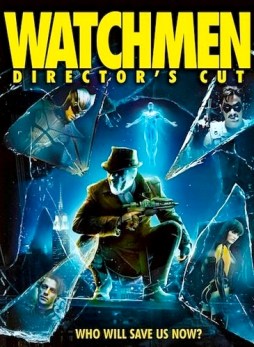
Hitting US Blu-ray so long ago that it’s shameful I haven’t watched it ’til now, and finally arriving in the UK next Monday, the Director’s Cut is Zack Snyder’s final vision of Watchmen: The Movie. The Ultimate Cut (currently available in the US but with no confirmed UK release), which integrates the animated Tales of the Black Freighter into the main feature, is, in Snyder’s words, “an experiment”. Maybe one day he’ll change his mind and say that’s actually his definitive version; I suppose these days — when it seems every major film has a proliferation of different cuts across theatrical release, home entertainment release, and home entertainment re-release — such a thing as a “definitive version” doesn’t necessarily exist. But that’s a debate for another day: for now, this — not The Ultimate Cut, and certainly not the theatrical cut — is Snyder’s Watchmen.

That said, I wouldn’t be inclined to say it’s vastly different to the previously seen version. There are some obvious new scenes and extensions, especially if you’re familiar with the original novel, but ultimately I didn’t find the additional 24 minutes created a vastly different experience. Most of the flaws still remain, from the unfixable — Malin Akerman is somewhat miscast; sometimes episodic storytelling (a largely unavoidable side effect of faithfully adapting a novel that is very much a story in 12 parts, as opposed to a story divided into 12 chunks) — to those that Snyder could potentially have rectified — the alley fight/Manhattan interview crosscutting still doesn’t quite work; Bubastis is inadequately explained; too little time is devoted to the large cast of secondary characters in New York to give Adrian’s plan the same emotional kick it has in the novel; and so on.

By the same token, none of the great bits are ruined, while some are enhanced. Although mostly faithful to the novel, the changes Snyder and co have made are almost all for the better: Rorschach’s “what do you see?” beats the fan-favourite landlady scene (goodness knows why it’s a fan favourite), and Matthew Goode’s slightly built, faintly Germanic Veidt seems a more natural fit for the character now than Gibbons’ more butch version (possibly only in my opinion, that one). Best of all is the modified climax, which retains all the significance of the original but, by changing the way in which it’s brought about, streamlines and tidies up the storytelling. The giant squid is a great comic book image, but this is superior plotting, especially in the abridged form a film adaptation must take.

As for the new bits themselves, some are slightly misguided — Rorschach’s escape from Blake’s apartment, for example, is wholly unnecessary; it shows him injuring a policeman, an incident now referred to over the next few scenes, but we don’t need to see it to follow the references, and showing it gets in the way of the previously perfect match-cut from the Minutemen photo in Blake’s apartment to the same one in Hollis Mason’s. By and large, however, the extensions add depth via little lines and moments. The most noticeable are a better building of Laurie’s backstory, and Hollis Mason’s death. The latter is a little ancillary to the main plot, its excision from the theatrical version easily justified to keep the running time down, but in itself is a well-played and tragic scene that adds further resonance to the end of Dan’s story.

Whatever you thought of Watchmen after the theatrical cut, this extended version is likely to change your opinion no more than any other re-viewing would. That said, with a little extra room to breathe and a few worthwhile extensions, and in spite of the odd tweak that doesn’t work, this is the superior cut of the film.

5 out of 5

Most of the comments in my lengthy review of the theatrical cut still stand, so I invite you to read it here.

Watchmen: Director’s Cut placed 3rd on my list of The Ten Best Films I Saw For the First Time in 2009, which can be read in full here.

Hannah Montana/Miley Cyrus: Best of Both Worlds Concert [3D] (2008)

2009 #78
Bruce Hendricks | 72 mins | TV | U / G

Hannah Montana and Miley Cyrus: Best of Both Worlds Concert UK posterRubbish. In almost every way possible.

I could expand on that in numerous ways, but what would be the point? The only real exception is the 3D — being a very recent production, that was flawless.

Take solace in the fact that one day — hopefully, one day soon — Cyrus, Montana, this ‘movie’, and all the rest, will be completely forgotten.

1 out of 5

This was shown as part of Channel 4’s 3D Week. That’s why.

Hannah Montana/Miley Cyrus: Best of Both Worlds Concert featured on my list of The Five Worst Films I Saw in 2009, which can be read in full here.

Ripley’s Game (2002)

2009 #67
Liliana Cavani | 106 mins | TV | 15 / R

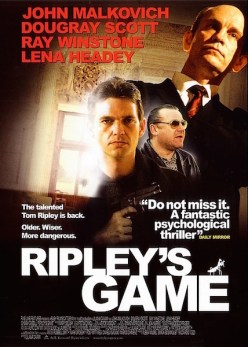
Ripley's GameMatt Damon is back as… Oh, wait, no he isn’t — he’s turned into John Malkovich.

Not quite — there’s no reasonable way Ripley’s Game can be considered a sequel to Anthony Minghella’s The Talented Mr Ripley. Though it’s adapted from a later novel in Patricia Highsmith’s Ripley series (previously filmed as the Dennis Hopper-starring The American Friend, incidentally), the action is relocated to the present day, and it’d be a pretty hard sell to believe Matt Damon would grow up to be John Malkovich.

Despite the acclaim of Minghella’s effort just three years earlier, and a cast that includes recognisable faces such as a Ray Winstone, Dougray Scott and Lena Headey alongside Malkovich, Ripley’s Game snuck out with barely anyone noticing, including going straight to TV in the US. There are surely reasons for this, reports of a problematic shoot probably among them, but the neglect is undeserved. In 2006, Roger Ebert saw fit to include it in his Great Movies list, though other critics are less favourable (the Radio Times, for one handy example, rate it just three out of five). While Ebert is in my opinion overselling the film by including it in a list of the best films ever made ever, it’s certainly an above average, consummately made, and constantly entertaining Euro-thriller.

Perhaps the difference in opinion about the film stems from one, arguably crucial, sticking point: the Radio Times criticises the humour included in the murders and thriller sections, viewing it as a failure of director Liliana Cavani; conversely, Ebert approves of it, praising them as appearing somewhere “between a massacre and the Marx Brothers”. There’s undoubtedly more to the diverging opinions than this, but it’s at least emblematic. I’m inclined to agree with Ebert: these sequences do have tension — not the most one’s ever experienced in a thriller, but enough — but they marry the humour to it, leaving you chuckling on the edge of your seat.

For the most part the story keeps moving, twisting and turning in sometimes unexpected directions. Other films would happily take the first half-hour or so of this and stretch it to a whole feature, but screenwriters Charles McKeown and Cavani — adapting from Highsmith’s novel, of course, so the credit lies with her — take the premise further and in new directions. It’s not flawless, with the climax by far the biggest let down: Ripley and Trevanny hole up in the former’s villa, preparing for a veritable war as Ripley anticipates goodness-knows how many men to turn up. When it’s only two, it seems more believable than a whole army of mafia goons descending on the relatively insignificant pair, but it’s also distinctly anticlimactic after the hype. Still, at least the story has a final twist up its sleeve.

Malkovich may be a fairly respected actor, but to me he’s always seemed detached, flat, or mannered — often all three. Here, he’s still all three, but it suits Ripley’s unusual character down to the ground. His dry wit and incessant matter-of-fact delivery craft a quietly sinister, stalking nature, aiding the character’s believable unpredictability — that is to say, you’re never certain what he’s going to do next, but when he does it’s not surprising. I’ve never read a Ripley novel (there are five) nor seen another Ripley film (there are four), but Malkovich’s performance fits so perfectly I have little doubt this is precisely how Ripley should be played.

Among the rest of the cast, Ray Winstone is landed with a role he could play in his sleep, Lena Headey is perfectly fine as an unremarkable wife, and Scot Dougray Scott plays a none-more-plummy Brit. Unfortunately this accent sometimes seems to be the main focus of his performance, and it occasionally falters when he gets highly emotional, but it’s not really a problem… though it is rather odd to hear if you’re familiar with how he normally sounds. His character, Trevanny, is primarily a pawn in Ripley’s titular amusement, leaving Scott with only a passing hint of the character arc with which the role could have been gifted.

As noted earlier, there are numerous tales of problems on set, not least the multinational cast coping with a multinational crew in multiple nations, culminating in Cavani leaving towards the end of shooting and directorial duties being fulfilled by Malkovich. But as many have noted before, happy sets can produce dreadful movies and unhappy sets masterpieces, and while I don’t quite share the view that Ripley’s Game is entirely the latter, it certainly errs more in that direction than the other.

4 out of 5