
Jason Reitman | 92 mins | DVD | 12 / PG-13
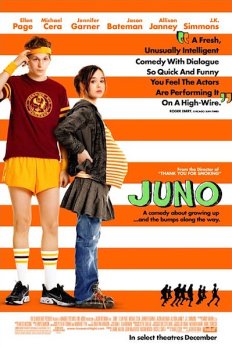 Juno followed in the footsteps of films like Sideways and Little Miss Sunshine to be the token Little Indie That Could among 2008’s Best Picture nominees. It was also the highest-grossing film on the list, no doubt thanks to America’s abundant Christians thinking it was all about an anti-abortion message. I’m sure these conflicting facts (the indie-ness and top-grosser, not the Christian thing) say more about the Oscars’ nominating form in the past decade than they do about Juno.
Fortunately, there’s enough to Juno to allow it stand up for itself. The most discussed aspect is Diablo Cody’s screenplay, with its idiosyncratic slang-laden dialogue and accusations that every character speaks the same. The first is true, the latter is rubbish, and one has to wonder if whoever thinks it watched beyond the first ten minutes. Most of the film’s teenage characters speak similarly… in that they use the same bits of slang, have similar speech patterns, employ a similar sense of humour — you know, like groups of teenagers tend to. Their related adults speak broadly similarly, but also differently; the higher-class couple Juno chooses to adopt her baby to speak differently again — but none are pathetically “I am trying to sound different”-different like you can find in weak writing. It’s just natural. I struggle to see how anyone can honestly say that all the characters “speak the same” in a way that isn’t true to life. Perhaps Cody has generously made Juno and her fellow teens wittier and quicker than the real-life majority, but this is a scripted drama and that’s what happens to your hero characters.
Cody’s dialogue, and what the cast do with it, are the film’s standout aspects. It’s quite a wordy screenplay, so it’s good that it’s a joy to listen to. The realistic overuse of slang by some characters occasionally greats, but the plentiful laugh-out-loud beats more than make up for it. The “I wish I’d say that” quality in some of Juno’s responses to familiar situations quickly make her an identifiable, memorable and loveable character, expertly played by Ellen Page — lead roles like this and Hard Candy show she’s one to watch, and add another mark against X-Men 3 for wasting her talents on such an insignificant (in the film) part.
Every supporting part is equally pitch-perfect: J.K. Simmons’ endlessly supportive father; Allison Janney’s stepmom, granted a gift of a rant at an ultrasound operator; Jennifer Garner’s earnest, desperate wannabe-mother; Olivia Thirlby’s teacher-loving best friend. Jason Bateman redeems himself in my eyes from his not-Marc-Warren turn in State of Play, while my pre-judgement of Michael Cera (Superbad? Year One? They sound dreadful) is half erased by being good as an appropriate-but-still-niggling character (Mr MacGuff and Leah summarise it best: “I didn’t think he had it in him.” “I know, right?”)
The film’s success in America is slightly baffling, which is why I merrily attribute it to Juno considering an abortion and then turning away. There’s underage sex, swearing, numerous displays of teen independence, divorce, love of rock music and horror films… All that’s missing from a Middle American Mom’s worst nightmare is drugs (there’s no violence either, but we know them there yankees love a bit of that). The whole thing worries the boundaries of its 12 certificate, I’m sure (being a recent film, the BBFC explain/justify), not that such things affect its quality as a film.
The backlash against Cody’s screenplay had me all prepared to find Juno a samey, wannabe-cool and lacking experience, but it isn’t. It’s consistently funny, occasionally moving, and only infrequently irritating (usually when it comes across as stereotypically indie). As the comedy-indie entry in the Academy’s 2008 choices, its worthy of its predecessors, and I consider that praise indeed.

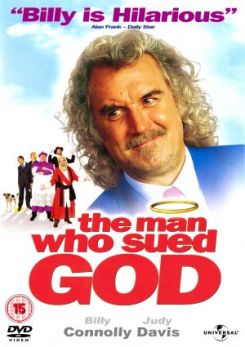 I always assumed this was British, probably because it stars Billy Connolly and has a suitably quirky premise — one can see it fitting in with the school of British comedy that’s brought us
  There are times when one feels under-qualified to review a film in a way that gives it its due. This happens particularly frequently when one’s blog covers first-time viewings of films that are often classics/significant/beloved/etc. My appreciation for Exiled has been increased by two other, more qualified, reviews: one from
  Denzel Washington and Tony Scott have now served as star and director (respectively, as if you didn’t know) on four films, with
  First, a little note on that aka: technically — and, I believe, legally — no such title is attached to this project. However, the initial idea was developed by Koontz and, after he left the project, adapted into his Dean Koontz’s Frankenstein series of novels. Despite the ‘creative disagreement’ (or whatever they chose to call it) that led him to walk away, the film retains significant similarities to the first book. More on these in a moment.
 The third theatrical release to star Krister Henriksson as Henning Mankell’s detective is the thirteenth and final episode in the first series. It has a suitably Season Finale feel to it — “this time it’s personal” and all that — but also subtly constructs itself to work as the standalone piece necessary for a theatrical release schedule that skipped six whole episodes.
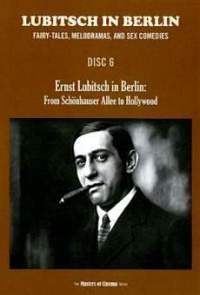 Part biography, part making-of, part analytical retrospective, Robert Fischer’s documentary does what it says on the tin: tells the story of the life and work of actor/director Ernst Lubitsch from his formative years, living on Schönhauser Allee in Berlin, to when he made the move to America in the early 1920s.
 As we head in to this year’s awards season, I’ve finally got round to seeing last year’s big winner. It’s the Little British Film That Could, and I do feel like I’m the last person in the country to see it.
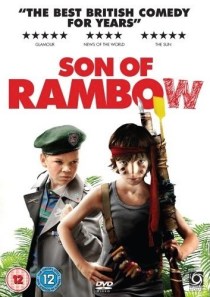 Of late I’ve posted
  abound, from the comic asides with Didier to Will’s fertile imagination realised through animation, or the post-credits snippet of dialogue.
 but realise the error of their ways to come back together in the nick of time) and the lessons learnt are hardly new (true friendship can conquer all), but it’s all put together with immense joy and skill, built around a charming concept, that it becomes far more than the sum of its parts.
 100Films.co.uk