2014 #34
Michael J. Bassett | 104 mins | Blu-ray | 2.35:1 | UK, Czech Republic & France / English | 15 / R
 The year 1600: British ship’s captain Solomon Kane is not a nice man, a mite too fond of pillagin’ and killin’ and quite possibly other not-nice things ending in —in’. That is until he has a run in with the Devil’s Reaper. Hell has claimed his soul, and its time to collect. Solomon does not plan on being collected, renouncing his former life and trying to hide at a monastery in England. But as a gang of possessed men lay waste to the countryside, burning its towns and enslaving its people, will Solomon be able to stick to his newfound pacifism? Yeah, we all know the answer to that…
Star of a series of pulp fantasy stories and poems by Robert E. Howard, creator of Conan, this version of Solomon Kane is inspired by those works rather than adapted from them. It’s an origin story, showing how Solomon came to be the man he is in Howard’s tales, though you’d be forgiven for missing that: writer-director (and lifelong fan) Bassett has managed to construct a story that feels entirely complete in itself, not mere setup for future adventures. Even though the ending is ready for the planned-but-unlikely sequels, it’s open for, rather than expectant of, them; a pleasing oddity in today’s franchise-driven blockbuster landscape.
The style is a fantasy-horror mash-up, recalling everything from the 1982 Conan to Witchfinder General, and plenty more besides. That’s not to say its a rip-off of those movies, or even some kind of cobbled-together reference-fest, but rather that its roots and inspirations — the previous works it aligns itself with — are discernible for those familiar with them. There’s some creepy creatures and sequences, no doubt thanks to Bassett’s previous directing horror movies, 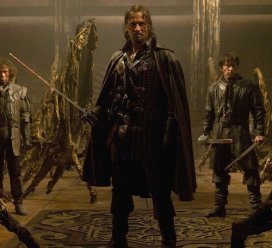 but also a more-than-requisite amount of swordfighting and the like — all told, Kane is more period action-adventure (with demons) than period horror.
Nonetheless, some viewers have found the pacing off. It’s true that after a big opening action scene the story slows down for a time, and that later on events become a tad episodic, but I think this gives the film more of a unique flavour than your usual action-adventure flick, where the action sequences are carefully designed to build in scale and are methodically spaced throughout the running time. The way Bassett plays things allows more time for character and mood to grow, and while his screenplay doesn’t always excel at uncovering those things, a first-rate cast brings the necessary.
In the titular role, James Purefoy is best as snarling action hero rather than when tormented and penitent… but that might just be because all-action Kane is more fun. Indeed, the less-nice version we meet in the opening sequence is perhaps the best of all. On his solo audio commentary, Bassett says that everyone on the crew fell in love with that incarnation, and suggests there might be room for a prequel starring the pre-heroic version of the character. If we’re not getting sequels then we’re certainly not getting that, but Kane’s anti-hero antics do promise entertainment value. (I’ve read that Kane isn’t actually all that nice in Howard’s original stories — perhaps, contrary to the film’s “origin story” aims, more like the movie’s opening version? The film has given me a desire to check out the original works, though I don’t know when I’ll get round to it.)
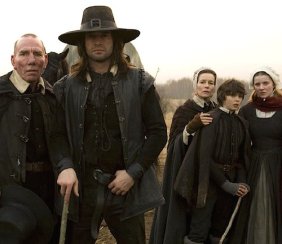 In support there’s the likes of Pete Postlethwaite, Alice Krige and Max von Sydow, all of whom bring instant heft to roles that need it. I don’t mean to say the screenplay doesn’t contain it, but the shorthand the actors bring with them certainly does favours. Cameo-sized appearances by Mackenzie Crook and Jason Flemyng are also effective, and watch out for a pre-Game of Thrones appearance by Rory McCann, aka The Hound.
Although made for a relatively tight budget on a swift schedule, every technical element sings. Dan Laustsen’s cinematography is gorgeous, whether it be the golden hues of an African throne room, the cold blue-whites of an English winter, or the muddy browns and rainy greys of later sections. I’m sure there’s a lot of digital grading involved in all this, but does it really matter how something was achieved when it’s achieved so well?
Full marks too for Ricky Eyre’s production design, David Baxa’s art direction and Lee Gordon’s set decoration. I don’t want this to read like the credits scroll, but the work done on the sets and locations is phenomenal and those responsible deserve the praise. Their work wouldn’t look out of place in something as crazily budgeted as The Hobbit — and hurrah to them for actually building it, whereas the majority of Jackson’s Middle-earth locales now seem to be CGI.
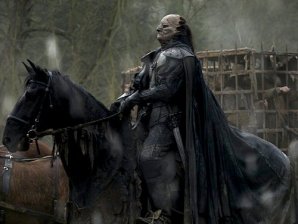 My praise also extends to those responsible for the film’s location shooting. Shot in the Czech Republic, for once that genuinely looks like Britain. OK, the style of some buildings give the game away occasionally (in particular the monastery), but until I read different, I just assumed the fields, forest and coastline had been found in our real South West, on the moors or what have you.
Further kudos to those responsible for the fight choreography (so good that even a deleted sequence (included on the Blu-ray) is better than many films can manage), for make-up, for creature design, for costumes, for the CGI… Rare is the element that lets this movie down. Indeed, my one real gripe is a final-act monster that seems to be beyond the scope of the filmmakers — between slightly jerky animation and a flatly limited choice of camera angles, it literally looks like a modern video game cutscene. Considering the excellent effects in the rest of the film (the opening sequence is a highlight in this regard, particularly the flaming sword that begins to melt Kane’s own), it’s a shame. That said, it’s not bad CGI, just not top-notch. If that’s the biggest complaint, there’s nothing to worry about.
Also, it’s permanently raining. Which looks great. Whoever was in charge of rain did a fab job.
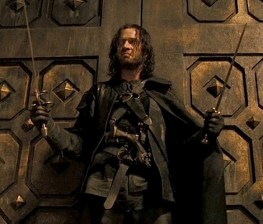 At the end of the day, Solomon Kane is a period fantasy action-adventure, something which doesn’t seem to be everyone’s taste — it has relatively weak scores on the likes of IMDb and Rotten Tomatoes (though, in the context of how this kind of movie often performs in those arenas, they’re far from awful). For my money, however, it’s a great little film. It looks beautiful, it renders the tone of pulp fantasy brilliantly, its action sequences are exciting (so many swordfights! Heaven!) and its creepy bits unnerving. It may not be ‘trash’ elevated to art — it’s not a Tarantino movie — but it is pulp fiction treated with due reverence.
The UK TV premiere of Solomon Kane is on Film4 tonight at 9pm.

 Quirky director Jeunet uses quirky cinematography and quirky special effects to tell the quirky story of a quirky girl, who had a quirky upbringing by quirky parents, and now lives a quirky life with quirky friends. A quirky coincidence leads her into the quirky hobby of cheering up strangers in quirky ways, during which she meets more quirky people who do quirky things, and she quirkily falls for the quirkiest.
 Nicolas Cage fulfils his long-held wish of playing a comic book hero in this peculiar effort from the writer-director of
 Adapted from a Marvel comic, though you can’t really call this a superhero movie: undercover cop Frank Castle’s family are murdered, so he goes after the crime organisation responsible. This is action-thriller territory, not guys in tights fighting.
 The director of Disney’s woeful
 The writer-director of
 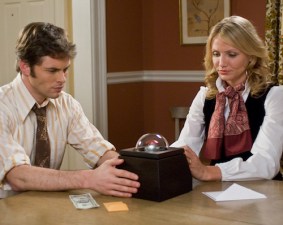 What a nice tribute to his supportive parents and their devotion to one another, eh? At the start, perhaps, but by the end of the film you may be wondering what the writer-director’s subconscious wants to do to his ma and pa…
 What could function well as an indie-level thriller is further undermined by abundant, therefore costly, CGI. Whether that’s Langella’s facial disfigurement (what could’ve been make-up is actually a complex array of tracking dots, green face-paint, motion-control cameras, and so on; all used merely to place him in simple dialogue scenes), or wide shots of ’70s Virginia, with a computer-adjusted skyline, computer-animated cars, and computer-painted snow. It’s not that the effects work is poor (though don’t look too closely at those cars), but that it screams “this must be special effects!” when you don’t want such distractions.
 The Box should have been a film we all discussed for years to come, its “what would you do”-ness providing an
  Based on a novel by Morton Freedgood (writing as John Godey), previously adapted into
 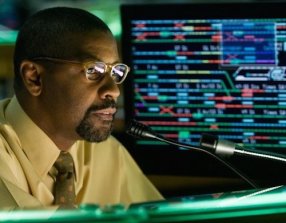 None of that here, where the captives are either even more unnoticeable, or heroic off-duty military types. So far so standard.
 Applied here to such a meat-and-potatoes tale, it feels like they’re trying to jazz it up because it can’t sustain itself otherwise.
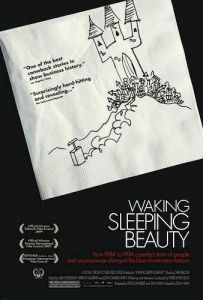 However, Waking Sleeping Beauty is told from the inside: director Don Hahn started out as an assistant director at Disney animation in the ’80s, graduating to producer by the time of Beauty and the Beast. With him he brings behind-the-scenes home movies and access to a stunning array of interviewees. Almost everyone who was anyone at Disney during that time is interviewed, either through archive footage or new audio commentary. It was a tough time, and while Hahn’s portrait is probably not quite warts-and-all, it comes damn close; for example, we get to see some of the caricatures the animators drew in disgust at their new boss, Jeffrey Katzenberg.
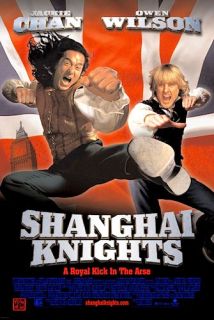 Jackie Chan and Owen Wilson are back as… um… whatever their characters were called, in this follow-up to
 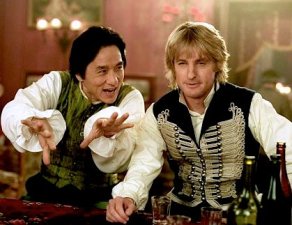 Knights as a whole feels like it moves better than its predecessor — it gets going quicker, without the need to establish these characters and force them together; there’s a greater reliance on those quality action sequences. The guest cast feels a bit bargain basement, though the villains — Aiden Gillen and the aforementioned Yen — are of a higher calibre. This means we’re treated to a pair of great climaxes, with Chan first having that punch-up with Yen, followed by a three-sword duel with Gillen (or possibly a stuntman).
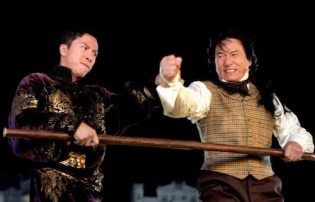 In the end, I’m not sure if I like it more or less than the first film. The Western setting was a smoother fit in many ways, but here there’s a less stodgy plot, a general reduction in the overlong comedy sequences, and even better action sequences. All things considered, I think Knights may actually have the edge.
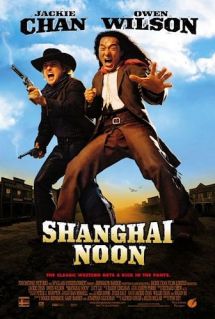 Hong Kong martial arts legend Jackie Chan and Hollywood funnyman also-ran Owen Wilson team up for a film that I don’t think anyone involved could reasonably deny is just “
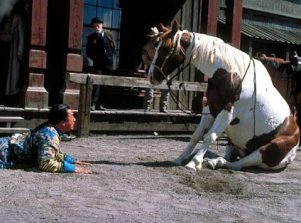 Things that could have (should have) been fixed way back at the writing stage leer out at the viewer. The plot is treated almost perfunctorily, as if it’s not interesting enough to bother explaining or expounding upon. It’s hardly highly original or complex, but it feels as if important beats or character motivations have just been skipped over. For instance, the character/story impact of the final fight would be so easy to build up a bit, but they haven’t and so it falls a bit limp. Not to mention the bit when two characters who are essentially on the same side have a duel when they have more pressing things to worry about — save the Princess first, fight amongst yourselves later! Then there’s all the time given to Wilson’s rivalry with the local sheriff/martial/whatever, which we’re told exists, isn’t really built from anything, and suddenly is half the focus of the climax.
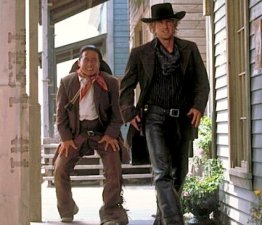 Shanghai Noon should be a lot of fun. It should be Jackie Chan and Owen Wilson engaging in a bit of comedy between skilfully choreographed, occasionally amusing, balletically staged fight sequences. But it isn’t. It’s laden with an underwritten plot, bulked up by clichés, stereotypes, overplayed character scenes, humour that doesn’t work, and a shortage of judicious editing. It is still kinda fun, but it could so easily have been more.
 100Films.co.uk