
 Will Smith is the eponymous drunken vagrant, who also has the powers of Superman, in this under-appreciated superhero comedy-drama. Hated by the public for the destruction he causes while ‘helping’, and wanted by the authorities for the same — though they can’t catch him because, you know, superpowers — he gets an image makeover when he saves wannabe entrepreneur Jason Bateman. Bateman’s wife, Charlize Theron, is less sure of Hancock’s merits.
If you’ve only seen the humour-focused trailers, seeing Hancock described as a comedy-drama might come as a surprise. There’s a whole behind-the-scenes story here, it would seem, hinted at in various interviews and articles one can find scattered around. To boil it down, it seems as if screenwriters Vy Vincent Ngo and Vince Gilligan (yes, him of Breaking Bad) and, in particular, director Peter Berg thought they were making a character drama superhero movie, while studio executives were more interested in it being a superhero action-comedy. Only natural when you hire Will “Men in Black” Smith, I guess. While the marketing went all-out on the comedy angle, the film itself is torn between these two pillars, leaving viewers with mismanaged expectations — resulting in “under-appreciated”.
Tonally, it’s mixed throughout. For instance, it’s been shot with handheld close-up ShakyCam veracity, which works when it’s playing on “what if this were real?” emotional story beats, but feels at odds on the occasions it descends into comedic vulgarity. Some criticise Berg’s style fullstop, saying he’s taken a black comedy/satire and played it straight. Unsurprisingly, I don’t think that’s wholly fair. There’s a lot of stuff here that works as a serious-minded drama, suggesting Berg was on the right track, 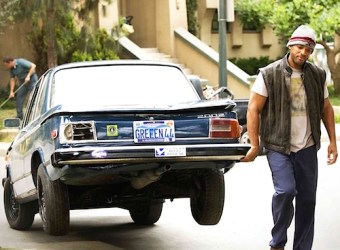 but it rubs against comedy stuff that feels like it’s from a Comedy. The extended cut includes an early sex/ejaculation joke/sequence that wasn’t in the theatrical cut because Berg thought it wasn’t funny and test audiences agreed. Goodness knows why it got put back, other than because of length — it accounts for over half of the extensions (more details here).
Essentially, I think the critics are damning Berg and co for not making the movie the critics think they should be making, and not giving them credit for making the movie they were trying to make. The marketing men are at fault here, or the audience for wanting a superhero comedy when they’ve sat down to a superhero drama. Unfortunately, it’s harder to defend when Berg’s work was indeed compromised, though by studio interference rather than by misunderstanding his own mind. Also by the fact his other films include crap like Battleship, so of course you might think he’s rubbish.
As if that wasn’t enough, there’s a controversial twist/change of direction halfway through. Fundamentally there’s nothing wrong with twists, but this engenders a bumpy transition, which initially seems not to work — the tone and meaning shift abruptly. However, if you go with it, the film settles back down and it pays off during the finale. A lot of viewers aren’t very good about trusting a movie and going with it these days, though. Again, however, occasional poor decisions make it trickier to defend. For instance (spoilers!), when Mary goes to visit Hancock after it’s revealed she has powers too, she’s dressed up like a supervillain, a complete change of style from her normal casual-suburban-mom look. Why the change?  Why indeed, because a) she’s not a supervillain, and b) even if she were, why get changed?! It’s a kind of bait-and-switch: she’s made to look like a villain because we think that’s what she’s about to be revealed as, and a big hero-vs-villain fight follows too… but she isn’t. It’s not quite up there with the magically-changing Batsuits of Batman & Robin, but it’s the next level down.
While I’m bashing the film, let’s note that the CGI is appallingly weak. It’s hard to know how much that’s time passing and how much it was always weak, but considering it’s from the same year as Iron Man, I err to the latter. This may again be the result of behind-the-scenes travails, though: apparently it was supposed to contain 300 VFX shots, but actually has 525. Did anything go right on this film’s production?
On the bright side, Will Smith’s performance has garnered lots of praise, deservedly so. He could have been his usual charming self, making Hancock a funny goofball character. Instead, he plays the reality of this guy being a damaged loner. It might not make the film as consistently comedic as some would have liked, but it’s a more engaging and rewarding performance on the whole.
 The film would work a lot better on the whole if the tone had been settled on as definitively as Smith’s performance, rather than trying to have its cake and eat it by mining both the “what if this were real?” and “haha, an unlikeable drunk superhero!” versions concurrently. For my money, however, if you treat Hancock as a fairly seriously-intended movie that was forced to contain more (half-arsed) action and (misjudged) comedy for the sake of box office, it’s not a bad experience at all.

Hancock is on 5* tonight at 9pm.
* The extended version is officially Unrated in the US. Many a time an “unrated” cut would mirror the theatrical version’s certificate, if only they’d bothered. However, theatrically Hancock was a PG-13, but only after it had been submitted twice before and received an R — which is probably what this version would be, then. ^
 A bunch of obstreperous actors are too much to handle for the director of a Vietnam war movie, so he dumps them in the jungle to shoot it with hidden cameras. Things go awry; hilarity ensues.
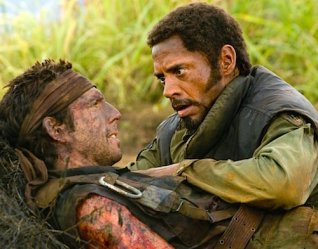 The film may run a little long in the middle, though I don’t think that’s the fault of this extended cut. It adds just over 17 minutes across many little changes and extensions
  After abandoning the X-Men franchise for a
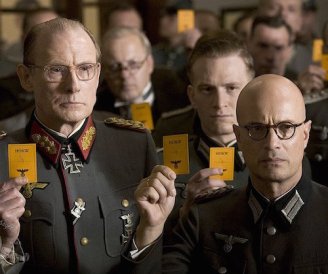
 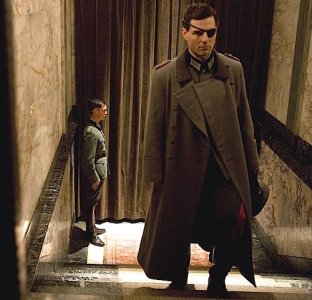 One of the stated aims of the conspiracy is to show the rest of the world that not everyone in Germany believed in what Hitler and his inner circle were doing. It may have taken us a long time to realise that, for fairly understandable reasons, but quality films like this help get the message out. Singer has crafted a proper thriller here, replete with scenes of edge-of-your-seat tension. Many a filmmaker can’t manage that with a fictional storyline, never mind one where we know exactly how it turns out.
 but nor is he in simplistic action hero mode.
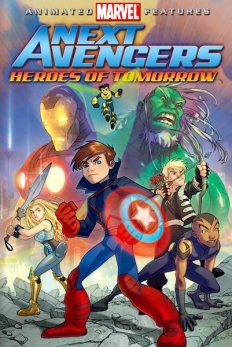 No, not the ’70s spy-fi series
  The rest of the new characters are largely fine, and while they’re clearly grounded in their parents’ personalities, they’re not just carbon copies — Cap’s son James is less worthy than his father, for instance; Black Panther’s son Azari is less elbows-out; and so on. Though Hawkeye Jr. is a little skeevy… Writer Christopher Yost has done a fair job of crafting realistic-enough kids, and in an era when superheroes seem to spend more time fighting amongst themselves than they do against villains, it’s nice that this team largely get on — though not in an overly-rosy “it’s all happy families” way, thankfully.
 Coupled with a good plot, which keeps moving and developing rather than setting up one threat and meandering along until a big fight, as well as a few cameos and maybe even surprises along the way, Next Avengers is the kind of movie you expect to be pretty awful kids-only dross, but turns out to actually be pretty darn good.
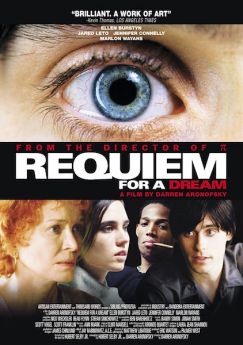 On Coney Island, the faded and decrepit one-time pleasure place of New York City, four people — Harry (Jared Leto), his girlfriend Marion (Jennifer Connelly), his best friend Tyrone (Marlon Wayans), and his mother Sara (Oscar-nominated Ellen Burstyn) — find themselves accidentally drawn into a whirlwind of drug addiction. Not to put too fine a point on it.
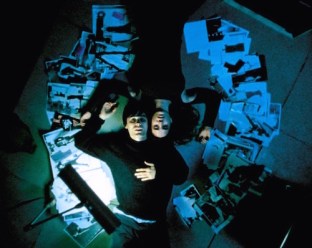 Harry and Tyrone by getting rich through selling drugs — and it all goes horrible awry.
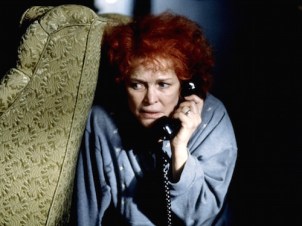 Requiem for a Dream may have a bit of a reputation at this point; one that might put you off viewing it, or possibly only deigning to attempt it in a certain frame of mind. While there is an element of truth to that, it is a brilliant film — not “enjoyable” in the easily-digested blockbuster sense, but as a mind-boggling and awe-inspiring feat of filmmaking, yes. Incredible.
 The
The  Your enjoyment of the film will hinge on your tolerance for this level of filmmaking. War Zone isn’t a Marvel-derived adaptation to sit alongside their big-budget in-house productions, but one to rival other hard-R violence-focused flicks. It may be kind of nasty in places, but no more so than other movies of its ilk; and really, if you look at it from outside the confines of sometimes-simplistic comic book morality, the Punisher is quite a nasty character.
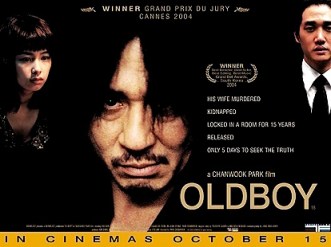 Perpetual drunkard, but also loving husband and father, Oh Dae-su (Min-sik Choi) is snatched off the street and imprisoned in a shabby bedsit without explanation. He learns that his wife has been murdered and he’s being blamed. His daughter lives, but he doesn’t know where. Then, 15 years later, and equally inexplicably, he’s released. He befriends a sushi chef, Mi-do (Hye-jung Gang), before being contacted by Woo-jin (Ji-tae Yoo) who claims to have been his captor. Dae-su is given just five days to discover why he was locked up. If he succeeds, Woo-jin will kill himself; if he fails, he will kill Mi-do. Dae-su’s investigations lead him to dark secrets, shocking revelations, and violent retribution.
 Choi is excellent in the lead role, deserving of all the praise he’s garnered. It’s a highly unusual role with a lot of different and sometimes conflicting facets, but he pulls it all off with aplomb. He maintains a sense of mystery and unknowableness throughout, whilst also being a plausible human being in an implausible situation. As his adversary, Yoo makes for an excellent villain: calm, businesslike, always with the upper hand. The final confrontation is a scene to be savoured, calling to mind everything from James Bond to David Fincher (for me, at least) in terms of the villain’s slick lair and the twisted events that unfold in it.
 In Oldboy’s case, however, so much of what makes it special, unique and exceptional lies in the direction. So do you copy that wholesale? If you do, what’s the point — just watch the original. But if you don’t, what’s the point — you’re losing a large chunk of what’s special. I guess this is why the US version didn’t go down so well — whichever path it took, it was on a hiding to nothing. I look forward to seeing it to judge for myself.
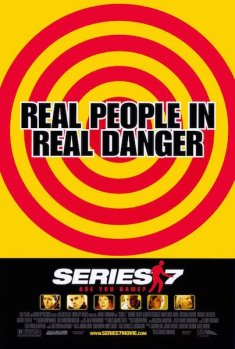 The debut of director Daniel Minahan — who’s since helmed episodes of over a dozen TV shows, including HBO hits
 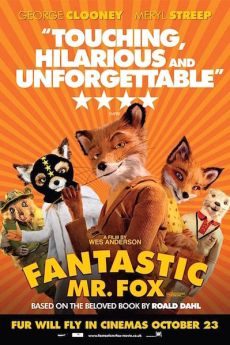 Quirky cult-y director Wes Anderson tries his hand at stop motion animation with this Roald Dahl adaptation, in which an all-star cast voice the tribulations of a gaggle of talking animals — led by the eponymous vulpine — who come into conflict with three vicious farmers.
 Compositionally, I thought I’d get sick of the squared-off 2D style, but Anderson’s cleverer than that. It might look flat and lacking in dimension at first, but that’s the starting point for variation, including some great bits of depth (farmer Bean trashing a caravan is a particular highlight of this), and when it breaks form (like a rabid dog chase) it’s all the more effective. There’s also a fantastic score by Alexandre Desplat. Not your usual plinky-plonky Quirky Kids’ Movie music (though there are instances of that), but something more raucous. Nice spaghetti Western riffs, too.
 Fantastic Mr. Fox is the kind of film I feel I may enjoy more on a re-watch. Indeed, some comments on film social networking sites (e.g.
 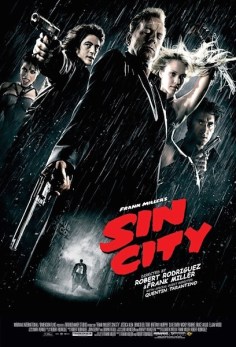 Adapted from a series of graphic novels by Frank Miller, Sin City is a noir homage, replete with high-contrast black-and-white cinematography, dialogue so hard boiled you couldn’t crack it with a sledgehammer, and all the requisite downtrodden heroes, corrupt authority figures, dangerous dames, etc. There’s also the very modern inclusion of shocking ultra-violence and nudity, but I guess a fair degree of that would’ve crept into classic noir if the mores of the time allowed — pretty much the point of the genre is the dark grubbiness of the world, after all.
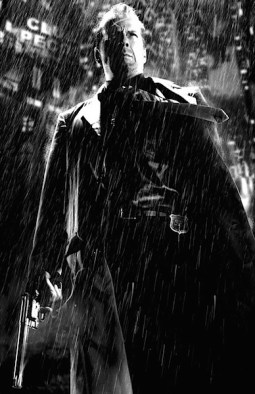 The DVD-premiering extended version, dubbed Recut & Extended (or, in the US, “Recut, Extended, Unrated”) is even more faithful to the comics than the theatrical version. Some of the books’ scenes that were excised are now included, and the structure has been rejigged to present each of the four stories one by one in their entirety (whereas the original version had a small amount of intercutting). The total running time is 17 minutes and 40 seconds longer, an increase of some 14.2%… which is a thoroughly misleading figure. As a presentational choice, each of the four stories is offered for individual viewing, plus option to “play all”. However, rather than that showing them as a single film, they play as four shorts back to back, with a full set of section-specific end credits rolling each time. The actual amount of new material in the film itself is
  For one, the second scene belongs more truly to The Big Fat Kill (the final story, starring Clive Owen’s Dwight and the whores of Old Town led by Rosaria Dawson). For another, because this recut purports to be in chronological order, The Customer is Always Right plays second. So we get 47 minutes of Bruce Willis protecting Jessica Alba from a paedophile in That Yellow Bastard, then we get a one-scene story that rightly belongs at the beginning (complete with title card, now 50 minutes into the ‘film’), then we get a scene that, actually, belongs in a completely different place. The next full story is The Hard Goodbye (the one with Mickey Rourke under a slab of prosthetics as Marv), followed by The Big Fat Kill — and it’s after this that the second scene with The Man belongs. Divorced of that context, the scene is robbed of almost all its meaning.
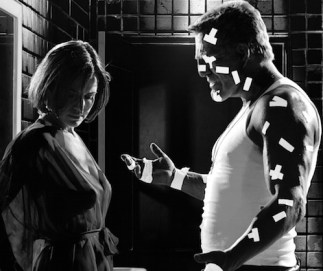 In the end, I enjoyed Sin City considerably less than I did nine years ago in the cinema. This is partly down to the restructure, but I’m not sure wholly so. I don’t think it’s aged particularly well, as things produced at the forefront of emerging technology are wont to do: some of the CGI looks dirt cheap, the shot compositions are often unimaginatively flat, and there’s an occasional internet-video style to the picture quality. It’s not just the visuals, sadly, with amateurish performances from reliable actors, possibly a result of the hurried filming schedule. Just because you can capture an entire part in a single day doesn’t mean you should. Then there’s Jessica Alba, who’s just awful here.
 None of the present additions are game-changing, and though some are good in their own way, there’s nothing noteworthy enough to compensate for the destruction of the original cut’s well-balanced structure. For the average punter — and certainly for the first-time viewer — the theatrical cut is unquestionably the way to go.
 100Films.co.uk