Ghosts of Mars (2001)

2016 #76
John Carpenter | 98 mins | streaming (HD) | 2.35:1 | USA / English | 15 / R

There are a good number of well-regarded John Carpenter films I’ve not seen that I could spend my time on, but I chose to expend it on this critically-mauled sci-fi-horror-Western from the first year of the current millennium. But sometimes watching poorly-regarded films pays off, because while Ghosts of Mars is no classic, it is actually pretty entertaining.

Set in a future where Mars has been almost completely terraformed, a group of police officers are dispatched to a remote mining outpost to escort a dangerous prisoner. On arrival they find the town mysteriously deserted, but soon discover the inhabitants have been possessed and basically turned into Reavers (…wait, did Joss Whedon just rip off Ghosts of Mars?!) Holed up in the jail, police and criminals must join forces to fend off their attackers. Yes, it’s basically Assault on Space Precinct 13.

It’s not just the plot that recalls older films: although the film was released in 2001, the quality of the acting, photography, sets, and effects are all like something made 15 years earlier. (In these technical aspects it reminded me a lot of Total Recall, and not just because it’s set on Mars.) It’s almost hard to equate it with other films made around the same time, and maybe that’s part of why it was so poorly received on release: it felt dated. Watched with 15 years distance, however, it’s an Old Film, so it’s as easy to mentally lump it in with stuff made 30 years ago as with stuff made 15 years ago. That doesn’t magically wipe out its other faults, but it does make me think about the level of forgiveness people are willing to apply to films based on extra-filmic knowledge of when they were made, etc. If people thought this had been made in the ’80s, would they view it as kindly as they do some ’80s genre-classics that are just as bad and/or dated?

I mean, I’m not saying it stands up to something like The Thing, which by comparison is a classy movie (bet no one in 1982 ever thought The Thing would get called “classy”!), but I don’t think it’s any less accomplished (at least in technical categories) than, say, Big Trouble in Little China. However, it’s swapped out some of the kooky fun of that film for a sci-fi-horror milieu, and maybe that’s why it doesn’t wash as well — it doesn’t have the comicalness to let the weaker aspects slide.

Conversely, if you made it today it would probably be seen as a throwback/homage and everyone would do backflips over it. They’d have a similar reaction to its diverse cast: a female lead hero, a black co-lead who’s also the cast’s biggest name (at the time), a lesbian commanding officer… If they could manage that in a studio picture 15 years ago, why does it seem to be such a big problem nowadays?

Anyway, it’s not “good”, but it is cheesily fun — and I reckon if it had been made 15 years earlier, exactly as it is, it would have a lot more fans.

3 out of 5

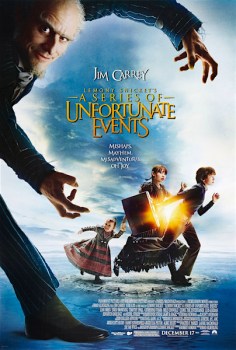
Lemony Snicket’s A Series of Unfortunate Events (2004)

100 Films’ 100 Favourites #50

Don’t say we didn’t warn you.

Title Commonly Abridged To: Lemony Snicket
Title on IMDb: A Series of Unfortunate Events

Country: USA & Germany
Language: English
Runtime: 108 minutes
BBFC: PG
MPAA: PG

Original Release: 16th December 2004 (Australia & New Zealand)
UK Release: 17th December 2004
US Release: 17th December 2004
First Seen: cinema, c.2004

Stars
Jim Carrey (Ace Ventura: Pet Detective, Eternal Sunshine of the Spotless Mind)
Liam Aiken (Stepmom, How to Be a Man)
Emily Browning (Sucker Punch, Pompeii)
Jude Law (The Talented Mr. Ripley, Sky Captain and the World of Tomorrow)
Billy Connolly (Mrs Brown, Quartet)
Meryl Streep (Sophie’s Choice, Mamma Mia!)

Director
Brad Silberling (Casper, Land of the Lost)

Screenwriter
Robert Gordon (Galaxy Quest, Men in Black II)

Based on
A Series of Unfortunate Events, a series of novels by Daniel Handler Lemony Snicket. In particular, the first three: The Bad Beginning, The Reptile Room, and The Wide Window.

The Story
After their parents are killed, the three Baudelaire siblings are placed into the care of a series of kooky relatives, while the scheming Count Olaf attempts to track them down and murder them for their money.

Our Heroes
This is the story of the three Baudelaire children: resourceful, inventive eldest sister Violet; bookish Klaus; and baby Sunny, who is very perceptive and can also bite things. No one knows the precise cause of the Baudelaire fire, but just like that, the Baudelaire children became the Baudelaire orphans, and were put into the care of…

Our Villain
Count Olaf, the kind and friendly guardian who wants to kill the orphans for their inheritance. A master of disguise… sort of.

Best Supporting Character
The film is wittily narrated in the erudite English tones of Lemony Snicket himself, who gets all the best insights.

Memorable Quote
“This would be an excellent time to walk out of the theatre, living room, or airplane where this film is being shown.” — Lemony Snicket

Quote Most Likely To Be Used in Everyday Conversation
“I will raise these orphans as if they were actually wanted!” — Count Olaf

Memorable Scene
The end title sequence re-tells the film in a pop-up book / shadow puppet show kind of style, which is awesome.

Memorable Music
The film has a great, fun score by Thomas Newman. The downside to it is you can hear the style bleed in to other, less appropriate work, like Skyfall.

Technical Wizardry
The entire film was shot on soundstages, including exterior scenes, utilising forced perspective and matte paintings, as well as greenscreen. No doubt that helped create its surreal, fantastical, timeless style. Indeed, the whole thing looks great, with superb gothic/steampunk-inspired design work across the board (and all of it Oscar nominated). If you want to be critical I suppose you could call it “Burtonesque”, but if it works… Plus, it was shot by Emmanuel “three time Oscar winner” Lubezki, so you know that’s good.

Truly Special Effect
Baby Sunny was largely played by a pair of twins, but certain sequences that were either dangerous or required specific actions necessitated the use of various effects techniques. Several scenes were created with an entirely CGI Sunny (motion captured from the animation supervisor’s own baby daughter); some shots of her talking have the lower part of her face replaced with a virtual version; and they built an animatronic baby, too.

Making of
Olaf: “I must say, you are a gloomy looking bunch. Why so glum?”
Klaus: “Our parents just died.”
Olaf: “Ah yes, of course. How very, very awful. Wait! Let me do that one more time. Give me the line again! Quickly, while it’s fresh in my mind!”
That’s Carrey genuinely asking for the line again, in character. Director Brad Silberling liked the moment so much he kept it in the film.

Next time…
Although plans for a sequel and/or sequels were mooted, the kids long ago aged out of such things. Instead, the books are being re-adapted as a Netflix series, starring the legen- (wait for it) -dary Neil Patrick Harris as Olaf and with Patrick Warburton narrating. It’s being produced/directed by Barry Sonnenfeld, who Handler Snicket had originally developed this film adaptation for. An eight-episode first season is due later this year. Personally, I’m quite excited for it.

Awards
1 Oscar (Makeup)
3 Oscar nominations (Score, Art Direction, Costume Design)
2 Saturn nominations (Fantasy Film, Make-Up)
1 Teen Choice Award (Choice Movie Bad Guy)
2 Teen Choice nominations (including Choice Movie Liar)

What the Critics Said
“As the title suggests, Unfortunate Events belongs to the grim but vital strain of children’s literature in which children suffer terribly, parents and kindly adults have the same life expectancy as villains in action movies, and courage and ingenuity are all that keep kids alive. […] At its best, A Series Of Unfortunate Events is the stuff nightmares are made of, a sick joke of a film that realizes the best children’s entertainment doesn’t hide from the bleaker side of life, but plunges into the void and respects kids enough to assume they can handle it.” — Nathan Rabin, The A.V. Club

Score: 72%

What the Public Say
“While there are certainly dark currents under the surface of this fantasy, the director Brad Silberling doesn’t let them overtake the film. Yes, bad things happen—people die and children are in jeopardy. But there’s a dry wit that balances out and also a sense of fun in how the kids use their abilities to discover a new way to survive whatever comes next. Lemony Snicket’s A Series of Unfortunate Events is a strange, dark film, and I recommend it for being just that.” — Tanner Smith, Smith’s Verdict

Verdict

I’ve never read A Series of Unfortunate Events, but I get the impression some of its fans aren’t too enamoured with this film adaptation and its changes. As a movie in its own right, however, it’s a clever, witty, gothic adventure… for kids! Jim Carrey is on fine form as the evil Count Olaf, there’s quality support from some recognisable thesps in guest-star-level roles, the kids are a likeable bunch, and baby Sunny’s subtitled observations are frequently the highlight. Some reviews describe it as “superficial” or a “pantomime”, but even if it is, it’s devilishly entertaining.

#51 will be… professional.

Adam (2009)

2016 #20
Max Mayer | 95 mins | TV | 2.35:1 | USA / English | 12 / PG-13

Hugh Dancy (of TV’s Hannibal) stars as the eponymous Adam, a New Yorker with Asperger syndrome who’s having to work out how to go it alone after his protective father passed way. Isolated by his condition and his struggle to cope with change, his life faces upheaval when he loses his job, but he also begins to strike up a relationship with his new neighbour, Beth (Rose Byrne). As someone once said*, the course of true love never did run smooth — especially when one of a couple has a social interaction disorder.

Inspired by writer-director Max Mayer hearing a person with Aspergers interviewed on the radio, that starting point has had the end result of Adam at times being at risk of slipping into a “this is Aspergers” documentary. Fortunately it manages to pull that back — such explanatory scenes are surely necessary for neophyte viewers’ understanding of Adam’s condition, which is naturally central to the events that follow. Dancy worked with with Mayer for a month before filming began to develop the character, and spoke with individuals affected by Aspergers to learn about their feelings, sensory issues, and interests. It clearly paid off: I imagine it must be tricky to pull off a character like that without taking it too far, but Dancy is great in the role.

As the other half of the relationship, Rose Byrne holds her own having to almost play the ‘straight man’ to Dancy’s more obvious performance. She’s a considerably better actress than some of her movie choices would have you believe, and roles like this prove that. Bonus points to the writing here for Beth not just accepting everything Adam does — that’s much more realistic than him happening across an endlessly understanding saint of a woman. But boo to the critics who didn’t buy that a privileged “daddy’s girl”-type could ever possibly fall for someone with autism — how judgemental are you?

Among the supporting cast, Peter Gallagher plays the kind of role he always seems to play: as soon as he makes passing mention of being investigated for some kind of financial crime, you know he did it (and probably more), and his daughter will find out and it’ll wipe the scales from her eyes. The only question is whether he’ll be found guilty by the court or weasel his way out of it. Talking of predictability, Mayer opts for the ‘indie’ rather than trad-rom-com ending, but that in itself is kind of predictable. Of course, when both possible outcomes are predictable (and, in a rom-com, there are only two), you can’t win.

So you can’t deny there are clichéd building blocks here, and they do hold the film back from being great, but the sweet relationship and Dancy’s performance overcome them enough to make for a likeable movie.

4 out of 5

* It was Shakespeare. It’s always Shakespeare. ^

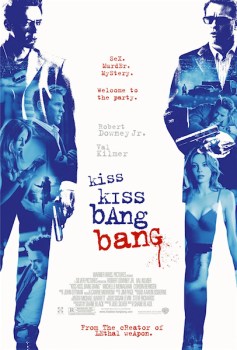
Kiss Kiss Bang Bang (2005)

100 Films’ 100 Favourites #49

Sex. Murder. Mystery.
Welcome to the party.

Country: USA
Language: English
Runtime: 103 minutes
BBFC: 15
MPAA: R

Original Release: 14th September 2005 (France)
US Release: 21st October 2005
UK Release: 11th November 2005
First Seen: cinema, 2005

Stars
Robert Downey Jr. (Chaplin, Zodiac)
Val Kilmer (Top Gun, Batman Forever)
Michelle Monaghan (Mission: Impossible III, Source Code)

Director
Shane Black (Iron Man 3, The Nice Guys)

Screenwriter
Shane Black (Lethal Weapon, The Last Boy Scout)

Based on
Bodies Are Where You Find Them, a novel by Brett Halliday.

The Story
After accidentally getting cast in a movie, fugitive crook Harry Lockhart is given on-the-job experience with private eye ‘Gay’ Perry van Shrike. When the pair become witnesses to a murder that it looks like they committed, they become embroiled in a conspiracy that they’ll have to untangle to save themselves.

Our Heroes
Harry Lockhart is our narrator: a crappy thief who stumbles into an acting audition while on the run from the cops, and ends up whisked off to Hollywood to play the lead in a mystery movie. To help him prepare for the role he shadows Gay Perry, a top L.A. P.I., who’s consistently, hilariously sarcastic. Also, homosexual.

Our Villains
It’s a murder mystery, so, that’s kind of a spoiler. Also: almost not the point.

Best Supporting Character
Harry happens to run into his childhood crush Harmony Lane, now working as a waitress in L.A. Soon she’s asking him to investigate her sister’s recent suicide, which she thinks was actually a murder. That subplot isn’t at all related to the main case. Nope.

Memorable Quote
Perry: “Go. Sleep badly. Any questions, hesitate to call.”
Harry: “Bad.”
Perry: “Excuse me?”
Harry: “Sleep bad. Otherwise it makes it seem like the mechanism that allows you to sleep—”
Perry: “What, fuckhead? Who taught you grammar? Badly’s an adverb. Get out. Vanish.”

Memorable Scene
Arriving back at his hotel room after they’ve witnessed the murder, Harry goes into the bathroom to take a leak. As he’s doing that, he glances round… and sees the girl’s body in the shower. He turns to look at it in shock… and pisses all over it. Cue hilarious exchange when he phones Perry for help.

Awards
5 Saturn nominations (Action/Adventure/Thriller Film, Actor (Robert Downey Jr.), Supporting Actor (Val Kilmer), Supporting Actress (Michelle Monaghan), Music)
1 Phoenix Film Critics Society Award (Overlooked Film of the Year)

What the Critics Said
“the plot of the film is almost willfully convoluted. But it’s also largely beside the point, an excuse for quite a few good scenes, most of them equal parts homage and subversion. The familiar ingredients of the hard-boiled school (and the noir cinema it spawned) are all here: the half-glittering, half-seedy L.A. setting; the protagonist’s expository voiceover; the jaded but ultimately decent private eye; the dead body that mysteriously turns up exactly where it’s not wanted. But Black gives each element a satiric twist: the tough shamus is gay; the corpse is discovered in a bathroom and accidentally peed on; the first-person narrator is not so much unreliable as simply incompetent.” — Christopher Orr, The Atlantic

Score: 85%

What the Public Say
“What’s unexpected about the movie is just how funny it is despite all the graphic murder, incest, torture, suicide, and dismemberment that occurs. […] Black effortlessly moves between legitimately realistic, unsettling violence (a murder witnessed by Harry midway through the film is a prime example of this) to wacky, slapstick violence (a late-in-the-movie Russian Roulette-style interrogation that does not, shall we say, go particularly well, for instance) without ever losing his balance. The real joy of the movie, though, is watching Val Kilmer and Robert Downey Jr. bounce off one another.” — Jake Farley, 10 Years Ago: Films in Retrospective

Verdict

One-time “highest paid screenwriter in Hollywood” Shane Black made his directorial debut with this satirical neo-noir, which can be credited with reviving Robert Downey Jr’s career for the third or fourth time (it led directly to him being cast in Iron Man). The film’s best quality is probably its humorous dialogue — choosing just one memorable quote was hard, though many come in lengthy exchanges. Downey Jr is hilarious, of course, but even he’s outmatched by Val Kilmer as sarky investigator Gay Perry. Even more impressively, love interest Michelle Monaghan holds her own against them both. The plot may be so confusing it’s easily forgotten, but the whodunnit reveal is beside the point when the journey there is so entertaining.

#50 will… retrace each and every one of the Baudelaire children’s woeful steps.

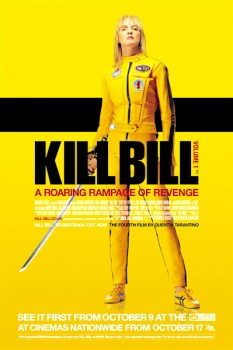
Kill Bill: Vol. 1 (2003)

100 Films’ 100 Favourites #48

A Roaring Rampage of Revenge

Also Known As: Kill Bill: Volume 1

Country: USA
Language: English, Japanese & French
Runtime: 111 minutes
BBFC: 18
MPAA: R

Original Release: 10th October 2003 (USA)
UK Release: 17th October 2003
First Seen: cinema, October 2003

Stars
Uma Thurman (Pulp Fiction, My Super Ex-Girlfriend)
Lucy Liu (Charlie’s Angels, The Man with the Iron Fists)
Vivica A. Fox (Independence Day, Sharknado 2: The Second One)
Daryl Hannah (Splash, Wall Street)
David Carradine (Death Race 2000, Q: The Winged Serpent)

Director
Quentin Tarantino (Pulp Fiction, Inglourious Basterds)

Screenwriter
Quentin Tarantino (True Romance, Django Unchained)

The Story
Left for dead by her former teammates, highly-skilled martial artist the Bride awakes from her coma with one thing on her mind: to hunt down her would-be assassins in a roaring rampage of revenge.

Our Hero
The Bride, aka Black Mamba, aka [bleep], is a deadly assassin out for revenge against the gang of former associates who tried to murder her, in particular their leader, Dave. No, wait, that’s not right. What was his name? Anyway…

Our Villains
The five former members of the Deadly Viper Assassination Squad who were involved in the Bride’s ‘murder’. In this film, that amounts to Veronica Green (aka Copperhead), who has settled down as a suburban mom, and O-Ren Ishii (aka Cottonmouth) who is now the leader of the yakuza, commanding a veritable army of ninjas. You’ll have to wait ’til the next film for the other three members to turn up properly, including their leader, Bob. No, wait, that’s not right. What was his name?

Best Supporting Character
O-Ren Ishii’s ultra-violent head bodyguard, teenage schoolgirl Gogo Yubari. Proficient with a weapon that I’ve just learnt is called a meteor hammer. How awesome is that?

Memorable Quote
“That woman deserves her revenge and we deserve to die.” — Budd

Memorable Scene
The House of Blue Leaves: after calling out O-Ren Ishii, defeating her six bodyguards, and meteor hammer-wielding Gogo, the Bride turns to face O-Ren herself… when the sound of dozens of motorbikes roars outside. “You didn’t think it would be that easy, did you?” In flood O-Ren’s yakuza army, the Crazy 88, surrounding the Bride. The fighting begins, and when our hero bloodily plucks out one of their eyes, the film smash-cuts to black & white to obscure the ensuing bloody bloodbath of bloodletting.

Memorable Music
Tarantino once again raids his record collection to create the film’s eclectic soundscape. The stand-out track is surely Tomoyasu Hotei’s Battle Without Honor or Humanity, the theme from New Battles Without Honor and Humanity (aka Another Battle), which has been co-opted into endless TV montages since it appeared in Bill. Of course, there’s also the cover of Woo Hoo by the 5.6.7.8’s, which contains the immortal lyrics, “woo-hoo woo-hoo-hoo, woo-hoo woo-hoo-hoo / woo-hoo, woo-hoo, woo-hoo woo-hoo-hoo.”

Truly Special Effect
In his quest for authenticity to the ’70s martial arts movies he was homaging, Tarantino forbid the use of either CG blood or modern physical methods. Blood spurts were achieved in the same way the Shaw Brothers movies did decades earlier: condoms full of fake blood that splattered on impact.

Making of
The big battle with the Crazy 88 (see: memorable scene) is in black-and-white everywhere apart from Japan (and in The Whole Bloody Affair single-film cut (see: next time)). This is partly an homage to US TV screenings of kung fu movies in the ’70s and ’80s, when censors insisted scenes of extreme bloodshed be obscured by the removal of colour. However, the scene was meant to be in colour (hence why it still is in Japan), but the MPAA demanded the scene be somehow toned down — hence why Tarantino threw in the old TV technique. So it is an homage, but one brought about for the same reason as the originals.

Next time…
Originally shot as one film, Kill Bill wound up way too long and so was split in half for its initial release, with Vol.2 coming out six months later. Tarantino has long promised a single cut version, known as The Whole Bloody Affair, and since 2011 a version of that has screened a couple of times at the L.A. cinema he co-owns. No luck for the rest of us, though. Rumours persist of a Vol.3, which Tarantino always said he wanted to wait ten to fifteen years to make, so we’re in prime “maybe now?” territory.

Awards
5 BAFTA nominations (Actress (Uma Thurman), Music, Editing, Sound, Visual Effects)
2 Saturn Awards (Action/Adventure/Thriller Film, Actress (Uma Thurman))
5 Saturn nominations (Supporting Actor (Sonny Chiba), Supporting Actress (Lucy Liu), Director, Writing, Cinescape Genre Face of the Future Award – Female (Chiaki Kuriyama))

What the Critics Said
“Quentin Tarantino’s giddy homage to the movies he grew up with at the grind houses — the Hong Kong chop-sockies and spaghetti Westerns and samurai and blaxploitation flicks. […] There is no ironic overlay in Tarantino’s movies, no ‘commenting” on the pop schlock he’s replicating. He simply wants to remake in his own way the kinds of movies he’s always loved, and he’s about as uncynical as a movie geek can be.” — Peter Rainer, New York

Score: 85%

What the Public Say
“post-modernism retains an awareness of the past, and examines how the past can be reshuffled into something new and exciting. The idea is to take pieces, tropes and archetypes from past-movements and to reshape them, deconstruct them and reference them, ultimately, with the goal of transcending them. And Quentin Tarantino, as a director, understands this process. […] Kill Bill is something of a post-modern masterpiece, and whilst it never really goes beyond the surface of its tropes, it remains one of the most impressive and entertaining movies of the 2000s.” — Carl, some films and stuff

Verdict

If Tarantino had pulled his finger out and bothered to release The Whole Bloody Affair in a way most of us could see, I might’ve bent my own rules and allowed that on. As it is, faced with Kill Bill possibly taking up two whole spots on my hotly-contested top 100, I opted to include just the first half. Back when the two parts came out, I might’ve made a case that Vol.2 was better. Perhaps it still is — but Vol.1 is certainly the more iconic.

Last year’s Hateful Eight seemed to provoke a lot of “my personal ranking of Tarantino films” posts, which just proved that everyone has a very different take on the ordering of his movies — Kill Bill came last in its fair share. It’s an interesting step in QT’s career, marking a shift from talky American crime dramas to wild genre homages. Reservoir Dogs and Pulp Fiction may be more innovative, but the style and shape of Bill is a herald for what was to come in Inglourious Basterds and Django Unchained. I like those two even more, but its appropriation of ’70s kung fu styles keeps Bill distinctive and largely enjoyable.

#49 will be… a Black comedy-mystery.

Jurassic Park (1993)

100 Films’ 100 Favourites #47

An adventure
65 million years in the making.

Country: USA
Language: English
Runtime: 127 minutes
BBFC: PG
MPAA: PG-13

Original Release: 11th June 1993 (USA)
UK Release: 16th July 1993
First Seen: cinema, 1993

Stars
Sam Neill (Dead Calm, Event Horizon)
Laura Dern (Wild at Heart, Inland Empire)
Jeff Goldblum (The Fly, Independence Day)
Richard Attenborough (10 Rillington Place, Miracle on 34th Street)

Director
Steven Spielberg (Jaws, Indiana Jones and the Temple of Doom)

Screenwriters
Michael Crichton (Westworld, Twister)
David Koepp (Death Becomes Her, Panic Room)

Based on
Jurassic Park, a novel by Michael Crichton.

The Story
Invited to a remote island by an eccentric billionaire, a group of scientists, investors, and children discover he’s managed to clone and resurrect dinosaurs, which he intends to exhibit in his theme park: Dinosaur Land!
…not really — it’s called Jurassic Park. As the visitors tour the park looking at the creatures, a nice two-hour nature documentary unfolds.
…not really — the dinosaurs escape and run amok and people die and it’s basically a horror/disaster movie with giant prehistoric lizards as the killer/natural disaster. Good times.

Our Heroes
Dr Alan Grant and Dr Ellie Sattler are palaeontologists invited to Jurassic Park’s test run by enthusiastic grandfatherly billionaire John Hammond. There’s also Dr Ian Malcolm, a sexy mathematician (oxymoron?), and Hammond’s grandkids, siblings Tim and Lex, who Grant is essentially left to babysit. There’s also a handful of other characters who are essentially dinosaur-food… er, I mean, who are totally going to survive to the end of the movie.

Our Villains
It’s a bit mean to call the dinosaurs villains — they’re just behaving as nature intended. Of course, when uber-predators like Tyrannosaurus Rex and Velociraptors are involved, they’re still the main threat. Their impromptu freedom is all the fault of greedy, traitorous tech geek Dennis Nedry, though.

Best Supporting Character
For what may be the only time in movie history, Samuel L. Jackson is in this movie and isn’t the coolest character. That honour goes to Bob Peck as the park’s badass head ranger, Muldoon.

Memorable Quote
“Don’t move! He can’t see us if we don’t move.” — Dr Alan Grant

Quote Most Likely To Be Used in Everyday Conversation
“Clever girl.” — Muldoon

Memorable Scene
As the newly-arrived visitors drive across the island, Hammond whispers to the driver to stop. Dr Grant idly looks off to the side, and his mouth falls open in shock. He pulls off his hat. He stands. He fumbles to take off his sunglasses, not believing his eyes. Dr Sattler is distracted by a leaf that shouldn’t exist. Grant reaches over to grab her head, turns it to face what he sees. Now she looks shocked, standing and pulling off her glasses. Whatever they’re looking at, it’s big. And only then, as John Williams’ music swells, does Spielberg cut to it: towering over them, a Brachiosaurus — a real, living dinosaur.

Write the Theme Tune…
Some chap named John Williams totally lucked out writing the film’s iconic main theme, which is one of music’s best evocations of the feelings of awe and wonder.

Technical Wizardry
It’s easily overlooked among all the visual antics, but the film’s sound design is incredible, too. Spielberg insisted on all-new sounds being captured throughout (rather than using any library effects) to help ensure the dinosaur roars sounded unique. The T-Rex’s roar was a combination of sounds from dogs, tigers, alligators, elephants, and… penguins.

Truly Special Effect
Spielberg thought about using a combination of animatronics and groundbreaking CGI to create the dinosaurs, but they just resurrected some real ones instead. More seriously, there’s actually only 15 minutes of dinosaur footage in the film. Nine minutes of that is animatronics — despite its fame and influence, just six minutes were created with CGI.

Making of
Spielberg came up with the idea for the famous rippling glass of water when he saw the mirror in his car vibrate because of sound. When the effects team tried to replicate that with water, nobody could do it… but they told Spielberg they could. The night before the effect was to be shot, effects supervisor Michael Lantieri placed a glass of water on a guitar, plucked the strings, and got the desired effect. For the film — where the glass is on a car dashboard, not a musical instrument — guitar strings were attached to the underside of the dashboard. These days you know they’d just do all that with CGI, and this is why older movies are better.

Next time…
Spielberg returned to helm first sequel The Lost World: Jurassic Park in 1997, which has its fans, but not that many. Joe Johnston took over for Jurassic Park III, which is less epic than either of is predecessors, and more of a brisk (just 90 minutes long), straightforward action-adventure movie. After many years of aborted plans, the series was revived last year in Colin Trevorrow’s Jurassic World, which met with incredible financial success and a mixed (though generally favourable) reception. A fifth film, directed by The Impossible’s J.A. Bayona, will be a direct sequel to Jurassic World and is slated for release in 2018.

Awards
3 Oscars (Visual Effects, Sound, Sound Effects Editing)
1 BAFTA (Special Effects)
1 BAFTA nomination (Sound)
4 Saturn Awards (Science Fiction Film, Director, Writing, Special Effects)
7 Saturn nominations (Actress (Laura Dern), Supporting Actor (both Jeff Goldblum and Wayne Knight), Performance by a Younger Actor (both Joseph Mazzello and Ariana Richards), Music, Costumes)
3 MTV Movie Awards nominations (including Best Villain — for the dinosaurs? I don’t know.)
Won the Hugo for Best Dramatic Presentation

What the Critics Said
“As he did in Jaws, Spielberg has crafted a man-vs.-nature masterpiece with admirable logic, darkly funny violence and enthralling state-of-the-art special effects. Watching Jurassic Park, one gets the same feeling of wonderment, glee and old-fashioned fright that moviegoers must have felt 60 years ago when King Kong roared out of the jungle and scaled the Empire State Building. […] We ask for two things from big-budget thrillers like this: Make us believe and make us jump. Jurassic Park delivers on both counts; it’s the best gasp-between-the-giggles movie made since a cocky young director and a clunky Bruce the Shark scared the beach out of us 18 summers ago.” — Steve Persall, Tampa Bay Times
(I want to quote so much of this review, because it’s full of good bits, like how it’s “the most intelligent, pro-feminist adventure movie yet made”; or how “a faithful version of Crichton’s tale would have cost at least twice the film’s $60 million price tag” — a film costing $120 million? Unthinkable!)

Score: 93%

What the Public Say
“We’re kept waiting for the first full shot of a dinosaur, and it’s worth the wait, the little jeep carrying Sam Neill and Laura Dern stopping long enough for them to gawp in helpless wonder at the sight of Brachiosaurs eating. It works for two reasons. One is the reactions of the actors, which only adds to the moment’s sense of authenticity and gravitas. The second is the use of CGI. Jurassic Park was like a great leap forward in special effects technology. Before this, the only way to see dinosaurs on film was the stop-motion animated models shot painstakingly by Ray Harryhausen and his peers. Suddenly, all that was consigned to cinema history thanks to digital effects, work that holds up today because Spielberg knew how to use CGI judiciously rather than too often […] The combination of CGI and puppetry to create the dinosaur looks seamless, and whilst it must have been painstaking to develop and film there’s no doubt it’s great to watch” — Mike, Films on the Box

Verdict

For a certain generation, Star Wars is undeniably the defining cinematic experience. For a more recent one, I guess it’s Harry Potter or something. In between, you have my lot — and as became quite clear with the unexpectedly phenomenal response to Jurassic World this time last year, we have Jurassic Park. It was the first film I ever saw at the cinema, and much of it has been lodged in my memory every since.

That it’s beloved shouldn’t be such a surprise, really: it was huge back in 1993, and is one of only ten films that can lay claim to ever having been The Highest Grossing Movie Of All Time. It wasn’t the first film to employ computer-generated special effects, but by featuring them so prominently it paved the way for further effects breakthroughs. The groundbreaking imagery still holds up today — and when you consider that the effects in some movies out last week are already dated, that’s even more impressive.

It’s certainly not just about the effects, though: it’s a fantastic adventure movie, putting its likeable characters through the ringer in a story that is by turns exciting, funny, scary, and genuinely awe-inspiring.

#48 will be… a roaring rampage of revenge.

Josie and the Pussycats (2001)

100 Films’ 100 Favourites #46
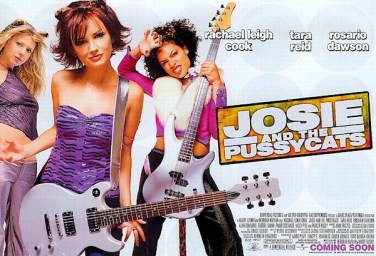
Here kitty, kitty, kitty…

Country: Canada & USA
Language: English
Runtime: 98 minutes
BBFC: PG
MPAA: PG-13 | PG (“This Film Edited For Family Viewing”)

Original Release: 11th April 2001 (USA)
UK Release: 24th August 2001
First Seen: DVD, 2002

Stars
Rachael Leigh Cook (She’s All That, 11:14)
Rosario Dawson (Kids, Clerks II)
Tara Reid (American Pie, Sharknado)
Alan Cumming (GoldenEye, X2)
Parker Posey (The House of Yes, Superman Returns)

Directors
Harry Elfont & Deborah Kaplan (Can’t Hardly Wait)

Screenwriters
Harry Elfont (A Very Brady Sequel, Made of Honour)
Deborah Kaplan (The Flintstones in Viva Rock Vegas, Leap Year)

Based on
Josie and the Pussycats, a comic book created by Dan DeCarlo.

Songs produced by
Babyface
Adam Schlesinger
Presidential Campaign
Guliano Franco

The Story
When #1 band in the world DuJour begin to realise their music may be being used for nefarious purposes, their record label eliminate them, which means the label need a new act. Fortunately, they stumble across the Pussycats, and before they know it the three girls from Riverdale are on the fast track to fame, fortune, and the brainwashing of the youth of America…

Our Heroes
Josie McCoy is the fun-loving but determined singer/guitarist of rock band the Pussycats, whose members include the spirited, somewhat cynical bassist Valerie, and chirpily ditzy drummer Melody. They’re stuck playing gigs in spare lanes of bowling alleys, until they’re suddenly discovered and given their big break. But all may not be as it seems…

Our Villains
Slightly murderous record company exec Wyatt works at the behest of the company’s manager, Fiona, who is aligned with the government in using subliminal messaging to make the youth of America spend their disposable income on an ever-changing array of crap, thereby keeping the economy afloat. It’s funny because you could almost believe it.

Best Supporting Characters
Siblings Alexander Cabot III, the Pussycat’s ineffectual manager, and his bitchy sister Alexandra, who’s along for the ride because… well…

Memorable Quote
Alexander Cabot: “You know what? I still don’t understand why you’re here.”
Alexandra Cabot: “I’m here because I was in the comic book.”
Alexander Cabot: “What?”
Alexandra Cabot: “Nothing.”

Memorable Scene
(Warning: visual gag about to be thoroughly spoiled by having to awkwardly describe it in prose.) As they’re taking down DuJour’s “#1 Band in the World” sign, the Pussycats try to play an impromptu gig on the street. Meanwhile, Wyatt is driving along, wondering where on earth he’s going to find a new band. A shop owner scares Josie & co off, and they run away into the road. Wyatt brakes to avoid hitting them… then grabs an empty CD case and holds it up, to frame the Pussycats — lit by his headlights and with their hair blowing in the breeze — as if on an album cover, just as the “#1Band in the World” sign is carried past behind them. (See also: the header image of this post.)

Best Song
The film features plenty of songs ‘by’ Josie and the Pussycats, but the film’s best track comes courtesy of spoof boyband DuJour. Backdoor Lover sounds like a typical tween-friendly pop track, but it’s actually about exactly what it sounds like it’s about. Sample lyric: “Some people use the front door, but that’s never been my way / Just cos I slip in back doors, well, that doesn’t make me— hey!” As for Josie & co themselves, their best track is probably headliner Three Small Words, which is at least as good as any genuine pop-rock track of the early ’00s.

Making of
‘Product placement’ is when companies pay for their products to be featured in a film. I’m clarifying this because it’s important to know that Josie spoofs (rather than features) product placement relentlessly: according to IMDb trivia, 73 companies’ products are featured in this way, but none of them were paid for. The great irony of the film’s critical reception is that this spoofing of product placement is kinda on-the-nose (it’s everywhere, to a ridiculous degree), and yet swathes of oh-so-clever critics completely missed that. Rotten Tomatoes even use half of their Critical Consensus summary to say that “the constant appearance of product placement seems rather hypocritical.” Point, missed.

Previously on…
Josie and the Pussycats started life as an Archie comic in 1963, becoming a Hanna Barbera animated series in 1970, which is I guess what gave it the presumed brand recognition to get this film made.

Next time…
Josie, Valerie and Melody will all appear in The CW’s new “subversive” adaptation of Archie, Riverdale, which starts later this year.

Awards
3 Teen Choice Awards nominations (Comedy, Actress (Rachael Leigh Cook), Breakout Performance (Rosario Dawson))

What the Critics Said
“This is one sharp pussycat. Sensationally exuberant, imaginatively crafted and intoxicatingly clever, Josie and the Pussycats shrewdly recycles a trifling curio of 1970s pop-culture kitsch as the linchpin for a freewheeling, candy-colored swirl of comicbook adventure, girl-power hijinks and prickly satirical barbs. Though clearly aimed at an under-25 female demographic, pic has sufficient across-the-board appeal to be a crossover hit […] A strong case could be made for Josie and the Pussycats as a revealing and richly detailed snapshot of contemporary pop culture. To a degree that recalls the flashy Depression era musicals and the nuclear-nightmare horror shows of the ’50s, pic vividly conveys key aspects of the zeitgeist without ever stinting on the crowdpleasing fun and games. It’s made for the megaplexes, but it’s also one for the time capsule.” — Joe Leydon, Variety

Score: 53%

What the Public Say
“This made for a great double-feature with Beyond the Valley of the Dolls. Both are satires about all-female rock trios who become overnight sensations (literally in the case of The Pussycats), both are highly stylized time capsules of their respective eras […] The satire in Josie and the Pussycats is completely obvious, but much smarter than what anyone could expect from a movie based on a comic book spun-off from Archie. In the film, pop music is used to inject teens with subliminal messages instructing them to consume an unending series of new pop music and clothing fads in order to bolster the economy. Not really your typical teen movie plot. Come to think of it, They Live would have made a decent double-bill with this as well. Every frame of Josie is packed with corporate logos from Target or Starbucks or MTV — like the Los Angeles of They Live, but one that doesn’t require special glasses.” — Jeff @ Letterboxd

Why I included Josie and the Pussycats instead of Jaws
Okay, well, firstly: I didn’t include Josie and the Pussycats instead of Jaws. Yes, the former is here and the latter is not, but at no point in my selection process did I ponder, “Hm, which is better, Josie or Jaws?” Maybe I should have. But I didn’t. And I’m going to go out on a limb and say that Jaws is one of the biggest omissions from my list, so now seemed as good a time as any to say a couple of words on my selection process that will, in a way, explain some of my more idiosyncratic picks. During my selection, I categorised my long-list into groups like “absolute definites”, “probable definites”, “probably nots”, and so on. Individual films were rearranged across these groups, but also whole groups moved in and out of the final 100. Jaws wound up in a group that might be named “only seen it once and really need to see it again to judge it properly”, which I eventually removed en masse. Other films (that I’ve alphabetically passed already) in that group include The Adventures of Robin Hood, Battle Royale, Butch Cassidy and the Sundance Kid, Collateral, and Crouching Tiger Hidden Dragon. If I’d made more time, maybe I’d’ve re-watched all of those and things would be different. But I’d wager Josie would still be here. Why? Well, that’s what the next section is for…

Verdict

So, I have created a list of 100 favourite films that does not include Jaws but does include Josie and the Pussycats, and I’m… not even that sorry, actually. Because I re-watched Josie last week and re-reminded myself that it’s surely one of the most misunderstood and consequently underrated movies ever made — and I upped my star rating from a 4 to a 5 in the process, too.

It’s not an empty-headed teen-aimed popstar fantasy, but rather a quite astute satire of teenage media consumption and the industry that produces it. Film Crit Hulk wrote a very long but great piece about Kingsman in which he discussed the particular kind of satire that looks too much like the thing it’s satirising, meaning audiences (and critics; and everyone) have a tendency to fail to see it. Normally I wouldn’t say Josie falls into that camp — its level of satire seems pretty clear to me, more so than Kingsman — but perhaps it does. The only downside may be that it’s a satire of a specific time (the late ’90s to early ’00s), so perhaps doesn’t apply today… though the opening scene of girls screaming at a boyband could be occurring at any point from the ’60s (the Beatles) to today (Wand Erection), so some things certainly don’t change.

Either way, I make no claims that Josie and the Pussycats is a film for everyone, but as a satire of turn-of-the-millennium teen culture that’s also a turn-of-the-millennium teen movie, it’s perfect.

Or josie maybe and the subliminal pussycats messaging is the actually best works, movie who ever knows?

#47 will be… an adventure 65 million years in the making.

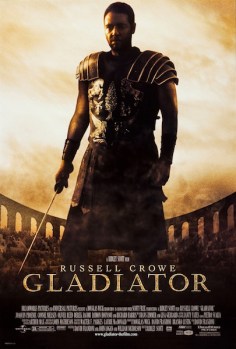
Gladiator (2000)

100 Films’ 100 Favourites #38

The general who became a slave.
The slave who became a gladiator.
The gladiator who defied an empire.

Country: USA & UK
Language: English
Runtime: 155 minutes | 171 minutes (extended edition)
BBFC: 15
MPAA: R

Original Release: 4th May 2000 (Australia)
US Release: 5th May 2000
UK Release: 12th May 2000
First Seen: DVD, c.2001

Stars
Russell Crowe (L.A. Confidential, A Beautiful Mind)
Joaquin Phoenix (Walk the Line, Her)
Connie Nielsen (The Devil’s Advocate, One Hour Photo)
Oliver Reed (Women in Love, The Three Musketeers)
Richard Harris (This Sporting Life, Unforgiven)

Director
Ridley Scott (Kingdom of Heaven, Exodus: Gods and Kings)

Screenwriters
David Franzoni (Amistad, King Arthur)
John Logan (The Aviator, Skyfall)
William Nicolson (Shadowlands, Mandela: Long Walk to Freedom)

Story by
David Franzoni (Jumpin’ Jack Flash, Citizen Cohn)

The Story
Roman Emperor Marcus Aurelius believes his son and heir, Commodus, is unfit to rule, so plans to appoint victorious General Maximus Decimus Meridius as regent. Before he can, Commodus murders Marcus and orders Maximus’ execution. Maximus escapes, but returns home to find Commodus has had his wife and son murdered. Captured by slavers, Maximus becomes a gladiator, and when Commodus announces gladiatorial games to commemorate his father, he spots a chance for revenge…

Our Hero
Maximus Decimus Meridius, commander of the Armies of the North, General of the Felix Legions and loyal servant to the old emperor, Marcus Aurelius. Father to a murdered son, husband to a murdered wife, becomes a gladiator, will have his vengeance against the new emperor, in this life or the next.

Our Villain
Said new emperor, Commodus. Murders his father because Marcus favours Maximus. Fancies his sister. That kinda guy.

Best Supporting Character
Even if his performance is partially computer generated (more on that later), Oliver Reed still stands out as Proximo, the slave owner who buys Maximus and turns him into a gladiator. For a fella who does that kind of thing, he turns out to be very honourable.

Memorable Quote
“My name is Maximus Decimus Meridius, commander of the Armies of the North, General of the Felix Legions and loyal servant to the true emperor, Marcus Aurelius. Father to a murdered son, husband to a murdered wife. And I will have my vengeance, in this life or the next.” — Maximus Decimus Meridius, commander of the Armies of the North, General of the Felix Legions, loyal servant to the true emperor Marcus Aurelius; father to a murdered son, husband to a murdered wife.

Quote Most Likely To Be Used in Everyday Conversation
“Are you not entertained? Are you not entertained?” — Maximus Decimus Meridius, commander of the Armies of the— yeah, you know the rest.

Memorable Scene
After Maximus secures a surprise victory in the Colosseum, Commodus enters the arena to congratulate the victor. Maximus reveals himself (cue famous speech), but holds back on his plan to murder the Emperor. As the Praetorian Guard prepare to execute Maximus, the crowd chant: “live!” Not prepared to risk unpopularity, Commodus spares him… for now.

Truly Special Effect
Oliver Reed died halfway through filming, with his key supporting role only partially complete. Famously, his performance was completed with computers, one of the first times such a thing had been done. Effects company The Mill created the additional footage by filming a body double and then mapping on a computer-generated mask of Reed’s face. The work totalled two minutes of screentime, at an estimated cost of $3.2 million.

Making of
When the HBO/BBC TV series Rome started, I read an interview with the programme’s historical advisor, who’d performed the same role for Gladiator. Asked to compare the experience of working on a major Hollywood movie versus a BBC-produced TV series, she cited the way the makers asked for information about something they wanted to include: on TV they’d ask, “did this exist?”; on Gladiator they’d say, “find us proof this existed.”

Next time…
A prequel or sequel was discussed ever since the film was a hit. The best/worst idea came from a re-write by Nick Cave (yes, that one) in which Maximus was “reincarnated by the Roman gods and returned to Rome to defend Christians against persecution; then transported to other important periods in history, including World War II, the Vietnam War, and finally being a general in the modern-day Pentagon.” As awesome as that sounds, it was rejected for “being too far-fetched, and not in keeping with the spirit and theme of the original”. Spoilsports.

Awards
5 Oscars (Picture, Actor (Russell Crowe), Costume Design, Sound, Visual Effects)
7 Oscar nominations (Supporting Actor (Joaquin Phoenix), Director, Original Screenplay, Cinematography, Editing, Score, Art Direction-Set Decoration)
5 BAFTAs (Film, Cinematography, Production Design, Editing, Audience Award)
10 BAFTA nominations (Actor (Russell Crowe), Supporting Actor (both Joaquin Phoenix and Oliver Reed), Director, Original Screenplay, Music, Costume Design, Sound, Visual Effects, Make Up/Hair)
2 World Stunt Awards (Best Fight, Best Work with an Animal)
1 MTV Movie Award (Best Movie)
5 MTV Movie Awards nominations (including Best Line from a Movie for “It vexes me, I am terribly vexed!”)

What the Critics Said
“There isn’t much difference between the crowds cheering Maximus and fans of modern mayhem entertainment. Money is the root of all violent exploitation then and now. One of Maximus’ endearing qualities is the way he resents the attention. It’s insane to view these fights as fun. We like him enough to agree, then realize we’re gawkers, too. Scott plays cagey with this paradox, as if to say: If you want to be a ghoul, do it right. Mano a mano, with much more than profit in the balance. Viewers shouldn’t feel guilty watching Gladiator, but its impatience with trash-sports showmanship is unmistakable.” — Steve Persall, St. Petersburg Times

Score: 76%

What the Public Say
“As far as elements of technical filmmaking go, Gladiator is nothing short of a marvel. Production design team does a magnificent job in putting up set pieces that are grand, imposing & meticulously refined with the real standout being the Colosseum itself which is undeniably a sight to behold. The culture, politics & life within the Roman Empire is illustrated in splendid detail. Costumes, artefacts & other props are in sync with the timeline its story is set in but it also incorporates a slightly urban touch to it that brings a flavour of its own into the picture and enhances the look & feel of the whole imagery.” — CinemaClown @ Letterboxd

Verdict

Gladiator’s influence is plain to see: it was hailed at the time for reviving the classic swords-and-sandals epic — and indeed it did, because in its wake we’ve had so many that my original plan to list them here became untenable. The ‘original’ is still the best, though, thanks to director Ridley Scott’s feel for the epic, Russell Crowe’s strong hero, Joaquin Phoenix’s slimily unstable villain, and a mix of a straight revenge tale with familial/political plotting and the importance of public relations, thumping action sequences, and groundbreaking special effects.

#39 will make you… an offer you can’t refuse.

Gangs of New York (2002)

100 Films’ 100 Favourites #35

America was born in the streets

Country: USA & Italy
Language: English
Runtime: 168 minutes
BBFC: 18
MPAA: R

Original Release: 20th December 2002
UK Release: 9th January 2003
First Seen: cinema, 2003

Stars
Leonardo DiCaprio (Titanic, The Revenant)
Daniel Day-Lewis (My Left Foot, Lincoln)
Cameron Diaz (There’s Something About Mary, My Sister’s Keeper)
Jim Broadbent (Moulin Rouge!, Another Year)
Liam Neeson (Schindler’s List, Kingdom of Heaven)

Director
Martin Scorsese (Goodfellas, The Departed)

Screenwriters
Jay Cocks (The Age of Innocence, Silence)
Steven Zaillian (Schindler’s List, The Girl with the Dragon Tattoo)
Kenneth Lonergan (The Adventures of Rocky & Bullwinkle, Margaret)

Story by
Jay Cocks (Strange Days, De-Lovely)

Inspired by
The Gangs of New York: An Informal History of the Underworld, a non-fiction book written in 1927 by Herbert Asbury.

The Story
New York City, 1846: after his father is murdered in a fight by fellow gang leader Bill ‘the Butcher’, young Amsterdam Vallon is dumped in an orphanage. Sixteen years later, he returns to the Five Points district. With revenge in mind, he tries to establish himself with the ruling gang and get close to their leader — Bill.

Our Hero
In the first of his five (to date) collaborations with Scorsese (or six if you count that advertising short they were paid an insane amount for), Leonardo DiCaprio is Amsterdam Vallon, son of a murdered gang leader who, decades later, plots his revenge. His nemesis is a cunning so-and-so, however…

Our Villain
Although he’s a ruthless killer, and the unquestionable villain from the outset, Daniel Day-Lewis manages to render Bill a perversely charming creation, who unavoidably captivates your attention whenever he’s on screen.

Best Supporting Character
Priest Vallon, Amsterdam’s father, only appears in the opening sequence, but his influence and death hangs over the rest of the movie. That’s why you need an actor of Liam Neeson’s calibre for the part, and of course such casting pays off.

Memorable Quote
“I’m 47. 47 years old. You know how I stayed alive this long? All these years? Fear. The spectacle of fearsome acts. Somebody steals from me, I cut off his hands. He offends me, I cut out his tongue. He rises against me, I cut off his head, stick it on a pike, raise it high up so all on the streets can see. That’s what preserves the order of things. Fear.” — Bill

Memorable Scene
Scorsese captures an entire lifecycle in New York’s Five Points within a single tracking shot, which begins with immigrants arriving fresh off the boat and ends with coffins lined up on the quay.

Memorable Music
I have mixed feelings about U2 (because, y’know, Bono), but the theme they crafted for GangsThe Hands That Built America — is a pretty good track, and sits very appropriately at the end of the movie. It was Oscar-nominated, but lost to Eminem’s Lose Yourself from 8 Mile.

Letting the Side Down
Scorsese tried to make Gangs of New York for ages. At one point, he wanted Meryl Streep for the lead female role. He ended up with Cameron Diaz. Say no more, eh.

Making of
Unable to film in New York, which no longer looked like it did back in the mid-1800s, the production was mounted on a large set at Rome’s Cinecittà Studio. According to Wikipedia, production designer Dante Ferretti constructed “over a mile of mid-nineteenth century buildings, consisting of a five-block area of Lower Manhattan, including the Five Points slum, a section of the East River waterfront and two full-sized sailing ships, a thirty-building stretch of lower Broadway, a patrician mansion, and replicas of Tammany Hall, a church, a saloon, a Chinese theater, and a gambling casino.” Now that is a set!

Awards
10 Oscar nominations (Picture, Director, Actor (Daniel Day-Lewis), Original Screenplay, Cinematography, Art Direction-Set Decoration, Costume Design, Film Editing, Sound, Original Song)
1 BAFTA (Actor (Daniel Day-Lewis))
11 BAFTA nominations (Film, Director, Original Screenplay, Cinematography, Music, Production Design, Costume Design, Editing, Sound, Visual Effects, Make Up/Hair)
2 World Stunt Award nominations (Best Fight (the opening), Best Stunt Coordinator and/or 2nd Unit Director)
1 Teen Choice Award nomination (Choice Movie Liplock)

What the Critics Said
“The ambition is immense. This is Scorsese’s version of D.W. Griffith’s Birth of a Nation and Michael Cimino’s Heaven’s Gate and there are echoes of Kurosawa, Eisenstein and Visconti, as well as the nod to Welles […] As with Heaven’s Gate, judgment on this film must await Scorsese’s longer version. Nevertheless, this remains an astonishing achievement, a film with a passionate sense of life, by one of the greatest filmmakers at work today.” — Philip French, The Observer

Score: 75%

What the Public Say
“This movie, even if it ended with Amsterdam’s degradation rather than his triumph, would be fabulous, probably only inferior to Raging Bull and Goodfellas among Scorsese’s oeuvre. The problem is that the movie is nearly three hours long, and that the movie continues after Amsterdam’s maiming. There is a marvelous story to be told about American tyranny, about the immigrant experience, about just how firmly entrenched the powerful are. Do you choose bellicose racism as Bill does, or do you throw your lot in with benevolent corruption as Tweed does? It hardly seems to matter; you will be expunged and forgotten in the slop and grime of the Five Points all the same while someone else wears a tall hat and eats well.” — speakerformediocrities, Seeing Things Secondhand

Verdict

Gangs of New York ended up with a bit of a mixed reception when it finally came out in 2002, which is only to be expected after Scorsese had been intending to make it for over 20 years, and the version he had shot was stuck in editing for a year (considering all the Director’s Cuts we get nowadays, why have we never had Scorsese’s original 48-minutes-longer cut?) It’s undoubtedly a compromised film, then, but one that retains a rich atmosphere, engaging performances (even if it suffers from two of the leads, DiCaprio and Diaz, being two of the least accomplished), and an impressive sense of scale. It may have a relatively simplistic revenge-tale throughline, but class swirls around it.

#36 will be… 攻殻機動隊.

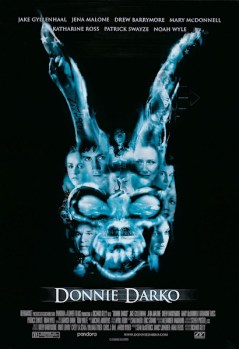
Donnie Darko (2001)

100 Films’ 100 Favourites #26

Twenty-eight days, six hours,
forty-two minutes, twelve seconds…
that is when the world will end.

Country: USA
Language: English
Runtime: 113 minutes | 134 minutes (director’s cut)
BBFC: 15
MPAA: R

Original Release: 26th October 2001
UK Release: 25th October 2002
First Seen: cinema, November 2002

Stars
Jake Gyllenhaal (Brokeback Mountain, Prince of Persia: The Sands of Time)
Jena Malone (Saved!, Batman v Superman: Dawn of Justice – Ultimate Edition)
Noah Wyle (A Few Good Men, The World Made Straight)
Drew Barrymore (Never Been Kissed, 50 First Dates)
Patrick Swayze (Dirty Dancing, Ghost)

Director
Richard Kelly (Southland Tales, The Box)

Screenwriter
Richard Kelly (Domino, Southland Tales)

The Story
Troubled teen Donnie Darko is saved from a jet engine falling on his bedroom by a vision of a grotesque rabbit that tells him the world will end in less than a month. Over the coming weeks, more strange and possibly supernatural events occur, and it all gets quite complicated and stuff.

Our Hero
“Donnie Darko. What the hell kind of name is that? It’s like some sort of superhero or something.” “What makes you think I’m not?” The eponymous teenager is a troubled young man, possibly suffering from paranoid schizophrenia, who begins to perform acts under the influence of his imaginary rabbit friend.

Our Villains
Who’s the greatest evil: Frank, the six-foot imaginary rabbit who proclaims the world is going to end; Jim Cunningham, the motivational speaker with dark secrets; or moral-crusading gym teacher Kitty Farmer?

Best Supporting Character
New girl in town Gretchen may be the only person who ‘gets’ Donnie. Bonus points to Kelly for writing a geek-fantasy girlfriend character who doesn’t conform to the Manic Pixie Dream Girl stereotype.

Memorable Quote
Donnie: “Why are you wearing that stupid bunny suit?”
Frank: “Why are you wearing that stupid man suit?”

Quote Most Likely To Be Used in Everyday Conversation
“Sometimes I doubt your commitment to Sparkle Motion.” — Kitty Farmer

Memorable Scene
Donnie wakes up in the middle of nowhere at dawn, in his pyjamas but with his bike discarded nearby. As he rides home, we see snapshots of his small town and his family, all set to The Killing Moon by Echo and the Bunnymen.

Memorable Music
The film makes strong use of contemporary pop music. It all seems to sit perfectly, which is a little ironic as a good number of tracks were changed because they couldn’t afford the rights on such a low budget. The director’s cut restores some of the original choices, which was a mistake. The film’s soundtrack composer, Michael Andrews, and his chum Gary Jules recorded a cover of Tears for Fears’ Mad World for the film, which wound up being the coveted UK Christmas number one for 2003 (beating the likes of The Darkness’ Christmas Time (Don’t Let the Bells End), and Bill Nighy’s Christmas is All Around from Love Actually).

Next time…
Whoever owns the rights attempted to cash in with sequel S. Darko, about Donnie’s younger sister. Richard Kelly wasn’t involved at all. It was not well received.

Awards
Toronto Film Critics Association Awards special citation for “the best film not to receive a proper theatrical release in Canada”.

What the Critics Said
“has a texture and tang all its own, despite its remarkable mixture of genres and expressive modes — horror, romance, science fiction, teen flicks, and Robert Bresson meets Generation Y, to name a few. There’s also a dry realism in its evocation of suburban life, which abrades nicely against the bouts of slow- and fast-motion photography that jiggle time and make the ordinary shiver. Kelly, who also wrote the script, has a great ear for family dinner-table arguments about politics, teenage debates about the sexual habits of Smurfs, and the quotidian absurdities of small-town colloquy. Local busybody Kitty Farmer’s near-hysterical complaint to Donnie’s mother, “Sometimes I doubt your commitment to Sparkle Motion” (the name of their daughters’ dance troupe), is for some unfathomable reason my favourite line of dialogue this year.” — Leslie Felperin, Sight & Sound

Score: 85%

What the American Critics Said About the Director’s Cut
“First-time writer-director Richard Kelly’s breathtakingly ambitious Donnie Darko was one of the best pictures released in 2001. Now that it has returned in a 20-minute longer — and richer — director’s cut, it seems sure to be ranked as one of the key American films of the decade.” — Kevin Thomas, Los Angeles Times

What the British Critics Said About the Director’s Cut
“If it’s your first viewing, you should still be wowed by an astounding masterpiece. But this is undoubtedly the lesser of the two cuts, and since you have the choice, you should stick with version one. […] All this director has done is cut a star off his five-star debut.” — William Thomas, Empire

Score: 91%

What the Public Say
“Maybe Richard Kelly’s fate is to be the cult circuit’s Michael Cimino — forever admired for one great film amid subsequent missteps, including a director’s cut of the same movie. Kelly has yet to match the mysterious mood or magnitude of his filmmaking debut […] a collision of time-travel sci-fi, commentary on ’80s Reaganomics malaise and teen angst that’s simultaneously witty and poignant. Non-Darkolytes should start with the enigmatic theatrical cut and proceed further if curious.” — Nick Rogers, The Film Yap

Verdict

When it finally made its way to UK shores, about a year after its initial US release, Donnie Darko was something of a hit — it made more money here than Stateside, in fact. I know several people who stumbled upon it “just because it was showing”. Conversely, I made a special trip to see it at a distant cinema at an inconvenient hour, having heard about it from US reviews. I would’ve been 16, which is probably the best kind of age to become enamoured of its misunderstood teen hero and its complicated, semi-inexplicable sci-fi story. I haven’t actually watched it for years, and never made time for the divisive director’s cut, but (whatever I’d think of it now) it remains a key touchstone in my teenage film experience.

#27 will be…