2013 #80
Mike Nichols | 120 mins | streaming (HD) | 1.85:1 | USA / English | 15 / R
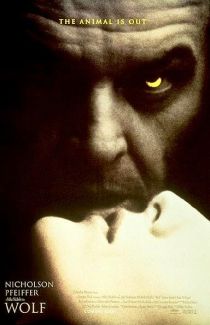 Without meaning to spoil anything, Wolf is rated R for “language and werewolf attacks”! I love the ludicrous specificity the MPAA indulge in sometimes. I know the BBFC’s famous “mild peril” is pretty useless, but at least they draw from an academic- and objective-sounding pool of phrases in their summaries, rather than throwing in ‘advice’ that is meaningless (there are perfectly PG werewolf attacks in other movies).
Anyway, Wolf. It’s about werewolves. But don’t go thinking this is like An American Werewolf in London or The Wolfman, and certainly don’t attach it to the modern Twilight-type werewolf saga — this is a supernatural movie For Adults. Not in the sense of there being excessive violence or sex or swearing or what have you, which you might think when I’ve used adults with a capital A and highlighted the R rating — though there is a dash of all those things — but, rather, because of the characters and their situations. For instance, the titular (were)wolf is not a muscle-ripped teenage boy, but a middle-aged literary agent played by Jack Nicholson. No one wants to see him running around in the woods topless, do they? (I understand that’s the primary appeal of the werewolves in Twilight. I’ve still not seen it.)
And it’s not just about horror movie stuff, either. When he gets bitten, Nicholson’s character thinks it was just by a regular wolf. He has it treated by a doctor, that kind of thing. But then he begins to exhibit more self assurance in the workplace. Rather than meekly accepting his new posting to the back of beyond, with his protege and supposed friend stealing his current job, or that his wife is having an affair, he fights both these things. Only later does he start getting all hairy and kill-y and visiting-mysterious-shaman-y.
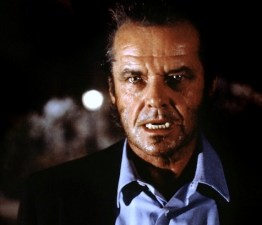 It’s those early sections where the film is at its best, when it tries to stay grounded in some form of realism. Any time it gets too Fantasy, it begins to get a tad silly. The climax in particular seems to come from a different film: Wolf abruptly moves from being an office politics drama with a fantasy edge, to a full-on manwolf-vs-manwolf brawl. As a straight dramatic director, Mike Nichols doesn’t seem to quite have the chops to pull off this fantasy/horror stuff without it beginning to look daft. That might not be entirely his fault, however, as reportedly the film was delayed by months to re-shoot the entire third act. Perhaps originally it had something more in-keeping? That said, he did want Michelle Pfeiffer to wear a red-hood sweatshirt during the finale! She refused, fearing it would harm the film’s credibility. She was right — it’s quite silly enough as it is.
Things do come to a head with nicely ambiguous ending, however. (Half-spoilers follow.) Rather than some pat “hero gets away with it in the end” conclusion, or even a “hero sacrifices self” moment, the primary ending is uncommon, followed by a coda that’s open to interpretation. Empire’s review reads it as a cliché, but I think that does it a disservice. It’s not enough to redeem the film, but I liked it.
One other aside I must mention is the budget: apparently it cost $70 million! How?! It would be a marvel for it to reach that figure today, never mind 20 years ago.  I can only presume there were hefty paydays for Nicholson and Pfeiffer, both megastars at the time, and possibly Christopher Plummer’s supporting role, maybe Nichols, and on scoring duties (obviously), Ennio Morricone. And maybe those re-shoots were really extensive. Or perhaps they spent it all on the nighttime aerial photography of Manhattan, which is gorgeous — that would’ve been worth it.
All told, Wolf is an unbalanced film. The first hour-ish feels quite fresh, mashing together two different genres to use one as an unusual prism with which to commentate on a particular world. When it morphs into more standard werewolf territory, however, it throws away what was a unique facet in lieu of some half-rate horror-action theatrics. Shame.
This review is part of the 100 Films Advent Calendar 2013. Read more here.

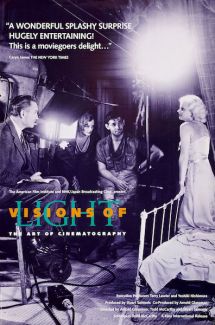 Cinematographers discuss cinematography in this AFI-produced documentary. Initially a whistlestop history of film photography, it segues into analysis of movies the interviewed DPs had shot. Unfortunately, casual film fans may judge it monotopical, while hardened cineastes may find it a haphazard, Hollywood-centric overview.
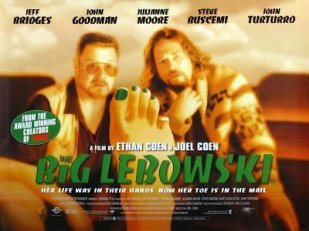 I confess, I’ve never really got on with the Coen brothers. I liked
 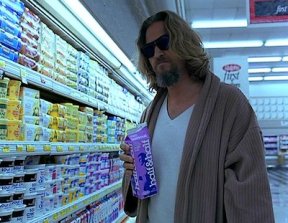 I don’t wholly agree, though I didn’t unabashedly love the film as some do. It’s perhaps a bit “of its time” now, and getting a little “you had to be there”; coming to it almost two decades later, it exemplifies a ’90s American mainstream/independent-borderline filmmaking sensibility; the kind of bracket the early works of Tarantino might also fall into, for instance.
 If one did want to look into Lebowski more deeply, the most interesting facet is that noir one. It’s quite lightly of that genre — very much an updating and re-appropriation of certain tropes, rather than a straight-up example of where the modern version(s) of the genre is (are… or were). It feels like the Coens were consciously putting a present-day(-then) character through the paces of a traditional noir plot. Whether that was the deliberate structural conceit or just a side effect of making a noir pastiche, I couldn’t say.
 Frank Drebin and the crew at Police Squad are back for the usual mix of silly one-liners and farcical slapstick. Fortunately, they’re as entertaining as ever.
 Normally I’m a stickler for watching film series in order, even when it doesn’t matter, so skipping 31 sequels really isn’t my style… but this was on telly one night in July and I was in just the right mood, so
 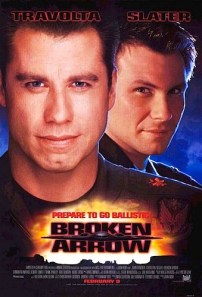 US Air Force pilot Jon Travolta crashes a plane, steals a nuke, and former friend and colleague Christian Slater must stop his dastardly plan in this ever so ’90s actioner.
 Bruce Willis stars as a down-on-his-luck PI who stumbles into a sport/politics conspiracy in this early-’90s action-thriller from screenwriter Shane Black (
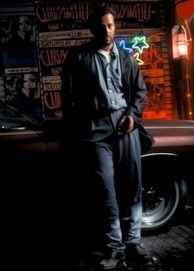 — pitch black frames punctuated by glowing coloured lights. On the whole, it looks gorgeous.
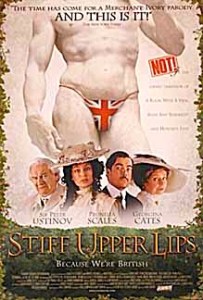 Spoof of British ‘Heritage’ films and TV series, particularly the work of Merchant Ivory. It was probably a bit belated: released in 1998, you’ll note most targets are from the ’80s. It only even made it to TV recently (I watched on
 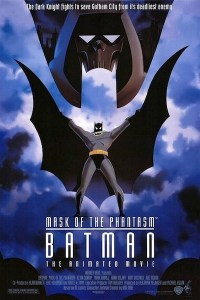 Batman movies have a habit of provoking strong reactions.
 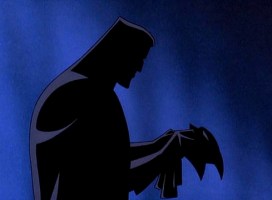 One of the main reasons the film succeeds is that look back at Bruce Wayne’s early days as a crime fighter. Batman’s origin is oft told — too oft, truth be told — but they thankfully don’t rehash it here. Instead, early in Batman’s career Bruce falls in love and finds happiness, causing him to question whether to continue down the path he’s already dedicated his life to. The scene where he talks to his parents’ grave, expressing his guilt at potentially finding happiness after so much mourning, is one of the most powerful, emotional moments in all of Batman’s many iterations.
 But instead of falling in some nasty halfway-house, Phantasm turns up trumps on all fronts.
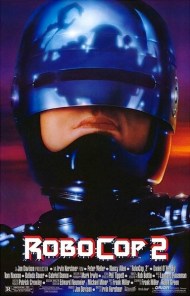 The consensus opinion seems to be that the RoboCop films exist on a steep downward trajectory of quality, starting with the pretty-good
 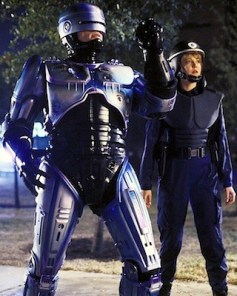 and though it was reportedly massively re-written after his work was done (to the extent that, decades later, there was a comic book miniseries that adapted his original version) I think his touch can still be felt at times.
 100Films.co.uk