The Iron Giant (1999)

2016 #86
Brad Bird | 83 mins | DVD | 2.35:1 | USA / English | U / PG
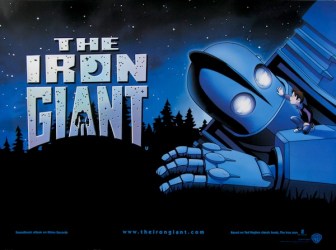
Adapted (loosely) from Ted Hughes’ children’s novel The Iron Man, the feature debut of director Brad Bird (The Incredibles, Ratatouille, now live-action stuff) relocates the book’s story to ’50s America and mixes in some Cold War elements. The film was somewhat verboten in our household when it came out, because the book was beloved and the film looked so different, but its reputation has only grown in the ensuing decade-and-a-half — and Hughes approved of it anyway.

This version sees the titular robot (voiced by Vin Diesel) crash to Earth near Maine in late 1957, the home of nine-year-old Hogarth Hughes (Eli Marienthal) and his mom Annie (Jennifer Aniston). After the giant eats the Hughes’ TV aerial, Hogarth tracks it to take a photo, and ends up saving it from electrocution when it tries to eat a power station. As the giant sneaks around the countryside eating cars and causing train crashes, it attracts the attention of government agent Fox Mulder from the FBI’s X Files Kent Mansley from the Bureau of Unexplained Phenomena (Christopher McDonald), who’s intent on uncovering and destroying the giant. Hogarth tries to hide the friendly creature with the help of artist Dean (Harry Connick Jr.), but could it be Mansley isn’t so wrong about the threat it poses?
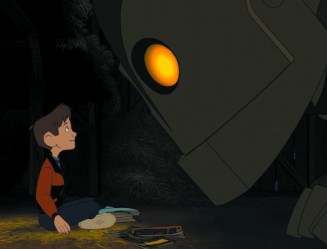
The story, as reconstructed by Bird and screenwriter Tim McCanlies, integrates influences from ’50s B-movies (very apt for a giant robot ‘monster’) and Cold War/Space Race paranoia for a potent storyline that has a different emphasis from the novel’s “world peace” finale, but nonetheless is promoting understanding of alien/foreign powers and, y’know, deep stuff like that. Alternatively — or, rather, concurrently — it’s an E.T.-esque tale of a boy and his quirky alien friend. Bird was keen to emphasise character over action and mindless spectacle, and that’s really where the film’s strengths lie.

Well, that and the technical aspects. The animation is stunningly well done, exhibiting exceptional fluidity and detail in its character animation, in particular. That’s in spite of the film having a reduced budget and time schedule thanks to the box office failure of previous animations by the studio — in Bird’s words, they had “one-third of the money of a Disney or DreamWorks film, and half of the production schedule”, but that meant greater production freedom (so long as they managed that budget). I guess that’s why the film’s ended up only growing in stature since its first release — because it’s able to be committed to its creators’ vision, rather than being battered into homogeneity by a studio desperate for a return on considerable investment.

Beautifully animated and affectingly told, with a style that nicely homages classic sci-fi movies, The Iron Giant is a film that deserves the reputation it has gradually amassed — and which only continues to grow, I think. Last year saw the release of an extended Signature Edition, with a couple of short scenes added, which comes to US Blu-ray (alongside the original version) later this year. Just from reading about those new scenes, I’m not convinced they’ll improve the experience, but it’ll certainly be worth finding out.

5 out of 5

The Iron Giant was viewed as part of my What Do You Mean You Haven’t Seen…? 2016 project, which you can read more about here.

This review is also part of 1999 Week.
The Limey (1999)

2016 #72
Steven Soderbergh | 89 mins | streaming (HD) | 16:9 | USA / English | 18 / R

There’s an argument to be made that, from a cinematic perspective, mainstream US cinema these days is boring. Look at the kind of films American auteurs were producing in and around the studio system in the ’90s and early ’00s: Pulp Fiction, Fight Club, Memento, Requiem for a Dream; films that experimented with how they told their stories, the shots they used, how they were edited. Does anyone do that now? Or does anyone do it successfully?

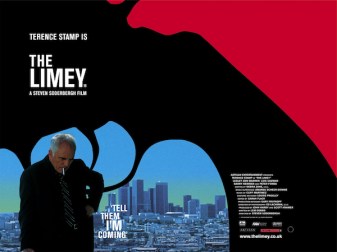
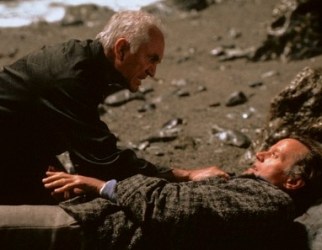
Personally, I’ll be adding Steven Soderbergh’s The Limey to that list. At its most basic it’s a straightforward thriller, in which a British crook played by Terence Stamp is released from prison and travels to L.A. to find out the truth behind the death of his daughter (played in flashbacks by Melissa George, which is kinda weird because she has little to do and no dialogue), and probably take revenge on those responsible. By all accounts, the screenplay by Lem Dobbs was indeed that run-of-the-mill. In the hands of Soderbergh, however, it becomes an arthouse-ish experience, mainly thanks to the editing.

It’s the kind of cutting that’s hard to accurately describe on the page without overdoing it. The movie jumps back and forth in time — not from scene to scene, but from shot to shot. For instance, Stamp’s arrival at the home of his daughter’s friend, and the conversation that follows, is jumbled up with shots of him on the plane, driving in the city, the people his daughter was associating with, and even within the conversation itself, sometimes speech continues on the soundtrack while we watch the characters not talking, or doing something else. This isn’t a conceit Soderbergh uses for one scene, or wheels out now and then, but an overall approach. Some sequences are more thick with it than others, but it’s always right around the corner. It creates a unique sensation. Not disconcerting, exactly, but mysterious and querying. It has you constantly question what you’re watching — is it a memory? A plan? A fantasy? A delusion? It draws connections back and forth across the timeline of the story, bringing out thematic angles. At its most key, it helps explain what happens at the end (too bluntly for some reviewers, I should add). This collage-like style — which unlike, say, Memento’s back-to-front narrative has no obvious in-story point — will certainly not be to everyone’s taste, but it presents an interesting challenge to our usual ideas of how a film should be constructed.
This led to a somewhat infamous commentary track on the film’s DVD release. The A.V. Club even included it in their New Cult Canon series — not The Limey, that is, but The Limey’s commentary track. In it, Soderbergh and Dobbs discuss the filmmaking process, understandably focusing on how screenplays get transformed, and how screenwriters get screwed over. The Limey that ended up on screen is very different to Dobbs’ screenplay, having been aggressively filtered by Soderbergh. This isn’t hard to believe — the film on screen is a very film-y film; how would you go about conveying the crazy editing style on the page, even if you wanted to? By the sounds of things the whole track is basically a friendly argument, and makes me wish someone somewhere would get round to releasing this on Blu-ray so I could hear it (the film looks great in HD, so I don’t much fancy settling for a DVD, thanks).

Despite the visual trickery, The Limey still works pretty well as a straightforward thriller. You have to be prepared to accept the slippery editing, because there’s no avoiding it, but the throughline of Stamp tracking down bad men and how he deals with them is still here. Personally, I’ve never much rated Stamp as an actor, but somehow he fits here. He’s a fish out of water, a man out of place — way out of place — and possibly out of time, too, seeming like a ’60s or ’70s British gangster transported to turn-of-the-millennium L.A. It’s no discredit to the supporting cast that they mainly exist to bob around in his wake.

At a guess, I’d say some would criticise The Limey for being a basic revenge thriller with a veneer of artistry applied in the form of its editing, while others would be turned away from its basic revenge thrills thanks to that editorial veneer. I’m always up for mashing together arthouse and mainstream, though, and here Soderbergh does just that, and in a way I found consistently thought-provoking, too. It’s discoveries like this that are the reward for digging into less-heralded corners of interesting filmmakers’ back catalogues.

5 out of 5

This review is part of 1999 Week.

The Limey placed 7th on my list of The 20 Best Films I Saw For the First Time in 2016, which can be read in full here.

Election (1999)

2016 #74
Alexander Payne | 103 mins | streaming (HD) | 2.35:1 | USA / English | 15 / R

The third feature (but first you’re likely to have heard of) by writer-director Alexander Payne (Sideways, The Descendants, Nebraska; he also co-wrote Jurassic Park III, did you know that? I didn’t know that) stars Matthew Broderick as a high school teacher who tries to stop Reese Witherspoon’s perfect student from becoming president of the school council.

With Witherspoon largest on the poster, and the title being Election, you’d naturally assume that’s where the film’s focus lies. Really, it’s about Broderick and the disintegration of his life, from a happily married man and dedicated teacher beloved by his students, to… well, where he ends up (no spoilers!) The poor guy’s really put through the ringer, though a lot of it is of his own making, so how much we sympathise is questionable.

Indeed, the whole film has a conflicted idea of identification. It has you side with a teacher who wants to tear down the dreams of a bright, dedicated, enthusiastic young student. And I don’t mean it tries to get you to side with him — you do side with him. But then it proceeds to tear his whole life apart, as if in punishment for what he wanted to do; and, by extension, it punishes you for wanting him to do it. So maybe those ideas of identification aren’t actually conflicted — which might imply it doesn’t know where it wants you to lay your support — but, rather, it knows exactly who you’re going to support, and thinks you’re a bad, bad person for doing so.

Broderick is suitably exasperated as the man whose life slowly falls apart, and Witherspoon is primly perfect as the overly-chirpy student — I’m sure she must remind everyone of someone they knew at school, and that’ll just make you dislike her all the more. (If there wasn’t someone like that in your class… are you sure it wasn’t you? Just sayin’.) It’s also the debut of Chris Klein (who went on to quality cinema like American Pie, the Rollerball remake, and Street Fighter: The Legend of Chun-Li), as the nice-but-dim jock who Broderick taps to stand against Witherspoon in the election. His younger sister, played by Jessica Campbell (who stopped acting a couple of years later, it seems), is a jilted lesbian rebel who also stands in the election on a platform of wanting to destroy the system, and is clearly the film’s most likeable character. Or maybe that’s just me.

A bit like Office Space, Election is the kind of indie comedy that is more wryly amusing than laugh-out-loud hilarious (though it has its moments), and is no doubt more appealing the more you feel like you know the characters. I think Payne has matured into more interesting (and, sometimes, funnier) work, but this was clearly a strong starting point.

4 out of 5

This review is part of 1999 Week.

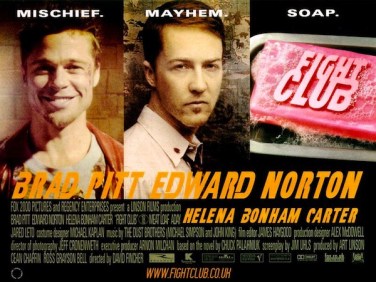
Fight Club (1999)

100 Films’ 100 Favourites #29

Mischief. Mayhem. Soap.

Country: USA & Germany
Language: English
Runtime: 139 minutes
BBFC: 18 (cut, 1999) | 18 (uncut, 2005)
MPAA: R

Original Release: 15th October 1999 (USA)
UK Release: 12th November 1999
First Seen: TV, c.2001

Stars
Edward Norton (American History X, 25th Hour)
Brad Pitt (Interview with the Vampire, World War Z)
Helena Bonham Carter (Room with a View, The King’s Speech)
Meat Loaf (The Rocky Horror Picture Show, Tenacious D in The Pick of Destiny)

Director
David Fincher (Se7en, The Social Network)

Screenwriter
Jim Urls (Sweet Talk, Jumper)

Based on
Fight Club, a novel by Chuck Palahniuk.

The Story
The film’s nameless narrator is growing increasingly disillusioned with his mundane consumerist lifestyle, when he bumps into Tyler Durden. A free-spirited soap salesman, the pair have a fight for the heck of it. Finally experiencing some kind of genuine feeling, they set up an underground club for fighting, but it gradually becomes clear that Tyler may have bigger ideas…

Our Heroes
I am Jack’s nameless narrator. I am also Jack’s friend, Tyler Durden. Yes, just his friend…

Our Villains
The establishment! Capitalism! What’ve you got?

Best Supporting Character
Helena Bonham Carter hasn’t been fucked like that since grade school.

Memorable Quote
“The first rule of Fight Club is: you do not talk about Fight Club. The second rule of Fight Club is: you do not talk about Fight Club! ” — Tyler Durden

Quote Most Likely To Be Used in Everyday Conversation
“You are not special. You are not a beautiful or unique snowflake. You’re the same decaying organic matter as everything else.” — Tyler Durden

Memorable Scene
Called into his manager’s office to discuss his bad behaviour, the Narrator decides the best method of getting his own way is by enacting physical violence… on himself.

Technical Wizardry / Truly Special Effect
For what’s essentially a drama, Fight Club is overloaded with special effects and visual trickery. I don’t know if any are particularly groundbreaking in and of themselves, but several are particularly striking. A personal favourite, thanks to the perfect execution of the idea, is the shot where the Narrator’s condo is transformed into a living IKEA catalogue.

Making of
Marla’s original post-coital line was, “I want to have your abortion.” The studio objected to such an offensive line, so Fincher agreed to change it on the condition that the new line had to be used. The studio agreed, apparently unaware that such an agreement was never going to end well. Fincher wrote the replacement line, “I haven’t been fucked like that since grade school.” The studio asked for the original line back; Fincher refused. (It must say something about American values that abortion is considered more shocking than underage sex.)

Next time…
Nothing from the film, but Chuck Palahniuk has continued his novel in 10-issue comic book series Fight Club 2. A second comic series, Fight Club 3, is planned.

Awards
1 Oscar nomination (Sound Effects Editing)
1 MTV Movie Awards nominations (Best Fight for Edward Norton fighting himself)
1 BRIT Award nomination (Best Soundtrack — it lost to Notting Hill)

What the Critics Said
“Three factors elevate Fincher’s apocalyptic stew to something approaching art. First is Norton’s performance, as sneaky and shocking as that in his film debut Primal Fear. Second is Palahniuk’s story, which dances on a razor’s edge between life and death, expression and repression, ecstasy and agony. Third is Fincher’s dedication to making a film that looks and sound likes no other, one that powerfully illustrates what dementia looks like from inside and out.” — Carrie Rickey, Philadelphia Inquirer

Score: 79%

What the Public Say
“it’s hard to believe Fight Club is now 15 years old. As I was watching the film last night I found it hard to review because it is so ingrained in pop culture now it would be almost sacrilegious to say something bad about it. […] The first time I saw Fight Club I did not see the twist of [REDACTED] coming. I remember being surprised, but also very confused. I didn’t really understand how it worked then. On the second viewing it is easy to see a million clues pointing to this from the very beginning. Director David Fincher is very clever in how he orchestrates the film by giving you all these hints. He’s very good at walking that tight rope of not giving away too much. The twist is definitely one of the highlights of the film and why it is so memorable. It doesn’t feel cheap to me as some of these things normally do.” — Sherise, The Girl that Loved to Review

Elsewhere on 100 Films
I reviewed Fight Club as part of a retrospective on Fincher’s films back in 2011, saying “Fincher’s films often look great, but Fight Club is surely the most visually inventive. A list of exciting spectacles could be endless […] To top it off, the ‘regular’ cinematography is grounded in Fincher’s trademark darkness, as if every shot was conceived as just black and he added only what light was necessary.”

Verdict

A controversial film to this day, Fight Club is a violent, explicit exploration of the turn-of-the-millennium Western male psyche, which hasn’t necessarily lost its relevance in the ensuing decade-and-a-half. Criticised by some for endorsing the anarchic lifestyle it depicts, praised by others for satirising that mode of thinking, and criticised by other others for not satirising it well enough, the film can certainly provoke a spread of views. There’s little doubt that David Fincher’s direction is memorably slick and inspired, however, and it has one of the most talked-about twists in movie history.

#33 will… boldly go where no comedy has gone before.

The Thomas Crown Affair (1999)

2016 #73
John McTiernan | 113 mins | streaming (HD) | 2.35:1 | USA / English | 15 / R

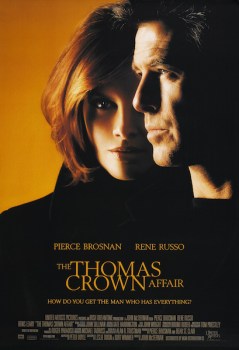
Once upon a time, John McTiernan was an action auteur, known for films that sat comfortably on the “mainstream modern classics” scale, like Predator, The Hunt for Red October, and, most of all, Die Hard. Then he made a couple of bombs (Rollerball and Basic), before ending up in a career hell of his own making thanks to some protracted legal battles. This thriller remake, starring Pierce Brosnan at the height of his Bond tenure (it was made between Tomorrow Never Dies and The World is Not Enough), is the once-eminent director’s last well-regarded film.
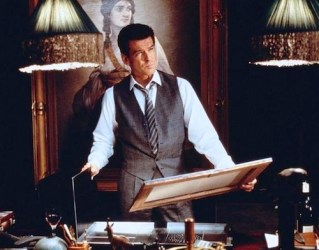
Brosnan plays the titular Thomas Crown, an ultra-wealthy New York entrepreneur whose hobby is stealing art from museums. His latest theft attracts the attention of the insurance company’s investigator, Catherine Banning (Rene Russo), who is clever enough to see past the fancy gadgets and gang of Eastern European crooks placed to take the fall. So begins a game of cat and mouse, as Banning tries to catch the thief, while he tries to woo her, and she tries to resist his charms — while also using her womanly wiles to try to ensnare him.

It’s the latter that practically kicks The Thomas Crown Affair into the realms of the ‘erotic thriller’. Throw in a couple more sex scenes (and a few less high-profile contributors) and you’d have late-night TV filler. There’s virtually no swearing and certainly no violence, but with some gratuitous boobs you’ve got a 15/R-rated flick. The film doesn’t really need such titillation to attract attention, because it’s a strong cat-and-mouse thriller in its own right. On the other hand, it doesn’t shy away from sexuality and the part that could play in such a ‘game’, so in that respect it’s more plausible than a million other neutered movies.

McTiernan’s action background comes to the fore in a pair of extended heist scenes at either end of the movie, which are surely the standout parts. The seductions and plot twists in between these bookends are certainly entertaining and may even keep you guessing, but it’s the heists that pack the most entertainment. They’re the kind of thing we don’t see so much nowadays, at least not in mainstream movies, because any sequence designed to provide excitement is a fight of some kind, and most of those are shot in the shaky-cam style. There’s none of that palaver here, just perfectly choreographed cutting between the various players in each heist, and some well-chosen music — as if being ably to do awesome stuff accompanied by the James Bond Theme wasn’t cool enough, here Brosnan gets to do the same to Nina Simone’s Sinnerman.

Those scenes are reason enough to watch the film, in my opinion, but that’s not to denigrate what comes in between. Brosnan is mainly just charm personified as Crown, a kind of “Bond gone naughty” playboy (without the, y’know, murdering), while Russo makes Banning’s back-and-forth umming-and-ahing seem largely plausible, whereas in other hands it might’ve just come across as inconsistent character writing. Denis Leary and Frankie Faison bolster the entertainment as the pair of NYPD cops forced to work with Branning, while Faye Dunaway (star of the original film) appears in a handful of tacked-on cameo scenes as Crown’s psychiatrist.

The Thomas Crown Affair may not be the best film on any of its principals’ CVs (well, except perhaps for Russo’s), but it’s a consistently enjoyable light thriller with a couple of particularly memorable sequences and a fun central dynamic. Apparently it’s better than the original, too. There’s long been talk of a sequel, but it seems to have gone the way of McTiernan’s career, which is a shame.
4 out of 5

This review is part of 1999 Week.

Office Space (1999)

2016 #54
Mike Judge | 86 mins | streaming (HD) | 1.85:1 | USA / English | 15 / R

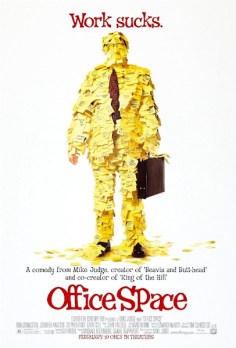
“From the creator of Beavis and Butt-Head” is not a designation that’s going to help sell a film to many people anymore. That the same fella also went on to write and direct the mediocre Idiocracy does it no favour in my eyes, either. The man in question is Mike Judge, and his first live-action feature — this — quickly became a cult favourite, apparently beloved of IT guys and office workers in general everywhere. Well, one has to see what all the fuss is about, doesn’t one?
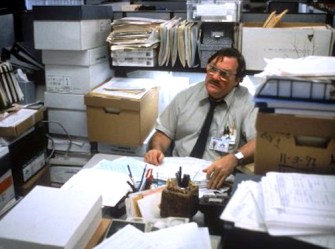
Office Space is, in its way, the story of Peter Gibbons (Ron Livingston), a frustrated office drone. He agrees to go to a hypnotism session with his girlfriend to try to alleviate his stress. While under, he reaches a state of relaxation… so relaxed, he doesn’t even register when the hypnotherapist dies before bringing Peter out of his trance. In his state of newfound enlightenment, his honesty gets him a promotion at work, he finally asks out the girl at the local restaurant (Jennifer Aniston), and, when his IT friends are laid off, sets about scamming the company he works for.

So, there’s sort of a wish-fulfilment thing going on here, which must partly explain its popularity. It’s a film about low-level white collar workers, stuck in unfulfilling office jobs, having to do the repetitious and sometimes stupid bidding of the higher-ups — guys who don’t actually do anything, really, but will certainly get to keep their jobs when lay-offs are needed, even as the little guys who actually do the work get the sack. Wouldn’t it be great to find yourself in a position where you could stick it to Management?

In truth, the plot doesn’t quite fill the slight running time, and Judge doesn’t seem to quite know how to end it — clearly he doesn’t want his hero figure getting caught out, but it can’t just go on forever. Fortunately, this is a comedy, and so plot matters only so much if the rest is funny. In some respects it’s a story of “first world problems” — these guys have decent jobs, making decent money, but it’s boring — but at least it finds the humour in this. Little vignettes of office life, a mix of light satire and gentle surrealism, keep the amusement ticking over too.

I’m not about to sign up for the cult of Office Space, but it is a funny way to spend a brisk under-90-minutes — more “quite amusing” than “laugh-out-loud funny”, though. As it’s now 17 years old, you also have to wonder if it’s a bit of a time-capsule for a passed era.

4 out of 5

This review is part of 1999 Week.

1999 Week

This week on 100 Films, I shall be partying like it’s 1999.

“Why?” Well, I’m glad you asked. It’s all thanks to a confounding confluence of coincidence, whereby I happened to watch three films from that momentous year back to back, then noticed I had two 100 Favourites posts very close together from that year coming up around this week, a week that ends with my birthday. And how do you celebrate a birthday? With a party. And how do you party? Like it’s 1999.

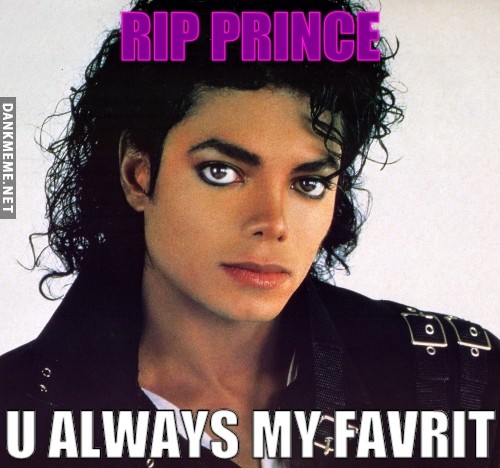
Then Prince died and now it feels kinda disrespectful.

RIP Prince

I could be worse.

Moving on…

On Monday, Tuesday, Thursday, Friday, and Saturday there’ll be reviews of films from 1999 I happen to have watched recently, including one of my Blindspot / WDYMYHS films; on Wednesday and Sunday, as usual, a pair of 100 Favourites from 1999; and, because it’s a Bank Holiday next Monday, the week will last 8 days, and end with my thoughts on the best films of 1999.

Now, imagine your picture going all wobbly and the soundtrack going tinkly (or, if you prefer, roll-back-and-mix with a “vworp vworp” noise) as we travel back 16 years…

Face/Off (1997)

100 Films’ 100 Favourites #28

It’s like looking in a mirror — only not

Country: USA
Language: English
Runtime: 139 minutes
BBFC: 18 (cut)
MPAA: R

Original Release: 27th June 1997
UK Release: 7th November 1997
First Seen: TV, 22nd September 2002 (probably)

Stars
John Travolta (Saturday Night Fever, Hairspray)
Nicolas Cage (The Rock, Ghost Rider)
Joan Allen (Nixon, The Bourne Supremacy)
Alessandro Nivola (Mansfield Park, Jurassic Park III)
Gina Gershon (Bound, P.S. I Love You)

Director
John Woo (Hard Boiled, Mission: Impossible II)

Screenwriters
Mike Werb (The Mask, Firehouse Dog)
Michael Colleary (Darkman III: Die Darkman Die, Firehouse Dog)

The Story
FBI agent Sean Archer finally corners his nemesis, Castor Troy, knocking him into a coma in the process. Unfortunately, Troy has planted a bomb that will destroy Los Angeles, and the only other person who knows its location is his brother — and he ain’t talking. So Archer comes up with the perfectly sane and utterly foolproof plan to secretly have a face transplant and assume Troy’s identity. Unfortunately, the real Troy wakes up, takes Archer’s face, and kills everyone who knows the truth. Hilarity ensues! No, wait, it’s not that kind of movie — violent bloody action ensues.

Our Hero
Sean Archer, super cop. Looks like John Travolta, until he looks like Nicolas Cage. Don’t overthink it, it works just fine when you’re watching the film.

Our Villain
Castor Troy, super villain. Looks like Nicolas Cage, until he looks like John Travolta. Don’t overthink it, it works just fine when— wait, I did that bit.

Best Supporting Character
Castor’s brother, Pollux. Yes, that’s his name. Looks like Alessandro Nivola throughout.

Memorable Quote
Castor Troy: “Sean Archer here, who’s calling?”
Sean Archer: “Well if you’re Sean Archer, I guess I’m Castor Troy.”

Memorable Scene
The good guy’s teenage daughter — played by Dominique “Lolita” Swain, as if to ram the point home — is hanging out in her bedroom wearing next to nothing, when in walks the villain, who starts perving over her… oh, and he’s got her dad’s face at the time. This is the kind of scene you can have when your body-swap movie is rated 18, I guess.

Making of
According to IMDb, the studio wanted John Woo to take the slash out of the title, but he kept it so people wouldn’t think it was a hockey movie. I don’t know why you’d think it was a hockey movie without the slash, or why adding a slash magically stops it being a hockey movie, but that’s what it says.

Awards
1 Oscar nomination (Sound Effects Editing)
2 Saturn Awards (Director, Writer)
7 Saturn nominations (Action/Adventure/Thriller Film, Actor (both Nicolas Cage and John Travolta), Supporting Actress (Joan Allen), Younger Actor/Actress (Dominique Swain), Music, Make-Up)
2 MTV Movie Awards (including Action Sequence for the speedboat chase)
4 MTV Movie Award nominations (including Best Villain, shared between Nicolas Cage and John Travolta)
1 Golden Trailer Awards nomination (Best of the Decade)

What the Critics Said
“Travolta and Cage make superb adversaries, flip-flopping roles, first as hero, then as villain. What titilating fun to observe Cage seethe with venom and Travolta meet danger head-on, then see Cage become Travolta, as the latter adopts the unmistakable characteristics of the fiend. […] Face/Off is a masterpiece equal to the action classics Seven Samurai, The Wild Bunch and The Good, the Bad, and the Ugly.” — Roger Hurlburt, Sun Sentinel

Score: 92%

What the Public Say
“Gorgeously shot with lots of Ol’ West style close up on the eyes while silence is only interrupted by the sounds of gun magazines falling to the ground. Woo’s directorial vision and the clever exchange of snark and built up bitterness displayed in the dialogue are just two of the beautiful components displayed in the first 30 minutes of this film that set the tone of the fucking masterpiece that it is.” — Amy Seidman, This Film Is Better Than You, Deal With It

Verdict

After making his name as an “heroic bloodshed” director par excellence with films like A Better Tomorrow, The Killer and Hard Boiled, John Woo headed for Hollywood… and made Van Damme vehicle Hard Target and nuclear-warhead-theft thriller Broken Arrow. But after those he made this, surely one of the best action movies of the ’90s. Its sci-fi high-concept allows Travolta and Cage to have a whale of a time in each other’s bodies, and Woo’s trademark OTT action is as exciting as ever.

Next: #30, ah-ah! Saviour of the universe!

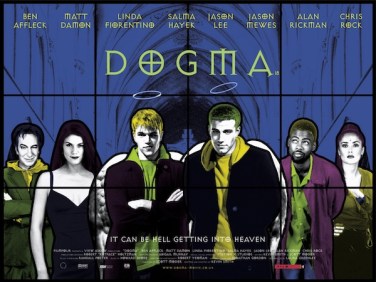
Dogma (1999)

100 Films’ 100 Favourites #24

It can be Hell getting into Heaven.

Country: USA
Language: English
Runtime: 128 minutes
BBFC: 15
MPAA: R

Original Release: 12th November 1999 (USA)
UK Release: 26th December 1999
First Seen: DVD, c.2004

Stars
Ben Affleck (Armageddon, Daredevil)
Matt Damon (The Rainmaker, The Bourne Identity)
Linda Fiorentino (The Last Seduction, Men in Black)
Salma Hayek (Desperado, Frida)
Alan Rickman (Die Hard, Galaxy Quest)

Director
Kevin Smith (Clerks, Red State)

Screenwriter
Kevin Smith (Chasing Amy, Zack and Miri Make a Porno)

The Story
When two fallen angels discover a loophole that might allow them back into Heaven, a normal woman is charged with stopping them before they bring about the apocalypse. Hilarity ensues.

Our Heroes
Abortion clinic worker Bethany has greatness heaped upon her when the voice of God gives her a mission (“I don’t want this, it’s too big.” “That’s what Jesus said.”). She ends up collecting a motley crew of followers and helpers, including 13th apostle Rufus, Serendipity herself, and idiot-prophets Jay and Silent Bob.

Our Villains
Banished angels Loki and Bartleby are fed up with living on Earth, but that’s okay because they’ve found a loophole that will get them back into Heaven. It might destroy the world or something, but, y’know, collateral damage ‘n’ all that.

Best Supporting Character
Alan Rickman again (see also: last time), this time as Metatron — not an anime hero or Power Rangers villain, but the dry-witted, genital-less Voice of God.

Memorable Quote
“Any moron with a pack of matches can set a fire. Raining down sulphur is like an endurance trial, man. Mass genocide is the most exhausting activity one can engage in, next to soccer.” — Loki

Memorable Scene
Whiling away time until they can execute their plan, Bartleby and Loki invade a company’s board meeting and expose the members’ secrets. (Any scene that features Bartleby + Loki + dialogue is among the film’s best bits.)

Truly Special Effect
I suppose it’s a relatively simple one really, but I’ve always thought the various characters’ wings look magnificently ‘real’. That’s the beauty of practical effects for you.

Letting the Side Down
This isn’t about the film itself, but they made a behind-the-scenes documentary, called Judge Not: In Defense of Dogma, which wasn’t actually ready for the film’s DVD release. Instead, it was included on the later DVD of Vulgar (not heard of it? Me either.) Eight years later, when Dogma made its way to Blu-ray, the making-of… still wasn’t included. I mean, how hard is it to pay attention when creating a new release and do more than just “copy and paste” the DVD’s contents?!

Making of
Even before the film opened it was picketed by Christian protestors. Unbeknownst to that mob, the film’s writer-director Kevin Smith joined them… and, unrecognised, got interviewed on TV. Sounds kinda implausible, but it happened.

Awards
1 Razzie nomination (Worst Supporting Actress (Salma Hayek, also for Wild Wild West))

What the Critics Said
“those who would call it sacrilegious (and there will be many) should look beyond the foul language and crude humor, to see more deeply into Smith’s intentions to give the dusty doctrines of the ancient faith a fresh new perspective. Foul language aside, the film has some interesting things to say about human nature, and about the nature of those non-humans we have come to know and love, and hate, and pray to, and obsess about, over the last few millennia.” — John R. McEwen, Film Quips

Score: 67%

What the Public Say
“The beginning of the movie has a few disclaimers pleading with a sensitive audience to not hate this movie because of its seemingly antireligious rhetoric. To be honest, I thought the message of ultimate religious tolerance was fairly clear. […] I don’t think Dogma will make you examine your faith any more than before you watched it. Instead it will let you turn a more satirical eye to the absurdities of the modern church bureaucracy and hopefully make you laugh a little bit about how ridiculous some of this shit is. It’s okay to have faith in a higher power, but getting too extreme with your ideals can make you an asshole.” — ThomFiles

Verdict

Not nearly as disrespectful to Christianity as the Bible-bashing protestors would like you to think, Kevin Smith’s religious comedy can be a bit of a mixed bag — the story is occasionally a tad baggy and the toilet humour sometimes goes too far for my taste, but there are plenty of amusing scenes, lines and performances. Irreverent and crude, to be sure, but sometimes surprisingly clever, and consistently funny.

#25 will be… setless.

Cube (1997)

100 Films’ 100 Favourites #21

Don’t look for a reason.
Look for a way out.

Country: Canada
Language: English
Runtime: 90 minutes
BBFC: 15
MPAA: R

Original Release: 11th July 1998 (Netherlands)
UK Release: 25th September 1998
First Seen: TV, c.2000

Stars
Maurice Dean Wint (Rude, Nothing)
David Hewlett (Scanners II: The New Order, Cypher)
Nicole de Boer (Star Trek: Deep Space Nine, Corrupt)
Nicky Guadagni (Crash, Lars and the Real Girl)
Wayne Robson (Interstate 60: Episodes of the Road, Survival of the Dead)

Director
Vincenzo Natali (Cypher, Splice)

Screenwriters
Andre Bijelic
Vincenzo Natali (Splice, In the Tall Grass)
Graeme Manson (Rupert’s Land, Orphan Black)

The Story
Six strangers wake up inside a mysterious 14-foot cube, its walls covered with circuit-like designs and each wall containing a door… which leads to another cube, identical but for the colour scheme. They soon realise that some of these rooms are boobytrapped with death-dealing devices. If they combine their different backgrounds and strengths, perhaps they can find a way out…

Our Heroes
The six individuals we follow are a fractious bunch. You may side with one or two, but at any given moment something might happen to make you rethink who should or should not be trusted.

Our Villain
The Cube itself is the enemy here… although with the amount our group fight amongst themselves, maybe it’s not the only problem…

Best Supporting Character
Part way through the film, our gang come across Kazan, who clearly has some kind of mental problem. I thought Andrew Miller’s performance was decent, but pretty much every other review of the film criticises all of the acting, and I’ve never seen Rain Man (a regular point of comparison), so who knows?

Memorable Quote
Holloway: “What does it want? What is it thinking?”
Worth: “‘One down, four to go.'”

Memorable Scene
The opening scene, which quickly establishes the danger of the environment so succinctly and memorably that Resident Evil ripped it off a few years later.

Technical Wizardry
The characters move through many rooms in the cube, a challenge for a low-budget production… unless, of course, all the rooms are nearly identical: there was only one cube set, with coloured panels changed to suggest the different spaces.

Making of
All of the characters are named after famous prisons around the world. Not only that, but their personalities reflect the characteristics of those prisons. To say too much might spoil parts of the film for those who’ve not seen it, but the curious can find a fuller explanation here.

Next time…
There are two sequels to Cube, Hypercube and Cube Zero, each worse than the last. Don’t waste your time.

Awards
1 Saturn nomination (Home Video Release)
Toronto International Film Festival — Best Canadian First Feature Film

What the Critics Said
“They don’t agree on the best course of action, and might one of them be a spy for whomever is in charge? The grating mechanical noises that echo through the Cube all around them seem to be the manifestation of the stress they’re under, stress they act out on one another. Holloway estimates they have only a few days without food and water before they’re too weak to continue, and yet they slow themselves down with their virulent bickering. […] As Rennes says, “Ya gotta save yourselves from yourselves,” and they’re not doing a terribly good job of that.” — MaryAnn Johanson, flickfilosopher

Score: 62%

What the Public Say
“you can’t make [the plot] sound interesting — “for 90 minutes, people move through largely identical cubic rooms that want to kill them”. But it is interesting, mainly, and here’s where the Twilight Zone comparison is useful. […] the cast ends up filling somewhat allegorical roles: the Teacher, the Authoritarian, the Intellect, the Survivalist. And Cube, in finest Rod Serling fashion, plays out as a series of conundrums in which the audience is invited to think about how these different types, that is to say, these different worldviews and moral codes, interact with each other in a patently allegorical environment” — Tim Brayton, Antagony & Ecstasy

Elsewhere on 100 Films
I offered some thoughts on Cube when I watched the two sequels back in 2008: “In its series of careful, measured, necessary reveals, the film strikes a perfect balance between what it lets the viewer know — and the revelations are expertly paced throughout — and what it keeps hidden, either for the viewer to deduce or interpret for themselves, or simply because one doesn’t need to know. […] everyone interested in the more intelligent end of the sci-fi spectrum should see Cube.”

Verdict

Regular readers will know of my fondness for the single-location thriller. A lot of that likely stems back to Cube, which I think pioneered the form as a popular one for new filmmakers making low-budget genre pictures, and is the yardstick all others must measure up to, at least for me. Throw a mismatched group of characters into a confined, mysterious setting and, hey presto, instant drama. Cube remains one of the best because of both the mysteries of its location, and the pure tension director Vincenzo Natali creates as the cast try to avoid or evade the deadly traps.

Next… yippee-ki-yay, #23 !