The Return of Archive 5

Hey, look what else is back! Almost a whole year on from the last instalment in the series, I’ve finally managed to rustle up a new Archive 5. Although, that previous post was also a comeback after a long time off, so I probably shouldn’t celebrate until I mange two in a row.

Being another year on, the pool of possible reviews has increased — quite significantly, as I’ve so far covered hardly anything from my 2023 viewing. But today’s five were chosen (but not written up, otherwise I’d’ve posted it) back when Vol.6 was published, so they were selected (at random) from the backlog of then-443 unreviewed feature films from my 2018 to 2022 viewing.

This week’s hideously delayed Archive 5 are…

  • The Mummy (1932)
  • So Dark the Night (1946)
  • The Adventures of Ichabod and Mr. Toad (1949)
  • A Brief History of Time Travel (2018)
  • Misery (1990)


    The Mummy

    (1932)

    Karl Freund | 73 mins | Blu-ray | 1.33:1 | United States / English | PG

    The Mummy

    The third classic Universal Monster film, following Dracula and Frankenstein, The Mummy ditches literary adaptation for a horror based in then-contemporary fears. Nowadays, the notion of digging up of mummies is an Old Thing, but in 1932 they were just a decade on from the discovery of Tutankhamen’s tomb, and it was only in that year that it was finally fully excavated, so that kind of thing — and, of course, the attached curses — were still fresh in the public imagination.

    In the wake of Frankenstein, The Old Dark House, and The Mask of Fu Manchu, Boris Karloff was now the horror star in Hollywood, and so The Mummy was conceived as a starring role for him. Perhaps that explains why, plot wise, it’s a remix of Universal’s take on Dracula: the villain is after the girl, using supernatural tricks to lure her; the dashing young man is in love with her; there’s even a Van Helsing-esque figure with the knowledge to stop the monster. But originality is not the be-all-and-end-all — overall, I much preferred this to Dracula. Karloff is superb as the antagonist; Zita Johann (and her array of skimpy outfits) makes for an appealing (and, perhaps in spite of said clothing, competent) female lead; and there’s some intensely atmospheric direction from Karl Freund. His name may not seem as familiar as Dracula’s Tod Browning or Frankenstein’s James Whale, but he was already an acclaimed cinematographer, who’d shot the likes of Metropolis and, er, Dracula.

    The Mummy presented considerably less bandaged-wrapped foot-dragging living-corpse action than I expected. I guess those clichés come from the sequels (reportedly, their stories are entirely unconnected to this one) or another studio’s efforts (Hammer, perhaps). Instead, it’s quite simply one of my absolute favourites from the initial wave of Universal’s classic monster movies.

    4 out of 5

    The Mummy was #122 in my 100 Films in a Year Challenge 2021.


    So Dark the Night

    (1946)

    Joseph H. Lewis | 70 mins | Blu-ray | 1.37:1 | USA / English | PG
    So Dark the Night

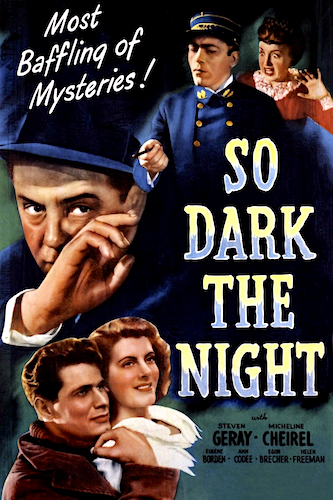
    How many serial killer mysteries have you seen that spend their first half being bucolic romances? I can’t think of any others than So Dark the Night. The title and setup don’t prepare you for it, but the first half-hour is more of a genteel country romcom, with only the slightest hint there might be darker turns to come. Half-an-hour isn’t long generally, but it’s almost halfway through a film this short — and that’s when things take an abrupt turn for the murderous.

    The short running time probably works against the film, on the whole. For example, it makes it easy to miss that there are several interesting supporting characters or facets to main characters. Love interest Nanette is sort of depicted as an innocent ingénue, but we first meet her ogling the expensiveness of Henri’s car, and then she and her mother conspire for her to meet Henri and try to elicit a romantic connection, even though she’s already got a long-standing engagement. That’s not exactly upstanding and sweet behaviour, is it? Then there’s the widowed maid, who’s so lonely and desperate to escape that even after she suspects the killer, she pleads to be taken with him.

    Along with a few other factors that are rather spoilersome, this is a film that takes the usual shape of the whodunnit and subverts it to disquieting effect. It’s a film that, on the surface, looks nothing like a noir — it’s set in a pretty French village (created with surprising authenticity on Columbia’s backlot) — but exposes that the darkness and violence of the human condition can exist anywhere. I say “on the surface” because the film’s photography is great, with many interesting shot and lightning choices peppered about, without overwhelming proceedings with unnecessary flourishes.

    4 out of 5

    So Dark the Night was #57 in my 100 Films in a Year Challenge 2020.


    The Adventures of
    Ichabod and Mr. Toad

    (1949)

    James Algar, Clyde Geronimi & Jack Kinney | 69 mins | digital (HD) | 4:3 | USA / English | U / G

    The Adventures of Ichabod and Mr. Toad

    Disney’s canon of animated films goes through a weird blip between Bambi in 1942 and Cinderella in 1950. That’s when the six so-called “package films” were released, bundling together short films into themed features. They’re almost a footnote in the Disney animated canon — I mean, before them you’ve got Snow White, Pinocchio, Fantasia, Dumbo, and Bambi, and after you’ve got Cinderella, Alice in Wonderland, Peter Pan, Lady and the Tramp, Sleeping Beauty, and so on… and on… But it’s not a period of hidden gems: these are films mostly only worth bothering with if you’re a completist. This final one is, perhaps, the exception. At any rate, it’s easily the best of the package films.

    Whereas the others contained multiple short features, here there are just two: adaptations of The Wind in the Willows and The Legend of Sleepy Hollow. There’s barely any faffing about with linking segments, either: a quick intro from Basil Rathbone (who narrates Willows), and an equally speedy transition from Bing Crosby (who narrates Sleepy Hollow), and that’s it. And that’s all it needs, instead spending time and resources on the stories themselves.

    I’ve never been a huge fan of The Wind in the Willows, but this is a fast-paced and fun version, with a particularly entertaining ‘action sequence’ in Toad Hall as the good guys and weasels run around trying to keep hold of the property deed. Then, The Legend of Sleepy Hollow recasts the famous horror story as… a small-town romantic farce. No, seriously. It’s fine if a little dull, but picks up considerably when it reaches Halloween and we get a song about the headless horseman, a highly atmospheric sequence in spooky woods, and an exciting/comical chase between Ichabod and the horseman. It takes a while to get there, but it’s worth it.

    3 out of 5

    The Adventures of Ichabod and Mr. Toad was #176 in my 100 Films in a Year Challenge 2020.


    A Brief History of Time Travel

    (2018)

    Gisella Bustillos | 69 mins | digital (HD) | 16:9 | USA / English
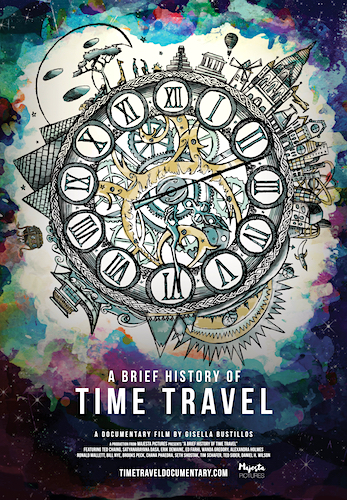
    A Brief History of Time Travel

    It’s a decade this year since I backed this documentary on Kickstarter — how’s that for time travel for you? I mean, technically, “normal and linear”, but also: time flies. It doesn’t feel like Kickstarter’s even been around that long. What the hell is going on with our perception of time (for example, the increasingly widespread observation on social media that everyone’s perception of how long ago things were is stuck somewhere in the early- to mid-2000s) would be an interesting topic for a documentary.

    But anyway, that’s not what this is. This is a wide-ranging overview of the concept of time travel, taking in fiction, science (both real and theoretical), and religion, as well as how those things interrelate and influence each other. It’s probably most interested in the science side, using other angles to illustrate rather than be examined in their own right. For example, it details the significance of H.G. Wells’s The Time Machine (the first story to involve time travel into the future, and one of the first where the travel was achieved via a man-made machine rather than some form of magic), but that’s about the last fictional story it describes. There are clips from Doctor Who and Back to the Future, but no discussion of their influence, nor of the kinds of time travel they present.

    At its best, the film draws interesting links and parallels between the different spheres it’s encompassing. This is at its most poignant when we meet a physicist who got into the field because his father died when he was young and time travel stories offered the idea that he might be able to revisit his dad, which developed into him learning the real science and becoming a physicist. Now, he believes he has a workable theory for how information could be sent into the past. I have no idea if that stands up to scrutiny, mind — the film doesn’t vet it with other interviewees’ opinions.

    Considering it only runs a little over an hour, it’s unsurprising that there’s not room to cover everything in depth. Nonetheless, it’s so blatantly leaving significant amounts of material untouched that you can’t help but feel disappointed. To be kind, it’s a reasonable primer for the uninitiated, with interesting bits of info dropped here and there, but almost every topic covered would merit a deeper, dedicated examination.

    3 out of 5

    A Brief History of Time Travel was #123 in my 100 Films in a Year Challenge 2021.


    Misery

    (1990)

    Rob Reiner | 107 mins | digital (HD) | 1.85:1 | USA / English | 15 / R
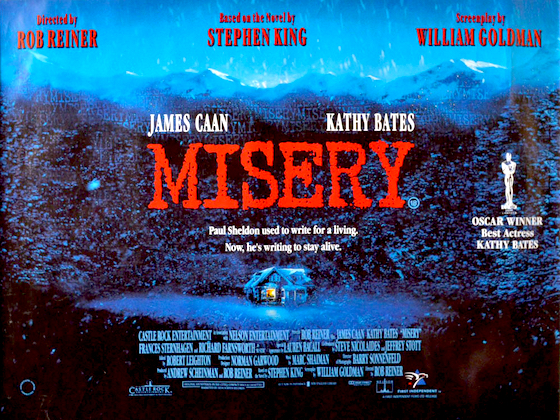
    Misery

    I feel like Misery is one of those movies that was once very well known in general pop culture, but has since slipped back, if not into obscurity then certainly into a lesser-known status, remembered only when mentioned by people who were there or as one in a list of Stephen King adaptations, that sort of thing. And that also feels fair enough, because it’s very much a movie that’s pretty good but not exceptional. The author whose work it’s taken from, the filmmaker who’s adapted it, and the main players on screen have all been responsible for or involved in even better and more enduring works of cinema, so of course this has become an “and also” note in their careers.

    Perhaps transcending that — and, certainly, by far the most famous thing about Misery — is the ankle-bashing scene, which unfortunately means you spend most of the film waiting for it to turn up, and when it does it’s rather unaffecting. That’s time and infamy for you. The former: it’s not as gruesome as it would be if shot today. The latter: I’d already seen the clip a dozen times. I can see how it was striking on the film’s original release, but familiarity has really blunted it.

    Fortunately, there’s more to the film than one shocking act of violence. Kathy Bates is excellent as Annie Wilkes, making her wild mood swings terrifyingly plausible. Her Oscar was well earned. Then there’s the subplot with the local sheriff and his unceasing investigation, which also introduces a welcome note of comedy via his interactions with his deputy (who’s his wife) and some of the other townsfolk. He’s brought to life with immense likability by Richard Farnsworth, and I’d’ve happily watched a whole movie based around him. On the whole, the film has a somewhat underwhelming “TV movie” feel to its visual (lack of) style, but there are some nicely done bits: the scene where Annie’s coming home while Paul tries to cover up that he’s been out and about; the final fight, which is just the right mix of tense, scrappy, and believably comical.

    4 out of 5

    Misery was #230 in my 100 Films in a Year Challenge 2020.


  • Archive 5, Vol.6

    Hey, wouldja look what it is! After getting off to a fairly strong start back at the beginning of 2022, I allowed my Archive 5 strand to fall by the wayside while I made a concerted attempt to stay up-to-date reviewing my new viewing (with mixed success). But now it’s back, hopefully on a more permanent basis. And I guess going forward it should include what’s left of 2022, because otherwise I’m stuck trying to catch up on those reviews before I can even begin 2023. But not just yet, because I selected today’s five films back when Vol.6 should originally have been posted (last February, gasp!)

    For those who’ve forgotten, I have a backlog of 421 unreviewed feature films from my 2018 to 2021 viewing (448 if we add in 2022 too). This column is where I give those films their day, five at a time, selected by a random number generator.

    Today, some films sizzle with heat or tension, while others fizzle into disappointment. This week’s Archive 5 are…

  • Paris When It Sizzles (1964)
  • 7500 (2019)
  • The Rhythm Section (2020)
  • Carefree (1938)
  • The Lie (2018)


    Paris When It Sizzles

    (1964)

    Richard Quine | 110 mins | digital (HD) | 16:9 | USA / English | U

    Paris When It Sizzles

    William Holden and Audrey Hepburn are clearly having a whale of a time in this marvellously cine-literate romp about a struggling screenwriter (Holden) and the secretary (Hepburn) hired to type up the script he hasn’t actually started. With the deadline just two days away, the pair rush to put a script together, which plays out as a film-within-a-film, also starring Holden and Hepburn, and allowing them even more fun as they get to overact extraordinarily. The “inside baseball” feel of the thing is furthered by a handful of surprise cameos.

    Perhaps it’s me just misjudging the era, but the whole thing feels somewhat ahead of its time. In the way its such an insider’s riff on the movie industry, it feels like something you wouldn’t expect to have emerged until maybe the ’90s (The Player being an obvious point of reference). How well that worked for audiences at the time, I don’t know — maybe it did come across as too esoteric — but, viewed today by anyone with an idea of the history and inner workings of the Hollywood machine — it’s a lot of madcap fun.

    5 out of 5

    Paris When It Sizzles was #129 in my 100 Films in a Year Challenge 2020. It placed 20th on my list of The Best Films I Saw in 2020.


    7500

    (2019)

    Patrick Vollrath | 93 mins | digital (UHD) | 2.39:1 | Germany, Austria & USA / English, German & Turkish | 15 / R

    7500

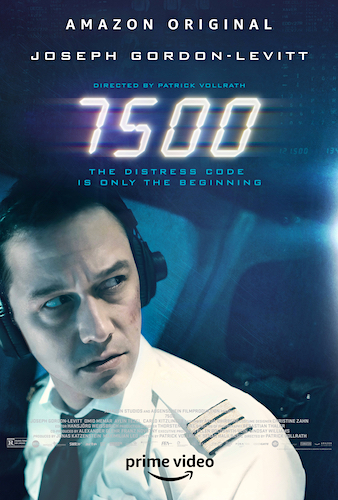
    After a title sequence that uses security camera footage to follow some shifty-looking blokes around Berlin airport, the film fades up in a passenger airplane cockpit as the crew arrive and begin their regular pre-flight routines. It’s a location we won’t leave for the next 80 minutes, as the unremarkable flight to Paris takes a turn when the aforementioned shifty-looking blokes attempt to invade the cockpit mid-flight, leaving it up to copilot Joseph Gordon-Levitt to try to rescue the situation.

    A tense thriller set entirely in one confined location and told in (near-as-dammit-)real-time? This film could have been made just for me. Suffice to say, I was suitably pleased. This kind of style and pace clearly won’t be to everyone’s taste (I mean, the first 15 or so minutes are almost entirely about watching the pilots just doing their everyday job), but there’s something about the format that does it for me. I think it’s something to do with the inescapability of real-time — that what’s happening and what will happen is going to last as long as it lasts, no shortcuts — that serves to underscore the tension of a thriller storyline. That said, in this case the final act does lose some of the momentum and tension, as much as it tries to maintain it, meaning it feels like it limps to the end, with the really suspenseful stuff having expired a little after the hour mark. It’s not that this final act is bad, just that it feels like a comedown from what’s gone before.

    Still, Gordon-Levitt is great throughout, carrying a large chunk of the film singlehanded, and there’s ultimately a more nuanced treatment of the terrorists than you might expect. I saw someone criticise it for trying to humanise one of them, as if that was problematic. Sure, terrorists are bad guys, but they’re still human beings underneath, and they’ve been plenty demonised enough in plenty of less thoughtful media — I’m not sure it should be considered controversial or a step too far to suggest that one of them (out of four) might be a misguided teenager rather than Evil Personified. On the flip side, I read another review that trashed the film for “featuring brown terrorists again”. I imagine those two reviewers would have a lot to disagree about…

    4 out of 5

    7500 was #144 in my 100 Films in a Year Challenge 2020.

    The Rhythm Section

    (2020)

    Reed Morano | 110 mins | digital (HD) | 2.39:1 | UK & USA / English & French | 15 / R

    The Rhythm Section

    I don’t know about you, but sometimes I watch movies with a bad rep in case I see something in them that everyone else* missed — because that does happen. In that vein, The Rhythm Section isn’t some overlooked masterpiece, but I don’t really get why everyone hated it so much.

    Blake Lively uglies up and forces an English accent to star as Stephanie Patrick, a drug-addicted prozzie who used to be a pretty Oxford student until her family died in a plane crash three years earlier, which a journalist now tells her was a terrorist attack that MI6 have covered up. Events lead her to a disgraced agent (Jude Law) who agrees to train her to hunt down the people responsible.

    Hardly the most plausible storyline ever, but it’s no more ludicrous than many a thriller. So, as a genre piece, well, it’s certainly not the greatest action-thriller ever made, but it’s decent overall with a couple of neat twists on the usual formula. The primary one is that our heroine isn’t actually very good at being an action hero and keeps fucking up. Normally these films are about highly competent super agents (Jason Bourne, John Wick, etc), or newbies who take to it like a duck to water. Stephanie’s borderline incompetence is not only a mite more realistic, it makes a refreshing change, and at times is even successfully used to heighten the tension.

    Unfortunately, other aspects were stale on arrival. For no reason, it begins halfway through and then does the “8 Months Earlier” thing. This is a personal bugbear of mine, because it’s a trick that’s been used to death at this point, routinely trotted out to no real purpose. Usually it’s used as a cheap way to deliver some action upfront because otherwise there won’t be any until somewhere in Act Two, which is just an insult to the audience’s attention span. In other cases, the film just got unlucky. I imagine when they conceived of a single-shot car chase it seemed like an original idea — as it probably did to all the other filmmakers who attempted the same thing around the same time; not least Netflix’s Extraction, which did it bigger and therefore better. Oh well.

    Ultimately, I suppose The Rhythm Section is fundamentally derivative, with only fleeting moments of originality. But I still thing everyone else was overly negative — it’s not bad, just not strikingly fresh. I think if you enjoy Bourne-esque action-thrillers, you should enjoy this.

    3 out of 5

    * It’s never everyone else, but you know what I mean. ^

    The Rhythm Section was #138 in my 100 Films in a Year Challenge 2020.


    Carefree

    (1938)

    Mark Sandrich | 83 mins | digital (SD) | 4:3 | USA / English | U

    Carefree

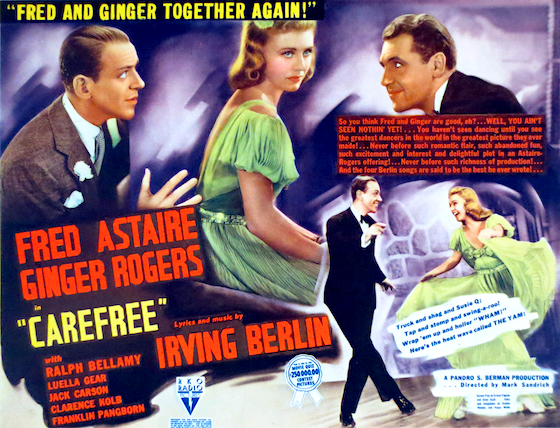
    Fred Astaire is a psychiatrist prone to misogynistic views and unethical practices who mimes playing the harmonica and performs dance routines with golf balls, and Ginger Rogers does a song & dance about yams (because Astaire thought it was so silly, he refused to sing it. He was right). Yeah, I think it’s fair to say this isn’t the couple’s finest hour. The public agreed: this was the first Astaire-Rogers film to lose money on its initial release.

    That said, it’s not without the occasional charm. Rogers still shines — the sequence where she goes around playing naughty pranks with a cheeky grin while under the influence of anaesthetic is a delight — and there’s a slow-motion dream-sequence dance that is rather lovely. But these are fleeting pleasures amongst the distasteful storyline (see: my description of Astaire’s character) and less refined moments (there’s a song about yams).

    2 out of 5

    Carefree was #97 in my 100 Films in a Year Challenge 2021.


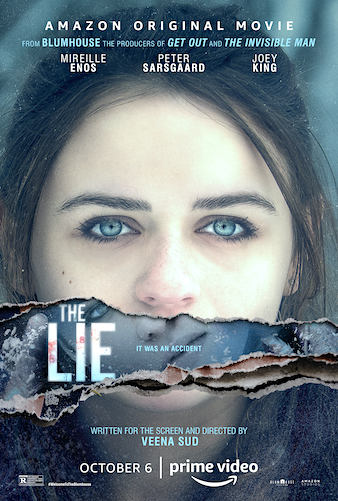
    The Lie

    (2018)

    Veena Sud | 95 mins | digital (UHD) | 2.39:1 | USA / English | 15 / R

    The Lie

    Although it debuted to most of the world as one in a series of eight Blumhouse original movies that premiered together on Amazon Prime in 2020, The Lie is listed as a 2018 film because that’s when it premiered at TIFF under a different title (Between Earth and Sky). The fact it went from being a standalone production to one of a series released en masse provides a clue as to how well it went down.

    The film has a solid premise that starts out well enough: a father (Peter Sarsgaard) and daughter (Joey King) are driving to a ballet retreat when they spot her best friend waiting by the side of the road, so they offer her a lift. Later, they stop in the middle of nowhere so the friend can go to the bathroom, but she falls off a bridge into an icy river. Or possibly the daughter pushed her. Either way, presumably she couldn’t survive the fall, and her body has washed away. Fearing how all that would look, they set about covering it up… which is where things go awry, both for the characters and us viewers. The longer the story goes on, the further it departs from actions and consequences that feel plausible. It’s not ludicrously far-fetched, it just doesn’t feel right; like people wouldn’t make those decisions, or those decisions wouldn’t have those consequences. The lead cast give it their best shot, but they’re battling against material that’s below their skills.

    Then there’s an inevitable last-minute twist that just hurls the whole thing off a bridge. Kate Erbland for IndieWire wrote that it “should rank among the all-time great fake-outs,” and she’s sort of right: it could have been a reveal for the ages, but rather than eliciting a pleasant “OMG I don’t believe it!”, it plays as “ugh, I don’t believe it.”

    2 out of 5

    The Lie was #245 in my 100 Films in a Year Challenge 2020.


  • 2022 | Week 26

    I’m taking you back over two months here, to the end of June / start of July, for another eclectic batch of films I happened to watch in close proximity to each other…

  • The Flying Deuces (1939)
  • Apollo 10½: A Space Age Childhood (2022)
  • My Name Is Julia Ross (1945)
  • Ambulance (2022)
  • Easy A (2010)


    The Flying Deuces

    (1939)

    A. Edward Sutherland | 68 mins | DVD | 4:3 | USA / English | U

    The Flying Deuces

    I feel like I’m aware of Laurel & Hardy in a way I would say “everyone” is, but I guess that’s probably not true anymore (the kind of stuff I picked up or learnt about by osmosis in my ’80s/’90s childhood is surely very different to what kids got growing up in the ’00s/’10s). But I don’t think I’ve ever actively seen any of their work; certainly none of their feature-length films. The Flying Deuces is “probably their most famous film”, at least according to the blurb on my copy. Certainly, it’s the one you see bandied about the most; but then it’s in the public domain (one of only two Laurel & Hardy films where that’s the case), so it’s inevitably subject to endless cheapo releases. Leaving the quality of the print aside (it was poor; but at least it wasn’t cut, which apparently many are), I can’t say I was too impressed by the quality of the content, either.

    Here’s the rub: it’s a comedy, but it barely made me laugh. The humour operates at a basic level, with gags that are either well-worn or repetitious. “How anyone could be so stupid as to stand there and continually bump their head is beyond me,” one of them says at one point. And yet the other does exactly that, because that’s the level most of the film’s humour operates at. Some might say this is the downside of the duo being popular and their work being old — i.e. it’s been imitated and copied for decades, and we’ve moved on. But I don’t find that to be the case with silent comedians —who were equally, if not even more, popular, and whose work is even older — nor with things like the Road to films — which are far from the height of sophisticated comedy, but tickle my fancy more often.

    Well, there’s your answer, I guess: it’s all a matter of taste. And it seems Laurel and Hardy aren’t to mine.

    2 out of 5

    The Flying Deuces is the 41st film in my 100 Films in a Year Challenge 2022.


    Apollo 10½:
    A Space Age Childhood

    (2022)

    Richard Linklater | 97 mins | digital (HD) | 16:9 | USA / English | 12 / PG-13

    Apollo 10½: A Space Age Childhood

    I guess one of the advantages of being a filmmaker with some degree of clout is you can take your regular-ass childhood and turn it into a movie as if it was somehow special. That’s what the Before trilogy and Boyhood mastermind Richard Linklater has done here, fictionalising his autobiography as the story of ten-year-old Stanley, who lives in Huston, Texas, in the era of the first moon landing. Except, in this version, Stanley is secretly recruited by NASA to secretly train to be a secret astronaut to secretly be the first person on the Moon, in secret. If that sounds like an unusual spin on a traditional nostalgia-driven biopic, don’t get excited: that subplot is moved away from as quickly as it’s introduced, and only pops back up two or three more times, each brief. The film is much more concerned with real memories than imagined ones, and is much less fun for it.

    Often, at Christmas or other such get-togethers, members of my family will end up reminiscing about various childhood recollections. I’m sure many other families do a similar thing. What’s shared on these occasions are the kind of mundane memories that mean the world to us but, if you stopped to think about it, you know no outsider would find of much value. Well, seems Richard Linklater hasn’t stopped to think about it. And I really do mean “mundane”: there’s a sequence about which sibling did which chores and how they made their school lunches. As a commenter on iCM put it, Linklater “name checks every TV show and movie he saw, every game he played, everything in his diary […] for long stretches, it just feels like an itemized list of childhood memories.”

    One part that’s actually rather good is Jack Black’s voiceover narration as the adult Stanley. There’s probably too much of it (again underlining the fact these are nostalgic anecdotes rather than a true narrative), but the actual quality he brings is very nice. It feels calm and understated, neither giving in to Black’s usual mania nor substituting it for the hardcore tweeness you might expect from such a rose-tinted autobiography.

    Maybe Apollo 10½ will be more interesting to young people or future generations, whose technology- and safety-obsessed childhood experiences will be so far removed from what we see here. To them, it’s an historical documentary. I can’t say my childhood was much like this one (especially as it occurred almost 30 years later), but I guess I’ve picked up enough of this kind of nostalgia from other American films and TV series down the years that what Linklater has to share doesn’t feel remarkable enough to be worth sharing.

    3 out of 5

    Apollo 10½: A Space Age Childhood is the 42nd film in my 100 Films in a Year Challenge 2022.


    My Name Is Julia Ross

    (1945)

    Joseph H. Lewis | 65 mins | Blu-ray | 1.37:1 | USA / English | PG

    My Name Is Julia Ross

    Here we have one of those films that commonly gets called a film noir, but isn’t really (or, at least, doesn’t fit well with the standard conception of what noir entails). The blurb for Arrow’s Blu-ray release describes it as a “Gothic-tinged Hitchcockian breakout hit” (apparently it was produced as a B-movie but became so popular they promoted it to “A-feature status”), which struck me as accurate — it’s less standard noir, more a Rebecca-influenced psychological thriller. While it’s clearly no Hitchcock, it’s a very entertaining substitute.

    Nina Foch stars as the eponymous Julia Ross, who takes a job as a live-in secretary for a wealthy widow. But the job is a front: Julia is kidnapped, waking up a prisoner in a Cornish mansion, where the widow (Dame May Whitty) and her son (George Macready) try to convince her she’s actually Marion Hughes, the son’s wife, and she’s having a bit of an episode.

    From the way Arrow described the film, I assumed it was going to play to some degree with the idea that maybe she is actually mad. It would be a neat twist, right? That she is Marion Hughes, and the stuff we saw at the start was part of her delusion. But no, the film doesn’t even vaguely gesture at that route: right after Julia meets her prospective employer, we see that she’s plotting something nefarious — and the film isn’t even seven minutes in. Then, even before we really know that something’s up, Julia’s fancy-man is looking into her disappearance. It’s like the film’s playing all the right notes but in the wrong order.

    But it doesn’t really matter, because the whole thing is suitably entertaining. Rather than relying on the mystery of what’s happening, it’s more about how Julia can get out of the situation. Will she be able to escape her confinement? Can she somehow get out a message for help? Or will the villains succeed in their scheme? Plus, at just 65 minutes, it moves at a whipcrack pace, so you can sit back and enjoy the absurd plot rather than worrying about, well, how absurd it is.

    4 out of 5

    My Name Is Julia Ross is the 43rd film in my 100 Films in a Year Challenge 2022.


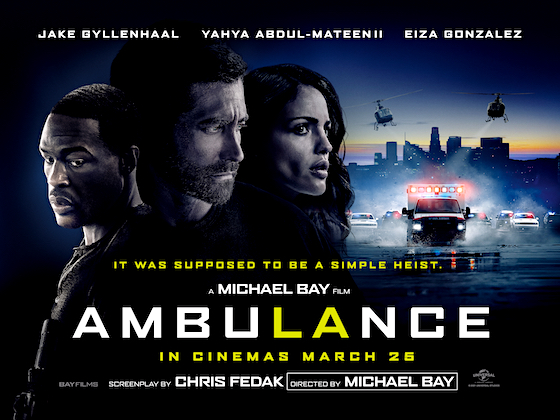
    Ambulance

    (2022)

    Michael Bay | 136 mins | Blu-ray (UHD) | 2.35:1 | USA & Japan / English | 15 / R

    Ambulance

    When their bank heist goes sideways, two brothers (Jake Gyllenhaal and Yahya Abdul-Mateen II) make their getaway in a stolen ambulance — with a policeman they shot and the paramedic working on him (Eiza González) in the back. With the cops immediately on their tail, thus begins an epic car ambulance chase around the streets of LA.

    The setup feels like it should signal the low-/mid-budget debut of a new director showcasing their talents with a 90-minute stripped-back thrill-ride that’s mostly contained to the eponymous setting. But it’s not directed by some newbie — it’s Michael frickin’ Bay, back on the form that gave us action classics like The Rock. And so the 90-minute character-focused thriller is in there (honest it is), but augmented with 40 minutes of big-budget Bayhem.

    Compared to Bay’s other work in the past 15 or so years, Ambulance feels restrained. Compared to almost any other filmmaker, it’s anything but. When I say “restrained”, part of what I mean is the editing. Not that it takes a leisurely approach by any means, but it doesn’t have that “impressionistic jumble of B-roll” style Bay has tended towards on and off ever since Armageddon, and that became his only mode during a couple of the Transformers sequels. Also, I didn’t notice this until I read it on IMDb, but the film contains a literal Chekhov’s gun — that is, a gun that is a “Chekhov’s gun”. That’s so Michael Bay.

    Giving this film 5 stars would be a bit silly… but it was really good. It’s the kind of movie you’d never rate higher than 4, but you love for what it is: magnificent Bayhem.

    4 out of 5

    Ambulance is the 44th film in my 100 Films in a Year Challenge 2022. It placed 9th on my list of The Best Films I Saw in 2022.


    Easy A

    (2010)

    Will Gluck | 92 mins | digital (HD) | 16:9 | USA / English | 15 / PG-13

    Easy A

    When an overheard white lie about losing her virginity makes barely-noticed Olive (Emma Stone) the centre of her high school rumour mill, she decides to manipulate her newfound notoriety for her own amusement.

    As “raunchy teen comedy” plots go, it hits a sweet spot of being neither too prudish nor too lecherous. The dialogue elevates it further in a sharp and witty script by Bert V. Royal (who, it seems, has since only worked on TV shows I’ve never heard of. Shame). In her first lead role, Emma Stone gives a perfectly-pitched, surprisingly nuanced performance. The story really allows her to show off her versatility, believable as both the ‘quiet girl’ and ‘confident slut’. Obviously there’s lots of comedy, but she sells the moments of sincerity too. It’s no wonder she quickly got snapped up for more awards-type work. Plus, there’s Stanley Tucci being what I imagine Stanley Tucci is actually like as a dad, which is perfection.

    The only major downside (and it’s a bit of a spoiler, but also so predictable that it barely counts as a spoiler) is that it would’ve been nice if the guy she eventually ends up with wasn’t so stereotypically hot. We’re meant to buy him as a kinda-goofy sports mascot rather than someone who’d actually be playing The Sport? Yeah right.

    I’m not always a fan of high school movies or teen comedies, but there are definite exceptions, and this is the latest addition to that rarefied list.

    4 out of 5


  • Bank Holiday (1938)

    aka 3 on a Week-End

    Carol Reed | 82 mins | digital (SD) | 4:3 | UK / English | U

    Bank Holiday

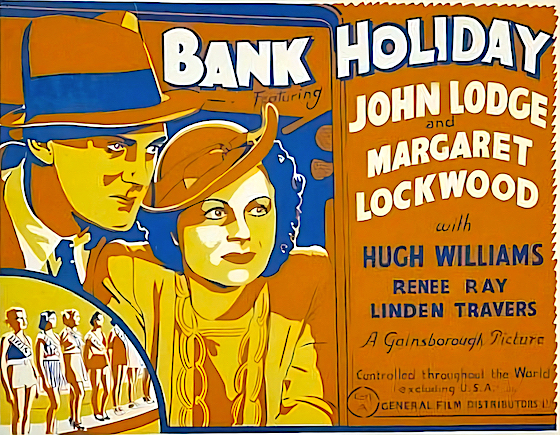
    You’ll be forgiven for not having heard of this one, even though it’s directed by Carol Reed (The Third Man, Oliver!, etc) and stars Margaret Lockwood (The Lady Vanishes, etc), because it seems to be pretty obscure. I only discovered it when browsing the online offering of UK digital channel Talking Pictures TV, and it mainly caught my attention because that was just before the weekend of the Queen’s Platinum Jubilee, when we had a double Bank Holiday. “What appropriate viewing,” I thought. Well, sometimes chance smiles on us, because this definitely doesn’t deserve to be so overlooked.

    As the title indicates, the film is set on a Bank Holiday weekend — the August one, to be precise — and, this being the interwar years (i.e. well before the ease of popping overseas for a quick holiday), city folk flock to the seaside en masse. In terms of the film, a variety of melodramatic and comic plot lines unfurl for an array of characters. The primary one follows a nurse (Lockwood) getting away for a rare holiday with her young fella (Hugh Williams); but he’s not planned it very well, and she’s distracted by thoughts of a man (John Lodge) who was suddenly made a widower on her last shift. That particular storyline gets a bit heavy (death in child birth; attempted suicide), but its balanced by comic antics in other plot lines. Overall, the mix of drama and humour gives a “something for everyone”, all-round entertainment feel that you tend not to get within a single work anymore.

    Two outta three ain't bad

    Nowadays, the film arguably has greatest value as a snapshot of 1930s British society. There’s a degree to which it feels ‘of its time’ as a work of cinema, but not in a terribly dated way. Indeed, while some things have changed a lot in the ensuing nine decades, but there are definitely behaviours, attitudes, and meteorological phenomena that’ll be familiar to any British viewer and their experience of a summer holiday weekend. And it remains entertaining in its own right. The comic bits still mostly work. Even when they’re not hilarious, at least they’re not embarrassing. The drama is similarly solid: the handling of romantic relationships remains relatable, rather than feeling terribly old fashioned (in fact, it had to be edited for release in the US due to its implication that an unmarried couple had a sexual relationship. And they think us Brits are the prudish ones…)

    To call Bank Holiday a “forgotten classic” or similar would be to overstate the point somewhat, but it does seem to be a largely forgotten film that merits being better known.

    4 out of 5

    2022 | Weeks 7–8

    It’s been a hectic time, both at work and in my personal life, these past few weeks. I’ve managed to carve out a small amount of time for some film watching (though not as much as I’d like), but little for film reviewing — hence why there’s not been an Archive 5 for a fortnight, and why this update comes over two weeks after the period it covers.

    But better late than never, and the only way to get back on track is to get on, so…

  • Shot in the Dark (1933)
  • The Brits Are Coming (2018), aka The Con Is On
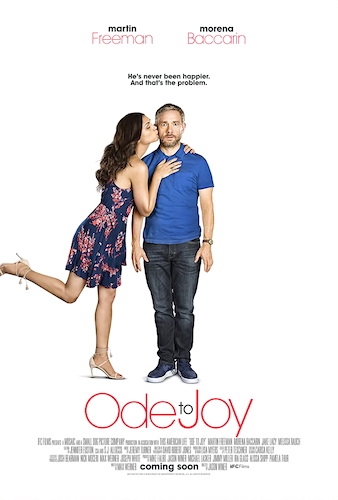
  • Ode to Joy (2019)
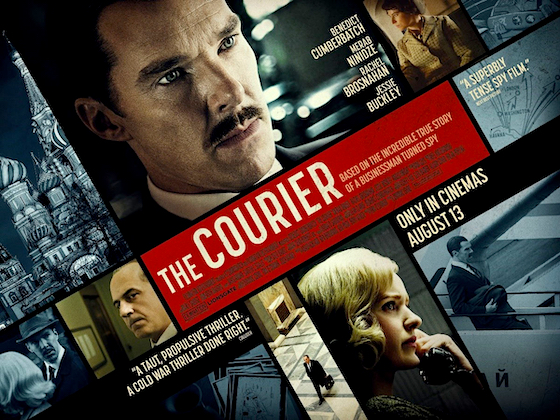
  • The Courier (2020)
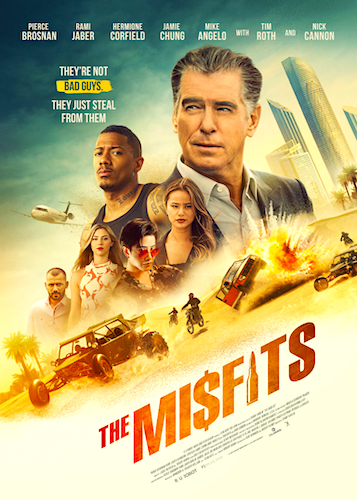
  • The Misfits (2021)


    Shot in the Dark

    (1933)

    George Pearson | 52 mins | digital (SD) | 4:3 | UK / English

    Shot in the Dark

    The works of Agatha Christie and G.K. Chesterton are casually evoked in this ‘quota quickie’ murder mystery, adapted from a novel by H. Fowler Mear, a screenwriter whose Wikipedia entry describes him as “competent but uninspired”. (FYI, the film is often listed as A Shot in the Dark online, I presume due to confusion with a couple of slightly later films that go by that title. As the title card makes plain, there’s no A here.)

    When a wealthy old man dies of a gunshot, it’s ruled a suicide; but when the family gather to listen to the will he recorded, the deceased claims he must have been murdered. Before he can make any further accusations from beyond the grave, the record goes missing. Fortunately, the local vicar (O.B. Clarence) happens to be passing at the time, and sticks his nose in — to find both the record and the murderer.

    There’s nothing particularly special about the mystery that unfolds. As a detective, the vicar is a cut-price Father Brown knockoff; a weak caricature of the Sherlock Holmes type: every time he interviews someone, he seems to already know everything they’re going to tell him, if not more. It’s quite fun that almost everyone confesses to the murder at one time or another, only to turn out to not actually be responsible, but I have trouble crediting that as a deliberate gag — it’s not emphasised enough for that to be the case. When the actual culprit is eventually revealed, how and why the crime was committed isn’t properly explained. This is the kind of film that doesn’t see the value in wasting valuable screen time on things like “motive” and “plausible opportunity” and “plot twists” when it can offer dark & stormy nights and people storing poison next to medicine and secret passageways. Indeed, when they find a secret room, it turns out to have its own secret room — that’s the kind of work we’re dealing with here.

    All in all, it’s not <i<bad for a quick little murder mystery, but it’s not strictly good either. It scrapes a 3 by the skin of its teeth.

    3 out of 5

    Shot in the Dark is the 16th film in my 100 Films in a Year Challenge 2022.


    The Brits Are Coming

    (2018)

    aka The Con Is On

    James Haslam | 91 mins | digital (HD) | 2.35:1 | UK & USA / English | 15 / R

    The Brits Are Coming

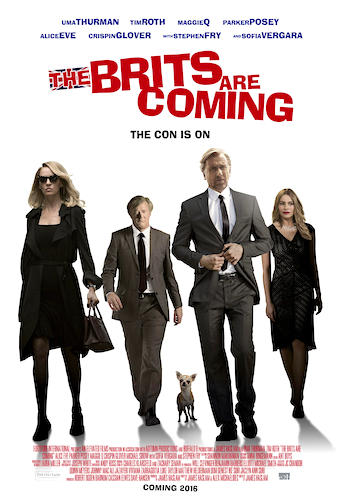
    Uma Thurman and Tim Roth star as a couple of British crooks who accidentally gamble away a pile of cash belonging to a crime lord (Maggie Q), so flee to LA to steal the expensive new engagement ring of his ex (Alice Eve).

    As a crime-comedy caper, you feel like this must have read funny — how else to explain such a starry cast in such a cheap-feeling production? Assuming that’s the case, something definitely got lost between page and screen: almost everything about The Brits Are Coming seems as if it should work, and yet almost none of it does. The occasional moment lands, amid a barrage of F-words so unnecessary you wonder if the film was in some kind of competition to use as many as possible. You sense the cast might’ve been having fun, at least, though supporting appearances from the likes of Stephen Fry and Crispin Glover do little to elevate the material.

    1 out of 5


    Ode to Joy

    (2019)

    Jason Winer | 97 mins | digital (HD) | 2.35:1 | USA / English | 12 / R

    Ode to Joy

    Charlie (Martin Freeman) has cataplexy, a rare neurological condition that means if he feels a strong emotion — in his case, happiness — he passes out. Unfortunately for Charlie, he seems to be a bit of a softy: even just seeing someone with their baby or cute dog on the street is liable to make him wobbly. So Charlie lives an uneventful life, working in a library (what better place for calm?) and never doing anything particularly interesting. Certainly never dating. But then one day he defuses a situation involving Francesca (Morena Baccarin), who takes a shine to him; and of course he’s interested in her, because, duh, it’s Morena Baccarin. Can Charlie manage to be happy… but not too happy?

    If it all sounds a tad far-fetched, you should know that it’s inspired by a true story (there’s even a writing credit acknowledging the journalist behind the original piece). Nonetheless, the fictionalised version could easily have turned the premise into something ridiculous, but a solid screenplay and great cast ensure it stays balanced on just the right comedy-drama line. Freeman is perfect casting for “man who would like to be happy but must keep himself miserable”, playing to strengths he’s displayed ever since his breakthrough role in The Office. As his love interest, Baccarin could probably have got away with just looking pretty, but there’s more zest to her character than that. Among the supporting cast, The Big Bang Theory alum Melissa Rauch is particularly hilarious as Francesca’s ‘boring’ friend who Charlie ends up dating instead. She’s the closest thing the film has to an outright “comedy character”, but the screenplay and Rauch’s performance manage to round her out.

    Ode to Joy could’ve coasted on easy (if probably repetitive) gags derived from Charlie’s condition, or it could’ve more-or-less ignored it as simply a hook for a bog-standard romcom. Instead, it’s something a bit more thoughtful, exploring what it really means to be “happy”, as well as where and how we find happiness. Not to mention that age-old question, what’s the point in living if you don’t feel alive?

    4 out of 5


    The Courier

    (2020)

    Dominic Cooke | 112 mins | digital (UHD) | 2.39:1 | UK & USA / English & Russian | 12 / PG-13

    The Courier

    A fascinating true story that I wasn’t the slightest bit aware of, The Courier stars Benedict Cumberbatch as nondescript businessman Greville Wynne, who was recruited during the Cold War by MI6 and the CIA to travel to Russia and collect information offered by an asset in Soviet military intelligence, Colonel Oleg Penkovsky (Merab Ninidze), at that time the highest-ranked Soviet to leak intelligence to the West. Definitely sounds like spy novel stuff, but, as I said, it’s all true (well, except for the bits tweaked for dramatic licence, obv).

    As regular readers will no doubt have inferred from my reviews of James Bond, John le Carré adaptations, and other similar fare, I love a bit of Cold War espionage. Normally that’s of the fictional variety — I guess most of the true stories aren’t quite as exciting, or remain too classified — but there’s nothing quite like knowing the events you’re witnessing actually took place. That said, the events depicted here fall under the latter category, as they’re officially still classified. Screenwriter Tom O’Connor reportedly pieced the narrative together from various sources, which I imagine helps make this as close to the truth as we’re likely to get, for now at least.

    Either way, it’s a suitably thrilling tale, powered by two superb lead performances from Cumberbatch — initially reluctant and floundering, but increasingly self-assured and moralistic — and Ninidze — controlled and honourable, but with an emotional undercurrent. Strong supporting turns, too, from the likes of Jessie Buckley and Rachel Brosnahan, don’t let us forget the very human cost of the spy games, especially if things should turn sour…

    By the end, you definitely feel that the actions of Wynne and Penkovsky should be better known. Perhaps the need for keeping official secrets has stymied that — although (without wishing to spoil what happens) some events did make news at the time, and this isn’t the first drama or documentary to cover the case — but The Courier stands as a valiant effort to bring their tale to a wider audience.

    4 out of 5


    The Misfits

    (2021)

    Renny Harlin | 95 mins | digital (HD) | 2.39:1 | USA, UAE & Finland / English | 15 / R

    The Misfits

    If you thought Michael Bay’s 6 Underground was bad, The Misfits is here to show you what a properly poor “former crooks do good deeds from the shadows” action movie looks like.

    The eponymous ‘Misfits’ are a small group of international Robin Hoods, preying on the rich and selfish for the benefit of the poor and helpless. Their latest job is to steal the gold reserves of a terrorist organisation, which are kept safe in a prison owned by Warner Schultz (Tim Roth, slumming it again), so they recruit his nemesis: thief and multi-time Schultz prison escapee Richard Pace (Pierce Brosnan, only half succeeding to reconjure the roguish charm he deployed decades ago in similarly-themed films like The Thomas Crown Affair).

    Despite the involvement of a couple of big-ish names in front of the camera and a former blockbuster director behind it (Renny Harlin, whose credits included Die Hard 2 and Cliffhanger before a couple of flops relegated him to rental-shelf-filler fare), The Misfits looks like it was made for £3.50 and a favour from the Abu Dhabi tourist board (the city appears glamorous and expensive, unlike anything else about the film).

    The screenplay feels like it was generated by an AI fed on every low-rent heist movie from the last 30 years. It’s not just clichés, but the way it drifts along with a “this is the sort of thing that happens in this sort of movie” logic, not particularly caring if it makes objective sense. The construction is sloppy, too. For example, a ton of time is devoted upfront to introducing the ‘Misfits’, only for most of them to be 2D one-trick pies (a thief, a fighter, an explosives expert, etc) who are supporting characters in what is really Brosnan’s film. I thought it was going to be a case of bait-and-switch marketing — make the famous actor prominent on the poster, only for his role to be little more than an extended cameo when the film is really about these other guys — but no, he’s genuinely the lead, it’s just the film is weirdly built. And that’s before we get onto the centrepiece heist itself, where the inevitable twists and reveals are either too clearly telegraphed, or simply pulled out of thin air (the gold isn’t there, it’s here! Except it’s not here, it’s there! But it’s not there, it’s here!)

    If you are exceptionally forgiving, The Misfits has vague merit as entertainment, but it’s a very hollow kind of fun. If you’re in the mood for the particular joys of a heist movie, and you can’t think of or get hold of another one at that minute, it would probably scratch the itch.

    2 out of 5

    The Misfits is the 18th film in my 100 Films in a Year Challenge 2022.

  • Archive 5, Vol.5

    I have a backlog of 427 unreviewed feature films from my 2018 to 2021 viewing. This is where I give those films their day, five at a time, selected by a random number generator.

    Today, melancholic Frenchmen, screwball Americans, and royal Africans are followed by a superhero team-up and a lesson on the evils of social media.

    This week’s Archive 5 are…

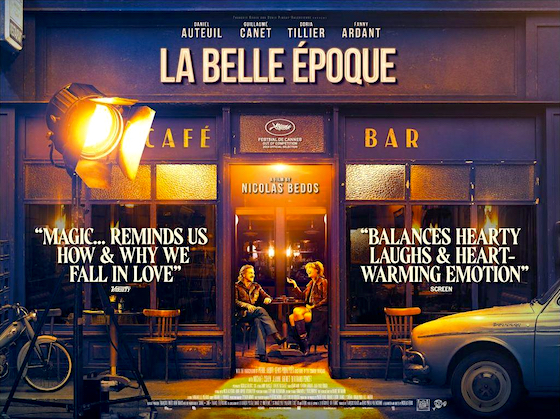
  • La Belle Époque (2019)
  • The Awful Truth (1937)
  • Coming to America (1988)
  • Scooby-Doo! & Batman: The Brave and the Bold (2018)
  • The Social Dilemma (2020)


    La Belle Époque

    (2019)

    Nicolas Bedos | 115 mins | cinema | 2.35:1 | France / French | 15 / R

    La Belle Époque

    Sixtysomething Victor (Daniel Auteuil) is officially a grumpy old man, and his marriage is on the rocks because of it. To cheer him up, his son buys him an experience with his friend’s company, who stage bespoke historical reenactments as a form of time travel. When Victor’s wife finally has enough and throws him out, he uses his experience to revisit 1974, when they first met and fell in love.

    To oversimplify things, it’s kind of like Groundhog Day by way of Charlie Kaufman: the immersive theatrical experience recalls Synechdoche, New York (in a superficial way, I guess), and Victor’s desire to live it over and over again is, well, obvious. Except he’s not stuck there, but choosing it. It’s a mix of nostalgia and melancholy, because, of course, he’s not actually reliving that day, however much he comes to believe in it.

    Advance reviews led me to believe La Belle Époque would be little more than a pleasant diversion, but there’s a lot more to it than that. It clearly has something to say as regards the power of nostalgia and the need to live in the present. But, deep thoughts aside, it’s also a charmingly romantic film — sharply witty, unexpectedly beautiful in places, and genuinely emotional by the end. It’s a shame that it seems to have had half-hearted distribution outside of France (perhaps the fault of it being acquired by Disney, I suspect with an English-language remake in mind, rather than a ‘proper’ distributor of foreign fare who would’ve shown it more love) because I think it deserves, and would reward, a wide audience.

    5 out of 5

    La Belle Époque was #140 in my 100 Films in a Year Challenge 2019. It placed 7th on my list of The 15 Best Films of 2019.


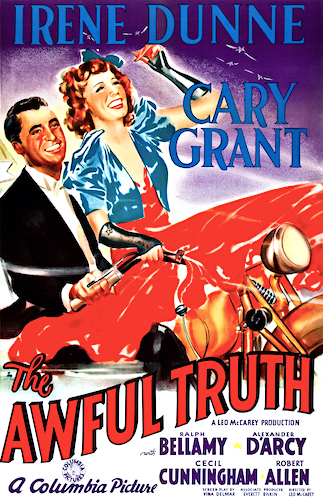
    The Awful Truth

    (1937)

    Leo McCarey | 91 mins | Blu-ray | 1.37:1 | USA / English | U

    The Awful Truth

    When Leo McCarey received his Best Director Oscar for this film, he said that he got it for the wrong film — a clear reference to his fondness for Make Way for Tomorrow, which he made the same year. I’m not wholly sure I agree with him, although Tomorrow’s is clearly the ‘worthier’ picture — but that doesn’t always mean better.

    The Awful Truth was the first of three screen pairings of Irene Dunne and Cary Grant, and the film that refined the latter’s famous screen persona. Here, the duo play a married couple who begin to divorce, only to then interfere with each other’s further romances. When it’s on form, the film is up there with the best of its subgenre: a sparkling screwball comedy with glorious dialogue, a pair of splendid lead performances, and a magnificent dog. Unfortunately, it goes on a mite too long and begins to lose steam in the final act. While that might hold the film back from perfection (and so open the door to the idea that Make Way for Tomorrow is somehow superior), the magnificence of what comes before means it’s still a must-see for fans of this style of comedy.

    4 out of 5

    The Awful Truth was #95 in my 100 Films in a Year Challenge 2021.


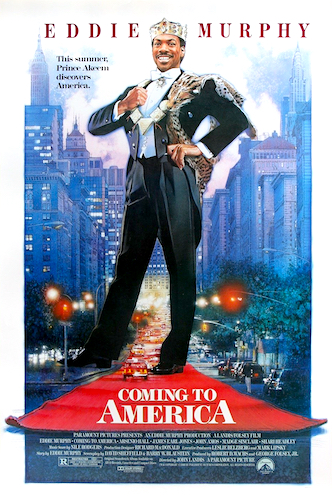
    Coming to America

    (1988)

    John Landis | 117 mins | digital (HD) | 16:9 | USA / English | 15 / R

    Coming to America

    Eddie Murphy plays a pampered but bored African prince, who dodges an arranged marriage to travel to America and find a bride. With that plot and the fact it was made a few decades ago, I was half expecting Coming to America to have aged badly. If nothing else, it seemed primed to base its humour around cringe-inducing culture-clash awkwardness — not necessarily an invalid kind of comedy, but not one I personally enjoy.

    As it turns out, it’s nothing of the sort. In fact, it’s actually rather sweet and kind-hearted, with just enough lewdness to give it a kick rather than make it eye-rollingly vulgar (I’m sure it would only take a couple of minor trims to get that 15/R rating down to a 12/PG-13). Some have criticised it for being too slow — including director John Landis, who asked Paramount if he could re-edit it for the Blu-ray release (they refused) — but I thought it was quite well paced. It doesn’t move at whipcrack speed, but it doesn’t need to. All in all, it holds up well enough that I can see why they decided to produce a belated sequel (which is still on my watchlist).

    4 out of 5

    Coming to America was #28 in my 100 Films in a Year Challenge 2021.


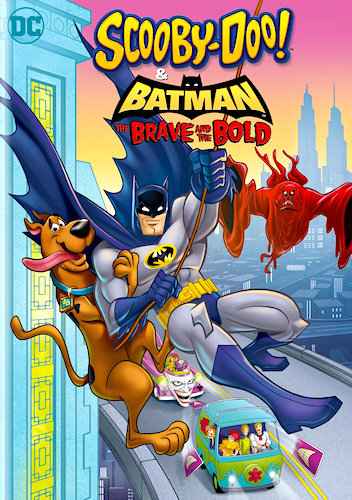
    Scooby-Doo! & Batman:
    The Brave and the Bold

    (2018)

    Jake Castorena | 75 mins | digital (HD) | 1.78:1 | USA / English | PG

    Scooby-Doo! & Batman: The Brave and the Bold

    There are an awful lot of Batman movies nowadays (58 and counting, according to my Letterboxd list), but I thought I was at least aware of them all. Turns out not, because I hadn’t even heard of this one until I happened to see someone log it on Letterboxd several years after its release. (It’s a direct-to-video production that they didn’t bother to release on Blu-ray, so that’ll be a big part of why it slipped under my radar.)

    A plot description is pretty unnecessary here: the title tells you all you need to know. The reason it’s a particularly unwieldy one is because Scooby-Doo and friends team-up with, specifically, the Batman from animated series Batman: The Brave and the Bold. I watched a selection of episodes from that show a few years ago and, frankly, didn’t enjoy most of them (although a couple are excellent: Mayhem of the Music Meister is so good I watched it twice in as many days, which regular readers will know is very unlike me), so I didn’t have high hopes for this movie either.

    At least it’s an appropriate iteration of Batman to crossover with Scooby-Doo, because (a) the whole point of the show was team-ups, with every episode seeing Batman join forces with a different DC hero (the subtitle is derived from a classic DC team-up comic), and (b) the overall tone of the show was camp and comical, which chimes well with Scooby-Doo. In fact, despite Scooby-Doo getting top billing, the film is really a feature-length episode of Batman: The Brave and the Bold guest starring Mystery Inc, rather than the other way round. I mean, it’s set in Gotham City, stuffed with appearances and cameos by other DC characters, and (most of all) it uses The Brave and the Bold’s animation style, even featuring a version of the series’ title sequence and theme music — with a Scooby makeover, of course. Nonetheless, it also adopts plenty of the tropes of a Scooby-Doo story, like the unmasking at the end.

    Thanks to all that, it’s everything you’d expect from “Scooby-Doo meets Batman” — they leave nothing on the table, right down to having Scooby actually say, “Holy Scooby-Dooby-Doo, Batman!” And would you have it any other way? It’s a daft concept, mashing these two cheesy franchises together — there’s no point trying to be above it. By embracing what it is, it delivers what you’d expect as well as could be imagined. For that, I quite enjoyed it on the whole. And so I would say that, if the basic idea of it doesn’t interest you, give it a miss; but if you think it sounds potentially appealing, you should definitely watch it.

    3 out of 5

    Scooby-Doo! & Batman: The Brave and the Bold was #105 in my 100 Films in a Year Challenge 2020.

    The Social Dilemma

    (2020)

    Jeff Orlowski | 94 mins | digital (UHD) | 16:9 | USA / English | 12 / PG-13

    The Social Dilemma

    One of those Netflix documentaries that everyone seems to be talking about for a while but then forgets just as quickly, The Social Dilemma is essentially about how dangerous social media is, as told to us by the people who created it. Not the Mark Zuckerberg of the world, obviously — they’re still raking in far too much cash to want to dissuade us from using their products — but various other developers and whatnot who’ve been involved over the years.

    Naturally, the main reaction to all this information is: “OMG, I totally need to change all my social media habits!” And do people? Not as far as I’ve seen. As one contributor in the doc comments, “knowing what was going on behind the curtain, I still wasn’t able to control my usage. So that’s a little scary.” Eesh. We’re doomed.

    4 out of 5

    The Social Dilemma was #20 in my 100 Films in a Year Challenge 2021.


  • Archive 5, Vol.2

    I have a backlog of 442 unreviewed feature films from my 2018 to 2021 viewing. This is where I give those films their day, five at a time, selected by a random number generator.

    Today: musical comedies from ’41 and ’51; murder mysteries from ’33 and ’73; and an animated film that changed the Oscars.

    This week’s Archive 5 are…

  • Royal Wedding (1951)
  • A Study in Scarlet (1933)
  • Chicken Run (2000)
  • The Last of Sheila (1973)
  • Road to Zanzibar (1941)


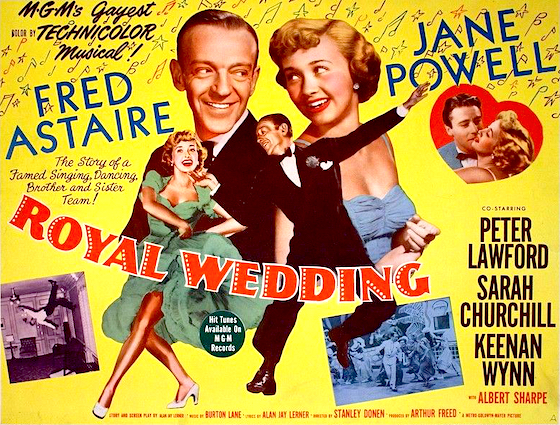
    Royal Wedding

    (1951)

    aka Wedding Bells

    Stanley Donen | 93 mins | digital (SD) | 4:3 | USA / English | U

    Royal Wedding

    Cynically, I assumed this US production was designed as a cash-in to a news event, most likely the wedding of Princess Elizabeth (i.e. the Queen) and Philip. Although those are indeed the eponymous nuptials, they actually took place several years earlier, in 1947; and in the UK, for its initial release the film was retitled Wedding Bells so audiences wouldn’t think it was a documentary about the real event. So much for my modern cynicism.

    The actual plot is semi-biographical, inspired by the real-life dance partnership of the film’s star, Fred Astaire, and his sister Adele, and who she went on to marry. Here the sister is played by Jane Powell (almost 30 years Astaire’s younger) as the duo take their successful Broadway show across the ocean to London in time for the royal wedding. Such window dressing aside, the plot that unfurls is run-of-the-mill, with both siblings finding themselves in romantic entanglements, and the songs are unmemorable too. The object of Astaire’s affection is played by Sarah Churchill, daughter of Winston Churchill, which adds a bit of fun trivia, at least.

    There is one noteworthy highlight: a set piece in which Astaire dances up the walls and across the ceiling of his hotel room, an effect that’s achieved seamlessly — there’s no wobble or what have you to give away the trickery, and Astaire’s choreography helps hide the behind-the-scenes technique too. There are one or two other neat bits if you’re a fan of dance-y musicals, but, on the whole, this is a thoroughly middle-of-the-road Astaire musical — not bad, just no more than adequate.

    3 out of 5

    Royal Wedding was #180 in my 100 Films in a Year Challenge 2021.


    A Study in Scarlet

    (1933)

    Edwin L. Marin | 72 mins | Blu-ray | 1.33:1 | USA / English | U

    A Study in Scarlet

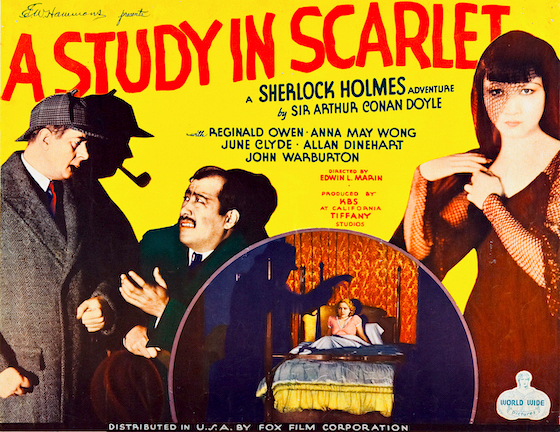
    For some reason, cinema has a long history of taking the titles of original Sherlock Holmes stories but then producing an entirely new plot underneath. A Study in Scarlet — the very first of Sir Arthur Conan Doyle’s Holmes works — seems to be a particularly afflicted tale. It features the first meeting of Holmes and his roommate / sidekick / chronicler, Dr Watson, but I think there are two adaptations that actually show this — and, ironically, neither of them are actually called A Study in Scarlet (one is the debut episode of Sherlock, A Study in Pink, and the other is the first episode of the Russian series The Adventures of Sherlock Holmes and Dr. Watson, which is called Acquaintance). According to IMDb, “the Conan Doyle estate quoted the producers a price for the rights to the title and a considerably higher price to use the original story” — perhaps they did that all the time, hence my observed phenomena.

    Obviously, this ‘poverty row’ effort is one such example of title/story mismatch: this so-called adaptation stars Sherlock Holmes and Dr Watson… and that’s where similarities to the novel end. The pair don’t even live at 221b Baker Street — for no apparent reason, it’s been changed to 221a. Did the filmmakers just misremember one of the most famous addresses in literature? Having only paid for the rights to the title, the producers hired director Robert Florey (the Marx Brothers’ The Cocoanuts; Murders in the Rue Morgue) to write a new story, and actor Reginald Owen — who stars as Holmes — wrote the dialogue. Owen hoped this would be the first in a series of Holmes films starring himself. It wasn’t.

    Physically, Owen isn’t anyone’s ideal image of Holmes, but his actual performance is adequate. Much the same can be said of the whole film: it’s an entertaining-enough 70-minute crime romp, with enough incident to create a brisk pace, and a use of the rhyme Ten Little Indians that makes you wonder if Agatha Christie saw this movie before she published And Then There Were None six years later (or is it just a coincidence? The audio commentators spend a good deal of time chewing it over). Given second billing behind Owen is bona fide Chinese-American movie star Anna May Wong, even though she has relatively little screen time. She makes her mark, though, with a role that doesn’t simply conform to racial stereotypes (possibly an unintended side effect of her late casting rather than genuine progressivism by the filmmakers, but sometimes you gotta take what you can get).

    This particular Study in Scarlet is a long way from being a definitive Sherlock Holmes movie, but for fans of ’30s detective flicks, it’s nonetheless a likeable little adventure.

    3 out of 5

    A Study in Scarlet was #206 in my 100 Films in a Year Challenge 2021.


    Chicken Run

    (2000)

    Peter Lord & Nick Park | 84 mins | digital (HD) | 16:9 | UK, USA & France / English | U / G

    Chicken Run

    I’ve always enjoyed Aardman’s work. I grew up watching the Wallace & Gromit shorts on TV, and have seen all of their feature output — except their first. I’m not sure why it’s taken me 20 years to get round to Chicken Run. I guess when it was originally released I had grown out of “kid’s movies” but not yet grown back into them; but since then, to be honest, something about it never particularly appealed to me. It certainly has its fans: it’s still the highest grossing stop motion film ever; there was a push to get it an Oscar Best Picture nomination, the failure of which led to the creation of a category it could’ve won, Best Animated Feature (trust the Academy to shut the door after the horse had bolted); and when Netflix recently announced a sequel, there was much pleasure on social media.

    So, finally getting round to it, would I discover what I’d been missing all along? Unfortunately, no. I thought it was fine. In no way did I dislike it, but nor did it charm me in the way of my favourite Aardman productions. It’s rather dark for U-rated film — it doesn’t mince its words or imagery about the fact the chickens are being killed — and that contributes to some particularly effective sequences, like when our heroes end up inside the pie machine, or a suitably exciting climactic action sequence. There are some reliably decent gags along the way, too.

    I’m sure I’ll watch the sequel. Maybe I’ll like it more. But, I confess, the fact they’ve now announced a new Wallace & Gromit movie for the year after does have me even more excited.

    3 out of 5

    Chicken Run was #148 in my 100 Films in a Year Challenge 2020.


    The Last of Sheila

    (1973)

    Herbert Ross | 120 mins | digital (SD) | 1.85:1 | USA / English | 15* / PG

    The Last of Sheila

    I’d never even heard of this before Rian Johnson mentioned it as an inspiration for Knives Out 2. Co-written by Anthony Perkins (yes, Norman Bates from Psycho) and Stephen Sondheim (yes, the famous musical composer), The Last of Sheila is a murder mystery firmly in the Agatha Christie mould — despite the writers’ pedigree, there are no significant horror elements (even the deaths are, at worst, on the PG/12 borderline) and certainly no song-and-dance numbers (excepting a magnificently inappropriate song over the end credits, sung by Bette Midler). Apparently Perkins and Sondheim used to host elaborate scavenger hunts for their friends in the late ’60s and early ’70s, and they adapted them into a screenplay at the suggestion of a guest, Herbert Ross, who produced and directed the film (seems only fair).

    Further inspiration came from their professional lives and acquaintances, because the potential victims and suspects are all actresses, agents, and the like, gathered for a Mediterranean cruise aboard a producer’s yacht. He proposes they play a game about secrets and gossip — but clearly one of the secrets in play is too big, because someone winds up murdered. A well-constructed mystery is unfurled throughout the film, although its execution is a little variable: a fun, very Christie-esque first half gives way to long talky scenes in the second, as characters stand around and explain the plot to each other. But when that plot is as good as this — with some nice surprises, plus motives dark enough to give it a little edge — it feels churlish to object too strongly.

    4 out of 5

    The Last of Sheila was #186 in my 100 Films in a Year Challenge 2021.

    * IMDb says it was given a 15 on video, but the BBFC say it hasn’t been rated since 1973, when it got an AA. The BBFC site is crap nowadays; IMDb will accept any old junk users submit. You decide. ^


    Road to Zanzibar

    (1941)

    Victor Schertzinger | 87 mins | DVD | 1.33:1 | USA / English | PG

    Road to Zanzibar

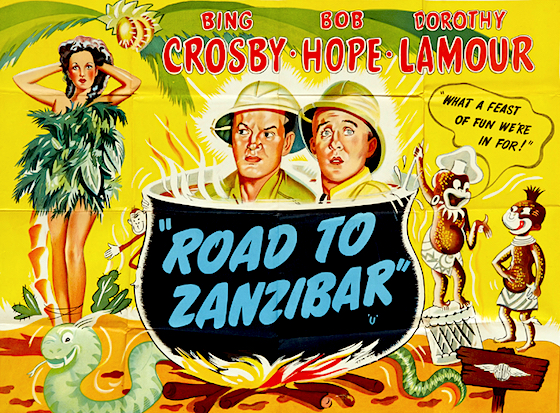
    The second in what became the Road To… series — though it was never intended as such. What ended up becoming Road to Zanzibar was initially an original feature, first offered to Fred MacMurray (this before his roles in the likes of Double Indemnity and The Apartment) and George Burns (an actor I’m not particularly familiar with). After they rejected it, apparently someone at Paramount remembered Road to Singapore had done relatively well, and that Bob Hope and Bing Crosby seemed like a good pairing, and so they were offered it.

    As I wrote in my last review of a Road To film (which was over 11 years ago?! Jesus…), if you’ve seen one Road To film then you’ve a fair idea what to expect from any other — essentially, a suitably daft bit of fluff and fun. This one’s a bit thin — on plot, on gags, on everything — but it skates by on the charm of Bob and Bing, joined, as ever, by Dorothy Lamour. The only serious problem is the same as Singapore: dated depictions of African stereotypes. It kind of gets away with it by being a spoof of “African adventure”-type movies, but maybe that’s me being kind with hindsight. Either way, the bit where the tribe’s African dialogue is subtitled with contemporary American vernacular is one of the film’s more amusing gags.

    3 out of 5

    Road to Zanzibar was #110 in my 100 Films in a Year Challenge 2019.


  • The 100-Week Roundup XXXI

    The 100-Week Roundup covers films I still haven’t reviewed 100 weeks after watching them. Sometimes these are short ‘proper’ reviews; sometimes they’re only quick thoughts, or even just the notes I made while viewing.

    This week’s selection includes a trio of films I watched back in May 2019

  • Widows (2018)
  • Cosmopolis (2012)
  • The Kennel Murder Case (1933)


    Widows
    (2018)

    2019 #88
    Steve McQueen | 130 mins | digital (HD) | 2.39:1 | UK & USA / English & Spanish | 15 / R

    Widows

    The story of four women with nothing in common, except a debt left behind by their dead husbands’ criminal activities. Set in contemporary Chicago, amid a time of turmoil, tensions build when Veronica (Viola Davis), Alice (Elizabeth Debicki), Linda (Michelle Rodriguez) and Belle (Cynthia Erivo) take their fate into their own hands and conspire to forge a future on their own terms.IMDb

    Best known for powerful socially/politically-conscious work like Hunger, 12 Years a Slave, and the Small Axe series, director Steve McQueen here delivers something closer to a genre movie — although, with its storyline of gangsters’ women empowering themselves, and a racially diverse cast, it still feels at least somewhat radical. As a thriller, it’s not exactly taught with tension, but it’s not too slack either — the pace is considered but not slow, allowing enough room for everything (and there’s a lot) without feeling rushed.

    4 out of 5

    Cosmopolis
    (2012)

    2019 #89
    David Cronenberg | 101 mins | digital (HD) | 16:9 | Canada & France / English | 15 / R

    Cosmopolis

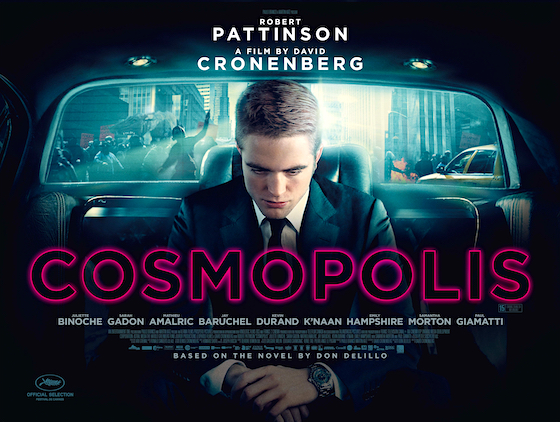
    Riding across Manhattan in a stretch limo in order to get a haircut, a 28-year-old billionaire asset manager’s day devolves into an odyssey with a cast of characters that start to tear his world apart.IMDb

    David Cronenberg may be most famous as a horror director, but the only thing horrific about Cosmopolis is having to sit through it. It has the visual, aural, writing, and performance quality of an overambitious semi-pro early-’00s webseries, from the distractingly ugly green-screened limo windows to the “undergrad philosopher”-sounding screenplay and stiff performances. I presume this literally monotonous lack of realism must have been intentional, but doing something deliberately doesn’t inherently make it good. Cronenberg reportedly wrote the screenplay in just six days, apparently by copy-pasting the book into screenplay format and separating the dialogue from narration. That would go some way to explaining why it’s all so unnatural and impenetrable.

    1 out of 5

    Cosmopolis featured on my list of The Five Worst Films I Saw in 2019.

    The Kennel Murder Case
    (1933)

    2019 #91
    Michael Curtiz | 73 mins | digital (SD) | 4:3 | USA / English

    The Kennel Murder Case

    Before he starred in The Thin Man, one of the definitive detective movies, William Powell played private eye Philo Vance in a series of movies — three at Paramount across 1929 and 1930, later returning for this one at Warners. Here, Vance investigates a locked-room mystery: wealthy collector Archer Coe is dead and all signs point to suicide, but Vance had run into him the day before at the Kennel Club, where Coe was looking forward to his dog winning the next day’s competition.

    While the ensuing story unfolds a solid mystery, it lacks the charm and wit of the Thin Man films. Powell’s character is a facilitator of the plot rather than an entertaining main character; a blank slate who wanders around solving things. That lack of verve or individuality (which you do find in, say, the Falcon and Saint films, which this is on a par with in most other respects) is what really holds it back. Mind you, it has its moments: for example, much of Michael Curtiz’s direction is perfunctory studio-programmer stuff, but there’s the occasional striking shot (the discovery of a body though a keyhole) or sequence (the recap of how the murders went down, with a roving first-person view to hide the killer’s identity).

    3 out of 5

  • King Kong (1933)

    The 100 Films Guide to…

    King Kong

    A Monster of Creation’s Dawn
    Breaks Loose in Our World Today!

    Country: USA
    Language: English
    Runtime: 100 minutes
    BBFC: A (1933) | PG (1985)

    Original Release: 2nd March 1933 (New York City, USA)
    UK Release: 17th April 1933 (London)
    Budget: $672,254.75
    Worldwide Gross: $5.3 million

    Stars
    Fay Wray (Doctor X, Mystery of the Wax Museum)
    Robert Armstrong (The Most Dangerous Game, Mighty Joe Young)
    Bruce Cabot (Fallen Angel, Diamonds Are Forever)

    Directors
    Merian C. Cooper (The Four Feathers, The Last Days of Pompeii)
    Ernest B. Schoedsack (The Most Dangerous Game, Mighty Joe Young)

    Screenwriters
    James Creelman (The Most Dangerous Game, The Last Days of Pompeii)
    Ruth Rose (She, Mighty Joe Young)

    From an idea by
    Merian C. Cooper (Roar of the Dragon, Mighty Joe Young)
    Edgar Wallace (The Squeaker, The Hound of the Baskervilles)

    The Story
    Adventurous filmmaker Carl Denham and crew travel to an uncharted tropical island in search of the subject for his next picture. There, they encounter a gigantic ape — Kong — who takes a shine to the movie’s pretty young star…

    Our Hero
    Ann Darrow is a down-on-her-luck gal in New York City, when successful movie producer Carl Denham plucks her to star in his next movie — which involves going on a long boat voyage to a mysterious uncharted island, where she’ll make a big new friend…

    Our Villain
    People might point to Kong — he is a giant monster who kidnaps the heroine and kills a bunch of people, after all — but I think we all know the real villain is Carl Denham, the risk-taking heath-and-safety-averse movie producer turned theatrical impresario, whose exploitative whims ultimately lead to death and destruction.

    Best Supporting Character
    He may be a stop-motion puppet made of metal and rubber and fur, but animator Willis O’Brien injects so much life and personality into Kong that he is, unquestionably, the real star of the show.

    Memorable Quote
    “It wasn’t the airplanes. It was beauty killed the beast.” — Carl Denham

    Memorable Scene
    King Kong is full of great moments, but the most famous has to be the climax: having wreaked havoc across New York City, Kong scales the Empire State Building with Ann in hand, deposits her at the top, and fights for his life as a fleet of biplanes swarm around. It’s not going to end well…

    Truly Special Effect
    I’ve already mentioned Willis O’Brien’s animation of Kong, but his skill goes far beyond that: there are all manner of beasties on Kong’s island, brought thrillingly to life by O’Brien and his team. These stop-motion effects are obviously of their time, but the way they’re integrated with the live action is frequently impressive, and any technical limitations certainly didn’t lead them to skimp on the action — you might think Kong would only appear sparingly, but the big guy gets tonnes of screen time.

    Making of
    King Kong was made before the enforcement of the Production Code, but its 1938 re-release was after. To comply, multiple scenes were removed (perhaps most famously, one where Kong peels off Ann’s clothes). They weren’t restored until the ’70s. But one scene was deleted even earlier: the so-called “spider pit” sequence, in which the sailors Kong tips off a log are attacked and killed by a bunch of creatures. When included in a preview screening, audience members were so disturbed that they either left or were so focused on what they’d just seen it disrupted the rest of the film. Consequently, the sequence was removed before the film’s general release, and is probably lost forever. But it remains a kind of Holy Grail of deleted scenes, and so during production of the 2005 remake, Peter Jackson and Weta set about recreating the original spider pit scene, just as a fun side project. The end result (included on subsequent Blu-ray releases of the ’33 film) is nice ‘n’ all, but what’s really incredible is the half-hour making-of devoted to its creation. The amount of time, effort, and skill that Jackson & co put into creating such a short sequence — something they themselves describe as “just a bit of fun” — is phenomenal.

    Next time…
    King Kong was such a hit that a sequel was raced out the same year. Produced on a vastly reduced budget and in just six months to get it into theatres for Christmas, The Son of Kong was not a success. But the iconicity of Kong has ensured he’s survived long-term. In the ’60s, he was licensed to Japanese studio Toho so they could pit him against their own giant monster in King Kong vs. Godzilla, and in 1967 they produced a Kong-only followup, King Kong Escapes. In 1976, a big Hollywood remake of the original updated events to a contemporary setting. Although it wasn’t a success, sequel King Kong Lives eventually followed ten years later. There was another remake in 1998: a direct-to-video animated musical titled The Mighty Kong (no, really). Also in the late ’90s, a small-time horror director from New Zealand nearly produced another remake, but the project didn’t come together. One billion-dollar-grossing, Oscar-winning, genre-defining, medium-revolutionising fantasy trilogy later, Peter Jackson was finally allowed to realise his dream, helming an epic reimagining that this time retained the original film’s 1930s setting. Various other animated films, TV series, comic books, games, theme park rides, and the like have featured Kong down the decades. Most recently, he’s once again been inducted into a shared universe with Godzilla, getting a wholly rebooted origin in Kong: Skull Island before facing off against the giant lizard in Godzilla vs. Kong. Given the latter’s current box office success, more films will surely follow.

    Verdict

    Beauty and the Beast is reimagined as a monster movie in this iconic classic. Obviously some of it has aged (not just the effects, but some broadly racist attitudes around Pacific islanders and the ship’s Chinese cook), although its pre-Code roots allow it some unexpected liberties (from gruesome deaths to an unmistakable sexuality around Fay Wray — all within PG levels, but still). Take all that in your stride, and King Kong absolutely holds up as an adrenaline-fuelled spectacle.

    Gone with the Wind (1939)

    100 Films’ 100 Favourites #41

    The most magnificent picture ever!

    Country: USA
    Language: English
    Runtime: 233 minutes
    BBFC: A (cut, 1940) | PG (1988)
    MPAA: G (1971)

    Original Release: 15th December 1939 (premiere in Atlanta, Georgia, USA)
    US Release: 17th January 1940
    UK Release: 18th April 1940 (premiere)
    First Seen: TV, c.2005

    Stars
    Clark Gable (It Happened One Night, Mutiny on the Bounty)
    Vivien Leigh (Fire Over England, A Streetcar Named Desire)
    Leslie Howard (Of Human Bondage, 49th Parallel)
    Olivia de Havilland (The Adventures of Robin Hood, The Dark Mirror)
    Hattie McDaniel (Show Boat, Song of the South)

    Director
    Victor Fleming (The Wizard of Oz, A Guy Named Joe)

    Screenwriter
    Sidney Howard (Arrowsmith, Dodsworth)

    Based on
    Gone with the Wind, a novel by Margaret Mitchell.

    The Story
    The American South, 1861: wealthy teenager Scarlett O’Hara spends her days attending parties and flirting with her many admirers, though she only really has eyes for her neighbour, Ashley. After he declares his intention to marry his cousin Melanie, a furious Scarlett meets Rhett Butler, a practically-minded gent who only serves his own interests. When the American Civil War breaks out, Scarlett has to apply her manipulative nature to survival, as down the years she engages in a love/hate relationship with the similarly-tempered Rhett.

    Our Heroes
    Scarlett O’Hara is the perennial belle of the ball in her Southern community, until the American Civil War comes and she’s forced to grow up. Her innate selfishness and tendency to manipulate people (or try to, at least) helps her survive the conflict in more-or-less one piece. Equally self concerned is Rhett Butler, a gentleman not afraid to stand up to Scarlett, which is why they clash, and why they’re probably made for one another.

    Our Villains
    Those damn Unionists, with their trying to get rid of slavery and everything!

    Best Supporting Character
    Hattie McDaniel is memorable, likeable, and Oscar-winning as the O’Haras’ maid, Mammy. Whether her performance was a good thing for the African American community or just an ‘Uncle Tom’ is another matter.

    Memorable Quote
    “As God is my witness, as God is my witness they’re not going to lick me. I’m going to live through this and when it’s all over, I’ll never be hungry again. No, nor any of my folk. If I have to lie, steal, cheat or kill. As God is my witness, I’ll never be hungry again.” — Scarlett O’Hara

    Quote Most Likely To Be Used in Everyday Conversation
    “Frankly, my dear, I don’t give a damn.” — Rhett Butler

    Memorable Scene
    In the streets of Atlanta, Scarlett comes across the casualties from the battle. First we only see her face as she comes upon a shocking sight. Then it cuts to a long-shot: Scarlett stood by some soldiers, a couple of wounded men on the ground before her. The camera tracks back as Scarlett walks forward, gradually revealing the field of wounded soldiers she’s walking among. It continues to pull back, up into the sky, for a full 55 seconds, the injured stretching as far as the eye can see as a damaged Confederate flag flutters into view in the foreground.

    Technical Wizardry
    The Technicolor photography by Ernest Haller is absolutely gorgeous, and looks better than ever nowadays thanks to new restoration techniques developed in 2004 (12 years ago?! Where does time go?) That restoration is where the real wizardry lies. Gone with the Wind was shot with Technicolor’s three-strip process, in which a prism split the light entering the camera into its green, red and blue parts, which were each exposed on a strip of black-and-white film. These strips were then dyed the appropriate colour, before being combined onto a new film to create the final full-colour print. Naturally this process was liable to human error: misalign one of the strips by even the slightest amount and you get errors; small and almost unnoticeable, maybe, but less than perfection. In 2004, they went back to the original three strips and, using complicated new computer programs, realigned them from scratch. This perfect alignment revealed details that have always been on the film but would never have been seen before, meaning these movies (they also did it for the likes of The Wizard of Oz, Singin’ in the Rain, and The Adventures of Robin Hood) literally looked better than they ever had. Magic.

    Letting the Side Down
    There are a raft of criticisms that can be levelled at Gone with the Wind, from its depiction of black characters, to making the South seem not so bad, to the faithfulness of its adaptation (too much). The second half is certainly less focused and less memorable than the first, but the whole overcomes that, for me.

    Making of
    The search for an actress to play the leading role of Scarlett O’Hara is legendary — it was even dramatised in an Emmy-winning TV movie in 1980. In all it lasted two years, including an open casting call that interviewed 1,400 unknowns (useless for casting, great for publicity), and the formal screen-testing of 31 actresses, including the likes of Lucille Ball, Clara Bow, Joan Crawford, Bette Davis, Katharine Hepburn, Ginger Rogers, Barbara Stanwyck, and many more. In the end, it of course went to a young British actress, then unknown in America, called Vivien Leigh. The rest is screen history.
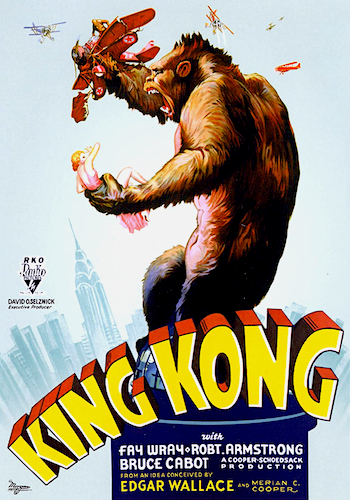
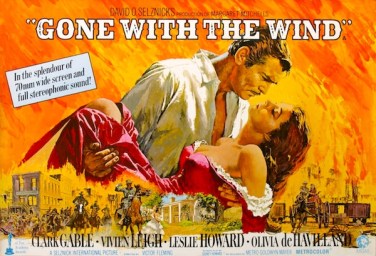
    Next time…
    Fans and filmmakers alike tried to get Margaret Mitchell to write a sequel until her death in 1949. In the ’70s, her brother agreed a deal with MGM and Universal under which a novel would be written and simultaneously adapted into a film. Despite a 775-page manuscript being produced, the deal fell apart. Numerous sequel novels have been published, and in 1994 one of these, Alexandra Ripley’s Scarlett, was adapted into a miniseries starring Joanne Whalley as Scarlett and Timothy Dalton as Rhett, with a supporting cast that includes Sean Bean, John Gielgud, and Ann-Margret. Apparently it’s not very good.

    Awards
    8 Oscars (Picture, Actress (Vivien Leigh), Supporting Actress (Hattie McDaniel), Director, Screenplay, Color Cinematography, Art Direction, Editing)
    1 Honorary Award from AMPAS (for “outstanding achievement in the use of color for the enhancement of dramatic mood”)
    1 Technical Achievement Award from AMPAS (for being “pioneering in the use of coordinated equipment”)
    5 Oscar nominations (Actor (Clark Gable), Supporting Actress (Olivia de Havilland), Score, Sound Recording, Special Effects)

    What the Critics Said in 1939
    “There has never been a picture like David O. Selznick’s production of Gone With the Wind. It is so true to Margaret Mitchell’s novel of the Civil War, as it was fought in and around Atlanta, that the film is of the same epic quality as the book. […] Vivien Leigh, the little English girl imported to play the role of Scarlett, gives a magnificent performance. No other actress in Hollywood, or on the New York stage, could have come close to equalling it. […] She is pert and beautiful, lacking in erudition but the possessor of all the arts and allure of the vital female. She is quick-tempered, selfish, untruthful, sturdy and wilful as a lioness. No attempt has been made to gloss over Scarlett’s weaknesses and sins. As she is, she dominates the picture from its gay and light-hearted beginning to its tragic close.” — Kate Cameron, New York Daily News

    What the Critics Said in 1973
    “The most interesting way to consider GWTW today is in comparison with the film that may eventually surpass it in profits, The Godfather. Look at the similarities. Both originated in best-selling American novels. Both are very long. Both are about predators. Both are ultra-American yet are very closely allied to Europe (Walter Scott and Sicily). And, most important, both live within codes of honor, and both codes are romances. William R. Taylor has shown, in Cavalier and Yankee, that the ‘Walter Scott’ antebellum South was largely a literary fabrication, concocted at the time, not retrospectively; as for The Godfather, our newspapers show us daily that ‘They Only Kill Each Other’ is just another escape hatch to allow us to blink facts. ‘Us,’ by the way, means the world, not just the United States, since the whole world flocks to both films. And that’s interesting, too, because it leads to a difference, not a likeness. In a new age, when the ‘realistic’ Godfather is packing them in, the romantic GWTW is still popular. There’s a crumb of comfort in that: at least culture is still more pluralist than some of our propagandists would have us believe.” — Stanley Kauffmann, The Atlantic

    What the Critics Said in 2015
    “Its stereotype of happy slaves and kindly masters has never been more wince-inducing […] But no one watches Gone with the Wind for historical accuracy. What keeps us coming back is four-hours of epic romance in gorgeous Technicolor. Slavery, the Civil War, the burning of Atlanta, a street knee-deep in dead soldiers—all just a backdrop to the main event, Scarlett ’n’ Rhett. The feminist jury is still out on Southern belle Scarlett O’Hara (Vivien Leigh). Nothing but a serial husband-thief? Or a resilient modern woman doing what she can to survive? You decide.” — Cath Clarke, Time Out

    Score: 94%

    What the Public Say
    “What’s striking almost 75 years on is how fresh and modern both Rhett and Scarlett remain. Gable’s eyes twinkle as he rolls Sidney Howard’s dialogue around his mouth, but there’s also a sadness there and a resignation that, no matter how hard he tries, he and Scarlett can never last. Leigh, who came through a tortuous audition process to land the part, positively crackles. Although still one of the feistiest and most driven female parts committed to screen Scarlett is, for the most part, pretty damn annoying and does little to enamour herself as the film progresses. […] Rhett sums Scarlett up perfectly when he remarks that she’s ‘like the thief who isn’t the least bit sorry he stole, but is terribly, terribly sorry he’s going to jail’.” — Three Rows Back

    Elsewhere on 100 Films
    I briefly reviewed Gone with the Wind after a re-watch way back in 2007, when I assessed that “the direction is brilliant, displaying styles you think weren’t invented for another 20 years; all of the design work is gorgeous; and the story is epic and expertly told, moving across genres (romance, war, melodrama, comedy) with ease. It’s easy to see why this is the most popular film ever made.”

    Verdict

    Last week I wrote about the enduring mass popularity of The Godfather, and here’s another case in point. Gone with the Wind may not rack up the ratings in the same circles as Coppola’s opus, but it has consistently been voted America’s most favourite movie, and its numerous massively successful re-releases mean that, adjusted for inflation, it’s still the highest grossing movie of all time. It’s an epic in the truest sense of the word, with a story spanning many years and many miles, passing by historical events in the process. However, at its core it’s the story of a tumultuous romance between two people, who may love each other or may hate each other, but who, with their unique, selfish, manipulative perspectives, are surely perfect for each other.

    #42 will be… #42 will be… #42 will be…