TV dominated my viewing this month, with whole seasons of Luke Cage, Red Dwarf, and Ripper Street released, plus sundry other shows, new and old — so many I’m not even going to list them. And I’m currently most of the way through Stranger Things too (more on that in next month’s TV round-up).
Despite that, I still found the time to watch a decent number of films — in fact, October isn’t even the lowest-totalling month this year.
And those films were…

#159 The Quay Brothers in 35mm (2015)
—#159a In Absentia (2000)
—#159b Quay (2015)
—#159c The Comb (From the Museums of Sleep) (1990)
—#159d Street of Crocodiles (1986)
#160 A Knight’s Tale (2001)
#161 The Big Short (2015)
#162 Raiders!: The Story of the Greatest Fan Film Ever Made (2016)
#163 Moneyball (2011)
#164 Raising Arizona (1987)
#165 The Rocky Horror Picture Show: Let’s Do the Time Warp Again (2016)
#166 The Transporter Refuelled (2015)
#167 The Spy Who Came in from the Cold (1965)
#168 Cover Girl (1944)
#169 Doctor Strange (2016)
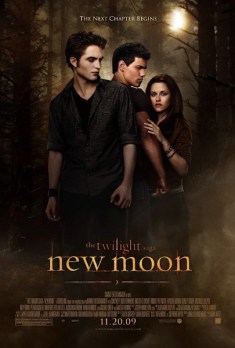
#170 The Twilight Saga: New Moon (2009)
#171 The Witch (2015), aka The VVitch: A New-England Folktale

- I watched 14 new films this month, for the 29th consecutive month with 10+ films.
- No WDYMYHS film this month, the first time I’ve faltered this year. Concerted effort at a double-bill in November, then.
- 2016 slips behind 2015 for the first time this month: by the end of October last year I’d reached #172, whereas this year it’s only #171. Not a huge difference, but how much more will that gap widen over the next two months? Well, November 2015 was unexceptional, but I’m away for most of this December (more on that this time next month). Time will tell.
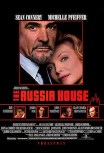
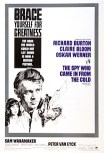
- Two Le Carré adaptations this month, The Russia House and The Spy Who Came in from the Cold. Later in November, Our Kind of Traitor is coming to Amazon Prime Video; and of course we had The Night Manager earlier this year. I would say I’ll be Le Carré’d out, but his stuff is so darn good.
- I can’t spend a whole month watching horror movies like some people do — if I spend a week watching one kind of thing I’ll usually get fed up of it. Nonetheless, I had a whole load of horror movies lined up for the last weekend or so of October… but then Stranger Things happened. Well, it happened in July, but I finally got round to it. Anyway, that’s why the extent of my horror viewing became New Moon and The VVitch.

The 17th Monthly Arbitrary Awards
 Favourite Film of the Month
Quite a few films I liked this month, but only a couple that stand out as worthy of a “favourite” award. The biggest pleasant surprise was Cold War spy thriller The Russia House, an underrated Le Carré adaptation.
Least Favourite Film of the Month
Oh, but this one’s hard! A couple of weaker films are spared this award by a pair of horrors: Fox’s Rocky Horror remake and the second Twilight movie, New Moon. Which was worse? Rocky Horror was insultingly poor, but it did have a couple of enjoyable parts, whereas New Moon was just dull.
Best Worst Fake Action Movie Title Ever
Face Punch! Whatever else it does or doesn’t offer, I will always be grateful to the Twilight saga for giving us the scene where they decide to go and see Face Punch.
The “Oh, Look Who It Is! This Must’ve Been Before He Was Famous” Award
goes to The Russia House, for featuring an abundance of recognisable British faces in smaller roles, from Martin Clunes as an aide who doesn’t have a single line of dialogue, to David “grandad from Outnumbered” Ryall as Sean Connery’s chum whose face we don’t even see properly because he’s filmed half from behind.
The Audience Award for Most-Viewed New Post of the Month
Whether or not people wanted to do the Time Warp again I don’t know, but it certainly seems they wanted to read about it: my review of Fox’s dire The Rocky Horror Picture Show: Let’s Do the Time Warp Again isn’t just my most-viewed new post of October, it’s already my most-viewed new post of 2016.


















More of the most popular movies of all time in this month’s selection, starring big damn actors, made by big damn directors, and featuring big damn heroes.









As my 10th year of 100 Films heads into the home straight, I’m not only thinking about what the final tally for 2016 will be, but also my total for the past decade of doing this blog. Exciting times.
 Last Halloween, I reviewed one of the most horrifying movies of all time:
  And they accuse teenage guys of being shallowly obsessed with the opposite sex’s chests. But then Jacob starts acting aggressively, and hanging out with a gang, and there are stories about beasts in the woods killing people, and his tribe leader type guy looks shifty whenever all that’s mentioned, and… wait, could there be a connection between Jacob and his friends and the wolf-like attacks in the woods?! Gasp!
 so that even bits that aren’t bad in isolation (the wolves, for instance) are poorly integrated into the live-action. And at one point the characters go to the cinema to see an action movie… called Face Punch. At this point New Moon slips from ineptitude into genius. It’s the best worst fake action movie title ever. The scene where they discuss it is so hilarious, I actually had to pause the movie to finish laughing.

 Score:



 You wouldn’t think the 2008 financial crisis would make good fodder for a comedy-drama — it’s both too complicated and too grim — but
  The narrative is laden with concepts that are so complicated even people within the industry don’t properly understand all of them (however did the market fail?!), but the movie nonetheless attempts to explain them in an accessible way. It’s half successful: you kind of understand them at the time, about enough to follow along, but the chances of remembering them later are next to naught. One of McKay’s tricks to engage us with these explanations is to wheel in random celebrities to deliver analogies. It’s a fun idea, though it’s success is debatable — I mean, I’ve just about heard of Selena Gomez, and I guess the “famous chef” that turns up must have a TV show in America, or something, maybe? Yeah, the ‘names’ he’s chosen are going to date this movie far more than its 2008 setting ever will.
 Though the conceptual explanations may fade almost as soon as you’ve heard them, what does stick with you is how it all ends. Essentially, the financial industry that destroyed peoples’ lives in pursuit of never-ending profit not only got away with it, but they actually started doing the same stuff all over again, just with new acronyms. What’s even more sickening is that people are clearly aware it’s going on — I mean, we’ve been told as much in an Oscar-winning movie — but they’re still doing nothing about it.
 When this TV movie kicks off with Ivy Levan sashaying her way around a cinema while she mimes to a pre-recorded and over-produced backing track of Science Fiction/Double Feature, full of licks and runs and finding four notes to hit where there used to be one, like a desperate X Factor wannabe who has no concept of the meaning of the lyrics she’s warbling but is ever so desperate to show she can saaang (that’s like singing but with added Cool), you get a pretty fair idea of the terrible experience about to be unleashed upon you by the not-so-catchily titled The Rocky Horror Picture Show: Let’s Do the Time Warp Again. That’s to say it’s been modernised, Americanised, and sanitised.
 The interpretation of the songs is appalling. The recordings are all overworked, full of needless warbles and added “oohs”. They’ve been modernised in such a way that, when current popular fads for over-singing things (“licks” or “runs” or whatever else they call them) have passed — as they surely will — these new versions will sound even more dated than the already-40-year-old originals, which have a certain timelessness. The lyrics are sung with the same amount of attention to what they mean as you get from a computer’s text-to-speech function, including or echoing parts of the original without understanding why they’re there or what function they perform; or if it does know the function, it doesn’t know how to replicate it.
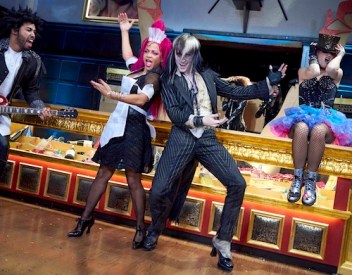 Everything is blunted further by Kenny Ortega’s ineffective direction. The camerawork is flat and uninteresting, the shot choices unimaginative. Some of the choreography looks interesting — it’s certainly more elaborate than in the original film — but the camerawork seems to be actively trying to obscure it. The editor must have struggled, unable to generate any additional excitement due to a shortage of options. At times it looks as if it was filmed live, under which circumstances its weaknesses might be understandable, if not excusable… but it wasn’t.
 I refer partly to her omnipresent cleavage, but also her acting. It’s not great by any means, but she’s suitably sweet and twee at the start, then manages to sell Janet’s near-instantaneous transformation from uptight goody-two-shoes to sex-mad strumpet using just a handful of expressions and line deliveries in the slight gap her character has between Over at the Frankenstein Place and Touch-a Touch-a Touch Me. The latter is one of the film’s rare highlights, for various reasons. One of those is actually Staz Nair as Rocky — undoubtedly the least challenging role in the piece, but at least he gets it right, and his musclebound chest counterbalances Justice’s for those of the other persuasion. The only downside are his tattoos: he was supposedly just grown in a tank, how does he have tattoos?!
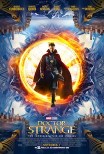
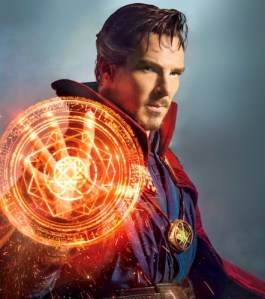
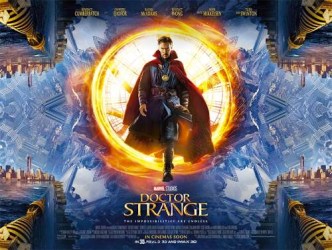 The latest from Marvel (or Marvel Studios, as they’re now branded, presumably in a bid to differentiate themselves from the properties owned by other studios that have been only too keen to use the Marvel logo and blur the line for the casual moviegoer) opens the door on a new facet of their shared cinematic universe, though does so in a movie whose plot follows the familiar “superhero origin story” rulebook. On the bright side, Doctor Strange has several other qualities to recommend it.
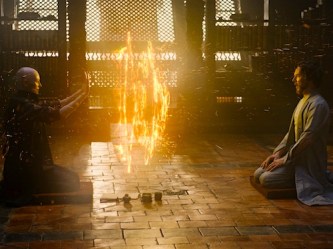 where the incredible effects are half the point — seemed dead in an era where every movie has CGI and every blockbuster has its share of once-impossible visuals. Strange demonstrates the form can be alive and well. The way the effects are created — with green screen and pixels — is the same as any other movie, but the designs and the visual imagination are exciting.
 Then there’s the cast. Obviously keen to avoid being typecast after playing an arrogant British genius in both
 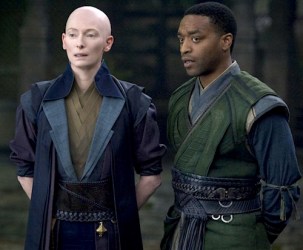 Besides, one of the film’s best characters is of Asian ethnicity, so it kinda balances out. That’s Benedict Wong as the sorcerers’ librarian, who’s likely to emerge as the film’s most popular character. It helps that viewers aren’t likely to expect much of him. Conversely, Chiwetel Ejiofor and Rachel McAdams are seriously underserved, perhaps hoping for more meat in the no-doubt-intended sequel(s).
 a teaser for another Marvel film, the other relates to the plot of the movie we’ve just seen. The former is first (and about 10% of my screening walked out before it came on) and the latter is, obviously, second (by which time about 90% had left). Those percentages ‘matter’ because, a) how do people not know Marvel’s rep for these scenes by this point?, and b) I think the scene related to the film you’ve just watched is the one that should be more attached to it, with the ‘teaser trailer’ being a fun bonus for those dedicated to stick around to the bitter end. But maybe that’s just me.

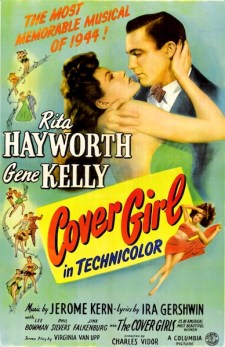 Run-of-the-mill musical starring Rita Hayworth as a Brooklyn showgirl who finds fame after accidentally landing a prestigious magazine cover because the editor was in love with her spitting-image grandmother.
 One of a couple of films John Carpenter directed “for hire” in an attempt to restore his Hollywood reputation after the box office failure of
  Even if Carpenter was doing it only for kudos with the studios, he still turned in solid work. Christine may not be scary, but she is menacing, and her attacks work as individual sequences. Unsurprisingly it’s not his strongest film, and it’s not the greatest adaptation in the Stephen King movie canon either, but if all movies by jobbing filmmakers were this good then we’d be luckier moviegoers.