
Hello, fine readers! I’m going to have to make this quick, because I’m actually right in the middle of a house move. The palaver around that has led to regular tail-offs in posting over the past few months, and during May in particular, though it hasn’t had too much effect on my actual viewing, as you’ll soon see (June may be another story, but that’s next month’s discussion).
That’s also why there isn’t my usual header image for this post — they take a disproportionality long time to put together (whereas the post itself is still fairly lengthy because, as the famous adage alludes, it’s easier to write something long than something short). Hopefully I’ll have time to retroactively create the header next week. (In case you were wondering, the chap in the current image isn’t me — it’s some fella off YouTube. I just found it on Google Images.)

#71 Godzilla (1954), aka Gojira
#72 Eyes Wide Shut (1999)
#73 The Secret Life of Pets 3D (2016)
#74 The Eyes of Orson Welles (2018)
#75 Bad Times at the El Royale (2018)
#76 Jaws 2 (1978)
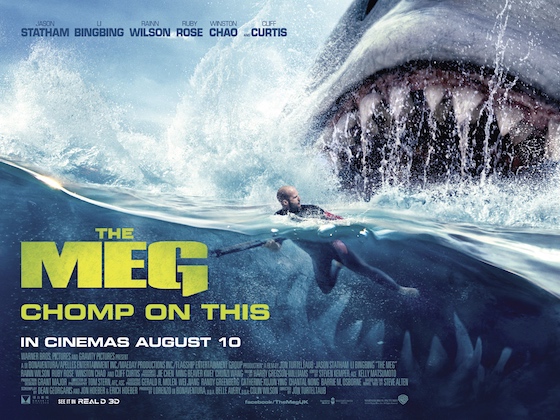
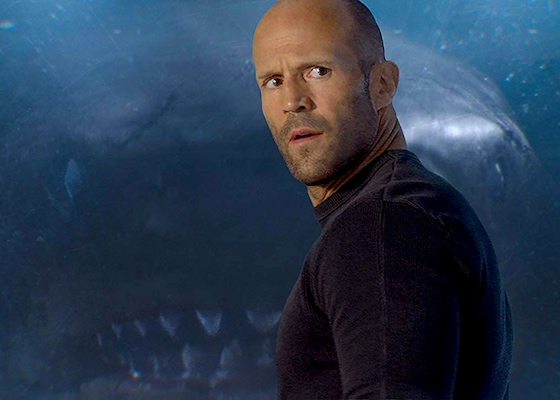
#77 The Meg 3D (2018)
#78 Ice Age: The Meltdown (2006)
#79 Everybody Wants Some!! (2016)
#80 Zatoichi Goes to the Fire Festival (1970), aka Zatôichi abare himatsuri
#81 Zombieland (2009)
#82 Godzilla, King of the Monsters! (1956)
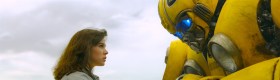
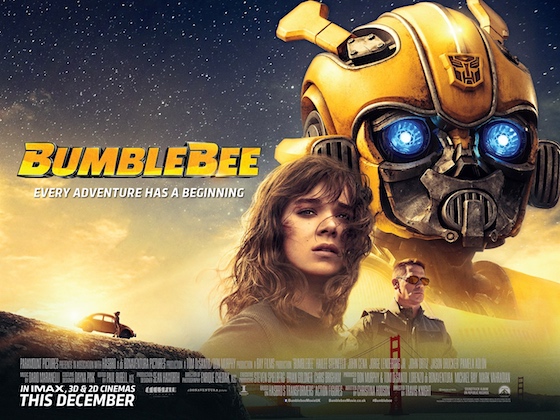
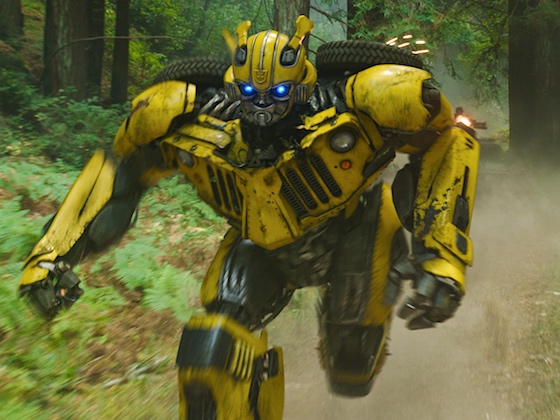
#83 Bumblebee (2018)
#84 The Man Who Knew Too Much (1956)
#85 Cleopatra (1970), aka Kureopatora
#86 BlacKkKlansman (2018)
#87 Dracula (1931)
#88 Widows (2018)
#89 Cosmopolis (2012)
#90 The Girl in the Spider’s Web (2018)
#91 The Kennel Murder Case (1933)
#92 The Saint (2017)
#93 Devil’s Cargo (1948)
#94 Hairspray (1988)

- So, I watched 24 new feature films in May.
- That makes it the best month of 2019 so far, passing the average for the year to date (previously 17.5, now 18.8).
- It’s a good all-timer too, in the top 5% of all months. It’s still not the best May ever — that was last year’s, which is also my best month ever. Therefore it brings the rolling average of the last 12 months down (from 20.1 to 19.25), even though it beats it.
- It’s my 60th consecutive month with a tally of 10+. With all that’s going on right now, June may yet be the month to break that streak.
- I can’t remember when I last discussed this (so apologies for the lack of link to the full background), but I’ve been tracking the days of the year on which I’ve ‘never’ seen a film, and I only have three left to tick off. One of those was May 23rd… and still is, because I missed it again. Darn.
- This month’s WDYMYHS film is also this year’s Stanley Kubrick film (I’ve been working my way through his oeuvre at the rate of one per year, initially by coincidence but now semi-deliberately), Eyes Wide Shut.
- This month’s Blindspot film: classic Universal horror Dracula.
- From last month’s “failures” I watched Bad Times at the El Royale, Everybody Wants Some!!, and Widows.

The 48th Monthly Arbitrary Awards
 Favourite Film of the Month
Plenty of worthy films to pick this month, whether they be critically-acclaimed awards-winners or critically-acclaimed films that were snubbed for awards, and most of those are more likely to make my year-end favourites list than what I’m going to pick now. It’s certainly not the ‘best’ film here, so maybe it’s just my current stresses making me wish for simpler entertainment, but I did have a lot of fun watching The Meg.
Least Favourite Film of the Month
When the rumour broke that Robert Pattinson was going to be the next Batman, some people on social media joked that he’d already done a great Bruce Wayne movie. Or maybe they weren’t joking, I don’t know. Anyway, the movie in question was Cosmopolis, which I’d been meaning to get round to, so I did, and I hated it. My Letterboxd comments are here.
Most Destructive Giant Monster of the Month
My May was incidentally filled with monsters of all different types: sharks from the sea, giant prehistoric sharks from the sea, giant prehistoric radioactively-enhanced dinosaur-like creatures from the sea… Also vampires, zombies, and alien robots… But worst of all was definitely the KKK in BlacKkKlansman.
Most Vivid Reminder of Stuff I Watched Years Ago of the Month
A few years back I reviewed the RKO film series starring the crime-solving character The Saint, which I continued by reviewing RKO’s follow-on series about The Falcon, and later covered the similarly-toned Thin Man series. So #91 to #93 this month brought back memories: The Kennel Club Murders stars The Thin Man’s William Powell as another murder-solving layman accompanied by his trusty dog (though neither had as much character as in the better-known series); The Saint was an attempt to reboot the character for a 2010s TV audience, later expanded into a feature-length film (and it’s as ropey as a rejected-pilot-turned-movie sounds); and Devil’s Cargo was an attempt to continue the Falcon series after a few years off, with a brand-new leading man and no continuity… but while it has a pretty poor rep, I actually thought it was a solid addition to the series.
The Audience Award for Most-Viewed New Post of the Month
In terms of site views, May 2019 is far and away my biggest month ever — it individually surpassed the totals for the entirety of 2012 (the first year for which I have these stats), 2013, 2014, 2015, and 2016. The driver of that was my reviews of Game of Thrones. What I said about the finale provoked lots of comments, and the number of hits it’s received in the past 10 days would normally mean it’d not just be the month’s top post, but already a lock for the most visited post of the year. But the TV post before that, which included my thoughts on Thrones episodes three and four, had an additional 13 days to rack up visitors during a time when it seemed like everyone was talking about the series. So it’s no real surprise that The Past Month on TV #46 is this month’s victor, as well as a likely candidate for the most-visited post of the year. In fact, it received enough hits in its first week to get into, not just my top posts of the week, or month, or even year, but my all-time top ten! (It’s wound up as 4th all-time for now.)

I finally gave the directors page header image its annual update this month (it was due in January but I kept just not getting round to it). For those who don’t know, it displays the 20 directors with the most number of films I’ve reviewed.
What were this year’s changes? Woody Allen is gone, for the first time since I started the page, and Tarantino’s out too. But I had seven directors tied for the last three slots. So, David Lynch went as well, because I often like an “all change” approach; John Carpenter and Tony Scott have been on the banner before, so I ruled them out for similar reasons; and also the Coen brothers, because I wasn’t entirely sure how to fit them both in. That meant the new additions were: Stanley Kubrick (those “one per year”s finally built up!), Richard Linklater, and M. Night Shyamalan. I also changed a couple of the other photos, just to give it a bit of a refresh (specifically: Ron Howard, Christopher Nolan, and Robert Zemeckis).











This has continued apace too…
#17 The Matrix Revolutions (2003)
#18 Ghostbusters II (1989)
#19 John Wick: Chapter 2 (2017)
#20 Hairspray (2007)
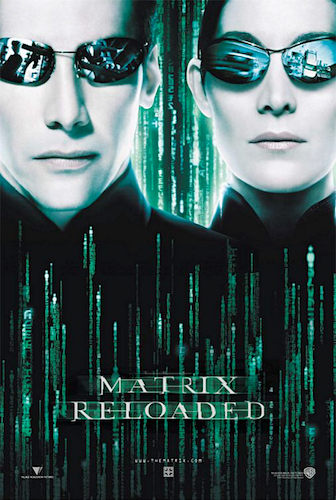
I rewatched each of the Matrix movies a month apart, which would be kinda neat if I’d actually planned to do that. More thoughts at the above link. I’ll save what I thought of Ghostbusters II for when I give it the same “guide to” treatment.
I rewatched John Wick 2 ready for the third, then haven’t had a chance to see it. For some reason I felt no desire to rewatch the original as well, which is weird because, while they’re pretty equal in quality, I’d say the first one is slightly better on balance.
Finally, that’s my fourth viewing of Hairspray, which probably makes it one of my most regularly rewatched films now — it’s been four years since I last saw it, and before that the gaps between viewings were three years each time, and that’s pretty often and repeatedly by my standards!

No time for trips to the cinema again this month, so I missed the likes of John Wick: Chapter 3, the live-action remake of Aladdin, and just-released Godzilla: King of the Monsters. Maybe next week.
I’m sure Netflix have added some stuff that ought to be on my watchlist but I also haven’t had time for. And naturally my Blu-ray collection has grown (when doesn’t it?), but right now I can’t actually remember what with (normally I’d have a pile somewhere nearby, but that’s all packed).
Also on the way out is my V+ box. For the past couple of months I’ve been listing some of what’s recorded on it that I haven’t got round to, and so here’s the final batch of that: Bad Lieutenant: Port of Call – New Orleans, Camelot, Chef, Colombiana, The Counsellor, Dead of Night, The Dressmaker, Elizabeth, The Ghoul, The Innocents, Joy, The Love Witch, Only Yesterday, Rare Exports, Ruby Sparks, The Servant, Straight Outta Compton, and Supercop. Whew!

With all that’s going on in my life right now, will June be the first month since May 2014 where I watch fewer than ten new films? I need at least six to make it to #100…

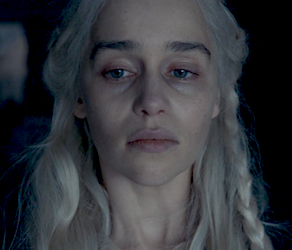 To call these two episodes “the climax” of Game of Thrones feels slightly disingenuous, because really the whole season has been the climax (to wit, my review of episodes one and two is
  Conversely, I thought the finale, The Iron Throne, was excellently handled in virtually every respect, including the pace. Well, mostly. I mean, I think it’s only during their conversation in front of the Iron Throne that Jon realises what he has to do to Daenerys, so that he then immediately carries it out is a little abrupt — should he have gone away, to steel himself for the task, and done it later? Maybe. Equally, why wait? And the scene needs to occur there for the powerful events that follow with Drogon’s grief and melting the throne. Some would also say the time jump to the Dragonpit court is a case of rushing the story, but do we need to see the Unsullied taking Jon Snow prisoner? Do we need to see the armies arrive at the gates of King’s Landing? You could draw the story out by putting all of that on screen, but what you actually need to know for the narrative is conveyed in the dialogue. Mind you, here I am wondering if it should’ve been slower when some of those petition-signing halfwits reckon “nothing happened” this episode. After weeks moaning about the pace being too fast, they think this was so slow that “nothing happened”! There’s no helping some people…
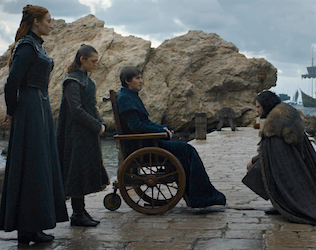 To cap it all off, both episodes were incredibly well made. That’s par for the course on this mega-expensive show, but it still merits observing. Okay, perhaps The Bells had a few too many scenes of King’s Landing’s destruction (a point on pacing again), but it was all spectacularly realised, keeping us mostly in the streets with the people who were really suffering. For striking moments, however, the finale was the place to be: that shot of Dany with Drogon’s wings (the subject of its own mini Twitter controversy, for yet more dumbass reasons); her speech to her assembled forces in the ruins, the staging and design evoking the the Nazis or Stalin’s Russia; the melting throne; the final montage, with the matching shots of Sansa, Arya and Jon embracing their destinies; and the very final scene, a mirror image of the opening scene of the very first episode. What a way to end; even with a green root poking through the snow north of the Wall — a dream of spring.
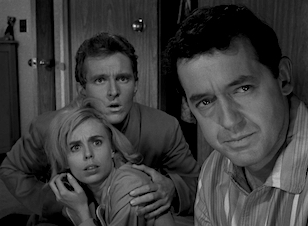 First, two episodes from season three. The Shelter is one of just four episodes in the entire series with no sci-fi or fantasy element (according to its IMDb trivia page). When the warning sirens go off that missiles, presumably nuclear, may be on their way to destroy the United States, a foresightful doctor and his family are able to retreat to their bomb shelter, but his less prepared neighbours want in too. It’s another of Rod Serling’s morality tales about the truth of human nature, and a particularly potent one because it’s very easy to relate to almost everyone’s position — there are no heroes or villains here (well, except for maybe one racist guy), just people who want to survive. The titular room is made for three people, not the dozen or so who try to break in to share it, which suggests perhaps the episode’s most universally applicable lesson: in panic, logic goes out the window.
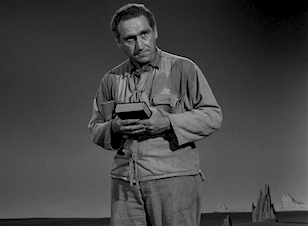 For its fourth season, Twilight Zone was scheduled as a replacement for another series, meaning it had to expand to hour-long episodes to fill the given time slot. This is largely regarded as being to the series’ detriment, and I can see why — I mean, some of the 25-minute episodes feel padded, so doubling the length…! Consequently, season four has very few episodes at the top of either list. The exception is On Thursday We Leave for Home, which is the highest-ranked season four episode on both: it comes 10th at ScreenCrush, but still only 24th on IMDb. This one is outright sci-fi from the off: it’s set on mankind’s first off-world colony, which has been a disaster, and after three decades a spaceship is finally arriving to take them back to Earth. What unfolds is another tale of man’s hubris and delusion with a self-wrought tragic ending — in other words, an episode of The Twilight Zone. But it has a unique angle and commentary on the corrupting influence of power; about how being in charge of the colonists has become Captain Benteen’s very reason to exist, to the point where he not only can’t imagine life any other way, but he can’t imagine his ‘subjects’ would want it any other way either. He’s thoroughly deluded.
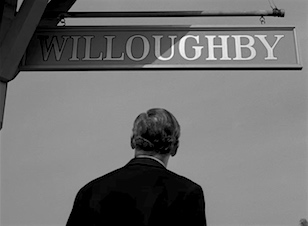 Finally for now, season one’s A Stop at Willoughby, which doesn’t quite make either list’s top ten (it’s 12th on IMDb, 17th on ScreenCrush), but I keep hearing it mentioned elsewhere as a favourite episode or referenced in other ways (as with Eye of the Beholder last time, it factors into Richard Linklater’s Everybody Wants Some!!). It’s about a harried ad exec in ’60s New York, whose boss’ motto of “push, push, push” pretty well tells how he’s feeling. On the train to his suburban home (there’s no real correlation here, but there are definite shades of Mad Men across this setup!) he falls asleep and wakes when the train stops at the village of Willoughby… in the year 1888. It’s an idyllic place on a warm summer day, with people enjoying leisurely strolls in the park — a simpler, calmer time. But then he really wakes up: he didn’t travel in time, Willoughby was just a dream; but it’s a dream of a place and time where he’d rather be — can he get back there? If
 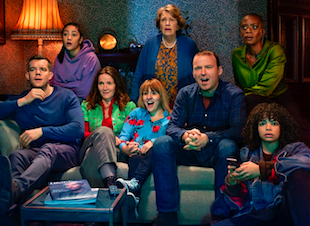 This fortnight I have mostly been missing Years and Years, the new drama from the pen of Russell T Davies that spans the next couple of decades to look at, presumably, how much worse things are going to get even than they are now. I’ve long been a big fan of Davies’ writing, though must confess I’ve missed most of what he’s done post-Doctor Who — I’ve been meaning to get round to A Very English Scandal ever since it aired, which was a whole year ago now. Hopefully I won’t take so long to get to this new one.


 2019 Academy Awards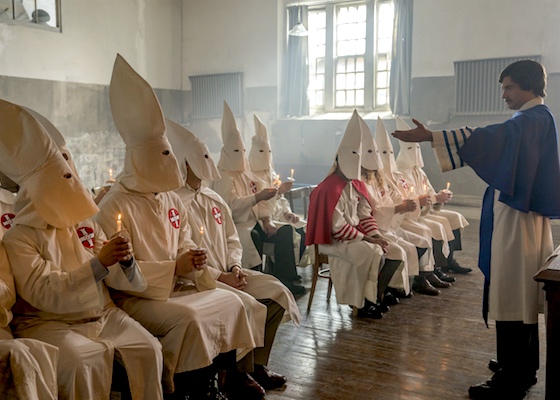







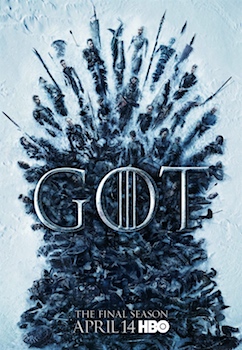 Almost two years ago, just hours after Game of Thrones’ seventh season finale aired,
 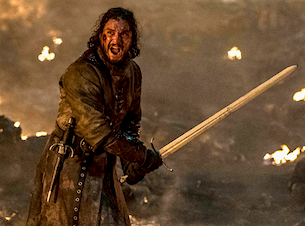 Content-wise, the episode was one long battle — the longest ever in film or TV history, apparently. More isn’t always more, mind. While I didn’t find it boring or drawn-out, it also wasn’t perfect. The battle tactics left a lot to be desired, something spotted by lay-viewers, never mind the “how it should’ve been done” articles by professional military tacticians that followed the broadcast. And the way things played out, a lot more deaths were warranted. Quite a few key characters did fall, and even more faceless masses, but the way it was staged made it a miracle that so many people escaped unscathed. There are three episodes left — you need characters to fuel the story, and major characters left to be sacrificed later too — but that doesn’t mean you have to stage it so everyone effects an improbable escape. There’s a balance to be found between “it looks like they’re all about to die” and “it seems literally impossible everyone would’ve survived those last-minute odds”. But hey, this isn’t the first time the show has succumbed to this, and there was a lot else to like: lots of effective individual sequences within the battle, great callbacks to previous lines and events, some heroic sacrifices, and a perfect ending. (I’m really not going to talk about some dickheads’ reaction to that.)
 It’s frustrating because I liked the tone of the episode overall — as I said, the return to human conflict and schemes; also a lot of the individual scenes between characters and so on. But it needs more room to breathe. It’s especially galling after the exceptionally spacious
 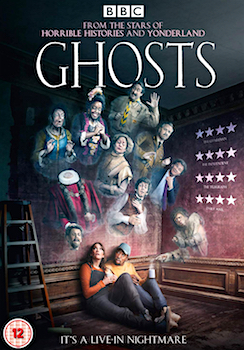 This new sitcom from the writing and performing troupe behind the original TV iteration of Horrible Histories and the Sky One fantasy comedy Yonderland is pitched as a more adult-focused series, but it’s not exactly 18-rated stuff, just a little cheekier than they might’ve done before. Anyway, it’s about a young couple who inherit a crumbling old mansion, which is home to the ghosts of various people who’ve died there down the centuries. As the couple attempt to make a life for themselves and restore the place on a budget of nothing, the ghosts cause various issues, while also having problems of their own — turns out being dead isn’t the end of your emotional woes. I wouldn’t say Ghosts is the most hilarious sitcom you’ve ever seen, but it has a definite charm. It also surprises with genuine emotion, particularly in the third episode, where we learn about the death and family of one of the more recent ghosts.
 I’ve never seen Columbo before, and despite this being the first episode (er, kind of — I believe it was preceded by two other pilots) this isn’t the start of me watching it regularly. No, I watched this for one simple reason: the director was a certain Mr Steven Spielberg, in his pre-movie days when he directed a handful of TV episodes. Unsurprisingly, such an early work contains little about its style that screams “Spielberg”, but it’s still a classily staged production, with a lot more going for its visuals than the point-and-shoot style we associate with old TV. The story’s not a bad one either, about a crime novelist who murders his co-writer following the methodology from an unused plot. He thinks he’s a clever bugger who’s got away with it easily, but Columbo seems to see through him right from the start. Well, I’m not sure dumping the corpse on your own front lawn is the best way to go about claiming “it wasn’t me.”
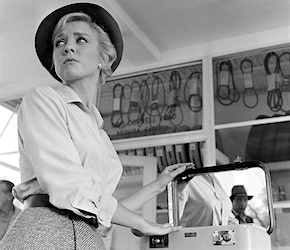 First up, season one’s The Hitch-Hiker is another Twilight Zone tale where we can’t be sure if the protagonist is experiencing paranoia or the supernatural — undoubtedly a recurring theme for the series, almost to the point where it’s less a “theme” more just a fact of its format. Anyway, this particular reiteration is effectively unnerving, with a scenario that’s relatable — you can just imagine how it would feel if you kept seeing the same hitchhiker by the side of the road, always somehow ahead of you, always staring at you with a despondent look… it gives me chills just thinking about it. Director Alvin Ganzer gets good mileage out of that element too, creating some effective shocks. Aside from that the execution isn’t top notch though, with Rod Serling seeming to have taken too much inspiration from the original radio play (by Lucille Fletcher) in his inclusion of some over-explanatory narration. The trademark twist ending is both altogether guessable for the savvy viewer, but also doesn’t really explain a whole lot.
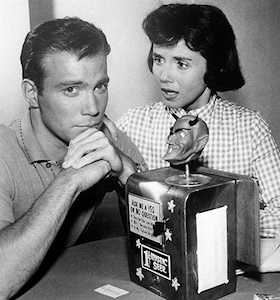 I was more taken with Nick of Time, written by the reliably superb Richard Matheson. Starring William Shatner as a superstitious honeymooner, it’s a neat little tale about a cheap fortune telling machine that might actually predict the future. As well as a genre tale about the perils such a machine might pose, it’s really about superstition and belief in fate vs. self determination — a strong moral life lesson bundled in a quirky supernatural fable. That’s Twilight Zone at its best, really. Similarly, season five’s Living Doll is another of the series’ most genuinely unnerving episodes. Telly Savalas stars as a man whose own insecurities make him paranoid and abusive towards his wife and stepdaughter. When the kid gets a new talking doll, it begins to taunt and threaten him, but only when no one else is around to hear. Again, it’s very creepy, but has a point to make beyond that.
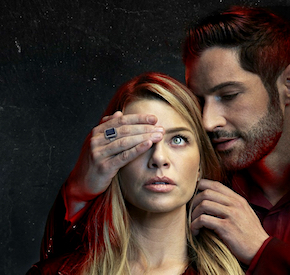 This fortnight, I have mostly been missing the fourth season of Lucifer, which just returned as a Netflix exclusive. I’ve not watched season three yet, though, so that’ll be a little while off. I’ve also successfully managed to avoid any spoilers about Line of Duty’s recently-concluded series (touch wood). I’ve got a plan to binge it in a few weeks’ time (so, not in my next TV roundup, but should be the one after) — hopefully nothing will blow its secrets between now and then!
 100Films.co.uk