The 100-Week Roundup XII

In the interests of catching up, this roundup combines two separate weeks.

The first contains two of the most acclaimed films of all time (both feature on numerous “greatest ever” lists, including those from IMDb, Letterboxd, TSPDT, and Empire), which happen to be my final reviews from September 2018.

The second is a pair of movies I watched back-to-back in October 2018 that share an obvious pregnancy theme — but, oh, they could hardly handle it more differently.

This week’s films are…

  • Network (1976)
  • Ran (1985)
  • Prevenge (2016)
  • Bridget Jones’s Baby (2016)


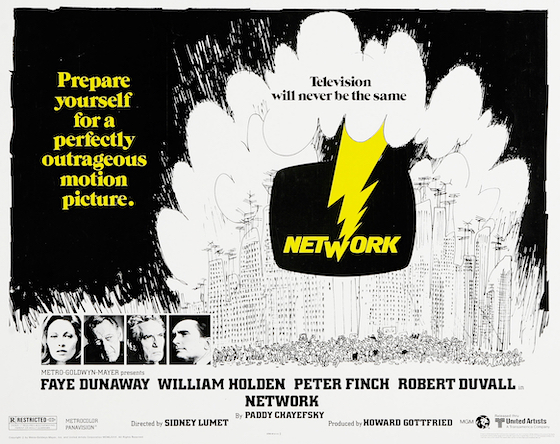
    Network
    (1976)

    2018 #201
    Sidney Lumet | 121 mins | digital (HD) | 1.85:1 | USA / English | 15 / R
    Network

    no predictor of the future — not even Orwell — has ever been as right as Chayefsky was when he wrote Network.

    So wrote Aaron Sorkin, who has cited Network’s screenwriter Paddy Chayefsky as a major inspiration on his own writing; he even cited the man when accepting his Oscar for The Social Network; and Sorkin’s TV series The Newsroom feels like it could’ve been called Network: The Series.

    Well, maybe not. The first half-hour or so of Network feels like The Newsroom (which was a series very much aimed at being realistic, to the extent that it was set in the recent past and mostly used real news stories for its plots), whereas Network spirals off into its own level of satirical craziness, far beyond what Sorkin’s series attempted.

    But whereas The Newsroom looked to the recent past and real events, Network is as indicative of the future as Sorkin said in that opening quote. The film may be 44 years old, but I’m pretty sure you could Chayefsky’s this screenplay, change only a couple of minor specific words, and film it as being set today. It forecasts the future of TV news as angry men ranting as if they were prophets (this was 20 years before Fox News launched), as well as commentating on the place of terrorism in driving TV ratings.

    It’s cynical and ultimately bleak, but, worst of all, it’s entirely accurate.

    5 out of 5

    Network placed 21st on my list of The 26 Best Films I Saw For the First Time in 2018.

    Ran
    (1985)

    2018 #203
    Akira Kurosawa | 161 mins | Blu-ray | 1.85:1 | Japan & France / Japanese | 12 / R

    Ran

    Akira Kurosawa returns to Shakespeare (after Throne of Blood quite closely adapted Macbeth and The Bad Sleep Well may or may not have been based on Hamlet) for an adaptation of King Lear, relocated to feudal Japan. At the time, it was speculated to be his final film. It wasn’t — he made three more — but this was his last large-scale work.

    The title translates roughly as “chaos”, “pandemonium”, or “turmoil” — I guess they didn’t bother retitling it for the West because the original is a nice, simple word we can understand. But the original meaning is clearly apt, because the film depicts the mayhem that ensues when a warlord abdicates and tries to divide his kingdom between his three sons.

    It’s testament to Kurosawa’s greatness that he can make a movie this magnificent and I wouldn’t even put it in his top five. That might be my failing, though — this is a longer and more complex work than, say, Throne of Blood or Sanjuro. I need to revisit all of Kurosawa’s movies, but none more so than this.

    5 out of 5

    Ran was viewed as part of What Do You Mean You Haven’t Seen…? 2018.

    Prevenge
    (2016)

    2018 #208
    Alice Lowe | 88 mins | TV (HD) | 2.35:1 | UK / English | 15
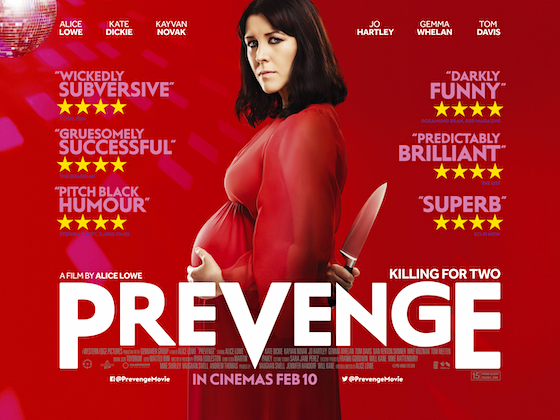
    Prevenge

    Seven-months-pregnant Ruth (played by Alice Lowe, who also writes and directs) believes she can hear the voice of her unborn baby, and it’s telling her to kill people. Why is a mystery… unless you read the Wikipedia entry, which just tells you upfront. (Don’t read the Wikipedia entry.)

    The behind-the-scenes story of Prevenge is impressive: it was made while Lowe herself was pregnant; she wrote it in just four days, and shot it in just 11. Speed is no indicator of quality, either positively nor negatively, but Prevenge is very good. The premise is obviously absurd, but it leans into that by being darkly funny. As a horror movie, it’s not scary, more kind of creepy, although not even quite that — it’s not playing on those kind of thrills.

    Perhaps this means it fails to satisfy “horror fans”, thus explaining its fairly low score on IMDb, which I think is unwarranted. But it’s also not what people have started to call “elevated horror” (i.e. horror that is acceptable as a Quality Movie too), because it’s too transgressive for that. Perhaps it is best taken as an exceptionally black comedy.

    4 out of 5

    Bridget Jones’s Baby
    (2016)

    2018 #209
    Sharon Maguire | 123 mins | digital (HD) | 2.39:1 | UK, USA, France & China / English | 15 / R
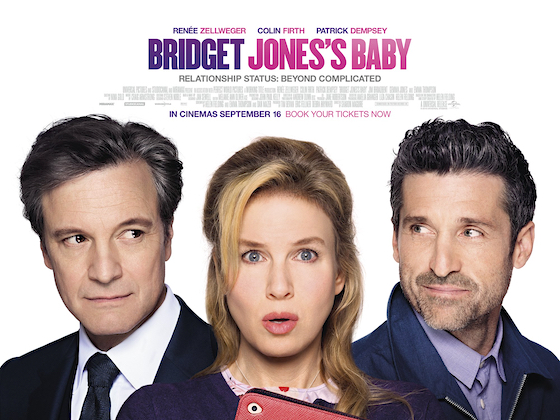
    Bridget Jones's Baby

    I first and last watched the original Bridget Jones’s Diary and its sequel, The Edge of Reason, many years ago (probably close to when they were originally released, in 2001 and 2004 respectively; certainly well before this blog existed). I didn’t dislike them, but all I can really remember about them is broad-sweep stuff, including barely anything from the second one. So I didn’t come to this belated third movie as an all-read-up fan; but, just like the first two, I didn’t dislike it… and, 100 weeks later, can barely remember any details about it. (I read the detailed plot description on Wikipedia and some of it came back to me.)

    The storyline is mostly pretty obvious — it’s a recycle of the previous films’ love triangle thing, now with the added complexity of a pregnancy — which means the over-two-hours running time feels somewhat excessive (I continue to believe all comedies should be about 90 minutes). In spite of that, it’s often pretty funny. Some of the riffs on modern media and whatnot are a bit tired (“those young people, just posting photos of their food on Instagram!”), but other gags land well enough.

    In the earlier movies, Renée Zellweger attracted praise for her ability to inhabit a British lass. It feels like she’s forgotten how to do the accent in the 12 year gap; or maybe it’s just thanks to the work she’s obviously had done on her face… At least she’s helped by a supporting cast so stuffed with quality performers from UK comedies that some literally just appear in the back of shot (presumably there were deleted scenes).

    Reasonably successful at what it sets out to do, then; enough so that there’s been talk of a fourth one.

    3 out of 5

  • Memories of Murder (2003)

    aka Salinui chueok

    2019 #15
    Bong Joon Ho | 131 mins | download (HD) | 1.85:1 | South Korea / Korean | 15

    Memories of Murder

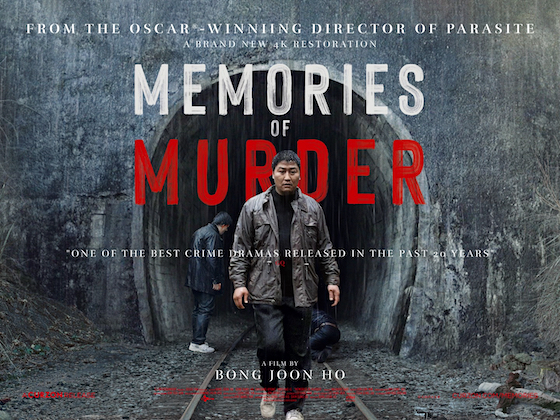
    South Korean director Bong Joon Ho has gradually risen in prominence over the past few years, culminating in Parasite’s history-making success at this year’s Oscars (yes, that was only earlier this year). Memories of Murder wasn’t his debut work, but it was what initially garnered him some attention outside Korea. It’s been surprisingly hard to come by for a while now, but a new 4K restoration is released in the UK via Curzon today (it’s coming to US cinemas for a limited run in October, and new Blu-ray releases (including one from Criterion) will follow).

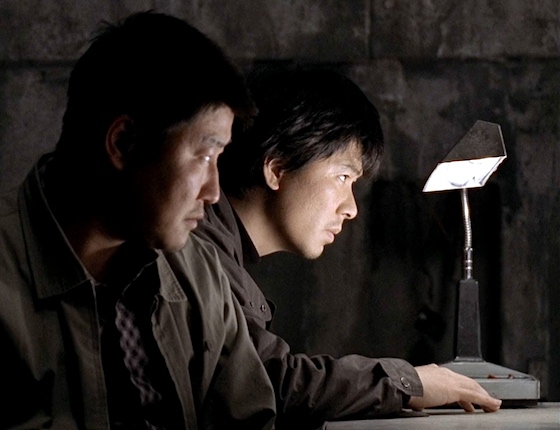
    In 1986, two women are raped and murdered in provincial South Korea. The local detective, Park Doo-man (Bong regular Song Kang-ho), has never dealt with a case of this magnitude and relies on old-fashioned methods — his main one being to have his partner, Cho (Kim Roi-ha), beat confessions out of suspects. After a modern-minded big-city ‘tec, Seo Tae-yoon (Kim Sang-kyung), volunteers to help, the old and the new clash. As more crimes are committed, more clues are gathered, and more suspects are apprehended, but then cleared. Can the police ever get close to their man?

    Loosely based on the true story of Korea’s first serial murders, and taking a procedural approach to the crime thriller genre, Memories of Murder invites comparison to David Fincher’s Zodiac for its methodical, realistic narrative style and plot that follows obsessed investigators chasing unsolved murders in the past. Zodiac is one of my favourite films (it placed 3rd in 100 Favourites II), so it’s a tall order to be pitched against it. Fortunately, Memories of Murder is strong enough to withstand the comparison.

    Investigators

    A lot of praise that applies to Zodiac could be copy-and-pasted here. In addition to the facets I’ve already mentioned, there are several fine performances (not least from Song, who’s clearly become a Bong regular for a reason); several striking set piece crimes and/or discoveries without indulging in glorification of real crimes; and a commentary on the methods and obsessions of investigators that goes beyond ‘doing the job’. It does none of this in the same way as Fincher would a couple of years later, but it’s a different perspective within the same genre headspace.

    Memories of Murder is already a well-regarded film (on top of a 91% Tomatometer score, it’s on the IMDb Top 250 and in the top 100 of Letterboxd’s version ) but, having been out of widespread circulation for a few years, and with renewed interest in Bong’s back catalogue, it’s ripe for wider (re)discovery.

    5 out of 5

    Memories of Murder is available to rent on Curzon Home Cinema from today.

    It placed 5th on my list of The Best Films I Saw in 2019, after being viewed as part of What Do You Mean You Haven’t Seen…? 2019.

    Le Mans ’66 (2019)

    aka Ford v Ferrari

    2020 #177
    James Mangold | 153 mins | Blu-ray (UHD) | 2.39:1 | USA / English & Italian |
    12 / PG-13

    Le Mans '66

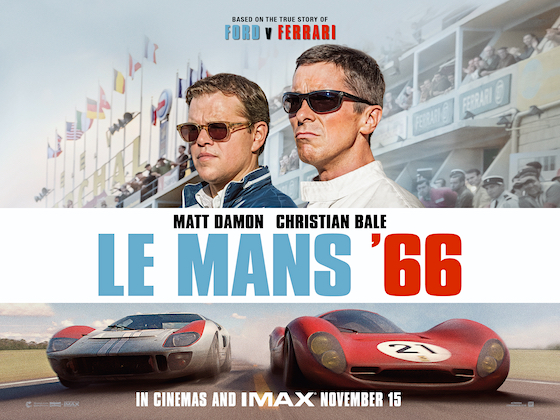
    Did you know that Ford tried to buy Ferrari in the ’60s? I didn’t. As per this film, Ford were desperate to appeal to a younger market and an association with motor racing seemed the way to do that. Ferrari were the regular winners of the Le Mans 24-hour race but were struggling financially, so Ford made an offer; but Ferrari played them, merely using Ford’s interest to get a better deal from Fiat. Pissed off, Ford set about making a racing car by themselves to beat Ferrari at their own game. Enter former Le Mans-winning driver turned race-car designer Carroll Shelby (Matt Damon), a smooth-talking American who’s as adept at charming higher-ups as he is at making fast cars; and his favoured mechanic and driver, Ken Miles (Christian Bale), a quick-tempered Brit who rubs the Ford execs up the wrong way. With Ford’s money behind them, but also management watching over them, can Shelby and Miles engineer a car good enough to beat Ferrari at Le Mans?

    That the film goes by one of two different titles depending where you live might seem like an incidental point of trivia — it’s not the first time this has happened (Avengers Assemble is probably the most famous recent example), and it wasn’t an artistic decision, nor even a marketing one, apparently, but instead legal necessity (according to director James Mangold, you can’t use brand names in a title in the UK and/or Europe) — but it’s also a lens through which we can consider the film’s focus. To wit, is it more about the rivalry between Ford and Ferrari (as in the original title) or winning the 1966 Le Mans race (as in the UK title)? The consensus seems to be that the original title sounds more dynamic, but I think the international one is more accurate. The head of Ford has it in for Ferrari, but our two heroes are more interested in winning the race, rivalry or not.

    Winner!

    To some extent the story has been streamlined in that direction. The original screenplay was an ensemble about the entire team building the Le Mans car — more historically accurate, I’m sure, but I’d wager less dramatic and personal. That’s what’s gained by focusing on Shelby and Miles, the two key figures. To the film’s credit, it still doesn’t pretend they did it alone. The role attributed to other mechanics may not be as large as it was in real life, but nor does the film try to pass it off as the achievement of just two men. What it primarily adds is relatable drama. This isn’t just a movie about building and/or racing a car, but about these two particular men — what motivates them; how their ego gets in the way, especially in Miles’s case.

    The film plays to the lead actors’ strengths in this respect, with Damon turning on the easy charm and Bale, who famously stays in character throughout a shoot, embodying someone who is superb at their job but can be belligerent. The standout from a quality supporting cast is Caitriona Balfe. She may just have the typical Wife role, but she’s made to be a bit more badass than that usually allows… before getting relegated it to the sidelines for the finale, naturally.

    Said finale is the eponymous Le Mans event, of course. It’s not the only race sequence in the film, but it’s by far the longest. Nonetheless, they’re all suitably thrilling in how they’re shot and edited. One of the film’s genres on IMDb is “Action”, and though it doesn’t really conform to my idea of what an Action movie is — not least in the fact that there are only three or four of these “action sequence” race scenes throughout the two-and-a-half-hour movie — I can see where they’re coming from.

    We are golden

    That runtime is quite long, but it doesn’t drag… once it gets going, anyway. The slowest part is early on, getting the story up and running, which I feel could have been streamlined. Ford’s attempt to buy Ferrari initially seems like an aside, but obviously it comes to frame the whole rivalry; but Miles’s woes with the IRS barely have anything to do with the rest of the movie, and, other than providing an extended introduction to the man, I don’t think you’d lose much by losing them. The film was clearly trimmed a fair bit, though, because there are loads of little bits you can spot in the making-of that aren’t in the finished film. Said making-of also highlights the choices behind the cinematography. The visuals are very golden — that kind of “wasn’t the past pretty” atmosphere — but the behind-the-scenes footage shows the shooting conditions to be much duller and greyer, revealing how much the orange/gold light comes from the camerawork and grading.

    Le Mans ’66 might look like a film for car nuts, and I’m sure they’ll get a lot out of it — alongside the likes of Rush, I guess this kind of thing would be their favourite movie (both those films currently sit in the IMDb Top 250). But the rest of us are by no means left out, thanks to involving characters and exciting race scenes, even if some plot beats border on clichéd. Le Mans ’66 may not reinvent the wheel, but it works hard at refining it.

    4 out of 5

    Le Mans ’66 is available on Sky Cinema and Now TV from midnight tonight.

    Jodorowsky’s Dune (2013)

    2018 #228
    Frank Pavich | 90 mins | Blu-ray | 1.78:1 | France & USA / English, French, German & Spanish | 12A / PG-13

    Jodorowsky's Dune

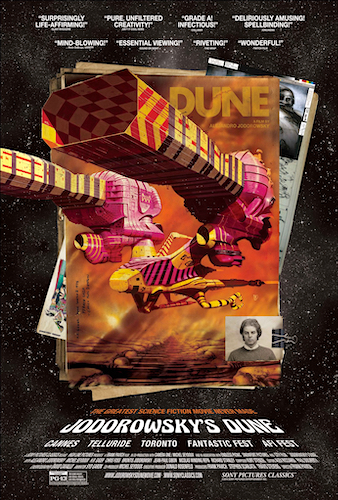
    In 1974, director Alejandro Jodorowsky was hot off a pair of psychedelic projects — “acid Western” El Topo and surrealist fantasy The Holy Mountain — that had brought some cult attention and success (El Topo was the original “midnight movie”, while The Holy Mountain was apparently second only to that year’s Bond film at the Italian box office). Consequently, his French distributor, Michel Seydoux, offered to produce whatever he wanted to do next. Jodorowsky’s answer was Dune. He’d never read it, but he had a friend who said it was fantastic.

    So begins the crazy story of how a director of surrealist Mexican art-films came this close to making an epic space opera out of one of the most acclaimed science-fiction novels ever written, but, in his failure, accidentally helped give birth to Star Wars (sort of), Alien (indirectly), and possibly the entire history of screen science-fiction that did actually get made in the ensuing 40 years. Sounds like a bit of a stretch? Um, well, yeah… but that doesn’t stop some of this documentary’s contributors from asserting it, and they do kind of have evidence.

    Mind you, Jodorowsky’s Dune is full of interviewees making grand assertions, not least the eponymous filmmaker himself. He unironically describes his Dune as “the most important picture in the history of humanity”. He pitches himself as a prophet, thinks of his crew as spiritual warriors, and is convinced the film was going to be a great message for humanity; that it would literally change the world. The lack of self-awareness when he considers Douglas Trumbull to be full of his own importance is palpable. Jodorowsky’s regard for himself and the project may seem deluded, but at least he was committed. They spent two-and-a-half years developing this movie, including storyboarding every shot and getting exactly the right kind of people for the cast and crew — he pursued Dalí literally around the world to persuade him to play the Emperor; he rejected Trumbull, not because of an ego clash, but because he felt he was a technician rather than a spiritual person. He’s a bit barmy, but Jodorowsky definitely believed what he was doing was some grand transcendent enterprise.

    A Chris Foss spaceship design for Dune

    Such an attitude might get you far with arty types, but it doesn’t wash with the moneymen of Hollywood. The film had a projected budget of $15 million, and they went to the Hollywood studios seeking the last $5 million. In hand they had a giant tome containing all the storyboards, the costume and production designs, and so on. The book convinced them — it was well planned out and reasonably costed — but this barmy director — whose only previous films were weird psychedelic experiences; whose response to “make it under two hours” was, “why? If it needs be, it’ll be 12 hours, or 20!” — he didn’t fill them with confidence. And so they didn’t get the money, and the film fell through. Well, duh. Surely they could see how that was going to go? Maybe people just weren’t as savvy in the ’70s, especially these optimistic, committed artists.

    All the documentary’s interviewees act like this was a problem with Hollywood moneymen having no vision, but c’mon, it’s easy to see where they were coming from. Plus, the fact that “the book convinced them” is just the word of Seydoux. Maybe Jodorowsky’s history and attitude was just a convenient excuse, because a lot of the stuff that was designed and planned is quite out there, especially to the mind of a ’70s Hollywood suit. It brings us back to how everyone’s making grand assertions: they all act like the film was going to be an unquestionable masterpiece, but it seems to me there’s a much higher chance it would’ve been terrible. For one thing, there’s doubt over if they even could have made it. It was an insanely ambitious project, with plans to do things George Lucas wouldn’t even attempt in the prequel trilogy, never mind what he struggled to get done in 1977. But there’s a first time for everything — 2001 still holds up, after all, and that was made seven years earlier. Still, I don’t know how successful Jodorowsky’s surrealist mindset would’ve made it as a movie — it probably would’ve been even less palatable to a mainstream audience than the Lynch version.

    Dune storyboards

    That said, there seems little doubt Jodorowsky was ahead of his time here. For starters, the idea of making a 12-hour film isn’t so ludicrous anymore. In the deleted scenes (there’s a hefty 46 minutes of them on the Blu-ray), he acknowledges people wouldn’t sit through that, saying he was prepared to release it in chunks if necessary — so, just like Lord of the Rings would do to huge success 25 years later? Jump forward another 20 years, and it’s even how they’re doing Dune, in two parts! Of course, it was unprecedented in 1975; and, decades later, Rings was still seen as a gamble, but it paid off and Hollywood is now littered with franchises where instalments connect up as closely as TV series. And what of TV series, where you’re also seeing 12-hour (or longer) single narratives.

    Aside from general questions of form, when you look at some of Dune’s storyboards and plans you can see mirrors to stuff that wouldn’t be done until later. This is where the claim that Jodorowsky’s work on Dune led to Star Wars, Alien, et al, comes from, because you can see parallels between what he did and what would come after. His film was never made, but they produced 20 copies of that book I mentioned, and only two are known to exist (one with Jodorowsky, one with Seydoux). The rest were left with Hollywood studios. Were they passed around behind-the-scenes? Did the likes of Lucas and Spielberg and Ridley Scott and Mike Hodges and James Cameron really see them and pilfer ideas? Or is it just coincidence — Jodorowsky thought of them first but couldn’t execute them, then others thought of them independently and pulled it off. Pick your own side.

    However, the claim that Dune led almost directly to Alien is less dubious. After he rejected Trumbull, Jodorowsky saw John Carpenter’s Dark Star and was impressed enough to hunt down its visual effects guy, Dan O’Bannon. Concept artists he hired included Chris Foss (painter of sci-fi book covers, mainly spaceships); Moebius (French comic book artist, for costume designs and storyboards); and H.R. Giger (German artist, who designed the dark and twisted world of the film’s villains). Those who know their Alien history might recognise all of those names: after Dune fell through, O’Bannon went on to write Alien, and all three of those designers followed on to the project. Maybe Alien would have come together just as well without the lead-in from Dune, we’ll never know, but those connections are pretty striking.

    Giger at work on Dune

    Lest you feel bad for everyone just ripping Jodorowsky off, he was able to recycle some of the ideas himself. His vision for Dune was only broadly faithful (one of the better deleted scenes is about his attitude to adaptation, which it seems Frank Herbert agreed with; i.e. that it’s not about being faithful, but reimagining something as a new, different work of art), and so he had plenty of fresh ideas that, presumably, weren’t tied up in the rights to Dune. Jodorowsky and Moebius piled some of these directly into later comic book collaborations, like The Incal and The Metabarons. A good idea never dies, I guess. Well, whether they were good ideas or just good in Jodorowsky’s mind, I don’t know. It does make me interested to read those books, though.

    Jodorowsky’s Dune is an interesting “what if” in the history of science-fiction cinema, and this documentary does a good job of being a making-of for a movie that was never made. (If you think this review reads like I’ve just regurgitated the entire story, I promise, there’s a lot more in the film; not to mention the unique benefits of hearing it from the horses’ mouths, rather than my abridgement for the sake of appending my own opinions.) Some critics assert the documentary does more than just recount interesting anecdotes; that it offers some kind of transcendent viewpoint about the creation of art. Maybe if you’re of a similarly spiritual disposition to Jodorowsky himself, that’s what you’ll take from it. For me, it’s most interesting as a window into what might have been. If it had been made, would Jodorowsky’s Dune occupy the place of Star Wars in our culture? Its devotees think so. I don’t, to be honest. But it’s fun to think about.

    4 out of 5

    The trailer for Denis Villeneuve’s new adaptation of Dune will be released later today.

    Before Midnight (2013)

    2018 #205
    Richard Linklater | 109 mins | Blu-ray | 1.85:1 | USA & Greece / English | 15 / R

    Before Midnight

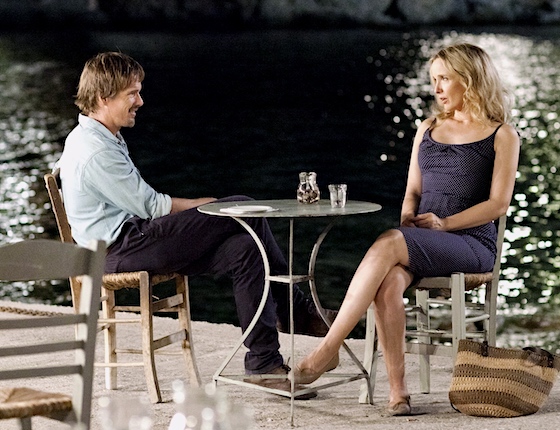
    The third film in co-writer/director Richard Linklater’s Before trilogy catches up with couple Celine (Julie Delpy, also a co-writer) and Jesse (Ethan Hawke, the third co-writer) in middle age, after years of being together, with two kids (plus his kid from a previous relationship) and a host of problems bubbling under the surface.

    Linklater got a lot of attention for shooting coming-of-age drama Boyhood in real-time over 12 years, but for my money he’s used a similar technique to much better effect in this trilogy. It’s a different way of handling it, of course: Boyhood was filmed across all 12 of those years, following the characters closely as they grow and change; whereas the Before films drop us in for a crucial few hours once every nine years, thereby offering a more concentrated experience of time on screen, but covering so much more in what’s discussed and implied about the time in between our visits.

    The first two films — 1995’s Before Sunrise and 2004’s Before Sunset — are marked by an unreserved romanticism. Midnight is notably different, abandoning that lovey-dovey-ness and replacing it with a powerful examination of the tension in a long-term relationship. In some respects, it’s all the better for it. That’s in no way a criticism of the previous films (I still think Sunrise is first among equals), but it’s realistic that, as time goes on, people change. They can’t be young-spirited and full of the joys of first love forever. Well, they could, but it wouldn’t be life and relationships as most of us know it.

    Jesse and Celine

    Their interpersonal turmoil is all the more affecting because we’ve connected with these characters on and off in real-time for a couple of decades. Consequently, I can’t remember the last time I went on such an emotional rollercoaster. It’s not just realistic, but brave, to choose to swing the film in such a quarrelsome direction, rather than just show them rekindle old passions (again). It leads to an entirely different effect: the first two leave you feeling warm and fuzzy; this is more like being punched in the gut. And yet I wouldn’t have it any other way. Rather than feeling out of place when put next to its forebears, Midnight feels like a necessary addition.

    My original reviews of Sunrise and Sunset from 2007 (linked earlier) are both marked as 4 out of 5, but I don’t stand by that. I watched them again before Midnight and would unequivocally give them each 5 stars. I wouldn’t want anyone to read all three reviews and think I’m rating Midnight as better than its predecessors. As a trilogy, they’re all almost equally good. I say “almost” because the hard-hitting emotional realism of this one is kinda depressing, while the unabashed romanticism of the first two is lovely. Maybe how you are as a person dictates which of those ends of the spectrum you prefer, because the dramatic shift in tone does not presage a shift in quality. Put another way, on a qualitative level I think they’re all 5s, but I love the first two that bit more because they’re nicer… but perhaps less real. Either way, together they are one of the greatest trilogies ever made.

    I really hope they do a fourth one, though. Maybe it’s just because I want to spend more time with these characters, but I also feel a little that the series might need balance. As I’ve said, the first two are so of a piece, the third isn’t, so perhaps there’s room for one more ‘act’ to even that up. Or, hey, why not just make another one every nine years until the inevitable? (Now I’m just getting greedy.) Ethan Hawke has observed that Sunrise begins with Celine and Jesse watching a couple in their 40s arguing and Midnight is about Celine and Jesse as a couple in their 40s arguing, so maybe it’s an apt place to stop. But he also says that all it takes is for one of them to have an idea that excites the other two and they’d do it again, so perhaps we can look forward to Before Midday in 2022 after all.

    5 out of 5

    Before Midnight placed 2nd on my list of The 26 Best Films I Saw in 2018.

    The 100-Week Roundup XI

    This week: an underrated crime thriller based on the same true-life story as a Hitchcock classic; an investigation of the trauma left by conflict in a film I’ve nicknamed “Gulf War Rashomon”; and a test of this “just post my notes already” roundup format with one of my favourite films I watched in 2018.

    They are…

  • Compulsion (1959)
  • Heathers (1988)
  • Courage Under Fire (1996)


    Compulsion
    (1959)

    2018 #194
    Richard Fleischer | 99 mins | TV | 2.35:1 | USA / English | 12

    Compulsion

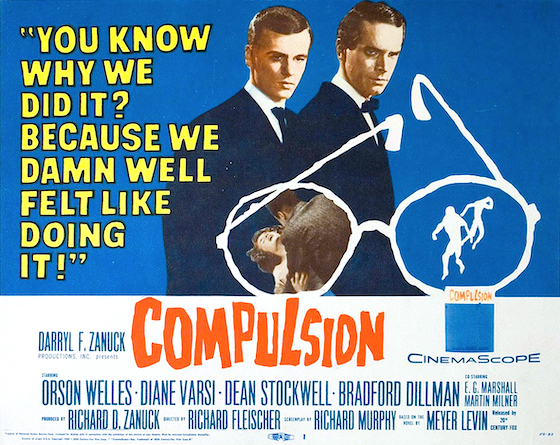
    Based on a novel that was based on the Leopold and Loeb case (which has also been the inspiration for various other films, most notably Alfred Hitchcock’s Rope), Compulsion is the story of two students who think their intellectual superiority will allow them to get away with the perfect murder.

    Playing the students, Dean Stockwell and Bradford Dillman are both fantastic. They’re two different types of well-to-do prodigies: Dillman charming and cocksure; Stockwell both awkward and supremely confident of his own exceptionalness. Their performances keep things compelling, even as the events unfolding are a foregone conclusion. You should and will hate them — even if they weren’t murderers, they’d be insufferable pricks (they sound like any number of modern-day politicians, don’t they?); that they’re cold-blooded killers just makes them worse. But even though you’ll never root for them, they’re still addictively watchable. Also, bearing in mind when the film was made, there’s a strong undercurrent of their homosexuality. It disappears as the film goes on, becoming more concerned with the case than the relationship between the two guys, but it’s discernibly there at the start.

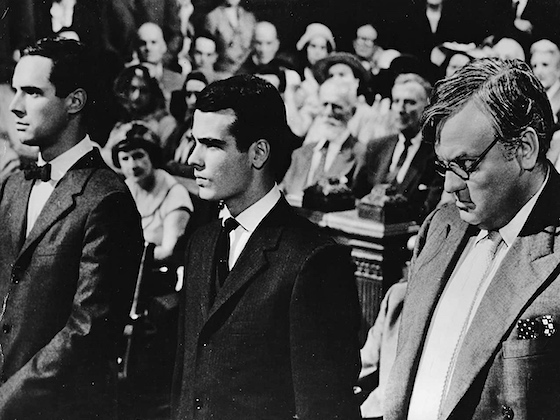
    And then Orson Welles turns up. Despite getting top billing, he has more of a third act cameo that turns into the film’s most grandstanding moment: his closing speech at the trial; a real tour de force against capital punishment. Apparently it was issued on vinyl, it’s that good. The three stars got and get all the recognition (they shared Best Actor at Cannes that year), but there are also fine supporting performances from Martin Milner and Diane Varsi as a couple of fellow students who get caught up in the case in different ways; and E.G. Marshall is very good as DA Horn, the man who eventually catches the guys and therefore becomes Welles’ courtroom nemesis. He’s particularly understated during Welles’ big speech, gradually shifting from annoyance and hatred to agreement, ultimately rising to his feet at the end as if in a silent standing ovation.

    Stillman, Stockwell and Welles

    Aside from that obvious Big Scene, there are several other memorable ones: Dillman calmly talking to his teddy bear while Stockwell frantically searches for misplaced glasses, for example; or the cat-and-mouse scenes where the DA interviews the lads separately. Much of it is fantastically shot, too. There’s an occasional showy bit (like focusing on glasses on a nightstand as it gets dark outside, then showing the culprit and investigator reflected one in each lens), but also a general level of quality that often helps emphasise the darkness in the lads’ souls.

    I don’t think Compulsion is widely discussed anymore (it has fewer ratings on IMDb than Love on a Leash!), but I thought it was a brilliant film; one that can withstand comparison to more-acclaimed versions of the same story. It’s definitely underrated today.

    5 out of 5

    Heathers
    (1988)

    2018 #196
    Michael Lehmann | 103 mins | Blu-ray | 1.85:1 | USA / English | 15 / R

    Heathers

    Heathers was one of my favourite films I watched in 2018 (it placed 5th on my list of The 26 Best Films I Saw For the First Time in 2018), but I didn’t make any notes on it at the time, and (obviously) it’s now two years since I watched it. Oh dear.

    So, in the spirit of the point of these roundups (to clear old unreviewed films, regardless of how much or little I have to say about them), we’ll have to make do with repeating my brief summary from the aforementioned “best of” list. Though I’ll also add that I watched this on Arrow’s then-new Blu-ray edition, which comes from a 4K restoration and looks absolutely fantastic.

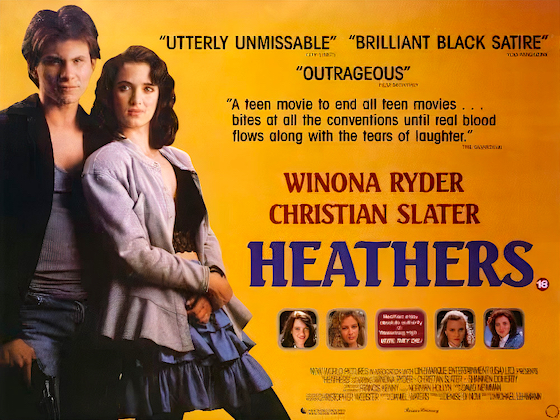
    The darkness that’s barely concealed beneath the pleasant veneer of American high schools is exposed in this pitch-black comedy, which mixes violent teen wish fulfilment with a certain degree of societal satire to boundary-pushing effect. It’s not as transgressively shocking 30 years on as it might’ve been back in the ’80s, but it’s still so very.

    5 out of 5

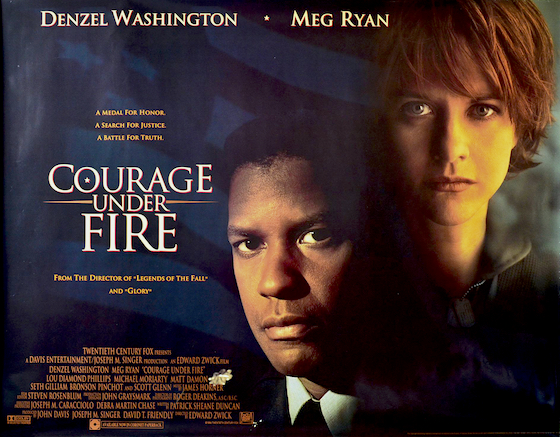
    Courage Under Fire
    (1996)

    2018 #197
    Edward Zwick | 108 mins | TV (HD) | 1.85:1 | USA / English | 15 / R

    Courage Under Fire

    It’s “Gulf War Rashomon” when a traumatised tank commander (Denzel Washington) encounters conflicting accounts of what happened while he investigates whether a helicopter pilot (Meg Ryan) deserves to be posthumously awarded the Medal of Honor, which would make her the first woman to receive it. As higher-ups put pressure on him to just push the honour through, he remains committed to uncovering the truth…

    The mystery of what really went on is not as clever or engrossing as the film thinks it is, but it still works as a meditation on how we acknowledge wartime heroism and the place of truth in doing so. It’s also a consideration of how many people are affected, in different ways, by the sacrifices of war.

    There are some decent performances along the way: Washington is always good value, and a before-he-was-famous Matt Damon demonstrates his commitment to the profession by losing a ton of weight between filming the flashback and “present day” scenes (endangering his health in the process) to portray a medical specialist indelibly affected by what went on ‘over there’. Apparently Mark Kermode said the casting of Meg Ryan as a chopper pilot was “the benchmark for a casting decision so ludicrous that it takes the viewer out of the film,” but I suspect that says more about how she was regarded at the time (best known for romcoms) than her actual performance (she’s no standout, but she’s fine).

    3 out of 5

  • Love on a Leash (2011)

    2020 #173
    Fen Tian | 86 mins | digital (SD) | 16:9 | USA / English

    Love on a Leash

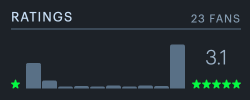
    Love on a Leash first gained a degree of notoriety when some YouTuber happened upon it on Amazon Prime and made a video about it, in which he instructed his followers to rate it 10-out-of-10 on IMDb. Enough of them did that it apparently resulted in his account being banned. (At time of writing, it has a score of 9.2 from almost 6,500 ratings.) I came across it more recently on Letterboxd, where it was featured on a list of divisive films. You only have to look at its ratings spread to see why:

    Love on a Leash Letterboxd ratings

    Are the 1,504 people who’ve rated it 5 stars in on the same joke as those YouTuber’s fans who rated it 10 on IMDb? Or is there in fact something to this movie that makes some people think “this is worth full marks”? You might be surprised to learn that, actually, I think it’s the latter.

    The film tells the story of Prince, a golden retriever who is actually a man turned into a dog (and whose human name may have been Alvin Flang. Or maybe not — I feel like the dog is an unreliable narrator). How has this happened? Why? Who knows? Who cares? (The film has a lot of random shots of ducks for no obvious reason (it’s almost Lynchian), so my guess is they did it to him. Still don’t know why, though.) Prince learns (from a magic rock-pool) that he can only return to human form by finding the true love of a woman. Enter unlucky-in-love shopgirl Lisa (Jana Camp), who meets Prince in a park and eventually takes him home. What unfolds is not as straightforward as the Beauty and the Beast narrative you might imagine, but to describe any more of the craziness would be to ruin half the fun. The plot’s constant twists and developments beggar belief — it’s genuinely imaginative, in its own way. By which I mean I don’t think you’ll have ever seen anything else quite like this.

    Pizza-faced cinder block and Alvin Flang

    I give full credit to Love on a Leash for just going for it. It’s hard to pigeonhole what genre it was even aiming for. The poster and basic concept suggest a cheesy kids’ film or Hallmark movie; the way it initially plays, you kinda assume it wants to be a romcom; but then it gets so fucking dark (suicide attempt! abusive coworkers! dead dog!), and there’s so much fantastical strange stuff… it’s so much weirder, wilder, and more unique than you can imagine. That’s without even mentioning the bizarre production quirks, like the fact Lisa only wears green clothes and lives in a green house with a green phone and green mugs and green plates… Or that it’s shot with a kind of documentary realism… um, maybe; or maybe it was just done quickly on digital video. There’s definitely no music, though. Like, at all. Even though there’s a composer credited.

    Well, except for a couple of songs the dog sings. Prince is constantly chatting away to himself in voiceover, and sometimes sings little childish ditties too (I suspect they weren’t actually composed by anyone). He can be a right snarky little bugger (he describes the love of his life as a “pizza-faced cinder block”), to the point that I suspect it may all have been improvised by the voice actor in post-production — he seems to be taking the piss out of what’s going on as often as we are.

    Love on a Leash was written and directed by Fen Tian, a 64-year-old Chinese woman who came to America in her 40s “with fifty dollars in her pocket, and not one word of English in her possession,” according to her production bio. It asserts that the screenplay won an award and funding from the Taiwan government, and at one point she took an American cast and crew to China to shoot it but funding fell through. After decades of trying, the film was eventually produced “with barely enough money to cover craft services”, and during post-production she “slept on the couches of her editors, dragging around her blanket, toothbrush, pillow and thirty-nine DV cam reels” and “spoiled” her team by “cooking up huge feasts of homemade Chinese food, and fixing her crew’s love lives with a motherly heart and some Chinese wisdom.” I feel like this deserves a Disaster Artist-type biopic…

    What people get up to in the privacy of their own homes...

    So, we come to the issue I touched on at the start: how do you rate a film like this? As an exercise in moviemaking, it’s a 1. The storyline is borderline nonsensical; it’s shot like an amateur using a camcorder for the first time; the sound mix is so unfinished I’m not sure it was ever started… And yet it’s constantly enjoyable, partly through a “so bad it’s good” hilarity (see the aforementioned terrible filmmaking), but also for the barminess with which it conducts itself, the relentless forward momentum of the storyline leading us in unpredictable narrative directions. Like famous cult favourite The Room, it transcends its amateur awfulness to be an artistic experience all of its own. In fact, it achieves a higher level of genuine artistry than The Room for me, because Wisseau’s film sometimes mires itself in wannabe-seriousness and runs out of stuff to laugh at, whereas Love on a Leash is restless in its creativity and consequently almost non-stop entertaining. It transcends its obvious awfulness through a kind of perverse innovation; a commitment to not hewing to any recognisable conventions. And it’s really funny — sometimes deliberately, often not.

    With reservations duly noted, then, I honestly and unequivocally give Love on a Leash full marks.

    5 out of 5

    200 Films in 2020

    For only the third time in this blog’s 14-year history, I’ve reached 200 Films in a Year.

    The film I chose for #200 was Wong Kar-Wai’s In the Mood for Love, perhaps the most acclaimed film of the 2000s that I was yet to see, and part of this year’s Blindspot list (I missed a Blindspot film in August, so this is catchup). I’ll write more about the film itself another day; for now, we’re concerned with the history and stats of reaching 200.

    As I said, this is the third time I’ve got there. The two previous occasions were 2015, when a last-minute scramble saw me get there on December 30th (December 2015 is still my second-highest December ever, behind only 2008, which was a similar scramble to reach #100); and 2018, when I got there on September 22nd. This year, I got there today, September 3rd, thereby setting a new record.

    It also means that I’ve reached #200 more times than I’ve failed to even reach #100 (the failures were 2009, which ended at #94, and 2012, which got to #97).

    And, of course, there’s still almost four whole months of the year left. Let’s run some numbers and see what we can predict about them…

    For starters, it’s a sort-of-logical deduction to conclude that, if it took (just over) two-thirds of the year to reach #200, surely the final third should get me to #300 more or less exactly. Is that possible? Well, yes. I’d have to achieve an average of 25 films per month (in fact, 25.5, because #199 and #200 count as part of September), but already this year I’ve had five months that passed 25 films, and the average for the whole year so far is 24.75, which is almost there. But is that likely? Well, I’ve only made it past 20 films in September and November once each (when I did, I got to 23 and 25, respectively), and I’ve never even got to 20 in December. So, the signs aren’t great.

    What does history forecast as a more likely outcome, then? My all-time average viewing for September to December is 45.6 films, which this year would see me reach #244. If we narrow that to just the last five years (because a lot has changed in my viewing habits over the past decade-and-a-half), the average becomes 58.8, which would get me to #257 this year.

    Switching from averages to specific examples, my worst September-to-December total came in 2011, when in that time I watched 23 films. At the other end of the scale, the best was in 2015, when I watched 82 films in those four months. If those extremes happened this year, I’d make it to either #221 or #280, respectively. If I managed to equal my best-ever totals for each individual month, I’d end on #296; but if I repeated my worst-ever individual month results, I’d only get to #215.

    You’ll note that every one of these predictions falls short of #300.

    Things don’t look good for reaching the big three-oh-oh, then. In fact, it’s questionable whether I can even beat my previous best (261 in 2018) — of the six history-based predictions I’ve run through, only two get me above that.

    But the idea that I could reach #200 within one year used to seem totally impossible, so never say never…

    The 100-Week Roundup X

    These 100-week roundups are a clearing house for reviews I haven’t got round to writing up 100 weeks (i.e. almost two years) after I actually watched the films in question. As I mentioned in my August review, I’ve recently fallen behind even on that, so the 100-week moniker isn’t technically accurate right now. Hopefully I’ll catch up soon.

    This time, we have a motley bunch from September 2018: two one-star films that made my “worst of year” list; and two four-star films, one of which made my “best of year” list. They are…

  • Lost in Space (1998)
  • Skyline (2010)
  • April and the Extraordinary World (2015)
  • I Kill Giants (2018)


    Lost in Space
    (1998)

    2018 #189
    Stephen Hopkins | 125 mins | digital (HD) | 2.39:1 | USA / English | PG / PG-13

    Lost in Space

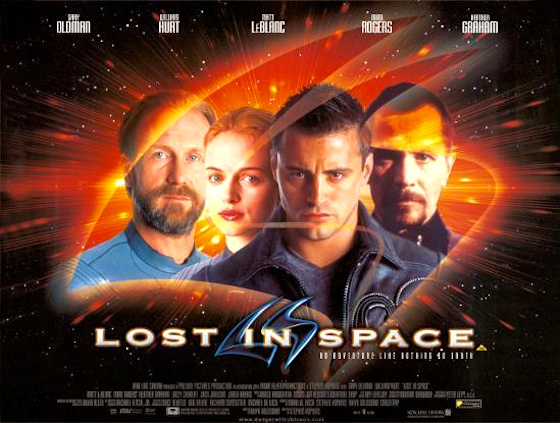
    I remember this reboot of the classic ’60s sci-fi series being received very poorly indeed when it came out in 1998; and so, even though I was a young sci-fi nut at the time, I didn’t bother to see it — and then spent the next 20 years not bothering to see it. But with the recent re-reboot on Netflix going down rather well, I thought maybe it was time to see for myself. I shouldn’t have bothered — it’s truly terrible.

    It gets off on the wrong foot, starting with a load of over-ambitious CGI, and that continues unabated throughout the entire movie. Anyone who moans about the quality of CGI in modern blockbusters should be made to watch this so they can understand what they’re complaining about. Maybe it looked ok back in ’98, I can’t remember (I suspect not), but watched now it looks like an old computer game, never mind an old movie.

    Poor effects can be forgiven if the film itself is any good, but the opening action scene is both fundamentally needless and stuffed to bursting with cliches, and the rest of the film is no better — just nonstop bad designs, bad dialogue, bad ideas, more bad CGI… Even the end credits are painful, playing like a spoof of the worst excesses of the ’90s, from the trippy “look what our computer graphics program can do” visuals to the dance-remix-with-dialogue-samples version of the theme.

    So, it turns out the critics at the time were right. I have seen even worse movies in my time, but there aren’t many merits here — there’s one effect that is well realised, at least. But that doesn’t come close to justifying the film, or for anyone to waste their time watching it. It really is very, very bad.

    1 out of 5

    Lost in Space featured on my list of The Five Worst Films I Saw For the First Time in 2018.

    Skyline
    (2010)

    2018 #190
    The Brothers Strause | 93 mins | digital (HD) | 2.35:1 | USA / English | 15 / PG-13

    Skyline

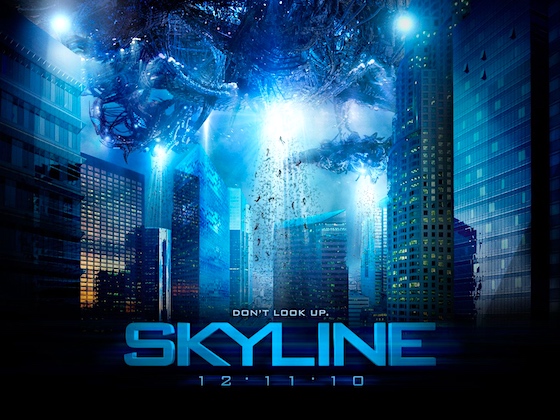
    In a Cloverfield-esque setup, a bunch of young people awaken from a boozy party to discover an Independence Day-esque alien invasion happening outside their window. What follows just feels like familiar parts from even more movies Frankensteined together in a failed attempt to produce something original.

    In terms of overall quality, it’s like a direct-to-Syfy movie granted a minor-blockbuster effects budget. Goodness knows how it landed a cinema release. The directors were visual effects artists who, based on their IMDb credits, moved into directing music videos before springboarding into film directing with Aliens vs Predator: Requiem, the sequel to the much maligned AVP that, shockingly, managed to be even worse. Skyline was their second feature — and, in a seemingly-rare bit of justice for directors making shitty blockbusters, their last (they’ve gone back to effects, where they continue to have a long list of high-profile credits). They completely financed Skyline themselves, forking out just $500,000 for the shoot before spending $10 million on the effects. It couldn’t be any clearer where their priorities were…

    And it feels like a film made by VFX artists. For one thing, one of the main characters is a VFX artist. He lives in a swanky apartment, with a hot wife and a hot mistress, drives a Ferrari and owns a yacht. Either this is extremely obvious wish fulfilment, or at one point VFX guys were doing very well indeed. (Considering there was that whole thing a few years back about major VFX companies shutting down, either this was made before the bubble burst, or some were able to weather the storm to a sickening degree. Or, like I said, it’s wish fulfilment.) Aside from that, it’s like a CGI showcase. Everything’s shot handheld, all the better to show off how realistically the CGI’s been integrated. The screenplay puts in no effort, with thinly sketched characters and a flat, uninspired storyline that rips off other movies with abandon, runs on a shortage of logic, features weak world-building with inconsistent rules, and seems to just… keep… going… until, after you think it’s definitely over this time, there’s yet another scene: a mind-bendingly gross and laughable finale.

    And yet, years later, someone made a sequel! I’ve even heard it recommended (though it has a lowly 5.3 on IMDb). Someday, I’ll have to see…

    1 out of 5

    Skyline featured on my list of The Five Worst Films I Saw For the First Time in 2018.

    April and the Extraordinary World
    (2015)

    aka Avril et le monde truqué

    2018 #191
    Christian Desmares & Franck Ekinci | 102 mins | digital (HD) | 1.85:1 | France, Belgium & Canada / French | PG / PG

    April and the Extraordinary World

    This French animation is an alternate-history steampunk adventure that follows orphan April (voiced by Marion Cotillard in the original audio) as she investigates a decades-long spate of missing scientists, including her own parents.

    The tone is one of pulp adventure, which is right up my street, and consequently I found the film a lot of fun. It’s a great adventure, abundant with imaginative sci-fi/fantasy ideas, engaging characters, and laced with humour. The independent French production means it’s not beholden to Hollywood homogenisation — there’s some very dark stuff in the world-building details, which contrasts somewhat with the light adventure tone of the actual plot, and some viewers may find this spread of tones problematic. More of an issue for me came when, a while in, the plot heads off into barmy sci-fi territory. No spoilers, but it wasn’t quite what I was expecting from the original premise. But this is perhaps more an issue of expectation than actuality — it wasn’t severe enough to lose me, just take the shine off something that was otherwise headed for perfection; and, as I adjusted to where the story was going, I enjoyed it more again.

    Resolutely unproblematic is the visual style. The design and animation, inspired by the works of comic book artist Jacques Tardi, are absolutely gorgeous — like a ligne claire comic sprung to life. When US animations try to ape an artist’s style, it often winds up as a movie-ised imitation — at best you can recognise the inspiration, but it’s still been filtered and reinterpreted (cf. Batman: The Dark Knight Returns). But this is like the panels just started moving, with full fluidity (none of the “jerkily moving between static poses” you sometimes get with cheaply-done modern animation). That applies to character animation as much as anything, but the wildly imaginative steampunk alternate history allows the designers and animators to really cut loose, with a fabulously invented world.

    Put alongside the likes of Long Way North and The Secret of Kells, it’s a reminder that we should look further afield than the US and Japan for great animation.

    4 out of 5

    April and the Extraordinary World placed 26th on my list of The Best Films I Saw in 2018.

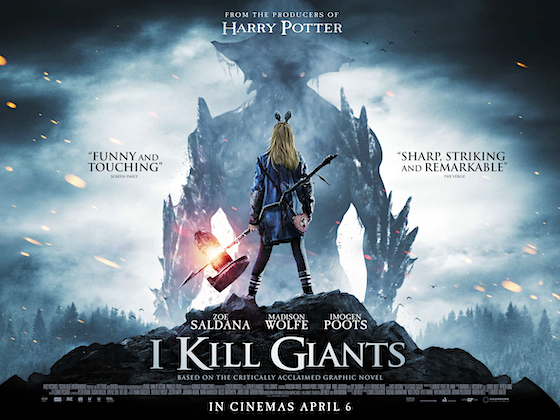
    I Kill Giants
    (2018)

    2018 #193
    Anders Walter | 106 mins | digital (HD) | 2.39:1 | Belgium, UK, USA & China / English | 12 / PG-13

    I Kill Giants

    The past few years have seen a random, unexpected mini-genre pop up: dramas about Serious Issues where the protagonists also have something to do with giant monsters. I’m not talking about Pacific Rim or Godzilla, but movies where the monsters are either imaginary or in some other way analogous to the very real problems experienced by the characters. Films like A Monster Calls, about a teenage boy coping with impending bereavement, or Colossal, in which Anne Hathaway discovers she’s controlling a giant monster that keeps appearing (and which kept its big issue a secret in the marketing, so I will too). I don’t know if there’s really enough of these to call it a “genre”, but three films in as many years that fit roughly in that very specific bucket strikes me as a lot; and I watched all three in the span of a few months, just to emphasise the point.

    Anyway, the latest entry in this genre I may’ve just invented is I Kill Giants. Based on a graphic novel by Joe Kelly (who also penned this adaptation) and J.M. Ken Niimura, it’s about American schoolgirl Barbara (Madison Wolfe) who believes giants are coming to attack her hometown and she’s the only one prepared to fight them. Whether these giants are real or just an outward expression of an inner conflict is, of course, why this ties in with the other films I mentioned.

    There’s plenty of stuff I liked a lot in I Kill Giants. The female focus. The power of friendship, and of small acts of kindness. The acceptance of being a bit different and an outsider, within reason. The magical realism in its handling of the giants. Unfortunately, it takes a bit too long to get to its conclusion — it’s not exactly repetitive, but there is some running on the spot. When the finale comes, it’s an effective twist. I’d guessed many of the reveals, and I think the film definitely expects you to guess at least one (which it then wrong-foots you about). But narrative trickery isn’t really the point. It’s impossible to discuss which other film it’s most similar to without spoilers, but the other one dealt with certain stuff better due to being upfront about it, rather than lacking it all into the final ten minutes. That’s the ending’s biggest flaw: that another film did fundamentally the same thing recently and, overall, better. That’s not the film’s fault.

    Not a perfect film, then, but it has a lot to commend it. Just be aware it’s one where the journey is more rewarding than the destination.

    4 out of 5

  • 0202 tsuguA fo weiveR ylhtnoM ehT

    It’s been quite a year, but now things are returning to normal… or some people are pretending they are, anyway. I mean, schools are going back, cinemas have reopened, and my film viewing has dropped back down towards 2019 levels.

    Worse, my reviews are lagging. It’s been a whole year since I hit 2,000 listed reviews, but I’m still over 50 away from actually being able to say I’ve published 2,000 film reviews. Hopefully I’ll get there before the end of 2020. In particular, I’ve fallen behind with my 100-week roundups already; and there was no new TV column this month, which was also a mistake. I’m aiming to get both back on track in September.

    For now, though, let’s reflect on what I did watch and post in August…


    #185 Much Ado About Nothing (2012)
    #186 The Mystery of the Rocks of Kador (1912), aka Le mystère des roches de Kador
    #186a The Stunt Double (2020)
    #187 RoboCop 3 (1993)
    #188 Color Out of Space (2019)
    #188a Frankenstein (1910)
    #189 The Man Who Laughs (1928)
    #189a The Dancing Pig (1907), aka Le cochon danseur
    #190 Pearl Harbor (2001)
    #191 Yes, God, Yes (2019)
    #192 The Assistant (2019)
    #193 Never Rarely Sometimes Always (2020)
    #194 Bad Boys for Life (2020)
    #195 A Beautiful Day in the Neighborhood (2019)
    #196 Tolkien (2019)
    #197 The Show Must Go On: The Queen + Adam Lambert Story (2019)
    #198 Entrapment (1999)
    Never Rarely Sometimes Always

    Bad Boys for Life

    Entrapment

    .


    • I watched 14 new feature films in August.
    • That beats January’s 12, so it’s not the lowest month of 2020, but it’s also the first month since February with a total below 28.
    • It’s my eighth month in a row with 10 or more features, which is my second-longest streak of months with 10+ films. (The longest is 60 months, from June 2014 to May 2019, so there’s literally years to go before I rival that again.)
    • It tops the August average (previously 12.5, now 12.6), but falls short of the rolling average of the last 12 months (previously 19.3, now 18.9) and the average for 2020 to date (previously 26.3, now 24.75).
    • I may not have quite got to #200 this month, but #198 is still the furthest I’ve ever reached by the end of August. It also means 2020 overtakes 2016 to become my third highest year ever, with four months still to go.
    • Further to what I wrote last month about years from which I’d never seen a feature film, The Mystery of the Rocks of Kador is my first from 1912. That just leaves 1915 as the only year since the US and UK started producing features (in 1912) from which I haven’t seen a film.
    • Watching Pearl Harbor means I’ve now seen all of Michael Bay’s films. That and 6 Underground are still scheduled for review, leaving only The Island unreviewed on this blog. I last saw it at the cinema back in 2005. I quite liked it and always meant to revisit it (I even own the DVD, but obviously never watched it (typical)). At some point I’ll get round to that rewatch and cover it then.
    • From last month’s “failures” I watched The Assistant, Bad Boys for Life, A Beautiful Day in the Neighborhood, Color Out of Space, and Never Rarely Sometimes Always.
    • Talking of failures, I didn’t watch a Blindspot film this month. That’s the first time I’ve slipped in 2020, so hopefully I’ll just catch it up next month.


    The 63rd Monthly Arbitrary Awards

    Favourite Film of the Month
    The notion of whether “favourite” means “best” or “most enjoyable” is on my mind with this month’s selection. Probably the best film I saw this month was abortion drama Never Rarely Sometimes Always, but, understandably, it wasn’t “enjoyable” per se. On the other side, then, the film I’m most likely to end up purchasing and rewatching is, a bit to my surprise, Bad Boys for Life — as a belated threequel it should by all rights be mediocre, but I think it might actually be the best instalment of the trilogy.

    Least Favourite Film of the Month
    Nothing truly terrible this month (at least not among the features — some of the shorts I was less enamoured of), but something must be chosen. I enjoyed Pearl Harbor more than most, so it would seem unfair to pick that. Instead, I’ll say The Mystery of the Rocks of Kador, which I was sold on by Movies Silently’s review but unfortunately didn’t enjoy that much. Never mind.

    Film I Haven’t Actually Seen But Nonetheless Used as a Title Theme of the Month
    It’s Tenet, ylsuoivbo.

    Decade I Most Miss of the Month
    Entrapment reminded me how much fun a solid studio programmer could be. Two stars, a few reasonably-scaled action scenes, and a mid-range budget add up to a couple of hours of fun. Not a great movie, but one I enjoyed enough to not regret the time spent watching it. It’s the kind of thing the major Hollywood studios are backing away from in favour of just making mega-budget super-blockbuster tentpoles, but that smaller indie studios aren’t up to providing. I feel like the ’90s did that kind of thing particularly well, too.

    The Audience Award for Most-Viewed New Post of the Month
    No one post really caught on this month — this month’s highest charting new post was down at 55th overall (behind mostly TV columns, but also a dozen older film reviews). Even my review of a new release (Yes, God, Yes) didn’t generate a huge number of clicks (I guess it is a pretty niche title), although the victor only beat it by one hit. Said victor was Ready or Not.


    My Rewatchathon continues at pace, which means I’m still about a month ahead of schedule. Although this month I finished a series that’s been a major part of it this year…

    #34 Pursuit to Algiers (1945)
    #35 The Great Mouse Detective (1986)
    #36 Terror by Night (1946)
    #37 Dressed to Kill (1946)

    The first time I watched the Basil Rathbone Sherlock Holmes series, it took me eight years. Now, I’ve rewatched them all in eight months. A much more reasonable pace, let’s be honest (the first time I was spacing them out so as not to rush them, but took it a bit far…) My original reviews are linked above, and I put some new thoughts on Letterboxd about Pursuit to Algiers, Terror by Night, and Dressed to Kill in these links.

    My fourth film this month was also Sherlock Holmes themed, albeit turned into a mouse courtesy of, appropriately enough, the Mouse House. Disney’s 26th animated film used to be known as Basil the Great Mouse Detective here in the UK, but it’s been brought in line with the US for the Disney+ era. I’m only surprised it took them so long. (Now, if they could just sort out the UK list of the Animated Canon…) I’ve been on a bit of a Sherlock Holmes kick this year, so it was only natural I’d revisit Disney’s version. It manages to be both a very good Disney movie and a very good Sherlock Holmes one at the same time, mixing the comedy and charm of Disney animation with a healthy dash of the investigation and adventure of a Holmes story. It comes just before what fans call the Disney Renaissance, but it’s also directly responsible for it: after the failure of The Black Cauldron, Disney’s animation studio was under threat, but the success of The Great Mouse Detective allowed them to continue. The rest, as they say, is history.


    After four months of no cinema releases to comment on, they’re back! It’s a gradual re-opening, of course, with Tenet the only truly major title on wide UK release so far (The New Mutants had previews, but isn’t technically out until this Friday). At least some people I follow on Twitter seem to have dived back in headfirst, but I remain a little wary — as I said earlier, I’ve not seen Tenet yet; whether that’ll change in the coming week or two, I’m undecided.

    Netflix attempted to fill the blockbuster void with originals like Project Power, a super-powered action-thriller starring Jamie Foxx and Joseph Gordon-Levitt, but the mediocre reviews put me off actually watching it (so far). This month they also bolstered their catalogue with the fourth and final Ip Man movie, and the only Tim Burton film Iv’e not seen, Pee-wee’s Big Adventure. Over on Amazon Prime Video, meanwhile, new-ish additions included Justin Kurzel’s True History of the Kelly Gang and true-story whistleblower thriller Official Secrets. Other newcomers of note include Mississippi Grind, which I heard recommended a couple of years ago and have been waiting for a chance to see since, and Roger Corman / Vincent Price horror The Masque of the Red Death, which is supposedly due on disc in a new 4K restoration later this year, but I don’t know if Amazon are streaming that.

    As for the other streamers, Sky Cinema / Now TV had Terry Gilliam’s much-delayed The Man Who Killed Don Quixote; Disney+ had diverted-from-cinemas The One and Only Ivan (which I think I’ll give a miss anyway) and a doc about lyricist Howard Ashman, Howard (which does interest me); BBC iPlayer has a pair of films I’d like to rewatch, The Lost Boys and Love & Friendship, not to mention the original Poltergeist, which I’ve never seen; and on All 4 I missed the chance to see Wild Tales (the 183rd greatest film ever according to IMDb voters).

    Finally, my new purchases on disc, of which there were a lot — some 54 films I could list (egads!) The bulk of those come from Arrow’s Gamera box set (with 12 films plus four alternate cuts), although Criterion’s Bruce Lee set was no slouch (with seven films plus one extended cut). The latter came as part of a belated order placed during Barnes & Noble’s Criterion sale back in July, which also included 1984, Come and See, and the four-part 1966-7 War and Peace; plus their editions of films I’ve already seen like The Grand Budapest Hotel, Portrait of a Lady on Fire, and Alfred Hitchcock’s Notorious. There were also a bunch of silents (I got good deals on eBay for US DVDs of the French serials Judex and The House of Mystery; plus an import of a French DVD set of French films from French director Raymond Bernard; and Masters of Cinema’s latest Buster Keaton three-feature box set) and a bunch of noirs (more from Masters of Cinema in the shape of No Way Out and Fritz Lang’s The Woman in the Window; and Blu-ray upgrades for the BFI’s releases of three Otto Preminger noirs and Jules Dassin’s Night and the City). Meanwhile, on 4K, I got Arrow’s UK format debut, Pitch Black, and their US format debut, but in its UK edition from StudioCanal, Flash Gordon (in a tat-filled box set. I love tat. It’s always kinda disappointing when you actually get it, but I can’t resist).

    And that isn’t even everything, but it’s more than enough to be going on about.


    Mulan comes to Disney+ for an additional fee (which varies by region). I’ll tell you this for nothing: I won’t be paying it.