Wallander: The Secret (2006)

aka Mankell’s Wallander: Hemligheten

2010 #12
Stephan Apelgren | 90 mins | TV | 15

The third theatrical release to star Krister Henriksson as Henning Mankell’s detective is the thirteenth and final episode in the first series. It has a suitably Season Finale feel to it — “this time it’s personal” and all that — but also subtly constructs itself to work as the standalone piece necessary for a theatrical release schedule that skipped six whole episodes.

As with Mastermind (the sixth episode / second film), there’s no need to have seen any of the series to follow things. Though the characters aren’t introduced from scratch, there’s no explicit reference to any on-going plots — any that are relevant are re-established in a way that isn’t intrusive. A knowledge of what happened in the ten films not chosen for cinematic release is inessential, then, but it does deepen the viewer’s understanding of events to some degree: Linda and Stefan’s relationship was played out more fully across the whole series, for example, while Stefan’s suspension has been a gradual slide rather than an almost sudden revelation.

Indeed, while the emotional pay-offs are sufficiently handled within the film itself — for one, it centres on an issue that it’s hard to not find affecting (which, if I spell out, is sure to give away a revelation or two) — getting to know the characters over the 18 preceding hours surely adds a dimension to the effect the story, its revelations and its twists can have on the viewer. Think, for example, of Serenity: I know people who saw that film cold who found the deaths emotional, but not to the same degree as those who experienced the film on the back of 10 hours (and more, with repeated viewings) getting to know and love those characters. I’m not saying Wallander at any point achieves the giddy heights of Firefly and Serenity, mind you, but the theory is the same.

The Secret‘s own plot is suitably high-stakes, if not quite as filmic as the one in Mastermind. Making it personal for one of the team is always a good way to make A Bigger Story, and there are some particularly large revelations and twists involved here. Ola Rapace is finally given something significant to do besides be a bit grumpy, and he excels in an understated fashion — even his moodiness now has good meaning. None of the reasons for this shall I spoil for those yet to discover the series, but events here will undoubtedly have a lasting impact — though how much this will be felt in the forthcoming second series (which, I understand, only includes one theatrical release) remains to be seen. In particular, the tragic suicide of Johanna Sällström, who plays Linda Wallander, must surely hang over the new episodes to some degree.

It’s arguable how fully the issue behind the story is explored, as the film gets rather caught up in explaining its own conceits — flashbacks disguised as asides to the current action, for example — and complex plotting — when past relations between characters come out, there are some hoops to be jumped through so that it all makes sense. I wouldn’t go so far as to say any of this is poorly handled, but one wonders if screenwriter Stefan Ahnhem has ultimately bitten off more than he can comfortably chew. The later twists and complexities occasionally overshadow the depressingly grounded earlier events.

Unfortunately, the cinematography — though a small step up from the ‘regular’ episodes — also isn’t quite as filmic as in Mastermind. This one feels more like a TV episode granted an upgrade, whereas Mastermind was closer to ‘the real thing’ of a film — as much as that can be defined and/or justified these days, anyway. One might suppose this leaves more room for the actors — in particular Rapace, as already mentioned, but also Sällström — though I’m not convinced it makes a huge difference.

Some of these are minor points, perhaps, but a number of factors add up to mean The Secret doesn’t feel quite as distinctive as Mastermind. Perhaps I’m holding it to ill-conceived criteria — as the culmination of the series, it has several things going for it — but I remain unconvinced that it tackled the subject as well as it could have.

3 out of 5

Wallander 2 (or 6) and 3 (or 13)

If you read my review of the first episode/film of the Swedish Wallander, Before the Frost, back in November, you may have some idea what that title’s on about. For the rest, I’ll try to explain it succinctly:

There are multiple TV/movie series based on Henning Mankell’s detective Kurt Wallander. This particular one, begun in 2005, features an adaptation of one novel (Before the Frost) followed by twelve original stories. Of these thirteen feature-length episodes, three were released theatrically — episodes one, six and thirteen (the rest went direct to DVD, and later TV) — and, because of their initial cinema release, I’ve reviewed those three as part of my objective. Having published the first last November, this pair of reviews covers the second film (or sixth episode) and the third film (or thirteenth episode).

I hope that makes some kind of sense…

2009 #88
Wallander: Mastermind

Mastermind works to earn its status as a theatrical release, everyone upping their game to provide something more filmic than the other direct-to-DVD entries in the series.” Read more…

2010 #12
Wallander: The Secret

The Secret‘s not quite as filmic as Mastermind. Making it personal for one of the team is always a good way to make A Bigger Story, and there are some particularly large revelations and twists involved here.” Read more…


A second series of the Swedish Wallander comes to BBC Four soon. This time, only the first episode — The Revenge (Hämnden) — has received a theatrical release, though to date only nine (of thirteen) episodes have been released at all (according to IMDb, the remainder are due for release in Sweden in March, April, June and July; I don’t know if BBC Four are screening all thirteen in one go regardless). I will, of course, continue to cover the series’ cinema-released episodes as I see them.

Air Force One (1997)

2010 #13
Wolfgang Petersen | 115 mins | TV | 15 / R

This review contains surprisingly minor spoilers.

Air Force OneHarrison Ford stars as President Indiana Jones — sorry, Jack Ryan — no, James Marshall (that’s it) in this action-thriller from the Die Hard school of moviemaking. Yep, this is “Die Hard on a plane” — except it’s not any old plane, it’s Air Force frickin’ One; and the Bruce Willis character isn’t any old washed-up cop, it’s the frickin’ President of the U.S. frickin’ A. Hells yeah!

At least, that’s how I imagine the pitch went.

It’s a faintly ridiculous premise: Russian terrorists take control of the President’s aircraft in an attempt to get their favourite General released from prison; the President, still on board unbeknownst to them, goes all John McClane. On their ass. Es. Oh, whatever. The really fun thing is, screenwriter Andrew W. Marlowe and/or director Wolfgang Petersen seem to have set themselves the task of upping the level of ludicrousness about every ten to fifteen minutes — the things that go on during the final act have to be seen to be believed and so I won’t ruin them here. Though, suffice to say, if you think someone taking a bullet for the President is old hat, imagine what a fighter jet might do…

If you can suspend your disbelief — and that’s certainly the film’s greatest intellectual challenge — then what goes on is pretty fun. Yes, much of it’s a Die Hard re-hash, but (as someone once said) if you’re going to steal, steal from the best. The initial hostile takeover may be the best action sequence, but the story does its best to hold our interest with a variety of new problems to be solved by the war-hero President-turned-action-hero (the former mentioned in one line of dialogue to help explain the latter, naturally). More entertaining, it must be said, is watching Marlowe and Petersen battle with the problem of making a fairly brief idea stretch to a feature.

Unfortunately, this problem sometimes manifests itself too obviously. The lead villain is dispatched before the final act kicks in. Even if you think narrative theory and screenwriting how-to guides have too large an influence on modern movie structure, surely most will agree that dispensing with your antagonist a good 20 to 30 minutes before the credits roll is a bit much. Though the badly damaged plane still has to be landed, it doesn’t have quite the same anyone-could-die tension as much of the film; a tension which impresses, incidentally, as there’s a disaster movie level of suspense in the potential executions, something most action thrillers fail to achieve with a line up of victims and survivors that’s predictable from the get-go.

A cast who were later TV bound (just see how many faces you can spot from the likes of 24, CSI and, for one of the big stars, Damages) give their all, though Gary Oldman is wasted in a sub-Hans Gruber / neutered-Stansfield role. Harrison Ford again shows he can play variations on a theme — President Jim Marshall may not be as cocky as Han Solo or Indy, but he’s an older figure from the same ballpark. But that’s what’s required in the role and that’s why he was cast, so why complain? On the technical side, there’s a showcase array of pre-CGI-overload special effects, particularly in the closing minutes.

The film’s most interesting facet, 13 years on, is the opening. President Marshall’s stance on terrorism and his commitment to stopping evil foreign regimes probably sounded great rhetoric at the time; and it probably sounded even better post-9/11, when those who perpetrate terrorism and those regimes that support it were obviously at the forefront of everyone’s mind. But after Afghanistan and Iraq, it’s beginning to seem a little awkward. As we’ve seen, tyranny may be quickly overthrown, but peace is much harder to restore; and genocides are worth stopping, but only if there’s oil involved. President Marshall’s peace still sounds bold and correct in theory, but it’s difficult to imagine it going down so well today.

But, really, that’s a retrospectively unfortunate aside: the West Wing-esque fast-talking political early minutes are really just set-up for the barmy action that follows, and taken on that level it’s as disposable as it needs to be.

Overall, my favourite thing about Air Force One is an indefinable quality: it’s an ’80s/’90s action-thriller, the kind of thing Hollywood gave us before The Matrix came along and changed everything. It has a feel — the same one that’s in Die Hard (of course), or The Rock, or other films of this era — that we don’t seem to get any more. Things move on and change, naturally, but I miss this quality a bit, and it’s always nice to discover another example of it.

4 out of 5

The ‘Best Pictures’ of the Noughties

With 2010’s Oscar nominees due to be announced tomorrow sometime (I believe it’s “OMG why so early?!” if you’re in the States and “during the day” in Blighty’s time zone, but that’s all I know), I thought I’d have a look back at how I’ve done seeing the Best Picture nominees from the noughties. Feel free to play along. (Not that I’m actually going to list them.)

Such a task therefore includes 2000’s nominations… all of which are, of course, technically from the last decade… but tish, that’s enough of technicalities! This is end-of-the-decade-lists year, goddamit, and I will have my Oscar Best Pictures List! So ner.

Things don’t get off to an auspicious start unfortunately: despite having a whole 10 years to catch them, I’ve still only seen three of 2000’s nominations — and one of those was only a bit over a year ago. Maybe I will start counting from 2001’s lot after all…

Except that, whatever tomorrow’s nods bring, I’m not likely to have seen many of them, even with that potentially awkward increase to 10 nominees (10×5 is such a neater equation than 9×5+1×10, somehow. Anyway…) Taking RopeofSilicon’s prediction list as an indicator because, well, it’s the only one I’ve stumbled across, I’ve seen a measly two of the top ten… and it only goes up to three if you broaden it to his top 21. Whatever comes about tomorrow, I won’t’ve seen many. I need to get to the cinema more.

So back to the ‘real’ noughties, then. (Still with me? Oh, someone is! I’ll try to speed this up anyway…)

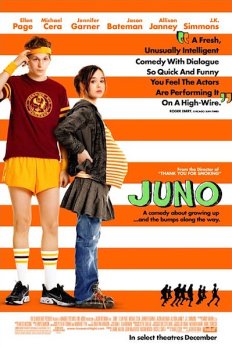
I’ve seen all the films from the 2001, 2006 and 2007 awards. I even saw four of 2006’s in the cinema (gasp!) When I finally get round to watching my DVD of Juno, 2008 will join that list (if anyone happens to be wondering why reviews of There Will Be Blood and No Country For Old Men are now over a year late… well, that’s why).

There are, in total, 14 nominees I’ve not seen — including two winners. Neither A Beautiful Mind nor Million Dollar Baby have inspired me enough to go out of my way to see them, particularly as the former especially seems to get lumped in with the likes of Shakespeare in Love in the annals of less-than-deserving winners. Hey, Eastwood’s effort is on TV this week — twice on the same night, even — so maybe I’ll finally sit down with it.

The full 14 I’ve not seen are:

2000: The Cider House Rules, The Insider. 2002: A Beautiful Mind, In the Bedroom. 2003: The Hours, The Pianist. 2004: Master and Commander: The Far Side of the World, Seabiscuit. 2005: Million Dollar Baby. 2008: Juno. 2009: Frost/Nixon, Milk, The Curious Case of Benjamin Button, The Reader.

And I have three of them on DVD too…

There we have it, anyway. As a ‘Film Fan’ it feels somehow wrong not to have seen all of the films considered to be The Very Best Of That Year at the highest-profile, most-prestigious (theoretically) film awards do. But — as that “(theoretically)” shows and as we all really know — the Oscars are far from the be-all-and-end-all of what are genuinely the best films of any given year (though I’m sure there must be some where they actually got it right). Besides, it’s all a matter of opinion anyway, making any such list wholly arbitrary.

Still, I do like a good list, and this one has 14 more things to tick off it. Maybe I’ll have got there by 2020…


2015 update:

Halfway to 2020, and how have I got on? Well, I’ve since seen five of the 14. That’s not that good, is it? Anyway, here are my reviews of those five:

  • A Beautiful Mind
  • Master and Commander: The Far Side of the World
  • Million Dollar Baby
  • Juno
  • The Curious Case of Benjamin Button
  • Ernst Lubitsch in Berlin: From Schönhauser Allee to Hollywood (2006)

    2010 #10
    Robert Fischer | 109 mins | DVD

    Ernst Lubitsch in BerlinPart biography, part making-of, part analytical retrospective, Robert Fischer’s documentary does what it says on the tin: tells the story of the life and work of actor/director Ernst Lubitsch from his formative years, living on Schönhauser Allee in Berlin, to when he made the move to America in the early 1920s.

    Fischer devotes a large amount of time to Lubitsch’s early years — the life he had growing up, his years as a stage actor, and how he eventually shifted into becoming a film actor — attempting not only to tell the story of his upbringing, but to draw (or leave the viewer to draw) parallels with the films Lubitsch would go on to make. A use of ‘family history’ first- and second-hand accounts and analysis from authors, critics and admirers strikes a moderate balance here, though those primarily interested in his eventual film work may find it goes on a bit too long.

    A lot is also made of (or, at least, implied about) Max Reinhardt’s influence on a young Lubitsch. The film implies Reinhardt had a greater significance generally, but lacks any context about why he was such a momentous figure. In fairness the film isn’t about him, but one feels a minute or two clarifying his importance may have been warranted.

    When Lubitsch’s directing career is eventually arrived upon, Fischer uses the same mix of talking heads to cover both the behind-the-scenes story of Lubitsch’s career, spanning a half-dozen or so of his more significant German works, and provide a brief analysis of how they foreshadowed (or didn’t) his future career and what they might reveal about the man and his methods. With such a broad overview no one film is covered in particularly great depth, despite the feature-length running time, though recollections from actors Emil Jannings and Henny Porten provide some film-specific focus.

    Illustrated with copious clips and photographs from Lubitsch’s work, the documentary incidentally instills a desire to see more of the director’s early work. Tantalising glimpses of and stories about films such as The Eyes of the Mummy Ma, Carmen, Madame DuBarry, Kohlhiesel’s Daughter and The Loves of Pharaoh all leave one longing they were included in the box set too — though considering the six films already allotted, it’s hardly an oversight that there aren’t even more. As IMDb/Wikipedia seem to suggest none of these are lost, perhaps there’s space for a Volume Two?

    Given that I found the documentary interesting, the following score might seem a tad low. Judged in the world of DVD extras, Ernst Lubitsch in Berlin would likely fare better; bumping it up to the world of ‘Proper Films’, however, reduces that somewhat. As much as anything, while I’m sure it’s of interest to the already interested, it’s not compelling enough to warrant viewing by anyone else.

    3 out of 5

    Read more reviews from Lubitsch in Berlin here.

    Die Bergkatze (1921)

    aka The Mountain-Lion / The Wildcat

    2010 #9
    Ernst Lubitsch | 82 mins | DVD | PG

    Die BergkatzeDie Bergkatze apparently rounds off Masters of Cinema’s Lubitsch in Berlin box set with appropriate heft: as the blurb asserts, this was “Lubitsch’s personal favourite work of all his German films, [it] represents a peak in both Lubitsch’s silent oeuvre and the silent cinema as a whole.” I wasn’t quite so enamoured with it.

    Which, again, isn’t to say it’s bad. The setup takes some time to build up speed, but when it does the gags begin to flow more readily, even if it degenerates to a more stop-start pattern later on. But scenes like the Lieutenant leaving town to an army of toddlers crying “Adios, daddy!” are on the one hand simple but on the other inspired; the first battle sequence is full of marvellously surreal touches, like the robber-leader making coffee to be drunk mid-shoot-out; and the satire on the military (always welcome) is pleasantly thorough, taking pot-shots at numerous elements rather than picking one trait and exhausting it.

    Lubitsch once again flips the roles of the sexes: the Lieutenant preens and prunes, spending ages tweaking his hair and clothes in the mirror, and one of the gang of robbers lies on a bed literally crying a river over his lost love; the titular robber’s daughter, however, leads a gang of men in thieving and fighting, living wild, free, and rather dirty, among them. A desired-by-all woman (Pola Negri, successfully branching out into comedy) and at least one mass of man-desiring women help round out a succession of familiar Lubitsch elements. Familiarity may be said to breed contempt, but Lubitsch’s reworking of similar sequences is more a recognisable touchstone than irritating repetition.

    Location filming in snow-covered Alps adds a scale and breadth to the film’s imagined-kingdom setting that would be inimitable in a studio. Perhaps art director Ernst Stern was right that the realism of using genuine locations doesn’t quite sit with the highly stylised fort; on the other hand, a studio set simply wouldn’t have the same effect: this isn’t the card-and-wood world of Die Puppe, where clearly-fake trees and horses were all part of the illusion. Instead of seeming fake, then, the contrast of a hyper-real fort and genuine-but-exotic locations creates the sense of a proper fantastical realm rather than some fictional stage set. Stern’s design for the fort is beautiful, from the overall look to specific features in each room. It’s scale is quite astonishing, particularly considering it was built on location in the Alps.

    Lubitsch’s love of camera mattes, seen with increasing frequency throughout Die Puppe, Die Austernprinzessin and, particularly, Anna Boleyn, is finally allowed free reign here, with shots that conform to the standard 4:3 frame seeming to be the irregularity amongst an unimaginable array of shapes and angles. At times it’s distracting, particularly at the start, but that’s more because it’s a technique we’re now almost entirely unused to rather than any flaw in Lubitsch’s application of it. That said, though he often uses the mattes to enhance or emphasise composition, or suggest something about a character or location, it’s not always clear why he’s choosing to vary the frame so much — other than the sheer fun of it, which, particularly in a comedy, may be reason enough.

    Die Bergkatze was a flop on its release in Germany and consequently never distributed elsewhere. Maybe it was, as Lubitsch thought, an unwillingness on the part of German people to have the military satirised; maybe it was the extreme use of unusual framing techniques that left them cold; maybe they just didn’t like it. Though it’s far from my favourite film in the set, it didn’t and doesn’t deserve to be dismissed.

    4 out of 5

    Read more reviews from Lubitsch in Berlin here.

    Anna Boleyn (1920)

    aka Deception

    2010 #8
    Ernst Lubitsch | 118 mins | DVD | PG

    Anna BoleynIn an age where Henry VIII is young, slim and sometimes irritatingly called “Henry 8”, not to mention more interested in shagging every young girl he can find than in, well, anything else, it’s somewhat refreshing to return to a time when he was always older, fatter and more interested in polishing off a huge slab of meat than seeing his wife. OK, so they call him “Heinrich VIII”, but at least that’s because this production team spoke a different language.

    The Tudors may be more interested in political intrigue and sex than slavish historical accuracy, but, in fairness, Anna Boleyn isn’t actually much different. The sex isn’t even explicit in dialogue, never mind explicitly shown, but it’s still the cause of Anne’s downfall; and the political intrigue may handle in 10 seconds what The Tudors spent 10 hours (or more) dragging its way through; but it’s this speediness, not to mention Henry’s girth, that are the very things that also leave historical accuracy by the wayside. But, again like The Tudors, that’s not really the point. Some things never change.

    Anna Boleyn is, once again for Lubitsch, a romance; though rather than a “happily ever after” ending it has more of a message. Sweet little Anne Boleyn believes King Henry’s eyes are wandering from his wife because he genuinely loves Anne, so she (eventually) goes along with it. He gets a divorce — if proof were needed that historical accuracy is immaterial, it takes about as long as it would today, skipping over a hugely significant part of British history in a heartbeat — and they get married. Anne fails to provide him with a son, and suddenly his lustful eye is roaming again. All it takes is the (false) accusation of a dalliance in the woods with her ex love and it’s off with her head. Poor Anne.

    It’s odd to see Anne Boleyn depicted as such an innocent; a tragic figure caught up in the machinations of Henry — and, indeed, History — rather than the plotting, ultimately deserving temptress we’re used to from British (co-)productions. She’s every inch the victim, falling foul of Henry’s appetites — both when he captures her and when he goes after other women in exactly the same we he went for her — and, at the climax, there’s no question she’s being framed. The historical veracity of such a portrayal is, again, suspect. Whether Anne was truly as scheming as she’s commonly depicted, or whether this is the legacy of the nation’s love for Catherine and acceptance of the charges later levelled (or fabricated) against her, I don’t know — my historiography isn’t quite good enough for that I’m afraid — but one suspects she can’t have been as entrapped as suggested here.

    On the other hand, Emil Jannings’ Henry is every inch the stereotype, a fat old man gorging himself on food and women, liable to explode with anger at any second. Just because it’s a stereotype doesn’t mean it’s wrong, of course, and Jannings’ performance is a strong one. Henry rages from joyous to furious in a heartbeat, swings from entertained to bored, loving to lustful, and every which way in between. Some of this is conveyed with grand theatrical gestures, but Jannings also pulls much of it off with just his eyes.

    Among the rest of the cast, Aud Egede Nissen’s Jane Seymour takes on the typical Anne role as a seductive power-hungry mistress, which is an especially striking comparison to the near-saint recently seen in The Tudors. Ferdinand von Alten’s duplicitous Smeaton, meanwhile, looks and behaves like his surname should be Blackadder.

    It’s been asserted that silent films should aspire to use as few intertitles as possible, with none therefore being the ultimate goal. This is clearly a theory Lubitsch never subscribed too. Normally that’s perfectly fine — his intertitles are mostly witty, loaded and never omnipresent. Here, however, there’s an abundance of wordy messages, and while I’m sure they could be worse, they rarely convey anything but plot. Indeed, bar the very occasional instance, the film is devoid of humour.

    Lubitsch seems to feel the need to keep himself entertained in other ways, constantly playing with aspect ratio and framing, using dozens of shapes to encircle characters in close up, or isolate a group within a crowd, or just vary his composition with widescreen, tilted widescreen, or a kind of vertical widescreen. And he still knows how to stage a big sequence — the wedding and accompanying riots, packed with hundreds of extras, are quite spectacular. The following dinner scene recalls Die Austernprinzessin with its plethora of guests, waiters and dishes, although it makes for an unfortunate comparison as nothing in Anna Boleyn feels even half as inspired.

    Sumurun took a more serious approach than any film thus far in this set, but still had plenty of touches that let you know Lubitsch was behind the camera (not least that he was also in front of it). Aside from some of the choice visual framing devices, or one or two familiar set-ups (the large banquet, four servants helping Henry get dressed), there’s no significant evidence here of Lubitsch’s touch. It’s not a bad film, it’s just not a particularly distinctive one.

    3 out of 5

    Read more reviews from Lubitsch in Berlin here.

    Sumurun (1920)

    aka One Arabian Night

    2010 #7
    Ernst Lubitsch | 104 mins | DVD | PG

    SumurunSumurun seems completely different to any film yet seen in the Berlin box set, yet this is more in line with the style of film that would ultimately lead Lubitsch to Hollywood.

    As the alternate title would suggest, this is primarily an Arabian Nights-style drama… but, while on the surface this looks entirely at odds with Lubitsch’s previous comedy work, it actually concerns itself with the same topic: romance, and the various entanglements and complications that lead to it. What’s different here is that instead of being wholly comic it’s often deadly serious (literally, as it turns out), and instead of one simple girl-meets-boy trajectory (as in the preceding three films) there’s two girls and four boys between them, in various combinations. It’s a many-stranded, relatively complex narrative: there’s a group of travelling minstrels, an old sheikh, a young sheikh, a cloth merchant, a bevy of harem girls — all of whom are connected and interact in varying ways with varying objectives, though most are related to love — or lust.

    The change in style is no bad thing. Lubitsch was clearly versatile, turning his hand well to this type of storytelling. His comedies are all based around romance, one way or another, and so treating the subject with a little more seriousness seems no great leap. He keeps control of the plot, despite the numerous strands and complexities, and his comedy background allows the tropes of farce to be employed in furthering the story. His previous use of fantastical realms, like the dolls’ world of Die Puppe, aids a succinct establishment of Lubitsch’s version of Arabia and its specific rules. Indeed, with its fantastical setting and shortage of character names (only Sumurun, Nur al Din and his two slaves — Muffti and Puffti — are known by more than their title, job description or physical impairment), Sumurun may be as much of a parable as some of the comedies.

    And still, comedy creeps in round the edges. Lubitsch is arguably showing restraint by not letting every sequence descend into it, but there is a fair amount of wit and humour lurking throughout. It’s mostly applied wisely though, furthering character, story or both: the ugly hunchback who smiles at a child only to make him cry; the harem girls giving their eunuch guardians the runaround (multiple times); the two wannabe-thieves accidentally stealing a pretend-dead body and desperately trying to hide or dispose of it — the last a subplot which ultimately plays a key part in the climax.

    What’s a little unclear is why it should be called Sumurun. Perhaps it’s no more than a vestige from the source, because while the titular harem girl is quite significant, she’s no more so than several other characters. Pola Negri’s namless dancer in particular seems more central to the narrative — indeed, she connects most of the disparate groups and plot strands; certainly more of them (and more significantly) than anyone else. But then, Sumurun survives to the end, and — along with her man, Nur al Din the cloth merchant — is the purest, most righteous, most deserving of all the main characters. Conversely, all the ‘bad’ (and, as noted, nameless) characters meet their end: the sheikhs are both fickle, and the old sheikh clearly a nasty piece of work; the dancer is flirty and adulterous; the hunchback, however, is devoted to her, and his tragedy effectively balances the “and they all lived happily ever after” of the freed harem girls and Sumurun and Nur al Din finally getting each other. If this is a parable, there’s quite a clear message about fidelity.

    Sumurun may lack the straightforward fun of Lubitsch’s comedies, but by creating a complex and engrossing Arabian epic he entertainingly demonstrates that there was more to him than just the talented comedian.

    4 out of 5

    Read more reviews from Lubitsch in Berlin here.

    Die Austernprinzessin (1919)

    aka The Oyster Princess / My Lady Margarine

    2010 #6
    Ernst Lubitsch | 61 mins | DVD | PG

    Die AusternprinzessinDie Austernprinzessin seems to be one of, if not the, most respected and/or beloved of Lubitsch’s early films. It makes They Shoot Pictures, Don’t They?’s Doubling the Canon list, something no other film in this box set has managed (nor, I should clarify, are any on the main list); it’s the only one to make IMDb’s top films of the 1910s; and it has some Proper critical backing too (more on that later). But personally, it’s my least favourite Lubitsch so far.

    Which isn’t to say it’s bad — far from it. Set in America, it’s packed with displays of ostentatious wealth: the titular ‘princess’ (played by Lubitsch muse Ossi Oswalda), actually the daughter of an oyster-selling businessman, lives in a huge palace of a home; the family has hundreds of servants to do everything, to a ridiculous degree; and there’s a pervasive “must have more” culture splashed across it. This isn’t praised though, as you might expect from a contemporaneous US film (or most US films, really), but is instead a satire/pisstake. It must have been particularly effective/galling in a Germany heading into severe post-war Depression.

    To support his theme, Lubitsch stages numerous epic set pieces on gigantic sets: Ossi’s bath, where a stream of maids carry her to and fro, wash and dry her; a huge cast of choreographed waiters, kitchen staff and guests at the wedding dinner; a mad foxtrot sequence that follows it; or the ladies’ boxing match, where for the third time in as many films Lubitsch shows a gaggle of women fighting over a man. The foxtrot sequence seems the most praised of these, though I wasn’t sold — other sequences here are better staged with greater comic impact. The supple, enthusiastic band leader was quite entertaining though.

    Occasionally, however, one feels the size of these sequences may have distracted the director from the task of making his film funny. Not that it isn’t or that these aren’t — Lubitsch still exploits almost every chance for a gag — but there’s sometimes the suspicion that the logistics of staging such big sequences, and so many of them, have derailed him from the primary goal. By extension, the story often feels like a series of sketches (even more so than the previous two films), with several — Ossi’s instruction in how to bathe a baby, for example — seeming wholly extraneous and not always hitting home as well as one might’ve liked.

    Similarly (though, it may just be my imagination), Oswalda’s skill gets a little lost among all the hullabaloo. She rarely has a chance to display the comedic and romantic charm she showed so beautifully in Ich möchte kein Mann sein and Die Puppe, although a couple of scenes allow her to let loose. She’s part of the ensemble much of the time, little more than a prop at others (the bath sequence, for example). Obviously, the film doesn’t have to focus on her, and the rest of the cast entertain — in particular a heavily made-up Victor Janson as the consistently bored oyster entrepreneur — but having seen her abilities so well displayed in the preceding films, they feel slightly underused here.

    But, as I say, maybe I imagined it; and perhaps I’m holding Die Austernprinzessin to unfeasibly high standards, buoyed by the success of the previous films and the aforementioned critical standing? I haven’t even mentioned all the plus-points, like some excellent individual gags — a drive-in wedding! — and a great score on this edition (sadly uncredited, as far as I can see).

    Speaking of this particular release, Ignatiy Vishnevetsky again pens the essay that accompanies the film, ending it with quite a nice analogy about food and restaurants and stuff — I won’t spoil it for those yet to read it. In fact, the main reason I even mention it is to cite that Sight & Sound review I mentioned, which asserts that Vishnevetsky’s essays “seem designed merely to show off his range — very pseud’s corner”. Not a point I’d necessarily disagree with, but it does feel a little rich coming from Sight & Sound, the magazine that (for one handy example culled from the same issue) can produce a list of the 30 “most significant” films of the last decade in which I’ve not even heard of half the selections.

    And the reviewer also calls Die Austernprinzessin Lubitsch’s “earliest masterpiece”, which obviously I’m going to disagree with. I’ll stick to playing with dolls, thanks.

    4 out of 5

    Read more reviews from Lubitsch in Berlin here.

    Silent Week – #1: Lubitsch in Berlin

    The idea behind Silent Week is simple: the films are silent, the blog is anything but.

    Oh, that sounds like a cheesy marketing line that ITV would use (not that ITV would ever go anywhere near a silent film). Sorry. But still, the idea runs more or less thusly: I watch a silent film one day, I post a review of it the next (well, that was the idea…) That doesn’t necessarily mean seven films, but enough to justify it being a Week rather than, I dunno, a Weekend. However, as it’s turned out (at least for this inaugural entry), I watched (almost) all the films last week and intend to post all the reviews this week.

    Why silent films? Because I’ve noticed I own quite a few that I haven’t seen. I could probably do the same thing with anime, or film noir, or Asian action movies, or any number of other such genres/categories, but silents attracted my attention for now.

    The initial idea (that again…) had been to start with a random selection of the silents I own, but then I got the new Masters of Cinema Lubitsch in Berlin set a week in advance of its release (which, incidentally, is tomorrow) — I always love it when that happens, especially as it inspires me to actually watch stuff right away. And this set has seven films — what could be more perfect for a Silent Week? (OK, one film immediately breaks the rules by not being silent, but as it’s a documentary about silents I rule it eligible.)

    As if to cement this more themed approach, as I listed the silents I own they began to fall into categories — Hitchcock, Chaplin, Murnau & Lang, plus the Feuillade serials Fantômas and Les Vampires. I could muddle these up into more random weeks, or go chronologically across them all, but why bother? As I’ve got through Lubitsch in Berlin OK (well, almost) I’ll try again sometime soon with another of these themes, and continue that way… until I run out and have a grab bag of remaining titles (currently: 4½).

    I hasten to point out (he says, in paragraph six) that I’m no expert on silent cinema — these are all first-views, as per the rest of the blog, and informed by little more than that (the exception being DVDs with booklets, where there may be a bit more info at my disposal). Despite the lack of any specialism, it’s thanks primarily to a series of era-spanning degree modules with a filmic bent that I’ve found myself with enough of an interest in the silent era to accumulate a variety of films over the past few years… I just haven’t watched most of them, clearly.

    But let’s bring things back on point: six films directed by Ernst Lubitsch, and one documentary about them. I begin today with reviews of the first two featured in the set:

    2010 #4
    Ich möchte kein Mann sein
    aka I Wouldn’t Like to Be a Man
    1918 | Ernst Lubitsch | 45 mins | DVD | PG

    “Ossi Oswalda is obviously a skilled comedic actress, convincing as both a petulant tomboy and a boyish gent, capable of both drunken stumbling and coy giggling, by turns delightfully rebellious, sweetly put-upon and succinctly joyous. She’s even believable as a man (albeit a boyish one).”

    4 out of 5

    2010 #5
    Die Puppe
    aka The Doll
    1919 | Ernst Lubitsch | 64 mins | DVD | PG

    “It’s a constant array of delights, and nothing outstays its welcome; every sequence is mined for its full comic potential, but Lubitsch wisely moves on before it can become repetitive or stale.”

    5 out of 5


    Coming up: Die Austernprinzessin (aka The Oyster Princess), Sumurun (aka One Arabian Night), Anna Boleyn (aka Deception), Die Bergkatze (aka The Wildcat), and Ernst Lubitsch in Berlin: From Schönhauser Allee to Hollywood.