
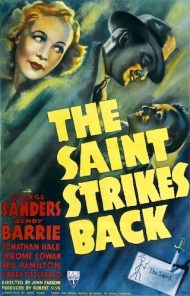
 The first film to star the Roger Moore-ish George Sanders as Simon Templar, aka the titular Saint, is also one of the RKO series’ better entries.
For starters, John Farrow’s direction is admirably slick for ’30s B-movie filler. One of the first shots of the film is a grand single take through a nightclub; not the longest shot ever, of course, but very effective, including a neat balloon-popping reveal of the movie’s villainess — a most striking introduction. There are a couple of directorial flourishes along these lines throughout the movie, including a bizarre hallucination sequence and a final tracking shot that loses the Saint in the fog.
If there’s one thing the Saint series is surprisingly good at it’s evoking a place. Each film seems to occupy a different setting (though there are a couple of trips to New York throughout the series) and, though I suppose fundamentally arbitrary, they do a solid job of reminding the viewer where they are. It’s no coincidence that almost half follow a The Saint in… title format. Here it’s The Saint in San Francisco, evoked with very atmospheric opening shots of the Golden Gate bridge — presumably stock footage, but its fogginess is carried on to the studio sets/backlot the film transfers to.
To be frank, I found the plot to be equally foggy in places. It’s adapted from one of Saint creator Leslie Charteris’ novels (She Was a Lady, aka Angels of Doom or The Saint Meets His Match) and perhaps it’s the legacy of squishing a book down into an hour of screentime. It’s not ludicrously unfollowable, just… foggy. The ending in particular seemed fudged, rushed, or just not as clear as it should be.
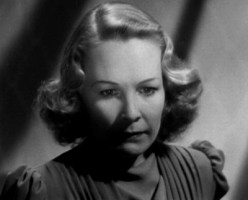 Nonetheless, it’s mostly a fun romp. Sanders’ portrayal of Templar is witty and enjoyably knowing, even more so than Louis Hayward in the previous film. He’s at once more laid-back and less self-certain; by which I mean you can sometimes see him working out his devilishly clever plans as he goes along, rather than floating through with invulnerability. This Saint is the kind of man who’ll bluff that a criminal’s house is surrounded by police so that he can escape, but then can’t resist phoning back to have a little gloat about how his bluff worked. Lighter, jokier — if Hayward was Sean Connery, Sanders is (as noted) Roger Moore. Though I’ve never seen the ’60s TV series, here I can see clearly how Moore was suited to the role.
Returning as Inspector Fernack, Jonathan Hale has a great double act with Sanders. Their relationship clearly grows as the series goes on, but it clicks from the off. He’s a great sidekick and foil, here treated to a neatly constructed subplot about his diet. It’s better than that sounds. Also topping the bill is Wendy Barrie, making the first of three appearances as three different characters. This is her best turn in the series, however, the part being the most interesting of her three roles as well as getting the most to do.
Initially I would have said I preferred in New York to Strikes Back, by a smidgen; but having completed Sanders’ run in the series before writing this review, I’ve further warmed to his portrayal. As I said at the start, this is certainly one of the high points of the run.

Read my thoughts on the four other films to star George Sanders as the Saint here and here.
* As with many of the Saint films, this has apparently not been passed by the BBFC since its release in 1939. Nonetheless, it’s available on DVD, rated PG. ^
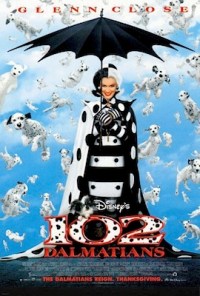 I imagine the live-action re-working of
 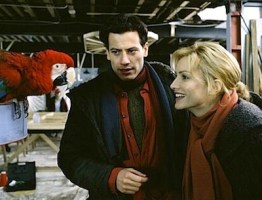 And aside from a race around the streets, ‘Paris’ is mostly a studio set anyway. Obviously they couldn’t keep Cruella in Nice Mode for the entire running time, but there’s call for a bit more originality in what happens after she goes bad.
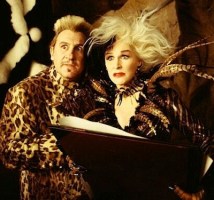 Plus there’s an awful lot of cute dogs. Always a bright side. And it’s a great answer for “name an Oscar-nominated film” trivia questions (it garnered one for, appropriately, costume design).
 Pixar have always attached original short films to their feature releases. As part of what seems to be their increasing franchisation, however, they’re not always wholly original now: Hawaiian Vacation was the short attached to
  Hawaiian Vacation doesn’t exactly allay these fears — its very existence is proof of that — but at least it’s an entertaining piece in its own right. It succeeds partly by not overreaching itself — this isn’t Toy Story 4 and it doesn’t try to be. It reminds us of the characters and gives them each a story beat, while remaining funny, entertaining and sweet, all in under six minutes. Cars 2 can’t manage that in 106.
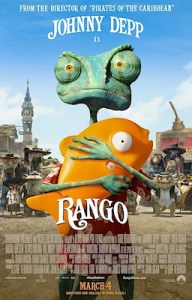 There seem to be an increasing number of live-action directors sticking their oar into animated films; and not just lending their ideas and name, as Tim Burton did with
 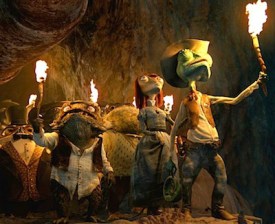 Indeed, perhaps the most striking thing about Rango is ILM’s hallmark, the extraordinary realism. Though some of the characters are rendered cartoonishly (just look at Rango’s face) and all are of course anthropomorphised, the textures and lighting are as true-to-life as any of their work in live-action movies. They consciously went for a photographic look, as if it had been shot with real cameras, including consultation with Oscar-winning cinematographer Roger Deakins, and it paid off because the whole thing looks incredible. I know I only just recommended it in the last paragraph, but the making-ofs are really great for an insight into why the film looks and feels so different to most current computer-animated films. The sequences of them recording performance reference are incredible — they essentially shot some scenes in full, with the entire cast, in costume, with full props, some sets, blocking, marks, camera angles, improvisation… (The only thing lacking on the Blu-ray is a
  Back to the film itself. I know it’s less interesting, and it is far too slow at the start, but when it eventually gets underway it becomes very entertaining. Somewhere in the middle there’s a five-minute wagon/bat chase that’s a properly exciting action sequence, excellently realised. It was so good I watched it again immediately afterwards. It’s got a clever use of Wagner too, as well as some regular Hans Zimmer action scoring. Zimmer’s score throughout is top quality, referencing Morricone and all the other staples of Westerns.
 The plot, however, is clearly borrowed from
  With its detailed references to other films and real-world visual aesthetic, Rango may be more likely to find appreciation among grown-ups than the children who are the typical target for English-language feature animation. Then again, there’s that immature humour I mentioned. A ‘family’ film indeed. Either way, it’s an entertaining addition to — and alternative from — American animation’s usual offerings.
 Pixar, oh exalted studio of wondrous excellence, who produce naught but critically-acclaimed and audience-beloved films that may as well just be given the Best Animated Feature Oscar without the need for fellow nominees, dropped the ball with
 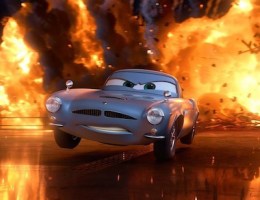 here we get an international spy movie — much more fun. The espionage stuff is clearly inspired by Bond (the primary secret service is British, for starters), and the opening eight minutes — an action sequence starring the film’s Michael Caine-voiced Bond analogy — is probably the best stuff in either Cars movie. Actors like Caine and Emily Mortimer lend the whole affair some much-needed class.
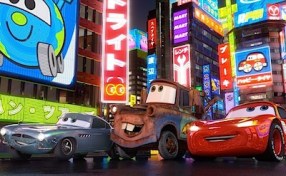 the back-and-forth battling, the last-minute surge, etc etc — so it’s not really any loss.
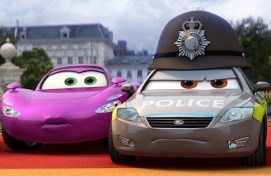 why is the police car wearing a giant hat?!
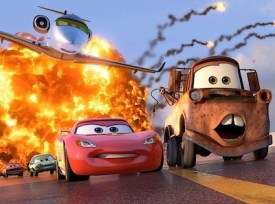 entertaining films, how can they also produce something so uninspired?
 #54b
#54b 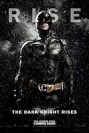 #57 Batman: Mask of the Phantasm (1993)
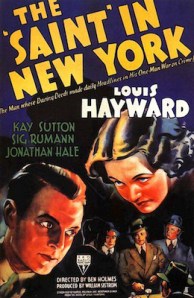 The Saint in New York is a B-movie in every sense of the term, but it’s certainly one of the fun kind.
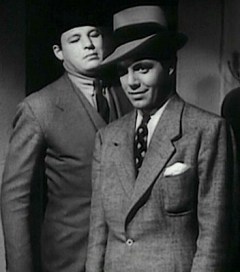 His habit of jumping into moving vehicles, much to the surprise of their drivers, is also fun. The other stand-out character is henchman Hymie, played by Paul Guilfoyle, who is enamoured of the Saint and constantly comments on his actions. Together they make the film a light, fun, amusing experience, with more memorable lines than a film of its stature deserves.
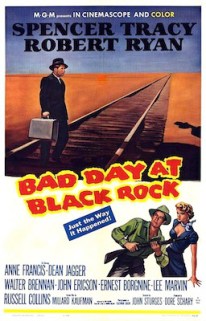 Bad Day at Black Rock comes with an air of the forgotten classic — or, at least, it did to me. I think that’s important to how I ultimately reacted to it. As is that wherever I first heard about it pitched it as a suspenseful mystery with a twist. I forget where that was now, but I remember consciously avoiding finding out the plot’s developments (more so than one naturally would anyway) before viewing.
 I missed the commentary. Indeed, in
  For a film so based in mystery and which has what I’d call a methodical pace (despite its short running time), there are surprisingly good action sequences to look out for: a car chase/battle along a thin path, a one-handed punch-up in a bar, and a climactic shoot-out that’s at its most tense once all the bullets have been fired. It’s not an action movie by any means, but these cinematic sequences stand out nonetheless.
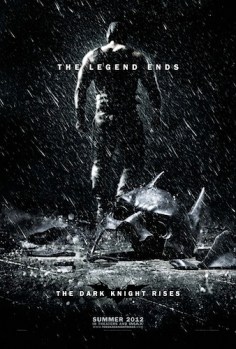 Everyone and their mother will be writing about The Dark Knight Rises over the next few days — I’m sure there’s already been an explosion in articles, blog posts and comments on both, not to mention various related terms trending on twitter almost constantly for most of the week already — so I figured I may as well add my voice to all the thousands shouting into the dark. But rather than a full review (which I’ll save for when things have quietened down a little, and perhaps there’s some kind of consensus or even just other reactions to respond too), here’s a couple of stray thoughts and paragraphs that immediately struck me.
 100Films.co.uk