Here we are — the final end of 2012. What better way to wrap up than to reflect on the good, the bad, and the other? And so there’s a top ten, a bottom five, and a bunch of stuff I missed. (This post is long; you might appreciate those links.)
“What’s the point,” you may ask, “of choosing a top ten from a wholly arbitrary list of 97 films?” And to that I say, “best not to think about it too much.”
As ever, all of these are selected from what I watched this year. The full list of eligible titles is here.
The Five Worst Films I Saw For the First Time in 2012
In alphabetical order…
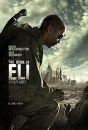 The Book of Eli
I gave four main-list films one star this year, and 14 two stars, yet a film I awarded three stars makes this list. Why? After a great beginning, Eli gradually descends into sanctimonious tosh; it becomes almost offensively bad. For that reason, I remember it with considerably less affection than its star rating would suggest, and certainly worse than those 14 others.
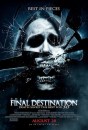 The Final Destination
I came to the Final Destination series late, but initially found them to be divertingly enjoyable teen horror movies. The third one went a bit off the rails (literally), but this fourth entry has no redeeming features. The definite-article title neatly indicated it was the last in the series, but then they went and made a fifth and so ruined that too.
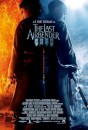 The Last Airbender
Some people have called M. Night Shyamalan’s adaptation of the Asian-tinged US cartoon one of the worst films ever made. I don’t necessarily disagree. Poorly made in every way but its special effects, the only joy in The Last Airbender comes from tittering at the double entendre every time the hero is described as “a powerful bender”.
 Legion
I don’t necessarily have anything against films with a religious theme, yet this is the second one on this year’s list. Legion doesn’t contain the objectionable moralising of The Book of Eli, though — it’s just a really badly made film. You might forgive bad dialogue and acting if the action sequences were well-done, but they’re not. Irredeemable.
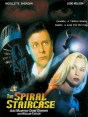 The Spiral Staircase
A needless modernised remake of the ’40s adaptation of Ethel Lina White’s novel Some Must Watch. This isn’t that bad judged in its own class (turn-of-the-millennium US cable TV movies made For Women), and it even has a couple of good bits, but by comparison to the fabulous earlier film, it’s contemptuous.
The Ten Best Films I Saw For the First Time in 2012
An uncomplicated low-budget British period action movie, but one that delivers on all the fronts it promises to. It may be too bloody and gory for some, but that adds a certain realism to the Seven Samurai-esque medieval story that isn’t unwelcome. Paul Giamatti stands out as a scenery-chewing villain par excellence, but a likeable cast all round help pull the film through some of its slower moments.
I couldn’t care less about Fashion — indeed, in many respects I despise that world as much as the next right-headed human being — but Bill Cunningham transcends that to be a social documentarian. A documentary about a documentarian may sound trite, but this simple portrait of a simple man is anything but. I imagine it won’t connect with everyone, but I loved it.
I love a good procedural thriller (look at Anatomy of a Murder, the only pre-millennium film to crack my 2010 top five), and this adaptation of a Michael Connelly doorstop is in broadly the same mould. Matthew McConaughey endears even as a smarmy small-time lawyer thrust into a big-league murder case, with (bit of a spoiler here) his own client certainly the villain. There’s been talk of a sequel, for which I have my fingers tightly crossed.
A big franchise is relaunched because a writer had a good idea for a story? Wonders never cease! And it pays dividends, because Rise isn’t your usual blockbuster: it’s an intelligent science-inspired drama that just happens to link up to a studio sci-fi/action series. Its pretty much Proper Science-Fiction, in fact. Even better, that doesn’t stop it from having a barnstorming climax.
I don’t think even TDKR’s staunchest defenders could claim in good faith that it was a perfect film (though some of the holes people harp on about aren’t holes at all and that bugs me). I think a lot of people wanted The Dark Knight: Part 2, but instead Nolan delivered something that was, despite the sheen of realism, much more comic-book-y. And you know what, I loved it. Caution after the non-stop unconvinced reaction of so many others leaves it low-ish in this list; when I get round to a pre-review re-watch I’ll see if I should’ve ranked it higher (or, indeed, lower).
A British spy thriller, yes, but about as different from Bond as you can get. A measured pace unveils an intricate plot (too intricate for some (mostly American) critics), it’s gorgeously shot, and Gary Oldman pulls off a mission many thought impossible by delivering a Smiley that can stand up to Alec Guinness’ classic performance. Superb. I really need to re-watch it though, which may have seen it place higher on this list.
Many Bat-fans would argue that the finest screen depiction of the Dark Knight is the ’90s animated series, and this is the theatrically-released spin-off — which many Bat-fans would argue is the finest big-screen depiction of said hero. Boasting an original new take on Batman’s backstory and origin, plus a fine cameo-sized turn from Mark Hamill’s arguably-definitive Joker, it’s definitely up there with the best Bat-films.
It took me a long time to get round to this 2003 Oscar nominee, for which I give myself a rap on the wrist because it’s excellent. Mass audiences also ignored it in droves, meaning we’re unlikely to get a sequel (despite there being well over a dozen further novels in the series). A shame. If, like me, you weren’t interested and haven’t bothered to see it, I encourage you to reconsider.
Spielberg’s World War One epic got lost last awards season under the weight of a silent French film and relative critical indifference. I thought it was a fine film, more family-friendly than its 12 certificate might suggest, but with a nonetheless realistic portrayal of a horrid period of history. Perhaps too melodramatic for some tastes, I loved it.
Is this really a surprise? I shouldn’t’ve thought so. I’m a big Bond fan and Skyfall is a big entry in the Bond canon, and I wrote a bloody big review of it too (lest you forgot). Whether it’s the best Bond film ever — or even the best Bond film to star Daniel Craig — is still open for debate, but the very fact it’s a debate to be had signals Skyfall as something very special.
Having got my 36-film long list down to just 14, I struggled with some parts of the final top 10. Just bubbling under (and maybe they would’ve got in on a different day) were The Hunger Games, The Scarlet Claw, With Great Power: The Stan Lee Story… and Avengers Assemble. I love the work of Joss Whedon (which I’ll talk more about in my review), but arriving on Blu-ray after years of hype and a rapturous reception in cinemas, I found the culmination of Marvel’s Phase One movies to be underwhelming. Though it may not be a five-star insta-classic (and, believe it or not, I’m far from alone in that view — indeed, Whedon himself agrees), it’s still a rollicking good time.
An honourable mention too for Harry Potter and the Deathly Hallows: Part 2, the final instalment in what has turned out to be quite an incredible series, in its own way. Following those characters and actors as they grew up over ten years and across eight films is a fairly unique achievement, and while the films aren’t always objectively great, they’re rarely less than engrossingly entertaining. I didn’t unconditionally adore the finale as much as (British, at least) critics and audiences seemed to, meaning it’s pipped to a place on my top 10, but it was a fitting climax to what turned out to be an epic saga.
I also can’t end this without mentioning the nine main-list films that earned themselves 5-star ratings this year. Almost all of them (seven, to be precise) made it into the top ten: Batman: Mask of the Phantasm, Bill Cunningham New York, The Dark Knight Rises, Master and Commander: The Far Side of the World, Skyfall, Tinker Tailor Soldier Spy, and War Horse. The other two were The Lost Weekend and With Great Power: The Stan Lee Story. Plus, among my other reviews, there were also full marks for Batman Begins, Batman Returns, The Dark Knight (I’ve seen it three times, reviewed it three times, and given it five stars three times!), From Russia With Love, Goldfinger, and the lovely Christmas-telly short Room on the Broom.
Additional thanks this year to the ’30s/’40s series of Saint and Falcon films, which between them accounted for 14 films. It should’ve been more, but my regular viewing of them kind of tailed off. I’ll aim to complete the Falcon films this year… but as I’ve been working my way through the Rathbone Sherlock Holmes flicks almost since this blog began, we’ll see how that pans out.
In case you missed it at the start, this post isn’t about the films of 2012, only my 2012, and as always there were a large number of notable releases this year that I’ve yet to see. As is traditional, then, here’s an alphabetical list of 50 films from 2012 that I’ve not seen. Normally I slavishly stick to those listed as 2012 on IMDb, but this year there are several where their year listing is dubious, so I’ve (partially) thrown that notion out the window. Maybe next year I’ll go whole hog and just go by UK release dates. But that might be a bit radical.
Debates about precise years-of-production aside, this list is always a mix between a year’s biggest films and ones I think I might actually get round to seeing, considering that I tick it off going forward (see the last post’s statistics for how I’ve got on down the years). This year is particularly awkward at the top end of this balance, with a ton of kid-aimed animated films among the highest-grossing films both in the US and worldwide. I love a Pixar, Dreamworks, or whoever crossover as much as the next man, but Ice Age 4? Madagascar 3? The Lorax, Hotel Transylvania, ParaNorman, Rise of the Guardians? All were financially very successful, but how many am I likely to care about enough to get round to – especially as I’ve seen not even seen Ice Age 2, never mind Ice Age 3. I usually try to include about the top 20 highest grossing films, but I’ve dumped that this year to exclude some of those movies I don’t imagine I’ll ever see. Though, as it’s the fourth highest-grossing film of the year worldwide, I couldn’t really ignore Ice Age 4.
As ever, the rest of the list is made up of Things People Have Talked About – not necessarily big earners, but Oscar contenders and those smaller, usually foreign, films the cinephile press and sites seem to have been discussing. Bit more of the latter this year, I think, just because I’ve been paying a little more attention.
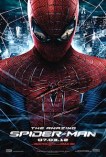 21 Jump Street
The Amazing Spider-Man
Amour
Anna Karenina
Argo
Battleship
Berberian Sound Studio
 The Best Exotic Marigold Hotel
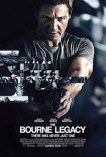
The Bourne Legacy
Brave
The Cabin in the Woods
Chronicle
Cloud Atlas
Dark Shadows
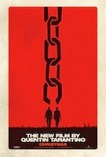 Django Unchained
Dredd
End of Watch
The Expendables 2
Flight
Frankenweenie
The Grey
 Hitchcock
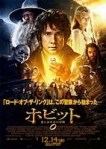
The Hobbit: An Unexpected Journey
Holy Motors
Ice Age: Continental Drift
Jack Reacher
John Carter
Life of Pi
 Lincoln
Looper
Magic Mike
The Master
Men in Black 3
Les Misérables
Moonrise Kingdom
 The Pirates! in an Adventure with Scientists
Rise of the Guardians
Rust and Bone
Seven Psychopaths
Silver Linings Playbook
Snow White and the Huntsman
Taken 2
 Ted
Ted
Total Recall
The Twilight Saga: Breaking Dawn, Part 2
Underworld: Awakening
The Woman in Black
Wrath of the Titans
Wreck-It Ralph
Zero Dark Thirty
Congratulations if you’ve made it this far, especially if you’ve read through all the end-of-year posts I’ve produced this year. I do waffle on, don’t I?
But that’s it now! I’m done! Well, apart from the whopping pile of unposted reviews. They’re going to require some re-viewing before reviewing, I think.
And it’s also time to get stuck into 2013. Maybe this year I’ll reach 100 again; indeed, based on form I should reach 120-something. Always good to set oneself up for failure, eh…

 The two-part animated adaptation of Frank Miller’s comic, regularly voted among the top three stories ever told in the medium, concludes here. If you’ve not seen
 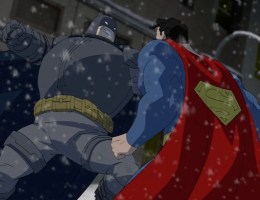 Nonetheless, a pair of big battles form the cruxes around which the story works: Batman vs the Joker, and Batman vs Superman. I won’t spoil the outcomes for those who’ve not read the book, but both are excellently realised on screen. Action can be tricky in comics — you’re stuck with a series of still images to convey fast-paced, often intricate movement. I also generally have the impression that action sequences are not 2D animation’s forte — too many frames need to be drawn, too many different angles to make it quick and exciting enough. The Dark Knight Returns is one of the exceptions, however, and the two big sequences in Part II — as well as a couple of smaller ones — outclass anything in Part I, which was good in the first place. I’d go so far as to say the Superman fight improves on the novel’s version, at least in a visceral sense — Miller delivers Batman’s internal monologue and a certain pleasing disregard of Supes, while Oliva wisely skips any kind of voice over and delivers the entire duel blow for blow. It’s a fantastic climax.
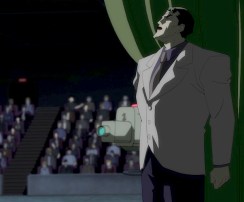 The story may provide some déjà vu for those only acquainted with live-action Batman, because Christopher Nolan borrowed liberally from Miller’s TDKR for his TDKR,
  There were many sceptics when DC first announced they were going to tackle such a sacred Bat-story, and not all were convinced by Part I. I don’t imagine Part II will change their minds, but for those of us who did enjoy the first animated interpretation of Miller’s seminal tale, this is even better. In fact, even without its first half, I’d say it joins the ranks of my very favourite Bat-films.
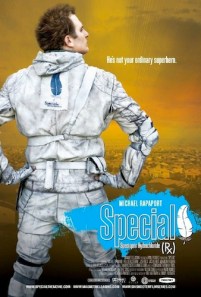 A lot of praise was slung
 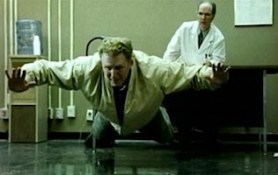 Those after a more genre-aware “real world superhero” movie would do better to stick with Kick-Ass or Super, but those who might embrace something a little different — especially something with an indie sensibility — would do well to take a look. Indeed, being a comic fan is certainly not a prerequisite for enjoyment here.
 From the makers of the successful Christmas TV shorts
 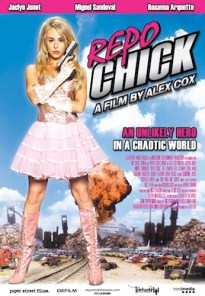 Alex Cox’s belated non-sequel (despite the title, there are apparently no links besides some cast members) to cult favourite (and
  True, the other characters are mostly dim and unlikeable, but is that a problem? We don’t need a film full of characters we like (otherwise we’d never have villains) — do we need there to be any? Or is the problem not that we don’t like them, but that their dimwittedness makes them too-easy targets for humour? I suppose it’s easier to just hate the film than grapple with such questions.
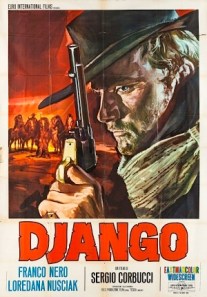 The ’60s were a pretty exciting time for cinema. In France, the Nouvelle Vague were tearing up the rulebook and pushing forward their own techniques; in Britain, the James Bond series was ditching kitchen sink drama in favour of reinventing the action movie, turning itself into a global phenomenon in the process; and in Italy (and Spain) they were pulling a similar trick on that most American of genres, the Western.
 Much of the film plays as an action movie. There’s a lot of atmospheric ponderousness at the start, but once things kick off they rarely let up. In just over 90 minutes the film rattles through a damsel-in-distress rescue; a blink-and-you’ll-miss-it shoot-out; a 40-on-1 massacre; a raid on a fort; a barroom brawl (one of the stand-outs, that — anyone who thinks handheld ShakeyCam fights are a modern invention should take a look); a tense, silent escape; a brutal punishment (or two); a valley ambush; and a graveyard stand-off. I think that’s all, but I may have missed some. It’s practically a definition of bang for your buck, which I’m sure goes a long way to explaining its popularity.
 but it’s like watching something on a not-quite-correctly-tuned analogue TV; like you’ve found the channel, but you’re one or two points off the optimum frequency. Or, to put it another way, it’s really snowy. As I said, I’m no expert in BD quality, but this looks like it needs a sympathetic dose of DNR. No one but fools want a
  Moonfleet is probably what you’d call a curio. It’s a colour CinemaScope Hollywood adventure movie from a director best known for epic German silents or dark film noirs; it’s not been passed by the BBFC since its original release in the ’50s, meaning it’s never been released here on DVD or (presumably) even VHS; I believe it’s also unavailable in the US; yet despite this dearth of attention in both the country that made it and the country in which it’s set, a
 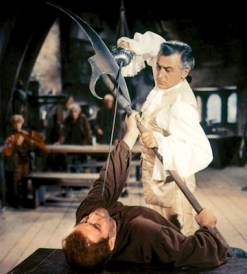 fights and chases of various kinds, a dramatic shoot-out on a beach, midnight escapes, and so on.
 Unveiled at San Diego ComicCon and then released
  The one glaring flaw (unless you hate realistic CGI-aided bloody violence, in which case there’s that too) is its use of music from Hans Zimmer’s
  Samuel L. Jackson and Tommy Lee Jones star in this military courtroom thriller from the director of
  That’s not all that’s bungled. There’s numerous instances of awkward editing by Augie Hess; a screenplay from Stephen Gaghan that clearly wants to be










 100Films.co.uk