
Steven Soderbergh | 89 mins | TV | 2.35:1 | USA & Ireland / English | 15 / R
 Like ponderous arthouse fare, but also action-thrillers? Disappointed that these two passions must always be sated independently? Well recent retiree (we’ll see how long that lasts) Steven Soderbergh has come to your rescue.
Haywire gradually reveals itself to be about Mallory Kane, a field agent for a private company contracted by the US government to do… things. Things that presumably need deniability. After a mission goes oddly, her next job reveals a surprising connection, and suddenly Kane finds herself on the run from a lot of men who want to kill her.
It’s difficult to know exactly what kind of film Soderbergh thought he was making here — it really does fall between the two stools of arty-indie and action-thriller. His directorial style hews towards the former, with his choice of shots, cutting speed, the roughness of the cinematography, the intricacy and opaqueness of the story… It requires you to keep up and pay attention; to piece together plot points retrospectively; to decide what to process and what to ignore (a lengthy conversation about budget and payment seems to fall by the wayside in irrelevance).
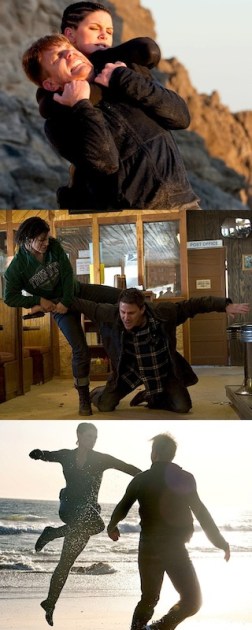 But then the lead isn’t even an actress, but former MMA fighter Gina Carano, presumably cast because she can fight rather than for her acting ability. That’s not a criticism, however — she may not be on a footing to contest an Oscar any time soon, but Carano is more than fine to be an action movie lead. Her undoubted combat skills, meanwhile, lend the fights a bone-crunching realism that is likely to be welcomed by many. They’re very much a showcase for her ability too, because any sense of an equally-matched duel is hampered by pitting her against men who are actually just actors.
That supporting cast (all male, bar a couple of extras) again straddles the line between blockbuster and indie: Antonio Banderas, Michael Douglas, Michael Fassbender, Ewan McGregor, Bill Paxton, Channing Tatum. These are largely actors who know what they’re doing on both sides of the fence, which I imagine works to the story’s benefit, if not to the action sequences. I won’t tell you which of those men Carano comes to blows with (three out of the six), but at least one of them has to rely on a bit of choppy editing and silhouettes to sell the fact it’s even close to a plausible brawl.
I expect there’s an interesting feminist reading to be had out of the film. Soderbergh has cast someone who can genuinely handle herself against a variety of men who, at best, can only do so a bit. She runs rings around them, and sundry nameless police officers too; and, as noted, she’s the only female in the main cast. I’ll leave such analysis to more dedicated observers than I, but I expect Soderbergh had some commentary in mind.
Despite my assertion that this might appeal to two groups one might think are fundamentally opposed, it’s more likely Haywire will fail to please either. It’s too engrossed in a fiddly espionage plot to please indie fans looking for deep characterisation or worldly insight, but too fiddly and artily realised to please the broader sweep of thriller fans.  That said, the latter withstood Paul Greengrass’ shakey-cam and jumpy cutting on the Bourne sequels, and this isn’t that extreme; indeed, Soderbergh’s use of wide angles and long takes for the fights is most pleasing.
Personally, I thought it was an interesting, leftfield, worthwhile addition to the genre. That genre being the action-thriller, which is where, in spite of everything, the film really resides.

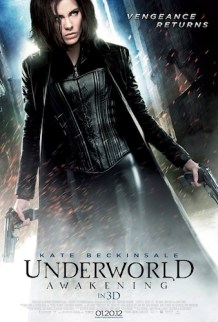 Just when you think the Underworld series is dead, it suddenly lurches back to life with a new instalment. Fitting for a series all about vampires & that, I suppose.
 By taking such a bold move with the plot, meanwhile, the story pushes the series’ mythology in new and relatively interesting ways. It’s becoming a bit dense and fan-only (unless you let it wash over you and just enjoy the punching), but at least they’re not regurgitating the same old stuff. It manages a few twists along the way too, which is always nice. The plot seems to have been half worked around Speedman’s non-involvement, leading me to wonder why — he’s not too busy, surely? Perhaps he’d just had enough? But no, apparently it was genuinely just written this way. I guess he couldn’t be bothered to turn up for some cameo shots, because the stand-in is really obvious.
 means the next one will probably turn up out of the blue with little hype, much as Awakening did last year. Plus, though this is the most expensive film to date (double the budget of the preceding one!), it’s also the most financially successful: $160.1 million worldwide, beating number two’s $111.3 million. Assuming Beckinsale still feels up for it, I imagine 2015 will bring us a continuation — and, hopefully, a conclusion.
 Also worthy of commendation: new-style ‘evolved’ Lycans; a small role for Charles Dance (always worth seeing); the evocative near-future setting; good quality action sequences; some nice steel-blue cinematography/grading. Some of it was shot at 120fps on brand-new pre-alpha never-used RED cameras — take that Peter Jackson, eh. Plus it’s only a little over 1 hour and 18 minutes long without credits. Some would bemoan such brevity, but it has its positives.

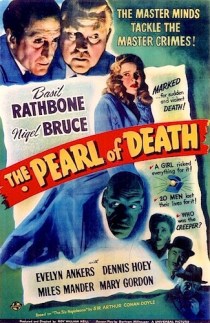 The Pearl of Death is one of the better-regarded films of the Basil Rathbone Sherlock Holmes canon, but somehow it didn’t quite click for me. That doesn’t meant there isn’t a lot to enjoy, however.
 Elsewhere, Nigel Bruce gets to indulge in a slapsticky scene that, as ever, people who dislike this interpretation of Watson would be happy to do without. Also worth noting is the female lead, British actress Evelyn Ankers: she was a regular fixture of Universal’s horror features, terrorised in no less than
 Neill somehow managed to pick one of the least dramatic. Neither of these reveal fudges are ruinous, of course, and are outweighed by the handling of sequences like Holmes setting off the museum’s alarm, the ensuing robbery, the villains stalking round a potential victim’s house, and so on. Still, I was surprised to find them so wanting.
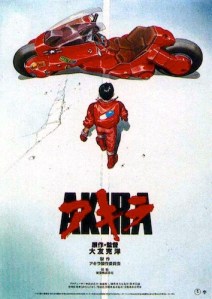 For many Westerners of a certain generation, Akira was their first (conscious) exposure to anime. Not so me: a step or two down,
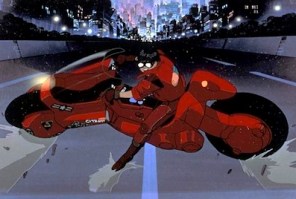 The visuals remain something to be savoured; they’re probably the film’s strongest point, in my opinion. Akira was an expensive production and it pays off on screen. It’s not just the bike chases that I appreciated either, while an extra decade of experience made the ending a bit less freakish! The other strong point is the audio. The BD’s booklet goes on about “hypersonic” sound. I’ve no idea if that worked on my system, but it sounded fantastic regardless.


 Winner of the highest number of Oscars for Best Foreign Language Film (five), the Italian writer-director is “one of the most influential filmmakers of the 20th century”. He’s the only member of TSPDT’s Top 250’s top 10 (at #4) that I’ve not seen anything by. Significant gaps in my viewing include

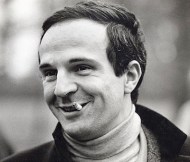 One of the founders of the French Nouvelle Vague (alongside the likes of Jean-Luc Godard, who I have seen films by), Truffaut is still probably best known for his first film,
 Though only at #52 on TSPDT’s Top 250 (there are 11 above him I’ve not mentioned), there’s no denying the notoriety of Herzog, the man who once got shot while being interviewed by Mark Kermode, amongst other bizarre anecdotes. Key works include
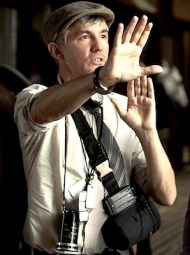 The theatrically-inclined Australian scores just 3 on TSPDT’s ranking, their lowest awarded mark. Only five others suffer this ignominy, and the only one I’ve heard of is Ed Wood. According to TSPDT, none of Luhrmann’s films are Highly Recommended, Recommended, or even Worth a Look. The best he can hope for is
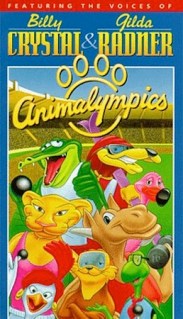 Originally commissioned as a pair of specials for US TV, Animalympics was dropped by the network when the US pulled out of the Moscow Olympics, then repurposed by its makers as a feature film. You might be able to guess the plot from the title: various animals compete in an Animal Olympics. It’s a series of sketches, essentially, although arranged to provide some narratives throughout.
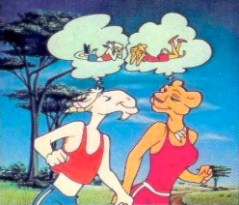 As per anything which is made up of sketches, some bits are funnier than others; and, as American animation, it is primarily aimed at kids, though I thought it was enjoyable enough for grown-ups too. Gouldman’s score is catchy in places, but nothing to rival The Things We Do For Love or Dreadlock Holiday or… I could go on for a few, actually. I’m just going to go listen to some 10cc…
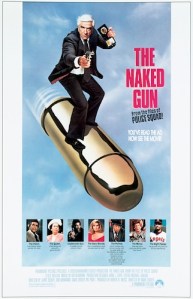 Classic spoof from the makers of
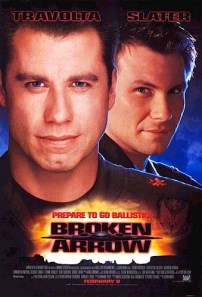 US Air Force pilot Jon Travolta crashes a plane, steals a nuke, and former friend and colleague Christian Slater must stop his dastardly plan in this ever so ’90s actioner.
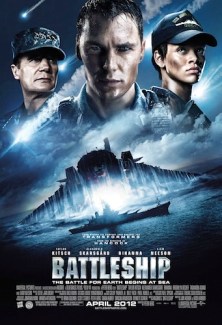 Battleship never sounded like a good idea. An adaptation of a board game that in no plausible way resembles real life? At least
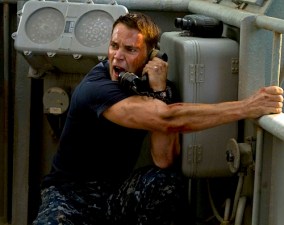 hobbling up a mountain on prosthetics to realise he’s still worth something as he saves the day. America, fuck yeah! And when the main battleship is ruined, our plucky heroes have no choice but to co-opt the museum piece (literally) WWII ship; and because most of their crew is dead, the museum guides — all of them septuagenarian WWII vets — have to man their ship once again. To defeat those invading scum, just like before!


