
I watched Gravity on the 1st of March. I didn’t watch another film ’til the 18th. Let’s see how this pans out…
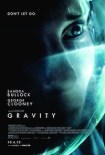 #13 Gravity (2013)
#14 World War Z (Extended Action Cut) (2013)
#15 The Hunger Games: Catching Fire (2013)
#16 Chicken Little (2005)
#16a The Hobbit: An Unexpected Journey (Extended Edition) (2012/2013)
#17 The Hobbit: The Desolation of Smaug (2013)
 #18 Space Battleship Yamato (2010)
#19 Union Station (1950)
#20 Mad Max (1979)
#21 Monsters vs Aliens (2009)
#22 Veronica Mars (2014)
#23 Legends of the Knight (2013)
#24 The Searchers (1956)
Surprise!
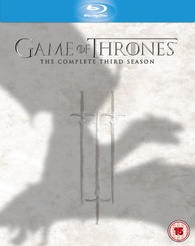
March was set to be a bit of a challenge: I accumulated a deficit of four films across January and February, meaning I needed to be viewing at 150% normal necessity to get back on target; and I wasn’t going to sacrifice my annual Game of Thrones catch-up week just to accommodate some paltry movies, no sir.
So I feel a little pleased with myself that I managed to not only watch this month’s allocation of movies (for the first time since last October, in fact), but also that extra 50%. And all of Game of Thrones season three, of course.
Now, you may note that it’s the end of March — a quarter of the way through the year — and I’m not yet at 25 films. How can I be on target? Well, technically — technically — I don’t need to reach #25 until the start of April (thanks to February’s shortness, a day-by-day breakdown puts the quarter-way film on April 1st), so by making #24 at the end of March I am back on target. Technically.
That said, I’m more than 10 films behind where I’ve been for the past few years (2010, 2011 and 2013 all found me at #38 now, coincidentally), so that’s a shame. This year is shaping up to be a funny one though, so goodness knows what April will bring.
What Do You Mean You Haven’t Seen…?
Squeezed in at the end there is The Searchers, this month’s WDYMYHS film, meaning I’m still on track with that too. Maybe it’ll all work out this year? That’ll be the day…
5 Cancelled TV Series That Continued on the Big Screen
Many TV shows have been remade for the big screen, often old favourites revived with all-new casts and a bigger scope. In fact, a surprising number have made the leap to the cinema with the original cast intact — all those infamous “the regular show, but in Spain” sitcom movies from the ’70s, but also successful shows where someone saw moneymaking potential just by doing the same thing but bigger.
Rarer, though, are TV series that were dropped but then, due to the dogged determination of fans and/or creators, found themselves with a large-scale reprieve. The following aren’t just any movies based on TV shows (like I said, there are loads of those), but specifically ones that were continued on the big screen — not rebooted, restarted, recast, or in any other way remade, but continued.
- Veronica Mars
 The recently-released inspiration for this list. An underrated series from the late ’00s, its creator and stars have tried to get a movie made ever since it was ditched. With traditional options failing, they famously turned to Kickstarter — and fans coughed up almost $6 million. Relatively strong limited-release box office and VOD chart positions suggest their wish for a sequel may be granted. Unlike:
 - Firefly
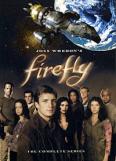 The modern marker of true TV success — DVD sales (they also led to a return for series like Family Guy) — saw Joss Whedon’s short-lived, beloved space Western revived for a lap of honour. Sadly it struggled to find a big enough audience there either, dashing hopes of a sequel. But at least we got one movie. One big damn movie. One day, I’ll tell you all about how I think it’s better than Star Wars…
 - Star Trek
 Sci-fi fandoms lend themselves to this kind of list. Now that it’s a massive multimedia franchise, spanning half a dozen long-running TV series and twice as many movies, it’s easy to forget the original Star Trek was cancelled after just three years. The post-Star Wars movie world saw it rescued for the big screen. A bit like what J.J. Abrams is doing now, one might argue.
 - Police Squad!
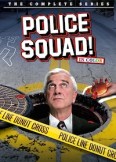 The what now, you might ask? Police Squad lasted just six episodes in the early ’80s, but then they spun it off onto the big screen as The Naked Gun (hence that first film’s ludicrous subtitle) — which was obviously a success, because it spawned two sequels and people still go on about it. Apparently “many gags from the show were recycled for all three films,” which I guess is fair enough if no one watched your show.
 - Twin Peaks
 Twin Peaks was a cultural phenomenon, and is widely attributed with revolutionising US network television thanks to its filmic style and long-running storylines. Too long-running, as it turned out, when audiences abandoned it after things got weird (the fact it was masterminded by David Lynch should’ve been a clue) and the driving mystery was kinda-solved. A prequel movie did little to clarify things. (Apparently. I’ve still only seen season one.)
But then there’s…
- The X Files
 Sure, the first X Files movie came mid-series, but the second was a considerable time after the show left our screens. And after the TV series ended on a cliffhanger, what better than to return to the big screen so you can tell… a completely standalone and unrelated story with a TV-friendly small scale. Oops. Hopes for a third movie that would deal with the hanging plot threads were basically killed right there.
Was it worth these TV shows being continued, or should they have left well enough alone? What other demised shows deserve the same treatment?
Next month on 100 Films in a Year…
#25.
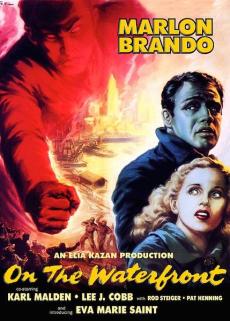 So much more than one famous scene, On the Waterfront is a movie about a magic jacket, which causes anyone who owns it to stand up for what’s morally right even in the face of oppression, but also to suffer badly when they do.
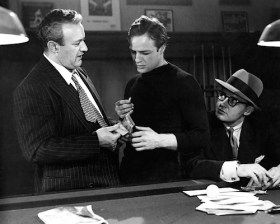 The only potential downside to this comes if you dig behind the scenes. Kazan was one of those who testified before the House Committee on Un-American Activities during its 1940s and ’50s witchhunt for Communists in Hollywood, naming eight men who were later blacklisted. If you consider the film to be Kazan’s answer to critics of his actions (as it “widely” is, according to Wikipedia), then presumably Brando is meant to be Kazan, calling out those who are doing ill to good hardworking Americans. But many a great film has been made with poor motive — just because Kazan thinks what Brando’s character does and what he did are the same thing doesn’t mean we have to. Even then, the issue of Kazan’s testimony is not so straightforward: a former Communist himself, he faced the end of his career if he didn’t testify, and the names he gave up were already known to the committee. The controversy dogged him for the rest of his career, though: when he received an honorary Oscar in 1999, several notable audience members refused to applaud.
 While subtext is undoubtedly a meaningful thing, and using one situation to comment on another is a tried and true way of presenting an argument or criticism, I’m not a proponent of offhandedly dismissing work(s) just because we don’t agree with the actions or beliefs of the person who made it. On the Waterfront is a powerful film, exemplarily made by skilled craftsmen. Whatever Kazan was trying to atone for with its message about standing up to bullies in defence of what’s right, the sentiment is true. And you don’t need a magic coat to do it either.
 Like a
  The plot is essentially “
 with both this and last year’s sequel proving huge hits, and a
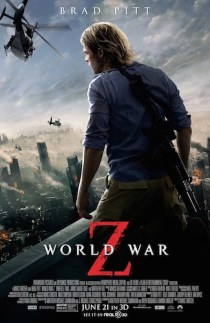 In the weeks leading up to its theatrical release, it was already known that World War Z was going to be an almighty flop. An unscrupulous movie studio had taken a cult novel and thrown away everything but the title, alienating its existing fanbase. They’d spent a fortune making a movie in a traditionally R-rated genre that, if released at R, could never make its money back, and if released at PG-13 would never attract an audience. Then they reshot the entire third act, pushing the budget through the roof and ensuring the resultant film would get critically mauled. A fanbase snubbed, an impossibly huge budget, a genre/rating disconnect, and unavoidably poor reviews to come — World War Z was going to flop, and it was going to flop hard.
 That, at least, is something different. The first half-hour races through stuff we’ve seen time and again: zombie attacks, humans turning on humans as they loot supermarkets, etc. Here the zombies are of the
  It’s a Wales populated by a Londoner, a Scotsman and a Spaniard, but still. I say “more tense” because this is far from the most nail-biting zombie film you could see. The finale is a nice change of pace, and does work as a climax in spite of the bombast that precedes it, but these are zombies as teen-friendly action movie menace, not adult scare-inducers, so don’t except to feel much fear or surprise.
 but I don’t think it was the filmmakers’ aim to make us feel the characters’ plight, but instead to show the scope of a worldwide disaster. It does that pretty well, even if the occasionally-CGI zombies prove to be an
 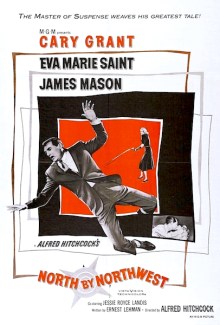 Alfred Hitchcock is famous for a good many movies — I wager most people would jump to
  Grant is as wonderful as ever, a perfect ‘everyman’ to guide us through the crazy turns of events, but also finding the appropriate level of humorous edge where it exists. Eva Marie Saint is a textbook ‘Hitchcock Blonde’, attractive but duplicitous — women, eh? James Mason makes for an excellent English-accented villain — today it may be a terrible cliché to use Brits as villains in Hollywood movies, but we’re so damn good at it. That said, Martin Landau makes for a deliciously creepy henchman, so there’s no monopoly. There’s also Leo G. Carroll, who to me will always be best known from
 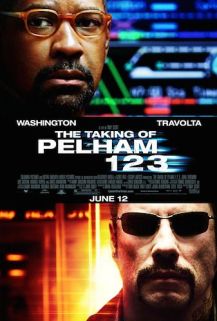 Based on a novel by Morton Freedgood (writing as John Godey), previously adapted into
 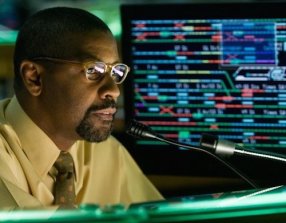 None of that here, where the captives are either even more unnoticeable, or heroic off-duty military types. So far so standard.
 Applied here to such a meat-and-potatoes tale, it feels like they’re trying to jazz it up because it can’t sustain itself otherwise.

 Braveheart
 Up
Up Amélie
 Rear Window
 12 Angry Men
 Blue Velvet and Requiem for a Dream
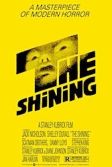 Not only was Kubrick’s acclaimed horror movie not nominated for any Oscars, it found itself in contention for two Razzies. Shelley Duvall was one of the ten Worst Actresses (Brooke Shields in The Blue Lagoon was deemed worst of all), while the sainted Stanley Kubrick was declared one of the year’s Worst Directors (he ‘lost’ to Robert Greenwald for Xanadu). And there you were thinking everyone always loved it.
 The writing and directing team from
  As for the veracity of the facts, I have no idea. Nothing seems implausible. And when condensing eight years of a manhunt into around two hours of screen time, of course some details will be lost, or truncated, or slightly modified to support the flow. I think those who allege the film is poppycock are accusing it of more than minor tweaks, but nonetheless, that’s inevitably part of the process. What’s perhaps most interesting is it hasn’t whitewashed the facts to make a film that feels like A Movie — this isn’t a relentless thriller-shaped eight-year chase, but a more methodical, occasionally messy, real-life-like quest for information.
 This carries through to the final half-hour (or so), which is a near-real-time rendition of the Navy SEAL mission to invade bin Laden’s compound in Pakistan. The unit assigned to the task turn up and get on with it — like the rest of the characters, they are no more than sketches. I read a review that asserted this is where the film’s focus should have been — on who these men were, what their home lives were like, on their training for the mission, and what effect it had on them after. All of which are valid points for a film, but that’s not what Zero Dark Thirty is trying to be.
 The one other criticism I do agree with is that we don’t see enough of the SEALs’ preparation. They built a full-scale replica of the compound and trained on it — was that not worth putting on screen? I know this is the story of Maya and her investigation, not the SEALs and their assault, but I think a bit of time could have been spent on that fascinating aspect of the raid. On the bright side, there’s a sequence where our characters collect their still-in-development super-top-secret stealth helicopters from Area 51. Yes, really. I guess that must be true, because without the reality-claim of the previous two hours it would come across as
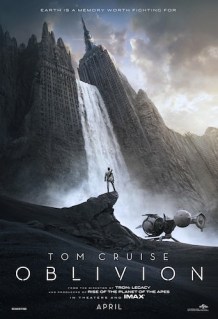 As Oblivion informs us in a hefty chunk of voiceover exposition at the start, the year is 2077, several decades on from a war with aliens that we won but left the Earth in ruins. Humanity fled to a colony on Titan, but the last party to depart remain in orbit aboard a giant space station. Waiting to join them are Tom Cruise and Andrea Riseborough, the last humans on Earth, serving the final few weeks of their mission to watch over the drones that guard giant water-collecting machines, sucking up the oceans for the benefit of the new colony.
 Also, as with many a tale desperate to surprise its audience thus, there are holes in the story and its logic (for a good summary of some of the major sticking points, check out
  I like a good action sequence, and some of the ones Kosinski presents have their moments, but I also found I could have done without most of them. To a degree they seemed to have been slotted in so it could look like an Action Movie in the trailers, the aim (as ever) being to pull in the punters, thereby justifying the budget needed to create such a slick SF world.
 With the aforementioned plot issues, not to mention an ending that some will find too twee (I saw the broad strokes of the epilogue coming from quite a way out, so can’t say I was surprised), Oblivion is not quite all it could have been. But it gets considerably closer than I expected — it’s undoubtedly an A for effort — and that, bolstered by faultless technical aspects, makes for an all-round enjoyable experience.
 100Films.co.uk