
Neill Blomkamp | 105 mins | streaming (HD) | 2.35:1 | USA / English, Spanish, French & Afrikaans | 15 / R
 The year is 2154 (the same year as Avatar, apparently. No idea if that’s meant to signify anything). The wealthy have left Earth to live in a giant space station of luxury called Elysium, rendering Earth (or, at least, Los Angeles) one gigantic ethnic slum. It’s in the latter we meet Max (Matt Damon), an ex-con who winds up in a factory accident that leaves him with just five days to live — unless he can get to Elysium, where their Magical Medical Machines could heal him in minutes. Unfortunately he doesn’t have the cash to buy transport from his criminal connections; and even if he did, the station’s over-zealous security chief (Jodie Foster) has a habit of blowing up approaching illegal immigrants. Fortunately, there may be a more revolutionary option…
That said, this isn’t a film about a principled revolution, something it seems a few viewers have unfairly judged it for because that’s what they expected or wanted. It is an issue-driven film (to an extent), but rather than present a mass revolt motivated by the desire to Change Things, it follows the effects brought about when people — even one man — are pushed to extremes just to survive. Whether the world this occurs in is a wholly plausible SF future is debatable, but I’m not sure that’s the point. Elysium is a parable; one related to current hot-button topics (in the US especially) like immigration and access to healthcare for the poor. I’m sure some would therefore characterise it as Left Wing, for good or ill, but I think its underlying message is more fundamental than that: it’s just humanitarian.
 Unfortunately, it seems writer-director Neill Blomkamp (of the acclaimed District 9) got distracted by his Point and slipped up in other areas. There are various bits and pieces of the plot that don’t quite hang together — so many quibbles, in fact, that I’m not even going to attempt to go into them. Some are hand-wavable under the “it’s a parable” excuse, others just seem sloppy; how much they impact your enjoyment will vary.
Characters get short shrift too. Every one is more sketched than drawn, which is problematic for the leads: Damon is left with little to do other than fight things and try to inject pathos in to what scraps of personality are there. It’s the same for sort-of love interest Alice Braga, who alternates between looking concerned and looking caring. An early tease of a romantic subplot all but evaporates: Damon persuades her to meet him for coffee at eight, but then he doesn’t seem to turn up and neither of them mention it again. You what?
Supporting characters are commonly less detailed anyhow, so at least the remaining cast are not so poorly served. Sharlto Copley is in a deliciously scowling-panto-villain mode as the primary physical antagonist, almost seeming to be from a different movie because he’s having such fun. Diego Luna and, in particular, Wagner Moura offer able support on the side of our hero, even if it is sometimes a bit “white person with person-of-colour sidekicks”. Goodness only knows what Jodie Foster is doing, though.  It sounds and looks like she’s struggling with a bizarre accent, while always being American. A similar problem seems to afflict William Fichtner to a lesser extent, so perhaps it’s some incomprehensible deliberate decision to differentiate the wealthy from the normal folk? I’ve read one report that Foster’s entire performance had to be dubbed, which might be a better explanation.
Ultimately, there’s little that can undermine its social point (even if the solution here is perhaps not as splendiferous as it first appears), but if you’ve decided to not be cognisant of that in favour of The Plot, they might grate more. Conversely, if you want to watch people in cool future spaceships wearing cool future armour shoot at each other with cool future guns, not much is going to trouble you. There’s a fair degree of that, because Blomkamp has (wisely?) slipped in his moral points under the aegis of an action movie. In that regard it’s fine — there’s nothing exceptionally memorable, and there’s some borderline-distracting hoop-jumping to keep threats both coming and suitably dangerous, but it’s efficient enough.
 There’s also something viscerally pleasurable about seeing a decently-budgeted R-rated effects movie these days. You’d think that classification would keep the budget down, but it reportedly cost over $100 million — and it looks it, with epic must-be-CGI situations that are faultlessly rendered. I suppose when the biggest PG-13 blockbusters are seeing their costs spiral towards triple that, a budget that only nudges into nine figures doesn’t look so bad. Hopefully that’s good news for those of us who would like to see more grown-up (whether that be intellectually or violently) effects-requiring movies.
In fact, the film’s strongest element all-round is almost certainly its production design. Some of it is of the “nothing new” variety (the robot police, the ‘ship designs, the see-through future computers — all good work, but broadly familiar), but then you have pieces like the mission control-style command room of Elysium’s security services: large, multi-level, glossily black, but with vine-like plants crawling up the surfaces. It’s a bit different; it works. Everything is crafted or augmented with that flawless CG work, providing a drip-feed of enjoyable or intriguing sights.
 Blomkamp is a writer-director clearly committed to doing bold work in a film genre that is increasingly about spectacle over story, action over allegory, popcorn-selling over point. Elysium may not be the fully-realised vision he was likely hoping for, and more work on the screenplay would clearly have been a benefit, but top marks to the man for trying to do something worthwhile. Surely he remains one to watch.

Elysium is new to Sky Movies this week, starting today on Premiere at 4pm and 8pm. It’s also on Now TV, of course.
 Nicolas Cage fulfils his long-held wish of playing a comic book hero in this peculiar effort from the writer-director of
 (and it made more than double per screen what
  The Doctor’s role in the Time War has not only dominated many of his actions and personalities since it happened, but it also stands awkwardly with his persona as a whole. Here’s the man who always does the right thing, always avoids violence, always finds another way, even when there is no other way… and this man wiped out all of his people and all of the Daleks? The same man who, in his fourth incarnation, stared at two wires that could erase the Daleks from history and pondered, “do I have the right?”, before concluding that he didn’t? Doesn’t really make sense, does it?
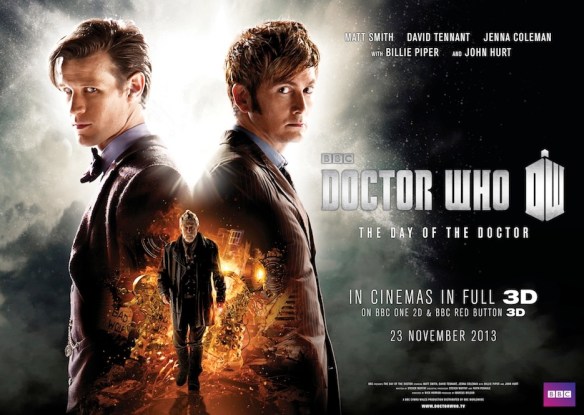
 I think some fans would have preferred a big party history mash-up; they certainly would have liked to see their favourite faces from the past. But let’s be honest: from the classic era, only Paul McGann could pass muster as still being the Doctor he once was (and he got his own, fantastic, mini-episode to prove it); and how the hell do you construct a story with a dozen leading men? It’s clearly enough of a struggle with three. The Doctor is always the cleverest person in the room, so what do you do with multiples of him? Moffat finds ways to make all of the Doctors here (that’d be David Tennant’s 10th, Matt Smith’s 11th, and John Hurt’s newly-created ‘War Doctor’) have something to do, something to say, and something to contribute — because really, the oldest (i.e newest) Doctor should be the most experienced and have all the ideas, right? There are ways round that, but only so many.
 Along the way, Moffat nails so many other things. The dialogue and situations sparkle, and frequently gets to have its cake and eat it: familiar catchphrases and behavioural ticks of the 10th and 11th Doctors are trotted out to a fan-pleasing extent, and then Hurt’s aged, grumpier, old-fashioned Doctor gets to criticise their ludicrousness, speaking for a whole generation of fans who hate “timey-wimey” and “allons-y” and all the rest. I think it’s this self-awareness that helps so much with selling the episode to everyone, both calling back to well-known elements of the series that many love, and pillorying their expectedness for those that aren’t so keen. Well, it would be a pretty awful party if you had a cake but couldn’t eat it, right?
 Smith and Jenna Coleman are on form too, of course, but as the series’ regular cast members that feels less remarkable. That’s not intended to sell them short, however, as they hold their own against actors who are arguably more, shall we say, established. If there’s one weak link it may be Joanna Page’s eyebrows, possibly the side effect of duelling with an English accent. (Complete aside: I’m rewatching Gavin & Stacey as I write this, and feel horrible even going near criticism of such a lovely person.)
 Credit too to editor Liana Del Giudice, not only for crafting cinematic action sequences, but for stitching together a narrative that is often told with imagery and flashbacks, rather than people stood around chatting. Look at the sequence just after the Doctor sees the painting for the first time as just one clear example. That sequence may be dialogue-driven, but the faded-in and intercut flashbacks and glimpses of other events are what’s really conveying information. This is first-class visual storytelling, not just when compared to the rest of British TV, or international TV, or cinema, but the whole shebang.
 Still, you can’t please all of the people all of the time, and not everyone liked The Day of the Doctor: it may’ve topped DWM’s poll, but there were voters who scored it just one out of ten. But then, that’s true of 239 of the series’ 241 stories; and almost 60% of voters gave it a full ten out of ten — that’s a pretty clear consensus. I didn’t get round to voting myself, but I would’ve been amongst them. There are undoubtedly some weak spots that I haven’t flagged up, but conversely, there are myriad other successes — both minor (the opening! The dozens of sly callbacks!) and major (the use of the Zygons! Murray Gold’s music!) — that I haven’t mentioned either.
 May’s films in full
 #39 A Beautiful Mind (2001)
 The original screen incarnation of the detective, Lassgård starred in a run of TV movies and miniseries made between 1994 and 2007 that directly adapted all of Mankell’s novels up to that point, ending with a version of short story collection The Pyramid. Only some of these have made it to British TV, and not in the right sequence, so I think it’s a little hard for British fans to get an accurate handle on his portrayal. On the evidence available, it seems to be a more hulking, womanising take than other versions.
 The connoisseur’s Kurt, at least as far as British fans are concerned, Henriksson has filled the role from 2005 to 2013 across three series totalling 32 feature-length mostly-original tales. Despite a diversity of release styles (some in cinemas (hence my
  Filmed in Sweden but made specifically for British TV (well, and those American outlets that actually co-produce most British drama), this 2008-initiated BBC series also adapts Mankell’s novels. Branagh’s Wallander is a little hazier than the others, prone to staring into space or having a little cry. The series as a whole seems based in a very British concept of Scandinavia — desaturated close-ups of wheat gently swaying in the breeze, that kind of thing. It has its own charms. A final run adapting the last two novels is due whenever Branagh gets round to it.
 The final Lassgård film, The Pyramid, features flashbacks to a case Kurt was involved with when he was a young uniformed policeman. His 24-year-old self (“Wallander 24” in the credits, as if there’d been a lot more than five of the guys) is played by Mr Skarsgård. Surname seem familiar? He’s the son of actor Stellan, brother to fellow actors Alexander, Bill and Valter. He’s currently starring in History / Amazon Prime Instant Video’s
  Here’s where we get really obscure, then. In 2003 Wallander’s creator, Henning Mankell, co-wrote a crime miniseries called
  OK, he didn’t play Wallander — but he probably has a lot to thank it for. The first two series of the British version feature Hiddleston as a member of Kurt’s team, a stroppy little whatsit called Martinsson. It was after this that Branagh cast him as Loki in Thor, which as we know has brought the guy all kinds of success and adoration. Seems kinda unlikely Branagh didn’t remember him from their Wallander days when he was casting his Marvel movie…
 The man who would go on to helm
 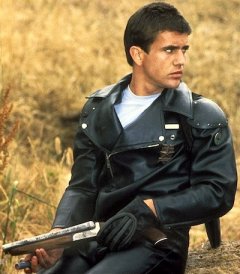 In reading up on the film, a few pieces analyse the ending as Max going to the dark side — becoming as bad as those he was fighting against; or, at the very least, becoming an anti-hero. I didn’t see it that way at first, which I think is the difference between 1979 and what’s happened in movies since. Now we routinely have heroes who do bad things: look at Jack Bauer’s love of torture in
 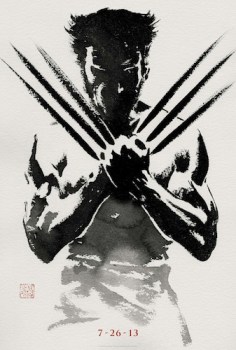 Rather than a sequel to the poorly-received
  and the end result is a moderately unique movie. OK, it doesn’t ooze originality, but nor does it feel quite like your run-of-the-mill powered-people-punch-each-other comic book yarn.
 Talking of women, you can’t overlook Logan’s lost love, Famke Janssen’s Jean Grey. Considering the build-up pitched The Wolverine as a standalone film, with perhaps the occasional nod to the wider X-universe, including rumours of a Jean cameo, the final film is surprisingly tied-in to previous events: there’s actually loads of Jean (how? Well…), and Wolverine’s personal journey is very much grounded in the events of The Last Stand. I’m sure you could watch this without having seen or remembered a previous X-movie, because the bulk of the plot is indeed standalone, but the emotional journey is invested in what came before.
 Without seeing all the behind-the-scenes goings-on it’s difficult to know whose fault this was, but it’s equally difficult to imagine the screenplay that Darren Aronofsky (far from your regular blockbuster director) described as “a terrific script” could have concluded this way; and knowing that his replacement, James Mangold, fiddled with the script before shooting commenced… well, draw your own conclusions.
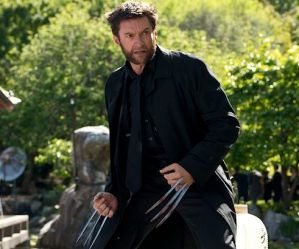 The Wolverine isn’t quite the movie it could have been; nor, I think, quite the one the makers hoped they were producing. Jackman has intimated since that it’s studio interference that pushes for silly-big action sequences and the like, but that fan feedback might slowly be winning them around to the things viewers actually care about. Whether that’s true or not, I guess we’ll see in the next instalment…
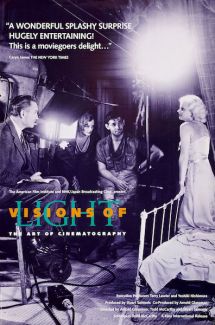 Cinematographers discuss cinematography in this AFI-produced documentary. Initially a whistlestop history of film photography, it segues into analysis of movies the interviewed DPs had shot. Unfortunately, casual film fans may judge it monotopical, while hardened cineastes may find it a haphazard, Hollywood-centric overview.


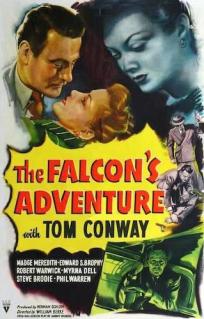 The final Falcon film to star Tom Conway (three more were made a few years later, but there seems to be debate about whether that was the same character) sees our avian-monikered detective planning to take a fishing holiday… until he can’t resist saving a damsel in distress and gets dragged in to a plot involving kidnap, theft, and murder. I think I saw someone jaywalking too, so it’s a veritable hotbed of criminality.
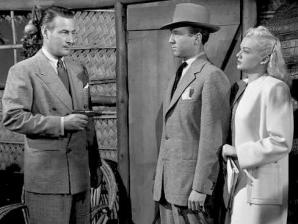 The Falcon’s Adventure is a terribly generic title for a film that isn’t the series’ very best, but is a solid upper-end instalment. They’re mostly quite formulaic films, naturally, but Adventure gets the mix right with some good sequences and gags. As the last film it doesn’t represent much of a conclusion, but then they didn’t really go in for big “series finales” back then, did they.
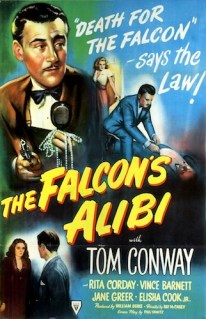 Once again smitten by a pretty lady, the Falcon finds himself co-opted into guarding a wealthy woman’s jewellery. But when said jewels are promptly stolen, and murders ensue, our charming hero is implicated. Who would do such a dastardly thing? And what’s going on with the DJ in the roof of the hotel?
 Among the rest of the cast, Vince Barnett becomes the fourth actor to play the Falcon’s sidekick, Goldie; and Jean Brooks and Rita Corday each appear in their fifth Falcon films! Brooks was previously in
  100Films.co.uk