
Bradley King | 99 mins | streaming (HD) | 16:9 | USA / English
 Shallow Grave meets Primer in this indie thriller that sees three housemates discover a camera that takes photos 24 hours into the future. They initially use it to their financial advantage, but soon Things Go Wrong™.
Time Lapse has a sci-fi setup, but it’s a film driven by its characters rather than its high concept. The whys and hows of the machine are incidental (who created it and what happened to him is a plot point, but how he did it isn’t), it’s what it does to the characters that matters. The images of the future soon depict tableaux that throw their relationships with one another into question. Moments are seen that one or more of them wouldn’t like the others to see. But if they know the camera is there, why would they do that in front of it? And do they have to recreate it? What happens to Time Itself™ if they don’t?
So it’s a thriller, really, albeit one about three normal characters and their relationships rather than the usual thriller stomping grounds of terrorists or criminals (although there are a few of the latter). There are answers to the mysteries, and at least one game-changing twist that’s an absolute killer. Co-writer/director Bradley King does a first-class job of concealing its presence, only for its reveal to be damningly obvious and explain some things you mightn’t’ve thought would be explained — pretty much a perfect kind of twist, in other words.
 The very low-key nature of Time Lapse will put some people off. If you like your sci-fi full of action or scientists or world-saving/changing endeavours, it’s not for you. If you like sci-fi where an impossible concept throws ordinary people into dilemmas about themselves and each other, this is a well-conceived drama. Add in an engrossing mystery element that keeps you questioning and guessing until the end, and you have a minor gem.

Time Lapse is released in US theaters and on demand today, and on Blu-ray from Tuesday June 16th. In the UK, it’s already available on Sky Movies and Now TV, and to rent or buy through all the usual digital providers.
(Despite the latter, the film seems to have no official BBFC rating (Sky go with 15; Amazon say U; iTunes keep schtum), which I’m pretty sure is illegal…)
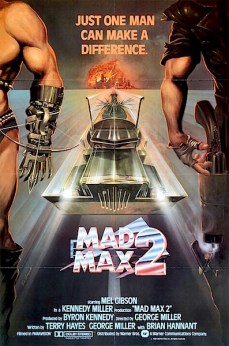 Roaming the outback of a gasoline-desperate post-apocalyptic Australia, “Mad” Max Rockatansky (Mel Gibson) comes across a commune-like oil refinery, whose inhabitants are under siege by a brutally violent gang. Max strikes a bargain: he’ll help them escape with their oil, in exchange for a tank full for himself.
 The most memorable part, however, is the climax. They escape the oil refinery, Max driving the tanker — fitted out with weaponry and defences — and the gang give chase. An almighty action sequence follows, a speeding battle through the outback. It feels wrong to just call it “an action sequence”, like that’s selling it short. You get the sense that this is why the movie exists; that co-writer/director George Miller’s goal with the entire rest of the film has been to get us to this point. It’s not just “the climax”, it’s “the third act”, and it’s stunning — the choreography of it, the editing, the stunts, as dozens of vehicles chase each other, people run around on top of them, jump between them… I don’t think it’s hyperbolic to say it must be one of the greatest action sequences ever committed to film. One of the reasons
 A bunch of obstreperous actors are too much to handle for the director of a Vietnam war movie, so he dumps them in the jungle to shoot it with hidden cameras. Things go awry; hilarity ensues.
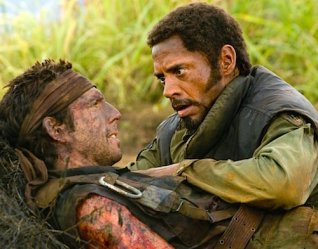 The film may run a little long in the middle, though I don’t think that’s the fault of this extended cut. It adds just over 17 minutes across many little changes and extensions
  As presidential nominee Barack Obama talks about the American Dream, in a run-down corner of the nation a trio of small-timers plot a robbery, landing them in hot water with some nasty people.
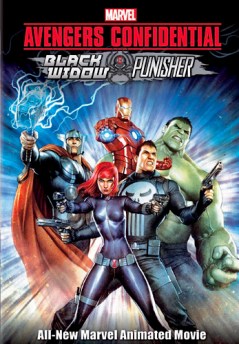 Anime take on Marvel properties. S.H.I.E.L.D. agent Black Widow teams up with vigilante Frank Castle, aka the Punisher, to investigate a threat to global security.
 #54 The Philadelphia Story (1940)
























 After abandoning the X-Men franchise for a
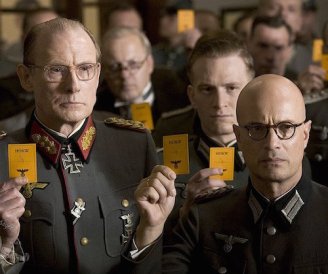
 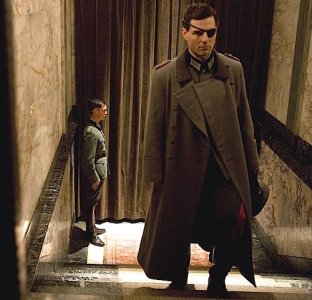 One of the stated aims of the conspiracy is to show the rest of the world that not everyone in Germany believed in what Hitler and his inner circle were doing. It may have taken us a long time to realise that, for fairly understandable reasons, but quality films like this help get the message out. Singer has crafted a proper thriller here, replete with scenes of edge-of-your-seat tension. Many a filmmaker can’t manage that with a fictional storyline, never mind one where we know exactly how it turns out.
 but nor is he in simplistic action hero mode.
 Steven Spielberg’s second feature (or “first” if you’re American) is based, loosely, on a true story. The fictionalised version sees Lou Jean (Goldie Hawn) breaking her husband (William Atherton) out of prison so they can travel cross state to liberate their baby from foster care. Everything goes smoothly until they accidentally kidnap a police officer (Michael Sacks), hundreds of police cars begin to follow them, and a multi-day slow-paced chase ensues.
 when filmmakers became contractually obliged to keep their compositions “TV safe”). The camerawork is frequently extraordinary, including at least one unbroken shot where the camera moves around inside and outside the car, like something out of
 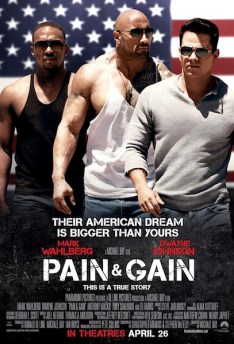 For his first non-sci-fi movie in a decade, divisive action director Michael Bay channels Tarantino (kinda) for this based-on-a-true-story crime comedy. Dwayne “The Rock” Johnson, Mark “Marky Mark” Wahlberg and Anthony “
 Bay is aided by leads who are surprisingly adept at comedy. Johnson is the best thing in it, consistently hilarious as his conscience battles former addictions and newfound religious convictions. I noted down some of his best lines to quote in the review, but they lose something without his delivery.
 After he’s become so sidetracked making the
  100Films.co.uk