
Martin Scorsese | 124 mins | DVD | 1.85:1 | USA / English | 18 / R
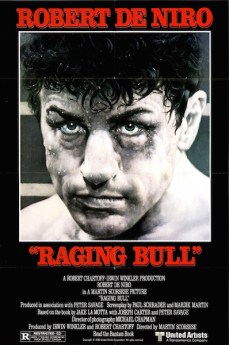 It would be boring if we all liked the same stuff, wouldn’t it? I’m sure there’s at least one ‘universally’-loved classic that we each dislike. Heck, tends to be every ‘universally’-loved classic has at least one Proper Critic that dislikes it. The flip side of this is that, in my opinion, if you don’t like something that everyone else does, there’s a fair chance it’s you who’s missing something. That’s a rule I apply to others, naturally, but I also try to bear it in mind myself (and, at the risk of sounding terribly arrogant, I think a few more people could do with thinking the same).
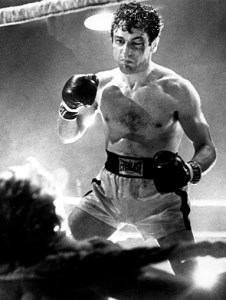
Given that introduction, I guess it’ll come as no surprise that I didn’t get on very well with Raging Bull. We’ve established before that I don’t like boxing (see: Million Dollar Baby, which (I’ll say now) I didn’t like more than Raging Bull, but has a higher score because I was softer back then), but I don’t think that precludes me from enjoying a film set in that world. Anyhow, I wouldn’t say Scorsese’s biopic pitches the sport as an aspirational one full of honour and wonder or something. And indeed, the boxing scenes were some of the bits I liked the most — they’re very well done; immensely effective. Unfortunately, they make up barely ten minutes of the running time, and it was the rest I didn’t care for.
Robert De Niro stars as wannabe-a-contender boxer Jake LaMotta, as he grows in stature — both his reputation and physically — and also grows ridiculously paranoid, which is probably the kind of thing that happens when you spend years being repeatedly punched in the head. This arc seems to unfold through interminable scenes of people mumbling semi-unintelligibly at each other, realised with a style of camerawork, editing, and acting that seems to be aiming for documentary-like realism, which has both pros (realism) and cons (s’boring).
 The aforementioned fights, on the other hand, are full-on Cinema, and glorious for it. The make-up is also very good. Relatedly, De Niro’s physical transformation, from lithe boxer to washed-up fatso, is remarkable. Decades before the likes of Christian Bale and his Machinist/Batman Begins flip-flop, De Niro gained a then-record-setting 60lbs.
Mixed technical success aside, I was never sure what the film was really meant to be about. Things turn up and go nowhere — like, what happened with that 14-year-old girl in his club? One second he’s been arrested, then it’s a couple of years later and he’s slumming it as a stand-up in New York; then, just as fast, he’s doing some kind of literature recital to a packed house. I mean, what? I would say that this is a film only of interest to people who are already fans of LaMotta and want to see some of his life on screen, but clearly that’s not the case. That’s certainly how it felt to me, though; and it’s what I would believe too, were it not for 35 years of widespread appreciation that demonstrates I’d be wrong.
 Based on where we find him at the end, I guess LaMotta would appreciate a Shakespeare quotation. For all the film’s “greatest of all time” acclaimedness, this is the one that came to my mind:
Life’s but a walking shadow, a poor player
That struts and frets his hour upon the stage
And then is heard no more. It is a tale
Told by an idiot, full of sound and fury
Signifying nothing.
You can’t win ’em all, right?

Raging Bull was meant to be viewed as part of my What Do You Mean You Haven’t Seen…? 12 for 2013 project, but I missed it. I’ve righted that as part of my What Do You Mean You Haven’t Seen…? 2015 project, which you can read more about here.
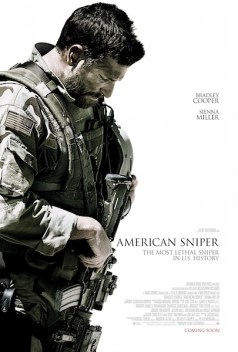 Politics aside, American Sniper is an adequately-made film. Eastwood’s direction is at best workmanlike, at worst laughably clichéd. Jason Hall’s screenplay rehashes better movies’ insights into the mental effects of war on combatants. Neither elicit much excitement from a half-arsed sniper-vs-sniper storyline. The film belongs to a bulked-up Bradley Cooper, who
  On the day marshal Will Kane (Gary Cooper) marries his young bride Amy (Grace Kelly), hands in his badge and plans to leave town, word reaches Hadleyville that a criminal he arrested, Frank Miller (presumably Will read
 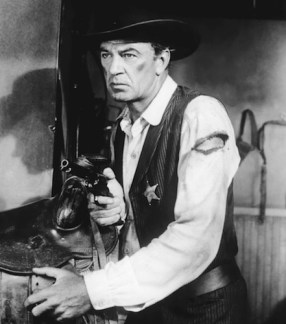 Some would contend it’s impossible to engage with High Noon and ignore that political allegory; others, like Mike at
 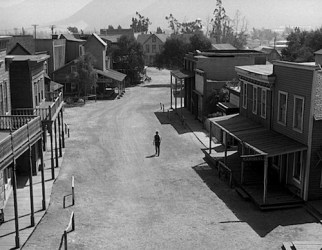 To top it all off, the film takes place in near-as-damn-it real time. Regular readers will know this is a plus for me, for reasons I still can’t quite fathom. In a narrative such as this, however, it only adds to the tension: you know it isn’t going to jump from 11:30 to the titular time, for instance — you’re going to live every one of those minutes with the characters; that’s exactly how much, or little, time Will has left to get ready.
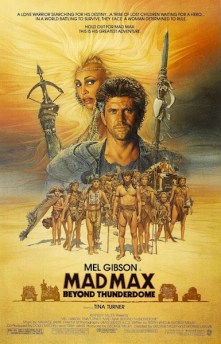 The third (and, for 30 years, final) Mad Max movie sees the titular post-apocalyptic drifter (Mel Gibson) rock up at last-outpost-of-humanity Bartertown in search of his pilfered car and camels. Max finds himself dragged before the town’s ruler, Aunty (Tina Turner), who has a job for him: kill the mutinous overseer of the city’s power supply, Master Blaster. As payment, she’ll arrange for the return of his belongings. The only conditions are he can’t reveal Aunty has employed him, and he has to do it in a fair fight in the town’s arena of combative justice — the Thunderdome. And then the story goes beyond that, funnily enough.
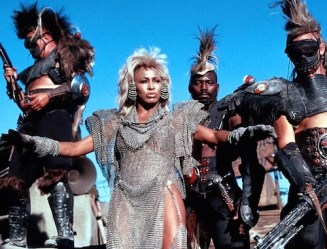 I didn’t even notice the change in level until I read those comments afterwards. The film still reaches a 15 certificate in the UK, so clearly it isn’t toned down that much. And the lack of visible blood doesn’t mean it lacks creativity: Roger Ebert
 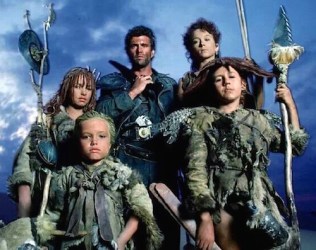 that have been forced to coexist because neither was enough to sustain an entire feature, but at least neither part feels unduly padded, meaning the narrative keeps on rolling. It doesn’t hit the same heights as the exceptional Mad Max 2 — especially with a climax that invites a direct comparison, and is good but not as good — but, as a post-apocalyptic action-adventure movie in its own right, it’s a good film.
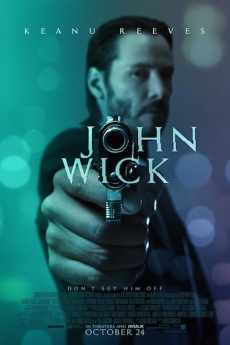 Keanu Reeves is John Wick, a nice guy whose wife sadly died. Now he lives alone with a puppy. Then he accidentally annoys a thug (
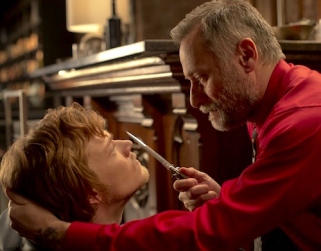 A decade and a half on from
 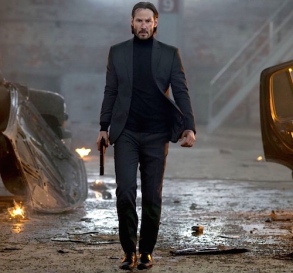 Combine that with the exciting, innovative, technically faultless action sequences and you have a distinctive, memorable movie. It seems to have gone down a storm with action movie fans, anyhow, and so those hoped-for sequels and/or spin-offs are most definitely in development. It’ll be interesting to see if it does what-I-call “a Bourne”, spiralling from a well-liked almost-sleeper-hit first film into an everyone-knows-it major franchise, or, well, not.
 If you’re not au fait with the
  as both sides attempt to rally ordinary people to their cause through the power of the media. It’s a tale that’s as timely as ever, surely.
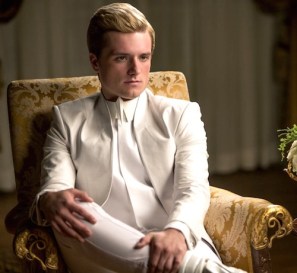 I must say that (as someone who hasn’t read the book) it didn’t feel overly like the first half of something longer to me. Of course there’s a cliffhanger and stuff, but there was at the end of the last film as well. This is no worse than that. If anything, I felt Mockingjay Part 1 built to its ending more successfully — I was quite surprised when
 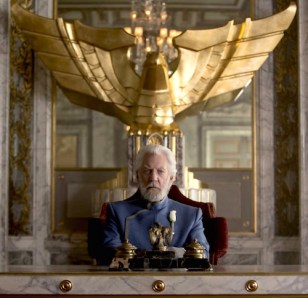 it may be your favourite instalment so far (and you wouldn’t be alone in that view). For me, Catching Fire is the best of the three because it crystallises both of those constituent elements; and if the first film was purely the action side (with a bit of the politics), then here we find its mirror image: purely politics (with a bit of action). Either way, perhaps the ultimate fate of all these films rests on how well
 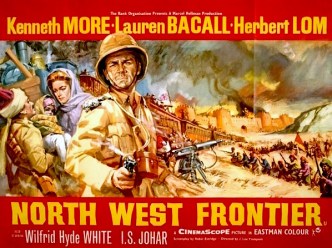 British Army Captain Scott (Kenneth More) is charged with getting an Indian child prince and his American governess (Lauren Bacall) to safety as rebels attempt to murder him. With the palace under siege, their only hope is a barely-ready rust-bucket train engine, a single passenger carriage, and a long journey through enemy territory joined by a motley group of diplomats and hangers-on who’ve bargained their way on to this last train.
 on the train by her governor husband, and Eugene Deckers is an arms dealer, who consequently no one likes but who remains unashamed of his trade. Through this prism there’s some discussion of the merits or otherwise of the British Empire and Indian independence, which some will judge to be extolling old-fashioned values, and others will take as little more than a (probably unnecessary) hat-tip in the direction of real politics.
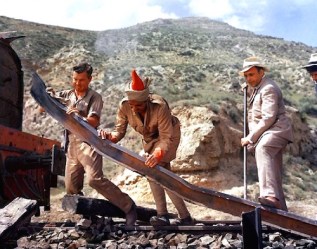 North West Frontier, on the other hand, sounds like a Western — which was perhaps the intention: the film’s structure and story style is fundamentally a fit for that genre, albeit British-made and geographically relocated. The storyline immediately brings to mind John Ford’s
  Four years ago, DreamWorks’
  Tonally, DeBlois has been productively inspired by
  If there’s a flaw, it’s in some of the new characters. The primary villain is underused, introduced too late in the game to become a palpable threat. More time spent building him up, seeing his evil on screen rather than just being told about it, would’ve been appreciated. So too for the mysterious vigilante dragon-rider, who turns out to have a very significant role. The deleted scenes include a prologue that would have introduced the character at the start, which would have better established the mystery and import of their role. It’s clear why it was deleted (to focus on Berk and keep the initial tone light), but I still think it would’ve worked better in the film. In the final cut, the vigilante is mentioned all of once, then turns up and is unmasked about two minutes later. Really, though, these are niggles — even for them, the cumulative consistency is certainly better than, say, its Oscar conquerer
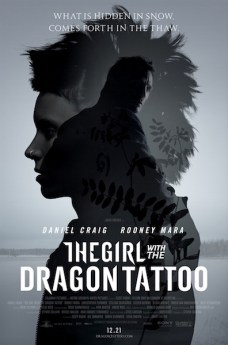 Stieg Larsson’s much-hyped novel comes to the screen for the second time in David Fincher’s much-hyped English-language re-adaptation. Somewhere between the pre-release build-up (do you remember the fuss over the trailer’s release? And all those magazine covers and articles?) and now, something clearly went awry: its UK TV premiere back in March was buried mid-week on ITV2.
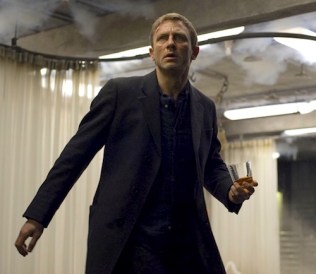 There are certainly changes, but nothing especially major. For example, the ending has been tweaked — not “completely changed”, as some reports had it, but just streamlined slightly. Some will struggle to even remember the difference if their experience of a previous version was long enough ago. Die hard fans, however, seem to regard it as a massive re-visioning of events. It isn’t.
 in particular, it’s beautifully shot, and there’s a vein of interest to be mined in discussing the fact it was consciously made using a five-act (as opposed to the usual three-act) structure (but not here today, sorry) — it feels unable to innovate or hone the genre in quite the way Se7en or
 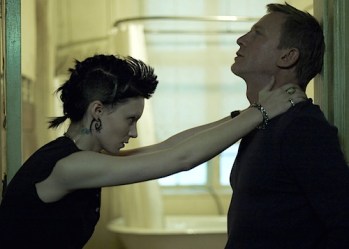 So my rating may come as a bit of a surprise given the focus of this review, which is primarily my fault for finding it so tough to shrug off all those contexts and comparisons. But hey, that’s something the film itself struggles with in many people’s eyes, too. If the viewer can divorce it from those ties, however, I think it’s still an exceptionally good thriller.
 100Films.co.uk