
You will.

 #45 Chappie (2015)
#46 Blackhat (2015)
#47 The Witches of Eastwick (1987)
#48 Teenage Mutant Ninja Turtles (2014)
#49 Barely Lethal (2015)
#50 The Book of Life (2014)
#51 Kill List (2011)
#52 Fast & Furious 7 (2015), aka Furious Seven
 #53 Beverly Hills Cop II (1987)
#54 Office Space (1999)
#55 Exodus: Gods and Kings (2014)
#56 The Boxer from Shantung (1972), aka Ma Yong Zhen
#57 The Descendants (2011)
#58 One-Armed Swordsman (1967), aka Du bei dao
#59 The Hunger Games: Mockingjay – Part 2 (2015)
 #60 Bridge of Spies (2015)
#61 Scotland, Pa. (2001)
#62 Lincoln (2012)
#63 Brooklyn (2015)
#64 Turbo Kid (2015)
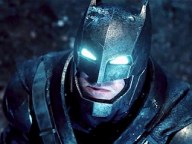
#65 Batman v Superman: Dawn of Justice (2016)
#66 The Color Purple (1985)
#67 Grave of the Fireflies (1988), aka Hotaru no haka

- After sitting out last month, I got back to WDYMYHS in March with IMDb voters’ 7th favourite war movie, 5th favourite ’80s movie, and 3rd favourite animated movie: Studio Ghibli’s Grave of the Fireflies.
- With Bridge of Spies coming out on Blu-ray, Lincoln premiering on TV, and The Color Purple being removed from Amazon Prime Instant Video, the last week of March turned into a bit of a Spielberg-athon for yours truly. I’m now just 3¼ films away from finally having seen all his features…
- Value For Money Assessment, Part 4: adding 10 more films from Now TV to the 10 (plus the Oscars) from last month gives a final cost of £0.48 per film. I’d say that’s good value.

With 23 new films watched this month, March 2016 joins the elite pantheon of months to reach 20 films — it’s only the sixth ever, and the third this year. In the process, it became the 22nd consecutive month with a 10+ total; it leapt spryly over March’s previous best tally (2013’s 17); and it handed 2016 the record for earliest #50, on the 6th (besting last year’s 8th April). It raises the March average from 11 to 12.3, and nudges the 2016 average up a smidgen from 22 to 22.3.
And there I was thinking that 13 hours of Daredevil would knacker my film viewing. (As it is, I’m actually only 10 hours through Daredevil. It’s really good, though.)
I normally end this with a prediction for the rest of the year, but they feel increasingly meaningless. I mean, they’ve always been meaningless — they’re based on averages, which only hold true until they don’t — but I’m still intending to cut back on film viewing this year (at some point), so they’ll definitely go awry. That said, I’m also intending to maintain my 10-film-minimum for a second calendar year, meaning 2016’s final tally should be at least 157 films. And, frankly, I’m intending April and May to continue in a similar vein to these first three months; at least until I reach #100, anyway. Assuming I do get there in May (which will be a whole Thing that I’ll discuss at the time), 2016 will be looking towards 170+ films.
2015 has really recalibrated my notion of “a lighter year”…



















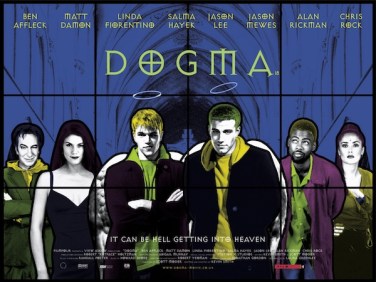
This month: Bourne, Bond, and Ben Affleck twice.








The 10th Monthly Arbitrary Awards
 Favourite Film of the Month
Although a couple of fun action movies turned my head this month, none of them were fun enough to detract from the sheer class of Steven Spielberg’s collaboration with Abraham-Lincoln-pretending-to-be-Daniel-Day-Lewis-pretending-to-be-Abraham-Lincoln (last time I make that joke, promise) in Lincoln.
Least Favourite Film of the Month
My memories of it have softened a little in the four weeks since I watched it, but as it remains the only film this month that I’ve got down for a 2-star rating, the loser is Michael Mann’s disappointing cyber thriller Blackhat.
Winner of Batman v Superman
Wonder Woman.
Loser of Batman v Superman
Film critics, apparently. Or not.
The Audience Award for Most-Viewed New Post of the Month
This almost went to everyone’s favourite movie about a blind superhero*, but it was edged out by everyone’s second favourite filmed production of Shakespeare’s Scottish play starring an actor who’s also played Magneto** — Macbeth.
* It’s true! If you can find another one, I’ll retract that statement.
** OK, I’m certain some people prefer the Fassbender one to the old McKellen-and-Dench one, but acknowledging that fact would’ve ruined the mirroring structure of my sentence.

¾.
 I’ve observed before that the ’80s seem to be everywhere in film these days, and here’s another example: Turbo Kid is in every respect an homage to low-budget ’80s genre fare.
 Then there’s the score, which is of course all ’80s synths, in a similar style to the score of

 Score:



 2013 Academy Awards
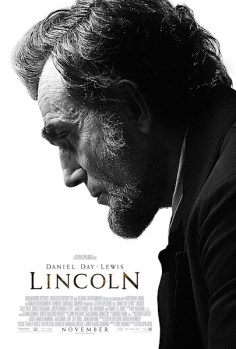 Daniel Day-Lewis allegedly stars in this account of the final months of President Abraham Lincoln’s life, which might more pertinently be called The 13th Amendment due to where its focus lies. I say “allegedly” because I’m not convinced they didn’t find a way to resurrect Lincoln to appear as himself, then just pretended it was Day-Lewis acting.
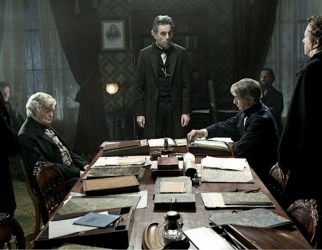 who might be persuaded to vote which way, and how they might be persuaded, and what they will want in return, and what deals need to be struck, and so on and so forth — sounds like it might make for an engrossing movie, then there’s a fair chance Lincoln will be your cup of tea. A not-insignificant proportion of viewers protest that it is boring, however, and while I in no way agree with them, your mileage may vary.
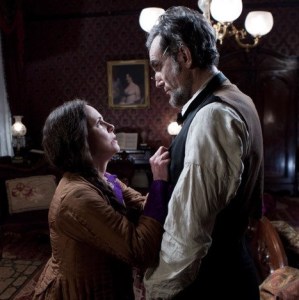 Not to do anyone else in the film — or, indeed, any other performance in any film ever — a disservice, but Day-Lewis embodies the President in a way few other actors have ever embodied a role. It’s quite remarkable.
 For me, there are few black marks (unfortunate choice of phrase…) to be held against Lincoln. Does it give in to Spielberg’s sentimentality? Yeah, a little — but it’s a long, long way from the worst case of that, and I think you’d be nitpicky (or have a different opinion on history, which, you know, is a matter of opinion) to criticise the film too harshly for that. As to whether it’s boring, that’s entirely a matter of preference. If you think The West Wing is boring, people who write lists of “the greatest TV shows ever” will disagree with you, and you also likely won’t like Lincoln. I like The West Wing, though.
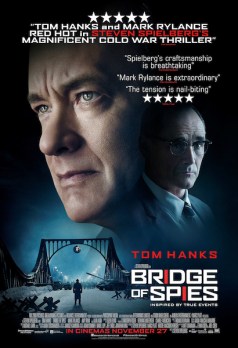 Steven Spielberg’s true-story Cold War drama stars Tom Hanks as insurance lawyer James B. Donovan, who is tapped to defend captured Soviet spy Rudolf Abel (Mark Rylance). After Donovan insists on doing his job properly, he manages to spare Abel the death penalty — which comes in handy when the Soviets capture spy-plane pilot Francis Gary Powers (Austin Stowell) and a prisoner exchange is suggested, which the Russians want Donovan to negotiate.
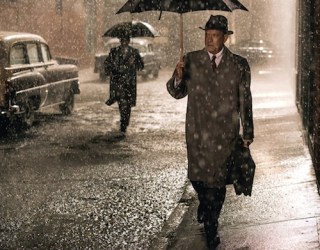 If we’re talking storytelling oddities, another is the manner in which Powers’ backstory is integrated. As Donovan continues to defend Abel, the film suddenly becomes subjected to scattered interjections, in which we see pilots being selected and then trained to fly secret reconnaissance missions in a new kind of plane. Any viewer who has read the blurb will know where this is going, but it’s so disconnected to the rest of the narrative that it felt misplaced, at least to me. The same is true when we suddenly meet Frederic Pryor (Will Rogers), an American student in Berlin who’s mistaken for a spy and arrested by the East. It turns out we need to know about him because Donovan attempts to use his negotiations to get a two-for-one deal, exchanging Abel for both Powers and Pryor. Knowing the stories of the men Donovan will be negotiating for is not a bad point, but I can’t help but feel there was a smoother way to integrate them into the film’s overall narrative.
 hints at emotions under the surface rather than declaiming them. A lesser film would’ve made a point of this — would’ve had Hanks’ lawyer struggling to understand and relate to his client’s low-key nature — but, instead, Donovan is a man who can identify with this mode of being, at least to an extent. There’s a reason they talk a couple of times about the ‘stoikiy muzhik’.
 allows the whole film to be equally as subtle, even as it remains gripping and entertaining. However, the storytelling quirks are a mixed success, the pace they sometimes lend offset by the almost non sequitur style of the captured Americans’ backstories. Nonetheless, this is a classy but still enjoyable dramatic thriller, which takes a seat among Spielberg’s better works.



 After martial arts student Fang Cheng is killed protecting his master, the latter takes in Cheng’s infant son, Fang Kang, as his student. Years later, Fang Kang is bullied by his aristocratic classmates and treated as a servant by the master’s daughter, Pei, though he’s a better student than any of them. Eventually goaded into leaving, his fellows corner him, challenge him, accidentally lop off his sword arm, and leave him for dead. Kids, eh? Fortunately, Kang is found by orphan Xiao Man, who nurses him back to health. With the help of an old textbook, he learns to fight left-handed, which is handy because there’s a conspiracy underway to kill all of his master’s former pupils…
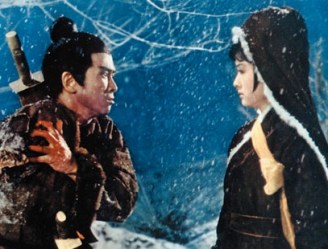 However, for me the film also worked very well as a drama, and even sometimes as a romantic drama. Fang Kang is an interesting protagonist. His lifestyle is torn from him, and rather than simplistically train to regain it or give up entirely, he battles with that decision. He returns to that way of life only to defend himself and his rescuer, and then out of a sense of loyalty to the master who raised him, but he’s also prepared to abandon the martial life to be a farmer… when the job is done, naturally. Jimmy Wang Yu, in a star-making turn, sells this character arc as well as anyone in a kung fu picture ever has. He’s also (somewhat) torn between two women, the kindly and supportive Xiao Man, and brat-with-a-heart Pei. While no one could truthfully call this a romantic picture, the love-triangle aspect also functions surprisingly well.
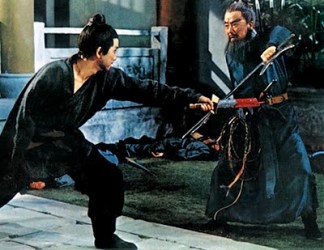 I disagree with that. Perhaps those lists are based on the abundance of action in these films, by which metric this probably has too much drama — though, as I said, it’s not devoid of fisticuffs and swordplay. Combine that with a solid story, engaging characters, and a brisk pace (even with its near-two-hour running time), and you have one of my favourite Shaw Brothers movies I’ve yet seen.
 After the success of


 I confess, I only watched The Hangover to see what the fuss was about, and to get the tick on
  100Films.co.uk