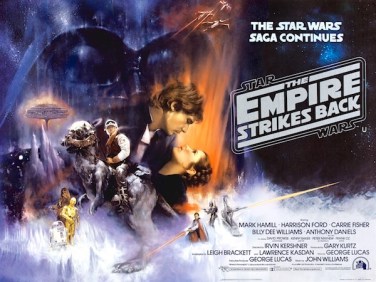
Also Known As: Star Wars: Episode V – The Empire Strikes Back
(I may be a young whippersnapper, but I’m old enough that, when I was a kid, we still called it just The Empire Strikes Back. I thought that would be a nicer place for it among my 100 Favourites, therefore.)

Country: USA
Language: English
Runtime: 124 minutes | 127 minutes (special edition)
BBFC: U
MPAA: PG
Original Release: 21st May 1980 (UK)
US Release: 20th June 1980
First Seen: VHS, c.1990
Stars
Mark Hamill (Star Wars, The Big Red One)
Harrison Ford (Raiders of the Lost Ark, Air Force One)
Carrie Fisher (Star Wars, Hannah and Her Sisters)
Billy Dee Williams (Mahogany, Batman)
Frank Oz (The Muppet Movie, Monsters, Inc.)
Director
Irvin Kershner (Never Say Never Again, RoboCop 2)
Screenwriters
Leigh Brackett (The Big Sleep, The Long Goodbye)
Lawrence Kasdan (Raiders of the Lost Ark, Wyatt Earp)
Story by
George Lucas (Raiders of the Lost Ark, Willow)
The Story
After the evil Galactic Empire uncovers the Rebel Alliance base on Hoth, our heroes flee for the stars. Guided by a message from beyond the grave, Luke heads to meet an old Jedi master. Meanwhile, Han, Leia, Chewie, and the droids hide for a bit, then go to meet the only black man in the galaxy…
Our Heroes
Luke Skywalker: ace pilot; Jedi in training.
Han Solo: reformed criminal.
Princess Leia: wait, hold on, her planet was destroyed — surely now she’s either Queen Leia or, y’know, nothing?
Our Villain
Darth Vader: daddy issues personified.
Best Supporting Character
R2-D2 is the best supporting character in every Star Wars film, but in this one we are introduced to Yoda. Looks like a Muppet, as cheeky as a Muppet, much wiser than a Muppet. Probably. It’s hard to be certain.
Memorable Quote
“Try not. Do, or do not. There is no try.” — Yoda
Quote Most Likely To Be Used in Everyday Conversation
Leia: “I love you.”
Han: “I know.”
Memorable Scene
After a dramatic lightsaber duel, Darth Vader lops off Luke’s hand, his weapon disappearing with it. As Luke dangles over an endless fall to Certain Death, Vader decides this is the perfect moment to impart a big secret…
Memorable Music
The Star Wars Main Theme is all well and good, but here regular composer John Williams introduces us to arguably an even more iconic tune — it certainly gets played outside of the films more often, as a universal signifier of evil. That’s right, it’s the Imperial March! All together now: dum dum dum dum-duhdum dum-duhdum…
Truly Special Effect
To animate the tauntauns, Phil Tippett and ILM pioneered the use of go motion, a version of stop-motion animation that moves the puppet while the frame is being exposed so as to create motion blur, thereby making the effects more realistic. (It purposefully wasn’t used for the AT-AT walkers, to emphasise their mechanical movement by keeping it slightly jerky.) Go motion would go on to be used on films including Dragonslayer, E.T., RoboCop, and Willow. It was going to be used for the dinosaurs in Jurassic Park, but then someone had another idea…
Letting the Side Down
Lucas’ Special Edition fiddling isn’t as prevalent in Empire as in its original trilogy compatriots. If anything, the big windows in Cloud City are a nice touch.
Making of
The crew took crates of simulated snow from the Hoth set to the shoot in Norway, in case there wasn’t enough real snow on location. Somewhat ironic, then, that the location was hit by a snowstorm, coating the region so thoroughly that some of the scenes set in Hoth’s wilderness were filmed right outside the crew’s hotel.
Previously on…
The story begins, of course, in Star Wars. There’s tonnes of other material set before Empire, not least the infamous prequel trilogy.
Next time…
The Star Wars universe is immense, so don’t expect me to even attempt a summation of it. At the most essential, Return of the Jedi picks up the dangling threads of Empire and completes the trilogy, while last year’s The Force Awakens continues the narrative decades later, with more instalments to come in 2017 and 2019.
Awards
2 Oscars (Sound, Special Achievement in Visual Effects)
2 Oscar nominations (Score, Art Direction-Set Decoration)
1 BAFTA (Music)
2 BAFTA nominations (Production Design, Sound)
4 Saturn Awards (Science Fiction Film, Actor (Mark Hamill), Director, Special Effects)
4 Saturn nominations (Supporting Actor (Billy Dee Williams), Writing, Music, Costumes)
Won the Hugo for Best Dramatic Presentation
1 WGA Award nomination (Best Comedy Adapted from Another Medium — yes, really)
What the Critics Said
“It’s almost too much to expect that a sequel can ever top the success of the original, and I suspect that this will prove the case with The Empire Strikes Back […] While Empire doesn’t quite measure up to Star Wars in the freshness and originality of its script, and the plethora of space operas that has been jamming the screens ever since Star Wars has somewhat lessened the novelty of city-sized ships sailing the stratosphere, nevertheless this 20th Century-Fox release remains a rattling good entertainment, a worthy successor to the original — and far and away the best of its kind since Star Wars itself.” — Arthur Knight, The Hollywood Reporter (This original 1980 review also mixes up Yoda and Boba Fett. Fun.)
 Score:
 94%
94%What the Public Say
“the movie suffers from as uneven a vibe as its forebear, with, especially, the midsection lacking in elements designed to wholeheartedly sustain one’s interest. This proves to be especially true of Luke Skywalker’s ongoing (and less-than-captivating) training at the hands of Frank Oz’s Yoda, as such interludes suffer from a lack of momentum that bring the proceedings to a dead stop at each and every turn. […] an erratically-paced yet consistently entertaining installment in a not-quite-great sci-fi series.” — David Nusair, Reel Film Reviews (This site gives Episodes III, IV, V and VI a rating of 3/4, but Force Awakens a full 4/4. Just so you know.)

Elsewhere on 100 Films…
I’ve written about the original Star Wars trilogy twice before, both times back in 2007. Of The Empire Strikes Back’s modified DVD version, I said that “the big change comes in dubbing both Boba Fett and the Emperor with appropriate actors from the prequel trilogy […] Other than shunning the poor original actors in such a way, Empire is much the same as ever.” Then, treating the film as the fifth part of the saga, I wrote that “a variety of elements […] have a very different impact in light of what we’ve experienced in the first trilogy. The most obvious is the revelation that Vader is Luke’s father: it’s no longer a twist, of course, but the emotional impact on Luke still makes it an important moment. Yoda […] seems to have gone a little loopy after several decades alone on Dagobah”.
What more is there to say about The Empire Strikes Back, really? According to some polls, it’s the greatest movie of all time; even if you don’t go that far, it’s a masterpiece of blockbuster science-fantasy adventure. Every moment is tuned to tickle the thrill-glands; every special effect a labour of love that, with their inventiveness and genuine physicality, remains largely impressive today. And it’s so well paced that most people completely overlook that the storyline is chronologically challenged (Luke travels to Dagobah, meets Yoda, learns a bunch of tricky Jedi skills, and heads off to Cloud City, all while the rest of the characters hide in an asteroid field and are locked up for about five minutes). Plus it has the audacity to end on an almighty cliffhanger/revelation double-header! And in that spirit: it’s not even my favourite Star Wars movie. But I’ll tell you about that another time.

#28 will star… Travolta/Cage.
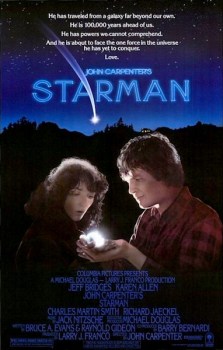 In this sci-fi romance, an alien intercepts the invitation included on the Voyager 2 space probe and tries to visit Earth, but is shot down. Taking the form of Karen Allen’s recently deceased husband, Jeff Bridges, he forces her to drive him to Arizona, where his people will rescue him in three days — if they can escape the attention of the government agents chasing them, anyway.
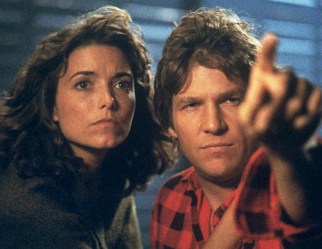 there are stalking POV shots as the alien arrives at Allen’s house, and then it grows a human body, a sequence in which the ugliest (prosthetic) baby you’ve ever seen stretches and creaks as it grows into an adult in mere minutes. It’s pretty freaky. Indeed, as per the BBFC, Starman “contains mild language, sex, violence and sci-fi horror”, but is rated PG. Ah, the good old days!
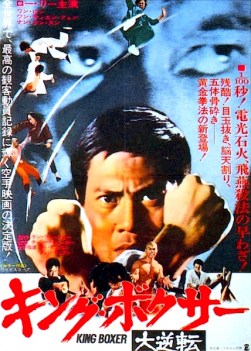 Released in the US as Five Fingers of Death, this popularised kung fu Stateside… before
  In this atypical espionage thriller, Brit Marling is a private security employee sent to infiltrate an underground activist group who are exposing the illegal activities of mega-corporations. Faced with the group’s honourable intentions vs. her employers’ indifference, will she go native?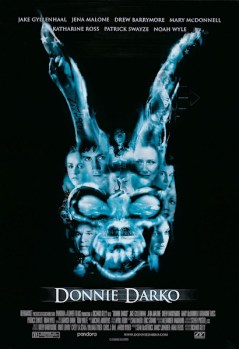


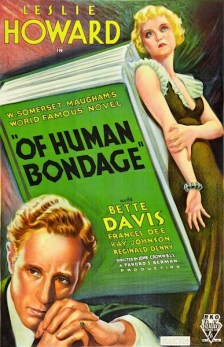 W. Somerset Maugham’s semi-autobiographical novel Of Human Bondage is, per
 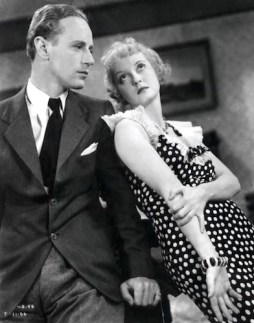 so she destroys his belongings and disappears. Eventually he meets her again, when she’s in search of his medical opinion. She has contracted syphilis from working as a prostitute, but rejects Philip’s advice to quit. Her ultimate fate remains unknown.
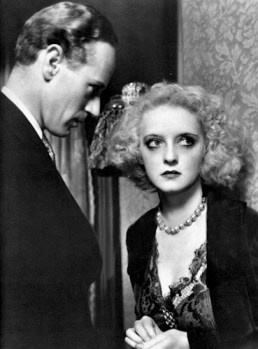
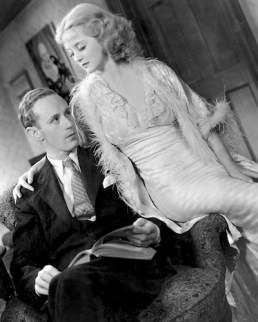 The film begins in Paris, with Philip (Leslie Howard) being told he’ll never make it as an artist. He instantly decides to become a medical student, during which time he meets Mildred (Bette Davis). From there, the rest of the film follows the plot described in the second paragraph, albeit with some notable modifications (which I’ll come to later), with parts of the third paragraph (the patient, his daughter, abandoning travel for marriage) surfacing during the third act.
 In the film it’s not syphilis that does for her, but tuberculosis, and prostitution is never mentioned, or even really alluded to. The changes were no doubt due to the infamous Production Code. (There are paintings of naked French women all over Philip’s apartment, though, but I guess that counts as Art. Sadly, there’s no meta-funny dialogue about painting anyone like one of his French girls.) Of Human Bondage is often labelled as a Pre-Code film — as coming from that narrow era between the Code being invented and anyone seriously bothering to apply it. The latter came about in 1934, when an amendment to the Code stated that any film released after July 1st 1934 had to receive a certificate of approval before it could be released. Of Human Bondage premiered on June 28th, which I guess is why it gets labelled a Pre-Code film, but it went on wide release from July 20th, so fell under the Code’s new remit after all. The print held by the Library of Congress (used for the US Blu-ray release) even has the Code certificate at the start (it’s #53, if you’re curious).
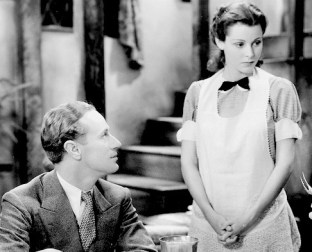 When Davis is off screen, it feels like the film is waiting for her to return. Her arc aside, it’s a take-it-or-leave-it damp squib of a drama — there’s nothing wrong with it, it’s just not all that engaging. Howard has definitely been better; his romance with Sally arrives too late to have much emotional weight, though it’s easy to believe he could fall in love with Frances Dee at first sight.
 and independent firm Price Waterhouse were hired to manage the voting next year — a job they still do today.
 Scorsese tells the story of Jesus in this controversial epic adapted from Nikos Kazantzakis’ novel. I have no idea how much is actually rooted in scripture — a disclaimer is keen to establish the film isn’t based on the Gospels, but obviously that’s just to appease the devout.


 With Warner Bros’ universe-launching superhero epic now in its second weekend (unless you live in Myanmar or Poland, anyway), you’ve probably more than had your fill of spoilerphobic reviews. So allow me to provide a spoiler-filled one. (There are a fair few of those around too, of course, but not all reviews can be beautiful or unique snowflakes.)
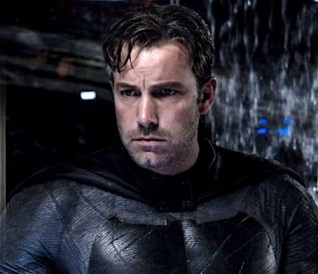 to good people turning bad; the Joker-graffitied Robin suit… This isn’t fan-pleasing/teasing background detail, it speaks to Bruce’s mindset. He’s become the kind of person who believes lines like, “if there’s a 1% chance he’s our enemy, we must take it as an absolute certainty.” He’s a bit of a right-wing nut, basically. If you want to find a character or emotional throughline to the movie, it’s Bruce learning to be a better hero again.
 But if we are criticising the screenplay, let’s turn our attention to the story and its structure, which leaves something to be desired. This isn’t just the writers’ fault, of course, because myriad things affect a film once the screenplay is signed off. In the case of story structure, editing seems a likely culprit — not the actual cutting together of individual shots to craft a sequence or scene, which is as good here as in any action blockbuster, but in terms of storytelling. Frankly, that’s a bit of a mess. Or a lot of a mess, maybe. Whole scenes serve literally no purpose or are clearly in the wrong place — the bit where Perry wanders up to Clark Kent’s desk and wonders if he’s clicked his heels and disappeared back to Kansas, for example. What purpose does it serve? None. But where it might have a role is where it clearly belongs: a couple of minutes later, right before the scene where Superman is in Kansas, chatting to his mom. Why is it not right before that scene? It’s like someone accidentally dragged it out of place on their computer editing timeline and never noticed. Sure, this is a minor point in the grand scope of the film, but it belies a sloppiness to the entire storytelling.
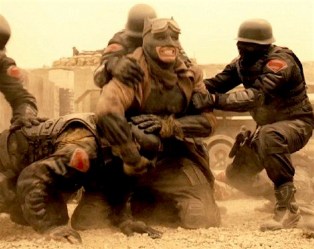 The only purpose it might serve is teasing the future — what is the giant Omega symbol? What are those flying devil-creatures? DC fans know that’s all related to alien supervillain Darkseid, and late in the film Lex Luthor makes a veiled reference to imply that some such alien badass is on the way. Yep, it’s Marvel-style foreshadowing, where every film is just a stepping stone to the next. Except BvS does it even more heavy-handedly than Marvel. As I said, the dream/vision is utterly unnecessary; Lex’s line is nonsensical (how does he know?); and the way other members of the Justice League are teased… You know, I don’t even want to discuss it. It’s a bad Marvel post-credit scene shoehorned into the middle of the movie. It feels like someone accidentally cut a teaser trailer into the actual print of the film. It’s not even so bad it’s good, it’s just tacky. And, I have to say, though I’m not the biggest fan of
 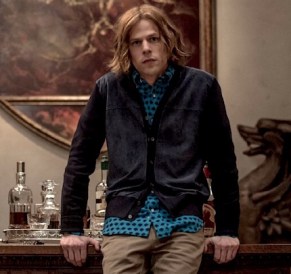 to look for clues you missed, not rethink to see if that even fits with everything we’ve seen. That’s because even if you do latch on to the almost-throwaway sliver of dialogue that indicates Lex put all of this together, the way it’s presented in this cut makes it come a little out of nowhere. However, I believe it’s a plausible explanation of events (within the realms of the version of the genre these films are in), and would tie the whole thing together neatly, were it just a little clearer.
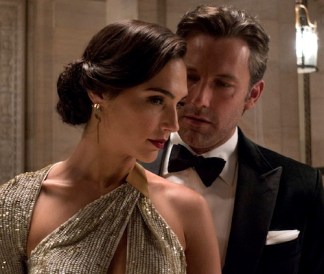 “Give audience an idea what future film(s) will be about while saying absolutely nothing concrete about what future film(s) will be about.” But in that mess (the mess I mentioned at the start of that last really long sentence, remember? OK,) there is stuff going on; there are ideas the filmmakers want to put across, possibly with the intention that they’ll actually be thought about.
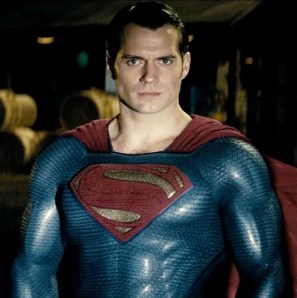 As I was saying: not a perfect movie, but one with a lot of material to provoke thought about both the inherent concepts of superheroes and, external to that, the genre itself, especially the way it’s presented in cinema. I’m not going to slag off the Marvel movies, because they are fun, but the entirety of the big-screen MCU
 Some say The Five Venoms is
 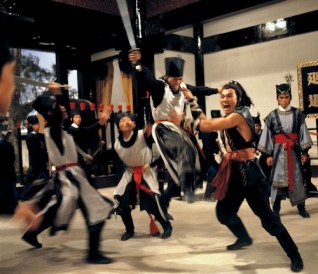 I keep reading things like “the concept of the five Venom styles is simply amazing”, or that “the mythology alone is exquisite”, but I just don’t buy it. There’s nothing wrong with it — it’s a decent setup — but to call it a “mythology” is bordering on grandiose. And whether it’s a full-blown mythology or just a high-concept setup, either way it’s not that incredibly mind-blowing a concept.
 100Films.co.uk