
My love for you is wide and long, dear readers, and so (one of) the breakout hit(s) from Netflix’s Eurovision movie seemed the only appropriate title for this month’s review.
Also, I didn’t have any better ideas. I mean, I could’ve called it “halfway”, because we are halfway through the year and I’m going to talk about that… but it’s not as fun, is it?

#129 Paris When It Sizzles (1964)
#130 Shadowlands (1993)
#131 E.T. the Extra-Terrestrial (1982)
#132 The Gay Divorcee (1934)
#133 The Last Black Man in San Francisco (2019)
#134 The Peanut Butter Falcon (2019)
#135 Split Second (1992)
#136 Birds of Prey (and the Fantabulous Emancipation of One Harley Quinn) (2020)
#137 The Old Dark House (1932)
#138 The Rhythm Section (2020)
#139 The Vast of Night (2019)
#140 The Armour of God (1986), aka Lung hing foo dai
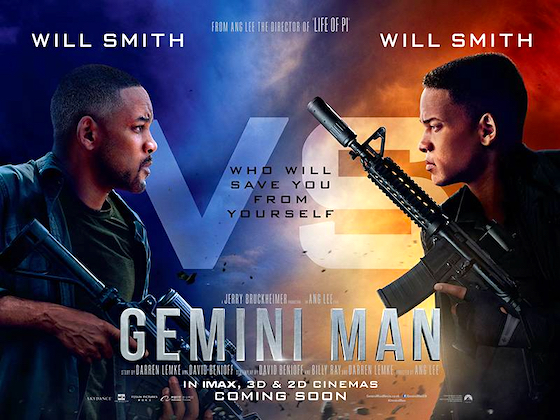
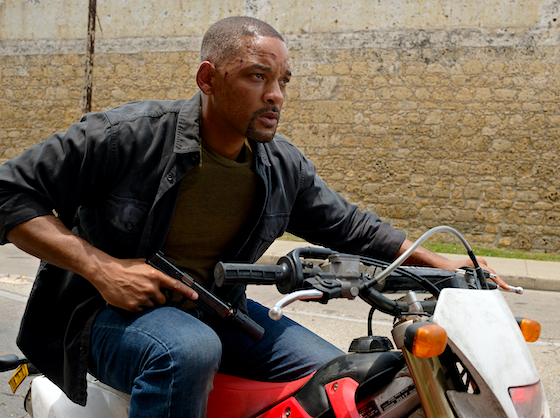
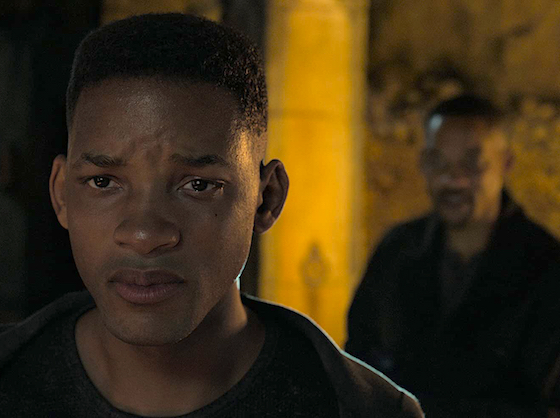
#141 Gemini Man (2019)
#142 Cairo Station (1958), aka Bab el hadid
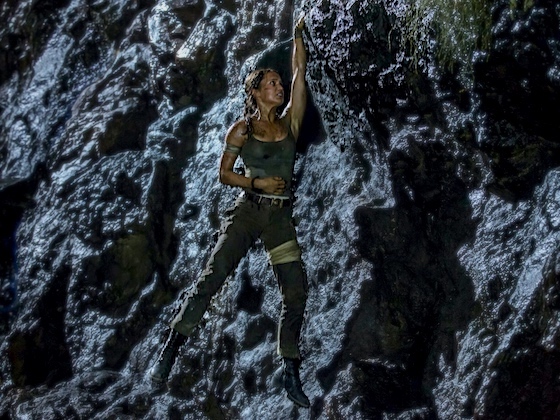
#143 Tomb Raider 3D (2018)
#144 7500 (2019)
#145 Do the Right Thing (1989)
#146 Shazam! 3D (2019)
#147 Crawl (2019)
#148 Chicken Run (2000)
#149 Man on Wire (2008)
#150 Who Killed Captain Alex? (2010)
#151 3:10 to Yuma (2007)
#152 Polytechnique (2009)
#153 Eurovision Song Contest: The Story of Fire Saga (2020)
#154 The Invisible Man (2020)
#155 Without a Clue (1988)



- I watched 28 new feature films in June.
- It’s my joint-3rd best month of 2020 (tied with March), which is right in the middle when you remember there have only been six months… but 2020 is clearly an exceptional year, because it’s also in the top 5% of months all-time.
- It’s also my best June ever, beating the 21 of June 2018.
- Naturally, that means it stomps all over the June average (previously 10.0, now 11.4).
- It also sails past the rolling average of the last 12 months (previously 15.3, now 17.3), and also pips the average for 2020 so far (previously 25.4, now 25.8).
- Reaching #155 means I’ve already passed my final total from last year, making 2020 already my fifth highest totalling year ever.
Now, some observations on the actual films I watched…
- They included my 2,000th film for this blog. I wrote about that here.
- I was also particularly glad to get a chance to see Cairo Station, one of the five films I flagged from The Story of Film: An Odyssey (my 1,000th film) back in August 2015. In the almost-five-years since that post, I’ve seen two of those films. Of the other three, I’ve owned one on Blu-ray for several years; another was released on Blu-ray in the UK last November; and the fifth recently came out on Blu-ray in the US. So, I could/should be completing them by now…
- This month’s Blindspot film: Spike Lee’s Do the Right Thing, which is exceptionally pertinent right now — which, considering it’s now over 30 years old, is rather depressing. A great film, though.
- From last month’s “failures” I watched Crawl, The Last Black Man in San Francisco, The Peanut Butter Falcon, The Rhythm Section, and The Vast of Night.
Finally, returning to statistics: the end of June marks the halfway point of the year, of course, and at #155 it’s the furthest I’ve ever reached by this point (beating #145 in 2018). So, to mark the occasion, I’ve gone back over previous years to see what I can learn about the first half of the year as a predictor for the second.
- Logic might suggest the second half would be double the first, but that’s never been the case.
- Of the previous 13 years, five saw the second half more than double the first, with the other eight showing a decrease (obviously).
- The biggest discrepancy came last year, 2019, when I did 64.9% of my film viewing in the first half of the year, leaving just 35.1% in the second.
- The biggest swing the other way was in 2009, when I watched 40.4% in the first half of the year and 59.6% in the second.
- On average, the second half of the year accounts for 48.3% of my viewing; though if we look at just the last five years, that drops to 44.8%.
- So, as a predictor for 2020, if I follow the all-time average I should end the year on #305 — holy moly! A feat that never seemed possible, considering I’ve only passed #200 twice.
- If I take the average of just the last five years, I only reach #283 — which would still be my highest year ever by over 20 films.
- And, compared to the two extremes detailed above, anything below #239 would be a new second-half low (in percentage terms), while a new high would see me watch over 383 films! The latter would mean a monthly average of 38.1 for the rest of the year — higher than I’ve ever reached in a single month. I really don’t see that happening.
- Leaving percentages behind, the average number of films I’ve watched in July-to-December is 69, which this year would put my final total at 224.
- Lest all this sound like plain sailing to a number definitively above 200, my weakest-ever July-to-December was 33 in 2011, which, if repeated, would see 2020 end on 188. Never say never…

The 61st Monthly Arbitrary Awards
 Favourite Film of the Month
Lots of stuff I liked a great deal this month, and as usual it’s hard to compare such wildly different films. For surprise value, I’m drawn towards Paris When It Sizzles — it doesn’t seem to be well-rated on the whole, but it’s a lot of fun as a kind of “insider’s view” Hollywood spoof that feels ahead of its time.
Least Favourite Film of the Month
No outright bad movies this month, in my estimation, but there were more than a couple that didn’t live up to my expectations. Perhaps the worst of these was Crawl, purely because it was doing so much better early on than it was by the end.
Song That Most Stands a Chance at the Oscars of the Month
God only knows what’s going to be going on at the Oscars next year, but they should be more amenable to streaming movies than ever, and that might open the door for a song from The Story of Fire Saga to get in — if there’s one thing most people who’ve watched it can agree on, it’s that the original songs are rather catchy (in a Eurovision-y way). Heck, why just one? In the past, multiple songs from the same film have made it, so never rule that out (I have no idea how the rules for the song category work). But if only one song makes it then… no, it won’t be Jaja Ding Dong (well, you never know). It might be Volcano Man, just because that had several weeks of advance play due to being released as a kind of teaser trailer. But judged as an actual song, the big emotive climactic number Husavik surely deserves a shot.
Most Desirable House of the Month
I can see why Jimmie Fails obsesses over restoring, maintaining, and (re)acquiring that house in The Last Black Man in San Francisco — it’s gorgeous. Until it gets that makeover at the end, anyway (um, spoilers? I dunno).
The Audience Award for Most-Viewed New Post of the Month
Maybe it’s because there’s nothing new in cinemas. Maybe it’s because Eurovision remains popular in many places, as does Will Ferrell. Whatever the cause, Netflix’s Eurovision Song Contest: The Story of Fire Saga has generated a lot of chatter since its release last Friday, and so it’s of little surprise that my release-day review has attracted a fair few visitors. It easily tops this month’s chart (both new and all-time posts), and has overtaken another Netflix original, Extraction, to be my most-viewed film review of 2020 so far.













This month, my Rewatchathon movies forward at give-or-take its intended pace — which, after last month’s bumper crop, means I’m still over a month ahead of schedule.
#27 The Scarlet Claw (1944)
#28 Gambit (1966)
#29 The Pearl of Death (1944)
#30 The House of Fear (1945)
Three of those continue my rewatch of the Sherlock Holmes series starring Basil Rathbone and Nigel Bruce. My original reviews are linked above; the following links are to new thoughts on Letterboxd. In summary, I think The Scarlet Claw remains my overall favourite from the series, but I enjoyed both The Pearl of Death and, in particular, The House of Fear a lot more this time — together, the trio are definitely among the series’ best.
As for Gambit, it made my yearly top ten back in 2011, but if anything I enjoyed it even more on this second watch. I’d remembered the famous first-act trick, of course, but forgotten the substance of all the twists at the end, which kept it exciting. It’s so much fun in between too, and moves like a rocket without ever feeling rushed.

Cinemas remain closed, but that hasn’t put a stop to new releases, with the likes of Woody Allen’s A Rainy Day in New York and Simon Bird’s Days of the Bagnold Summer heading direct to rental. Plus, there was an even more high-profile new release in Spike Lee’s acclaimed movie for Netflix, Da 5 Bloods.
Other titles new to the preeminent streamer that caught my eye include action movie VFW; last year’s animated revival of The Addams Family; documentary The Show Must Go On: The Queen + Adam Lambert Story; and almost a dozen movies directed by Youssef Chahine — I watched the most noteworthy one, Cairo Station, but I’ve seen several others recommended. I also noticed Line of Duty pop up, but only because it was released theatrically here as In the Line of Duty, presumably to avoid conflict with the popular TV series, but Netflix have reverted to its original title. I don’t remember it being well reviewed, so I won’t be rushing to catch up with it.
Meanwhile, Amazon Prime Video offered the new Shaun the Sheep movie, Farmageddon, which I’ve been looking forward to getting round to. Also a couple of documentaries, one titled Showrunners: The Art of Running a TV Show, which kind of sums up its topic, and the other about a pioneering early female filmmaker, Be Natural: The Untold Story of Alice Guy-Blaché (which still hasn’t been picked up by the site I use to track additions to Amazon, so it may’ve been there a while for all I know). Also standing out from the pack was the brilliantly titled Django and Sartana Are Coming, It’s the End (the titles seem to be the best thing about any of the movies starring Sartana) and a steampunk adaptation of The Secret Garden. Um, what? Colour me curious.
Once again, Sky Movies / Now TV suffered by comparison. Mr. Jones sounds interesting, but has the kind of grim subject matter that’s going to make me keep putting it off; I didn’t mind the first one, which hardly pushes Maleficent: Mistress of Evil to the top of my must-see list (I didn’t even bother to put it on last year’s ’50 unseen’ list); and I’m not sure I’ve seen enough Kevin Smith films to really ‘get’ Jay & Silent Bob Reboot… but, hey, I guess it is a reboot, right?
Oh, and lest you think I’d curbed my spending this month, oh dear me, no. Recent films finally hitting disc here included The Lighthouse and Pixar’s Onward (in 3D, natch), while new releases of catalogue titles included 88 Films’ latest Jackie Chan release, Armour of God II: Operation Condor (hence why I watched the first one this month); Eureka adding film noir Criss Cross to their Masters of Cinema line; and BFI issuing a restored Tokyo Story, a film I’ve been meaning to rewatch for a very long time. And offer pricing was once again the siren to my wallet’s sailor: from the BFI, The Crying Game, doco Mifune: The Last Samurai, and their Early Women Filmmakers box set (with seven features and 15 shorts, including several by the aforementioned Alice Guy-Blaché); from a Masters of Cinema twofer, Faust and Witness for the Prosecution; and from the recent UK Criterion offer, Fail Safe, Holiday, Kiss Me Deadly, and Solaris. I think I would’ve caved to more in the latter, but I’m trying to hold some money back for the Barnes & Noble Criterion offer that should be starting in a couple of weeks. I can never have enough set aside for that…

UK cinemas are set to reopen… but how long will that last? Will anyone go? The major films scheduled for July have already been pushed (again) to August, leaving only re-releases and some small-scale new releases with nothing to lose by testing the waters. Hardly an enticing slate, especially when the safety measures on offer are dubious (personally, I’m almost entirely put off by the lack of reserved seating at Odeon). Some people would like to pretend this is all over, but anything could still change any day…
Well, at least we’ll definitely have Hamilton on Disney+.






 This Royal Shakespeare Company production from 2018, starring Christopher Eccleston and Niamh Cusack, has apparently been
  Having really enjoyed Sloss’s two Netflix specials
  After three seasons on network TV (or Amazon Prime Video here in the UK), Lucifer fell prey to
  I used to love Jonathan Creek back in the day. It was a huge hit, too, gaining high viewing figures and a BAFTA award. On the surface it doesn’t look so special: two mismatched individuals solve murders. But it’s the execution that’s different: these are all “locked room” mysteries, and rather than interview a small array of suspects to guess who did it, they must work out how the murder was even physically possible. Creek is a magician’s trick designer, and the stories kind of work like magic tricks: something seemingly impossible that has a hidden rational explanation. Personally, that’s right up my street, and while some elements of the show are obviously dated (the hairstyles; the cars; the pace is leisurely by modern standards), I think it holds up pretty well.
 Last month, Doctor Who Magazine ran a Twitter ‘world cup’ to find the most popular stories starring the First Doctor. Many of the usual suspects did well, but I was surprised to see The Time Meddler wind up
  This third selection of episodes deemed the series’ worst (according to
 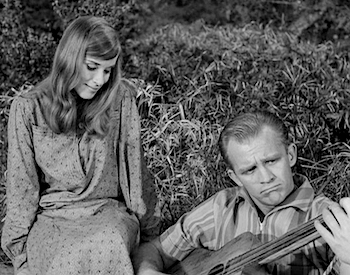 The next episode in our rundown is also based around a song: Come Wander with Me, in which a wandering singer attempts to buy a folksong from a young woman, only to find he might be living the lyrics… maybe. It’s a bit unclear what’s really happening, or why. It’s got some nice ideas, with mysterious characters, the haunting song, and some atmospheric direction by Richard Donner, but it comes to no kind of conclusion. How has this happened before? Has it happened before? Why is it happening again now? The episode barely even begins to ask those questions, never mind answer them; and not in a Lynchian “it’s up to your interpretation” way, which would be fine, but it doesn’t even seem to be aware those questions exist. Frustrating.
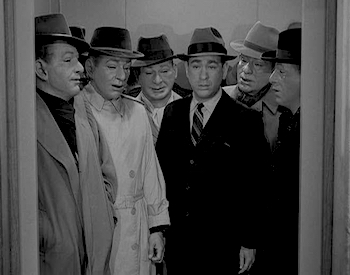 The ‘hero’ of The Mind and the Matter hates people. They bump into him on the subway; they squish against him in the elevator; they accidentally pour coffee over him at work. If he had his way, all the people would just disappear. After he reads a book about the power of the mind, he instantly gains the power to make his thoughts real (no practice required, apparently), and so immediately does away with everyone else. Hurrah! But after a morning’s work in peace and quiet, he’s bored, with no idea what to do. So the first thing he imagines to enliven his world is… an earthquake. Um, what? Unsatisfied with imagining different weather phenomena, and apparently unable to conceive of anything else whatsoever to occupy his interest, he decides to fill the world with people just like him. That results in a world full of grumblers and moaners, which he finds even more distasteful than how it was before — so he just puts it all back. It’s almost a lesson in what happens if you give unlimited power to unimaginative people… except that’s not the point the episode actually wants to make, so it doesn’t really make it. Instead it’s going for “this world isn’t perfect, but it’s better than the alternative and there’s a lot to like”. But it doesn’t make us feel that, it just tells us it. Heck, even the character doesn’t feel it — he’s just as miserable at the end as he was at the start. The whole affair is sort of an infinitely stupider rehash of the classic















 Adapted by James Graham from his own West End play and directed by Stephen Frears almost as if it were a movie (note how only the first episode has a proper title sequence), Quiz is the story of Major Charles Ingram, who in 2001 went on Who Wants to Be a Millionaire? and — allegedly — cheated his way to winning the million-pound jackpot with the help of his wife and someone in the audience coughing to indicate correct answers. But Quiz takes its remit wider than this, showing how Millionaire was born and spawned a nationwide community of quiz enthusiasts determined to game the system and make it onto the programme — and once on there, cheat in their own ways.
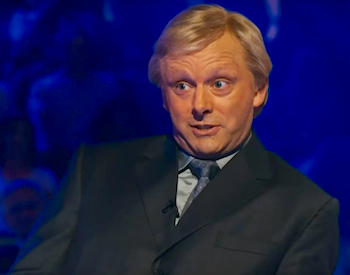 Indeed, even as there are serious events (watch out for the undeserved fate of the Ingrams’ pet dog), Quiz is consistently very funny. There’s a gag in the closing seconds of episode two (punctuated by a smash cut to black) that is golden. Michael Sheen’s uncannily spot-on impersonation of Chris Tarrant will also tickle anyone familiar with the man — i.e. UK viewers, but I guess it won’t translate internationally. Matthew Macfadyen is more understated but also excellent as Charles Ingram, while Helen McCrory burns up the screen as their barrister later on. Those are the obvious standout performances, but the whole cast are on form, in particular Mark Bonnar as one of Millionaire’s exec producers. He’s consistently superb in everything I’ve seen him in (if you haven’t, you should definitely watch
 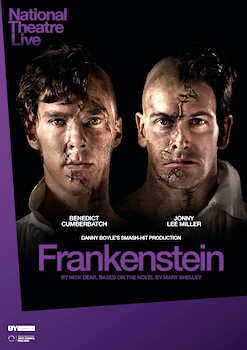 As theatre goes, this is a blockbuster: directed by Danny Boyle and starring Benedict Cumberbatch and Jonny Lee Miller, with the actors alternating who played Victor Frankenstein and his Creature for each performance. One of each was filmed for the National Theatre Live cinema screenings, and for the lockdown National Theatre at Home release they also made both available.
 The most recent missing story to be animated (see
  When I watched Archer’s fifth season (aka Archer Vice), I was picking it back up after years away and was set to continue it. That was
  In
In 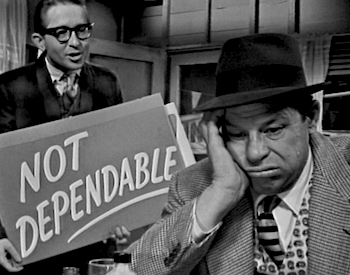 In 153rd is The Whole Truth, which is about a car that’s been haunted since it came off the production line — although this one’s considerably less threatening than
  The lead actor is Pat Hingle, of Commissioner Gordon in
  This month, I have mostly been missing Killing Eve, the third season of which is currently airing between iPlayer and BBC One. For the first two seasons we had to wait until after it had finished in the US so they could put the whole lot up on iPlayer at once, which no one noticed during season one but drew a lot of criticism during season two (you can work out why, I’m sure). Consequently, I binged those first two seasons (indeed, I came to it late, so
  100Films.co.uk